
Reducing Greenhouse Gas Emissions Won’t End Global Warming
by Jacqueline Sussman
Research Associate, Biodiversity for a Livable Climate
Solar panels on rooftops. Hybrid and electric vehicles. Meatless Mondays. What do all of these indicators of societal progress have in common? They are just some examples among the many symbolic, yet widely attainable, lifestyle modifiers for reducing energy consumption in our fossil fuel-addicted world. But while replacing SUVs with hybrid cars and changing lifestyle habits to reduce individual carbon footprints is important, it simply isn’t enough to reverse climate change. We have long surpassed the point where phasing down fossil fuel emissions alone will arrange for a biologically-diverse and livable climate.
The rapid rise of atmospheric CO2 to levels recently exceeding 400 parts per million (ppm) is an unprecedented climatic event in the past several centuries of modern human evolution (Royal Society 2014). The speed and scale of current climate change trends is truly remarkable, making adaptation by both humans and the natural world a complex and unique challenge. In addressing this challenge, many politicians, climate activists, and policymakers often point to reducing fossil fuel and greenhouse gas (GHG) emissions as the sole answer. Science is telling a different story, however, and it is time for us to listen.
Even in the best case scenario for GHG emissions reduction–a zero sum emissions scenario–global temperatures will not decrease fast enough to reverse the current trends of climate change. Climate models indicate that even with a zero emissions scenario, atmospheric temperature will continue to rise and, at best, stabilize or slowly decrease over decades to even centuries before hitting safe levels (Zickfeld et al. 2013, MacDougall et al. 2012). To reduce temperatures there must be a net removal of carbon dioxide from the atmosphere, for which there are multiple viable strategies that actuate the CO2 capture and storage potential of the biosphere. This truth is well known among a minority of climate scientists and activists, but continues to be omitted from conventional dialogues about the climate change crisis.
Natural carbon sinks exist in biomes and ecosystems around the world. Biomes differ in the extent of their carbon sequestration capacity, but there is massive carbon-storing potential in natural resources around the globe for long-term climate stability. By working with natural systems to sequester carbon from the atmosphere and store it in the world’s trees, plants, and soils we can effectively reverse climate change and lay a foundation for sustainable global vitality.
Forests:
Forests contain the highest reserves of soil carbon worldwide (about 35% of the global total) and have a proportionately high ratio of carbon storage to spatial coverage (SWS 2013). The biophysical influences of forests on atmospheric temperatures depend on multiple factors that affect carbon sequestration, such as the regional climate system (Jackson et al. 2008). Tropical forests promote the evaporation of water from land to air, contributing to cloud formation that increases the amount of sunlight reflected back to space. Boreal forests have a much more limited capacity for carbon storage due to limited sunlight, cooler temperatures, the long-term presence of snow and ice throughout each year, and other factors. Replacing snow covered land with trees that absorb more sunlight in northern countries can actually accelerate warming regionally, creating a positive feedback loop that leads to further loss of highly-reflective snow and ice (DellaSala et al. 2003).
The biophysical influence of temperate forests is complex and highly variable on a region-to-region basis (Field et al. 2007). Some studies show that replacing temperate forests with grasslands will cool surrounding surface areas, while other studies show the opposite. While temperate forests can store between 150 and 230 tons of carbon per hectare (Kemper et al. 2009), these forests can contribute to a warmer atmosphere because they are darker and absorb more sunlight than grasslands and croplands. As the dynamic of temperate forests and atmospheric temperatures varies greatly, increasing temperate forest coverage might not be the best solution for carbon sequestration in all regions of the globe (Jackson et al. 2008). Thus, ecosystem assessments are crucial for determining whether increasing temperate forest coverage will benefit atmospheric CO2 concentrations on a case-by-case basis.
Climate researchers often suggest that the greatest potential for carbon sequestration in forests lies in the tropics; avoided deforestation, forest restoration and afforestation in these regions can play a significant role in mitigating global climate change (Jackson et al. 2008; Shukla et al. 1990; Dickinson 1992). In other regions of the world, forest projects and policies should be crafted to seek a balance between protecting ecosystem services and stabilizing local and global temperatures. In dryland ecosystems, forestry projects that consume scarce water resources are not favorable to other types of ecological restoration projects, such as grassland restoration (Jackson et al. 2008; Hurteau et al. 2008).
Grassland soils:
Excluding Greenland and Antarctica, grassland biomes constitute approximately 40% of the global land surface area and possess massive potential for sequestering carbon in arid and semi-arid areas of the world (Safriel et al. 2005; Savory 2013; Teague et al. 2011; Tainton et al. 1999). Healthy grasslands provide habitat for a biologically diverse range of plant and animal species, and also serve as a large reserve for soil carbon (Safriel et al. 2005; Savory 2013). While temperate forests can store carbon in above-ground biomass, grasslands have higher soil organic carbon (SOC) capacity, storing carbon in stable complex biomolecules for hundreds to even thousands of years (Scurlock and Hall 1998; Savory 2013). Studies estimate that grassland SOC carbon stocks comprise up to 30% of the total soil carbon worldwide (Anderson 1991; Scurlock and Hall 1998).
Grasslands that sustain abundant stores of SOC have higher rates of water infiltration and retention and are less susceptible to environmental degradation such as soil erosion and drought. These “non-forest” biomes, primarily located in the terrestrial regions of the Northern Hemisphere, constitute a significant fraction of the “missing carbon sink” in the global carbon budget (Scurlock and Hall 1998). Widespread mismanagement of grassland ecosystems has degraded their primary production functioning and SOC storage abilities, leading to a “desertification” crisis worldwide, characterized by processes such as vegetation degradation, water and wind erosion, salinization, soil compaction and soil nutrient depletion (Safriel et al. 2005). Although grasslands are currently facing desertification around the globe, proper land management can restore vegetation cover to protect soils from erosion and enhance the carbon sequestration capacity of these vital ecosystems (FAO 2004; Savory 2013).
Wetlands:
While forests and dryland ecosystems contain the most soil carbon globally, the carbon density of wetland ecosystems is three and six times that of forests and grasslands/shrublands, respectively (Society of Wetland Scientists (SWS) 2013). The deep organic-rich soils of coastal wetlands contain carbon reserves that have been sequestered over millennia (Emmiett-Mattox et al. 2011). These tidal ecosystems are able to store large quantities of carbon for two primary reasons: high-nutrient conditions that promote the rapid growth of carbon-sequestering plant biomass (primary production), and anaerobic soils that suppress microbial decomposition in the water-logged environment, allowing for long-term carbon storage (Chmura et al. 2003; SWS 2013; Mitsch and Bernal 2013). Tidal saline wetland ecosystems, including salt marshes and mangrove swamps, exhibit remarkable rates of belowground biomass production and enormous capacity as carbon sinks (Chmura et al. 2003).
While wetlands do emit carbon dioxide and methane (CH4), studies with analysis on model carbon fluxes over a 100-year period indicate that most wetlands are net carbon sinks (SWS 2013). In addition to their carbon storage capacity, wetlands provide a multitude of environmental benefits including habitat for a diverse range of species, water filtration mechanisms, and protection against floods and storms (Mitsch and Bernal 2013). Wetlands cover roughly 6% of the earth’s land surface and contain over 10% of the “global carbon pool” (IPCC 1996; Erwin 2009), making the health of wetland ecology an important segment of the global climate picture.
Biochar:
Biochar is a stable, carbon-dense form of charcoal created from the burning of plant material under low-oxygen or zero-oxygen conditions, called pyrolysis. Biochar is primarily produced by wildfires and can exist in some soils for hundreds of years (Lehmann et al. 2009). Controlled fire produces biochar that has the ability to simultaneously enrich soil health, sequester carbon, and promote additional growth of carbon-absorbing plants (Rostad and Rutherford 2011; Schwartz 2013). While biochar production currently remains an experimental strategy for global carbon sequestration, when applied responsibly it appears to have potential for aiding in efforts to enhance the long-term carbon storage of the biosphere.
Conclusion
A focus on fossil fuel emissions reduction as the primary solution to reversing climate change is misguided and futile. Arbitrary goals to reduce emissions by 10, 30, 50 or even 80 percent are not going to prevent future warming. Basic scientific principles dictate that atmospheric CO2 concentrations will not decline without a significant rise in the carbon sequestration mechanisms of the biosphere. The good news is that there is enormous carbon sequestering potential in multiple ecological systems around the globe. The only question now is whether we will work to enhance the carbon storage capacities of nature or effectively continue to weaken them.
Anderson, J.M. “Terrestrial higher-plant response to increasing atmospheric [CO2] in relation to the global carbon cycle. Global Change Biology, (1995): 1, 243-74.
Azar, C., K. Lindgren, E. Larson, and K. Mollersten. “Carbon capture and storage from fossil fuels and biomass costs and potential role in stabilizing the atmosphere,” Climatic Change, (2006): 47, 47–79.
Chmura, G.L.; Anisfeld, S.C.; Cahoon, D.R.; and Lynch, J.C. “Global carbon sequestration in tidal, saline wetland soils,” Global Biogeochemical Cycles, (2003): 17 (4), 1111, doi:10.1029/2002GB001917
Dickinson, R.E., and Kennedy P. “Impacts on regional climate of Amazon deforestation” Geophys. Res. Lett, (1992): 19, 1947-50.
DellaSala, D.A., Martin, A., Spivak, R., Schulke, T., Bird, B., Criley, M., van Daalen, C., Kreilick, J., Brown, R., and Aplet, G. “A Citizen’s Call for Ecological Forest Restoration: Forest Restoration Principles and Criteria,” Ecological Restoration, (2003): 21 (1).
Emmett-Mattox, S.; Crooks, S.; and Findsen, J. “Grasses and Gases” National Wetlands Newsletter, (2011): 28 (4), 30-35.
Erwin, K.L. “Wetlands and global climate change: the role of wetland restoration in a changing world,” Wetlands Ecology and Management, (2009): 17 (1), 71-84.
Food and Agriculture Organization of the United Nations (FAO), “Carbon sequestration in dryland soils,” World Soil Resources Reports 102, Rome (2004).
Field, C.B., Lobell, D.B., Peters H.A., and Chiariello, N.R.”Feedbacks of terrestrial ecosystems to climate change.” Annual Review of Environment and Resources. (2007): 32, 1-29.
Hurteau, M.D., Koch, G.W., and Hungate, B.A. “Carbon protection and fire risk reduction: toward a full accounting of forest carbon offsets,” Frontiers in Ecology and the Environment. (2008): 6, 493-8.
Jackson, Robert B. et. al; “Protecting climate with forests,” Environmental Research Letters. (2008): 3, 044006, doi:10.1088/1748-9326/3/4/044006.
Lehmann, J. and S. Joseph, Biochar for Environmental Management, Earthscan (2009). Press.
MacDougall, A., C. Avis, and A. Weaver, “Significant existing commitment to warming from the permafrost carbon feed-back” Nat. Geosci. (2012): 5, 719–721.
Matthews, H. D. and K. Caldeira, “Stabilizing climate re- quires near-zero emissions,” Geophys. Res. Lett. (2008): 35, L04705, doi:10.1029/2007GL032388.
Mitsch, W.J. and B. Bernal, “Carbon Sequestration in Two Created Riverine Wetlands in the Midwestern United States,” Journal of Environmental Quality, (2013): 42 (4), 1236-1244. doi:10.2134/jeq2012.0229
Rostad, C.E. and D.W. Rutherford, “Biochar for Soil Fertility and Natural Carbon Sequestration,” USGS Fact Sheet. (January 2011). http://pubs.usgs.gov/fs/2010/3117/pdf/FS10-3117.pdf
Royal Society “Climate change: Evidence & Causes,” 2014. http://dels.nas.edu/resources/static-assets/exec-office-other/climate-change-full.pdf
Safriel, U. et al. “Dryland Systems.” Millenium Ecosystem Assessment 2005. 2005.
http://www.maweb.org/documents/document.291.aspx.pdf
Savory, Allan & Butterfield, Jody, Holistic Management: A New Framework for Decision Making, Island Press, 1999.
Savory “Restoring the Climate Through Capture and Storage of Soil Carbon Through Holistic Planned Grazing.” Savory Institute. 2013. http://www.savoryinstitute.com/media/40591/Savory_Institute_Carbon_RestoringClimateWhitePaper_April2013.pdf
Schwartz, Judy. Cows Save the Planet: And other improbable ways of restoring soil to heal the earth. White River Junction, VT: Chelsea Green Publishing, 2013. Print.
Scurlock, J.M.O. and D.O. Hall, “The global carbon sink: a grassland perspective.” Global Change Biology. (1998): 4, 229-33.
Shukla, J., Nobre C., and Sellers P. “Amazon deforestation and climate change” Science, (1990): 247, 1322-5.
Society of Wetland Scientists. “Carbon sequestration in wetland soils: Importance, mechanisms, and future prospects” SWS Research Brief, October 2013. No. 2013-0001.
Tainton, N.M., Aucamp, A.J., & Danckwerts, J.E., 1999. “Principles of managing veld.” In: Tainton, N.M. (Ed.), Veld Management in South Africa. University of Natal Press, Pietermaritzburg, South Africa, pp. 169–193.
Teague, W.R., Dowhower, S.L., Baker, S.A, Haile, N., DeLaune, P.B, & Conover, D.M. 2011. Grazing management impacts on vegetation, soil biota and soil chemical, physical and hydrological properties in tall grass prairie. Agriculture Ecosystems and Environment 141:310-22.
Zickfeld, Kirsten, et al. “Long-Term Climate Change Commitment and Reversibility: An EMIC Intercomparison.” Journal of Climate. (2013): Vol 26. http://www.elic.ucl.ac.be/modx/users/thierry/articles/2013_Zickfeld_et_al_JClim.pdf

A Call for Sanity
By Helen D. Silver, Director of Policy, Biodiversity for a Livable Climate
In September, members of the United Nations will convene a round of climate change negotiations. It’s not hard to guess what is on the table: greenhouse gas emissions reductions. Yet after almost three decades of effort, during which atmospheric carbon concentrations have only gone up, another meeting focused primarily if not exclusively on emissions reductions appears to hold little promise for success. While emissions reductions are of course essential and we must keep working to end the burning of fossil fuels, we also have to do something else. Something that brings new hope to addressing global warming. That something is soils.
Biodiversity for a Livable Climate (BLC) seeks to redirect the climate conversation to include large-scale carbon sequestration through ecosystem restoration. Given that we know that healthy soils have the potential to sequester vast amounts of carbon dioxide, indeed enough to potentially reverse climate change, why haven’t policies seized upon this simple, apparent opportunity? I have found the following questions helpful:
1. Have GHG emissions reduction efforts reduced emissions? Clearly not. Despite admirable attempts and sincere commitment, climate policies have resulted in little meaningful mitigation of the climate crisis. Atmospheric concentrations of carbon dioxide have climbed to 400 parts per million (ppm), far above what most scientists agree is the upper bound of a safe level. Emissions continue rising annually, and all the while disruptions from climate change – in the form of rising temperatures, unpredictable water supplies, widespread drought and more violent storms – are being felt on every continent with ever-increasing frequency and intensity.
2. Why haven’t efforts to reduce GHG emissions been successful? The reasons are legion, but they include perceived economic risk, presumed threats to maintaining and improving the quality of life around the globe, and the time needed to effectuate a wholesale restructuring of energy infrastructure and policies. U.S. EPA’s efforts over the course of the Obama Administration are a case in point. Not only have regulatory efforts been besieged by lawsuits and legislative attacks fueled by industry and states, even those willing to comply simply have not had the time or the resources to implement an aggressive GHG reductions framework. While the Obama Administration has made inroads, it has chosen a path that is necessarily fraught with opposition and constrained by the resources of states and citizens alike.
Even assuming, however, that we could overcome all of the forces that keep us from effectively pursuing a low- or zero-carbon energy system, there is another question to ask:
3. Would it be enough? Again the answer is no. The Intergovernmental Panel on Climate Change in a recent report to policymakers made clear that unless long-term significant reductions in atmospheric concentrations of CO2 occur, we are committed to a future defined by climate disruptions. Because excess carbon dioxide remains in the atmosphere for decades or centuries, it wreaks havoc on the planet for for a long time. We must halt the current climate momentum by actively drawing down CO2 and storing it safely in soils.
There is no doubt that GHG emissions reductions are important. What is objectionable is the steadfast insistence on focusing almost exclusively on GHG emissions reductions. Expanding our horizons is long overdue when there is a simple, safe, and proven solution to the climate crisis: large-scale soil sequestration of CO2 through ecosystem restoration. It is well known that healthy ecosystems can sequester and safely store vast amounts of carbon. We know that each emission of GHGs today commits us to a planet and future defined by all but certain catastrophic climate change. Conversely, every molecule of CO2 sequestered today through the vast, untapped potential of soils is an investment in a livable planet where humans can thrive.

Why then have we failed to undertake this simple solution? Naysayers have paralyzed the conversation, raising two – ultimately unpersuasive – objections. Their first objection is that we are unable to predict with absolute certainty how much carbon can be sequestered. This is a red herring: the potential of the biosphere to sequester carbon is a much more powerful force in mitigating climate change than gradually moving to a low carbon world will ever be in the time frame needed.
Moreover, reducing GHG emissions will only address the status quo, and with positive feedback loops such as melting arctic ice in play, barely that; to reverse climate change and ensure a livable planet, we must remove CO2 from the atmosphere. Naysayers also object because of the uncertainty of the time span in which given amounts of carbon sequestration will occur. Again, this is a red herring – it’s like rejecting a proven medical cure for a terminal illness because one isn’t sure for how long the treatment will be necessary.
Both of these objections amount to the supposition that perfect knowledge should be required before we take action – that is, the hope that science can and will one day provide us with absolute certainty. First, at the risk of sounding trite, the most substantiated bodies of scientific evidence are called “theories” exactly because scientific knowledge is continually growing and assumptions about the way the world works are constantly revised. Second, and more importantly, if we required absolute certainty before taking any action, progress on nearly ever scientific front – ranging from medicine to space exploration – would have been significantly impeded. The ultimate irony, of course, is requiring certainty about the climate benefits of ecosystem restoration when we know that GHG emissions reductions by themselves are not enough.
Efforts at ecosystem restoration must begin immediately. Though this will require a herculean effort on all fronts, it is a much more workable solution. Unlike significant reductions in GHG emissions, worldwide ecosystem restoration will not create the disruptions in daily life implied by a swift shift to a low-carbon global economy requiring vast amounts of new infrastructure for energy and transportation. If anything, it will only serve to improve the lives of citizens around the globe by enhancing soils and restoring water cycles, thereby creating, among other things, more productive and resilient food production systems.
Adaptation measures are also likely to be discussed this September at the United Nations in New York. By enhancing food security and improving soils and water cycles, ecosystem restoration can contribute to these measures while also sequestering vast amounts of carbon. The task before us is clear: what is needed now is to introduce some reality-based sanity into the global climate conversation.

Good news!
The Paradigm Fence: Wish You Were Here, See You Soon!

Changing the Climate Conversation
by Steve Wineman
“Everything is connected to everything else.” - Barry Commoner, The Closing Circle
Like most climate activists, for a long time I thought that greenhouse gas (GHG) emissions were THE driving force behind climate change. It followed that reducing emissions was our overriding goal.
A steady stream of messages from both the climate movement and the mainstream media are constantly reinforcing the perception that GHGs and the climate emergency are synonymous. The most prominent activist organization is named after atmospheric carbon levels. Even the climate deniers reinforce this focus when they react against the claims of scientists and activists about carbon. GHGs and what to do (or not do) about them frame the debate.
Biodiversity for a Livable Climate is dedicated to expanding the terms of the climate conversation. We want to bring to the table measures for restoring degraded and desertified lands, re-establishing balanced water cycles, managing forests and reforestation, and restoring ocean food chains. This is not instead of working to reduce GHG emissions, but in addition. These are measures that have the potential to store huge amounts of carbon in the soil, reduce flooding and drought by stabilizing local climates, address the immediate dangers posed by the world’s diminished water supplies, restore habitable environments for innumerable species, increase food supplies and create jobs. Why would such measures not be on the climate table in addition to emission reduction?
Spanning the specific benefits of individual measures is the overarching need to restore the balance of Earth’s interconnected natural systems. Why would we not place carbon reduction into this larger ecological context?
* * *
I can think of several reasons why it’s not easy to change the conversation.
It takes a lot of emotional work to face the seriousness of the climate emergency. A big part of that work involves trying to gain some degree of intellectual mastery of the situation. Once you feel like you understand what’s going on, it’s natural to become invested in that explanation.
We climate activists who are not ourselves scientists (the vast majority of us) face the challenge of sorting out scientific explanations, drawing our own conclusions and figuring out whom in the public arena we trust. When prominent climate scientists and activists make statements that focus exclusively on carbon build-up and the urgent need for reductions, most of us are willing and eager to believe them. Then along comes ecologist Allan Savory promoting a holistic land management system which can restore degraded grasslands so quickly and effectively that, if done on a large enough scale, atmospheric carbon can be reduced by storing it in healthy soil (http://savoryinstitute.com/). And along comes a team of Slovakian water scientists saying that the depletion of ground water and its impact on regional water cycles may have more effect on climate instability than GHGs (http://www.vodnaparadigma.sk/indexen.php?web=./home/homeen.html). And along comes Biodiversity for a Livable Climate saying we need to change the climate conversation. Who are these people? Why should we trust them with their different, more complex messages? How can we make sense of apparently conflicting claims?
If we really try to take seriously the ecological framework – which changing the conversation invites us to do – the challenges multiply. We may celebrate Barry Commoner’s wisdom that everything is connected to everything else, but how do you actually parse out the innumerable devils in the avalanche of environmental details? Problems with one cause and one solution seem manageable, or at least capable of being understood, even if the solution fails to materialize. Trying to take in the true complexity of the Earth’s interconnected systems can be intellectually and emotionally overwhelming.
Underlying all particulars of the climate emergency is a crisis of imagination. Humans are hard-wired to respond in concrete ways to our immediate environments and to the tangible data that we can see and touch, that we experience having a direct bearing on our lives. It is already a leap to make connections between an abstract number representing carbon accumulation up in the atmosphere, the melting of ice in distant places, and dire threats to our collective and personal futures. Now we are being asked to make more leaps to more distant places and possibilities, to African grasslands and water evaporation cycles and ocean phenomena, to connect all these dots and see how they lead to greater possibilities for a sustainable future.
* * *
If greenhouse gas emissions were rapidly declining; if the arctic were not already melting; if our forests weren’t burning; if extreme weather events were not multiplying; if methane were not already seeping out of thawing permafrost – under these imagined conditions, we might get away with a single-minded focus on carbon (or we might not). But the hard reality is that carbon emissions continue to rise, and climate change is careening out of control.
This is a moment when we need somehow to find and act from our best selves. Which means stretching as far as we possibly can to face the hard realities and to consider options that have the potential to address them. It also means facing our own limitations and the almost unbearable emotional challenges of the climate emergency, and finding creative ways to cope and to support one another.
Changing the climate conversation does not ask us to accept new claims only on faith. It asks us to engage in the difficult and necessary work of investigating possibilities for climate stability in addition to and beyond human-caused carbon emissions. It means doing our best thinking and drawing on our best resources, opening our minds and our hearts to new ways of responding to the brave new world that bears down upon us.
Cool It! Water and the Climate Crisis
By Judith Schwartz, Advisory Board Member and author of Cows Save the Planet
With a record drought in California, floods in the UK and snow paralyzing areas of the South that have hardly met a plow, people are starting to make the connection between climate change and water. But generally the cause-and-effect link only goes one way, noting how climate change will affect water by putting stress on global water sources while parts of the world get soaked. This is a real concern. But we’re not seeing the other part of the picture: the effect that water can have on climate. You see, water in its various forms is an important thermoregulator of climate. By working with the water cycle—most basically by keeping water on the land in soil and vegetation—we can address climate changes locally, regionally and even beyond.
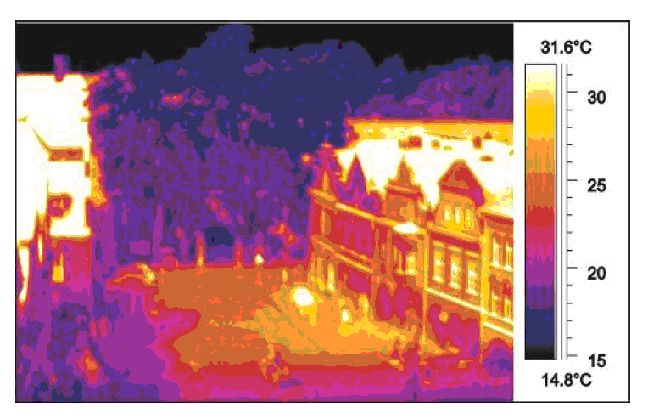 Photograph of the square and adjacent park in Trebon, Czech Republic, taken with a thermal camera. The differences in temperatures between the vegetation, facades and roofs of the houses – from 15°C (59°F) to 30°C (86°F) – are visible.
[From New Water Paradigm, p. 33]
There’s a group of Eastern European scientists who’ve written a book called The New Water Paradigm: Water for the Recovery of the Climate. I have to say, it fairly blew my mind. Co-author Jan Pokorny, a Czech scientist, explains how evapotranspiration, the upward movement of water through plants, is the “most powerful vehicle for solar energy transformation” in existence. Living plants transpire, which is a cooling mechanism. When soil is covered up, paved over, or dried out, there’s no transpiration and the ground heats up – as is happening more and more in the middle of the country, our once vaunted “breadbasket” – as well as around the world. If we focus on keeping soil moist and covered with plants, we can build microclimates of cooling. Microclimates can eventually add up to macroclimates, and this shifts multiple dynamics that affect climate.
It’s useful to consider that water vapor is the predominant greenhouse gas in the atmosphere, not carbon dioxide. Water vapor makes up between 1 and 4 percent of the atmosphere, whereas carbon dioxide is 0.0397 percent (that’s the parts-per-million figure we hear about.) Water has a greater capacity to absorb thermal energy than any other known substance. At the same time, it’s in constant flux, moving through the atmosphere and between forms, shape-shifting from gas to liquid to solid and back again. For this reason water vapor is hard to measure and plug into climate models.
We don’t have to wait for carbon dioxide levels to come down in order to mitigate climate change – we can begin to restore the water cycle, which will in turn restore ecosystems. Moreover, we need to do this. For here’s what we don’t talk about when we talk about climate change: we can draw all the carbon out of the atmosphere that we want and still have the problems we now associate with CO2-driven climate change. As Walter Jehne, a soil microbiologist and Director of Healthy Soils Australia puts it:
Water is not a secondary feedback; it can be used as a primary vehicle of climate relief.
========================
Water for the Recovery of the Climate – A New Water Paradigm, is available at http://www.vodnaparadigma.sk/indexen.php?web=./home/homeen.html. Michal Kravcik, one of the authors of the New Water Paradigm, blogs on the California water crisis:
http://www.goldmanprize.org/blog/michal-kravcik-reflects-california%E2%80%99s-water-crisis
Carbon Farming: Paying for Results, Not for Data (Soils Are Far Too Important for a Commodities Market!)
By Adam D. Sacks, Executive Director
At Biodiversity for a Livable Climate, removing carbon from the atmosphere by regenerating ecosystems and restoring biodiversity is our non-profit mission. Supporting farmers, herders and ranchers around the world to work in ways that both sequester carbon in soils and provide major benefits in productivity is a key means to that end. Unfortunately, the resources that carbon farmers need to accomplish this are currently in short supply. We need to develop a conceptual framework outside the current carbon-market mechanisms to advance the soil solution to global warming, and to provide funds, training and supplies that make worldwide carbon farming on billions of acres a reality.
To date, market mechanisms have been the primary basis for addressing the growing atmospheric carbon burden. Carbon credits for carbon stored or not released employ trading schemes to offset emissions that are in theory capped by national governments and international protocols, in particular Kyoto. Values are assigned to carbon emissions in the expectation that as emissions become more expensive, emitters will find it more economical to prevent emissions or to pay other enterprises that are somehow keeping carbon out of the atmosphere (“offsets”).
From the overall perspective of annual carbon emissions and growing greenhouse gas concentrations, carbon markets have not worked. While there may have been localized successes around the world in a variety of verified carbon offset projects (e.g., http://www.scsglobalservices.com/verified-carbon-offset-projects), presumably making climate acceleration less bad, the market approach of commodifying carbon has not achieved significant or meaningful results in any practical sense. There is little reason, other than market theology, to believe that any such outcome will occur in anything resembling a reasonable climate time frame.
Furthermore, many objections have been raised to carbon markets, for example with respect to prevention of deforestation (REDD http://guides.wikinut.com/Global-Warming-and-Deforestation%3A-How-Green-is-REDD/2cf5k_s7/). Assessing results is fraught with methodological questions and arbitrary conventional assumptions that are subject to scientific and political uncertainty. In particular, current belief in direct measurement of soil carbon dictates whether an approach to climate is “legitimate” or not.
These process formalities are, generally speaking, obstacles to the actual and practical sequestration of atmospheric carbon in soils. While valid verification is necessary to justify investing money and resources in carbon farming, a different funding approach, one that is more suitable to the task at hand, is necessary.
Land managers have long known how to determine the health of the soil by visual observation, touch, color, and aroma. We also know that biodiversity in soils is necessary for soil health because, among many things, having thousands of different species of soil biota creates stable biological carbon molecules from atmospheric carbon dioxide captured by green plants through photosynthesis.
From this we can derive a qualitative methodology that bypasses the shifting grounds and uncertainties of quantitative measurement, measurement that is impractical – in terms of time, accuracy, cost and technological requirements – in the context of the necessary and immediate carbon farming in local communities worldwide.
Let me offer a brief example to illustrate. An extreme yet unfortunately common occurrence is desertification. A formerly healthy and diverse ecosystem becomes barren through exploitation, toxicity, misuse and carelessness. This has occurred in many different ecosystems, from grasslands to forests to lakes and oceans.
On a desertified grassland, for example, you will see little but bare soil, perhaps an occasional tree, a few shrubs, some struggling tufts of grass. Ninety-five percent or more of the ground will be naked earth. Such land supports minimal life above and below the surface; because it is dry and crusted, it cannot absorb water, which is sacrificed to evaporation or runoff; and has lost most of its biological carbon to the atmosphere.
Within one to three years of the beginning of an eco-regeneration project, depending on a variety of factors, changes will begin to become apparent. Animals, birds, insects, plants, fungi and microbial life will return. So will water. And so will carbon. It’s simply the way nature works, over millions of years. It’s entirely predictable.
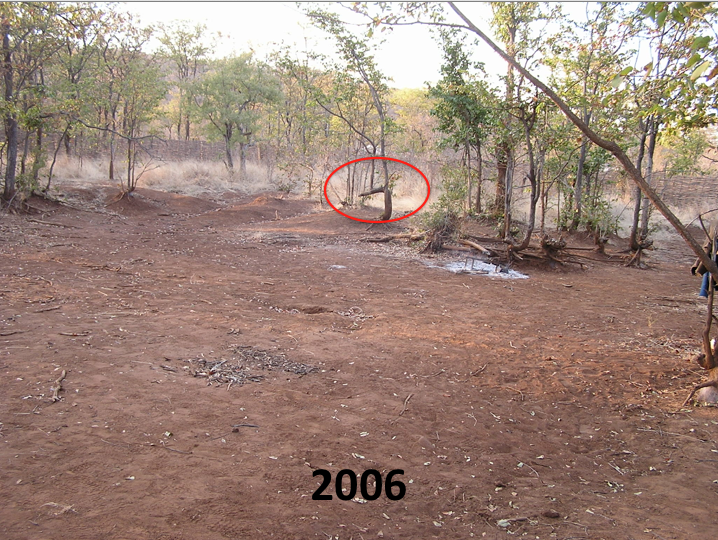
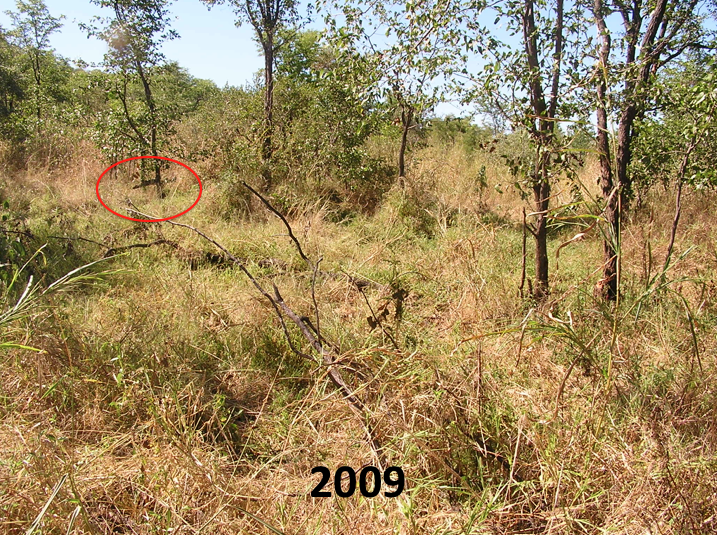
Reversing desertification by applying holistic planned grazing in Zimbabwe
(photos courtesy of the Africa Center for Holistic Management).
Can we say exactly how much carbon? No. Even the best measurements over thousands of acres have significant margins of error. But the point here is that measurement, for all practical purposes of sequestering carbon in soils, is unnecessary. Every blade of grass is literally atmospheric carbon dioxide transformed into solid living matter, no longer polluting the atmosphere and causing global warming. And for each plant that you see reaching for the skies, there is more complex carbon stored in the ground. About this there is no scientific doubt.
Back to the carbon farmers. How can we determine how to pay them for their work, for their extraordinary contributions to reversing climate change? If the commodity model currently in play, which requires quantitative carbon measurement, does not apply, is there a model that does?
While the continued existence of life on earth should not be a business decision (after all, who would profit from a dead planet), we are swimming in a sea of misleading economic models. As a transition, I would suggest that an appropriate one for carbon farming would be the one we use for western medicine.
We pay our health care providers for a service, not for results. In fact, we often pay the most money for services that have the least likelihood of the results we want, such as therapies for life-threatening conditions like advanced cancer or severe trauma. The services we pay for have presumed results, often backed by well-developed science such as antibiotics for non-resistant bacterial infections, but we don’t pay for the results, which are never assured. We demonstrate faith in the providers and pay them for the service, in advance, with zero probability of refund.
I think that this model is appropriate to carbon farming and can provide us with an even higher probability of positive outcomes than mainstream medicine. The way to pay carbon farmers is for their services: to manage land in a way that we know from long experience results in healthier soils and carbon sequestration. The precise quantity of carbon stored is not at issue.
We would monitor species diversity, local water cycle improvement, the percentage of bare land and the observable qualities of soil. These are accurate data easily acquired with no technology beyond pencil and paper. We use such data to assist carbon farmers in improving their process, but we pay them for their work on the process. We do this because we know as a certainty, backed by nature’s millions of years of experience, that the process works in sequestering atmospheric carbon. Paying for the service rather than the outcome also provides security carbon farmers need during years of lowered productivity due to natural and anthropogenic variability of weather. Of course they are also paid for the fruits of their labor in the marketplace, whether crops or animal products.
Removing greenhouse gases from the atmosphere is urgent. There is nothing intrinsically wrong with measuring soil carbon, the issue is that it is a cumbersome and expensive process, and carbon markets are subject to complexities, loopholes and flaws that only slow our response to the global climate emergency.
We need to act now. Soils are the only feasible carbon sink in the time we have left. Millions of carbon farmers, working on billions of acres, are the key.
Why everyone – vegetarians and vegans included – should be passionate about Holistic Planned Grazing
Helen D. Silver, Director of Policy, Biodiversity for a Livable Climate
Happy New Year!

Over the holiday season, I had the luxury of sharing many meals with family and friends, including latkes and apple sauce; Tofurkey and yams; and locally caught shrimp and farm-raised oysters. In discussing my work, I was asked several times, “But how can you not eat meat and be so passionate about Holistic Planned Grazing?”
Easily. Holistic Planned Grazing promotes reversing climate change, restoring grassland ecosystems, animal welfare, and healthier food. That Holistic Planned Grazing offers a sustainable meat source is incidental for most ecological purposes, in particular restoring degraded land (notably, 74% of the land in North America). Such restoration is necessary here and worldwide to avoid the worst impacts of climate change in the near and long term.
Often, dietary choices involve philosophical and ethical questions that can be approached from many perspectives, all of which I respect. Mine is promoting planetary health and animal welfare – my health is a nice co-benefit. The vegetarian/vegan movement has admirably raised the profile of the horrors (both for the animals and the planet) of industrial animal protein production. But this is only one part of the picture.
I became a vegetarian in 1992 – a very different culinary and nutritional time. Even in progressive California, finding a health food store sometimes felt like looking for a liquor store in Utah. Over the past twenty years, I have tried many different diets for environmental reasons – vegan with the exception of fish; complete vegan; lacto-vegetarian; pescatarian. More than thirty years later, being a vegetarian is mainstream and Whole Foods Market is one of America’s most successful companies. Currently, I consider myself a semi-pescatarian – I consume dairy products regularly (for health reasons – quite controversial, I know), but seafood only occasionally (about twice a month).
 A final note of introduction: I have never been a paragon of nutritional virtue or health. I drink more coffee than I care to admit, I am fairly sedentary, and I am almost religious about eating dessert. In fact, health has played an embarrassingly subordinate role in my dietary choices. But here’s the thing: because I consistently eat a diet that is good for the planet, I eat a diet that is good for my health. I say all this to emphasize that I understand that changing dietary habits requires herculean effort.
Along this journey, I have learned many things, but all the complexities generally come down to a simple, inclusive concept: Our health depends on the health of the earth, and how we use the earth determines how healthful are the foods we eat.
We have a tendency to vilify individual foods. Meat is bad! Fat is bad! No, wait, it’s carbs – even the good kind! In reality, it’s the way that we produce and consume food that is the problem, especially when it comes to animal protein.
Health is like everything, including climate change: it’s holistic, a careful interplay of many factors including your genetics, how much you move, your stress level, your environment – and, of course, what you eat. Just as there is no one rule for health, environmental sustainability requires a holistic perspective. An everyday rule of thumb is: the less human intervention that happens between my mouth and the soil or the water, the better the food is for the planet and for me and the animals.
 Imagine everything that happens along the food production line from fertilizers, plowing, injections of antibiotics into animals, to added colors. The problem is that much of what we eat is only a shadow of real food. Beef is a case-in-point. Make no mistake, as compared to fully-pastured beef, the steak you encounter at the market is likely just as processed as a piece of white bread.
Beef produced in CAFOs (concentrated animal feed operations) deserves a particularly prominent place in the agricultural hall of shame. Because cows are eating a diet of grains, which is unnatural to them, they become sick more often and require copious amounts of antibiotics (80% of the antibiotics in the U.S. are used for livestock, including cattle, a public health issue that the FDA is finally addressing).
CAFOs are the equivalent of “concentration camps” for the animals. These smelly, overcrowded factories are also responsible for air pollution (including greenhouse gases) and water pollution. If you live in a water-stressed area and consume locally produced beef (such as in the Southwestern U.S.), avoid industrially produced beef because it can require between 5 and 20 times more water than vegetables, cereals, and starchy roots.
Grass-finished beef, i.e., that which has been raised on grass until the last day of its life, has virtually none of these problems (note that almost all factory-farmed beef is “grass-fed” before it is sent to the CAFO for several months of fattening for market, or “finishing”). First, it has been shown to be of higher nutritional quality, containing more of beneficial fatty acids and a lower Omega 6 to Omega 3 ratio than conventionally raised beef. It tastes far better (to palates that like meat). The animals themselves are healthier, thus requiring less, if any, antibiotic treatment. Grass-finished beef harbors minimal risk of contamination from dangerous bacteria because the animals aren’t confined in tight, crowded conditions. They also impose less water stress than grain-fed beef. However, the devil is in the details – much depends on the actual system of grazing.
 Holistic Planned Grazing is markedly different from the type of grazing responsible for environmental damage, particularly in the Western United States. Unlike conventional grazing, cattle under Holistic Planned Grazing management mimic herds of wild animals, such as buffalo, that are so integral to restoring the formerly vast grasslands – now degraded or desertified. As opposed to conventional grazing, Holistic Planned Grazing contributes to reversing climate change, not making it worse.
Because Holistic Planned Grazing holds such climate promise, as well as restoring ecosystems, improving the quality of life globally, improving animal welfare and the nutritional quality of meat, and is low-tech, sustainable and very inexpensive to boot, implementing it is practically a moral obligation.
Furthermore, I am under no illusion that the world will become vegetarian – nor should it. In some countries, such as those in which the Africa Center for Holistic Management works, for subsistence families livestock are central to providing food and money as well as fertilizer to grow crops. Finally, 1.5 billion people are affected by land degradation every year, making even basic survival difficult. Crops just do not thrive on degraded and desertified land, period.
In addition, Holistic Planned Grazing can halt the loss approximately 3 million acres of arable land a year. We are going to need every bit of fertile soil we can muster to feed the growing human population. The UN Food and Agricultural Organization estimates that by 2050 demand for food worldwide will double and that food production must accordingly increase by 70%.
Finally, land degradation is not simply a problem facing poorer countries; here in North America, we have the highest percentage of degraded land of any continent – at a whopping 74%, much of which is in major agricultural and livestock production areas (no surprise there). Therefore, Holistic Planned Grazing is not a question of whether or not to eat meat; it’s one of regenerating croplands and grasslands worldwide. Thus, my choices are not a rebellion against any single food, but rather against a whole system in which we have been held hostage and passively participate like, well, cows in a feedlot.
Without vast tracts of grasslands, what can we do in New England?
 To pull carbon out of the atmosphere and sequester it in soils, we need to restore biodiversity: that’s the foundation of the whole show. One of the most important visible elements from the perspective of ecosystems is to cover bare ground. Bare ground doesn’t absorb water, it breaks the water cycle, it interferes with the moderating effects of moisture on planetary temperature, it kills soil life, it fails to create carbon storing molecules created by green plants, fungi and microbes. This is less obvious in the relatively wet northeast than in the dry west, but still a real problem here.
Our primary equivalent of bare ground is impermeable surfaces; lawns, a relative biological wasteland, are a close second. So one thing we can actually do here is replace lawns with deep-rooted grasses (what Jackson Madnick tries to with Pearl’s Premium), or even better a biodiverse self-maintaining selection of indigenous and compatible plants. We can promote backyard animals such as chickens and goats, using local manure locally. We can process fall leaves onsite rather than send nutrients elsewhere. We can encourage onsite human waste processing (composting toilets) and work towards eliminating a senseless and totally unsustainable sewage system. We can promote more local food production so New England can once again feed itself. We can depave all but the most essential surfaces (like the bike path!). We can restore brownfields and ruined pastures. We can outlaw unnecessary, noisy and polluting power lawn-care machines. And of course we can educate, organize, and mobilize on a path that’s parallel to but very different from emissions reductions, as well as support grassroots eco-restoration worldwide.
Mostly this is about changing a cultural mindset. That’s one of the problems with the alternative energy approach – it just substitutes one element of an unsustainable lifestyle with something perhaps slightly sustainable, at its essence changing little overall.
The bottom line is that we’re in the throes of the big emergency now, not somewhere down the road. It’s unpleasant to hear that, but as the climate crisis grows more urgent I think we need step up to the actual reality and leave the wishful thinking of political “reality” behind.

Breaking News!
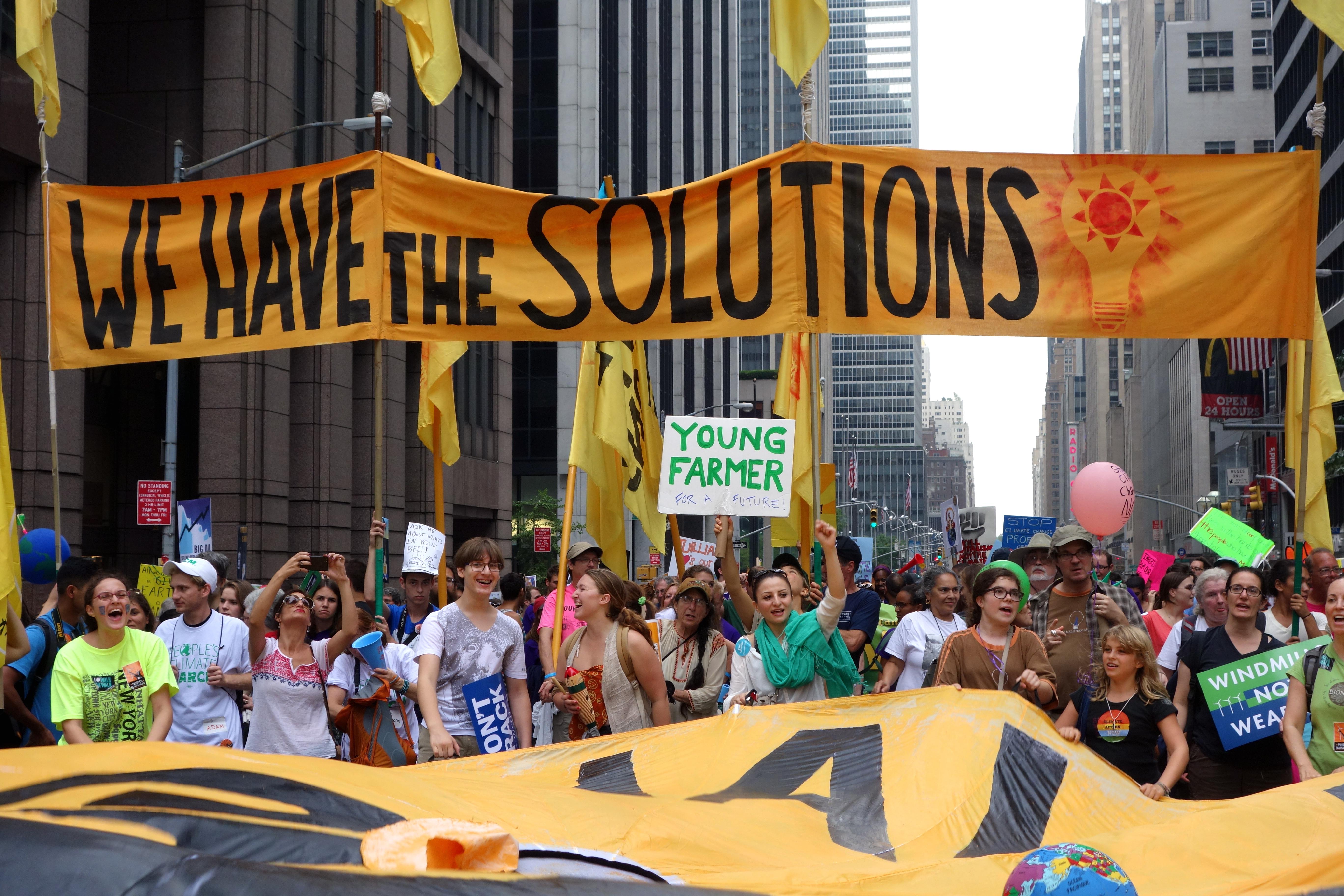
A one-day conference on Saturday, September 26, 2015 in Washington,DC sponsored by the DC Chapter of Biodiversity for a Livable Climate. It’s part of the Moral Action for Climate Justice organized by a broad coalition around the Pope’s visit to Congress. Meet us in DC for this milestone event, and sign up for our special conference here.
And of course . . . . .
Sign up for our October ground-breaking conference on regenerating a biodiverse and healthy planet :
Restoring Water Cycles to Reverse Global Warming
Did you know . . .
- Properly managed water cycles can cool the earth’s lands while we reduce greenhouse gas levels in the atmosphere
- The largest terrestrial carbon sink on Planet Earth is soils
- Soils hold more carbon than the atmosphere and all plant and animal life combined
- Human mismanagement has caused more carbon to be lost to the atmosphere from soils than is currently up there today, causing an excessive and dangerous greenhouse effect
- We know how to pull all excess carbon out of the atmosphere through eco-restoration, using nature’s own unique invention that’s 3.4 billion years old, photosynthesis
- We can return to pre-industrial atmospheric carbon levels in a few decades or less, and cool the biosphere even faster than that
- Eco-restoration brings extraordinary benefits aside from addressing climate change: increased food production, sustainable local economies; elimination of toxic fossil-fuel-based soil inputs; reduced regional conflicts (food and water wars); significant mitigation of drought, floods and violent weather; and climate and environmental justice
- It is very low- to no-tech
- All of this, in the global economy, returns far more than it costs: the entire world, humans and non-humans alike, makes a “profit”!
- When we restore water cycles, a natural process during eco-restoration, we cool the surface of the earth and reduce or prevent many adverse effects of excess heat-trapping greenhouse gases
If all of this sounds too good to be true . . . well, the natural world is like that here on Earth . . . our extraordinary blue-green planet is the only one known to be brimming with life among the billions of celestial bodies in the universe.
The mainstream climate conversation still has not embraced the power of nature to heal what humans have wrought. And yet, nature is poised for us to play a positive role among life on earth.
Read on for more information, and be sure to sign up for . . .
Restoring Water Cycles
to Reverse Global Warming

Tufts University
Medford, Massachusetts, USA
October 16-18, 2015

And check out Michal Kravcik’s Global Action Plan
for the Restoration of Natural Water Cycles and Climate!
* * *
We now have three highly successful conferences behind us on the road to restoring ecosystems to reverse global warming:
- Tufts University in November 2014 (check out the unsolicited rave reviews as well as the videos of the speakers),
- Bristol Community College in February 2015, and
- Harvard Science Center in May 2015.
Videos of speakers as well as their slide shows are available on the program pages for all the conferences. In the planning stages is a major conference in the Washington, DC area in the late fall or spring. In the meanwhile, we look forward to seeing you at Tufts in October!
Our Work: Restoring Ecosystems to Reverse Global Warming
Biodiversity for a Livable Climate brings you information about decades of scientific research and the practical experience of land managers around the world. We work to remedy the information gap in mainstream climate advocacy which tells us that virtually the only practical effective action we can take is to reduce fossil fuel emissions. There is another way. One foundational approach is Holistic Management as applied to billions of acres of grasslands worldwide, where soils have the potential to store enough carbon to reduce atmospheric carbon concentrations significantly. In addition, we are fully supportive of reforestation, ocean regeneration and other restorative endeavors, all of which return essential health, climate stability and diversity to the biosphere.
Primarily based in the physical sciences, climate scientists generally do not yet recognize what life scientists and ecologists have long known: the power of life has molded almost every aspect of the physical earth, including the climate. Wise human management of the biosphere can undo the eco-mess we have created, and regenerate a planet that we can live on.
While reducing emissions is of critical importance, there is far more that we can and must do, especially considering that emissions reductions efforts have to date been insufficient and even if emissions were to go to zero today, we would still be faced with catastrophic effects of climate change.
According to the 2013 Intergovernmental Panel on Climate Change (IPCC) report:
A large fraction of anthropogenic climate change resulting from CO2 emissions is irreversible on a multi-century to millennial time scale, except in the case of a large net removal of CO2 from the atmosphere over a sustained period . . . (p. 26, emphasis added)
We have lost far more carbon to the atmosphere from soil disruption since the beginning of agriculture than we have added by burning gas, coal and oil. We must do something else: Through eco-restoration and regenerative agriculture, we can take gigatons of carbon out of the atmosphere and put it back into the ground.

The American Dust Bowl, 1930s. Tons of carbon are moving from formerly healthy soils to the atmosphere. Since the beginning of agriculture, worldwide soil degradation from farming, deforestation and other human activities has caused more greenhouse gas pollution than all the carbon currently in the atmosphere.
We know now that the safest and most effective approach to reducing atmospheric carbon is to capture it with millions of species of green plants, animals, insects, fungi and micro-organisms, which bury it deep in soils in carbon-rich molecules that are stable for centuries or longer. In the process, because complex organic carbon molecules retain many times their weight in water, we restore vibrant life to billions of acres of parched, desertified areas that were once healthy forests or grasslands.
There’s more good news: with biodiversity and eco-restoration we can unite people, organizations and governments, even those who have been fighting and maneuvering for advantage for decades. Everyone will agree that a magnificent stretch of wooded hills or green fields of grasses full of life are preferable to those rendered parched, cracked, barren and lifeless due to human misuse. Therefore, the mission of Biodiversity for a Livable Climate is to promote seeing the world in wholes to re-establish biodiversity and the water cycle, store carbon in the soils, maximize photosynthetic solar energy capture, eliminate bare soils and reverse global warming by applying regenerative approaches to the land worldwide. 
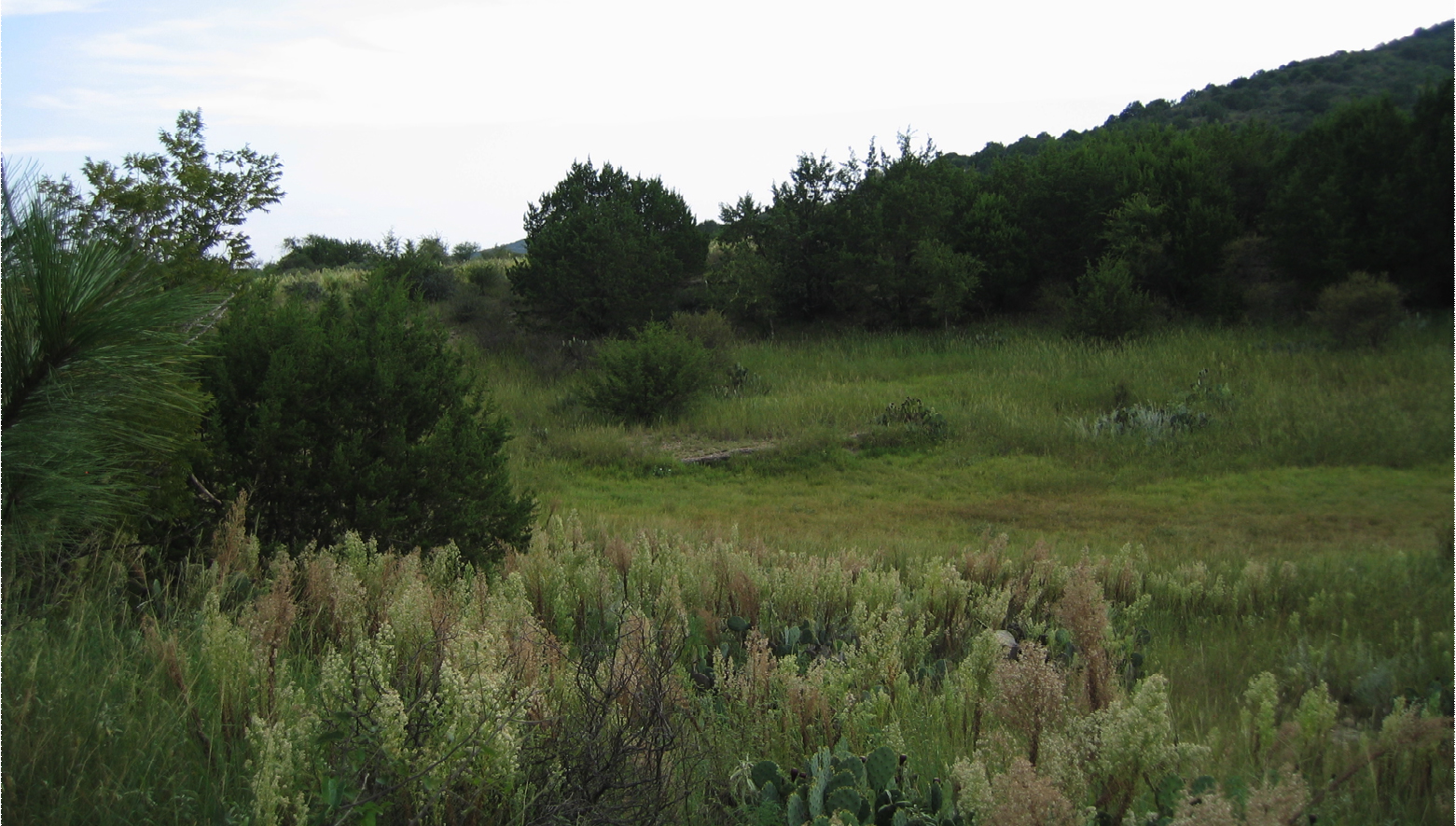
Site in the Chihuahan Desert in Mexico before and after restoration with Holistic Planned Grazing. There is roughly six times more water captured in the ground by plants (bottom photo) than there was in the artificial pond (top photo).
==========
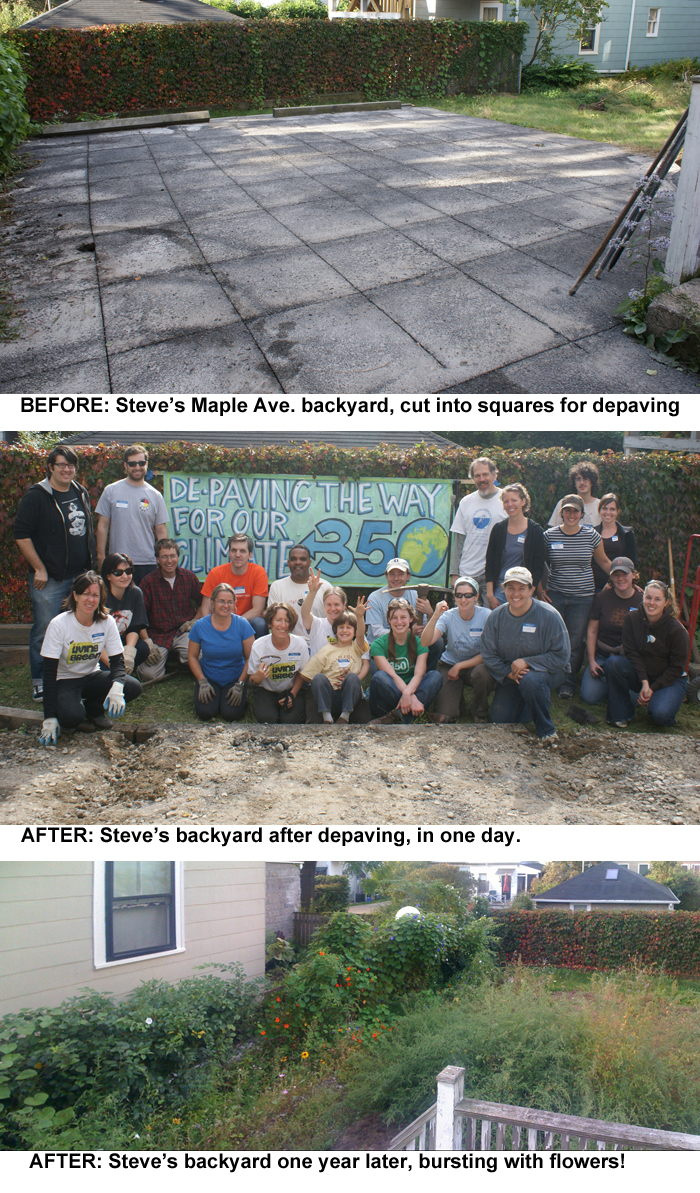
Above: Depaving in an urban environment (Somerville, Massachusetts) to recreate healthy soils. Carbon dioxide, along with water, is the basic and primary building block of plants. Now that the asphalt is gone, all the carbon you see as leaves and flowers is carbon that’s no longer polluting the atmosphere and causing a greenhouse effect.
Contact: info (at) bio4climate.org