
Home Program Speakers Registration Sponsors/Partners
Our program will address science, land management practices and activism. There will be ample time for Q&A, and attendees and speakers are encouraged to attend the entire conference insofar as possible in order to be available for thought-provoking dialogue and creative networking. On Sunday afternoon there will be ad hoc workshops presented by attendees and speakers, an activity that was very popular last year.
We are telling the story of water.
Today’s story is grim.
 Without water there is no life, and today the earth’s water cycles have been disrupted and damaged by human activity. Billions of acres worldwide have already been turned to deserts by mismanagement, and more are on their way. Thirst and drought prevail, paradoxically interspersed with devastating floods. We face massive loss of food along with the loss of water, and the loss of life that inevitably follows.
And yet . . . ther e’s another story to tell, one of abundance of water, food – and hope!
We know how to turn the water story around – and quickly – restoring drylands, dried wetlands and the biodiverse living abundance that water brings. Even the driest state in the U.S., Nevada, is turning wet again with proper management that reintroduces and supports key species such as beaver. Simultaneously such eco-restoration can pull gigatons of carbon out of the atmosphere and into the soils, to return greenhouse gases to pre-industrial levels, quite possibly in a matter of a couple of decades or less.
Our approaches are broadly applicable, inexpensive and low- or no-tech. We promote ways that nature has been developing for millions of years, ways that created once gloriously life-rich habitats across the globe. If this all sounds too good to be true – well, the natural world is like that when we give it a chance!
Join us as we tell this new water story, covering the science, the land management practices and the activism that will make it all come to pass. And check out Michal Kravcik’s Global Action Plan for the Restoration of Natural Water Cycles and Climate!
Friday Evening – Introduction and Overview
6:00 – 9:00 p.m.
Welcome to a Water Story Untold
Adam Sacks, Executive Director of Biodiversity for a Livable Climate, will introduce the conference – how and why we got here, and where we aspire to go.
Water and Climate: An Overview
Journalist and author Judith Schwartz will give us an overview of water cycles from the point of view of a concerned citizen: What are the connections between water and climate? We hear about drought, extreme heat events, as well as bizarre storms and flooding. How is water a central element acting on the climate? She will share the investigations leading to her next book on water, due out in spring 2016.
Civilization and Water: Scarcity, Abundance, and the Road Less Traveled
Canadian water activist Maude Barlow has been involved for over two decades with issues of globalization affecting natural resources and community economies. Since 2000 she has also collaborated periodically with Slovakian hydrologist Michal Kravčík, whose own activism and leadership in his native land forms a basis for a broader and more constructive activism. She will discuss the background of the global water crisis.
The New Water Paradigm, Part I: The New Water Reality
Innovative Slovakian hydrologist Michal Kravčík will give an introduction to his New Water Paradigm and the critical importance of regional or “small” rainwater cycles. The result is a set of empowering ecological concepts that enable people everywhere to secure clean and adequate water, prevent floods and drought and moderate local climate, simply by harvesting rainfall. Since the 1990s he has demonstrated these concepts in his native Slovakia.
Preparing for the Promise of Abundance
To close the evening, Judy Schwartz will moderate a panel discussion including audience participation, featuring Maude Barlow, Michal Kravčík, and writer Jan Lambert.
Saturday Morning – The Remarkable Story of Water in the Biosphere
9:00 a.m. – Noon
The Natural History of Water on Earth
Australian soil and climate scientist Walter Jehne will discuss how the five kingdoms of life have created water cycles, moving water through sea, soil and air, navigating tumultuous changes through geological ages to the present, and how the human presence has brought earth’s systems into a crisis in which water is also the potential vehicle for stabilization and renewal.
The New Water Paradigm, Part II: Digging Deeper
Michal Kravčík will guide us through the concepts of the New Water Paradigm in greater detail, showing how water cycles can be supported to enhance local climates and biodiversity, and how this understanding can broaden and enhance our strategies for addressing climate change.
Miracle in the Nevada Desert
The restoration of ground water in the driest landscape of North America, the Great Basin of Nevada, has been a dramatic success story. Beavers have begun return to the American West, representing a powerful step in restoring the land and transforming water cycles. Fisheries biologist Carol Evans has worked with ranchers in Nevada since the 1970s to support beaver habitat on grazing lands, with dramatic results replenishing groundwater levels and restoring surface brooks and ponds – even in areas with only 10 inches annual rainfall (by contrast, temperate Massachusetts receives 45 inches of rainfall a year). Adding the perspective of a rancher, Jon Griggs of Maggie Creek Ranch will tell us about the history, wildlife, and return of long lost biodiverse species. If we can do it in Nevada, we can do it anywhere. California, listen up!
Nature Wants to Be Wet
Restoration ecologist Jim Laurie will illuminate the vital connections between water cycles and biodiversity, describing numerous keystone species - from microbes and worms to beavers, burrowing animals and ruminants – which increase water infiltration and retention in landscapes. By partnering with these species we can jumpstart the restoration of stable local water cycles. Jim will also introduce home-schoolers from his Advanced Placement Biology course last year. They will describe life from the points of view of the creatures who play key roles in living soils, full of water. They’ll tell us what it used to be like in North America before 1500 A.D., what it’s like now, and what it could be like again.
Telling the Water Story to the People
Foster Brown, Amazonian ecologist, will give an introduction to the interactive methods he uses to teach forest ecology.
Lunch
Noon – 1:30 p.m.
At 1 p.m., Fiddlin’ Quinn and His Big Folks Band welcome us back. Foot-stompin’ music not to be missed!
Saturday Afternoon – Where the Water Hits the Riverbed
1:30 p.m. – 5:00 p.m.
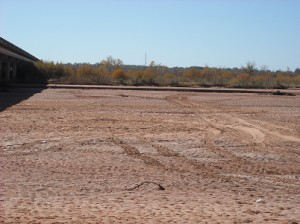
Red River, Memphis, Texas
Our Saturday afternoon speakers will present a vivid montage of water restoration success stories from around the world.
Rain, Rain, Come our Way!
Jan Lambert will introduce, by way of photos and illustrations, the richly varied ways in which rainwater is now being successfully restored into landscapes. From holistic green pastures in America to green roofs in Scotland, from using beaver dams as models for water retention to jumpstarting new forests by curbing erosion, huge strides are being made in forest, farm, desert, and city to renew the water cycle, reduce floods and drought and renew hope for nature and humanity.
The New Water Paradigm, Part III: Small Water Cycles in Action
Michal Kravčík will introduce numerous examples of restoration, and the many ways in which the New Water Paradigm can be applied in both urban and rural areas, from temperate to tropical. The goal is to retain water in the land and increase vegetation to augment the cycling of water through transpiration.
The Tijuca Story: Reforestation and the Biotic Pump
Tom Goreau will tell of the successful reforestation centuries ago of the mountains surrounding Rio de Janeiro, and will describe the workings of the “biotic pump” by which forest transpiration supports healthy precipitation across wide areas.
Seneca Meadows, a Wetland Reborn
Steve Apfelbaum of Applied Ecological Services will describe the restoration of Seneca Meadows Wetlands Preserve, a 600-acre wetland project in which 450 acres of wetlands were built from the ground up. An example of managed eco-restoration, combining planned species plantings and natural successions.
Community Grazing for Community Abundance
Precious Phiri of Zimbabwe will discuss the managed grazing of ruminants from the perspective of how it opens soils for water – and raises water tables and brings back surface water for crops, domestic animals and wildlife, along with a surge of biodiversity and productivity for humans and many other species.
Permaculture, Perma-Water
Glenn Gall will moderate a panel of speakers on the groundbreaking work done by many permaculture practitioners, and the central part which water plays in permaculture design. Discussion will include methods such as keyline, subsoiling and grazing, where water has become the focus of land management.
Sunday Morning
9 a.m. – Noon
Activism Meets Restoration: Water, Water Everywhere!
Policy Panel: Building Water Cycles into the International Climate Debate
Walter Jehne, Tom Goreau and Michal Kravčík will explore how we can use the vital knowledge of water cycles to expand the climate conversation, taking it beyond its current focus on carbon dioxide reduction to deploying methods for hydrological cooling that directly relieve climate extremes. Michal will introduce us to his recently-drafted Global Action Plan for the Restoration of Natural Water Cycles and Climate.
Activist panel: Empowering Water Restoration
Jan Lambert will moderate a panel including Maude Barlow, Walter Jehne and Precious Phiri, who will consider numerous examples of restoration and many ways to apply the New Water Paradigm no matter where you live. The panel will address water supply and water rights at the heart of many conflict and crisis zones throughout the world. as well as the potential for building mass support for water restoration and the empowerment of thousands of people working in their communities.
Maintaining Forest Cover and Biodiversity in Amazonia
Foster Brown and Tom Goreau will review the conditions of the forests of the Amazon, and the work being done to protect and restore the biosphere as a whole system, not simply a collection of trees awaiting commercial harvest.
Closing the Nutrient Loop: Creating Abundant Clean Water
Jim Laurie has used natural biological processes to turn some of the most toxic and polluted effluent around – both sewage and industrial waste – into clean, clear water.
Lunch
Noon – 1:30 p.m.
Sunday Afternoon
1:30 – 5:00 p.m.
Our Collective Water Genius
This conference feature was very popular last year as we welcome the initiative of attendees and speakers alike to spend the afternoon in breakout workshops. Participants can plan and post their own workshop topics to our sign-up board during the weekend, and we’ll have time for several workshops during three 1-hour sessions.
We will spend the afternoon in workshops given by anyone who has knowledge and experience in water issues and eco-restoration. Participants – speakers and attendees alike – will add the topic of a workshop to our sign-up board, and we’ll have time for several workshops during two 1.5-hour sessions. A highly popular activity last year.
Closing Remarks
Home Program Speakers Registration Sponsors/Partners
