Featured Creature: The Eastern Screech Owl

Photo by Bitnik Gao
Photo by Bitnik Gao

Meet the Eastern Screech Owl

It’s 9:30 on a cool summer night in the Upper Valley—the orogenous area surrounding the Connecticut River in New Hampshire and Vermont. My friends and I are making the steep journey up the unfamiliar grass-covered slopes of the Dartmouth Skiway. With sleeping bags, no signal, and only a slight idea of where our cabin is, we trek upwards using our phones’ flashlights. We hear the crunch of leaves under our feet, unspecified animals rustling, and echoes in the woods. Some of the less outdoorsy members seem on edge, eager to reach somewhere with walls and a roof. A loud whine startles Tom, not helped by the stories we’ve told of potential bear and coyote sightings. I chuckle and affirm, “Tom, that was an owl.” 

Photo by Wolfgang Wander

Adapting to Urban and Suburban Life

Identifiable in the darkness by its tremolo, an even-pitched trill that bounces through the trees, the eastern screech owl (Megascops asio) is one of the most common owls across the United States. They inhabit the Great Lakes down to the bottom of Texas, and from western Kansas to the Atlantic coast (Cornell Lab of Ornithology, 2024). Throughout such a vast range, they have adapted well to living alongside humans; it is one of the few birds of prey (raptors) that nest in New York City and other urban settings. Unlike many other raptors, the eastern screech owl has demonstrated a positive relationship with lower forest cover. In smaller green spaces, such as suburban parks, they thrive where larger predators cannot, thereby facing less competition for available prey (Nagy, 2012). However, smaller urbanized parks with impervious surfaces restrict their populations. Additionally, residing in concentrated residential or commercial areas increases their risk of human-related mortality and restricts movement to other populations. 

Challenges of a Changing Climate

Eastern screech owls face danger from increasing development and changing conditions caused by climate change. A 30-year study in Texas, where annual temperatures rose by more than 20℉ due to the heat-island effect, saw changes in the timing of hatching (Gehlbach, 2012). Temporal change can alter how species intermix with their food, prey, and habitat as they adapt at different rates and may fall out of their population niches. 

Masters of Camouflage and Adaptation

Photo by Anne-Marie Gionet-Lavoie

Their ability to thrive in such myriad environments comes from their variations in size and color. Their heights vary from roughly 6 to 10 inches, and their wingspan from 18 to 24 inches. This, combined with their lack of a neck, raised ear tufts, and short tail, gives them a rounded, unintimidating shape. Their smaller size contributes to their ability to camouflage into their environment. Most plumage ranges from grey to brown to a rusty red, adapted to the environment around them. Populations in southern states, like Texas, typically see higher numbers of red, and Northern states find more grey. In evergreen or deciduous forests, the eastern screech blends in meticulously with the trees (Lockwood, M. W., 2021).

This adaptation allows eastern screech owls to make quick work of their wide variety of prey. It’s a resourceful bird, consuming small rodents like mice, smaller birds, and insects. It plays an important role as a mesopredator, a mid-ranking role in the food web, that keeps lower populations in check, while also serving as prey for others. Still, their camouflage protects them from such predators. Larger owls and hawks, mammals like raccoons and mink, and even interspecies hunting by other eastern screech owls look to them for food; don’t be fooled by their small packages, these owls are fierce! (Chesapeake Bay Program). Whether waiting to swoop down from their perch, or in some cases fishing at water edges, the eastern screech owl is prepped to use its clawed feet against any foe (Peregrine Fund).

Conservation and Coexistence

While the eastern screech owl is resilient, they’re at risk too. By protecting existing populations through green spaces and human-based amenities, like nest boxes, we can contribute to their preservation. Community-led efforts like “Lights Out” campaigns, designed to reduce bird collisions and habitat disruptions, can also help. 


Ryan Hill is currently an undergraduate student at Dartmouth College studying Environmental Studies and Studio Art. He is passionate about the conservation of local biodiversity and learning more about the ecosystems that make up our planet. He takes artistic inspiration from the natural world and admires the beauty of small insect colonies, to widespread old-growth forests.


Dig Deeper

Cornell Lab of Ornithology. (2024). Eastern Screech Owl – All About Birds. https://www.allaboutbirds.org/guide/Eastern_Screech-Owl 

Nagy, C. M. (2012). Population dynamics and occupancy patterns of eastern screech owls (megascops asio) in new york city parks and adjacent suburbs (Order No. 3499268). Available from ProQuest Dissertations & Theses Global. (931548247). Retrieved from https://dartmouth.idm.oclc.org/login?url=https://www.proquest.com/dissertations-theses/population-dynamics-occupancy-patterns-eastern/docview/931548247/se-2

Lockwood, M. W. (2021). WESTERN SCREECH-OWL and EASTERN SCREECH-OWL. In Basic Texas Birds (pp. 172–173). University of Texas Press. https://doi.org/10.7560/713499-082

Peregrine Fund. (n.d.). Eastern Screech‐owl (Megascops asio). The Peregrine Fund. Retrieved [9/18/25], from https://peregrinefund.org/explore-raptors-species/owls/eastern-screech-owl peregrinefund.org

Chesapeake Bay Program. (n.d.). Eastern Screech Owl. Chesapeake Bay Program Field Guide. Retrieved [9/19/25], from https://www.chesapeakebay.net/discover/field-guide/entry/eastern-screech-owl

Gehlbach, F. R. (2012). Eastern Screech-Owl Responses to Suburban Sprawl, Warmer Climate, and Additional Avian Food in Central Texas. The Wilson Journal of Ornithology, 124(3), 630–633. https://doi.org/10.1676/11-157.1

Featured Creature: Tamarack

What tree wears needles in summer, gold in autumn, and nothing at all in winter, yet never forgets to bloom again?

Photo by Adrianna Drindak

The trees are silent. Last fall’s leaves crunch under my feet as I follow a faint trail through the woods. I know every rock and overturned leaf of this forest. Here I trampled over ferns, snowshoed in the light of a full moon, splashed in the gentle brook, and wandered for hours upon hours of my childhood. I wander back into these woods, dense with Eastern Hemlock, American Beech, hobblebush, trillium, and suddenly I’m young again, young enough to only see the beauty in the world, and I’m home. The old trail fades, and it’s time to journey beyond, along a path that lives in my mind like a memory. I recognize the surrounding trees, the pull of a small clearing in the distance. I may be off the trail, but I know where to walk, which steps will lead me through the thicket of trees, curving past the rickety rock wall, down by the bog, where a grove of evergreens grows, hemlocks and pines, and where a rare find in this forest thrives. Meet the tamarack.

In this forest, at the foothills of the Adirondacks, tamaracks are an uncommon sight. I’ve wandered through these woods for years, and these are the only ones I’ve been able to find. The marsh here, tucked into the creaky wood, creates an ecosystem where the tamarack thrives. Just beginning to grow, this small pocket of evergreens and tamaracks reminds me to remember my roots, deep in the bog, on a path I’ve come to know.

The name “tamarack” originates from “Hackmatack”, which is an Abenaki word meaning “wood for making snowshoes.” (Source) Tamaracks (Larix laricina) are found throughout North America, including all Canadian provinces and territories (Source). These trees thrive in bogs, but are also found in upland areas in the northern extent of their range (Source). 

Tamarack trees are special. Known as deciduous conifers, they shift their appearance through the seasons. “Deciduous” refers to trees that drop their leaves for a portion of each year, while “evergreen” trees keep their leaves throughout the seasons (Source). “Conifer,” on the other hand, defines the tree as one that reproduces using a cone structure, thus a cone-bearing plant (Source). While many conifers are evergreen, the tamarack is rare in its ability to drop and regrow its needles in response to seasonal changes throughout the year. In bundles of 10 to 20, the needle clusters of these trees fade from a vibrant green to bright yellow during the fall months, alongside many other tree species in the northeast (Source). These yellow needles fall as the cold weather returns, a golden blanket over the tamarack’s roots (Source).

By Adrianna Drindak

It has been years since I visited this small pocket of tamaracks in person. Yet I am here often in this is the place of my dreams. It has always been a place of wonder and peace, which lives on in my imagination. I close my eyes, and I’m back there, winding between trees, following the path imprinted in my soul. This is a place I know. How powerful it is to know the trees, the esker that runs along through the forest, the curve of the river as it bends away from my course.

I know this place, but it’s changed – I’ve changed. I’m not the same young girl who used to look for colorful rocks in the riverbed, my camera steady in my hands as the heron landed gracefully in its nest, and observed the beaver dams protruding from the murky marsh. But this place will always be a part of me, no matter where I find myself in the future, no matter how much I change, no matter how much this forest changes. The little pocket of evergreens and whimsical tamaracks, tucked in the bog entrenched in my memory, continue to grow, evolving and shifting with the seasons. There is such beauty in change.


Adrianna Drindak is a rising senior at Dartmouth College studying Environmental Earth Sciences and Environmental Studies. Prior to interning at Bio4Climate, she worked as a field technician studying ovenbirds at Hubbard Brook Experimental Forest and as a laboratory technician in an ecology lab. Adrianna is currently an undergraduate researcher in the Quaternary Geology Lab at Dartmouth, with a specific focus on documenting climate history and past glaciations in the northeast region of the United States. This summer, Adrianna is looking forward to applying her science background to an outreach role, and is excited to brainstorm ways to make science more accessible. In her free time, Adrianna enjoys reading, baking gluten free treats, hiking, and backpacking.


Dig Deeper

Featured Creature: Great Basin Bristlecone Pine

What creature stands still for thousands of years, weathering wind, drought, and time itself, yet still grows inch by inch in the high mountains out west?

Image credit: Adrianna Drindak

I’m standing next to one of the world’s best timekeepers. The timekeeper keeps the time for thousands of years, and right now, I hold just this moment. The ground is loose, with the rocks shifting under my weight. There’s not a cloud in the sky, with the vibrant blue bringing the seemingly drab landscape to life. I take a deep, relishing breath. The air in these high altitude mountains seeps into my soul and lives in my veins. It is here, where the air is precious, the sky is close enough to touch, and the silence encompasses your being, that I truly feel at home. 

In this alpine ecosystem, I share a few moments of time with the oldest living non-clonal organism on Earth – the Great Basin Bristlecone Pine (Pinus longaeva). Scattered in pockets across California, Utah, and Nevada, these trees thrive in rugged environments above 5500 ft (Lewis, 2024, p. 4). The Great Basin Bristlecone Pine (GBBP) is tolerant of drought conditions and bends in response to intense winds. Old needles are able to continue essential photosynthesis functions, with some staying on the tree for up to 35 years. Each century, these trees grow about 1 inch in diameter (Lewis, 2024, p. 4). In their ability to thrive at elevation and to grow unhurriedly, these trees are the embodiment of longstanding resilience. When people talk about the GBBP, they talk about the depth of time captured within the roots, trunk, and gnarled appearance. I’m standing by this mighty being for just a millisecond in its lifespan. My feet touch the same rocks into which the roots extend, we both take a breath of the same brisk mountain air, and the same wind bends our bodies to and fro. At this moment, we are the same.

Adrianna Drindak

While the jagged mountains loom above and the bristlecone pine latches to the tough soil, I know the landscape has not always been this way. The Earth is ever-evolving. It tugs and pulls, compresses and tenses, and takes on new forms from recycled material. Let’s look back to the formation of these mountains, and the creation of a harsh alpine environment in eastern Nevada. This region is known as the Basin and Range, and is defined by flat landscapes and steep mountain ranges, which form as a result of tectonic plate movement. As the Earth’s crust stretches, it fractures and creates faults in the bedrock. The extension that defines the Basin and Range region forms horsts and grabens, which form the steep mountains and flat, sediment-rich plains that we navigate today. Many GBBP are found in the high-reaching regions of the horsts of these geological formations. The Snake Range, home to Great Basin National Park and many GBBPs, formed as a result of crust extension in the region about 35 million years ago.

Flash forward in time to the Quaternary Period, which began about 2.6 million years ago. The Earth went through a series of glacial and interglacial cycles, which involved the cooling and warming of the planet due to changes in Earth’s orbit and the radiation reaching Earth’s surface. The glacial periods are marked by the growth of glaciers, which are masses of accumulated ice, sediment, and rocks that shape local landscapes. During the Quaternary Period, glaciers carved out the basins and ranges of Nevada. After a period of cooling in the Holocene, an epoch within the Quaternary that began about 10,000-12,000 years ago, a series of rock glaciers formed throughout the Snake Range. These glaciers are coated with thick layers of debris that increase resistance to melting. To this day, a rock glacier persists at the foot of Wheeler Peak, with a sea of GBBP towering above.

About 5,000 years ago, a monumental moment took place on Wheeler Peak. A seed drifted in the wind. It floated through the breeze, gliding down before landing gently on the exposed, rocky surface. This little seed grew into one of the oldest GBBP – named Prometheus.

Graduate student Donald Currey studied glacial landforms near Wheeler Peak during the 1964 summer field season. He received permits from the U.S. Forest Service to collect samples from many of the bristlecone pines in the area to learn more about the glacial geology underneath. This study of the bristlecone pines was designed to look at seasonal changes in growth. One tree on the mountain, Prometheus, was thought to be 4,000 years old. Currey identified this famous tree, and sources debate over what happened next. But at the end of the day, Currey had research permits and cut down the tree, only to find that Prometheus was about 4,900 years old – making this ancient tree the oldest documented. From this catastrophic discovery came the protection of this species. Researchers have since found trees of similar age in the White Mountains of California. 

Adrianna Drindak

Bristlecone pines provide a window into the past, allowing us to see changes in the climate and local environment. The study of climate history is known as paleoclimatology, and tree rings are a common archive for looking into previous conditions. Tree rings are often studied by taking increment core samples, which involve the extraction of cylindrical tubes from the tree’s inner wood, allowing researchers to study the climate without harming the tree. By looking at a tree’s growth, encapsulated in rings of time, scientists are able to see shifts from rainy to dry seasons, evidence for forest fires, and trends in climate over time. However, the record is showing that over the past 50 years, the GBBP has been growing faster. Why? Temperatures are rising, even at high elevation. Soil moisture levels are lower and photosynthesis is amplified. Bristlecone pines could live perpetually in ideal growth conditions (Lewis, 2024, p. 5). Is this still the case, or will climate change affect their ability to grow in high elevation regions?

Bore Sampling
ReBecca Hunt-Foster, NPS Dinosaur National Monument

I’m still standing next to the world’s best timekeeper. The moments that we have shared will live on in my memory. I celebrate this tree, and the complex plate movements and glacial history that molded and carved out this landscape. I wallow in the devastation of cutting down the world’s oldest tree, but also recognize that this action led to increased protection of so many ancient organisms. Great Basin Bristlecone Pines provide an incredible window into the past, allowing us to see how the climate has shifted over thousands of years. Beyond a look into the past, I’ve learned an invaluable lesson – the power of resiliency. GBBPs have adapted to face extreme conditions: rocky soil, intense winds, harsh winter conditions, limited oxygen, and a dry climate. We can also adapt, change, and grow in the most adverse conditions. When my world seems bleak, I’ll hold onto this moment – a powerful reminder of my own strength.


Adrianna Drindak is a rising senior at Dartmouth College studying Environmental Earth Sciences and Environmental Studies. Prior to interning at Bio4Climate, she worked as a field technician studying ovenbirds at Hubbard Brook Experimental Forest and as a laboratory technician in an ecology lab. Adrianna is currently an undergraduate researcher in the Quaternary Geology Lab at Dartmouth, with a specific focus on documenting climate history and past glaciations in the northeast region of the United States. This summer, Adrianna is looking forward to applying her science background to an outreach role, and is excited to brainstorm ways to make science more accessible. In her free time, Adrianna enjoys reading, baking gluten free treats, hiking, and backpacking.


Dig Deeper

Featured Creature: Right Whale

What species fights climate change, creates “surface-active groups,” and shares a home with the Maine lobster?

North Atlantic Right Whale
Image credit: NOAA

That would be the North Atlantic right whale. Hardly an unsung species, this large marine mammal is one of the most critically endangered in the world, with approximately 372 members remaining. Unfortunately for the whale, its story is inexplicably intertwined with that of North Atlantic fishermen, in particular the Maine lobster industry. On the surface, this is a battle between said industry and whale conservationists. But must this story be a zero-sum game?

A Deep Dive

As one of the largest species on the planet, the  North Atlantic right whale can grow up to 14-17 meters long and weigh up to 154,000 pounds. During my research, I was surprised to find that there are three subspecies of right whale, which appear very similar but have lived in genetic isolation for millions of years. In addition to the North Atlantic right whale, there are the North Pacific and South Atlantic right whale species. All three are listed as “Endangered” under the US Endangered Species Act (ESA), a designation that triggers various types of protective legislation. While the North Pacific right whale fares about as well as the North Atlantic under these conditions, estimates of the South Pacific right whale population are as high as 4,000. 

Despite their formidable size, the right whale is a gentle giant. They are incredibly slow swimmers, and can reach swimming speeds of 

 They also use their baleen to filter their food and have diets mainly consisting of copepods. This diet is also part of the whale’s role as a “nutrient cycler” in the ocean ecosystem: by feeding and defecating, the whales provide crucial nutrients to phytoplankton, which helps sequester atmospheric carbon– hence their role as a climate change fighter!

 Right whales are also incredibly social creatures and are often seen vocally interacting on the surface of the ocean in both mating and social settings. These interactions are called surface active groups (SAG), and make for great whale watching. Analogously, the speed, size, and behavior of the right whale led to its persecution by whale hunters for centuries. These actors even named the species, as they were the so-called “right whale” to hunt. The slow-moving, blubber-rich, and surface-active North Atlantic right whale was thus hunted to near extinction several times in history. The first concrete step toward whale protection at an international level occurred in 1946, when the United Nations established the still-active International Whaling Commission. 

The North Atlantic right whale commonly resides on the east coast of the United States and the west coast of Europe. In the states, the whale is known for feeding in the north (especially by Cape Cod and the Gulf of Maine) and calving in the south near Georgia. Afterward, the mothers herd their calves north so they can benefit from the plentiful copepods off the coast of Massachusetts. 

NOAA

It would be a mistake, however, to assume that right whales are entirely bound to such human-mapped migration patterns. This was pointed out to me by Rob Moir of the Ocean River Institute (ORI), who showed me examples of whales breaking these patterns. Notably, the ORI reported an instance of two female right whales, Curlew and Koala, migrating as far south as the Bahamas and as far north as Prince Edward Island. 

This outlier displaying whale intelligence reminded me of a larger point that my professors often make, that discourse around environmental protection sometimes falls into the trap of framing such actions as benevolence on our part. In reality, we share this planet with complex, intelligent species and natural processes, and it is in our best interest to preserve them. I believe wholeheartedly in the importance of functional natural systems. As someone born and raised in Maine, my public school education was full of cautionary tales of how anthropogenic changes can destabilize human lives.

In Maine, we have a long history of learning from unsustainable economic systems the hard way.For better or worse, many livelihoods here are tied to the functionality of our natural resources. In the early 1990s, Atlantic cod stocks virtually collapsed after decades of overfishing. Similar results in the shrimp, halibut, and numerous other populations led many to move into the lobstering industry. Beyond massive job losses, these shifts were particularly painful in a state whose cultural identity rests on continuing these ways of

Lobster vs. Whale

The Maine lobster industry faces numerous threats to its well-being, including legal gains in right whale conservation. In many ways, the continuance of the Maine lobster industry is a bit of a miracle: it is a vintage way of life, an occupation only made possible by stringent and consensual regulations designed to limit overfishing. The catching of egg-laying female lobsters is prohibited, and limits on the minimum size allowed for a harvested lobster are routinely updated. Hauling times are also limited during the summer months, and hauling is prohibited after sunset from November through May. These efforts become more important in the face of lobster northward migration to the Bay of Fundy. The Gulf of Maine is warming faster than 99% of the world’s oceans, creating increasingly less suitable lobster conditions.

When you look at the numbers, the importance of the lobster industry in Maine becomes clear. Estimates from a 2019 Middlebury College study report that the seafood sector provided as many as 33,000 Maine jobs and $3.2 billion in revenue in Maine annually. Although these numbers have since decreased, they stand to represent the strong presence of moneyed interests in the fight against right whale conservation, but also that the livelihoods of ordinary Mainers and New Englanders are at stake. Under these pressures, lawmakers are undoubtedly tempted to side with economic progress over conservation, which begs the question…

What Rights Do Whales Have?

In 1973, the United States government passed the Endangered Species Act (ESA), which holds the federal government responsible for the conservation of species classified as threatened or endangered by the US agencies. In article (a)(1)of Section II, the ESA asserts that species loss is a “consequence of economic growth and development untempered by adequate concern and conservation.” Thus, the framers of this document intended this law to empower the U.S. Fish and Wildlife Service (USFWS), National Marine Fisheries Service (NMFS), and successful plaintiffs to defend endangered animals against economic interests. 

But what, exactly, is the monetary value of a given species on this planet? The 1978 court case Tennessee Valley Authority (TVA) v. Hill, which was the  Supreme Court’s first exercise in interpreting the ESA, explored this question. The plaintiff was second-year Tennessee University Law student Hiram Hill, who sued the TVA to halt the construction of the Tellico Dam. The dam was set to bring immense economic benefits to the area, but would also render the snail darter, a small, endangered fish residing in the ESA-designated critical habitat of the Tennessee River, extinct. 

Tellico Dam, mid-construction.
Courtesy Tennessee Valley Authority

Initially, the courts sided with the TVA. The District Court claimed that protecting the snail darter would create “an unreasonable result,” essentially, that the existence of the snail darter was not worth the price of halting the dam’s construction. Unfortunately for the TVA, such an exemption is not provided for in the ESA. SCOTUS saw this and reversed earlier rulings, siding with Hill. This ruling was not obeyed by Congress, however. A few years later, a small amendment authorizing the TVA to complete the Tellico Dam was thrown into an unrelated bill, which became law. This was illegal and violated SCOTUS’s authority.

At this point, you may be asking what a fifty-year-old court case about a freshwater fish (which did not go extinct, by the way) has to do with the right whale. The answer is quite a bit. In court, the snail darter faced off with the Tellico Dam for the right to exist, with the former providing no major economic benefit and the latter with grand claims that it would. In the end, the fight was not defined by this metric- instead, the highest court in the United States ruled that all species have a right to exist that is monetarily immeasurable.

North Atlantic Right Whale and Fishing Line
Source: NOAA

The Blame Game

The necessary solutions for right whale survival will be disruptive. Organizations such as Oceana name the two biggest threats to right whales as vessel strikes and entanglements with ropes used in fishing equipment (despite decades-old Maine laws mandating weak links and sinking lines to limit whale entanglements). Regarding the latter, the most productive lobster season in Maine and Massachusetts coincides with the right whale’s food-motivated pilgrimage to the same waters. NOAA first officially connected the lobster industry to right whale deaths in 1996 and recommended seasonal prohibitions on fishing.

In 2017, NOAA recorded an “Unusual Mortality Event” where 17 right whales died, many due to fishing gear entanglements. This event spurred many of the modern “whale versus lobster” legal battles and debates we see today. In 2022, U.S. representatives in Congress secured a six-year pause on legislating the lobstering industry in the way of whale conservation, citing a history of sustainable practices in the industry. As a compromise, the bill featured forensic gear-marking requirements and authorized funding for whale-safe ropeless traps. These trap technologies today remain unreliable, despite extra funding. 

The Right Way Forward

What elements define a sustainable policy? In this case, the answer isn’t black and white: it’s not pro-whale or pro-lobster industry. On one hand, the ESA asserts that the North Atlantic right whale has the right to live. On the other hand, the hardships that the lobster industry currently faces are not the result of poor choices made by the industry itself. Climate change is the fault of larger societal processes and decisions, and the lobster fishermen of Maine have long been careful to maintain the size of the local lobster population. As for sustainability in the way of right whales, ropeless traps aren’t currently reliable enough for commercial use: fortunately, the industry has until 2028 to make them so. 

In the meantime, whale conservationists see other solutions to protect the North Atlantic right whale populations. For example, the Ocean River Institute advocates for a designated right whale sanctuary off the coast of Massachusetts. This area, which is already a desirable feeding area for right whales, would be administered by a diverse advisory council of interested parties, including scientists and representatives of the fishing industry. If the area in question were to become designated under the National Marine Sanctuaries Act, fishing of any kind would include restrictions on commercial fishing and types of gear.

Proposed Right Whale National Marine Sanctuary
Ocean River Institute

Furthermore, the ORI sees the planting of Miyawaki forests in Massachusetts coastal towns as a tool to improve the lives of right whales. Beyond causes of mortality, whales suffer when polluted stormwater enters their habitat. This process can lead them to ingest pollutants that cause illness and infections. Additionally, contaminated stormwater can cause algae blooms and deplete the nutritional quality and availability of copepods. One way to limit stormwater runoff into the ocean is to create land conditions where water can be absorbed. Miyawaki forests are excellent at this task: their loose soil and dense vegetation (which is meant to mimic an old-growth forest for rapid plant growth) is perfectly suited to absorb large amounts of water. This could improve conditions for right whales off the coast of Massachusetts and beyond. 

As a self proclaimed “policy person,” the lack of legislative progress on climate and conservation issues is incredibly frustrating. I also believe that the government owes a fair solution to the lobster industry. Delivering justice in this situation would therefore be a complex process- fortunately, we can initiate and foster change at an individual level.

**Special thanks to Rob Moir (Ocean River Institute) and Taylor Mann (Oceana) for providing information for this piece!


Alexa Hankins is a student at Boston University, where she is pursuing a degree in International Relations with a concentration in environment and development policy. She discovered Bio4Climate through her research to develop a Miyawaki forest bike tour in greater Boston. Alexa is passionate about accessible climate education, environmental justice, and climate resilience initiatives. In her free time, she likes to read, develop her skills with houseplants, and explore the Boston area!


Dig Deeper

Featured Creature: Coast Redwood

What species is the tallest tree in the world, produces fog, and provides habitat for many organisms?

Adrianna Drindak

Let me introduce you to this ecosystem, beginning with a moment of meeting.

The metal boardwalk presses into my back, creating small indentations along my spine. A few meters away, a stream whispers, with the sound of swirling eddies lingering in my ears as the water glides and splashes. The surrounding ecosystem dazzles with green as the ferns dance from the nudge of a passing breeze. There is a deep silence in this forest. A silence that penetrates your soul, a true peace that quiets every internal murmur. Your attention drifts away from both the mundane and real challenges of the world, and shifts to look one way – up.

Now, let’s go for a walk to see the tallest trees in the world. 

Adrianna Drindak

We step foot into the forest, with gigantic trees limiting our vision of the sky above. Today we’ll be meandering through the forest, stopping to explore and learn more about the vitality of the coast redwoods and the critical roles they play in this environment. But what does a redwood look like? The tallest known coast redwood is 379 feet (115 m) tall, which is similar to about 38 regulation height NBA hoops stacked on top of each other. This tree has a diameter of up to 26 ft (8 m) which is the equivalent to the length of about one stretch limousine. Recent research has found that there is more carbon stored aboveground in old-growth redwood networks than any other forest system. 

Where did these enormous trees, towering above our heads, come from?

There are three species of redwoods found around the world, with each organism populating different biomes: Coast Redwood (Sequoia sempervirens), Dawn Redwood (Metasequoia glyptostroboides), and Giant Sequoia (Sequoidendron giganteum). The redwoods originated from conifers that grew alongside dinosaurs in the Jurassic period, about 145 million years ago. With shifts in the climate, the redwoods became constrained to their present geographic regions. Today the Dawn Redwood is found in central China and the Giant Sequoia thrives in the rugged terrain of the Sierra Nevada Mountains in California. The Coast Redwood is distributed along the coast of southern Oregon and northern California, and stands as the tallest known tree species on the planet. 

Adrianna Drindak

We are walking down a gentle dirt path, deep within a redwood forest along the California coast, with our necks craned upwards to the giants above. As we wander amongst the trees, some over 2,000 years old, the branches above our heads are draped with lush greenery. Ferns, saplings, lichens and mosses rest within the tree; not causing harm, rather living peacefully from a higher viewpoint. These plants reposed in the canopy of the coast redwood are referred to as epiphytes. The quiet flutter of other biota sounds from above, such as the endangered Marbled Murrelets chirping from a nest and Wandering salamanders leaping between branches. The rumbling of a stream nearby is a reminder that while we cannot see below our feet, the redwoods are also building relationships below. Coast redwoods shade these aquatic environments and reduce erosion, which cools these areas for salmon populations. In exchange, the salmon provide marine nutrients to the ecosystem and the coast redwoods as they reproduce and decay. 

Fog weaves through the afternoon sunlight, making our vision of the path ahead hazy. We pause, with one of the redwoods extending far below our feet, roots entangled with a neighbor, and many meters above our heads, branches draped. This redwood does not only provide habitats for a wide range of organisms, but also facilitates the local climate to support them. Redwoods play a central role in the water cycle of this coastal ecosystem, particularly through their relationship with fog. Coast redwoods require increased moisture levels to reach such extraordinary heights, and use a chemical called terpene to remove moisture from the air. This chemical causes these water droplets to condense, which creates low-lying clouds. This cycle of fog production, fueled by the nearby ocean, sustains the growth of redwood forests.

Adrianna Drindak

The fog slowly lifts and we continue our walk on the dirt path. The forest rustles as we reach a fallen redwood, obscuring part of our trail. The giant lies on its side, resting, with an immense root system exposed. There are ferns and mosses that have grown from the tree and a banana slug inches across the surface, leaving a slimy trail on the rough bark. Fallen redwoods give back to the community in many ways. The Yurok people have cultural traditions that involve working with fallen redwoods to create canoes and other structures. David Eric Stevens, a Yurok Canoe Builder, tells us the story of how the redwood canoe originated. “There’s a story of a redwood tree that wanted to live among humans, and the creator gave him the opportunity to live among humans by giving us canoes.” The canoes carved from fallen redwoods can take approximately seven years to create. Canoe Captain Julian Markussen describes, “If you take care of them properly, they can last for over 100 years.” These fallen redwoods continue to live even after falling, whether that be as habitat for organisms or in an extended life as canoes. 

We step past the fallen redwood to continue our meander, dodging the ferns sprouting from the decaying bark. But as we walk, something changes in the forest. The redwoods seem to reach further and expand wider. The vegetation is more vibrant and green than anywhere else in the forest. The sunlight trickles through the branches above, dancing between lichen-covered branches. This is an old-growth redwood forest. Old-growth forests are hubs of biodiversity, with these trees acting as central to underground communication networks, providing habitat, and facilitating an interconnected ecosystem. The few trees that surround us are some that have been protected from historical logging in the region, as only 5 percent of these ancient coast redwood forests remain. We pause here and take a step back in time. There are hundreds of years of history captured in the lush undergrowth and full canopy.

We have reached the end of the path, emerging from the cool shade. We turn to look back, marveling once more at the incredible organisms we had the opportunity to meet. Coast redwoods regulate this vibrant, green ecosystem, endless beyond our sight. It is time to leave this magical forest, with the magnificent, ancient giants that shoot up out of our eyes’ reach. We have peered into an interconnected world, where these trees interact with the atmosphere, flourishing plant life, and abundant critters. There is a pause before we turn to go. What does this forest teach us?

I think back to that moment of meeting, lying on the boardwalk looking up. My first encounter with the coastal redwoods was magical, to say the least. There are no words to describe the might of these ancient beings, as their uppermost branches, or crown, beckon you to look up. In the sharing of gentle silence, as I laid down on the boardwalk surrounded by an ecosystem teeming with life, I dared my eyes to look farther and memorize every detail. I felt a deep desire to cherish and protect these organisms, and to share my joy for the incredible ways they shape their ecosystems and our planet. Most of all, the redwoods revived a deep sense of wonder. This wonder, inspired by such magnificent organisms, pulls you to be present. Just by nature of being and interacting with the redwoods, these trees inspire care, generosity, and resilience. How lucky we are to walk amongst such powerful beings.


Adrianna Drindak is a rising senior at Dartmouth College studying Environmental Earth Sciences and Environmental Studies. Prior to interning at Bio4Climate, she worked as a field technician studying ovenbirds at Hubbard Brook Experimental Forest and as a laboratory technician in an ecology lab. Adrianna is currently an undergraduate researcher in the Quaternary Geology Lab at Dartmouth, with a specific focus on documenting climate history and past glaciations in the northeast region of the United States. This summer, Adrianna is looking forward to applying her science background to an outreach role, and is excited to brainstorm ways to make science more accessible. In her free time, Adrianna enjoys reading, baking gluten free treats, hiking, and backpacking.
Dig Deeper


Featured Creature: ‘Ōhi’a Lehua

What tree has adapted to grow directly in lava rock and is a keystone species of the Hawaiian watershed?

‘Ōhi’a Lehua (Metrosideros polymorpha)!

Image Credit: Kevin Faccenda via iNaturalist 

The first time I saw the vibrant blossoms of the ‘ōhi’a lehua tree, I was walking on a dirt path in Kauai’s Waimea Canyon State Park, gaping down at the most colorful red and green gorges I had ever seen. Needing a breather from the steep visual plunge, I looked up from the canyon and noticed bright red flowers on the side of the path. As I got closer and could see the plant more clearly, the first thought that popped into my head was how similar the flowers looked to those fiber optic light toys I had played with as a kid. (If you don’t know what fiber optic light toys look like, look them up. You’ll see exactly what I mean.) 

After my trip to Waimea Canyon, I saw ‘ōhi’a lehua everywhere. When I drove along the coast between the beach and the sloping mountains, when I hiked the volcanic craters of Haleakala, and when I visited parks and gardens across the islands that protect native plants and animals. ‘Ōhi’a lehua is the most common native tree in Hawaii, so seeing its fiery red, orange, or yellow blossoms every day felt so very ordinary. But ‘ōhi’a lehua is far from ordinary.

Let Me Introduce You to My New Friend, ‘Ōhia Lehua

Endemic to the six largest islands of Hawaii, ‘ōhi’a lehua is the dominant tree species in native forests, present in approximately 80% of the total area of these ecosystems and covering close to one million acres of land across the state. Depending on where exactly it grows, its size can vary widely, from a small shrub to a large tree. Found only in the Hawaiian archipelago, ‘ōhi’a lehua grows at elevations from sea level to higher than 9000 feet, and in a variety of habitats like shrublands, mesic forests (forests that receive a moderate amount of moisture throughout the year), and more wet, or hydric, forests.

You can easily identify the ‘ōhi’a lehua blossoms by their mass of stamens – the part of the flower that produces pollen – which are slender stalks with pollen-bearing anthers on the end. It’s what made me think the ‘ōhi’a lehua looked exactly like those fiber optic light toys. These powder puff-like flowers are most often brilliant shades of red and orange, but yellow, pink, and sometimes even white ones can be found.

‘Ōhi’a lehua grows slowly, reaching up to 20-25 meters (66-82 feet) in certain conditions.

With a little help from the wind, the seeds of ‘ōhi’a lehua travel from the tree and settle in cracks in the ground of young lava rock. It is, in every sense, a true pioneer plant. As one of the earliest plants to colonize and grow in fresh lava fields, ‘ōhi’a lehua stabilizes the soil and makes it more habitable for other species.

Even though ‘ōhi’a lehua can blanket Hawaii’s native forests, this flowering tree also grows alone, as you can see in the photograph below. Plants like ‘ōhi’a lehua fill me with happiness because they are able to grow in the most harsh, barren, and disrupted places, and they make it possible for other species to do the same. Plants like ‘ōhi’a lehua fill me with surety that even though sometimes poorly treated, the natural world will continue to be strong. Plants like ‘ōhi’a lehua make me believe in the resilience of nature.

Arid, rocky, Mediterranean coast. (Via Pexels)

How ‘Ōhi’a Lehua Cares for the Hawaiian People

Biodiversity forms the web of life we depend on for so many things – food, water, medicine, a stable climate, and more. But this connection between human beings and natural life is not always clear, understood, or appreciated. But there is a concept in Hawaiian culture called aloha ‘āina, or love of the land, which teaches that if you take care of the land, it will take care of you. The ‘ōhi’a lehua in particular takes care of the Hawaiian people in a pretty special way. 

One of the most important characteristics of this flowering evergreen tree is that it’s a keystone species, protecting the Hawaiian watershed and conserving a great amount of water. The way I see it, ‘Ōhi’a lehua is an essential glue that holds Hawaii’s native ecosystems together. The leaves of ‘ōhi’a lehua are excellent at catching fog, mist, and rain, replenishing the islands’ aquifers and providing drinking and irrigation water for Hawaiian communities. ‘Ōhi’a lehua’s ability to retain water, particularly after storms, not only makes that water accessible for other plants, but it helps mitigate erosion and flooding. The tree provides food and shelter for native insects, rare native tree snails (kāhuli), and native and endangered birds like the Hawaiian honeycreepers (‘i’iwi, ‘apapane, and ‘ākepa). ‘Ōhi’a lehua trunks protect native seedlings and act as nurse logs, providing new plants with nutrients and a growing environment.

‘I’iwi, the Scarlet Hawaiian Honeycreeper, perched on an ‘ohi’a tree (Image Credit: Nick Volpe)

The Myth of ‘Ōhi’a Lehua

‘Ōhi’a lehua may have a disproportionately large effect on Hawaii’s ecosystems as a keystone species, but its presence as a meaningful part of Hawaiian culture could be even larger. There are many versions of mo’olelo (story) about the origin of the ‘ōhi’a lehua tree, but the most common one is about young lovers named Ōhi’a and Lehua. Pele, the goddess of the volcano, changed herself into a human woman and tried to entice ‘Ōhi’a. When he denied her, Pele became enraged and transformed ‘Ōhi’a into a tree. When Lehua found out, she was so heartbroken that she prayed to the gods to somehow help her reunite with him. Answering her prayers, the gods transformed Lehua into a flower and placed her on the ‘ōhi’a tree’s limbs. To this day, it’s believed that whenever a lehua flower is picked, the skies will open up and rain will fall, because the lovers have been separated.

‘Ōhi’a Lehua as a Cultural Symbol

In Hawaiian culture, the ‘ōhi’a lehua is a symbol of love, resilience, and ecological harmony. The transformation of Ohia and Lehua into tree and flower represents the inseparable bond between two people who love each other, and between the tree and its flowers. The term pua lehua, or lehua flowers, is often used to describe people who express the same grace, strength, and resilience of the ‘ōhi’a lehua. Pilina, a Hawaiian word that means “connection” or “relationship,” is an important value in Hawaiian culture because it is a critical way for people to connect with and understand the world around them. The ‘ōhi’a lehua tree is a symbol of pilina, and embodies this relationship between the Hawaiian landscape and its people.

The ‘ōhi’a lehua is also incredibly important to hula. Hula is the narrative dance of the Hawaiian Islands, and it is an embodiment of one’s surroundings. Dancers use fluid and graceful movements to manifest what they see around them and tell stories about the plants, animals, elements, and stars. ‘Ōhi’a lehua trees and forests are considered sacred to both Pele, the goddess of the volcano as you may recall, and Laka, goddess of hula. To enhance their storytelling and evoke the gods, dancers traditionally wear lehua blossoms or buds in lei, headbands, and around their wrists and ankles.

The Dependability of ‘Ōhi’a Lehua 

‘Ōhi’a lehua has long been a part of daily life. Historically, the hardwood of the tree was used for kapa (cloth) beaters, papa ku’i ‘ai (poi pounding boards), dancing sticks and ki’i (statues), weapons, canoes, and in the construction of houses and temples. Today, the tree’s wood is used for flooring, furniture, fencing, decoration, carving, and firewood. ‘Ōhi’a lehua blossoms decorate altars for cultural ceremonies and practices. Flowers, buds, seeds, and leaves form the base of medicinal teas that can stimulate appetite and treat childbirth pain.

Threats to ‘Ōhi’a Lehua

As a native tree, ‘ōhi’a lehua competes with invasive species for moisture, nutrients, light, and space. Plants like the strawberry guava plant (Psidium cattleyanum) grow in dense thickets and block the growth of ‘ōhi’a seedlings. The invasive fountain grass (Pennisetum setaceum) can dominate barren lava flows, making it difficult for ‘ōhi’a to compete. ‘Ōhi’a lehua is also threatened by non-native animals. Hooved animals like pigs, cattle, goats, and deer disturb the soil, eat sensitive native plants, and trample the roots of ‘ōhi’a lehua trees.

The most dangerous threat to ‘ōhi’a lehua is a virulent fungus called Ceratocystis fimbriate, which attacks the tree’s sapwood, preventing it from uptaking water and nutrients, and killing the tree within weeks. It’s been given the name Rapid Ohia Death (ROD) because of how quickly it suffocates the tree, turning the leaves yellow and brown and the sapwood black with fungus. Infections spread through a wound in the bark, which can be caused by animals trampling roots, lawn mowing, or even pruning, and can be present in the tree for up to a year before showing symptoms. ROD is spread by an invasive species of wood boring Ambrosia beetle that infests the tree and feeds off the fungus. When colonizing trees, the beetle produces a sawdust-like substance made of excrement and wood particles called frass, which can contain living fungal spores that get carried in wind currents and spread by sticking to animals and human clothes, tools, and vehicles. 

Since its discovery in 2014, ROD has killed more than one million ‘ōhi’a lehua trees across 270,000 acres of land, making it a significant threat to biodiversity and cultural heritage. The International Union for Conservation of Nature (IUCN) classifies ‘ōhi’a lehua’s conservation status as vulnerable, and has recorded a decline in mature trees since 2020. Because ROD can spread long distances, it has the potential to wipe out ‘ōhi’a lehua across the entire state. If ‘ōhi’a lehua disappears, it will lead to a collapse of the Hawaiian watershed and radically change the ecosystem.

How the Hawaiian People Care for ‘Ōhi’a Lehua

Scientists, researchers, and native Hawaiians are working together to ensure the long-term health and resilience of ‘ōhi’a and Hawaii’s native forests by mitigating the spread of Rapid Ohia Death. Hawaii’s Forest Service monitors the land to track the spread of ROD and mortality of trees, has developed sanitation and wound-sealing treatments, and collaborates with hunters and game managers to reduce disease transmission. Scientists rigorously test ‘ōhi’a trees to understand the disease cycle, find out how it can be broken, and to identify trees resistant to the infection that could be used in potential reforestation efforts. 

To prevent the spread, Hawaii has announced quarantine restrictions, travel alerts, and sanitation rules. If you are shipping vehicles between islands, you should clean the entire understory with strong soap to remove all mud and dirt from the tires and wheel wells. People who go into ‘ōhi’a forests are advised to avoid breaking branches or moving wood around, to clean their shoes and clothes, and to decontaminate any tools used with alcohol or bleach to kill the fungus. Even hula practitioners are forgoing the use of ‘ōhi’a lehua.

Orange ‘ōhi’a lehua blossom (Image Credit: Joan Wasser via National Park Service)

Mālama the ‘āina

Mālama the ‘āina is a phrase that means to care for and honor the land. ‘Ōhi’a lehua is a wonderful representation of the interconnection between people and nature and I hope learning about this beautiful tree has encouraged you to appreciate the relationship we have with the Earth and what the natural world does for us. 

Remember, if you take care of the land, it will take care of you.

Abigail


Abigail Gipson is an environmental advocate with a bachelor’s degree in humanitarian studies from Fordham University. Working to protect the natural world and its inhabitants, Abigail is specifically interested in environmental protection, ecosystem-based adaptation, and the intersection of climate change with human rights and animal welfare. She loves autumn, reading, and gardening.


Sources and Further Reading:

Featured Creature: Sphagnum moss

What bog-builder can hold 15-20 times its dry weight in water?
Sphagnum moss!

by David McNicholas

The distinctive brown color of Sphagnum beothuk forming a large hummock on a raised bog. (Photo courtesy David McNicholas)

As an ecologist working on Ireland’s peatland restoration, I’ve seen firsthand the profound transformation of re-wetting former industrial peatlands, and its capacity to enhance biodiversity and carbon storage. Working as a member of the Bord na Móna Ecology Team with funding provided by the EU’s Recovery and Resilience Facility as part of Ireland’s National Recovery and Resilience Plan, I’ve have seen more than 60 peatland sites undergo this incredible transformation. Following extensive ecological, hydrological and engineering studies to create the optimal conditions for Sphagnum moss establishment, it is exciting to now move towards the active planting of Sphagnum moss back onto these peatlands. This will accelerate the establishment of Sphagnum-rich bog vegetation that will have greater biodiversity and climate benefits at scale.

Raised bog formation

Sphagnum moss species are key plants in the development and existence of bog habitats. Some species can hold 15 to 20 times their dry weight in absorbed water and tolerate very harsh conditions such as nutrient deficiency, high acidity and waterlogged environments. This ability of Sphagnum to hold water creates the quaky surface conditions that are characteristic of raised bogs in good condition. Bogs simply would not exist as we know them without Sphagnum.

Raised bogs begin to develop in wet shallow depressions, often shallow lakes. Over time, wetland vegetation such as reeds, rushes and other plants leave dead matter behind in the substrate. As the amount of dead vegetation accumulates, the layer of growing vegetation on top is eventually lifted above the influence of the local groundwater. At this point, this layer has become ombrotrophic (exclusively rain fed). The result, in wetter climates, is the development of a wet, nutrient poor and acidic environment in which Sphagnum species thrive. Sphagnum is known as an “ecosystem engineer”. This moss can change its environment, making it wetter and more acidic, suiting these mosses and creating perfect peat-forming raised bog. As the living plants grow upward, the Sphagnum tissue beneath the living surface of the bog is submerged beneath the weight of the growing layer above. This dead material does not completely decay in the anoxic, waterlogged conditions. Instead, it will become peat over time, while the living material will continue to grow, driving the formation of a raised bog dome.

Sphagnum cuspidatum occurring within a bog pool. This species occurs in pools and the wettest parts of peatlands. (Photo courtesy David McNicholas)

Sphagnum’s role in carbon sequestration

The growth habit of Sphagnum is directly responsible for the development of one of nature’s most efficient carbon traps. A metre squared of intact, good quality raised bog sequesters a small amount of carbon annually, but over time these peatlands can accumulate and store much more carbon than the same area of other ecosystems like tropical rainforest. As such, Sphagnum moss is very important to help tackle climate change by taking in carbon and by creating peat-forming conditions to secure this carbon in the ground within healthy peatlands.

The ability of Sphagnum to store water also plays an important role in regulating heavy rainfall events within a catchment. Healthy peatlands can store water in Sphagnum moss, then slowly release this water over time, thereby helping to mitigate potential downstream impacts associated with sudden heavy rainfall.

Sphagnum papillosum, with round leaved sundew growing on top. (Photo courtesy David McNicholas)

Sphagnum as an indicator species

Different Sphagnum species can be used as valuable indicators of peatland type and their overall condition. However, Sphagnum mosses are widely believed to be tricky to identify and so many ecologists simply aggregate them, classifying them as “Sphagnum species”. In doing so, ecologists are forfeiting valuable information on nutrient availability, hydrology and habitat condition that these species provide. Like any other plant group, there are generalist and specialist Sphagnum species. For example, Sphagnum rubellum can be found on nearly any bog habitat in Ireland. Small red cushions and hummocks can be found from relatively dry cutover bog to the wettest parts of an active raised bog.

Sphagnum beothuk has a very characteristic chocolate brown colouring and is one of the prettiest raised bog species. While S. austinii has a range of colours, the large size of the individual capitulums (the top of the plant) and the relative compactness of the hummocks as a whole can be used to reliably identify the species. Both species generally inhabit the wetter parts of a bog and if abundant and healthy, can be used as an indicator of raised bogs in good condition. Sphagnum cuspidatum is one of the most aquatic species and is generally found in the acidic bog pools in the wettest parts of the bog. Interestingly, it can be found within the drainage ditches of industrially harvested bogs where no other Sphagnum species may be present. There are some Sphagnum mosses that are found in less acidic and more nutrient rich, fen conditions. To get to know Sphagnum species is to open a large encyclopaedia on the various natural history processes and conditions of our peatlands. However, don’t be put off getting to know the more readily identifiable species and build on this. Knowing just a few species can really add to the satisfaction of exploring our unique peatlands.

Moss growth (courtesy David McNicholas)

Use of Sphagnum moss in peatland restoration

Planting Sphagnum moss across re-wetted cutaway bog as a rehabilitation technique is a key objective of the Peatlands and People LIFE Integrated Project (IP). We’re on track to plant one million Sphagnum plugs across over 270 hectares of rehabilitated peatland by November 2024, with ambitious plans for further planting in 2025 and beyond.

Revegetating these areas provides new and more resilient habitat over the longer term. Sphagnum moss will recolonise these sites naturally in time; however, the work we’re doing aims to speed up this trajectory, and we’re establishing a network of peatland sites to develop best practices in restoration and rehabilitation. This involves the design of robust methodologies to monitor and analyse Sphagnum and carbon storage.

While monitoring is ongoing and we have a lot of research ahead of us, initial evaluations of the planted Sphagnum material is already showing positive survival and growth rates.

As I continue my work with Bord na Móna, we’re grateful for the support provided by the European Union’s Recovery and Resilience Facility as part of Ireland’s National Recovery and Resilience Plan, a key instrument at the heart of NextGenerationEU. The primary aim of this scheme is to optimize climate action benefits of rewetting the former industrial peat production areas by creating soggy peatland conditions that will allow compatible peatland habitats to redevelop.


David McNicholas is an Ecologist at Bord na Móna where he works with a multidisciplinary team to deliver an ambitious peatland restoration programme, post-industrial peat production. As a member of the Bord na Móna Ecology Team, David is involved in rehabilitation planning and implementation, while also planning and undertaking monitoring and protected species surveys.


Sources and Further Reading:

Featured Creature: Mouse-ear cress

What plant was the first to flower in space and is the most widely used model species for studying plant biology?

Arabidopsis thaliana (Mouse-ear cress)!

Mouse-ear Cress, Arabidopsis thaliana (Image Credit: Brendan Cole via iNaturalist)

If you’re a regular reader of Bio4Climate’s Featured Creature series, you might be wondering why I wrote the scientific name of this organism first, rather than its common name. Arabidopsis thaliana (also known as mouse-ear cress, thale cress, or rock cress) is, in fact, recognized by its scientific name more often because it’s one of the most popular organisms used in plant studies and has become the model system of choice for researchers exploring plant biology and comparative genomics. In fact, it’s often dubbed the “white mouse” of the plant research community, making its common name something of a double entendre.

A. thaliana is a small plant with a basal rosette of leaves (a circular or spiral pattern near the base of a plant) that grows up to 9.5 inches (25 cm) in height, and small white flowers that give the plant its name. Mouse-ear is a member of the Brassicaceae (Brass-si-case-see), or mustard, family, which includes plants like —you guessed it— mustard, along with cabbage, broccoli, brussels sprouts, and radish. While A. thaliana is indeed edible like these more economically important crop plants, its capacity as a spring vegetable is not the reason for its fame. More on that story in a minute.

Native to Eurasia and Africa and naturalized worldwide due to human disturbance, A. thaliana is often found by roadsides and other disrupted (or man-made) environments. You have most likely walked by this cruciferous plant without even realizing it. To many, it’s just another weed (though it’s not actually a weed). A. thaliana is widely distributed in habitats with bare, nutrient-poor soil and rocky areas where other plants struggle to establish, needing only air, water, sunlight, and a few minerals to complete its short six-week life cycle. As a self-pollinating plant (selfer), it can also produce seeds without external pollinators. These characteristics help A. thaliana colonize those barren or disturbed areas, making it a pioneer plant—those hardy plants that pave the way and help initiate the development of a plant community.

What makes Arabidopsis thaliana so important in plant research?

Arabidopsis thaliana’s popularity as a leading research organism really exploded when its genome was fully sequenced in 2000. With relatively fewer base pairs of DNA and around 25,000 genes (other plants can have upwards of 30,000-45,000), the plant’s genetic simplicity —paired with its short life cycle— allows researchers to conduct experiments and analyze how specific genes influence development, physiology, and reproduction. Due to the volume of work being focused on the plant since its genome sequencing, A. thaliana is genetically well-characterized, and it’s become an important model system for identifying genes and their functions.

An invaluable effort supporting this research is The Arabidopsis Information Resource (TAIR). The online database offers open access to gene sequences, molecular data, and research findings, fostering collaboration and accelerating discovery. The Nottingham Arabidopsis Stock Centre (NASC) complements TAIR by maintaining the world’s largest seed collection for A. thaliana. With more that one million seed stocks and distribution networks spanning 30 countries, NASC ensures that scientists have ready access to the genetic material they need to push plant science forward.

Arabidopsis thaliana cultures in agar medium (Image Credit: Laboratoire Physiologie Cellulaire & Végétale: LPCV, or Cellular & Plant Physiology Laboratory)

The plant’s limited space requirements and ability to produce high quantities of seeds and specimens assists in repeated and efficient genetic experiments.

Adept at Adapting

When you think of plants and flowers, words like “fragile” or “delicate” often come to mind. While this may be true, nature is much stronger and more resilient than people first assume. A. thaliana is a prime example of how a small, seemingly weak-looking plant can, in fact, adapt well and keep itself alive. As a plant living in the natural world, A. thaliana has a range of defense mechanisms available to protect against herbivorous insects. Many unique samples of A. thaliana have leaves covered in trichomes, which are bristle-like outgrowths on the outer layer of the plant, that ward off moths and flea beetles. When A. thaliana’s plant tissue is damaged, special compounds call glucosinolates interact with an enzyme, producing toxins that deter most would-be attackers. Studying these Arabidopsis-insect interactions can provide crucial information on mechanisms behind traits that may be important for other plant species.

Using A. thaliana as a research tool has applications for larger, more complex crops. It has furthered our understanding of germination, aspects of plant growth, and been a key to identifying a wide range of plant-specific gene functions.

While A. thaliana has helped form the foundation of modern plant biology, its research informs areas outside strictly plant science as well, including air and soil quality from a public health perspective. A. thaliana can be used as an environmental monitor by tracking its exposure and reaction to different pollutants. This small plant also plays a part in biofuel production and space biology.

Arabidopsis thaliana grown in lunar soil
Image Credit: Tyler Jones via NASA

Did you say space biology?

Yes, I did! Arabidopsis thaliana was the first plant to flower in space in 1982 aboard the Soviet Salyut 7. Due to its research value, to this day is it one of the most commonly grown plants in space. While it’s not a viable source of food, discoveries made using A. thaliana provide insights that can be applied to a variety of other plants. In the inhospitable environment of space, researchers deploy advanced plant habitats (APHs) with automated water recovery, distribution, atmosphere content, moisture levels, and temperature to assess how A. thaliana’s gene expression and plant health changes in space. When the plants are mature, the crew will freeze or chemically fix samples to preserve them on their journey back down to Earth for further study. Experiments to understand how space affects A. thaliana’s growth and development are key to learning how to keep plants flourishing in space and, some day, help promote long-duration missions for astronauts.

Nature’s little secrets

Nature can be found in the most improbable of places. Yesterday, A. thaliana was just a weed, one of the countless others blooming in places we’ve made natural life nearly impossible. Along a busy road or in the cracks of an aging sidewalk. I’ve stepped over it and driven by it every day without thinking twice.

Today, it’s a rugged little plant growing in some of the most unlikely or inhospitable places, not the least of which is about 250 nautical miles above our heads. A. thaliana’s relatively simple and unremarkable nature is precisely what makes it valuable to science, acting as a sort of legend to help researchers study other plants. It makes me wonder what other of nature’s secrets I pass every day, hidden in plain sight.

Remembering to appreciate those little plants growing on the sidewalk,

Abigail


Abigail Gipson is an environmental advocate with a bachelor’s degree in humanitarian studies from Fordham University. Working to protect the natural world and its inhabitants, Abigail is specifically interested in environmental protection, ecosystem-based adaptation, and the intersection of climate change with human rights and animal welfare. She loves autumn, reading, and gardening.


Sources and Further Reading:

Featured Creature: Blue Whale

Which creature who helps fight climate change has newborns the size of an adult elephant and is not a fan of boats?

The Blue Whale!

Photo from National Marine Sanctuaries (via Wikimedia Commons)

Big, bigger, and biggest

Blue whales are the largest creature to ever grace this Earth. They can grow to around 100 ft (33 meters), which is more than twice the size of a T-Rex dinosaur! Newborn calves are around the same size as an adult African elephant – about 23 ft (7 meters). To get more of an idea of how huge these animals are, picture this: a blue whale’s heart is the size of a car, and their blood vessels are so wide a person can swim through them!

Despite their large size, blue whales eat tiny organisms. Their favorite food is krill, small shrimp-like creatures. They can eat up to 40 million of these every day. They do so by opening their mouths really wide, and after getting a mouthful, they’ll close their mouths and force out the swallowed water with their tongue, while trapping the krill behind their baleen plates – this method is known as filter feeding.

Photo by Don Ramey Logan (CC BY-SA 3.0 via Wikimedia Commons)

From coast to coast

Blue whales live in every ocean except the Arctic. They usually travel alone or in small groups of up to four, but when there are plenty of krill to go around, more than 60 of these mega-creatures will gather around and feast. 

Blue whales can communicate across 1,000 miles (over 1600 km)! Their calls are loud and deep, reaching up to 188 decibels – so loud that it would be too painful for human ears to bear. Scientists believe that these calls produce sonar – helping the whales navigate through dark ocean depths.

Climate Regulator

All that krill has to go somewhere, meaning out the other end. Whale poop helps maintain the health of oceans by fertilizing microscopic plankton. Plankton is the bedrock of all sea life, as it feeds the smallest of critters, and these critters then feed larger creatures (and on goes the food chain). Plankton include algae and cyanobacteria that get their energy through photosynthesis, and they are abundant throughout Earth’s oceans. These microorganisms contribute to carbon storage by promoting the cycling of carbon in the ocean, rather than its emission in the form of carbon dioxide.  Without whales, we wouldn’t have as much plankton, and without plankton, the food cycle would collapse, and more gas would rise to the atmosphere. Therefore, whale poop acts as a climate stabilizer.

Learn more about this whale-based nutrient cycle here:

Size doesn’t equal protection

Unfortunately, the sheer size of blue whales isn’t enough to prevent them from harm. Blue whales were heavily hunted until last century, and although a global ban was imposed in 1966, they are still considered endangered. 

Today, blue whales must navigate large and cumbersome fishing gear. When they get entangled, the gear attached to them can cause severe injury. Dragging all that gear adds a lot of weight, so this also zaps their energy sources. Since blue whales communicate through calls intended to travel long distances, increased ocean noise either from ships or underwater military tests can also disrupt their natural behaviors. 

Another threat blue whales face are vessel strikes. They can swim up to 20 miles an hour, but only for short bursts. Usually, blue whales travel at a steady pace of 5 miles per hour. This means that they aren’t fast enough to dodge incoming vessels, and these collisions can lead to injuries or even death for the whales. In areas where traffic is high, such as ports and shipping lanes, this threat becomes even more prominent.

To protect blue whales, and our oceans, we can implement sustainable fishing practices that use marine mammal-friendly gear. We can also reduce man-made noise, and utilize precautionary measures when venturing out to sea. That way we avoid vessel strikes and have a higher chance of witnessing the largest creature to ever grace our planet.

For creatures big, bigger, and biggest,
Tania


Tania graduated from Tufts University with a Master of Science in Animals and Public Policy. Her academic research projects focused on wildlife conservation efforts, and the impacts that human activities have on wild habitats. As a writer and activist, Tania emphasizes the connections between planet, human, and animal health. She is a co-founder of the podcast Closing the Gap, and works on outreach and communications for Sustainable Harvest International. She loves hiking, snorkeling, and advocating for social justice.


Sources and Further Reading:
https://us.whales.org/whales-dolphins/facts-about-blue-whales/
https://www.natgeokids.com/uk/discover/animals/sea-life/10-blue-whale-facts/
https://www.fisheries.noaa.gov/species/blue-whale 
https://www.greatwhaleconservancy.org/how-whales-help-the-ocean

Featured Creature: Northern Red Oak

What statuesque organism is a champion of beauty, hardiness, and capacity to nurture life around it?

The Northern Red Oak!

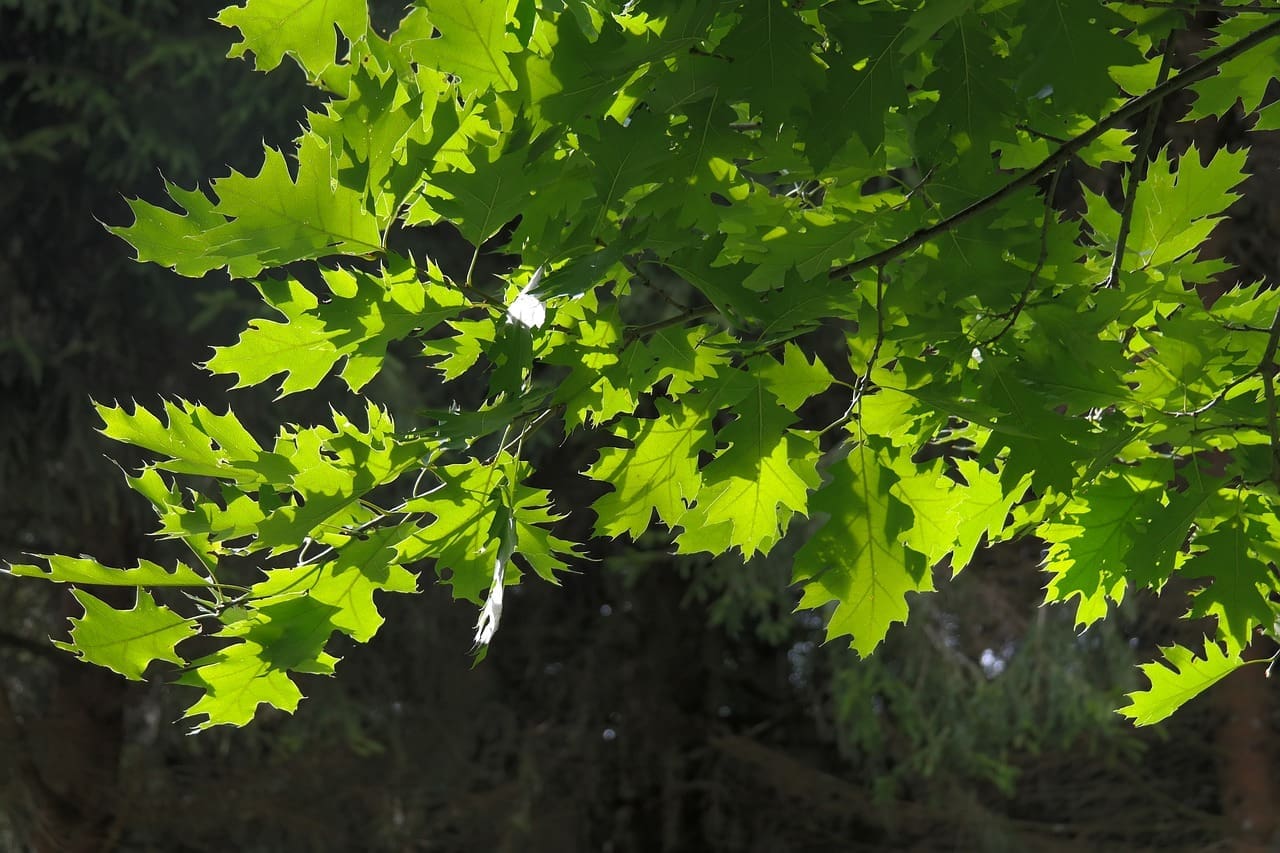
Image by iris4me from Pixabay

In the lush landscapes of North America, the Northern Red Oak stands as a timeless symbol of strength, resilience, and enduring beauty. Revered for its towering stature, vibrant foliage, and essential ecological contributions, this iconic species holds a cherished place in both natural ecosystems and human communities.

The state tree of New Jersey, the Northern Red Oak is sometimes referred to as the “champion oak,” and it certainly qualifies as a biodiversity and climate champion!

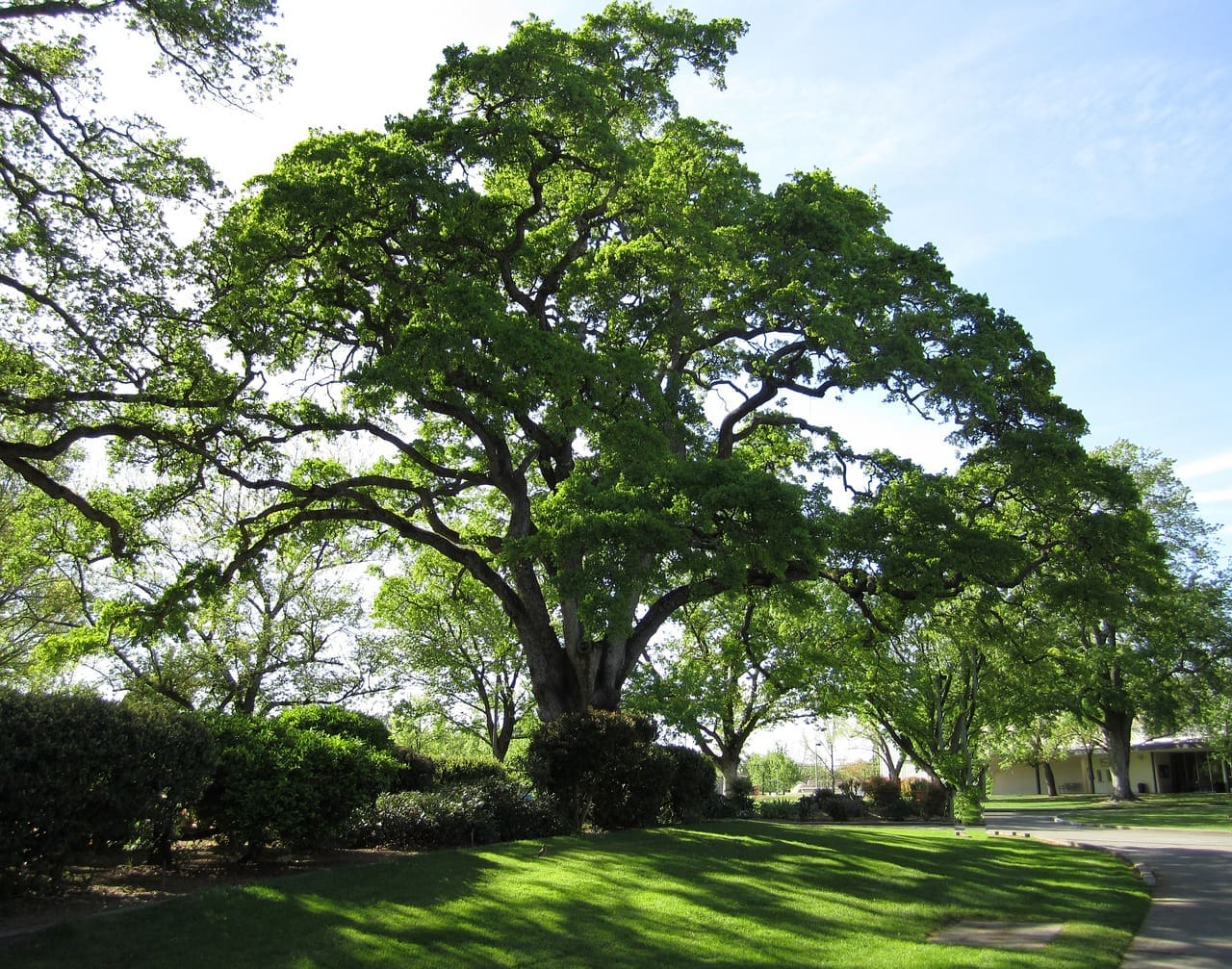
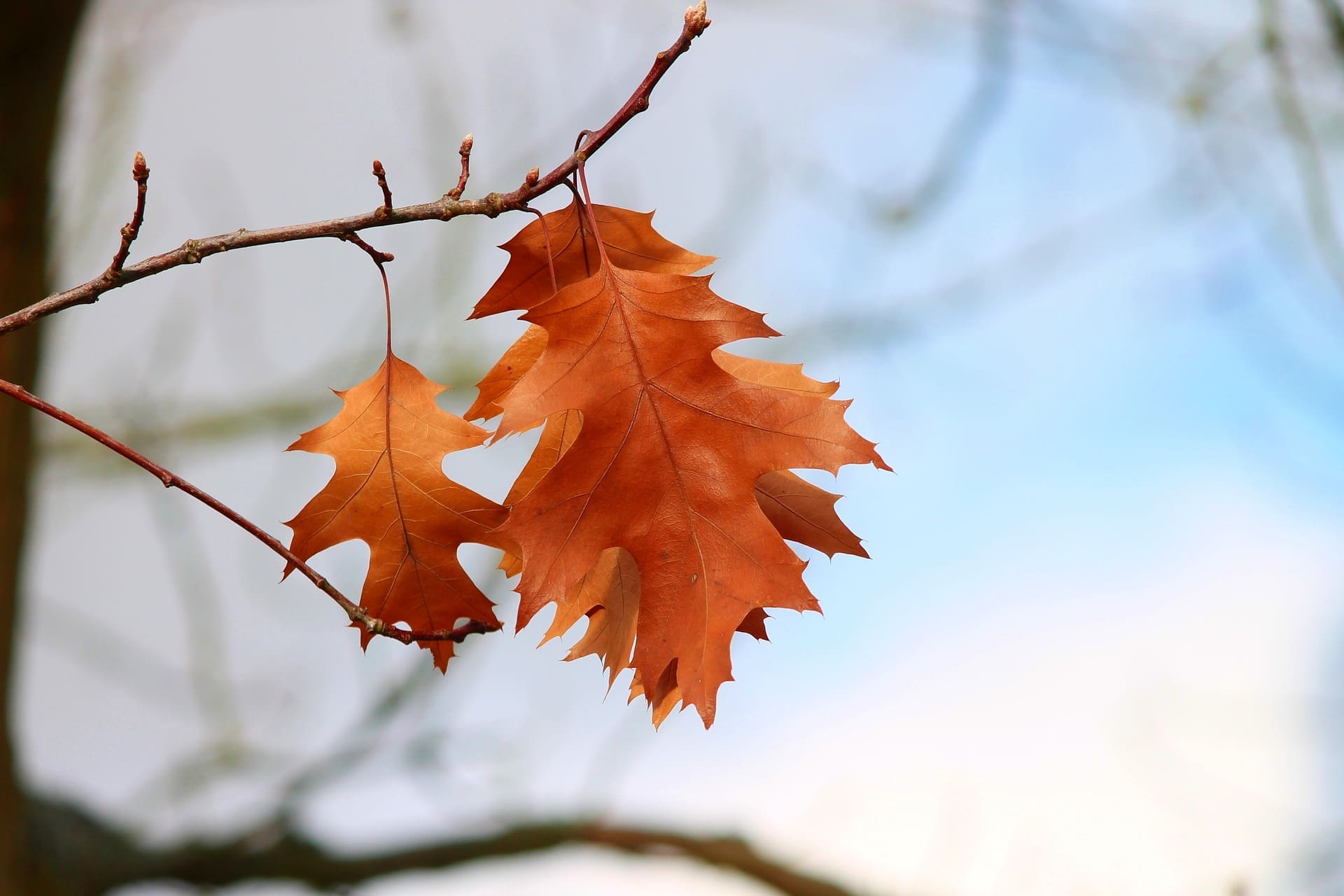
The Northern Red Oak, or Quercus rubra, is an impressive hardwood tree that graces the forests of Eastern and Central North America. Its grandeur is exemplified by its towering height, often reaching between 70 to 90 feet, and its robust, straight trunk. Adorned with deeply lobed, glossy green leaves, the Northern Red Oak undergoes a breathtaking transformation in the autumn, as its foliage turns into a symphony of red, russet, and orange hues, captivating onlookers and adding a burst of color to the landscape. 

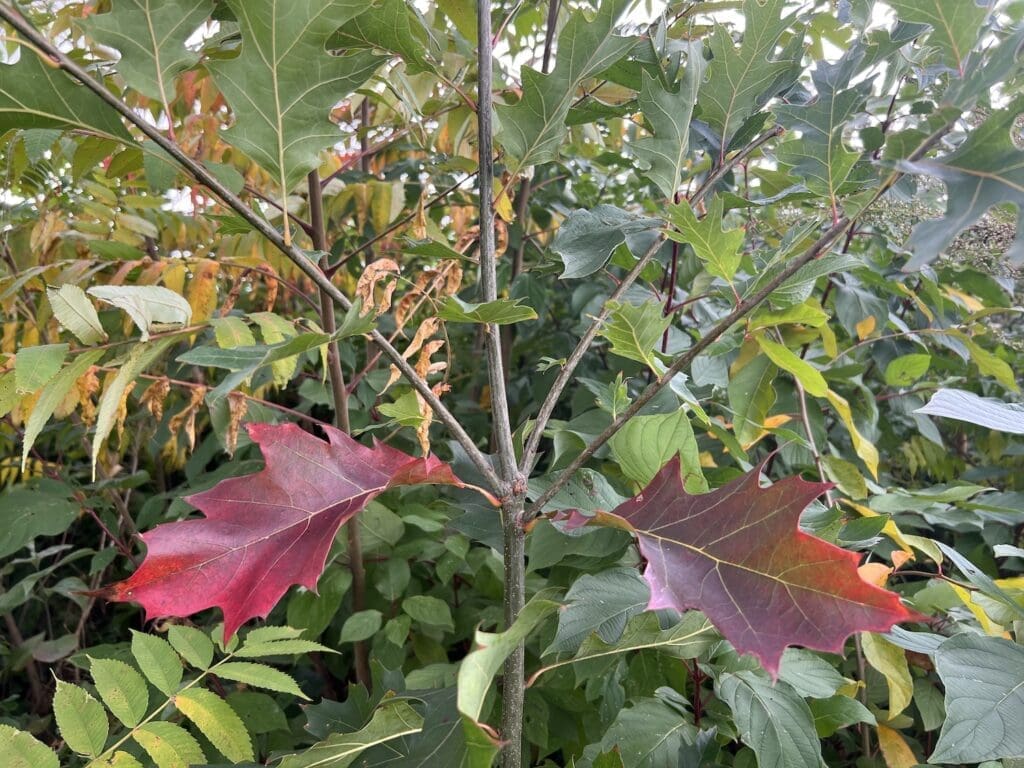
I got to know my oaks over the past few years as I’ve dived more deeply into the native ecology of New England. Like maples and tulip trees, oaks have fairly recognizable leaves, and make an accessible place to start with species identification. It took me a bit longer to discern between different types of oaks, from the sharp edged Northern Red Oak leaves to the rounded edges of the Swamp White Oak leaves, but it’s a satisfying journey to take to get to know these hallmarks of the landscape better. As I learn trees’ names, patterns, life cycles, and roles, I get to establish a greater kinship with these beings, and witness the beautiful ways they interact with the people, birds, insects, and animals in the ecosystem.

Image by Hans from Pixabay

Ecological Support Star

Beyond its visual allure, the Northern Red Oak plays a crucial role in maintaining the health and balance of its ecosystems. Its extensive root system helps prevent soil erosion, and improves the soil sponge for water infiltration, buffering against the intensifying drought and flood cycles affecting our environments. These trees also provide essential food and habitat for a biodiverse array of wildlife. 

As many scientists and foresters are beginning to recognize in greater numbers, the more we can preserve and plant keystone native species of our ecosystems, the more deeply and powerfully those ecosystems can mitigate the extreme effects of climate change and global warming. Healthy ecosystems are full of complexity, and in part it is the relationships between different species of vegetation, fungi, microbes, and wildlife that make the whole so successful. Northern Red Oaks are particularly valuable bulwarks of the forest ecosystems of the Eastern and Central US, where they support almost 500 different of butterfly and moth species, which in turn feed the larger food chain. These trees’ acorns also directly supply vital sustenance for many types of wildlife, including blue jays, woodpeckers, turkeys, squirrels, raccoons, and deer. Finally, as old trees begin to decay and die, their trunks and branches go on to house many animals’ dens and nests, continuing to provide throughout the stages their life cycle. 

The Northern Red Oak has traditionally been valued for its economic significance, which characterizes a lot of the information you can find on this beautiful tree. Revered for its durable wood, the Northern Red Oak is a prized timber species, notable for its strength, durability, and attractive grain pattern. Its wood can be found in various woodworking applications, including furniture, cabinetry, flooring, and veneer. So next time you see a product boasting its oak hardwood, imagine the long history of that material that lies beneath the surface.

Image by Nicholas A. Tonelli from Northeast Pennsylvania, USA, CC BY 2.0 via Wikimedia Commons

Vital and Versatile

Adaptability is another hallmark of the Northern Red Oak, as these trees thrive in a wide range of soil types and environmental conditions. From lush forests to urban parks, this resilient species can flourish in diverse habitats, underscoring its importance as a cornerstone of biodiversity.

In urban forestry and landscaping, Northern Red Oaks are treasured for providing shade, natural beauty, and environmental benefits to parks, streetscapes, and residential areas. Sometimes, biodiversity value and hardiness to poor soil conditions and urban stressors are thought of as tradeoffs that urban foresters must navigate. However, the Northern Red Oak (and many other remarkable trees) prove that sometimes, you can have it all. 

Northern Red Oak sapling in our Danehy Park Miyawaki Forest
(Image by Maya Dutta)

Despite its resilience, the Northern Red Oak faces threats from pests, diseases, and habitat loss from logging, degradation, and fragmentation, underscoring the need for transforming our relationship to forests and vegetation, these powerful systems for cooling and carbon sequestration. By protecting and preserving Northern Red Oak populations, prioritizing biodiversity and holistic ecosystem health in our climate resilience efforts, we can make a cooler, greener, healthier world for ourselves and the many species we share our home with.

May we make that dream a reality,

Maya


Maya Dutta is an environmental advocate and ecosystem restorer working to spread understanding on the key role of biodiversity in shaping the climate and the water, carbon, nutrient and energy cycles we rely on. She is passionate about climate change adaptation and mitigation and the ways that community-led ecosystem restoration can fight global climate change while improving the livelihood and equity of human communities. Having grown up in New York City and lived in cities all her life, Maya is interested in creating more natural infrastructure, biodiversity, and access to nature and ecological connection in urban areas.


Sources and Further Reading:
https://en.wikipedia.org/wiki/Quercus_rubra
https://forestry.ca.uky.edu/sites/forestry.ca.uky.edu/files/northern_red_oak_factsheet.pdf
https://gobotany.nativeplanttrust.org/species/quercus/rubra/
https://hort.ifas.ufl.edu/database/documents/pdf/tree_fact_sheets/queruba.pdf
https://ufi.ca.uky.edu/treetalk/ecobot-red-oak
https://forestry.com/trees/oak-tree/red-oak-tree/
Wild Seed Project’s Native Trees for Northeast Landscapes (2021)

Featured Creature: Humpback Whale

What species of tremendous size and grace undertakes the largest mammal migration on Earth? 

The humpback whale!

Image by Brigitte Werner from Pixabay

In the vast expanses of the world’s oceans, a symphony of moans, cries, and howls fills the water, echoing across great distances. This stunning serenade is the song of the humpback whale, one of the most majestic creatures to grace the seas. 

Scientifically known as Megaptera novaeangliae, the humpback whale derives its common name from the distinctive hump on its back. With dark backs, light bellies, and long pectoral fins that resemble wings, these whales are a sight to behold. Their Latin name, signifying “big wing of New England,” pays homage to those impressive pectoral fins and early encounters European whalers had with these graceful giants off the coast of New England. 

Image by Monica Max West from Pixabay

Humpback whales are renowned for their enchanting songs, which echo through the ocean depths for great distances. These compositions, which consist of moans, howls, and cries, are among the longest and most complex in the animal kingdom. Scientists speculate that these melodic masterpieces serve as a means of communication and courtship, with male humpbacks serenading potential mates during the breeding season for minutes to hours at a time. Songs have also been observed during coastal migrations and hunts. Many artists have taken inspiration from these songs, and you can even listen to eight-hour mixes of them to help you get to sleep. Check it out:

Another marvel of the humpback are their awe-inspiring displays of acrobatics, from flipper slapping to full-body breaching. Despite their colossal size, these creatures display remarkable agility and grace. With lengths of up to 62.5 feet (19m, or one school bus!) and weights of 40 tons (40,000 kg), humpback whales are true behemoths of the ocean.

Life on the move

Life for a humpback whale is a tale of two halves—a perpetual journey between polar feeding grounds and tropical breeding waters. These remarkable migrations span thousands of miles and rank as one of the longest animal migrations on the planet, and the longest among mammals. 

Feasting on plankton, krill, and small schooling fish, humpback whales are skilled hunters, capable of consuming up to 1,360 kilograms of food per day. Employing innovative techniques such as bubble-netting and kick-feeding, they ensnare their prey with precision and efficiency. Generally these whales stay in small and dynamic groups, and they use their social intelligence and coordination to orchestrate these group hunting mechanisms. 

Ecological powerhouses

Humpback whales’ feeding and movement contributes to more than just their own wellbeing. As these majestic creatures feed on zooplankton, copepods, and other food sources in the oceans’ depths, and subsequently ascend to the surface, they disrupt the thermocline—a boundary between surface and deep waters—facilitating greater mixing of ocean layers. This enhanced mixing fosters increased nutrient availability, benefiting a myriad of marine organisms. 

They also cycle nutrients through their own consumption and excretion, contributing to a phenomenon known as the “biological pump.” These whales ingest biomass and nutrients from microscopic and small macroscopic organisms in deeper waters, digest it, and excrete their own waste in large macroscopic fecal plumes on the ocean’s surface. This cyclical process effectively transports nutrients from the ocean depths back to the surface, replenishing vital elements such as nitrogen for algae and phytoplankton growth. In regions like the Gulf of Maine, the nitrogen influx from whale feces surpasses that of all nearby rivers combined, underscoring the profound impact of these marine giants on nutrient cycling. Finally, when a whale’s life has come to an end, its own massive body sinks to the ocean floor and countless organisms are nourished by it in the decomposition process.

Image by shadowfaxone from Pixabay

Conservation and Resurgence

Understanding the multifaceted lives and roles of humpback whales underscores the urgency of their conservation. Historically valued solely for commercial exploitation, these majestic creatures now emerge as essential components of oceanic ecosystems. Though humpback whales have faced centuries of exploitation and habitat degradation, concerted conservation efforts offer hope for their survival, not only safeguarding whales themselves but also preserving the intricate ecological processes that sustain marine life and biodiversity. 

Whales continue to face threats from ship collisions, entanglement in fishing gear, noise pollution, and the disruption of habitat for their food sources due to trawling, pollution, and encroachment. But strong advocacy has brought these creatures back from the brink before, and our conservation and restoration work can safeguard the future of these enchanting giants and ensure that their songs continue to echo through the seas for generations to come.

Take a look at Sir David Attenborough’s tale of their resurgence and beauty:

May we steward the ocean with love and care,

Maya


Maya Dutta is an environmental advocate and ecosystem restorer working to spread understanding on the key role of biodiversity in shaping the climate and the water, carbon, nutrient and energy cycles we rely on. She is passionate about climate change adaptation and mitigation and the ways that community-led ecosystem restoration can fight global climate change while improving the livelihood and equity of human communities. Having grown up in New York City and lived in cities all her life, Maya is interested in creating more natural infrastructure, biodiversity, and access to nature and ecological connection in urban areas.


Sources and Further Reading:
https://www.fisheries.noaa.gov/species/humpback-whale
https://www.nationalgeographic.com/animals/mammals/facts/humpback-whale
https://www.nwf.org/Educational-Resources/Wildlife-Guide/Mammals/Humpback-Whale
https://us.whales.org/whales-dolphins/species-guide/humpback-whale/
https://www.pbs.org/wnet/nature/blog/humpback-whale-fact-sheet/
https://conservationconnections.blogspot.com/2012/05/importance-of-whale-poop-interview-with.html
https://www.youtube.com/watch?v=uRY9giOUTrI (Whales as Keystone Species – Cycling Nutrients, Carbon and Heat with Joe Roman at Bio4Climate’s Restoring Oceans conference)

Featured Creature: American Chestnut

Photo by Jean Mottershead flickr.com

What tree, the “Redwood of the East,” once dominated the forests of the Eastern United States, and the cultural landscape as well?

The American Chestnut!

Photo by Jean Mottershead flickr.com

What Nat King Cole, Mel Tormé and Bing Crosby Were Singing About

According to legend, songwriter Robert Wells, trying to stay cool during the hot summer of 1945, put to paper his favorite parts of winter, eventually turning those thoughts into “The Christmas Song.” First on his list – “chestnuts roasting on an open fire.”

Now maybe, if you are like me, you find that a curious choice. Were chestnuts really that important to the Christmas experience? Before yuletide carols and Jack Frost? Before turkeys and mistletoe and tiny tots who can’t sleep because “SantaSantaSanta?” Why, when penning his favorite parts of winter, did his first thought turn to chestnuts?

Which brings us to the Columbian Exchange.

What is the Columbian Exchange?

The Columbian Exchange, for those who don’t know, refers to the massive transfer of plants, animals, germs, ideas, people, and more that occurred in the wake of Christopher Columbus’ arrival in the Americas. While a detailed analysis of all the impacts of the Columbian Exchange is far beyond the scope of this piece, from a strictly biological standpoint, it began a fierce evolutionary battle as previously unseen species entered new territory for the first time.

One of the most notable victims of this exchange turned out to be the American Chestnut Tree.

Photo from getarchive.net

For more than 2,000 years, the American Chestnut dominated the mountains and forests of the Eastern United States, allowing adventurous squirrels to travel, according to legend, from Georgia to New England without ever touching the ground or another species of tree. Each year it provided much of the diet for many species, including black bears, deer, turkeys, the (now extinct) passenger pigeon and more. 

The chestnuts, which grew three at a time inside the velvety lining of a spiny burr, contained more nutrients than other trees in the East, making them especially valuable to Indigenous peoples who relied on them as a food source and used them in traditional medicines. Europeans would later use the nuts as feed for their animals, or forage to use them for food or trade. In addition, since the trees grew faster than oak and were highly resistant to decay, the lumber was highly-prized for construction—to this day American chestnut, reclaimed from older buildings, is sometimes used to create furniture.

The chestnuts were, in fact, such a staple that, in the late fall and early winter after the trees had delivered their harvest, city streets would be lined with carts roasting the nuts for sale. They are reported to be richer and sweeter than other varieties of chestnut and were a much sought-after wintertime treat. Today, roasted chestnuts are typically imported, and either European or Chinese chestnuts are used and, if our great-grandparents are to be believed, those species are just not as good. In addition, the loss of the American Chestnut deprived the United States of an important export.

So, What Happened?

After Columbus arrived, a fella by the name of Thomas Jefferson danced into his Virginia home-sweet-home with some European chestnuts to plant at Monticello. Somebody else imported Chinese chestnuts and, before too long, ink disease had practically eliminated the American chestnut in the southern portion of its range.

Then, in 1876, Japanese chestnuts were introduced into the United States in upstate New York and, a few decades later, a blight was discovered at the Bronx Zoo (then known as New York Zoological Park) that, by 1906, had killed 98% of the American chestnuts in the borough. Since Asian chestnuts, and to a lesser extent European chestnuts, had evolved alongside the blight, they were able to survive. But the American Chestnut tree (and its cousin the Allegheny Chinquapin) could not. Over the coming decades the airborne fungus, which could spread 50 miles in a year and kill an infected American Chestnut within ten years, had rendered the American Chestnut functionally extinct.

What Does That Mean, “Functionally” Extinct?

While the American Chestnut may be “functionally” extinct, that is not the same as being extinct. The root systems of the trees in many cases have survived, as the blight only kills the above-ground portion, and the below-ground components remain. Every so often a new shoot will sprout from the roots not killed when the main tree stem died. These shoots are only able to grow for a few years before they are infected with the blight, and they never reach a point of bearing fruit and reproducing, but they do grow. For that reason, the tree is classified as “functionally” extinct, but not extinct. In addition, isolated pockets of the species have been found, or planted, west of the trees’ historical range where the blight has not yet reached.

Will I Ever Get to Eat a Roasted American Chestnut?

While you probably won’t get to have the full roasted chestnuts experience as Robert Wells once did, there is hope for this species and hope that maybe your grandchildren will enjoy them as your great-grandparents once did. Programs at several universities such as the University of Tennessee and the State University of New York along with the USDA, US Forest Service and some non-profits like the American Chestnut Foundation are actively working to bring the species back by either cross pollinating blight-resistant specimens or combining them with more resistant species. You can learn more about these efforts toward resilient chestnuts by exploring the sources below.

Ho ho ho,

Mike


Mike Conway is a part-time freelance writer who lives with his wife, kids, and dog Smudge (pictured) in Northern Virginia. 


Sources:
American chestnut – Wikipedia
Home | The American Chestnut Foundation (tacf.org)
How to grow an American chestnut | US Forest Service (usda.gov)
The Great American Chestnut Tree Revival – Modern Farmer
What it Takes to Bring Back the Near Mythical American Chestnut Trees | USDA
Sowing the Seeds for a Great American Chestnut Comeback | NPR
Uncredited photos in this blog from tacf.org

Featured Creature: Bamboo

Photo by kazuend on Unsplash

What organism can grow up to 35 inches in a day, conduct electricity, and survive an atomic bomb?

Bamboo!

Photo by kazuend on Unsplash

With over 1,600 species of bamboo worldwide, this subfamily (Bambusidae) has a great deal of diversity, and well-earned acclaim. These plants are actually the largest grasses, or members of the family Poaceae

This talented family boasts a remarkable diversity, with bamboo species native to every continent besides Antarctica and Europe. People and cultures across the world have come to prize bamboo for its amazing growth rates, its extraordinary flexibility and strength, and its ecological contributions to clean air, soil, and water. Whether as a symbol of luck and fortune, a provider of adaptable materials, or an ecosystem restoration MVP, bamboo reminds us of nature’s incredible ability to captivate and nurture.

Photo by Daniel Klein on Unsplash

The word “bamboo” is thought to originate in the Malay word “mambu.” During the late 16th century, the Dutch adopted the term and coined their own version, “bamboes,” which eventually became the “bamboo” we know and love today.

One great grower

Bamboo holds the crown for being the fastest-growing plant on Earth. Some species can achieve astonishing growth rates of up to 90 centimeters (35 inches) in just 24 hours. While giant sea kelp (actually an algae) can surpass bamboo’s growth rates in ideal conditions, the rapid growth of bamboo remains unparalleled among vegetation and land-based photosynthesizers. 

Another of bamboo’s most notable qualities is its ability to be harvested without uprooting the plant. This feature allows for comparatively sustainable manufacturing processes, as bamboo regenerates quickly from its robust root system and does not require its rhizomes to be replanted.

Photo by kazuend on Unsplash

A pretty prolific plant

Over centuries, people have found uses for bamboo in various industries, such as construction, furniture, textiles, and paper, and in the present day many are looking to bamboo for greener alternatives to traditional materials. You might see this trend taking off in the latest utensils, toothbrushes, or toilet papers hitting the market, but experiments using these plants are no new fad. 

One of the most famous examples of bamboo taking a central stage in innovation came in 1880, when Thomas Edison used carbonized bamboo fiber to conduct electrical current through a lightbulb. After testing a wide variety of materials, he found the bamboo fiber to perform the best, lasting 1,200 hours as the conductor. 

Bamboo harvested at Murshidabad, India (Photo by Biswarup Ganguly, CC by 3.0)

Bamboo is particularly renowned for its unique combination of flexibility and strength. This exceptional quality has made it a popular choice in construction. Notably, in Sichuan, China, a thousand-year-old bridge made of bamboo stands as a testament to the plant’s durability. The bridge is still in use today with ongoing maintenance, showcasing the long-lasting potential of bamboo.

People have naturally turned to bamboo for some of our most fundamental activities, like creating shelter, harvesting firewood, making clothing and home goods, and of course, eating. Bamboo shoots are featured in dishes across Asia, while its sap, seeds, leaves, and even the hollow stalks can be used in cooking or fermentation processes. Bamboo textiles offer durability, hypoallergenic properties, natural cooling, and moisture-wicking capabilities, making them ideal for bedding and clothing. Bamboo has also been used to create paper, writing implements, musical instruments, weapons, fishing and aquaculture equipment, baskets, firecrackers, medicine, and more. Truly, what can’t this plant do?

Bamboo trays used in mussel farming in Abucay, Bataan, Philippines
(Photo by Ramon F. Velasquez, CC by 3.0)

An asset to the ecosystem 

While humans have found many ways to work with harvested bamboo, I think these amazing grasses are most impressive as living organisms in their environment. Bamboo plays a vital ecological role in its surroundings, working to regulate intact ecosystems and repair degraded ones.

Bamboo’s extensive root system helps control soil erosion, preventing the loss of vital topsoil and providing stability to sloped areas and river systems. Some bamboo species are able to stabilize and hold in place up to six cubic meters of soil with their long roots. Additionally, bamboo can be extremely effective at absorbing carbon dioxide and releasing oxygen into the atmosphere. In particular, “clumping” types of bamboo that grow thickly in dense clusters can filter air up to 30% more effectively than other plants.

Park signage in New Delhi featuring good filtering plants, including bamboo
(Photo by Maya Dutta)

Bamboo thrives in diverse environments, from tropical to high-altitude regions. It demonstrates exceptional resilience, withstanding extreme cold below -20°C (-4°F) in the Andes and Himalayas and heat up to 50°C (122°F). Notably, bamboo groves were the only plant life to survive the atomic bombings in Hiroshima, Japan, in 1945, and were among the first to resprout after the devastation.

Some species of bamboo are able to survive and thrive even in areas of high pollution, making them an extremely important ally in remediation efforts to remove heavy metals or other toxic substances from soil or wastewater. As a result of these advantages, many people have introduced bamboo species outside of their native areas. In doing so, it is essential to be aware of the potential for displacing vegetation important to local wildlife. 

Some bamboo that clusters densely can easily crowd out competition, while other bamboo species can produce allelopathic compounds (natural herbicides) that prevent other plants from growing. In any interventions we make, especially for the good of our environments, a comprehensive systems approach is key. Understanding the elements of an ecosystem and the dynamics that make it function, as well as what outcomes you want to bring about, can help prevent single-minded solutions and unintended consequences that harm biodiversity and ecosystem function in the long run.

Bamboo under Spring Rain by Xia Chang (Image from Wikimedia Commons)

Strength in symbolism

Given its history of cultivation that dates back around 6000 years, it is unsurprising that Bamboo holds deep symbolic significance in cultures around the world. In China, it represents various values, including fairness, beauty, virtue, and strength. Its tall, upright growth is associated with integrity and the ability to adapt to challenging circumstances. In India, bamboo is considered a symbol of friendship and enlightenment, embodying qualities of unity and harmony.

One myth with several variants around Asia tells us that humanity emerged from a bamboo stem. If that is the case, then we are coming back to our roots. Let us embrace all this might mean for us — flexibility, fairness, adaptability, strength, and, of course, our interdependence with the biodiverse wonders of this world. 

Rooted in admiration,

Maya


Maya Dutta is an environmental advocate and ecosystem restorer working to spread understanding on the key role of biodiversity in shaping the climate and the water, carbon, nutrient and energy cycles we rely on. She is passionate about climate change adaptation and mitigation and the ways that community-led ecosystem restoration can fight global climate change while improving the livelihood and equity of human communities. Having grown up in New York City and lived in cities all her life, Maya is interested in creating more natural infrastructure, biodiversity, and access to nature and ecological connection in urban areas.


Sources and Further Reading:
https://www.bamboodownunder.com.au/20-fun-facts-about-bamboo
https://thebamboopillow.co.uk/50-amazing-bamboo-facts/
https://extension.tennessee.edu/publications/documents/W220.pdf
https://www.ijsrp.org/research-paper-0213/ijsrp-p14122.pdf
https://medium.com/@zippyfacts/which-bridge-in-china-has-to-be-tuned-7976a631136a
https://en.wikipedia.org/wiki/Bamboo
https://earthbound.report/2019/08/28/using-bamboo-for-land-restoration/
https://www.nationalgeographic.com/science/article/bamboo-mathematicians
https://www.dezeen.com/2021/08/04/impressive-bamboo-building-roundup/#

Featured Creature: Beaver

Photo by Derek Otway on Unsplash

Which creature fights fires, creates wetlands, recharges groundwater, alters landscapes, and is a climate hero?

Beavers!

Photo by Derek Otway on Unsplash

At Bio4Climate, we LOVE beavers. We’re borderline obsessed with them (or maybe not so borderline) because they do SO much for Earth’s ecosystems, natural cycles, and biodiversity. These furry, water-loving creatures are finally beginning to receive the recognition they deserve in mainstream media now that more people see how their existence and behaviors lead to numerous benefits for everyone’s climate resilience.

We are one of the many organizations advocating for their reintroduction across North America and some places in Europe. For this reason, when I spotted one on a hike during my time in Tennessee, I did what any Bio4Climate team member would do: jump in excitement, yell out “Oh my gosh it’s a BEAVER!” and take a picture that I’ll treasure forever.

Photo by Tania Roa

The rockin’ rodent

Beavers live in family groups of up to eight members. Offspring stay with their parents for up to two years, meanwhile helping with newborns, food gathering, and dam building. To create dams, beavers use their large teeth to cut down trees and lug over branches, rocks, and mud until they successfully slow down the flow of water. These dams include lodges that beavers use as bedrooms and to escape from predators. Dams are designed according to the water’s speed: in steady water, the dam is built straight across, and in rushing water the dam is built with a curve. These engineers build their dams in a way that makes them nearly indestructible against storms, fires, and floods.

Look at those bright orange teeth! The color is thanks to an iron-rich protective coating. Beaver teeth grow continuously, and require gnawing on trees for trimming.

Photo by Denitsa Kireva: Pexels
Photo by tvvoodoo on Freeimages.com

Furry firefighters

Beaver dams are what make these rodents, the largest ones in North America, so special. When dams alter the flow of water, they create ponds that stretch out a river into a wide wetland. These ponds filter pollutants and store nutrients that then attract a variety of wildlife including fish seeking nurseries, amphibians looking for shelter, and mammals and birds searching for food and water sources.

The abundance of wildlife and the storage of necessary nutrients in beaver ponds classifies these places as biodiversity hotspots, meaning they are “biogeographic regions with significant levels of biodiversity that are threatened by human habitation” (Wikipedia). Beaver ponds also store sediment, and this helps recharge groundwater. Due to the sheer wetness of these ponds, and how deep the water filters into the soil, fires are often extinguished as soon as they reach a beaver pond. In this way, beavers are nature’s firefighters, of which we need many more in areas where extreme heat is increasing.

“There’s a beaver for that”
Ben Goldfarb

  • Wetland Creation
  • Biodiversity Support
  • Water Filtration
  • Erosion Control
  • Wildlife Habitat
  • Flood Management
  • Drought Resilience
  • Forest Fire Prevention
  • Carbon Sequestration
  • They’re Cool (pun intended)

Beavers are considered ‘ecosystem engineers’ because they actively shift the landscape by fluctuating the flow of water and the placement of plants and trees. Muskrats, minks, and river otters also find refuge in beaver lodges. When beavers take down trees, they create pockets of refuge for insects. Using their constructive talents, beavers significantly modify the region and, in turn, create much-needed habitat for many. Numerous creatures rely on beaver dams for survival, and the local ecosystem dramatically changes when a beaver family is exterminated; for these reasons, we also consider them ‘keystone species.’

Disliked dam builders

Despite the positive impact beavers have on biodiversity and ecosystems, we humans have viewed them as fur, pests, and perfume. By 1900, beavers went nearly extinct across Europe and North America. We hunted them for their fur in response to fashion trends, and trapped them for their anal musk glands, or castors, which produce castoreum, a secretion that beavers use to mark their homes and that humans use to make perfume. When beaver populations plummeted, so did the number of dams and ponds, meaning vast swaths of land were drastically altered during this time – and not for the better. To this day, we kill beavers when they wander into military bases or near urban areas since we see their dam-building behaviors as potentially damaging to man-made properties.

Thankfully, as more ‘Beaver Believers’ speak out against these practices and more authorities recognize the importance of beaver benefits, these rodents are beginning to return to their original homes. California recently passed a program specifically for beaver reintroduction efforts across the state. Washington, Utah, and Massachusetts are other states witnessing the return of beavers. People like Skip Lisle of Beaver Deceivers are designing culverts that prevent beaver dams from damaging infrastructure, but allow the beavers to create their biodiverse-filled ponds. These are just a few examples of the ways we can coexist with beavers, and in turn heal our communities.

Beaver Dam on Gurnsey Creek commons.wikimedia.org

Climate heroes

There are places in North America where water sources are decreasing for all living things, and in other regions the amount of rainfall is increasing while the amount of snow is decreasing. These weather conditions are detrimental to all of our health, unless we welcome back beavers.

As the effects of climate change and biodiversity loss increase, storing water, preventing runoff and erosion, and protecting biodiverse hotspots become more important by the hour. By restoring local water cycles, beaver ponds provide a source of life. By spreading water channels and creating new ones, beaver dams prevent flooding and stave off wildfires. By encouraging the cycling and storage of nutrients, beaver ponds nurture soil health and that leads to carbon sequestration. We all have something to gain from beavers as long as we allow them to do what they do best: build those dams.

To learn more about beavers, watch the video below and the two in the ‘Sources’ section. We also highly recommend Ben Goldfarb’s Eager: The Surprising Secret Life of Beavers and Why They Matter for further reading.

For all creatures that deserve a feature,

By Tania Roa


Sources:
Why BEAVERS Are The Smartest Thing In Fur Pants
Why beavers matter as the planet heats up 
9 Amazing Beaver Facts
Environmental Benefits of Beavers – King County 
8 Facts to Celebrate International Beaver Day | Smithsonian’s National Zoo