I live where the forest is humid and deep, I chatter and mimic, I laugh and I weep. With feathers of gray and a mind that’s quite bright, I talk with my flock from morning to night.
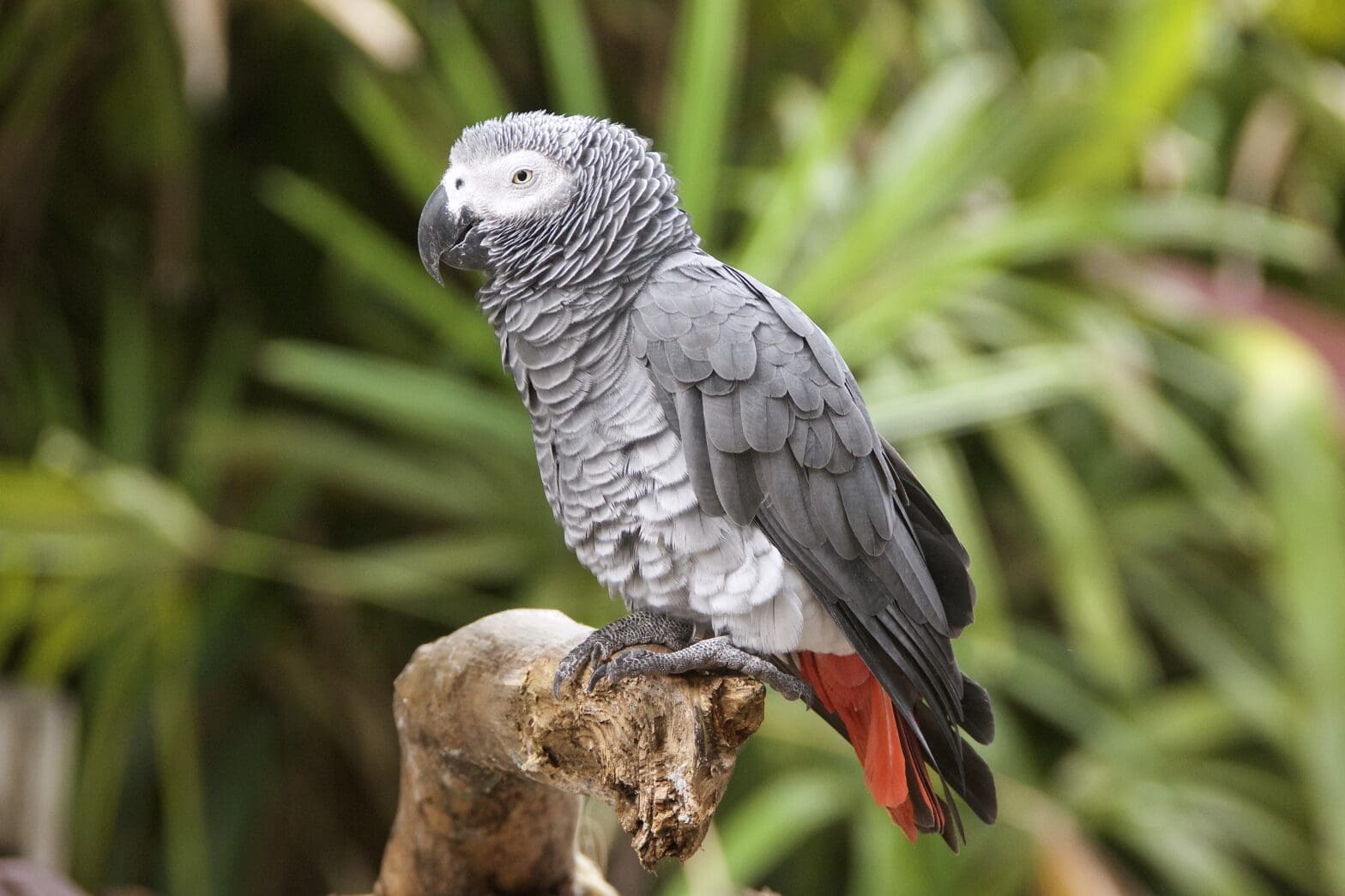
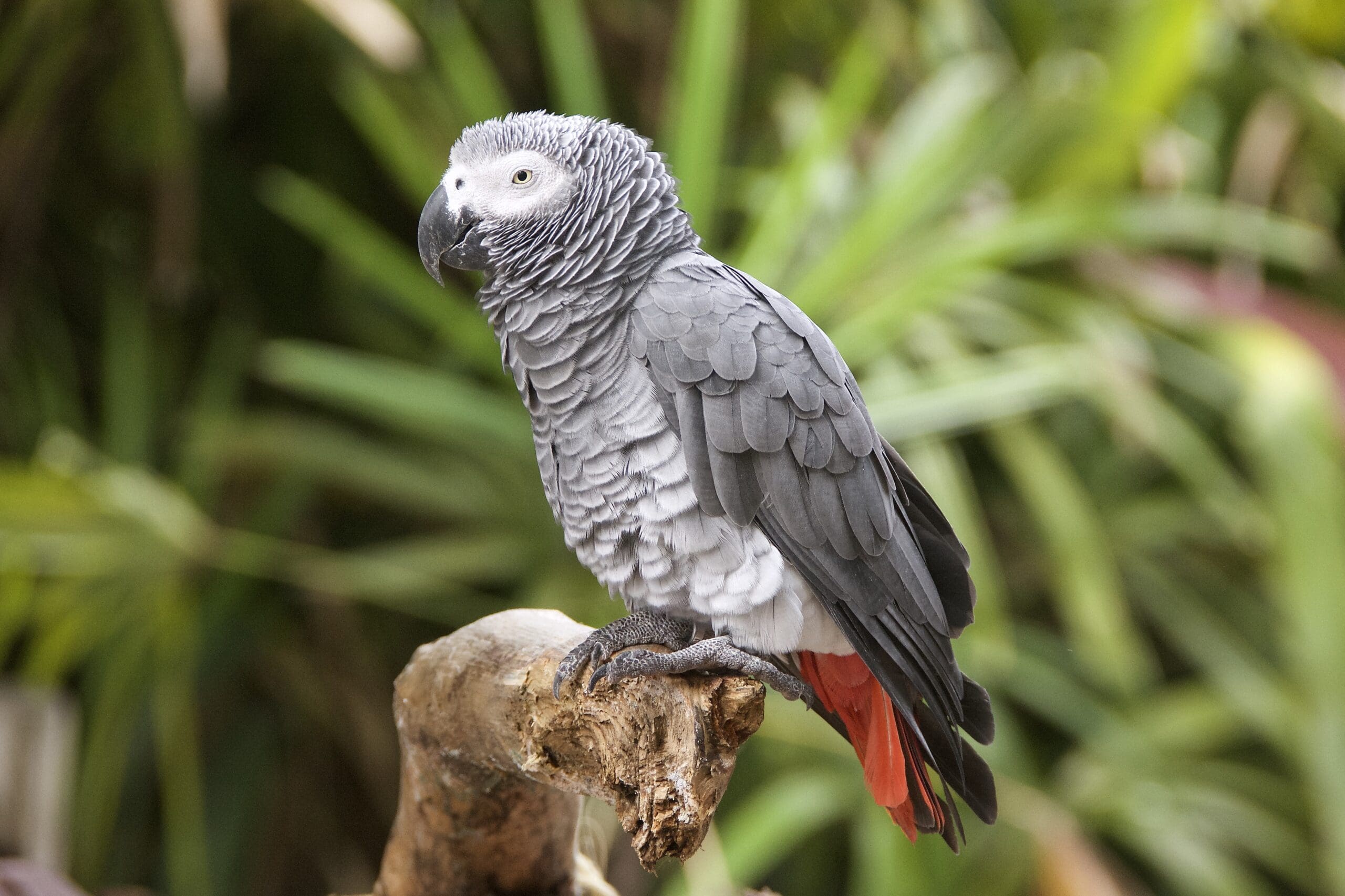
Perched on the sturdy branch of a Kapok tree deep in the Congo Basin rainforests, an adult African grey parrot listens as dawn begins to wake the parts of the forest that had been asleep.
Not long ago there had been many other roosts that would be waking up at this time, their overlapping songs passed from bird to bird, fragmenting into dialects and quips that only birds of a certain feather understood.
Now the forest stews in a silence that doesn’t fall all at once, but settles slowly.
Logging and habitat fragmentation have eroded away at the networks that bring the forest canopy to life. Roosts that once echoed with dozens of unique signatures have gone silent. Routes once marked by familiar voices are quieter now. The loss is not just physical territory, but a breakdown in the sonic landscape that makes community possible. When one parrot calls out to the forest, more and more often the forest doesn’t answer back.
Even so, at dawn the space between the trees begins to come alive. Slowly, the chorus starts with whistles and clicks, high-pitched mimicries and melodic chatter, weaving through the canopy with the morning light. To the untrained ear, certainly to mine, the parrot’s calls might sound like a kind of white noise, like a beautiful but nonsensical Youtube soundtrack titled Nature Jungle Ambiance 2. But to those birds in the know, it’s a language of memory, bond, warning, and belonging.
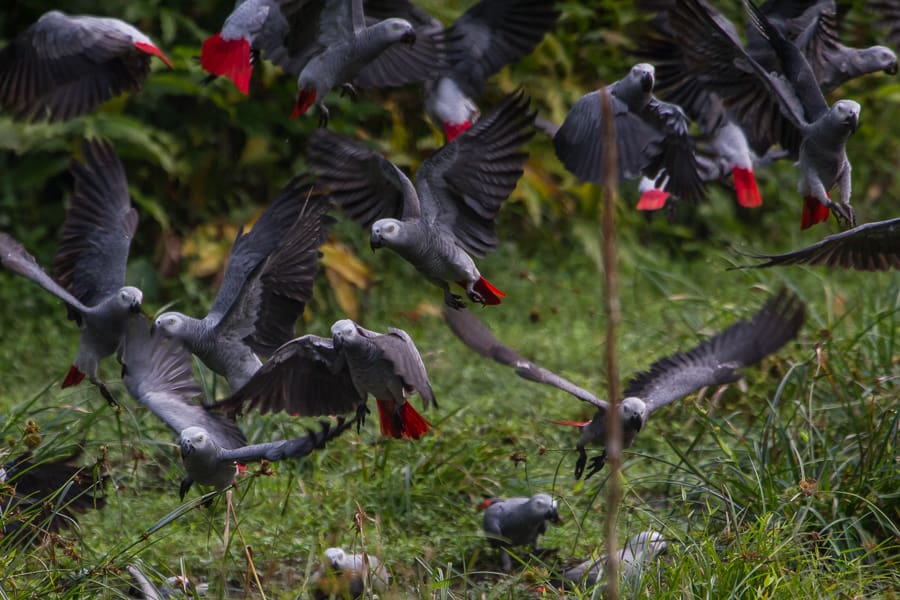
Communication is…everything to the African grey. These parrots live in fission-fusion flocks, where individuals join, leave, and rejoin subgroups throughout the day. In such fluid communities, each bird develops a unique vocal signature, a kind of name, that other parrots remember and respond to. Mates and family groups share contact calls, using them to locate one another in dense foliage or across long distances.
This writeup is not an exploration of physiology, but it’s important to understand how these parrots’ bodies are designed for communicating. Whereas we use vibrating vocal cords to speak, parrots produce sound using a complex organ called the syrinx, a structure of muscle and membrane. They control both airflow and tension in the syrinx’s membranes with remarkable precision, allowing them to mimic complex sounds, including human speech, with impressive clarity.
These are not purely instinctive habits; they’re learned, practiced, and honed as the parrots interact with each other and neighboring roosts. In a very real way, African greys don’t just make sounds, they participate in culture.
Young parrots learn by imitation, listening to their parents, flockmates, and the wider jungle soundscape. The mimicry is not random. They imitate that which surrounds them, other birds, local sounds, and occasionally the distant echo of chainsaws or human speech drifting from nearby villages and cities. These learned sounds are woven into their daily communication and social behavior.
They use alarm calls to signal predators, appearing to modulate their tone and pitch depending on the urgency of the situation, and reserving certain calls for specific threats. We’ve even seen strong evidence that some parrots can use reference-like calls, calls that refer to specific individuals, objects, or situations. In a way, we’re essentially talking about the capability for vocabulary, a primitive but very real form of symbolic language.
Communication among African greys also shapes their emotional reality. When separated from bonded partners, parrots often call persistently, showing signs of stress and vocal distress. Reunion is met with preening, soft warbles, and mutual mimicry.
If there’s anything we establish with this little exploration of African grey communication, it’s that these aren’t just functional instincts, they’re expressions of connection and culture. There’s really a month’s worth of Featured Creature essays we could fill up on the African grey, but I wanted to focus on communication because isn’t that what biodiversity really is at the end of the day? The exchange between living things? Trees share signals through their roots, grasses respond to grazing, coral reefs pulse with chemical messages. And the more we learn, the more it seems like life on Earth is always in conversation.
Brendan began his career teaching conservation education programs at the Columbus Zoo and Aquarium before relocating to Washington, DC. Since then, he has spent a decade as a journalist and policy communications strategist, designing and driving narratives for an array of political, advocacy, and institutional campaigns, including in the renewable energy and sustainable architecture spaces. Most recently before joining Bio4Climate, Brendan was working in tech, helping early and growth stage startups tell their stories and develop industry thought leadership. He is interested in how the intersection of informal education, mass communications and marketing can be retooled to drive relatable, accessible climate action. While he loves all ecosystems equally, he is admittedly partial to those in the alpine.
What species sang part of a Mozart concerto and got its own musical tribute in return?
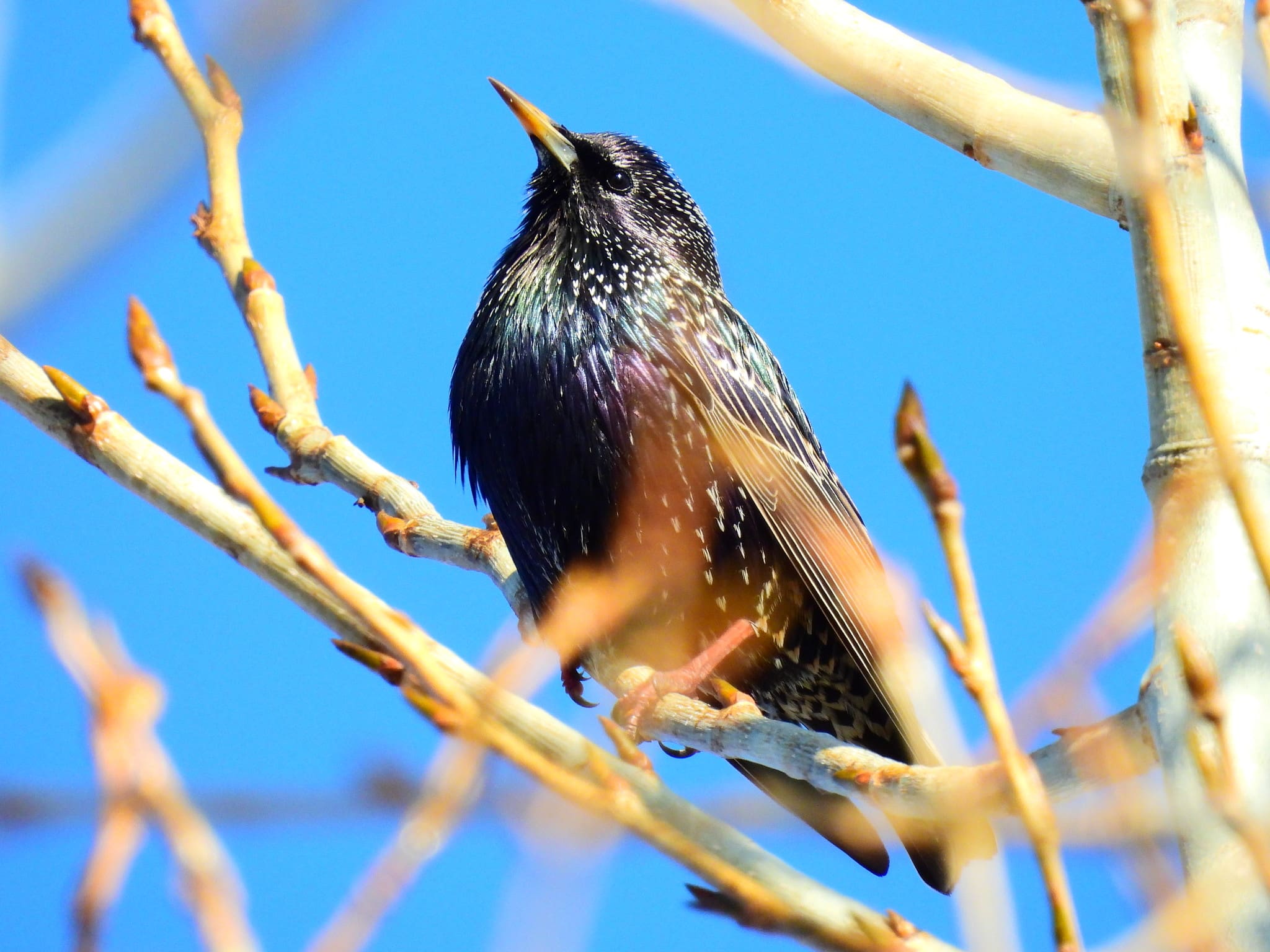
European Starling (Image Credit: Наталия via iNaturalist)
During my studies in urban governance, we took a course on complex systems thinking. I’ll spare you the technical details, but we learned that starling bird flocks were commonly used in the discipline to illustrate how complex systems work and emerge. The core idea was that complex systems are made up of many interacting components that, together, give rise to large-scale, coordinated behavior.
Years later, after I’d moved to the southern end of Rotterdam, I was hanging out in my living room, looked out the window, and there it was: a gigantic flock of starlings swirling through the sky. It was one of the most breathtaking natural events I’ve ever had the privilege of witnessing. And honestly, in a city like this, it might be one of the only natural events you can witness from the comfort of your living room or backyard.
Since then, I’ve spent countless hours watching these flocks from my rooftop during the months when they migrate through the city. As mesmerizing as it is to see them dancing in the sky, it’s even more incredible to watch them land. Just behind my house is a community garden with a few tall trees. The starlings will form a massive swarm around a tree, circling it with this eerie coordination. Then, seemingly out of nowhere, one bird dives into the branches — and within seconds, hundreds follow. The sound that follows is something else entirely: the collective chirping of all those birds packed into one tree fills the whole neighborhood. It’s chaotic, but in the most beautiful way.
More Than a Blur in the Sky: A Closer Look at the Starling
I was often confused about what exactly a starling bird was. Their song was always striking to me, but I noticed something odd: two very different-looking birds seemed to be making the same kind of sounds. At first, I assumed it might be a gender difference. But after doing a little research, I learned something fascinating: starlings change their appearance with the seasons, adopting a specialized breeding plumage during the mating season.
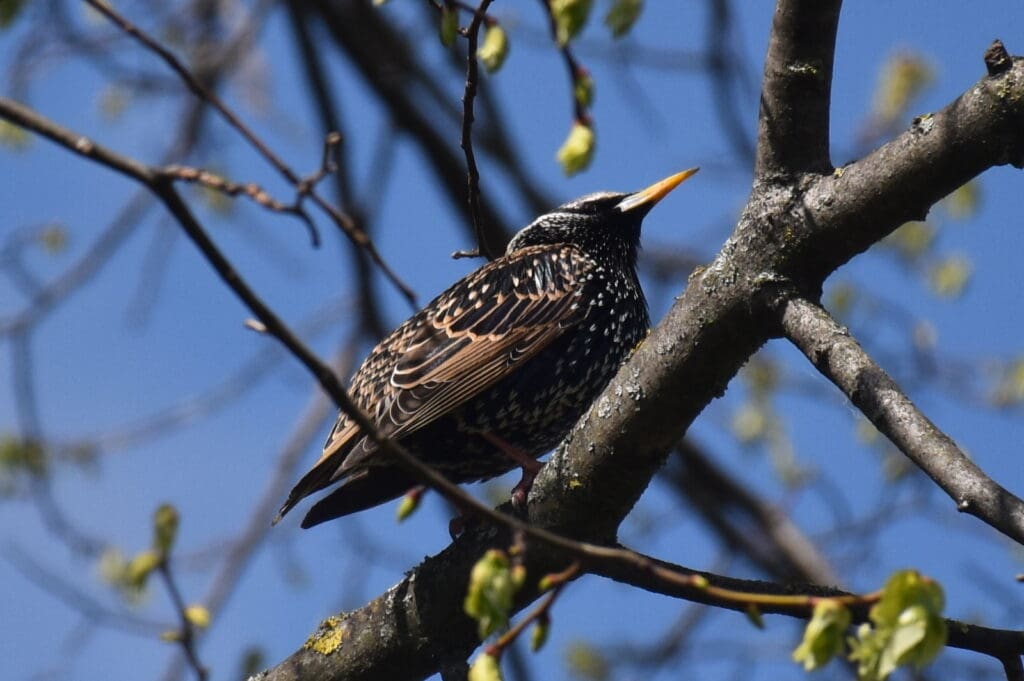
In the fall and winter, starlings appear dark with cream-colored speckles scattered across their bodies. But in spring and summer, when males enter breeding season, they undergo a striking transformation. Their feathers turn glossy and iridescent, shimmering with greens and purples, especially along their nape, breast, back, and wings.
Many birds change their plumage to attract a mate. Ducks are a classic example you might already be familiar with. But what makes starlings unique is how they transition. Unlike most birds, which molt (shed and replace their feathers) before breeding season, starlings don’t actually molt at all. Instead, they lose their spots through abrasion. The speckles we see in winter are just the cream-colored tips of their feathers. As the season progresses, these tips gradually wear off from contact and movement, revealing darker, melanin-rich parts of the feathers underneath. Melanin makes those parts more resistant to wear, so while the pale tips disappear, richer tones remain, just in time for mating season.
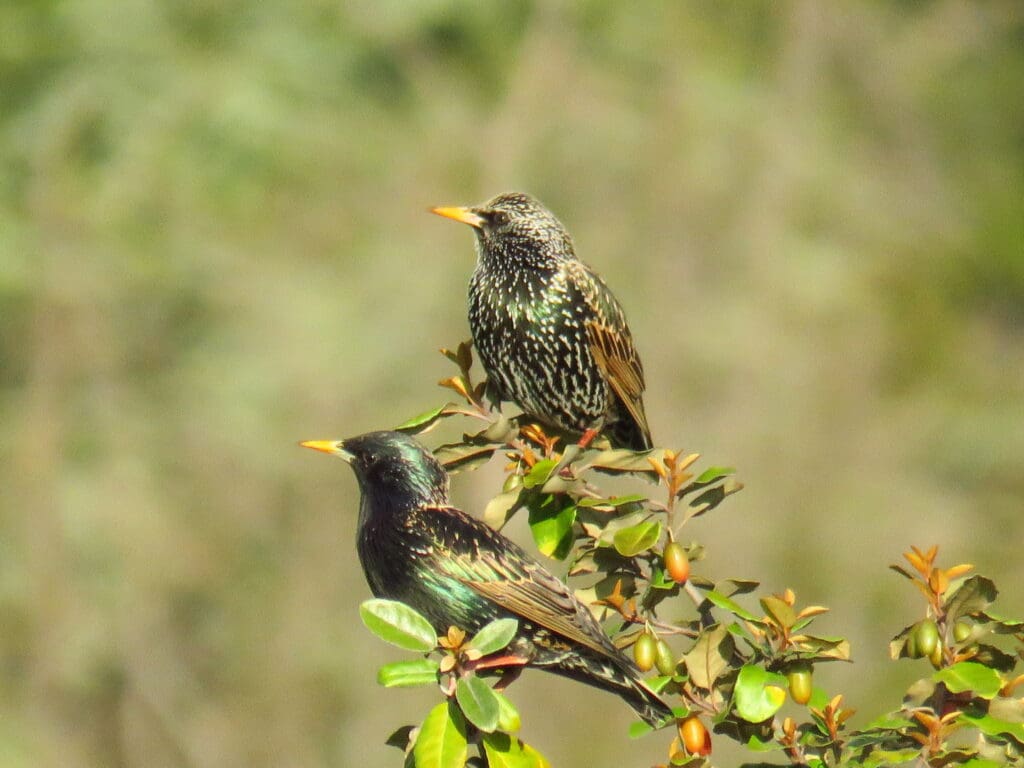
Interestingly, adult females don’t become as glossy or glittering as their male counterparts. They tend to retain more of their pale speckles, giving them a lighter, spottier appearance that makes them relatively easy to distinguish.
Adult male (bottom) and female (top) starlings. Image Credit: Franck Curk via iNaturalistStarling sporting its non breeding plumage Image Credit: cccrll via iNaturalist
Nesting: Homes, Herbs, and the Hunt for a Male
With breeding plumage in place, unpaired males seek out suitable nesting sites and begin building nests to attract females. To impress, they decorate their bachelor pads with flowers, greenery, and even herbs. It’s theorized that the quantity and quality of these ornaments play a role in courtship, helping males stand out in a competitive mating environment. Interestingly, once a female chooses a mate, she typically disassembles the decorations he so carefully arranged.
Turns out, birds might also be into a bit of aromatherapy — when they add herbs to their nests, they seem to chill out and parent better. The cozy, scented setup is linked to more positive vibes during egg-sitting duty.
Another curious aspect of their nesting behavior is how females lay their eggs. A typical clutch consists of 4 to 6 eggs per year, but if the first egg is removed — by a predator, researcher, or accident — the female will sometimes continue laying more eggs in an effort to compensate and make the clutch “whole” again.
If the home decor isn’t enough to impress a mate, ambitious bachelors have another trick up their wings: their song. These birds are among nature’s finest impressionists.
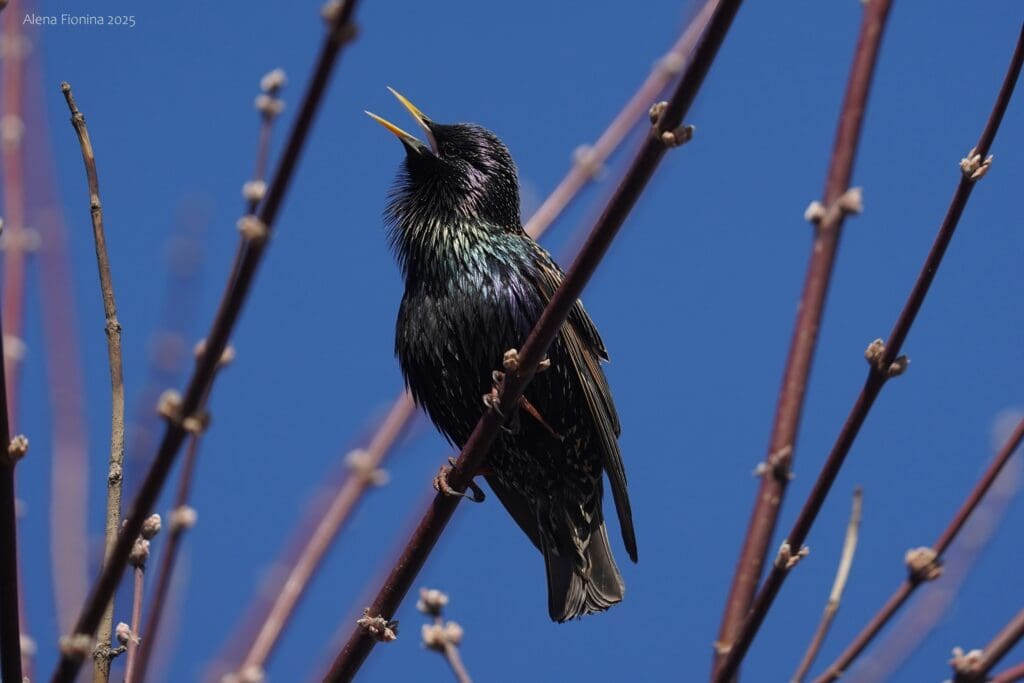
European starlings have a rich and varied vocal repertoire — clicks, whistles, rattles, snarls — and an extraordinary talent for mimicry. They can imitate other birds, animals, and even human-made sounds like car alarms.
This video highlights the incredible variety of sounds starlings are capable of producing.
This song plays a key role in courtship. Males sing to mark territory, attract mates, and signal their fitness. Often, these songs are performed near a decorated nest, combining sound, sight, and scent into a single courtship display. Research suggests females may prefer males with larger song repertoires, which could indicate intelligence, health, or age.
This vocal ability has long captivated humans. Mozart famously owned a pet starling that could sing part of one of his piano concertos. Urban legend holds that his piece A Musical Joke was inspired by the bird’s playful, unpredictable style, a feathered composer in his own right.Here’s a link to A Musical Joke if you’re curious, you decide!
Black Suns and Bird Ballets: The Science Behind Starling Flocks
As captivating as a single starling may be — with its shimmering feathers and complex song — their true magic emerges in numbers. When thousands gather, they move with a grace and synchronicity that seems almost unreal.
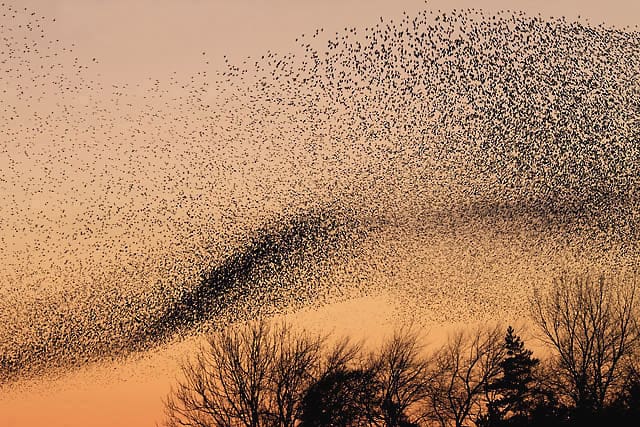
A murmuration of starlings at Gretna. (Image Credit: Walter Baxter via WikiCommons)
Starling flocks, called murmurations, are most often seen in winter when the birds gather to roost in huge numbers. Just after sunset, they form breathtaking patterns in the sky before settling for the night.
These movements are often likened to a kind of dance or aerial ballet. When the flocks grow large enough, they can even appear to obliterate the setting sun, a phenomenon so striking it inspired the Danish term “sort sol,” or “black sun.”
These spectacular displays aren’t just for show — these murmurations help protect against predators by confusing and overwhelming their vision, making it difficult to single out any specific target. They also aid in communication and guide birds to communal roosts, especially during colder months
But how do these birds move with such perfect synchronicity? It almost looks choreographed, but it’s not like the birds wake up early and go to synchronized flight practice to drill until everyone hits their marks. What’s actually happening is that starling flocks are showing off a rare and fascinating phenomenon called scale-free correlation. Sounds complicated, sure, but it’s actually pretty simple.
It means that the birds’ movements are coordinated no matter where you look in the flock — whether you’re watching birds that are right next to each other or birds that are far apart. The changes ripple through the entire group almost instantly.
What’s even more amazing is that there’s no leader. Unlike geese, which follow a clear leader in formation, starling flocks are totally decentralized. Each bird watches and responds to just its 7 closest neighbors — that’s it. But because every bird is doing this at the same time, the entire flock ends up moving as one super-organism.
It’s like a message passing through the flock: when one bird moves, its neighbors adjust, and their neighbors adjust, and so on. This chain reaction spreads through the whole group — and that’s what we mean by scale-free correlation: coordination that works across any size or distance, without a central controller.
See the coordinated movement of thousands of starlings in this short video of a murmuration in action:
Watching them gather in those immense, swirling formations from my rooftop — the very phenomenon that first sparked my interest years earlier — brought everything full circle. What once was an abstract example in a systems theory class had become a living, breathing presence in my everyday life.
And what’s perhaps most astonishing of all is that this beauty isn’t just instinct — it’s adaptation in action.
Global Spread and Genetic Genius
Few avian species have been as globally successful as the European Starling (Sturnus vulgaris). Today, starlings can be found thriving on every continent except Antarctica — a remarkable feat for a bird species that, in many places, didn’t even exist 150 years ago.
North America’s starlings trace back to a strange little story: in the 1890s, a group of Shakespeare fans released about 100 birds in Central Park, hoping to populate the continent with every bird mentioned in his plays. Most of their efforts fizzled — but the starlings didn’t. They took off, quite literally, and today their descendants are spread far and wide across the U.S., Canada, and even into the Caribbean and Central America.
Elsewhere, starlings were introduced intentionally for pest control, such as in Australia, South Africa, and New Zealand, where they were thought to help manage insect populations in agricultural settings.
But what is it about this species that has allowed it to become so incredibly widespread?
Part of what makes starlings so successful is how adaptive they are. They’re just as comfortable in cities as they are in farmland, nesting in everything from building vents to backyard trees. As long as there’s something to eat, bugs, grains, scraps, they’ll make it work.
They’re also smart; starlings have big brains for their size and it shows. They can solve problems, learn from each other, and figure out new ways to find food when times get tough. And they’re almost never alone. Whether foraging, roosting, or migrating, they move as a group, watching, listening, adapting together. It’s part of what makes them so good at surviving in unfamiliar places.
Starlings also exhibit what’s known as environmental niche flexibility, meaning they can adjust their physical or behavioral traits in response to a wide range of environmental conditions. It enables them to inhabit ecosystems ranging from humid woodlands to dry grasslands with relative ease.
What’s more, they’re not just surviving across these ecosystems, they’re evolving. In just over the course of a century, starlings in North America have started adapting to their new homes. Arizona birds are showing signs of handling heat and dryness, while their cousins up in the Pacific Northwest are built for cool and damp. It’s a rare, real-time glimpse of evolution in motion.
But this incredible adaptability also brings starlings into conflict with human systems, particularly in agricultural landscapes, where their success reveals deeper tensions between wildlife and the ways we use the land.
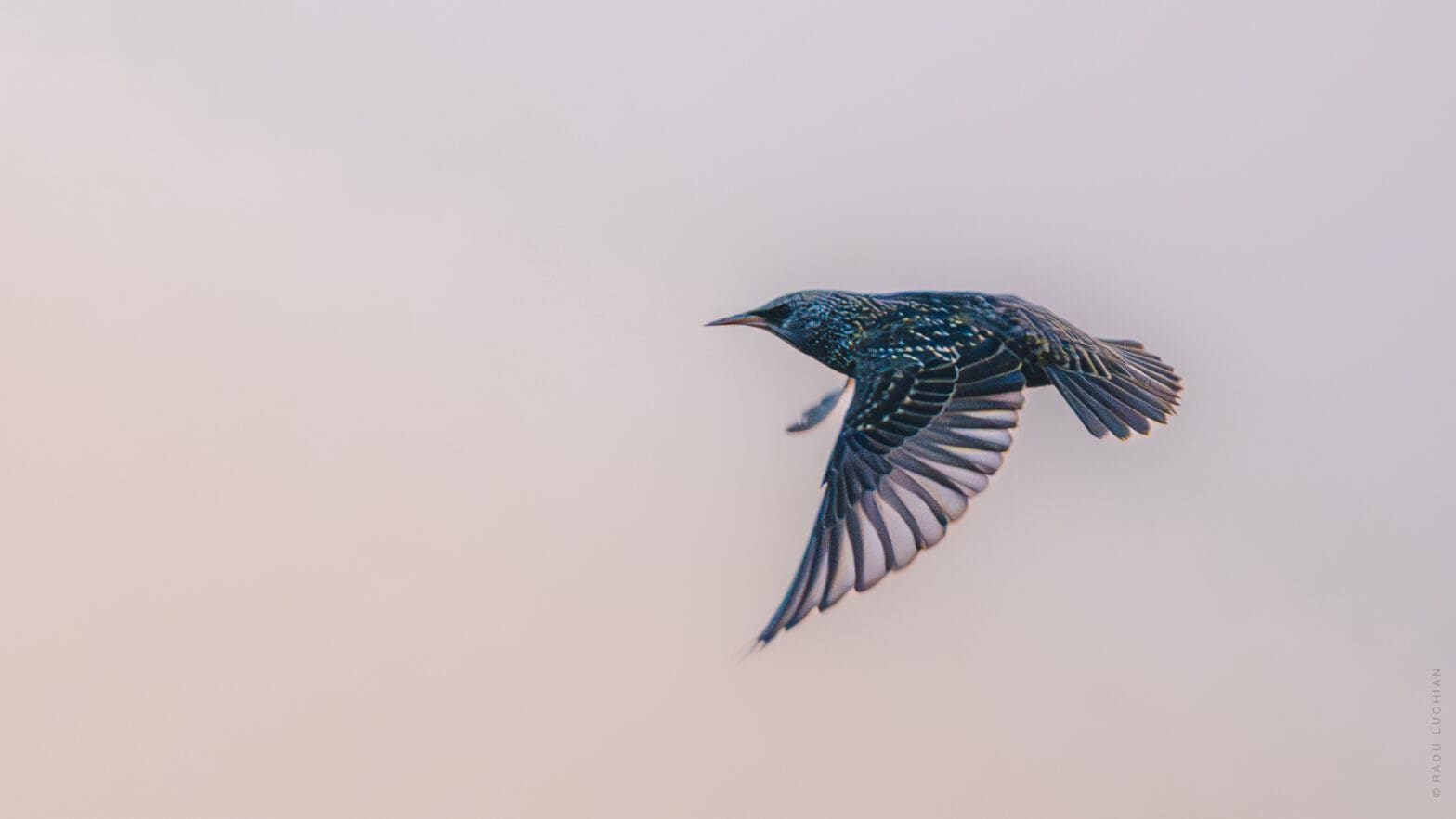
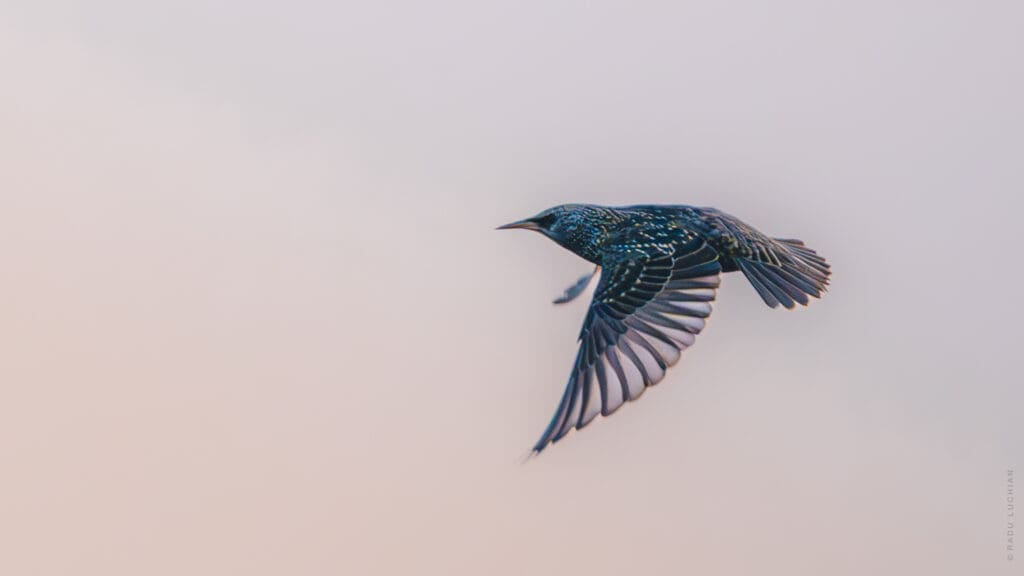
Starling bird in flight. (Image Credit: Radu L via iNaturalist)
Fields of Conflict: Starlings and Agriculture
The more I learned about starlings, the more I realized their story is tangled up in ours, especially in how we farm. These birds didn’t set out to invade feedlots and barns. They ended up there because the open meadows they once thrived in are disappearing.
Starlings evolved to forage in grasslands, digging through the soil for grubs and larvae. But as fields are replaced by monocultures filled with pesticides, they’ve had to adapt — and fast. Livestock farms offered what the land no longer did: bugs in the soil, water to drink, and plenty of places to nest. It’s not that they prefer our barns. It’s just that there’s nowhere else to go.
The irony is that what farmers often see as nuisance behavior is really just resilience in action, starlings making do in a landscape that’s no longer built for them.
For these farmers, starlings can be a real headache. They sneak into barns, eat livestock feed, and leave behind messes that can damage equipment and pose health risks. And they’re clever, most scare tactics only work for a little while before the birds figure them out. Remember those big brains? So while their presence speaks to larger ecological loss, the day-to-day impact is very real for people trying to make a living off the land.
Despite their reputation as a nuisance in agriculture, starlings are actually experiencing serious population declines — not only in their native range but also in parts of their introduced range, including the UK and North America.
This is often overlooked in public discourse. In the UK, for instance, starlings are now a protected species, due to sharp population drops attributed largely to the loss of high-quality foraging habitats and changes in land use.
Interestingly, their decline has not led to a rebound in the native species they’re often accused of displacing — suggesting that habitat loss, not species competition, may be the deeper issue.
It’s easy to label starlings as pests — especially in an industrial system where every loss counts. But that framing often misses the bigger picture. Their presence on farms isn’t just about opportunism; it’s about what’s missing from the land. If pastures were healthier and ecosystems more intact, maybe starlings wouldn’t need to forage in feed troughs or nest in sheds.
If agriculture were managed more sustainably, with more permanent pasture and diversified cropping systems, it’s likely that starlings would rely less on feed troughs and barns. In this light, controlling starling populations without addressing the root causes of their shifting behavior may be shortsighted.
Conservation in their native range should focus on restoring pasture ecosystems and rebuilding invertebrate populations. In their invasive range, managing their numbers in sensitive areas is important — but must go hand-in-hand with reconsidering how intensive farming practices shape the ecological playing field.
Each season, I look up from the same rooftop, and the starlings are there — not thriving, not vanishing, just enduring in the spaces we’ve left behind. Their presence doesn’t signal ecological balance, nor does it mark collapse. Instead, it speaks to something quieter: the capacity of life to persist in the margins, to find rhythm in disruption, and to adapt — however imperfectly — to a world in flux. In them, I see the echoes of our choices and the quiet, complicated resilience of the wild.
Lakhena Park holds degrees in Public Policy and Human Rights Law but has recently shifted her focus toward sustainability, ecosystem restoration, and regenerative agriculture. Passionate about reshaping food systems, she explores how agroecology and land management practices can restore biodiversity, improve soil health, and build resilient communities. She is currently preparing to pursue a Permaculture Design Certificate (PDC) to deepen her understanding of regenerative practices. Fun fact: Pigs are her favorite farm animal—smart, playful, and excellent at turning soil, they embody everything she loves about regenerative farming.
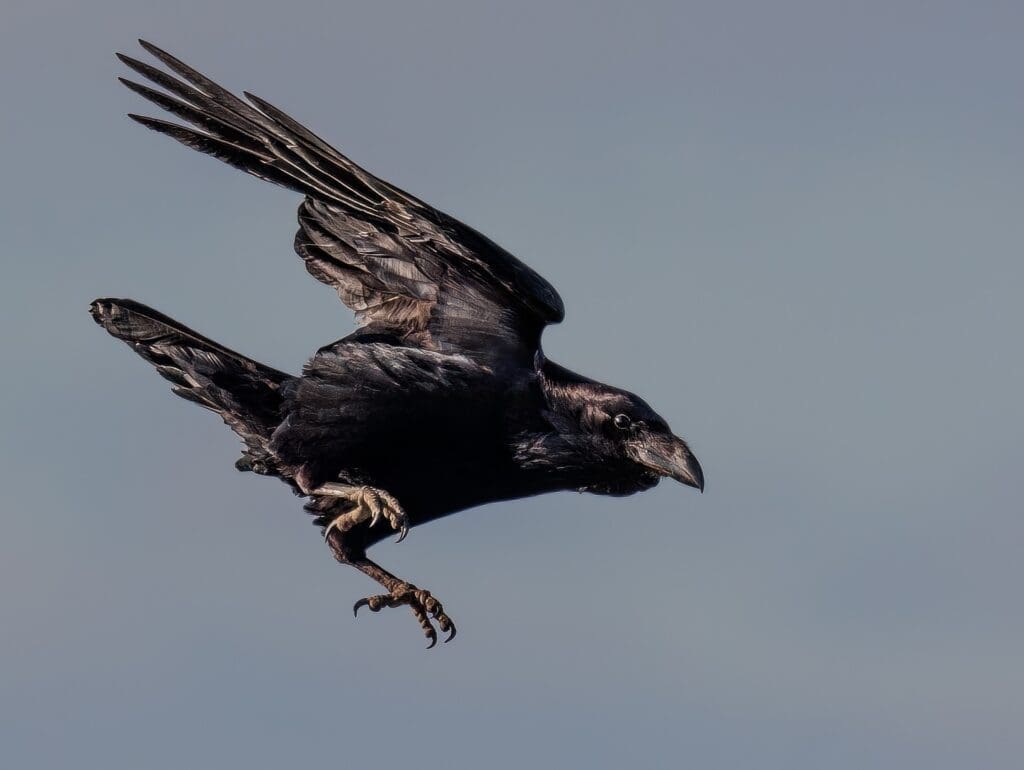
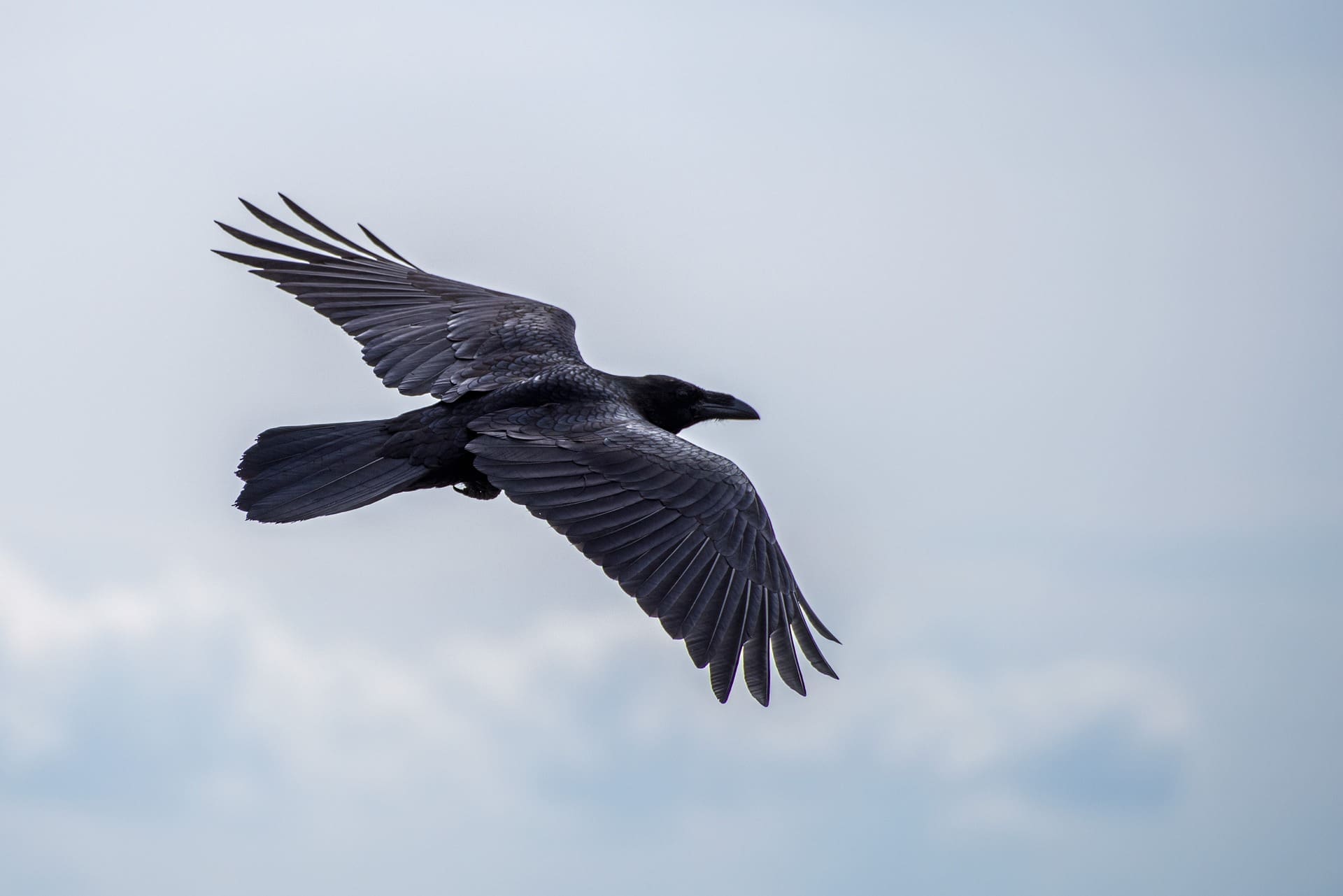
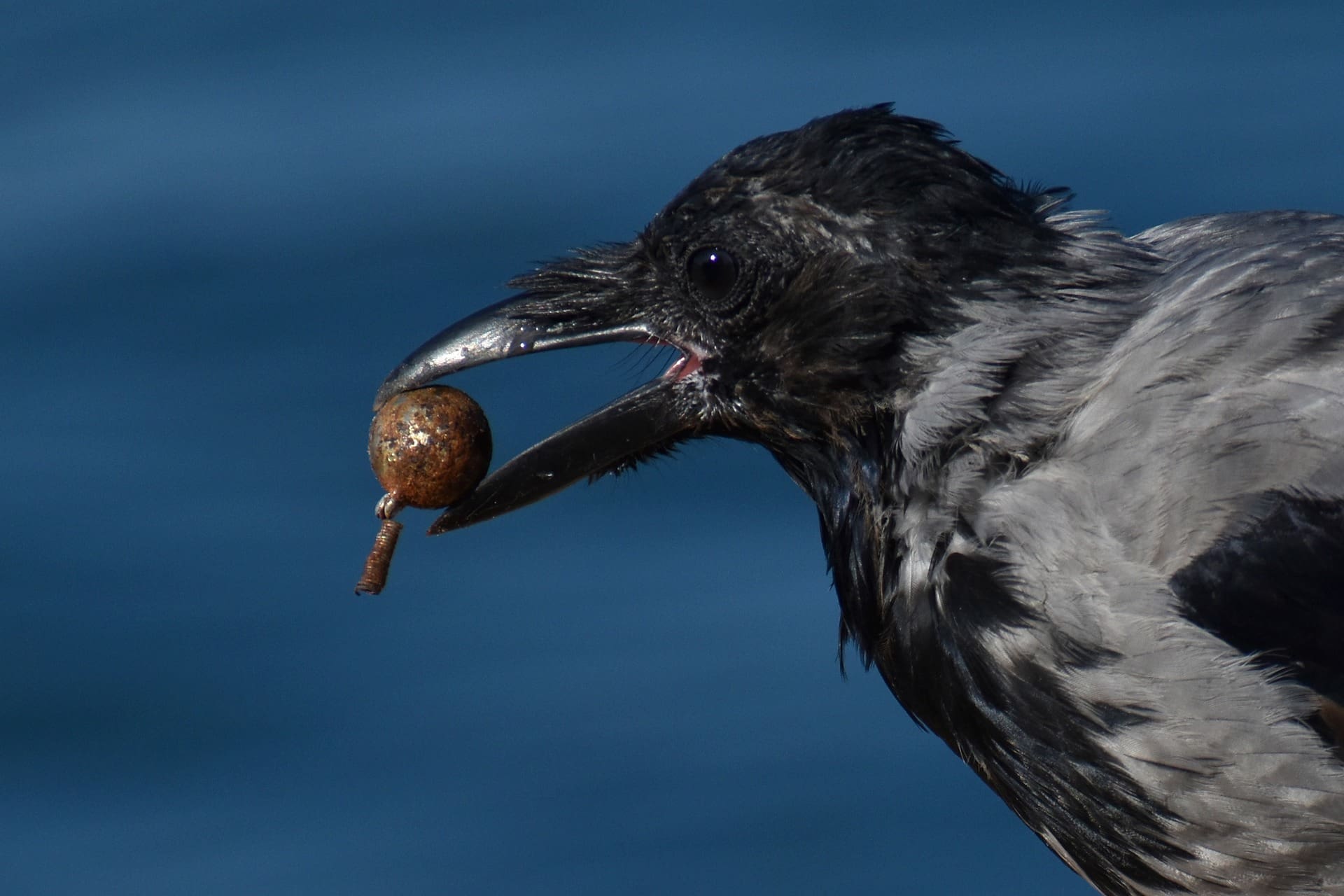
Crows, members of the Corvus genus, stand out as some of the most intelligent and adaptable birds on the planet. These corvids include over 40 species, such as the American crow, hooded crow, and fish crow, and they inhabit diverse habitats ranging from dense forests to urban landscapes.
Known for their resourcefulness and problem-solving skills, crows have captivated scientists and observers alike with their remarkable behaviors. Crows continue to push the boundaries of how we understand animal intelligence, with recent studies on their tool use, awareness, and relationship to complex concepts gaining them well-deserved recognition and a place in the conservation conversation.
Crows are a fairly common sight in many parts of the world, with recognizable shiny black feathers and a familiar ‘caw.’ They are ground foragers with an incredibly diverse diet, ranging from insects and fruits to small animals and human food scraps. They tend to be associated with scavenging but are true omnivores, and can benefit soils and ecosystems by helping keep insect populations from surging out of balance. In urban settings, they are involved in flock feeding on human food scraps and garbage, and this adaptability to human environments means certain (though not all) species of crow maintain strong population numbers in the face of decreased access to natural habitat.
Communication and Complexity
While the crow ‘caw’ may seem like a simple call recognizable to many people, crow vocalization turns out to be quite differentiated. It has been discovered that among crows, groups form ‘dialects’ based on region. They also possess remarkable vocal mimicry skills, allowing them to imitate the sounds of other birds, animals, and even human speech. All of this allows the crow to engage in communication, social bonding, and strategic goals of deception and resource acquisition.
These crafty corvids possess a level of intelligence comparable to great apes and human children, allowing them to solve complex problems and even make and use tools. For instance, the New Caledonian crow, widely regarded as the most intelligent species among the corvid family, creates hooks and skewers from twigs to extract insects from crevices, showcasing their ingenuity. Researchers have studied crows’ usage of tools and observed that these birds will not only use pre-made tools or create simple combinations of tools in pursuit of their goal, but create multi-part composite tools, a behavior observed in only a few primates.
Famously, Aesop’s fables summarized long ago, “A thirsty crow wanted water from a pitcher, so he filled it with pebbles to raise the water level to drink.” Though the story is thousands of years old, these behaviors are still being studied and producing new insight today.
Some of the most fascinating recent inquiries into crow intelligence have probed crows’ sense of self-awareness, long-term gratification, playfulness, and their understanding of complex concepts. As a math lover, one of my favorites among these is a unique phenomenon – conceptualization of ‘zero’. While many animals are able to perform basic counting, zero is generally a trickier beast, one that was absent from many ancient human civilizations’ numerical systems. However, crows are among the very few animals that grasp this number.
Additionally, crows exhibit impressive memory skills and can recognize individual human faces, reacting differently to perceived threats than to harmless humans. They are even known for ‘holding grudges,’ or conversely, remembering favorable relationships with people for years at a time. The ability to remember and share information within families and flocks may provide them with a significant evolutionary advantage in protecting themselves from harm.
Birds of a Feather Flock Together
In addition to their intelligence and adaptability, crows exhibit fascinating social behaviors. They often engage in cooperative mobbing to fend off predators, perform elaborate aerial displays to attract mates, and maintain strong family bonds by living in cooperative family groups. While adult crows primarily socialize just with their monogamous mate (with whom they pair for life), young crows stay with their parents for the first two years of life, and juvenile crows live in highly social ‘juvenile gangs.’ One theory into crow intelligence suggests that their ingenuity is due to the relatively long period of time young crows spend with their parents and the learning this enables.
Some crows, like American Crows, are also known to flock in large groups in winter months, both foraging for food and roosting together. These roosts can range from a few hundred to up to two million crows, with some roosts forming in the same general area for well over 100 years. Moreover, crows hold “funerals” for deceased members of their community, demonstrating a level of social complexity often overlooked among animals.
Crows will even form bonds with other animals. Crows in the wild have been observed playing with young wolves, and forming mutual attachments with these other social and intelligent creatures. Of course, there are many stories of the relationships humans have forged with individual crows, forming patterns of exchanging food for gifts or receiving trinkets after showing an injured bird care. One charming crow, Tuck, who has spent his life in a bird sanctuary in Tennessee, shares a moving friendship with his primary human caretaker, and has even become a conservation ambassador:
While many human cultures have depicted crows with respect for their ingenuity, recent trends have given crows a bad rap, primarily for the disturbance they cause to crops (hence the need for ‘scarecrows’). Despite their reputation as pests, though, crows play a crucial role in ecosystems as efficient garden helpers and natural pest controllers. They feast on insect pests like caterpillars and beetles, disperse seeds, and maintain a healthy balance in the garden ecosystem. Some crow species face significant challenges to their survival, such as habitat loss, disease, and predation, and crucial conservation efforts are underway to protect endangered species like the Hawaiian Crow through habitat restoration and captive breeding programs.
Crows have been both feared and revered by humans throughout history, often associated with death, darkness, and supernatural powers. The term “murder of crows” reflects their association with death and darkness in folklore, although alternative names like “horde” or “parliament” better capture their intelligent and social nature without perpetuating negative connotations. And many cultures and people have great respect for the clever crow, with whom we have coexisted for thousands of years. Despite their complex relationship with humans, crows continue to fascinate and inspire awe, challenging our limiting notions of animal behavior.
For a deeper dive into crows and the insights they share on animal intelligence, check out this fascinating video and the sources below:
May we continue to learn from our animal kin,
Maya
Maya Dutta is an environmental advocate and ecosystem restorer working to spread understanding on the key role of biodiversity in shaping the climate and the water, carbon, nutrient and energy cycles we rely on. She is passionate about climate change adaptation and mitigation and the ways that community-led ecosystem restoration can fight global climate change while improving the livelihood and equity of human communities. Having grown up in New York City and lived in cities all her life, Maya is interested in creating more natural infrastructure, biodiversity, and access to nature and ecological connection in urban areas.