A Miniforest Grows in Belmont
Belmont, Mass. | Belmont High School Miniforest
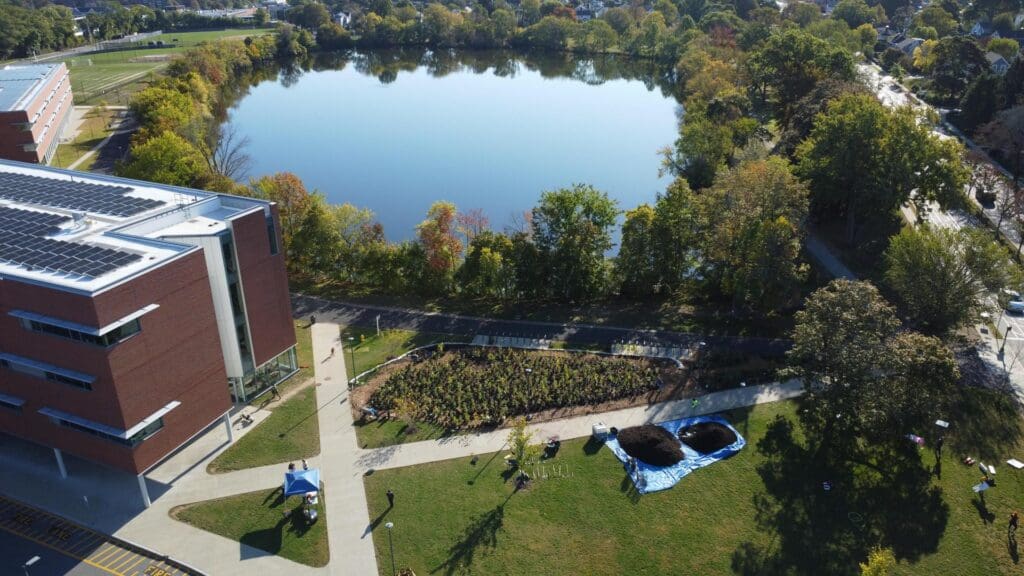
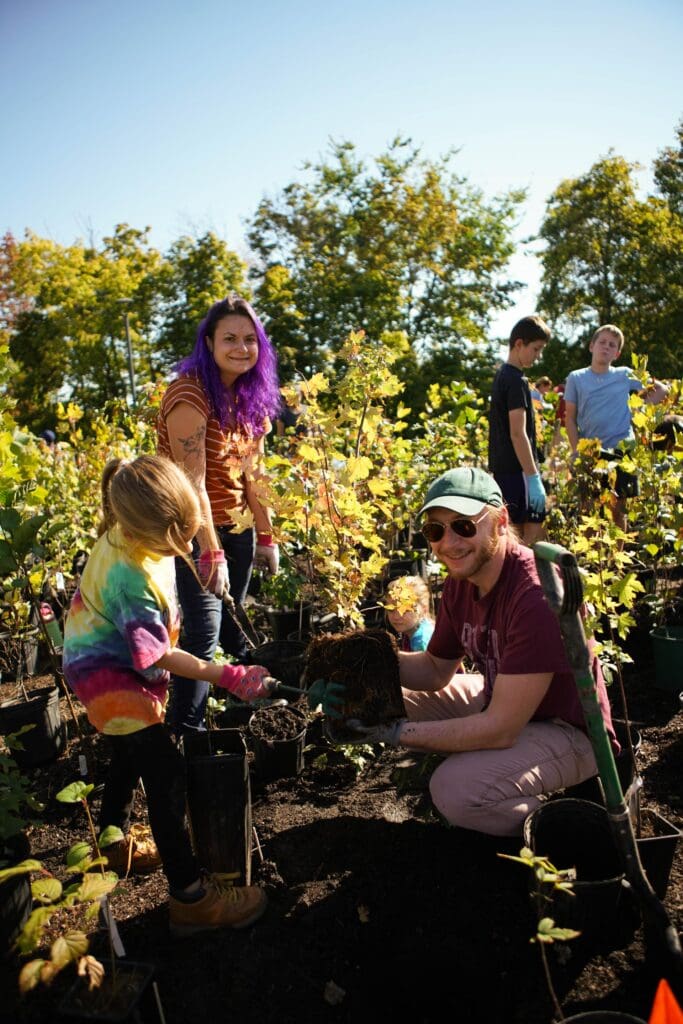
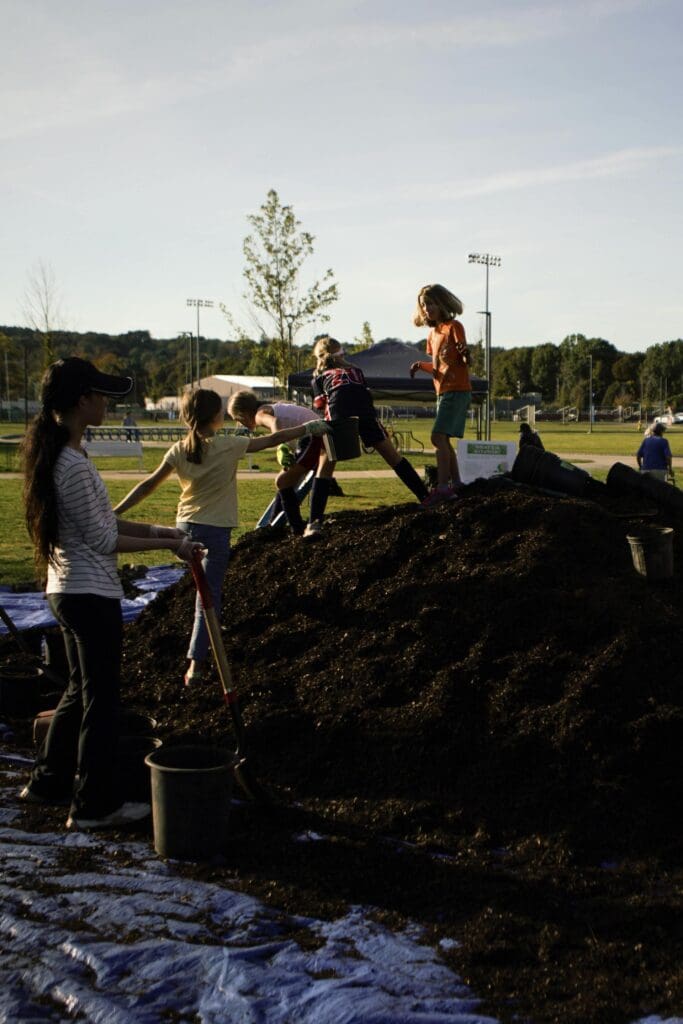
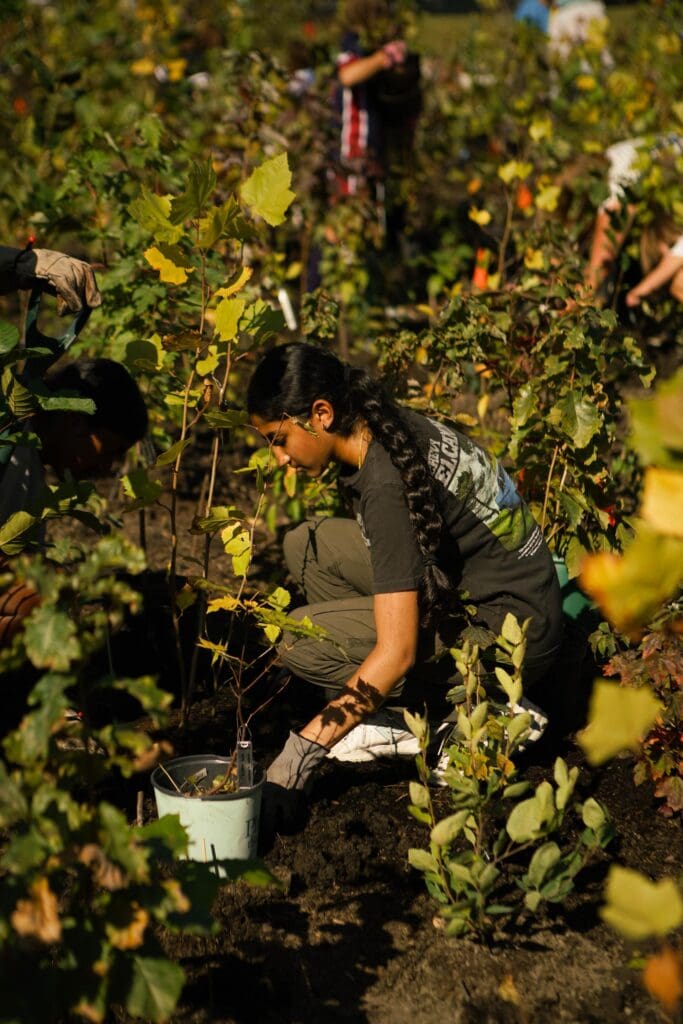
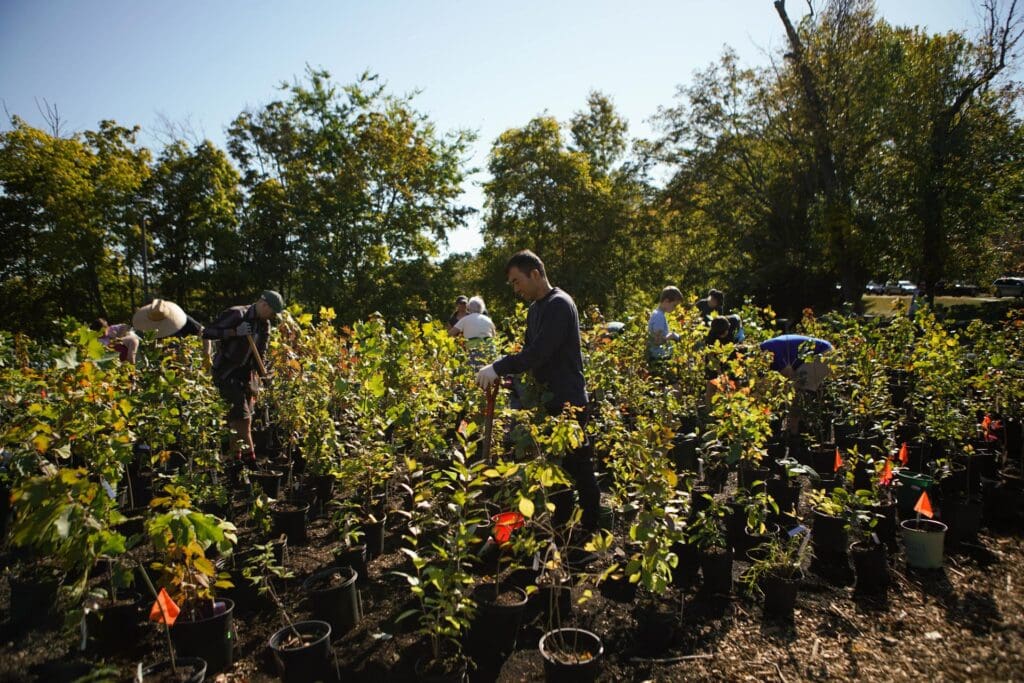
On October 4th, Biodiversity for a Livable Climate and the Miyawaki Forest Action Belmont (MFAB) community came together to plant a 3,000 sq ft Miyawaki forest — 1,140 native trees and shrubs across 32 species at the Belmont High School site.
Our 8th miniforest is especially meaningful — a true intergenerational effort shaped from its early formation to the day of planting by the dedication of students and community members. Around 275 local Belmont residents of all ages joined throughout the day!
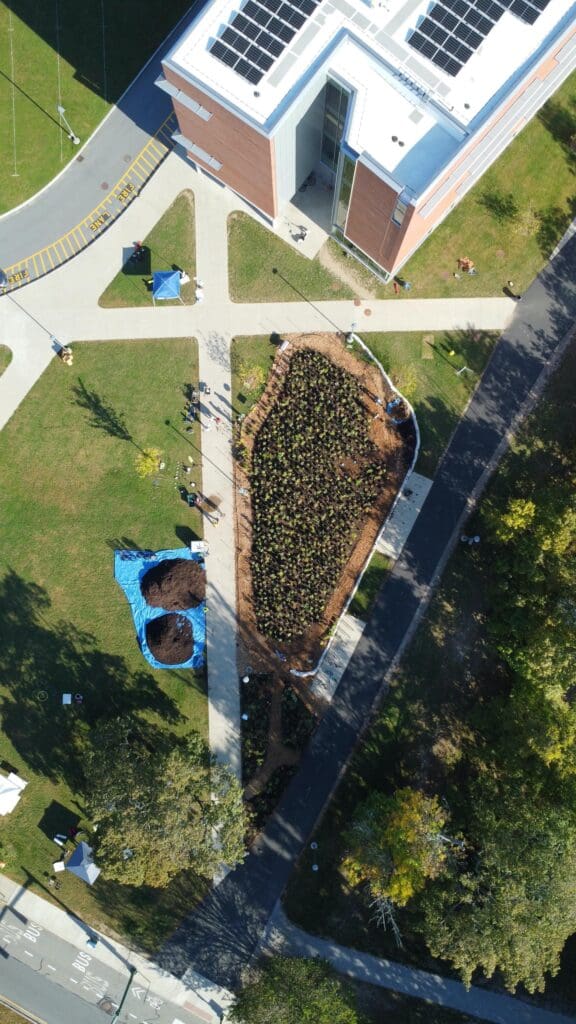
Drone photography by Nicholas Geron of Salem State University beautifully captures what becomes possible when lawns and other open spaces in urban settings are reimagined to sustain all life, participating in the water, nutrient, and carbon cycles and becoming living classrooms.
Deep gratitude to everyone who gave time, care, and energy — from erosion control and cardboard installation to soil preparation and planting — and to all who will continue tending this young, emerging ecosystem.
A special thank-you to our Ecology Advisor, Walter Kittredge, who has guided us through every step — from the site assessment and potential natural vegetation research at Bolton Flats to developing the planting list.
And heartfelt thanks to Andrew Putnam from the City of Cambridge, who advised us at different stages and generously shared compost tea with us on planting day!
We’re also grateful to local native nurseries — New England Wetland Plants, Oakhaven Sanctuary Nursery, Butterfly Effect Farm, and Russ Cohen — for growing these plants; to Black Earth Compost for transforming food waste into rich compost, leaf mulch, and soil full of life; to New England Biochar for contributing biochar that helps build healthy, living soil; and to the Belmont Department of Public Works for their assistance with soil preparation.
News and Insights
The Magic of Mini Forests
American Planning Association
Miyawaki mini forests are catching on in the U.S.
Alexandra Ionescu, associate director of regenerative projects at Biodiversity for a Livable Climate in Cambridge, Massachusetts, helped organize the first Northeast Miniforest Summit this past summer. With more than 500 registrants, the two-day symposium brought together educators, scientists, local government officials, volunteers, and others with an interest in mini forests to share insights about how to increase the use of the Miyawaki method.
“It is wonderful to see people coming to the planting day with so much excitement,” Ionescu says. “They come back to see the progress of the trees they helped plant and form this connection with place.”
Ionescu sees a potential role for planners to identify suitable mini forest sites, one of the largest challenges. Other mini forest programs have been launched by the Natural Urban Forests in Seattle, Washington; Urban Pocket Forest, Berkeley, California; and LA Microforests, Los Angeles.
A Miyawaki Forest Sprouts in Belmont
The Belmont Voice
On Saturday, Oct. 4, more than 275 volunteers gathered to plant a Miyawaki forest at Belmont High School. Named for the Japanese horticulturist Akira Miyawaki, A Miyawaki Forest is “an ultra-dense, biodiverse pocket forest that recreates the complexity of natural forests and the relationships and processes that help them grow strong and resilient,” according to Bio4Climate.