Featured Creature: Coquerel’s sifaka

An adult Coquerel’s sifaka photographed in Madagascar's Ankarafantsika National Park
Image credit: Allan Hopkins via Flickr (CC-BY-NC-ND)

What animal gained fame in a 1990s children’s TV show, and whose leaping abilities bring to mind a graceful human dancer?

The Coquerel’s sifaka (Propithecus coquereli)!

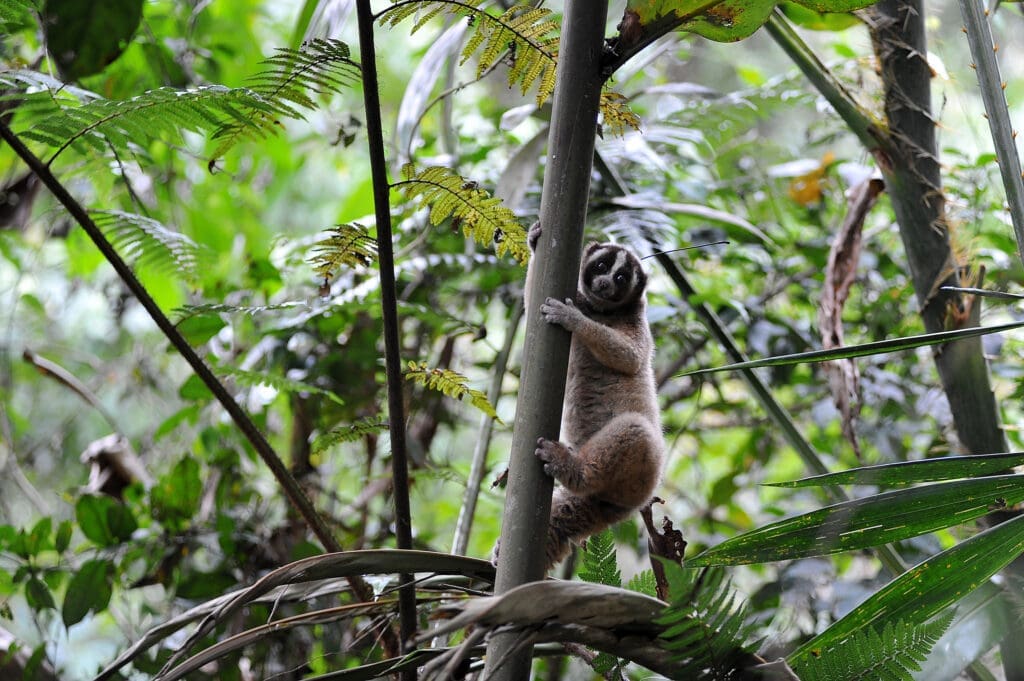
Coquerel’s sifaka in tree
An adult Coquerel’s sifaka photographed in Madagascar’s Ankarafantsika National Park
Image credit: Allan Hopkins via Flickr (CC-BY-NC-ND)

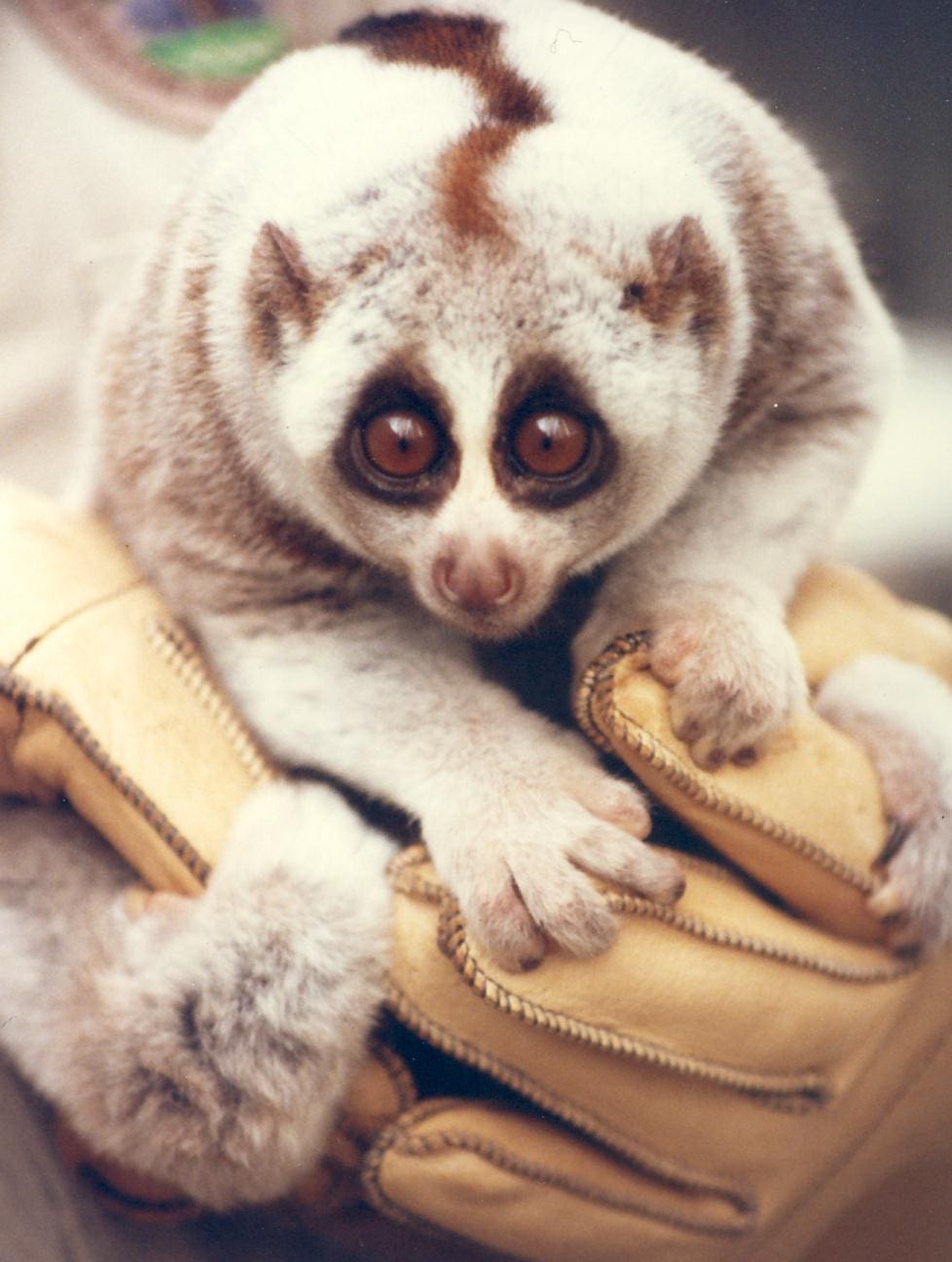
One of the shows, which I fondly recall growing up in the 1990’s was a live-action/animated children’s series titled Zoboomafoo. Created and hosted by zoologists and wildlife filmmakers, the Kratt Brothers (Chris and Martin Kratt), the show featured a talking Coquerel’s sifaka lemur named Zoboomafoo, who for the most part, was puppeteered, but in certain shots, was played by the “famous” lemur Jovian. Jovan’s appearance and his characteristic forward-facing bipedal bounds on the ground with his arms outstretched to the sides, made him a sight to behold, and his species leapt to the top among my favorite group of primates, the lemurs.

Cliché, but True: LEAPING LEMURS!

Native to the dry northwestern forests of Madagascar, the Coquerel’s sifaka, like other sifaka species, are distinguished from other lemur species by the way they move around their habitat: vertical clinging and leaping. Maintaining a vertical posture, sifakas leap from tree to tree using their long, powerful back legs, which can easily propel them distances up to 33 feet (10 m)! This unique motion isn’t limited to arboreal movement, however. Like their close cousin, the Verreaux’s sifaka, stretching their arms to the sides for balance, Coquerel’s sifakas move on open ground between areas of trees using bipedal hops. Unlike the former species, which bound sideways and cross their legs one in front of the other, the latter species bounds forward like a kangaroo, leaning in the direction of its jump to achieve forward momentum. In either case, these ground bounds evoke a human dancer! What’s more, the Coquerel’s sifaka has the amazing ability to leap to and across spiny trees and precisely place its hands and feet so that it won’t hurt itself on the cactus-like spines.

Girl Power!

Like most lemur species, the Coquerel’s sifaka is matriarchal–females hold a dominant status above males, they have preferential access to food and other resources, and they exhibit a polyandrous mating system, in which females mate with multiple males. Unlike other animal species which exhibit polyandry primarily to increase the chances for successful fertilization, polyandry among Coquerel’s sifakas is thought to be advantageous because when exact paternity is not known among the males of a group, the likelihood of infanticide among the potential fathers decreases.

Mouths: Useful for Munching, Vocalizing, and Cleaning

The Coquerel’s sifaka spends 30%-40% of the day foraging, especially during the morning, midday, and evening hours. They are herbivorous, with a diet that varies by season. In the dry season, they feed on mature leaves and buds, while in the wet season, immature leaves, flowers, fruit, bark, and dead wood are on the menu. Their diet contains a lot of fiber, so in order to aid in digestion, they have an enlarged cecum coupled with an extremely long colon. Thanks to each family group constantly moving around their home range, when releasing waste material as dung, Coquerel’s sifakas aid in seed dispersion of plant species throughout their forested habitat.

The Coquerel’s sifaka uses a wide variety of communication methods to relay messages about potential danger, territorial boundaries, and mood, among others. Among the most famous of their signals are their vocal signals. The word “shifaka” is a Malagasy name that comes from the lemurs’ characteristic “shif-auk” sound. The first syllable is a low growl that “bubbles” in the throat, and the second is a clicking sound like an amplified hiccup. The “shih-fak” call is used to warn fellow group members of a potential ground predator, or to threaten enemies and intruders, as all sifaka species are territorial. Contact calls used when family groups are traveling include soft grunts and growls. If a sifaka is separated from the group, it may emit a long, loud wail to find fellow members.

Coquerel’s sifakas have also been observed using visual signals to communicate as well. One of these is a rapid backward jerking of the head, which is a threatening action which may accompany the “shih-fak” call. They also rely heavily on scent for communication. Males typically scent-mark using a gland in their throats, which they will rub back and forth along branches. Females are more likely to scent-mark with anogenital glands. Despite the observance of scent-marking by researchers, it is not entirely clear what information is conveyed in these scents besides marking territory.

Like all lemurs, cleanliness is a must. Not only do Coquerel’s sifakas use what’s known as a toothcomb to occasionally scrape fruit off of a pit, but even more, they use this specialized dental structure consisting of a group of front teeth to groom one another. Like with other primates, grooming is a social activity that strengthens the bond between group members.

Many Conservation Threats, and Much Needed Collaboration

Like many other lemurs, the Coquerel’s sifaka have been studied extensively to help scientists learn about the evolutionary history of primates, including humans. They have been the subject of those researching the evolution of color vision, paternal care, matriarchal primate societies, and causes of speciation.

Unfortunately, 98% of lemur species (103 out of 107 listed on the IUCN’s Red List) are threatened with extinction, and of these, 31% of species (33 in total) are listed as Critically Endangered, including the Coquerel’s sifaka. The biggest threats facing the Coquerel’s sifaka are hunting for both local food and the pet trade, as well as habitat destruction in the form of slash-and-burn agriculture and annual burning to create new pasture for human livestock. Charcoal enterprises occurring in their “corner” of Madagascar are another habitat-destroyer of the already restricted distribution of this lemur species. Traditional beliefs placed major taboos on sifaka hunting, but new immigrants coming into the region in search of income are changing these beliefs through cultural erosion.

The Coquerel’s sifaka is listed in Appendix I of the Convention on International Trade in Endangered Species (CITES), an international agreement between governments whose goal is to ensure that international trade in specimens of wild plants and animals doesn’t threaten their survival. Coquerel’s sifakas are found in three protected areas in Madagascar: Ankarafantsika National Park, Anjiamangirana Protected Area, and Anjajavy Reserve. Unfortunately, habitat loss and hunting still pose threats in the former two locations.

Issues regarding Madagascar’s poverty have limited conservation efforts, especially when considering the need to burn down forest portions for economic gain and farmland. For this reason, it is critical to note that until the people of Madagascar can prosper, it will be difficult for the island’s unique wildlife to do the same. For this reason, the Wildlife Conservation Society has been collaborating with local communities to improve agricultural methods, develop businesses focused on sustainable resources, and modernize the local economies.

In addition, the American Journal of Primatology published a study in 2014 which recommended community-based conservation actions geared towards preserving forest connectivity, enacting alternative methods of charcoal production, logging, and grass fires, minimizing poaching, and collaborating with local authorities and researchers to ensure long-term monitoring of Coquerel’s sifakas in Ankarafantsika National Park.

With time and collaboration, hopefully the people and the truly unique wildlife of Madagascar will bounce back, and the Coquerel’s sifaka can continue to leap within the island’s northwestern dry forests for decades to come.


Sienna Weinstein is a wildlife photographer, zoologist, and lifelong advocate for the conservation of wildlife across the globe. She earned her B.S. in Zoology from the University of Vermont, followed by a M.S. degree in Environmental Studies with a concentration in Conservation Biology from Antioch University New England. While earning her Bachelor’s degree, Sienna participated in a study abroad program in South Africa and Eswatini (formerly Swaziland), taking part in fieldwork involving species abundance and diversity in the southern African ecosystem. She is also an official member of the Upsilon Tau chapter of the Beta Beta Beta National Biological Honor Society.

Deciding at the end of her academic career that she wanted to grow her natural creativity and hobby of photography into something more, Sienna dedicated herself to the field of wildlife conservation communication as a means to promote the conservation of wildlife. Her photography has been credited by organizations including The Nature Conservancy, Zoo New England, and the Smithsonian’s National Zoo and Conservation Biology Institute. She was also an invited reviewer of an elephant ethology lesson plan for Picture Perfect STEM Lessons (May 2017) by NSTA Press. Along with writing for Bio4Climate, she is also a volunteer writer for the New England Primate Conservancy. In her free time, she enjoys playing video games, watching wildlife documentaries, photographing nature and wildlife, and posting her work on her LinkedIn profile. She hopes to create a more professional portfolio in the near future.

References:

https://animals.sandiegozoo.org/animals/coquerels-sifaka

https://en.wikipedia.org/wiki/Coquerel%27s_sifaka

https://en.wikipedia.org/wiki/Sifaka

https://www.iucnredlist.org/species/18355/115572275

https://www.lemurconservationnetwork.org/learn/the-iucn-red-list-and-lemurs/

https://lemur.duke.edu/discover/meet-the-lemurs/coquerels-sifaka/
https://www.marylandzoo.org/animal/coquerels-sifaka/

https://neprimateconservancy.org/coquerels-sifaka/

https://onlinelibrary.wiley.com/doi/abs/10.1002/ajp.22243
https://programs.wcs.org/madagascar/About-Us/News/articleType/ArticleView/articleId/25728.aspx

https://www.sfzoo.org/coquerels-sifaka/

Images:

https://www.flickr.com/photos/hoppy1951/45134640554/

Featured Creature: Pangolin

A Temminck’s ground pangolin photographed in Gorongosa National Park, Mozambique
Image credit: Bart Wursten via iNaturalist (CC-BY-NC)

What animal is covered in scales made from the same material as our hair and nails, can extend its tongue as much as 16 inches (40 cm), and is sadly, the most trafficked in the world?

The pangolin (Order Pholidota)!

A Temminck’s ground pangolin photographed in Gorongosa National Park, Mozambique
Image credit: Bart Wursten via iNaturalist (CC-BY-NC)

After recently attending an interactive webinar entitled “Back from the Brink: How the Giant Pangolin is Catalysing Forest Recovery” hosted by The Pangolin Project (TPP), this week’s author Sienna Weinstein felt it was a sacred duty of sorts to create a Featured Creature profile on this iconic symbol of endangered species. I send my thanks to speaker Ebony Ellen Escalona and TPP for allowing me to attend such an informative, incredible event, featuring phenomenal photographs, as well as data relating to the impact of conservation actions aimed at protecting the giant pangolin on the biodiversity and recovery of Kenya’s Nyekweri Forest.

An Armor-Plated, Awkward-Gaited, Awe-Inspiring Animal

Eight species found in Africa and Asia make up the members of a truly unique-looking mammal known as the pangolin. Also known as “scaly anteaters,” “walking pinecones,” and “artichokes with tails,” pangolins are the only mammal covered in tough, overlapping scales made of keratin—the same material that makes up rhino horns, and our hair and nails. Making up about 20 percent of a pangolin’s body weight, their scales become a defense shield when they curl into a ball of protection against predators such as lions, leopards, and tigers. As another predatory defense mechanism, Pangolins can emit a noxious-smelling chemical from anal glands, similar to a skunk’s spray. 

Pangolins have short legs with sharp claws, which they use not only for climbing, but for digging into ant and termite mounds. They lack teeth, but like anteaters, they possess a long, sticky tongue which in larger species, can extend up to 16 inches (40 cm) in order to lap up their favorite foodstuffs: termites, ants, and their larvae. Despite some similarities to anteaters, and possessing traits which may remind an observer of armadillos, one of the closest living relatives of pangolins is actually the mongoose

8 Species With Wildly Different Habits

Most pangolins are nocturnal, with the only exception being the long-tailed pangolin, also known as the African black-bellied pangolin. There are also differences regarding where exactly certain species of pangolins live and sleep. All pangolin species search for food and water at ground level, but some species are arboreal, living in tree hollows. Ground-dwelling pangolin species dig tunnels to a depth of 11 feet (3.5 m) for shelter. Some species of pangolin, such as the tree pangolin (also known as the white-bellied pangolin), are rather acrobatic–using their strong prehensile tails to hang from branches and strip away bark from the trunk, exposing the insect nests inside.

Pangolin species even differ in their appearance while walking! Some walk with their front claws bent under the foot pad (although they use the entire foot pad on their rear limbs). Ground-based pangolins stand on their hind legs for some behaviors, such as surveying their surroundings or reaching higher objects, and may walk a few steps bipedally. Arboreal pangolins use bipedal movement less frequently, in comparison, and typically, in brief and unstable strides on the ground when moving between trees. Truly, after all of these fascinating facts, you could think pangolins are an alien species!

A Keystone Species

Pangolins are considered a keystone species–one that plays a crucial role in maintaining the health and diversity of their native ecosystems, as their actions significantly impact the environment and other species. Through their consumption of ants, termites, and their larvae, pangolins prevent these insects from overwhelming local vegetation, protecting both forests and human crops. Their digging abilities help to turn over the soil, aerating it and cycling nutrients, which is vital for plant growth and ecosystem regeneration, especially after fires. Abandoned pangolin burrows also provide homes for other species. Overall, pangolins physically reshape their environment which supports overall biodiversity, impacting both plant and animal communities.   

A pair of endangered white-bellied pangolins rescued at a fish market in Epe, Nigeria by St. Mark, a veterinarian and conservationist
Image credit: Adedotun Ajibade via iNaturalist (CC-BY-NC)

A Tragic Tale of Trafficking

Pangolins are one of the, if not the, most trafficked animals in the world despite international bans on the trade. While their plated armor protects them from natural predators, it doesn’t protect against their biggest threat: humans. Pangolins are in high demand in China and Vietnam, as their scales are believed to have medicinal properties (such as curing cancer or asthma) in traditional medicine.

For scale (no pun intended), one study found that between August 2000 and July 2019, [the equivalent of] at least 895,000 pangolins were trafficked internationally.[1]

Pangolin meat is also considered a delicacy in these countries, and a sought-after bushmeat in West and Central Africa. Spiritual beliefs regarding the power of pangolins are not just limited to East Asia, however. Pangolins and their body parts are used for a wide variety of medicinal and “fortunetelling” purposes in parts of Africa as well, promising wealth and a suitable partner, along with other tempting promises.[2][3] Finally, habitat change through deforestation, land conversion for agriculture, and urbanization, all pose ongoing risks to pangolin survival.

What Can be Done?

In July 2014, the International Union for the Conservation of Nature Species Survival Commission (IUCN SSC) Pangolin Specialist Group launched a global action plan to conserve pangolins, dubbed “Scaling up Pangolin Conservation”. This action plan aims to improve all aspects of pangolin conservation, with an added emphasis on combating pangolin poaching and trafficking while educating communities on the species’ importance. Another potential approach to fighting not only pangolin trafficking, but general wildlife trafficking as well, consists of the strategy of “following the money” rather than “the animal”, which aims to disrupt smugglers’ profits by interrupting money flows. Combatting deforestation is also a must in order to ensure the pangolin’s survival. These are just a few mentions, but there are plenty of conservation actions needed should these truly unique and endearing little animals shape ecosystems, slurp up insects, and ultimately, survive, for decades to come.


Sienna Weinstein is a wildlife photographer, zoologist, and lifelong advocate for the conservation of wildlife across the globe. She earned her B.S. in Zoology from the University of Vermont, followed by a M.S. degree in Environmental Studies with a concentration in Conservation Biology from Antioch University New England. While earning her Bachelor’s degree, Sienna participated in a study abroad program in South Africa and Eswatini (formerly Swaziland), taking part in fieldwork involving species abundance and diversity in the southern African ecosystem. She is also an official member of the Upsilon Tau chapter of the Beta Beta Beta National Biological Honor Society.

Deciding at the end of her academic career that she wanted to grow her natural creativity and hobby of photography into something more, Sienna dedicated herself to the field of wildlife conservation communication as a means to promote the conservation of wildlife. Her photography has been credited by organizations including The Nature Conservancy, Zoo New England, and the Smithsonian’s National Zoo and Conservation Biology Institute. She was also an invited reviewer of an elephant ethology lesson plan for Picture Perfect STEM Lessons (May 2017) by NSTA Press. Along with writing for Bio4Climate, she is also a volunteer writer for the New England Primate Conservancy. In her free time, she enjoys playing video games, watching wildlife documentaries, photographing nature and wildlife, and posting her work on her LinkedIn profile. She hopes to create a more professional portfolio in the near future.


References:

https://www.awf.org/wildlife-conservation/pangolin

https://biologicaldiversity.org/w/news/press-releases/pangolins-decline-deadly-poaching-continues-red-list-experts-find-2019-12-10/

https://en.wikipedia.org/wiki/Pangolin

https://www.instagram.com/p/DMBAmugKCdU/

https://link.springer.com/article/10.1186/1746-4269-10-76

https://news.mongabay.com/2019/12/three-pangolin-species-closer-to-extinction-iucn/

https://planetwild.com/blog/pangolins

https://pmc.ncbi.nlm.nih.gov/articles/PMC4300090/

https://www.savepangolins.org/what-is-a-pangolin

https://www.sciencedirect.com/science/chapter/edited-volume/abs/pii/B9780128155073000162

https://wildaid.org/wildaids-pangolin-priority-saving-the-most-trafficked-wild-mammal-in-the-world/

https://www.worldwildlife.org/resources/facts/what-is-a-pangolin/

https://www.zsl.org/what-we-do/species/pangolins

Images:

https://www.inaturalist.org/photos/80983346

https://www.inaturalist.org/observations/81231209

Featured Creature: Martial Eagle

What creature can knock a human off their feet, soars at heights beyond the naked eye, and is known as the “leopard of the air?”

Meet the Martial Eagle!

By Axel Tschentscher, CC BY-SA 4.0

My first introduction to the Martial Eagle (Polemaetus bellicosus) came when I was studying abroad in southern Africa. It was nearing sunset after a full day of working in the bush of South Africa’s Kruger National Park. Our vehicle was making its way back to camp when we stopped to observe a simple, yet powerful scene: an adult Martial Eagle perched atop a foliage-free tree with a snake in its talons. 

A Big Bird With Big Differences in Appearance

The Martial Eagle is the largest bird of Africa, with a length ranging between 31 to 38 inches (78-96 cm), weighing between 6.6-13.2 pounds (3-6 kg), and with a wingspan ranging between 72 inches to 102.4 inches (188-240 cm). Martial Eagles are highly sexually dimorphic, with females being larger and heavier than males.

Adult Martial Eagles are dark brown to almost blackish brown on the crown, nape, back, and upperwings, forming a solid, uniform mantle. The white chest, belly, and legs are marked with distinct dark brown to black spots or tear-shaped blotches. The spotting is heaviest on the chest, and becomes sparser towards the belly. The underside of the wings have a whitish base with darker flight feathers, giving quite a contrasting look while in flight, and the tail is dark brown with faint, broad grayish bands. Finally, the eyes sport striking yellow irises. 

Juveniles, by comparison, are much paler with less contrast and with coloration often described as “washed out.” The head and upperparts are chocolate to sandy brown, while the underparts are almost entirely white with little to no spotting. The underside of the wings is pale overall, lacking the sharp contrast between the body and flight feathers seen in adults. The tail is paler brown with more visible banding than the adults, and the eyes are dark brown or grayish in coloration.

A juvenile Martial Eagle photographed in Manyara, Tanzania
Image credit: nancylightfoot via iNaturalist (CC-BY-NC)

A High-Flying Powerhouse

The Martial Eagle is diurnal, and spends most of the day on the wing, soaring at heights at around 3.5 miles (5,500 m) above seal level. At these heights, the Martial Eagle can often not be seen by the naked eye. Speaking of eyes, in part due to theirs being roughly the size of a human’s, the Martial Eagle has incredibly keen eyesight, eight times as powerful as a human’s, and is able to spot prey from 3.1-3.7 miles (five to six km) away.

From its position high in the air, and with its muscular legs, powerful talons, and sharp beak, the Martial Eagle swoops down and delivers a swift and deadly strike, immediately incapacitating its prey. Coupled with the Martial Eagle’s immense size, the force is able to knock an adult human off their feet! Due to its spotted underbelly and ferocious efficiency as a predator, the Martial Eagle has sometimes been nicknamed “the leopard of the air.” A worthy moniker, indeed!

More Power Needed: Conservation

Despite their power as an apex predator, the Martial Eagle’s strength in numbers has been on a downward spiral in the wild. The most critical cause for the decline across their vast range in sub-Saharan Africa is direct persecution by farmers via hunting, trapping, and in very rare cases, poisoning, as they are mistakenly perceived as threats to livestock. In actuality, due to their shyness around humans, livestock makes up a very small percentage of a Martial Eagle’s diet. 

Other threats facing the Martial Eagle include indirect poisoning, drowning in sheer-walled reservoirs, electrocution on power lines and pylons, habitat alteration and degradation, and nest disturbance. In West Africa, the Martial Eagle is also threatened by a decline in suitable prey through human over-hunting. Large mammal populations in West Africa, an important food resource for the eagle, are highly threatened, and as human populations continue to rise, the threats are likely to increase in the future. The reduction in natural prey may lead to an increase in predation on domestic animals, which may in turn lead to further increased persecution by farmers. 

In some areas, birds including the Martial Eagle may be taken for use in traditional medicine, and bird parts have been found in muthi markets (i.e., traditional Southern African medicine markets) in Johannesburg, South Africa. Finally, Martial Eagles can use power pylons as nesting sites, which can lead to power outages, and thus create another form of human-wildlife conflict.

An adult Martial Eagle pictured in Kalkdam, South Africa
Photo credit: iprabhu via iNaturalist (CC-BY-NC-ND)

Currently, the Martial Eagle is listed as Endangered on the IUCN’s Red List. Conservation efforts are underway to aid the Martial Eagle, including a system initiated in South Africa to compensate farmers for stock losses. Additional proposed conservation actions include introducing programs that combine awareness campaigns and compensation to farmers for stock losses across the eagle’s range, installing anti-electrocution devices on power pylons, implementing education and awareness campaigns across the eagle’s range to reduce the use of poisoned baits, and carrying out regular population monitoring across the eagle’s range.

Hopefully, with these actions implemented, the Martial Eagle’s numbers can recover, and this incredible bird of prey can continue to soar across the southern African skies for decades to come.


Sienna Weinstein is a wildlife photographer, zoologist, and lifelong advocate for the conservation of wildlife across the globe. She earned her B.S. in Zoology from the University of Vermont, followed by a M.S. degree in Environmental Studies with a concentration in Conservation Biology from Antioch University New England. While earning her Bachelor’s degree, Sienna participated in a study abroad program in South Africa and Eswatini (formerly Swaziland), taking part in fieldwork involving species abundance and diversity in the southern African ecosystem. She is also an official member of the Upsilon Tau chapter of the Beta Beta Beta National Biological Honor Society.

Deciding at the end of her academic career that she wanted to grow her natural creativity and hobby of photography into something more, Sienna dedicated herself to the field of wildlife conservation communication as a means to promote the conservation of wildlife. Her photography has been credited by organizations including The Nature Conservancy, Zoo New England, and the Smithsonian’s National Zoo and Conservation Biology Institute. She was also an invited reviewer of an elephant ethology lesson plan for Picture Perfect STEM Lessons (May 2017) by NSTA Press. Along with writing for Bio4Climate, she is also a volunteer writer for the New England Primate Conservancy. In her free time, she enjoys playing video games, watching wildlife documentaries, photographing nature and wildlife, and posting her work on her LinkedIn profile. She hopes to create a more professional portfolio in the near future.


Dig Deeper

Featured Creature: Camel

A dromedary camel photographed in Varamin, Iran
Image credit: Houman Doroudi via iNaturalist (CC-BY-NC)

What animal is the “Superhero of the Desert,” reshaping entire ecosystems simply by eating, roaming, and . . . pooping?

Meet the Desert Superhero! 

A dromedary camel photographed in Varamin, Iran
Image credit: Houman Doroudi via iNaturalist (CC-BY-NC)

Desert wanderer
Curved as the dunes he walks on
Splat! Anger expressed

A close family friend asked me to cover camels as one of my Featured Creatures. Ask, and ye shall receive! Despite the majority of camels today being domesticated species, they still play important roles in their local ecosystem, and contribute to the biodiversity of the habitats in which they live.

Dominating the Desert, and De-bunking Assumptions

Camels are far more than the four-legged, desert pack animals typically shown in movies—their presence shapes the health, stability, and biodiversity of their ecosystems. Their grazing patterns, movement, digestion, and remarkable resilience collectively engineer the landscapes they inhabit.

Camels haven’t just adapted to desert life, their entire bodies are designed for endurance in some of the most unforgiving climates on Earth. Did you know they can go up to 10 days without drinking, even in extreme heat! Their long legs help keep them cool, elevating their bodies away from ground temperatures that can reach 158ºF (70°C), and their thick coat insulates them against radiant heat. In the summer, their coats lighten to reflect the sunlight.

Long eyelashes, ear hairs, and sealable nostrils protect against the blowing sand, while their wide, padded feet keep them from sinking into the desert sand or snow. Bactrian camels grow heavy winter coats that enable survival in winter temperatures (-20ºF [-29ºC]), then shed them to adapt to the hot summer temperatures. Their mouths have a thick, leathery lining that allows them to chew thorny, salty vegetation, with split, mobile upper lips that help them grasp sparse grasses . . . and spit. Well, sorta. . .  

Desert Engineers and Seed Dispersers

These “ships of the desert” feed on thorny, salty, dry plants that most herbivores avoid, keeping dominant species in check and promoting plant diversity. Their nomadic lifestyle prevents overgrazing, spreading this balancing effect across vast ranges and reducing the risk of desertification. As they move, they disperse seeds in their dung, enriching poor soils with nutrients and enabling new vegetation to take hold where it otherwise could not. 

Even their hydration strategy—relying heavily on moisture from plants and drinking only occasionally—protects scarce water sources that smaller species depend on. Trails they create become pathways for other wildlife, while their presence attracts predators and scavengers, helping sustain food webs in seemingly barren terrain.

People often assume that camels carry water in their humps and spit when they are annoyed. But those humps aren’t sloshing with water. They are fat-storage structures that provide a slow-burning energy reserve when food is scarce. And that spitting? It’s actually a warning system composed of both saliva and partially digested stomach contents. 

Helping People and Ecosystems Endure

Even though they may look goofy at first, the ecological and cultural value of the camel is extraordinary. 

They have supported human survival in harsh environments for thousands of years. Domesticated camels provide wool, meat, milk, transportation, and labor. Their endurance and strength have made them central to trade routes, cultural traditions, and economic activity across regions where few other animals could thrive.

Camels shape vegetation patterns, support biodiversity, stabilize fragile ecosystems, and enable life in regions that would otherwise be nearly uninhabitable. Without camels, many desert landscapes would lose the very processes that sustain them.

So next time you see a camel, in a movie, at a zoo, or on your travels, remember that these are no ordinary creatures. They are survival specialists and a cornerstone of some of the world’s harshest and most remarkable environments.

The wild bactrian camel (of which there are only 950 remaining)
photographed in Mongolia’s Gobi Desert.
Image credit: Chris Scharf, a client of Royle Safaris via iNaturalist (CC-BY-NC)

Sienna Weinstein is a wildlife photographer, zoologist, and lifelong advocate for the conservation of wildlife across the globe. She earned her B.S. in Zoology from the University of Vermont, followed by a M.S. degree in Environmental Studies with a concentration in Conservation Biology from Antioch University New England. While earning her Bachelor’s degree, Sienna participated in a study abroad program in South Africa and Eswatini (formerly Swaziland), taking part in fieldwork involving species abundance and diversity in the southern African ecosystem. She is also an official member of the Upsilon Tau chapter of the Beta Beta Beta National Biological Honor Society.

Deciding at the end of her academic career that she wanted to grow her natural creativity and hobby of photography into something more, Sienna dedicated herself to the field of wildlife conservation communication as a means to promote the conservation of wildlife. Her photography has been credited by organizations including The Nature Conservancy, Zoo New England, and the Smithsonian’s National Zoo and Conservation Biology Institute. She was also an invited reviewer of an elephant ethology lesson plan for Picture Perfect STEM Lessons (May 2017) by NSTA Press. Along with writing for Bio4Climate, she is also a volunteer writer for the New England Primate Conservancy. In her free time, she enjoys playing video games, watching wildlife documentaries, photographing nature and wildlife, and posting her work on her LinkedIn profile. She hopes to create a more professional portfolio in the near future.

Dig Deeper

https://animals.sandiegozoo.org/animals/camel

https://arkbiodiv.com/2022/05/18/the-camels-play-important-role-in-ecosystem-management-important-actor-of-the-desert/

https://dairynews.today/global/news/odnogorbyy1-verblyud-klyuchevoy-vid-dlya-vozrozhdeniya-pustyni-i-ustoychivogo-razvitiya.html

https://en.wikipedia.org/wiki/Camel

https://en.wikipedia.org/wiki/Wild_Bactrian_camel

https://kimd.org/the-role-of-camels-in-desert-ecosystems/

https://www.worldatlas.com/articles/how-many-types-of-camels-live-in-the-world-today.html

https://www.worldwildlife.org/stories/what-do-camels-store-in-their-humps-and-other-camel-superpowers

https://www.zsl.org/news-and-events/news/wild-bactrian-camel-research

Featured Creature: Grand Cayman Blue Iguana

What lizard is among the largest in the Western Hemisphere, has striking red eyes to reduce the sun’s glare, and has been called the “Gardener of the Forest” in their native ecosystem?

A male Grand Cayman blue iguana sunning himself
Image credit: David Jeffrey Ringer via iNaturalist (CC-BY-NC)

Big, Blue, and Totally Cool

As its name suggests, the Grand Cayman blue iguana is native to the largest of the Caribbean’s Cayman Islands. An example of island gigantism, the Grand Cayman blue iguana is also among the largest lizards in the Western Hemisphere, measuring five feet (1.5 m) from nose-to-tail, and weighing as much as 30 pounds (14 kg).

Adult iguanas are typically dark gray in color, matching the karst rock of the landscape. In the presence of other individual iguanas, however, they change their color to blue to signal to one another and establish territorial boundaries. Grand Cayman blue iguanas also exhibit sexual dimorphism, or noticeable physical differences between genders. Males are larger, are dark gray to turquoise blue in color, have more prominent crests along the back, and larger femoral pores (secretory glands which release pheromones, or chemical signals) on their thighs. Females are smaller than males, are typically colored olive green to pale blue, and have smaller and less prominent dorsal crests and femoral pores. Both genders have black feet, and, as equally striking as their skin color, have eyes sporting gold or blue-ish gray irises and red sclera. The red coloration of the sclera (the “white” part of the eyes in humans) is an adaptation to protect the pupils from the sun’s powerful glare in their tropical habitat.

Speaking of habitat, this iguana prefers dry, rocky forests in coastal areas of the island, but may also be found in scrub woodlands, semi-deciduous forests, and dry-to-subtropical, moist forests. Iguanas as a whole are rather adaptable, and can be found in manmade habitats as well, especially farmlands bursting with their favorite foods, such as flowers, fruits, leaves, nuts, and stems of over 45 different plant species. Although predominantly herbivorous, the Grand Cayman blue iguana has occasionally been observed feeding on fungi, insects, crabs, slugs, soil, small rocks, bits of shed skin, and feces.

The Grand Cayman blue iguana is diurnal, or most active during daylight hours. They begin their day basking in the sun to warm up, and at the end of the day, retreat to rock crevices, caves, tree cavities, and in more urbanized locations, buildings and piles of construction material. Adults are primarily terrestrial, and while not known to be arboreal (tree-dwelling), individuals have been observed climbing trees 15 feet (4.6 m) and higher. Younger individuals tend to be more arboreal. This iguana’s large size also comes with a few additional benefits: adults have no natural predators, and while their average longevity is not known, the species can live in excess of 50 years! One wild-caught individual (appropriately named Godzilla) who was transferred to the Gladys Porter Zoo in Brownsville, Texas was estimated to be 69 years of age upon his death in 2004. Notice how I said that adults have no natural predators? Hatchlings are preyed upon by the native snake the Grand Cayman racer, as well as rats, while iguanas of any age can fall victim to feral, free-roaming dogs and cats introduced by humans.

Headshot of a male Grand Cayman blue iguana at the Smithsonian’s National Zoo, Washington, D.C.
Image credit: Sienna Weinstein

An Important Lizard and an Ongoing Conservation Success Story

The Grand Cayman blue iguana is considered a flagship species of the Cayman Islands–a symbol of not only the area’s unique biodiversity, but also the broader conservation effort due to its public appeal as a strikingly colorful species of Grand Cayman. This iguana plays a pivotal role within its habitat as a keystone species–one that plays a crucial role in maintaining the health and diversity of their native ecosystems, as their actions significantly impact the environment and other species. As Grand Cayman’s largest native herbivore, this iguana helps distribute native fruit and plant species across the island via their feces. This has led to them being called the “Gardener of the Forest” by tropical field biologist and conservationist Ian Redmond–a worthy title indeed. Through this role as a living, breathing forest-growing machine, they help to maintain the delicate balance between the climate and vegetation necessary for all species to survive in the island’s ecosystem.

The main threats facing the Grand Cayman blue iguana are predation of adults by feral cats and dogs, habitat conversion (mainly from fruit farms to grasslands for cattle grazing), deaths from vehicle collisions, trapping and shooting by farmers, being mistaken for the invasive green iguana and retaliated against, and occasional illegal capture of iguanas for the local pet trade. In 2002, only 10-25 individuals were recorded, making this iguana one of the most critically endangered lizards on Earth. Thanks to an extensive recovery program, among other conservation partnerships, as of July 2018, wild Grand Cayman blue iguana numbers have rebounded to over 1,000 individuals, moving on the IUCN’s Red List from Critically Endangered to Endangered. Ongoing conservation needs for the Grand Cayman blue iguana include additional research to manage the genetic diversity of the species, controlling populations of feral cats and dogs, and continuous public education and outreach efforts to combat the threats this unique species of iguana still faces today.


Sienna Weinstein is a wildlife photographer, zoologist, and lifelong advocate for the conservation of wildlife across the globe. She earned her B.S. in Zoology from the University of Vermont, followed by a M.S. degree in Environmental Studies with a concentration in Conservation Biology from Antioch University New England. While earning her Bachelor’s degree, Sienna participated in a study abroad program in South Africa and Eswatini (formerly Swaziland), taking part in fieldwork involving species abundance and diversity in the southern African ecosystem. She is also an official member of the Upsilon Tau chapter of the Beta Beta Beta National Biological Honor Society.

Deciding at the end of her academic career that she wanted to grow her natural creativity and hobby of photography into something more, Sienna dedicated herself to the field of wildlife conservation communication as a means to promote the conservation of wildlife. Her photography has been credited by organizations including The Nature Conservancy, Zoo New England, and the Smithsonian’s National Zoo and Conservation Biology Institute. She was also an invited reviewer of an elephant ethology lesson plan for Picture Perfect STEM Lessons (May 2017) by NSTA Press. Along with writing for Bio4Climate, she is also a volunteer writer for the New England Primate Conservancy. In her free time, she enjoys playing video games, watching wildlife documentaries, photographing nature and wildlife, and posting her work on her LinkedIn profile. She hopes to create a more professional portfolio in the near future.

Dig Deeper

Featured Creature: Siberian Taimen

What creature is nicknamed the “river wolf?”

Cyrus Kiely

The guide pulls back on the oars, straining with effort to stay in place against the current. The angler leans back in a similar manner, his rod bowed under pressure. 

A fish erupts from the water, scales glimmering with the evening light. 

Just as quickly as it broke the surface, it disappears from view, still engaged in its titanic struggle at the end of the line. After fifteen minutes of unpredictable splashes, tension, and shouts of excitement, I was introduced to the most charismatic creature I’ve ever met: the Siberian Taimen. 

This particular Taimen was four feet of silvery power. We stood in awe as the bright red tail slipped through the angler’s hand, disappearing once more into a dark pool. Not to be held by another human for years, if ever again.  I sighed with relief, thankful our good practice led to a healthy release. 

I remember reflecting on how much needed to happen to reach this moment. The client had to take 3-4 flights to get across the world, followed by 8 hours crammed in a Jeep from the 20th century, navigating dirt roads. 

They did this all for just the opportunity to catch a taimen — a creature notorious for being incredibly difficult to catch.  

But that singular moment makes it all worthwhile.

The exact fish described above. Unfortunately, my hand was shaking so much that I couldn’t capture the vibrant red tail.
Cyrus Kiely

This was my first week on the job at Mongolia River Outfitters — a premier fly fishing outfitter and conservation organization. Throughout the rest of the season, I learned how this awe-inspiring creature holds its entire ecosystem in balance, a balance threatened by the fragility of the species.

Taimen are the largest Salmonids (the trout and salmon family) in the world. They can live up to 30 to 50 years, reach sizes greater than SIX FEET, and weigh more than 100 pounds! Ecologically speaking, they are slow growing, apex predators, feasting on trout, ducklings, and small mammals that find themselves at the mercy of the river.

The landscape of a wild taimen river.
Cyrus Kiely

Taimen epitomizes the term “keystone”.

They keep their river’s ecosystem in delicate balance, regulate prey populations, cycle nutrients, and occupy an indispensable niche.

By regulating prey populations, smaller fish species such as lenok or arctic grayling are unable to outcompete the rest and establish a hegemony within the river. In turn, these rivers remain rich in biodiversity!

In fact, thanks to the Taimen, these rivers grow even more nutrient rich and biodiverse. In parts of Russia, they have been known to regularly prey on adult Pacific salmon. These salmon (averaging around 20 lbs) run up freshwater rivers from the ocean, bringing the nutrients from the Pacific along with them. Thanks to the Taimen, these nutrients get passed from individual to individual, benefitting the entire ecosystem with their presence.

Taimen truly are facilitators of interconnectedness, maintaining population structures and promoting the flow of nutrients. While this importance often goes unnoticed and underappreciated, it’s only when they disappear that everyone sees just how integral these fish are.

When Taimen disappear from their historic waters, their absence can lead to a domino effect in the structure of the ecosystem.

Without the Taimen to keep them in check, prey populations such as lenok and grayling explode. In this exponential growth, the aquatic invertebrate (water bugs) populations they feed on plummet due to overpredation. Because of this, algae and plants are no longer kept in check by these aquatic invertebrates ,which feed on them.

So far, in this theoretical event, we have a lot of small fish, not too many bugs, and way too much algae in the river. But, over time, the situation will grow more dire. As the fish lose insects to feed on, they begin to experience massive die-offs. The insect populations vary wildly, as predator pressure shifts unpredictably, and algae blooms become a real issue. They suck up an incredible share of oxygen from the water, a vital element of a trout’s ideal habitat.

The simple absence of Taimen causes a cascade of domino effects, ending in low trout numbers and a less suitable environment due to lower oxygen levels. Luckily, this is the worst case scenario. Today, taimen continue to thrive in many protected areas, maintaining the delicate balance of these ecosystems. As conservationists, environmentalists, and people who really like cool creatures, it’s our job to investigate what threatens this delicate balance.

Poaching: A Threat to a Delicate Balance

If Taimen are so integral to the ecosystems they live in, don’t we understand that we need to protect them? Yes, but when an unexpected threat hits Taimen, it hits them hard.

Due to their large size, old age, and voracious appetite, Taimen have a very low population density within rivers. This fact means the death of a single mature Taimen is a significant ecological shift in population dynamics.

As humans, we have struggled to comprehend this fact. Individual deaths may seem insignificant when compared to the abundance of smaller fish, but for the Taimen, each loss represents decades of growth, reproduction, and ecological importance within an ecosystem.

Today, the threat of poaching looms over many of these protected fish with the very real issue of local extinction.

Over three months on the river, I witnessed countless poaching related incidents. I saw the head and carcass of what was a 20 year-old fish filleted and carelessly tossed away on the bank. Another time, a dead Taimen washed up on the shore with a barbed treble hook lodged down its throat, shredding its stomach and causing a slow and painful death.

Lenok
Book Talk, The Dawn Patrol Diaries, James Card

How much poaching and loss are we willing to put up with?

I hope for a future where I can relive that magical summer evening. I hope to one day lean back, straining with effort as I reel in, physically and spiritually connected to one of nature’s most remarkable creatures. I hope we have enough foresight to prevent such a loss, so the world can continue to marvel at the charisma of such an ancient and inspiring animal.


Cyrus Kiely is an undergraduate at Dartmouth College, studying Quantitative Social Science and Environmental Studies. He is an avid skier, hunter, and lifelong outdoorsman with a passion for biodiversity conservation. His experiences growing up in Montana, combined with environmentally focused opportunities abroad in Mongolia and Namibia ,have shaped his commitment to fighting environmental challenges. Particularly the importance of large landscape conservation in the face of rapid development.


Dig Deeper

Featured Creature: Yangtze River Dolphin

What river-dwelling goddess could navigate by sound alone, survived twenty million years of environmental change, yet disappeared within a few decades of human industrial expansion?

Image Credit: Hu Weiming/IC

According to Chinese legend, the story of the baiji begins with a beautiful young girl who lived along the Yangtze River with her evil stepfather. One day he took her out by boat, with hopes to sell her at the local market. During this journey, he attempted to take advantage of the girl, and she dove into the welcoming arms of the Yangtze river to escape. Suddenly, a storm rose, capsizing the boat and drowning him. When the water calmed, a white dolphin appeared gliding across the current. The locals believed this to be the girl reborn as the baiji: Goddess of the Yangtze and guardian of fishermen.

For centuries, the baiji was more than a dolphin. She was deeply embedded in Chinese mythology, and fishermen considered encountering the baiji a good sign. The baiji embodied the river itself and served as a reminder of the river’s generosity, as well as the dangers. Unfortunately, in 2006, experts declared the baiji as functionally extinct.

The baiji fell victim to the one force she could not outswim: human industrial expansion.

A Living Fossil

The baiji, Lipotes vexillifer, was one of only five freshwater dolphin species in the world. Nicknamed the “living fossil,” the baiji was a subspecies that diverged about sixteen million years ago from two South American species: La Plata dolphins and the Amazonian river dolphin. The baiji was the only member of the mammal family called Lipotidae since they carried unique traits such as a single stomach rather than two and small eyes adapted to the Yangtze’s murky waters.

The Yangtze: Lifeline and Powerhouse

Stretching over 6,300 kilometres from the Tibetan Plateau to the East China Sea, the Yangtze is Asia’s longest river and the third longest in the world. Today it supports mega dams like the Three Gorges, shipping routes carrying millions of tonnes of cargo, and over 400 million people living in cities along its banks. Alongside this, it generates about $2 trillion annually, nearly 40% of China’s GDP and sustains hundreds of fish, mammal, amphibian and reptile species.
The baiji was perfectly adapted to this environment, with a long, narrow beak and echolocation ideal for shifting through silt and mud in search of carp and catfish. She often fed near sandbars, where nutrient-rich deposits attracted fish and fishermen alike. But even these adaptations could not save her against escalating industrialisation.

Sadly this is not the only extinction story from the Yangtze. The Chinese paddlefish, and last member of its genus Psephurus, was last seen in 2003. This species survived for at least two hundred million years, and was killed, with overfishing and dam construction to blame.

Tan Wei Liang Byorn

When Growth Outpaces Nature

Before China’s industrialisation in the 1950s, there were an estimated six thousand baiji living in the Yangtze’s thriving ecosystem. By the 1980s, only a few hundred remained, and by 1997, fewer than twenty were left. The baiji’s collapse reflects what can happen when economic growth is expedited at the expense of ecologies, both human and non-human.

China’s proto-industrialisation began in 1978, and while the baiji were initially hunted for meat, oil and leather, the greater threats came later from dredging, untreated waste, and the Three Gorges, which permanently altered the Yangtze’s flow. Studies suggest that it was not simply the changes to the river flow, but the relentless pursuit of artisanal fishing that posed a major threat to the baiji. Many small-scale fishers, trapped in poverty, ignored restrictions and turned to destructive methods such as electric shocks and dynamite. In 1981, extreme poverty affected 70% of urban and 97% of rural Chinese populations, thus leaving fishermen little choice but to prioritise survival over sustainability.

The baiji were not deliberately hunted to extinction but perished as bycatch, a concept economics call a ‘negative externality’ which reflects the hidden costs of rapid industrialisation. These costs include habitat destruction, pollution, and biodiversity loss; all of which were not factored into economic calculations that drove further development along the Yangtze. Each of these costs matter individually, yet when collectively overlooked they do not only lead to environmental damage, but also result in missed opportunities for intervention that could have prevented irreversible loss.

Missed Chances

The Yangtze can be described as a social-ecological system due to its interconnected importance for humanity and nature alike, thus making its management complex and politically charged. As baiji populations declined alongside other species, Chinese lawmakers implemented protective legislation in the late 1970s banning harmful fishing practices and creating reserves along the main channel. The issue of how to save the baiji was debated internationally, including in two IUCN reports, but the existence of differing opinions led to minimal financial or logistical support ever materialising. In-situ reserves (on-site conservation efforts) proved inadequate, and the later ex-situ (controlled preservation of a species outside of its natural habitat) programme at the Tian’e-Zhou oxbow lake came too late. In 1995, one baiji was successfully transferred, but perished due to summer flooding and thus the initiative collapsed.

Arguably, only a total fishing ban could have offered real protection, however given that the majority of Chinese households lived in extreme poverty in the 1980s, this would have been economically and socially unfeasible. Families depended on the river for survival, and there would have been a need to provide alternative income sources and livelihoods for river communities. It seems almost impossible for a developing nation to shoulder this economic burden. In 2021, China finally implemented a 10-year fishing ban.  By 2020, studies show that the share of people living in extreme poverty in both urban and rural areas was below 1%, and now as the world’s second-largest economy China could absorb the financial cost of such policies.

Sadly, it was too late for the baiji. This case is illustrated by the ‘environmental Kuznets curve’ (EKC), shown below, which describes the relationship between economic development and environmental degradation. EKC suggests that environmental degradation initially increases with economic growth in poorer countries, then decreases after reaching a certain income level. The idea is that countries often cannot afford environmental protection until a certain level of development is reached.  But, by that point, often too much damage has been done to the most vulnerable species.

Beyond the Tragedy of the Commons

What happens when everyone has access to an abundant public resource? American ecologist and microbiologist, Garrett Hardin, considered this very question with his concept of the ‘Tragedy of the Commons.’ He describes a situation in which individuals with access to a finite public resource, such as the Yangtze, will all act in their own interest and thus overuse it, even possibly destroying the resource altogether. This concept links well to artisanal fishing. The regulation of common resources is a widely discussed concept, as it focuses on creating incentives to change individuals’ behaviour and use of shared resources, rather than relying on government ownership and direct control.

Yet Hardin’s model captures only one part of the baiji’s story. As mentioned earlier, much of the destructive fishing stemmed from economic desperation with families choosing to provide for themselves no matter the cost. Even those aware of the damage often continued because others did, a dynamic known as conditional cooperations. This reflects a wider reality that many of the ‘tragedies of the commoners’ are at heart, tragedies of inadequate social policy, where poverty traps leave communities without viable alternatives.

For the case of the baiji, the Yangtze required not only stronger top-down regulation, but also community-level institutions that Noble-prize winner Elinor Ostrom described within the concept of ‘polycentric governance.’ This governance system requires multiple, independent decision-making centres to interact and coordinate, rather than relying on a single, centralised authority. In the context of the Yangtze, this method requires not just regulation from Beijing, but also local fishing cooperatives collaborating and collectively developing economic incentives for conservation and alternative livelihoods for river-dependent communities. Economists now promote a scheme called ‘Payments for Ecosystem Services’, where communities are paid to conserve biodiversity. Had such frameworks been in place in the 1980s, fishermen might have been given both the means and the incentives to protect the baiji. Unfortunately, the absence of these mechanisms left short-term survival and extraction as the only rational choice.

Moving forward

All six river dolphin species in the world are classified as Endangered or Critically Endangered on the IUCN Red List of Threatened Species. In South Asia, the Ganges River Dolphin, scientifically known as Platanista gangetica, is officially endangered. Like the baiji, the Ganges River Dolphin holds significant cultural importance in Hinduism, but is struggling under mounting pressures from industrial runoff and accidental bycatch. Meanwhile, in South America, the Amazon River Dolphin faces mercury contamination from gold mining, entanglement in fishing gear, and deliberate killing for use as bait. It seems that the baiji’s extinction is not an isolated tragedy, but part of a global pattern for other river dolphins. 

Despite these challenges, there are signs of hope for river dolphins around the world. Studies show that China’s 10-year ban has shown promising results for biodiversity recovery. Fish eggs and fry counts in 2023 from the Jianli monitoring section reached six billion in total which is 4.4 times higher than those in 2020. However, scholars debate whether the ban alone is enough to reverse the situation, particularly since overfishing contributed only 30% of the total fish decline, with human activities contributing more heavily. Globally, there is a clear increase in integrating ecological resilience into economic frameworks. For instance, Costa Rica’s Payments for Environmental Services Program (PES) is the first scheme of its type in the region. This program is designed to promote forest ecosystem conservation and combat land degradation In which landowners receive payments for adopting sustainable land-use and forest-management techniques. Additionally, WWF’s River Dolphin Initiative acts as a global knowledge hub of the best practices for river dolphin conservation and management.

The baiji’s extinction illustrates the cost of delayed regulation, undervalued ecosystem services tied together with short-term economic thinking. Extinction is final, and the baiji’s story reminds us that we must embed biodiversity into policy before it is too late. 

Once revered as the Goddess of the Yangtze and guardian of fishermen, the baiji now endures as a warning, that treating rivers as merely resources erodes not just ecosystems but the very myths that bound us to them.


Marija Trendafiloska is a final-year BSc (Hons) Economics and Management student at King’s College London with a keen interest in environmental economics and climate policy. Her research experience has focused on turning complex economic concepts into clear, actionable policy insights, something she is motivated to deepen through postgraduate study. As the Co-President of KCL Green Finance Society, she also explores the intersection of sustainable finance, policy, and real-world impact. Beyond her academic commitments, Marija is passionate about reading, painting, and playing the piano, alongside being an avid gym-goer.


Dig Deeper

Featured Creature: Sun Bear

Which species of bear is the smallest and most arboreal, has the longest tongue of all bears, and are so smart, they can pick locks with their claws?

Courtesy Pexels

Made for the trees

If there is perhaps one thing to know about the sun bear, it’s that they are built for life in the trees.

If you were to design a near-perfect specimen for the arboreal life, you might end up with something pretty close to a sun bear.

Think about it. Its front paws turn inward like a pigeon’s, giving extra grip when climbing, while its strong, curved claws act like hooks to pull it upward. A flattened chest streamlines the body, reducing drag as the bear moves among a complex array of branches. Bare paw pads help add even more traction. And that thick coat? It helps protect these climbers from stings, scrapes, and tropical downpours…regular hazards of the trade. Even its eyes are set slightly forward compared to other bears, improving depth perception and giving their balance a boost high off the ground.

Sun bears are the smallest of all bear species, at 3.5-4.5 feet (1.1-1.4 m) long, and weighing 60-145 pounds (23-65 kg); males are almost 25 percent larger than females. Despite their awkward-looking gait on the ground due to their inward-facing front paws, their small size allows them to be quick-moving and flexible within their habitat, resulting in an ability to climb up to 40 feet (12.2 m) into the canopy! This impressive climbing feat makes the sun bear the one of the highest-climbing bear species of them all.

By hugging the tree more effectively with those inward-turned paws we just learned about, the sun bear can use its powerful forearm and chest muscles to climb. The inward angle essentially helps the front paws act like grappling hooks–preventing slipping while the hind legs push upward. For such a small bear, there’s a lot of muscle involved!

Sun bear claw marks in a tree, Thailand
(Photo by Max Vanl)

Shy and reclusive, sun bears are largely solitary (except for a mother and her cubs), and are typically most active during the day, foraging for food in the trees, and sunbathing in tree crevices, fallen logs, and especially nests they create out of twigs and leaves among the branches of the trees. They tend to be found far from human activity and can adjust their activities to be more nocturnal in order to avoid humans and any potential consequences that may result from such an encounter.

Sun bears are opportunistic omnivores, primarily eating fruits, insects (especially bees and termites), lizards, rodents, and their absolute(ly cliché) favorite: honey! Using their sharp claws, they break tree bark and beehives and use their impressive 8-10 inch (20-25 cm) long tongue (!!!) to lick up the insect and honey goodies. Their love for honey has unsurprisingly given them the nickname of “honey bear”, beruang madu, in Malay and Indonesian.

And they’re smart, too. A 2019 study discovered that, like humans and gorillas, sun bears use facial mimicry to communicate with one another. The study concluded that sun bears use distinct open-mouthed expressions during play, which could be used to communicate an interest in play or to strengthen social bonds. This power of observation extends to a little harmless tomofoolery, too. A captive sun bear was once observed carefully watching as sugar was locked away in a cupboard. Later, it used one of its claws like a key to open the lock and reward itself by snatching the sweet treat.

Courtesy Pexels
Sun bears on the prowl in Thailand
Image by Kridati

A species in danger

Sun bears play an important role in helping maintain the health and diversity of their native ecosystems, as their actions, routines, and behaviors significantly impact the environment and other species. While searching for beetles and other insects to eat, sun bears tear into tree trunks with their claws, leaving behind gashes and hollows. What begins as a little collateral damage later becomes a gift to the forest: the openings provide nesting spots and shelter for birds, reptiles, and other smaller animals. In addition, as fruit and seed-eaters, sun bears aid in the regeneration of their forest habitats by dispersing seeds through their feces as they move around. Finally, they can be considered pest controllers as a result of their diet consisting of insects and small rodents.

The sun bear is listed as Vulnerable on the IUCN Red List. Due to their secretive nature, it is unknown just how many wild individuals remain. But we do know they are in steep decline, with observable populations shrinking by more than 30% over the past three decades. Farming, logging, and poaching for meat or traditional medicine have stripped away both their habitat and safety, while the illegal pet trade adds further pressure. Their tendency to raid palm oil plantations and other crops has also fueled conflict with people.

While it is illegal to kill sun bears, laws protecting them are rarely enforced, and those laws that exist are poorly executed. There is A LOT that needs to be done in order to protect the sun bear on national, international, and local levels. Additional studies to further our knowledge of sun bear ecology, population distribution, conservation status, and the effect of threats, along with intense actions designed to reduce the trade in bear parts and to reduce habitat loss and degradation are some of the conservation actions needed to ensure that the smallest bear in the world remains free to climb trees and slurp up honey for years to come.


Sienna Weinstein is a wildlife photographer, zoologist, and lifelong advocate for the conservation of wildlife across the globe. She earned her B.S. in Zoology from the University of Vermont, followed by a M.S. degree in Environmental Studies with a concentration in Conservation Biology from Antioch University New England. While earning her Bachelor’s degree, Sienna participated in a study abroad program in South Africa and Eswatini (formerly Swaziland), taking part in fieldwork involving species abundance and diversity in the southern African ecosystem. She is also an official member of the Upsilon Tau chapter of the Beta Beta Beta National Biological Honor Society.

Deciding at the end of her academic career that she wanted to grow her natural creativity and hobby of photography into something more, Sienna dedicated herself to the field of wildlife conservation communication as a means to promote the conservation of wildlife. Her photography has been credited by organizations including The Nature Conservancy, Zoo New England, and the Smithsonian’s National Zoo and Conservation Biology Institute. She was also an invited reviewer of an elephant ethology lesson plan for Picture Perfect STEM Lessons (May 2017) by NSTA Press. Along with writing for Bio4Climate, she is also a volunteer writer for the New England Primate Conservancy. In her free time, she enjoys playing video games, watching wildlife documentaries, photographing nature and wildlife, and posting her work on her LinkedIn profile. She hopes to create a more professional portfolio in the near future.

Featured Creature: Black Capped Petrel

Which charismatic seabird is famed for its aerial agility and the illusion that it can walk on water?

Image credit: Patrick Coin (cc-by-sa-2.5)

Alone on a rolling sea, I scan the waves for life and find comfort in the company of seabirds. While gannets and shearwaters soar, it is the little storm petrels that make me smile the widest. They are like ocean butterflies, fluttering the valleys between waves to pluck at invisible animals in the neuston. Because so much of the world is covered by the ocean, the most numerous bird species is the Wilson’s petrel, found in all oceans. In New England and Newfoundland, Leach’s petrel nests on rocky outlying islands. Storm petrels can be distinguished by their foot color, shape of the “usual” white rump patch, and tail shape. I cannot tell them apart, and that does not lessen my enjoyment of being with individual petrels. 

The black-capped petrel feeds on squid, tiny fish, and zooplankton. Named “petrel” after the fisherman Saint Peter because the spritely birds stirring the sea surface with their feet for food looked like they were walking on water. 

These elegant little birds, dressed in black and white feathers, spend most of their lives in the Caribbean Sea, returning to land in fading light to nest in burrows among the mountains of Hispaniola and Dominica.

Patrick Nouhailler (CC BY SA 2.0)

Sadly, the black-capped petrel is currently threatened due to human activity.

The mountains where they nest are being cleared for agriculture and development, which is destroying the petrel’s nesting habitat, making it increasingly difficult for the population to survive.

During their nesting period, black-capped petrel chicks fall prey to human-introduced species such as rats and mongooses. These invasive predators have had a devastating impact on the petrel population.

From mountains to the sea, our environment is all connected. Our actions high on land are harming petrels and marine life below.

The good news is that local actions, when taken together, have a meaningful impact. We have passed a tipping point where vegetation is being removed, and soils are being replaced by hardscapes and heat islands. Although annual rainfall has not increased, water that once seeped into the ground now runs off as stormwater, causing flooding. When water cascades over hot hardscapes, it absorbs and transports heat to the ocean, along with harmful pollutants that reduce the productivity of phytoplankton and lower the nutritional value of copepods, a petrel’s favored food.

File:Pterodroma hasitata map.svg
Petrel Range.
Andrew Farnsworth, Cornell Lab of Ornithology

To better understand what’s happening, try warming a cup of water with a hair dryer. You’ll find that the only way to heat water above the air temperature is to place it on a hot plate. The solution to the petrel’s plight is to remove the hot plates, to cover heat islands with vegetation and soil, such as potted plants and raised gardens. Enabling properties to retain rainwater that falls on them will allow plants and rivers to survive dry periods, reduce municipal stormwater management costs, and alleviate suffering for people living in low-lying areas.

Our collective action to green our neighborhoods can turn the tide on the climate crisis and save charming little birds like the black-capped petrel from extinction.

I like to take the power of the wind to propel a sailboat into the wind. For the sails to fill and drive the boat forward, the wind must be about 40 degrees to the side. Too close to the wind, the sails lose the wind, luff, and the boat stalls. Sail for a while on a tack with the wind coming over one rail and then turn the boat before the wind, to fill the sails on the other side. Progress is a zigzag. Sometimes, when going through the narrows, no matter how expertly the boat is brought about and sails sheeted in, the windward mark cannot be fetched due to wind, tide, and weather. 

I take the same approach to advancing environmental legislation. The course is set, sails trimmed, and you go as far as you can, against the wind, before conditions change and obstacles appear. Then, quickly shift the effort onto a new tack. Sometimes, despite everyone’s best efforts, the legislation does not pass. Like going for an afternoon sail, win or lose, you still go sailing the next day because it’s not the destination; it’s the thrill of the voyage with a capable crew pulling together when the helmsman cries:

“Ready about, hard to lee,” fill the sails with wind and move forward once more.

FWS

Rob Moir, PhD, is the Executive Director of the Ocean River Institute. He lives in Somerville, Massachusetts, with a population density of 19,000 people per square mile, making it the most densely populated city in the Northeast. He enjoys sailing from Boston Harbor to see the Harbor Islands give way to open ocean with no land on the horizon, humbled by our smallness and the vast power of the ocean. For more information, please visit www.oceanriver.org.  Rob’s Clam Chowdah Narratives are on Substack https://robmoir469011.substack.com/ 


Dig Deeper

Featured Creature: Right Whale

What species fights climate change, creates “surface-active groups,” and shares a home with the Maine lobster?

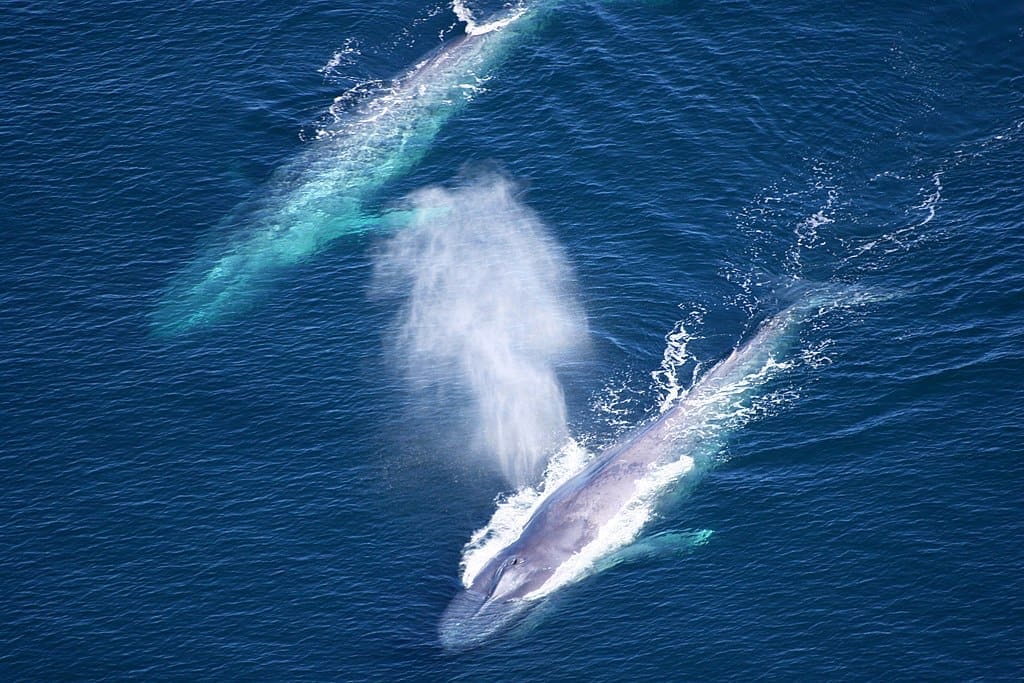
North Atlantic Right Whale
Image credit: NOAA

That would be the North Atlantic right whale. Hardly an unsung species, this large marine mammal is one of the most critically endangered in the world, with approximately 372 members remaining. Unfortunately for the whale, its story is inexplicably intertwined with that of North Atlantic fishermen, in particular the Maine lobster industry. On the surface, this is a battle between said industry and whale conservationists. But must this story be a zero-sum game?

A Deep Dive

As one of the largest species on the planet, the  North Atlantic right whale can grow up to 14-17 meters long and weigh up to 154,000 pounds. During my research, I was surprised to find that there are three subspecies of right whale, which appear very similar but have lived in genetic isolation for millions of years. In addition to the North Atlantic right whale, there are the North Pacific and South Atlantic right whale species. All three are listed as “Endangered” under the US Endangered Species Act (ESA), a designation that triggers various types of protective legislation. While the North Pacific right whale fares about as well as the North Atlantic under these conditions, estimates of the South Pacific right whale population are as high as 4,000. 

Despite their formidable size, the right whale is a gentle giant. They are incredibly slow swimmers, and can reach swimming speeds of 

 They also use their baleen to filter their food and have diets mainly consisting of copepods. This diet is also part of the whale’s role as a “nutrient cycler” in the ocean ecosystem: by feeding and defecating, the whales provide crucial nutrients to phytoplankton, which helps sequester atmospheric carbon– hence their role as a climate change fighter!

 Right whales are also incredibly social creatures and are often seen vocally interacting on the surface of the ocean in both mating and social settings. These interactions are called surface active groups (SAG), and make for great whale watching. Analogously, the speed, size, and behavior of the right whale led to its persecution by whale hunters for centuries. These actors even named the species, as they were the so-called “right whale” to hunt. The slow-moving, blubber-rich, and surface-active North Atlantic right whale was thus hunted to near extinction several times in history. The first concrete step toward whale protection at an international level occurred in 1946, when the United Nations established the still-active International Whaling Commission. 

The North Atlantic right whale commonly resides on the east coast of the United States and the west coast of Europe. In the states, the whale is known for feeding in the north (especially by Cape Cod and the Gulf of Maine) and calving in the south near Georgia. Afterward, the mothers herd their calves north so they can benefit from the plentiful copepods off the coast of Massachusetts. 

NOAA

It would be a mistake, however, to assume that right whales are entirely bound to such human-mapped migration patterns. This was pointed out to me by Rob Moir of the Ocean River Institute (ORI), who showed me examples of whales breaking these patterns. Notably, the ORI reported an instance of two female right whales, Curlew and Koala, migrating as far south as the Bahamas and as far north as Prince Edward Island. 

This outlier displaying whale intelligence reminded me of a larger point that my professors often make, that discourse around environmental protection sometimes falls into the trap of framing such actions as benevolence on our part. In reality, we share this planet with complex, intelligent species and natural processes, and it is in our best interest to preserve them. I believe wholeheartedly in the importance of functional natural systems. As someone born and raised in Maine, my public school education was full of cautionary tales of how anthropogenic changes can destabilize human lives.

In Maine, we have a long history of learning from unsustainable economic systems the hard way.For better or worse, many livelihoods here are tied to the functionality of our natural resources. In the early 1990s, Atlantic cod stocks virtually collapsed after decades of overfishing. Similar results in the shrimp, halibut, and numerous other populations led many to move into the lobstering industry. Beyond massive job losses, these shifts were particularly painful in a state whose cultural identity rests on continuing these ways of

Lobster vs. Whale

The Maine lobster industry faces numerous threats to its well-being, including legal gains in right whale conservation. In many ways, the continuance of the Maine lobster industry is a bit of a miracle: it is a vintage way of life, an occupation only made possible by stringent and consensual regulations designed to limit overfishing. The catching of egg-laying female lobsters is prohibited, and limits on the minimum size allowed for a harvested lobster are routinely updated. Hauling times are also limited during the summer months, and hauling is prohibited after sunset from November through May. These efforts become more important in the face of lobster northward migration to the Bay of Fundy. The Gulf of Maine is warming faster than 99% of the world’s oceans, creating increasingly less suitable lobster conditions.

When you look at the numbers, the importance of the lobster industry in Maine becomes clear. Estimates from a 2019 Middlebury College study report that the seafood sector provided as many as 33,000 Maine jobs and $3.2 billion in revenue in Maine annually. Although these numbers have since decreased, they stand to represent the strong presence of moneyed interests in the fight against right whale conservation, but also that the livelihoods of ordinary Mainers and New Englanders are at stake. Under these pressures, lawmakers are undoubtedly tempted to side with economic progress over conservation, which begs the question…

What Rights Do Whales Have?

In 1973, the United States government passed the Endangered Species Act (ESA), which holds the federal government responsible for the conservation of species classified as threatened or endangered by the US agencies. In article (a)(1)of Section II, the ESA asserts that species loss is a “consequence of economic growth and development untempered by adequate concern and conservation.” Thus, the framers of this document intended this law to empower the U.S. Fish and Wildlife Service (USFWS), National Marine Fisheries Service (NMFS), and successful plaintiffs to defend endangered animals against economic interests. 

But what, exactly, is the monetary value of a given species on this planet? The 1978 court case Tennessee Valley Authority (TVA) v. Hill, which was the  Supreme Court’s first exercise in interpreting the ESA, explored this question. The plaintiff was second-year Tennessee University Law student Hiram Hill, who sued the TVA to halt the construction of the Tellico Dam. The dam was set to bring immense economic benefits to the area, but would also render the snail darter, a small, endangered fish residing in the ESA-designated critical habitat of the Tennessee River, extinct. 

Tellico Dam, mid-construction.
Courtesy Tennessee Valley Authority

Initially, the courts sided with the TVA. The District Court claimed that protecting the snail darter would create “an unreasonable result,” essentially, that the existence of the snail darter was not worth the price of halting the dam’s construction. Unfortunately for the TVA, such an exemption is not provided for in the ESA. SCOTUS saw this and reversed earlier rulings, siding with Hill. This ruling was not obeyed by Congress, however. A few years later, a small amendment authorizing the TVA to complete the Tellico Dam was thrown into an unrelated bill, which became law. This was illegal and violated SCOTUS’s authority.

At this point, you may be asking what a fifty-year-old court case about a freshwater fish (which did not go extinct, by the way) has to do with the right whale. The answer is quite a bit. In court, the snail darter faced off with the Tellico Dam for the right to exist, with the former providing no major economic benefit and the latter with grand claims that it would. In the end, the fight was not defined by this metric- instead, the highest court in the United States ruled that all species have a right to exist that is monetarily immeasurable.

North Atlantic Right Whale and Fishing Line
Source: NOAA

The Blame Game

The necessary solutions for right whale survival will be disruptive. Organizations such as Oceana name the two biggest threats to right whales as vessel strikes and entanglements with ropes used in fishing equipment (despite decades-old Maine laws mandating weak links and sinking lines to limit whale entanglements). Regarding the latter, the most productive lobster season in Maine and Massachusetts coincides with the right whale’s food-motivated pilgrimage to the same waters. NOAA first officially connected the lobster industry to right whale deaths in 1996 and recommended seasonal prohibitions on fishing.

In 2017, NOAA recorded an “Unusual Mortality Event” where 17 right whales died, many due to fishing gear entanglements. This event spurred many of the modern “whale versus lobster” legal battles and debates we see today. In 2022, U.S. representatives in Congress secured a six-year pause on legislating the lobstering industry in the way of whale conservation, citing a history of sustainable practices in the industry. As a compromise, the bill featured forensic gear-marking requirements and authorized funding for whale-safe ropeless traps. These trap technologies today remain unreliable, despite extra funding. 

The Right Way Forward

What elements define a sustainable policy? In this case, the answer isn’t black and white: it’s not pro-whale or pro-lobster industry. On one hand, the ESA asserts that the North Atlantic right whale has the right to live. On the other hand, the hardships that the lobster industry currently faces are not the result of poor choices made by the industry itself. Climate change is the fault of larger societal processes and decisions, and the lobster fishermen of Maine have long been careful to maintain the size of the local lobster population. As for sustainability in the way of right whales, ropeless traps aren’t currently reliable enough for commercial use: fortunately, the industry has until 2028 to make them so. 

In the meantime, whale conservationists see other solutions to protect the North Atlantic right whale populations. For example, the Ocean River Institute advocates for a designated right whale sanctuary off the coast of Massachusetts. This area, which is already a desirable feeding area for right whales, would be administered by a diverse advisory council of interested parties, including scientists and representatives of the fishing industry. If the area in question were to become designated under the National Marine Sanctuaries Act, fishing of any kind would include restrictions on commercial fishing and types of gear.

Proposed Right Whale National Marine Sanctuary
Ocean River Institute

Furthermore, the ORI sees the planting of Miyawaki forests in Massachusetts coastal towns as a tool to improve the lives of right whales. Beyond causes of mortality, whales suffer when polluted stormwater enters their habitat. This process can lead them to ingest pollutants that cause illness and infections. Additionally, contaminated stormwater can cause algae blooms and deplete the nutritional quality and availability of copepods. One way to limit stormwater runoff into the ocean is to create land conditions where water can be absorbed. Miyawaki forests are excellent at this task: their loose soil and dense vegetation (which is meant to mimic an old-growth forest for rapid plant growth) is perfectly suited to absorb large amounts of water. This could improve conditions for right whales off the coast of Massachusetts and beyond. 

As a self proclaimed “policy person,” the lack of legislative progress on climate and conservation issues is incredibly frustrating. I also believe that the government owes a fair solution to the lobster industry. Delivering justice in this situation would therefore be a complex process- fortunately, we can initiate and foster change at an individual level.

**Special thanks to Rob Moir (Ocean River Institute) and Taylor Mann (Oceana) for providing information for this piece!


Alexa Hankins is a student at Boston University, where she is pursuing a degree in International Relations with a concentration in environment and development policy. She discovered Bio4Climate through her research to develop a Miyawaki forest bike tour in greater Boston. Alexa is passionate about accessible climate education, environmental justice, and climate resilience initiatives. In her free time, she likes to read, develop her skills with houseplants, and explore the Boston area!


Dig Deeper

Featured Creature: Mexican Wolf

I prowl the woods, both fierce and lean,
With golden eyes and coat unseen.
Once a ghost upon the land,
Now brought back by careful hand.
Who am I, wild and free,
Yet bound by fate and history?

Many moons ago, for two years during college and one year after, I worked at the Columbus Zoo & Aquarium in central Ohio (for those keeping score at home, that’s Jack Hanna’s zoo. Yes I met him.)

I spent thousands of hours over hundreds of days at that zoo. I got to know every path, every Dippin’ Dots stand, and every habitat under the zoo’s care. 

The Columbus Zoo & Aquarium has an incredible collection of creatures (they’re one of the only institutions outside of Florida with manatees). While I was enamored with all of them, my favorite were the Mexican Wolves, a critically imperiled species. 

In a place full of more diversity and creatures than I could ever count, the zoo’s Mexican wolves were different. As part of the (American) Association of Zoos and Aquariums’ Species Survival Plan, a nationwide conservation effort. There were excellent educators of the impact one creature can have on an ecosystem, and what can happen when we don’t take care of them.

A Mexican Wolf at the Columbus Zoo and Aquarium.
Credit: JCaputo via Flickr. CC BY-NC-SA 2.0

A Predator on the Brink

The Mexican wolf (Canis lupus baileyi) is both the rarest and most genetically distinct subspecies of the more well known gray wolf. It is notably smaller than its northern relatives, with adults weighing standing about two feet tall at the top of the shoulder. Despite this (relatively) diminutive stature, the Mexican wolf is an apex predator in its environment, finely tuned by evolution for survival in the rugged, often unforgiving landscapes of the southwestern United States and northern Mexico.

Consider those landscapes for a moment. What does it take for a species already up against the ropes to survive there? What would it take for you to survive there?

You’d have to have exceptional endurance to hunt in vast, open environments. Long, slender legs and a streamlined body would allow you to cover these great distances while tracking prey, often over the course of 30 miles in a single day. You’d require an acute sense of smell and keen eyesight to pick up on the movements of smaller creatures from far away, even in the dim light of dawn or dusk when your prey is most active.

You’d be an expert of efficient thermoregulation, that is, keeping cool in the heat and warm in the cold. And you’d have to be, an expert, when your world ranges from scorching desert heat to bitter mountain cold, these wolves have developed a double-layered coat that provides insulation in winter while shedding excess warmth in summer. The coat’s coloration, a mixture of gray, rust, and buff, serves as excellent camouflage against the rocky and forested landscapes they inhabit.

A Wolf’s Role

It’s old news to you, I know, but it bears repeating. For ecosystems to function, predators must play their part. Like other wolves, the Mexican wolf is a keystone species, regulating prey populations and influencing plant communities. Without them, the system unravels.

The Mexican wolf primarily hunts elk, white-tailed deer, mule deer, and occasionally livestock, but they will also take smaller mammals like rabbits and rodents when such larger prey is scarce. When they hunt, they do so together, as cooperative pack hunters. Their strong social structure is as essential a tool as their razor sharp incisors in felling prey much larger than themselves. Beyond the hunt, these [ack dynamics are critical to their survival—each member has a role, from rearing the pups learning the ropes to experienced hunters leading coordinated chases.

Both on the hunt and at home, communication is central to the wolves’ social structure. Howling serves as both a bonding ritual and a way to locate packmates over vast distances. Body language, like tail positioning and ear movement, helps maintain hierarchy within the group. You may even recognize a few of these traits in your own dog, barking or howling to communicate, using their tail and ears to express emotion, or learning through playful wrestling as a puppy. 
Packs are tight-knit, usually number four to six members, though some may grow larger depending on prey availability. They establish territories spanning up to 200 square miles, marking them with scent and vocalizing to warn off intruding wolves and other creatures.

A Mexican wolf and her pup.
Image by Bob Haarmans, CC BY 2.0

In the absence of wolves, prey populations, especially elk and deer, explode, stripping vegetation and weakening forests. Overgrazed lands mean fewer young trees, degraded soil, less cover for smaller animals and heightened wildfire risk. This domino effect, known more scientifically as trophic cascade, ripples through the entire ecosystem. Beavers lose the young saplings they rely on for food and dams. Birds struggle to find nesting spots. Streams warm without tree cover, altering aquatic life.
But when wolves return, balance begins to restore itself. Just ask Yellowstone National Park. Wolves keep elk and deer moving, preventing over-grazing in sensitive areas. Carcasses left behind provide food for scavengers, including ravens, eagles, foxes, and even bears. Their presence reshapes the landscape, not just through their actions but through the fear they instill in prey. They don’t just hunt; they change the way the river of life flows.
A Fragile Comeback

Conservation and reintroduction of Mexican wolves has been an uphill, if slightly progressive, endeavor since the first captive-bred wolves were reintroduced into Arizona and New Mexico in 1998.

Ranchers in the area saw them as a renewed threat to livestock, and illegal killings were common practice. Some reintroduced wolves were shot before they had a chance to establish packs. Others were relocated after venturing too close to human settlements and industry.

Populations have grown slowly. From a low of just seven wolves in 1980, there are now about 250-300 Mexican wolves in the wild today. This precarious population is still critically small, vulnerable to disease, low genetic variation, and continued conflict with humans.

Climate change has also complicated things.

Rising temperatures are altering the Mexican wolf’s habitat. More frequent and severe droughts in the American Southwest threaten prey availability, pushing elk and deer into different ranges. Increased wildfires, driven by hotter, drier, and more flammable conditions, destroy the forests that wolves depend on for cover and prey.

Mexican Wolf experimental population area map. Courtesy U.S. Fish and Wildlife Service.

Last Word

I know zoos can be complicated, controversial places at times. I’m not really here to weigh in on that. But I think like many things in life, there is great value in the best parts of them. As we all continue to advocate for a less-extractive relationship with the rivers of life beyond our front door, I think the ability to educate, connect, and inspire others to care about the world around them is critically important. I saw the Columbus Zoo do that well time and time again, and I think every time we share a featured creature, post a picture of our gardens, or take someone along for a Miyawaki planting, we do the same.


Brendan Kelly began his career teaching conservation education programs at the Columbus Zoo and Aquarium. He is interested in how the intersection of informal education, mass communications and marketing can be retooled to drive relatable, accessible climate action. While he loves all ecosystems equally, he is admittedly partial to those in the alpine.


Featured Creature: Coelacanth

What 200-pound nocturnal sea creature, thought to be extinct for millions of years, has one of the longest gestation periods among vertebrates? 

The Coelacanth!

Bruce A.S. Henderson (Wikimedia Commons)

This sea creature was thought to be extinct for 65 million years before it was rediscovered in 1938. Ancient and rare, the coelacanth is a fish so named from its fossil. Scientists knew this fish once existed but never expected to find it alive in the depths of the ocean. The coelacanth (pronounced seel-a-canth) is about 200 pounds and can grow to over 6.5 feet in length.  Two species exist today – the Indonesian coelacanth (Latimeria menadoensis)  and the African coelacanth (Latimeria chalumnae).

Anatomy

Coelacanth is derived from Latin and means “hollow spine” due to their hollow caudal fin rays. They have thick scales giving them an ancient appearance.These fish lack boney vertebrae. Instead, they have a notochord which is a fluid-filled rod beneath the spinal cord. Coelacanths also use a rostral organ to detect the electrical impulses of nearby prey much like stingrays and sharks. Most distinctive is the coelacanth’s limb-like pectoral fins that appear more like an arm than a fin. The coelacanth has a very unique anatomy. No other fish on Earth possesses these special features. 

Diet

The next discovery of a live coelacanth came in 1952 – 14 years after the first revelation. But why did it take so long for another fish to be caught? Coelacanths live at great very deep depths, often over 500 feet beneath the surface of the ocean. When they venture into shallower waters, they tend to do so at night. Coelacanths are nocturnal predators.They hide under rock formations and in caves until nightfall when they emerge to hunt other fish, crabs, eels, and squid.They use their hinged skull which enlarges their gape to swallow prey.

Population

The IUCN has listed the coelacanth as critically endangered. It is estimated that only 500 coelacanths exist today. Although not considered an edible fish, as its meat is too oily for consumption, the coelacanth still falls prey to deep-sea fishing nets. If caught as by-catch, coelacanths can die from the stress. These threats can deeply affect the population because coelacanths have an unusually long gestation period of three years – the longest of any vertebrate species. Such factors make coelacanths extremely vulnerable to extinction. 

Dean Falk Schnabel (CC BY-SA 4.0 via Wikimedia Commons)

The story of the coelacanth proves there is always more to discover. Biodiversity fosters a sense of curiosity about the endless possibilities of the natural world.

I wonder, if a creature like this still exists, what other species remain unknown to humanity?

Swimming away for now, Joely


Joely Hart is a wildlife enthusiast writing to inspire curiosity about Earth’s creatures. She holds a Bachelor’s degree in creative writing from the University of Central Florida and has a special interest in obscure, lesser-known species.


Sources and Further Reading:
https://a-z-animals.com/animals/mouse-deer-chevrotain
https://www.khaosok.com/national-park/mouse-deer
https://www.ultimateungulate.com/Artiodactyla/Hyemoschus_aquaticus.html
https://factanimal.com/chevrotain/
https://www.npr.org/2019/11/11/778312670/silver-backed-chevrotain-with-fangs-and-hooves-photographed-in-wild-for-first-ti

Featured Creature: Whale Shark

What creature is the largest of its kind, sports beautiful patterns, and holds a reputation for being a ‘gentle giant’? 

The whale shark!

Photo by Shiyam ElkCloner (CC BY-SA 3.0 via Wikimedia Commons)

Filter feeding for giants 

The majestic whale shark is famed for being the largest fish in existence. With a length of up to 33 feet and weight up to 20 tons, they are not only the largest living fish, but thought to be the largest fish that ever lived on this planet. Though their name might suggest otherwise, whale sharks are not a type of whale at all, but instead a member of the shark family. It is their enormous size (akin to a school bus) that led them to be compared with whales. 

Like their other shark relatives, these creatures are excellent swimmers and true masters of the deep. People are coming to recognize that all sharks, even carnivorous species that hunt marine mammals, fish, or other invertebrates, have been unfairly mischaracterized as threatening, and whale sharks are another species you need not be afraid of. 

In fact, one of the most fascinating traits of the whale shark is its diet. Despite their own large size, whale sharks subsist on some of the smallest ocean inhabitants, plankton. Much like the enormous blue whale, whale sharks are a living example of one of the most interesting links in the food chain, where nutrients are cycled from microscopic life to macroscopic organisms. 

They filter-feed by opening their mouths and letting plankton-rich waters pass through, as well as ingesting other small fish or unlucky invertebrates along the way. But even in this habit they are unique. Whale sharks use a technique called “cross-flow filtration,” in which particles do not actually catch on the filter (the way it works when we drain pasta through a strainer or breathe through an N95 mask). Instead, water is directed away through the gills while particles move towards the back of the mouth. A bolus (or a spinning ball of food) grows in size as more particles are concentrated, finally triggering a swallowing reflex in the throat. This avoids clogging any filters in the process and is a particularly efficient method of filter feeding. 

Because they are so large, whale sharks need a lot of food to sustain themselves, and so they journey long distances in order to eat enough for their great big appetites. They can be observed throughout the world in warm tropical waters and tend to lead solitary lives. Where there is an abundance of plankton, however, whale sharks are sure to follow. For example, in the Springtime many whale sharks migrate to the continental shelf of the Central West Coast of Australia, where Ningaloo Reef is the site of a great coral spawning that produces water rich with plankton for our giant fishy friends to enjoy.

Photo by Leonardo Lamas from Pexels

Big fish in a complex sea

The whale shark contributes to nutrient cycling throughout its lifespan, providing important benefits to the ecosystems they are a part of. Some of the warm tropical waters that whale sharks call home tend to be low in nutrients and productivity, and in these areas whale sharks can make a big difference due to their size and force. As they undertake migrations or even as they go about daily swimming and feeding activities, their motion stimulates small ocean currents that can help nutrients travel from areas of high productivity to waters where they are much less concentrated. 

Their own eating habits rely on an abundance of microscopic creatures and the nutrients they metabolize, and eventually each mighty whale shark passes on and becomes food itself, returning those nutrients to the ocean food web. After death, whale sharks sink to the ocean floor and the benthic organisms that reside there find food and shelter in the great carcasses. It can take decades for this decomposition to occur, and in the meantime hundreds of creatures benefit from the habitat and nutrients left behind.  

In life as well, whale sharks can provide refuge to smaller species of fish that travel around their great bodies, taking advantage of the shelter these gentle giants create. As largely docile creatures, whale sharks can be quite approachable and playful with divers who are also interested in tagging along: 

In a couple of instances, humans have even pushed their luck so far as to ride along on a whale shark’s back! Such close contact is discouraged by conservationists to protect the personal space of these beautiful animals, but whale sharks’ friendly reputation remains. 

Though they may be steady, generous members of the ocean community, whale sharks are struggling to survive in changing conditions. They are an endangered species, and while some protections for these creatures have been enacted across the coastal waters of the world, they are still hunted for meat, fins, and oil, or captured or killed as bycatch in industrial fishing operations. Whale sharks also suffer from the plastic pollution in our oceans, as microplastics mingle with the food they rely on. Like the rest of us, whale sharks need clean, healthy, abundant environments in which to live and co-create. 

Whale shark in the Maldives (Photo by Sebastian Pena Lambarri from Unsplash)

Unique beauties

Whale sharks may be known for their size, but that’s not the only special thing about their anatomy and appearance. Each whale shark sports a beautiful pattern of white markings on its dark gray back. Not only does this make these creatures look like giant mobile modern art pieces, but the patterns also uniquely identify whale shark individuals.

It is not conclusively determined why whale sharks carry these unique signatures, their own version of the human fingerprint. Some scientists speculate that the patterns, which tend to be common among carpet sharks and other species that find such markings useful for camouflage as they traverse the ocean floor, indicate a close evolutionary link among these organisms.  

The World Wildlife Fund has used these markings to identify individuals in the waters around the Philippines and keep track of whale shark population numbers there, so that humans can make the interventions needed to mindfully coexist with our marine friends. Whatever its distant origin or function today, this feature makes it clear that each whale shark is a special and irreplaceable member of our blue planet. 

For gentle giants and filtering friends,
Maya


Maya Dutta is an environmental advocate and ecosystem restorer working to spread understanding on the key role of biodiversity in shaping the climate and the water, carbon, nutrient and energy cycles we rely on. She is passionate about climate change adaptation and mitigation and the ways that community-led ecosystem restoration can fight global climate change while improving the livelihood and equity of human communities. Having grown up in New York City and lived in cities all her life, Maya is interested in creating more natural infrastructure, biodiversity, and access to nature and ecological connection in urban areas.


Sources and Further Reading:
https://www.worldwildlife.org/species/whale-shark
https://www.georgiaaquarium.org/animal/whale-shark/
https://www.nationalgeographic.com/animals/fish/facts/whale-shark
https://en.wikipedia.org/wiki/Whale_shark
https://earth.org/endangered-species/whale-sharks/
https://www.4ocean.com/pages/whale-shark-cause-of-the-month