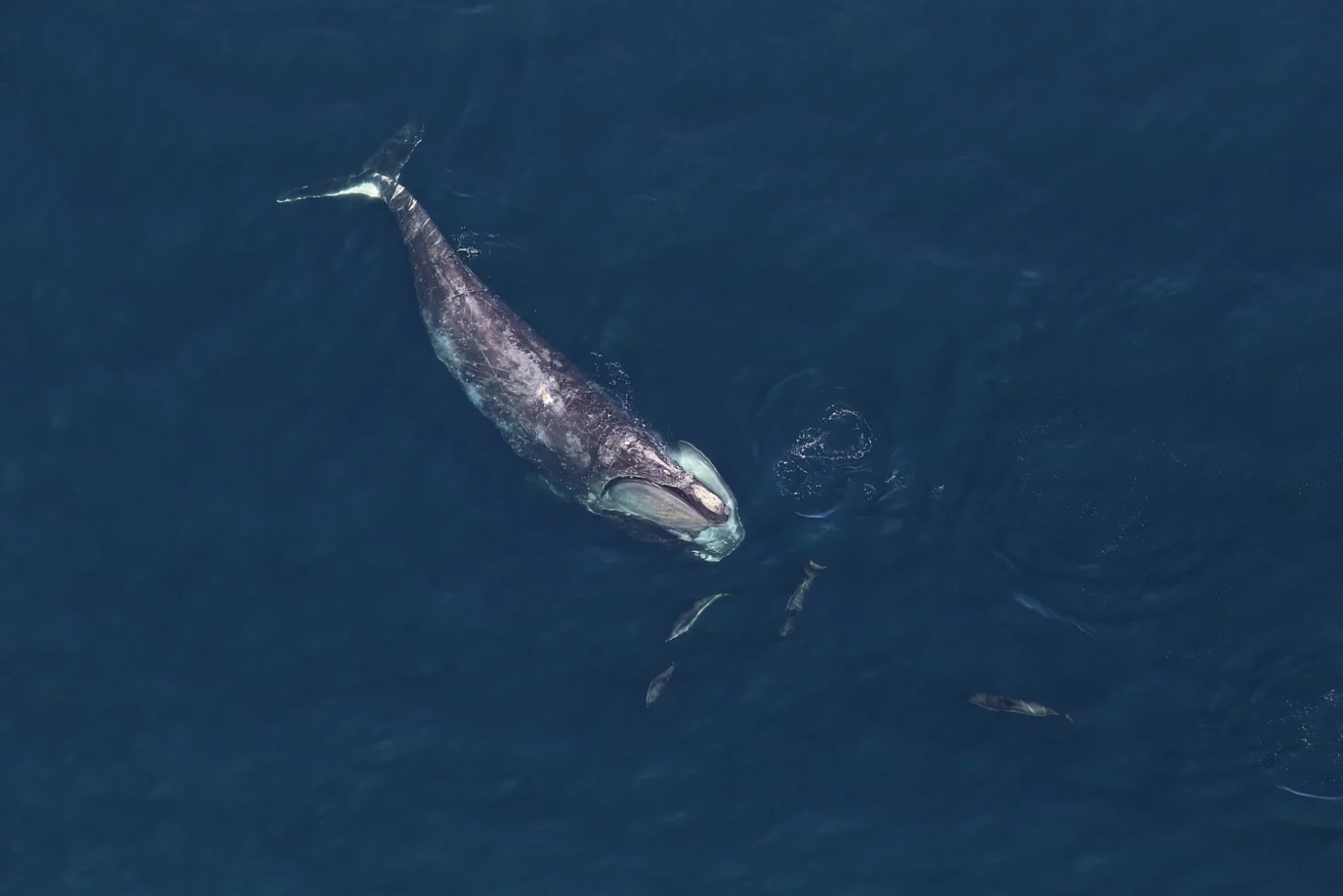
Featured Creature: Right Whale

What species fights climate change, creates “surface-active groups,” and shares a home with the Maine lobster?
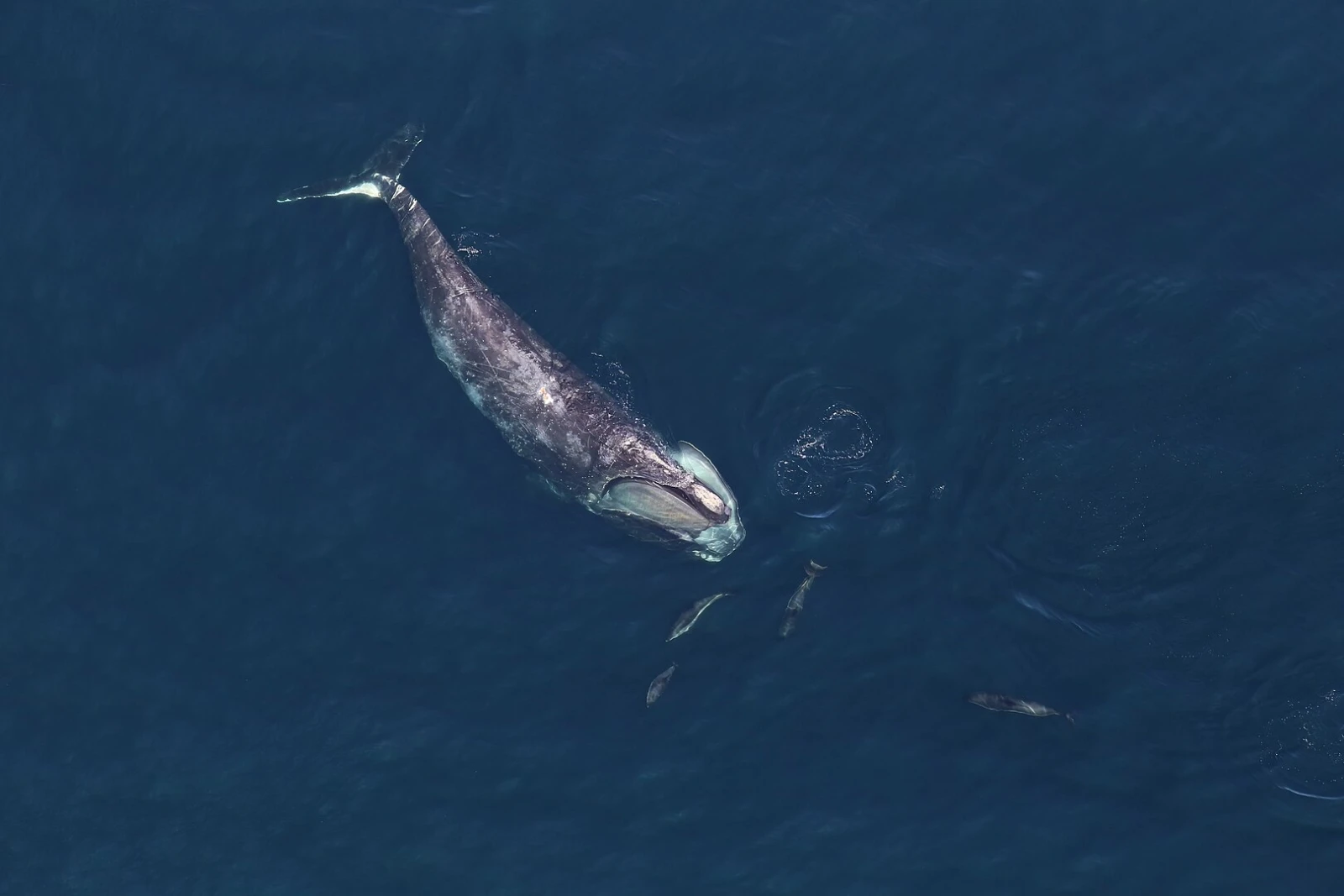
North Atlantic Right Whale
Image credit: NOAA

That would be the North Atlantic right whale. Hardly an unsung species, this large marine mammal is one of the most critically endangered in the world, with approximately 372 members remaining. Unfortunately for the whale, its story is inexplicably intertwined with that of North Atlantic fishermen, in particular the Maine lobster industry. On the surface, this is a battle between said industry and whale conservationists. But must this story be a zero-sum game?

A Deep Dive

As one of the largest species on the planet, the  North Atlantic right whale can grow up to 14-17 meters long and weigh up to 154,000 pounds. During my research, I was surprised to find that there are three subspecies of right whale, which appear very similar but have lived in genetic isolation for millions of years. In addition to the North Atlantic right whale, there are the North Pacific and South Atlantic right whale species. All three are listed as “Endangered” under the US Endangered Species Act (ESA), a designation that triggers various types of protective legislation. While the North Pacific right whale fares about as well as the North Atlantic under these conditions, estimates of the South Pacific right whale population are as high as 4,000. 

Despite their formidable size, the right whale is a gentle giant. They are incredibly slow swimmers, and can reach swimming speeds of 

 They also use their baleen to filter their food and have diets mainly consisting of copepods. This diet is also part of the whale’s role as a “nutrient cycler” in the ocean ecosystem: by feeding and defecating, the whales provide crucial nutrients to phytoplankton, which helps sequester atmospheric carbon– hence their role as a climate change fighter!

 Right whales are also incredibly social creatures and are often seen vocally interacting on the surface of the ocean in both mating and social settings. These interactions are called surface active groups (SAG), and make for great whale watching. Analogously, the speed, size, and behavior of the right whale led to its persecution by whale hunters for centuries. These actors even named the species, as they were the so-called “right whale” to hunt. The slow-moving, blubber-rich, and surface-active North Atlantic right whale was thus hunted to near extinction several times in history. The first concrete step toward whale protection at an international level occurred in 1946, when the United Nations established the still-active International Whaling Commission. 

The North Atlantic right whale commonly resides on the east coast of the United States and the west coast of Europe. In the states, the whale is known for feeding in the north (especially by Cape Cod and the Gulf of Maine) and calving in the south near Georgia. Afterward, the mothers herd their calves north so they can benefit from the plentiful copepods off the coast of Massachusetts. 
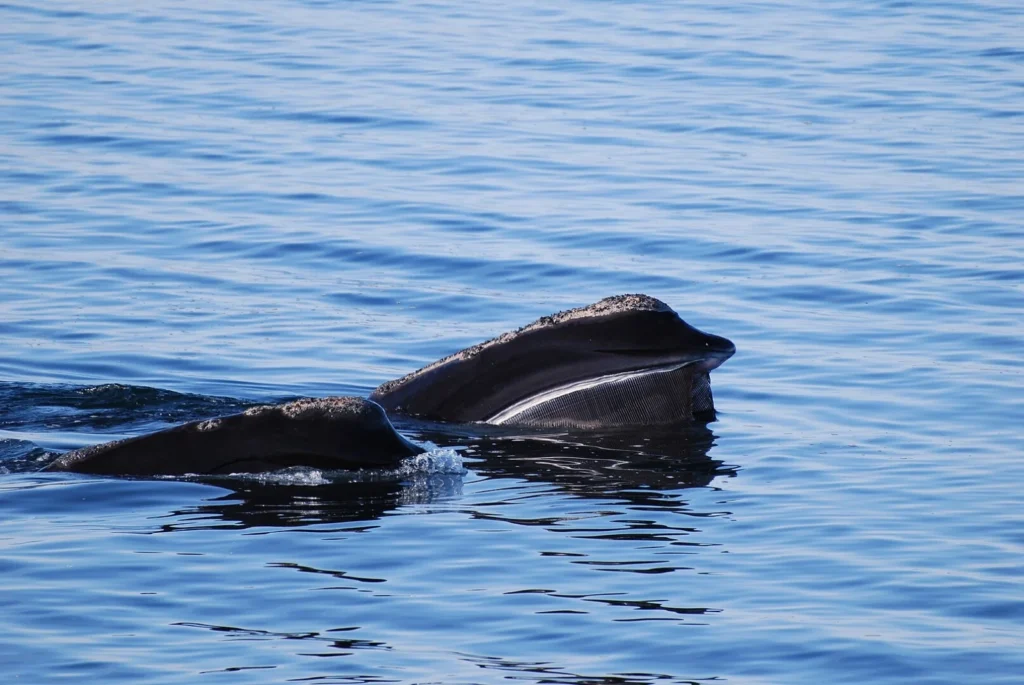
NOAA

It would be a mistake, however, to assume that right whales are entirely bound to such human-mapped migration patterns. This was pointed out to me by Rob Moir of the Ocean River Institute (ORI), who showed me examples of whales breaking these patterns. Notably, the ORI reported an instance of two female right whales, Curlew and Koala, migrating as far south as the Bahamas and as far north as Prince Edward Island. 

This outlier displaying whale intelligence reminded me of a larger point that my professors often make, that discourse around environmental protection sometimes falls into the trap of framing such actions as benevolence on our part. In reality, we share this planet with complex, intelligent species and natural processes, and it is in our best interest to preserve them. I believe wholeheartedly in the importance of functional natural systems. As someone born and raised in Maine, my public school education was full of cautionary tales of how anthropogenic changes can destabilize human lives.

In Maine, we have a long history of learning from unsustainable economic systems the hard way.For better or worse, many livelihoods here are tied to the functionality of our natural resources. In the early 1990s, Atlantic cod stocks virtually collapsed after decades of overfishing. Similar results in the shrimp, halibut, and numerous other populations led many to move into the lobstering industry. Beyond massive job losses, these shifts were particularly painful in a state whose cultural identity rests on continuing these ways of

Lobster vs. Whale

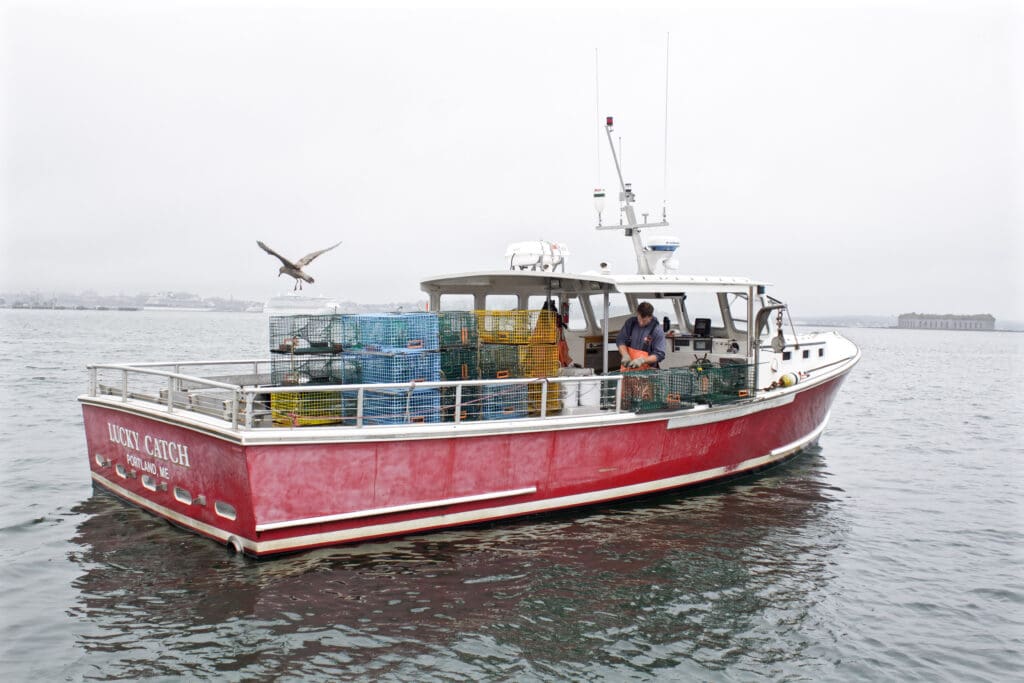
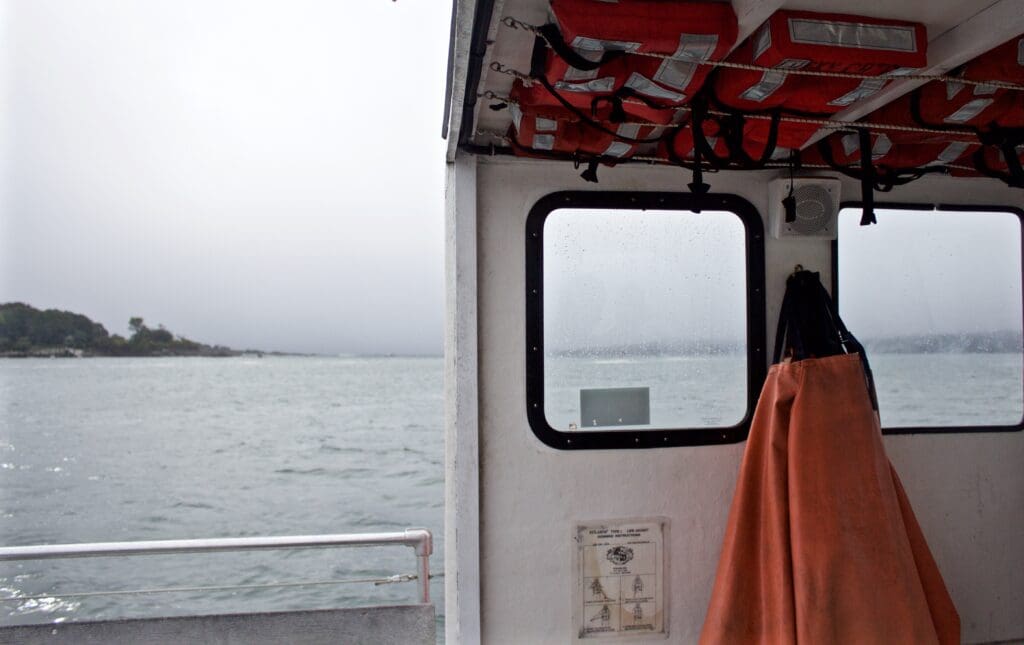
The Maine lobster industry faces numerous threats to its well-being, including legal gains in right whale conservation. In many ways, the continuance of the Maine lobster industry is a bit of a miracle: it is a vintage way of life, an occupation only made possible by stringent and consensual regulations designed to limit overfishing. The catching of egg-laying female lobsters is prohibited, and limits on the minimum size allowed for a harvested lobster are routinely updated. Hauling times are also limited during the summer months, and hauling is prohibited after sunset from November through May. These efforts become more important in the face of lobster northward migration to the Bay of Fundy. The Gulf of Maine is warming faster than 99% of the world’s oceans, creating increasingly less suitable lobster conditions.

When you look at the numbers, the importance of the lobster industry in Maine becomes clear. Estimates from a 2019 Middlebury College study report that the seafood sector provided as many as 33,000 Maine jobs and $3.2 billion in revenue in Maine annually. Although these numbers have since decreased, they stand to represent the strong presence of moneyed interests in the fight against right whale conservation, but also that the livelihoods of ordinary Mainers and New Englanders are at stake. Under these pressures, lawmakers are undoubtedly tempted to side with economic progress over conservation, which begs the question…
What Rights Do Whales Have?

In 1973, the United States government passed the Endangered Species Act (ESA), which holds the federal government responsible for the conservation of species classified as threatened or endangered by the US agencies. In article (a)(1)of Section II, the ESA asserts that species loss is a “consequence of economic growth and development untempered by adequate concern and conservation.” Thus, the framers of this document intended this law to empower the U.S. Fish and Wildlife Service (USFWS), National Marine Fisheries Service (NMFS), and successful plaintiffs to defend endangered animals against economic interests. 

But what, exactly, is the monetary value of a given species on this planet? The 1978 court case Tennessee Valley Authority (TVA) v. Hill, which was the  Supreme Court’s first exercise in interpreting the ESA, explored this question. The plaintiff was second-year Tennessee University Law student Hiram Hill, who sued the TVA to halt the construction of the Tellico Dam. The dam was set to bring immense economic benefits to the area, but would also render the snail darter, a small, endangered fish residing in the ESA-designated critical habitat of the Tennessee River, extinct. 

Tellico Dam, mid-construction.
Courtesy Tennessee Valley Authority

Initially, the courts sided with the TVA. The District Court claimed that protecting the snail darter would create “an unreasonable result,” essentially, that the existence of the snail darter was not worth the price of halting the dam’s construction. Unfortunately for the TVA, such an exemption is not provided for in the ESA. SCOTUS saw this and reversed earlier rulings, siding with Hill. This ruling was not obeyed by Congress, however. A few years later, a small amendment authorizing the TVA to complete the Tellico Dam was thrown into an unrelated bill, which became law. This was illegal and violated SCOTUS’s authority.

At this point, you may be asking what a fifty-year-old court case about a freshwater fish (which did not go extinct, by the way) has to do with the right whale. The answer is quite a bit. In court, the snail darter faced off with the Tellico Dam for the right to exist, with the former providing no major economic benefit and the latter with grand claims that it would. In the end, the fight was not defined by this metric- instead, the highest court in the United States ruled that all species have a right to exist that is monetarily immeasurable.
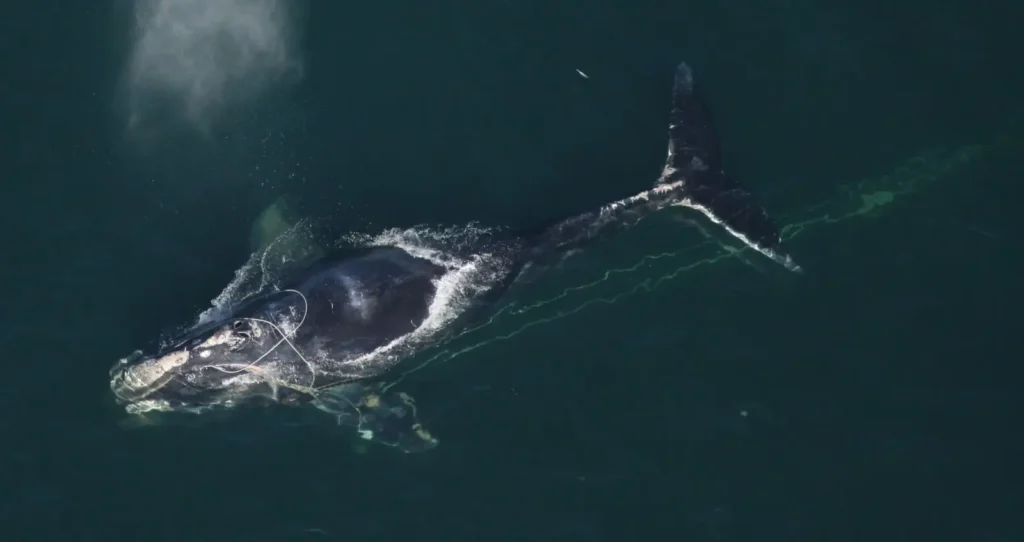
North Atlantic Right Whale and Fishing Line
Source: NOAA

The Blame Game

The necessary solutions for right whale survival will be disruptive. Organizations such as Oceana name the two biggest threats to right whales as vessel strikes and entanglements with ropes used in fishing equipment (despite decades-old Maine laws mandating weak links and sinking lines to limit whale entanglements). Regarding the latter, the most productive lobster season in Maine and Massachusetts coincides with the right whale’s food-motivated pilgrimage to the same waters. NOAA first officially connected the lobster industry to right whale deaths in 1996 and recommended seasonal prohibitions on fishing.

In 2017, NOAA recorded an “Unusual Mortality Event” where 17 right whales died, many due to fishing gear entanglements. This event spurred many of the modern “whale versus lobster” legal battles and debates we see today. In 2022, U.S. representatives in Congress secured a six-year pause on legislating the lobstering industry in the way of whale conservation, citing a history of sustainable practices in the industry. As a compromise, the bill featured forensic gear-marking requirements and authorized funding for whale-safe ropeless traps. These trap technologies today remain unreliable, despite extra funding. 

The Right Way Forward

What elements define a sustainable policy? In this case, the answer isn’t black and white: it’s not pro-whale or pro-lobster industry. On one hand, the ESA asserts that the North Atlantic right whale has the right to live. On the other hand, the hardships that the lobster industry currently faces are not the result of poor choices made by the industry itself. Climate change is the fault of larger societal processes and decisions, and the lobster fishermen of Maine have long been careful to maintain the size of the local lobster population. As for sustainability in the way of right whales, ropeless traps aren’t currently reliable enough for commercial use: fortunately, the industry has until 2028 to make them so. 

In the meantime, whale conservationists see other solutions to protect the North Atlantic right whale populations. For example, the Ocean River Institute advocates for a designated right whale sanctuary off the coast of Massachusetts. This area, which is already a desirable feeding area for right whales, would be administered by a diverse advisory council of interested parties, including scientists and representatives of the fishing industry. If the area in question were to become designated under the National Marine Sanctuaries Act, fishing of any kind would include restrictions on commercial fishing and types of gear.
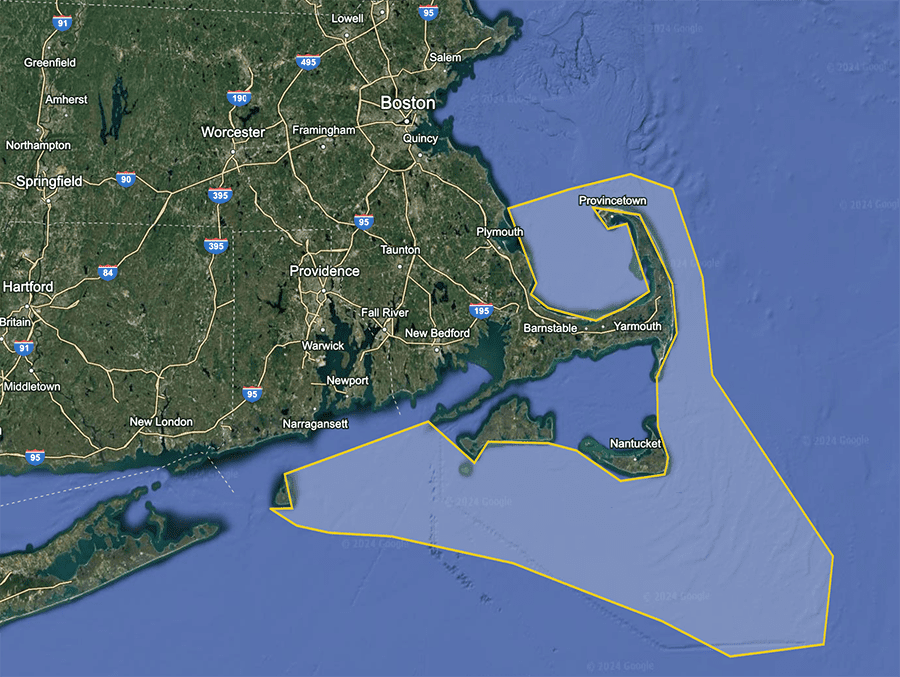
Proposed Right Whale National Marine Sanctuary
Ocean River Institute

Furthermore, the ORI sees the planting of Miyawaki forests in Massachusetts coastal towns as a tool to improve the lives of right whales. Beyond causes of mortality, whales suffer when polluted stormwater enters their habitat. This process can lead them to ingest pollutants that cause illness and infections. Additionally, contaminated stormwater can cause algae blooms and deplete the nutritional quality and availability of copepods. One way to limit stormwater runoff into the ocean is to create land conditions where water can be absorbed. Miyawaki forests are excellent at this task: their loose soil and dense vegetation (which is meant to mimic an old-growth forest for rapid plant growth) is perfectly suited to absorb large amounts of water. This could improve conditions for right whales off the coast of Massachusetts and beyond. 

As a self proclaimed “policy person,” the lack of legislative progress on climate and conservation issues is incredibly frustrating. I also believe that the government owes a fair solution to the lobster industry. Delivering justice in this situation would therefore be a complex process- fortunately, we can initiate and foster change at an individual level.

**Special thanks to Rob Moir (Ocean River Institute) and Taylor Mann (Oceana) for providing information for this piece!


Alexa Hankins is a student at Boston University, where she is pursuing a degree in International Relations with a concentration in environment and development policy. She discovered Bio4Climate through her research to develop a Miyawaki forest bike tour in greater Boston. Alexa is passionate about accessible climate education, environmental justice, and climate resilience initiatives. In her free time, she likes to read, develop her skills with houseplants, and explore the Boston area!

Dig Deeper

Featured Creature: Rotifers

I’m smaller than dust, yet ancient and wise,
I thrive in the harshest of lows and highest of highs.
No mate, no death, no fear of the cold,
I borrow new genes when my own get too old.

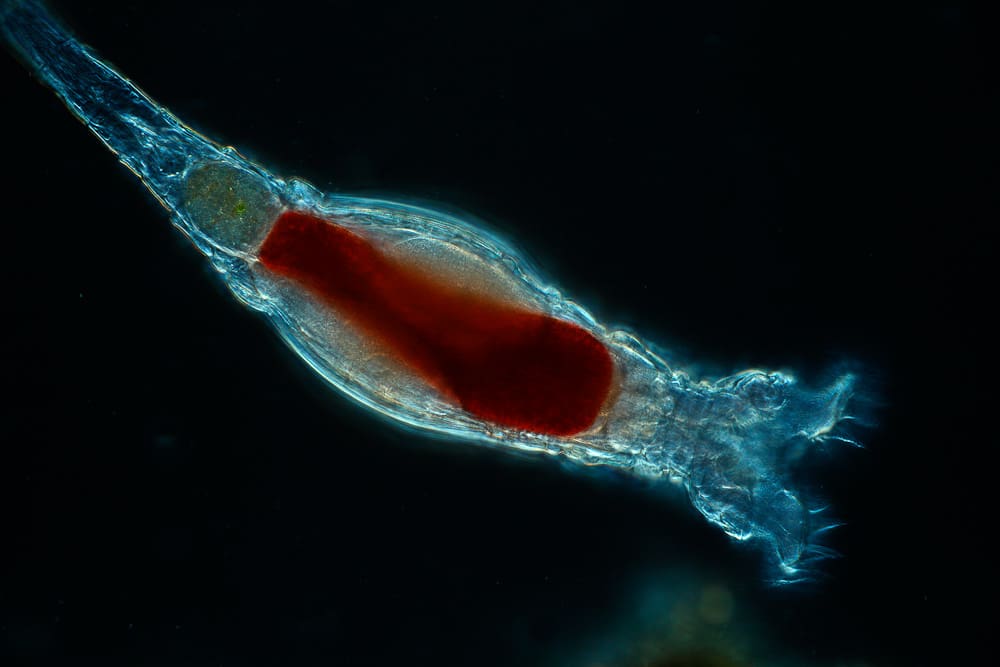
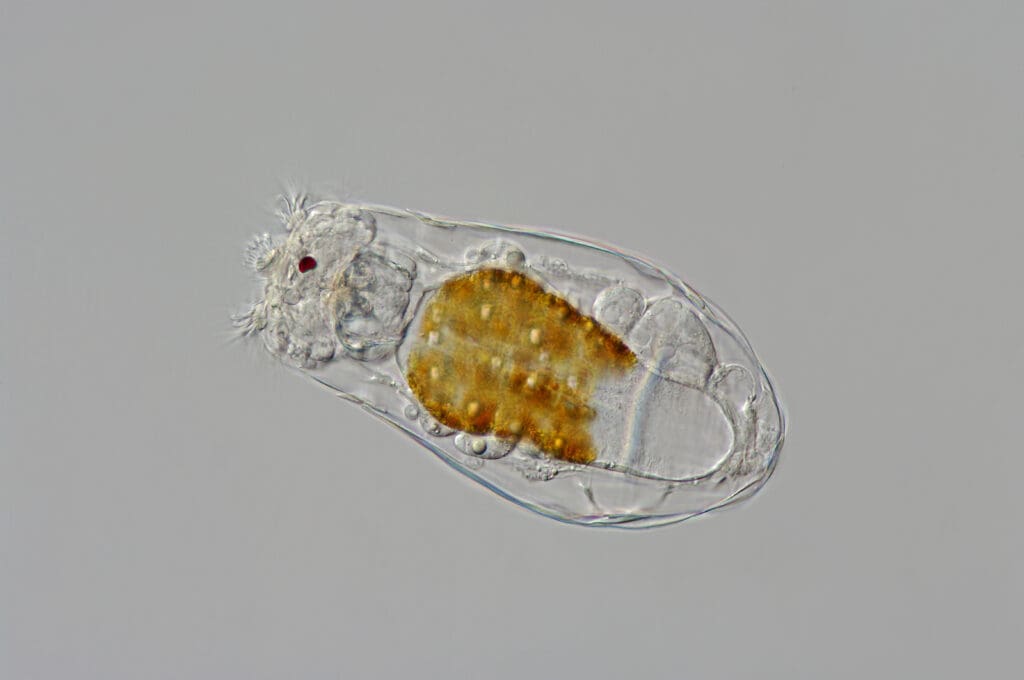
bdelloid rotifer
Image by Frank Fox

Our world follows certain rules. Or at least, that’s what I was taught growing up. Falling objects accelerate at 9.8 meters per second squared in a vacuum. Warm air rises. Diagonally cut sandwiches just taste better. Living things, too, evolve a certain way, survive a certain way, die a certain way. 

Or so I thought, anyway. 

I was not taught that there are some creatures out there that cheat death, that rewrite their own DNA and survive in conditions that should render said survival impossible. At a moment when humans are trying to hack biology in an effort to live younger, longer, there are creatures out there that have been doing it for millions of years. 

Meet the rotifer.

You’ve probably never seen one, but they’re everywhere: in puddles, moss, soil, and freshwater lakes. They look like something from Pandora, spinning through water with wheel-like cilia. Hardly larger than a speck of dust, they don’t roar, they don’t tower over landscapes, and they’re not exactly at the top of any food chain as I know them. But they’ve outlived entire species, survived mass extinctions, and continue to defy the rules of biology we thought we knew.

While rotifers may be practically invisible to our eyes, their impact is not. They play a fundamental role in freshwater ecosystems, drifting through aquatic environments and feeding on algae, bacteria, and other organic debris. Remember my little quip earlier about food chains? Well, it’s sort of a half-truth. They feed on algae, bacteria, and bits of organic debris—basically whatever’s floating around at the microbial level. In doing so, they turn microscopic life into something usable for everything else. They’re one of the first stops in the food web, sustaining creatures far bigger than themselves. Take them out, and the whole darn thing starts to wobble.

Life is full of exceptions, and even the smallest creatures can upend our understanding of what survival, and life itself, really means.

Rule #1: It Takes Two to Tango 

A fundamental principle of biology I thought I understood is that species need genetic diversity to evolve and survive. Sexual reproduction is nature’s way of mixing genes, creating stronger offspring that are better adapted to changing environments. Without this reshuffling of DNA, plant and animal species alike face genetic stagnation and, over time, possibly extinction.

Rotifers see it differently.

For tens of millions of years, the bdelloid class of rotifer has lived without sex. They reproduce by cloning themselves over and over, spawning genetically identical offspring generation after generation.

By my logic, this should have led to their extinction long ago. They should have faced great difficulty adapting to changing environments, vulnerable to disease, and trapped in a state of evolutionary stasis. Instead, they’ve flourished.

But how? 

By stealing DNA from other organisms. Instead of relying on traditional sexual reproduction, bdelloid rotifers are actually able to absorb genetic material from bacteria, fungi, and even some plants. This process, known as horizontal gene transfer, allows them to patch together their own genes with foreign DNA, essentially hijacking useful traits from unrelated life forms.

It’s a complicated process that, to be honest, I don’t fully understand. But that’s okay, because neither do the scientists studying this stuff. Here’s what they think is happening.

When a bdelloid rotifer dries out (usually in a harsh environment), its DNA begins to crumble and break apart into pieces. When it rehydrates, something strange happens: its cell walls become more permeable, just enough to let in snippets of DNA floating nearby, bits from bacteria, fungi, even plants. Once inside, the rotifer’s cellular machinery picks them up and patches them into its own fragmented genome. It’s like a genetic repair job using whatever foraged parts are lying around. Instead of mixing genes through sex, bdelloids build their genetic diversity by borrowing from the world around them. It’s a little messy, a little miraculous, but it works.

Rotifers can get nutrients from algae they can’t eat directly. A parasitic fungus infects algae and releases spores, which the rotifers can eat, allowing energy to pass from the algae to the rotifer through the fungus.
Image Credit: Virginia Sánchez Barranco, et al. 2020

Rule #2: Death and Taxes 

I remember my parents quipping throughout my childhood that there are only two sure things in this life, death and taxes. But while I can’t speak for their fiduciary responsibilities, rotifers have been able to generally cheat the former. 

When an organism is deprived of water, it usually dies. Cells shrivel, biological processes shut down, and life ends.

When conditions turn hostile for rotifers, when droughts dry up their ponds, when ice encases them, when the world around them becomes unlivable, rotifers don’t really die. They shut down, entering a sort of paused or stalled state, called cryptobiosis. Their bodies lose nearly all water content, their metabolism grinds to a halt, and for all practical purposes, they are lifeless husks of a microorganism. But give them a single drop of water, and they wake up, pretty much just as they were before.

Some rotifers can survive in this suspended animation for decades. Others have gone far longer. In one of the most staggering discoveries, scientists revived a 24,000-year-old rotifer from Siberian permafrost, and it immediately resumed life, eating, cloning itself, and otherwise carrying on as if it had just taken a nap. I’m not too well-versed on Marvel films, but I’m 99% sure this was basically the plot of a Captain America movie. 

Most creatures don’t get a second chance at life, and this individual superpower bodes well for the species as a whole. Limited though it may be, fossil evidence suggests they’ve been around for tens of millions of years, enduring planetary shifts, ice ages, and environmental catastrophes that wiped out far larger and more powerful creatures. I think it’s safe to say they’re well positioned for another few dozen million years, come what may.

notholca rotifer
image credit: Wiedehopf20

The Things We Think We Know 

Rotifers challenge what I thought I knew about survival itself. They don’t evolve the way they should, they don’t die when they should, and they have little regard for the biological limits we assume all creatures must adhere to.

Despite their microscopic size, rotifers keep ecosystems running, breaking down organic material, cycling nutrients, and supporting food webs that stretch far beyond their little dominion.

Science is full of rules. They help us understand how the world works. But rotifers are proof that rules aren’t always as rigid as we think. They remind me that life’s possibilities are bigger, weirder, and more resilient than we might imagine.


Brendan Kelly began his career teaching conservation education programs at the Columbus Zoo and Aquarium. He is interested in how the intersection of informal education, mass communications and marketing can be retooled to drive relatable, accessible climate action. While he loves all ecosystems equally, he is admittedly partial to those in the alpine. 


Dive Deeper


Featured Creature: Blue Whale

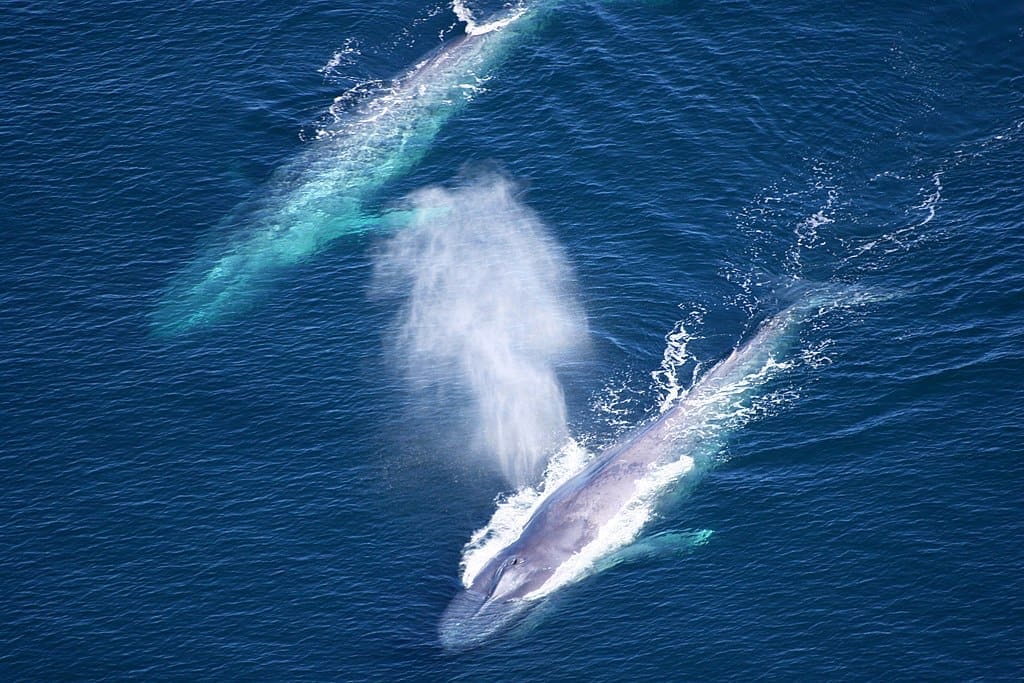
Which creature who helps fight climate change has newborns the size of an adult elephant and is not a fan of boats?

The Blue Whale!

Photo from National Marine Sanctuaries (via Wikimedia Commons)

Big, bigger, and biggest

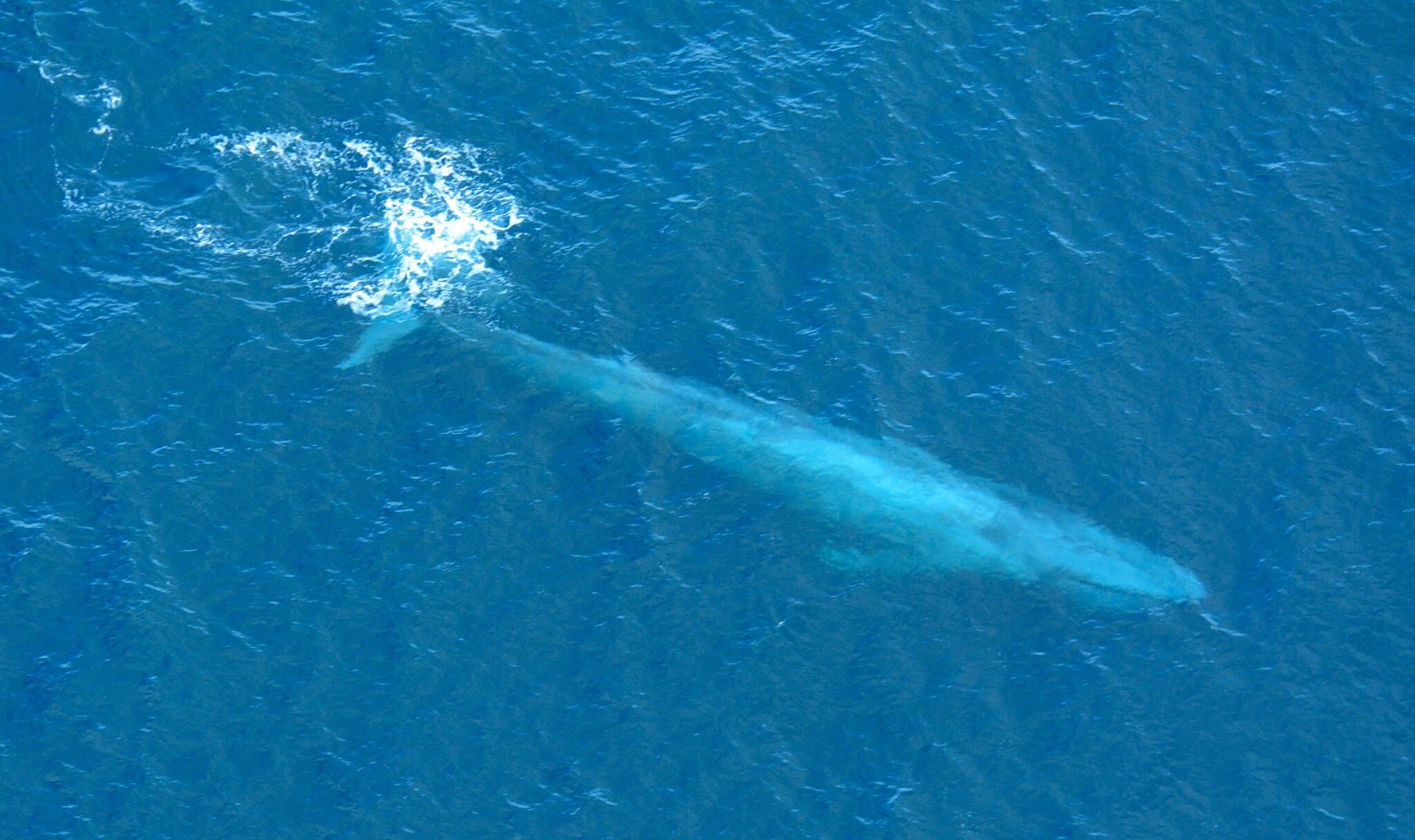
Blue whales are the largest creature to ever grace this Earth. They can grow to around 100 ft (33 meters), which is more than twice the size of a T-Rex dinosaur! Newborn calves are around the same size as an adult African elephant – about 23 ft (7 meters). To get more of an idea of how huge these animals are, picture this: a blue whale’s heart is the size of a car, and their blood vessels are so wide a person can swim through them!

Despite their large size, blue whales eat tiny organisms. Their favorite food is krill, small shrimp-like creatures. They can eat up to 40 million of these every day. They do so by opening their mouths really wide, and after getting a mouthful, they’ll close their mouths and force out the swallowed water with their tongue, while trapping the krill behind their baleen plates – this method is known as filter feeding.

Photo by Don Ramey Logan (CC BY-SA 3.0 via Wikimedia Commons)

From coast to coast

Blue whales live in every ocean except the Arctic. They usually travel alone or in small groups of up to four, but when there are plenty of krill to go around, more than 60 of these mega-creatures will gather around and feast. 

Blue whales can communicate across 1,000 miles (over 1600 km)! Their calls are loud and deep, reaching up to 188 decibels – so loud that it would be too painful for human ears to bear. Scientists believe that these calls produce sonar – helping the whales navigate through dark ocean depths.

Climate Regulator

All that krill has to go somewhere, meaning out the other end. Whale poop helps maintain the health of oceans by fertilizing microscopic plankton. Plankton is the bedrock of all sea life, as it feeds the smallest of critters, and these critters then feed larger creatures (and on goes the food chain). Plankton include algae and cyanobacteria that get their energy through photosynthesis, and they are abundant throughout Earth’s oceans. These microorganisms contribute to carbon storage by promoting the cycling of carbon in the ocean, rather than its emission in the form of carbon dioxide.  Without whales, we wouldn’t have as much plankton, and without plankton, the food cycle would collapse, and more gas would rise to the atmosphere. Therefore, whale poop acts as a climate stabilizer.

Learn more about this whale-based nutrient cycle here:

Size doesn’t equal protection

Unfortunately, the sheer size of blue whales isn’t enough to prevent them from harm. Blue whales were heavily hunted until last century, and although a global ban was imposed in 1966, they are still considered endangered. 

Today, blue whales must navigate large and cumbersome fishing gear. When they get entangled, the gear attached to them can cause severe injury. Dragging all that gear adds a lot of weight, so this also zaps their energy sources. Since blue whales communicate through calls intended to travel long distances, increased ocean noise either from ships or underwater military tests can also disrupt their natural behaviors. 

Another threat blue whales face are vessel strikes. They can swim up to 20 miles an hour, but only for short bursts. Usually, blue whales travel at a steady pace of 5 miles per hour. This means that they aren’t fast enough to dodge incoming vessels, and these collisions can lead to injuries or even death for the whales. In areas where traffic is high, such as ports and shipping lanes, this threat becomes even more prominent.

To protect blue whales, and our oceans, we can implement sustainable fishing practices that use marine mammal-friendly gear. We can also reduce man-made noise, and utilize precautionary measures when venturing out to sea. That way we avoid vessel strikes and have a higher chance of witnessing the largest creature to ever grace our planet.

For creatures big, bigger, and biggest,
Tania


Tania graduated from Tufts University with a Master of Science in Animals and Public Policy. Her academic research projects focused on wildlife conservation efforts, and the impacts that human activities have on wild habitats. As a writer and activist, Tania emphasizes the connections between planet, human, and animal health. She is a co-founder of the podcast Closing the Gap, and works on outreach and communications for Sustainable Harvest International. She loves hiking, snorkeling, and advocating for social justice.


Sources and Further Reading:
https://us.whales.org/whales-dolphins/facts-about-blue-whales/
https://www.natgeokids.com/uk/discover/animals/sea-life/10-blue-whale-facts/
https://www.fisheries.noaa.gov/species/blue-whale 
https://www.greatwhaleconservancy.org/how-whales-help-the-ocean

Featured Creature: Flamingo

What long-legged creatures are known for their beauty, social habits, and fabulous flamboyance?

Flamingos!

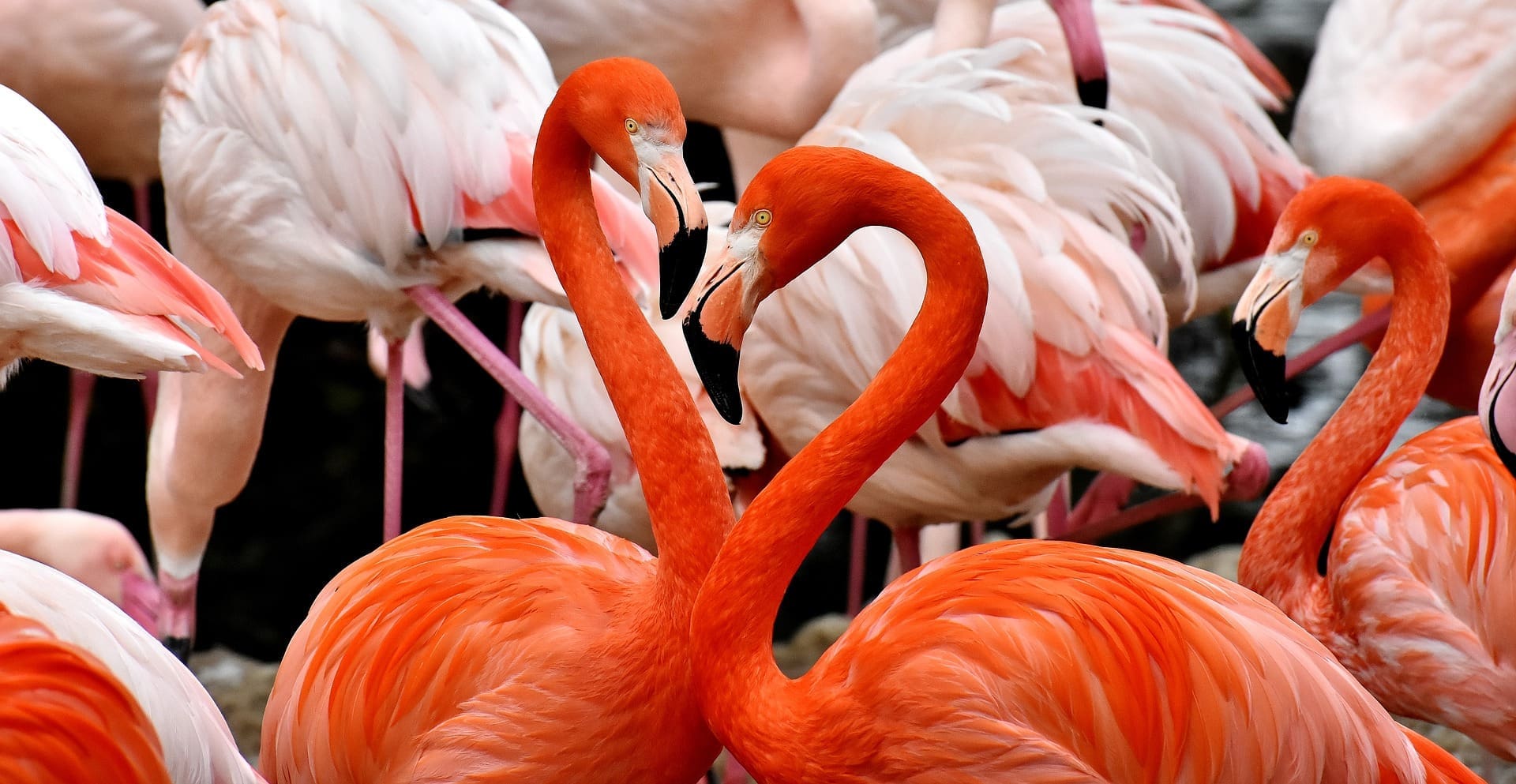
Image by Alexa from Pixabay

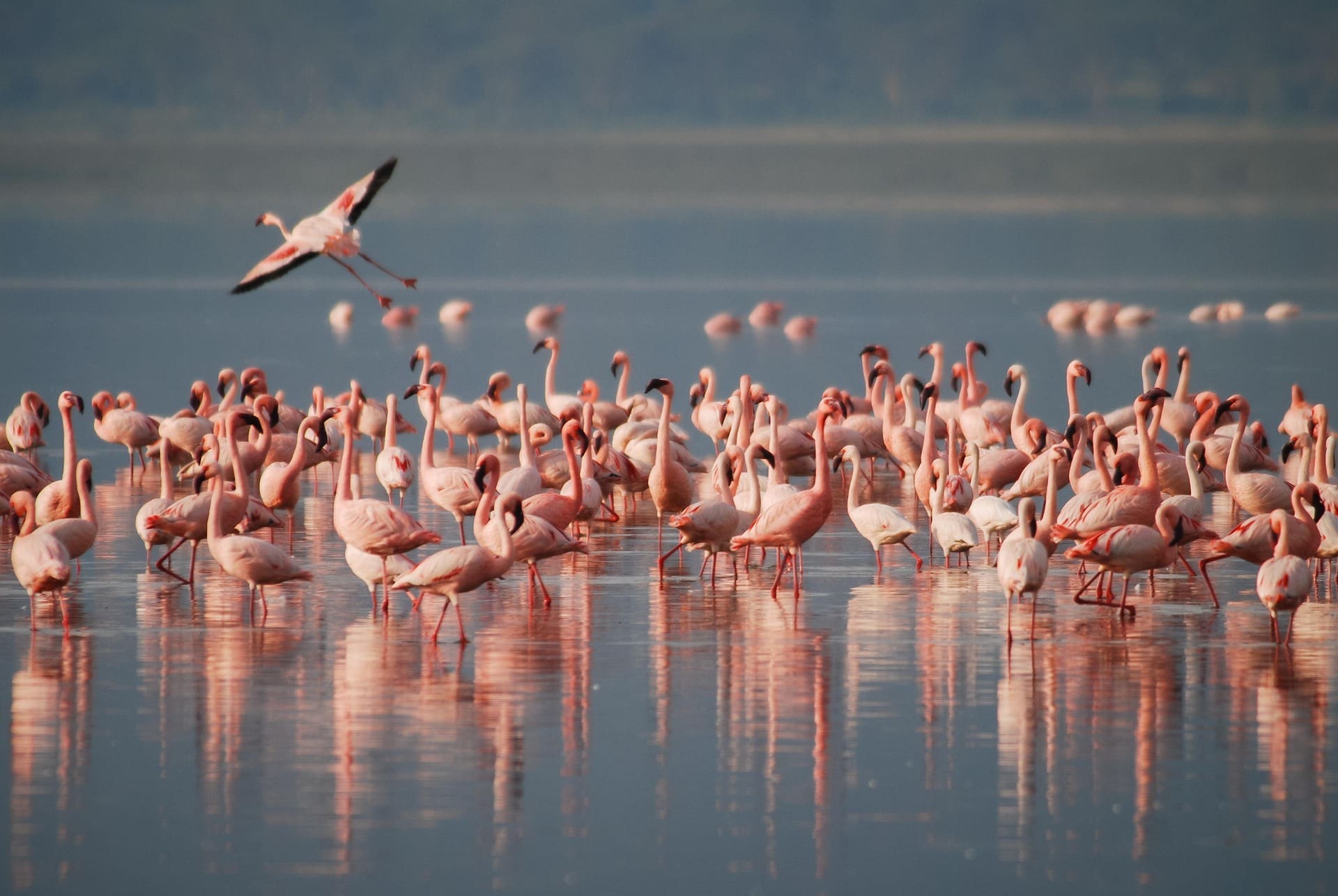
Flamingos are among the most recognizable birds in the world. These long-legged wading birds are known for their vibrant pink plumage and distinctive S-shaped necks, and rank among the most iconic inhabitants of wetlands across the globe. 

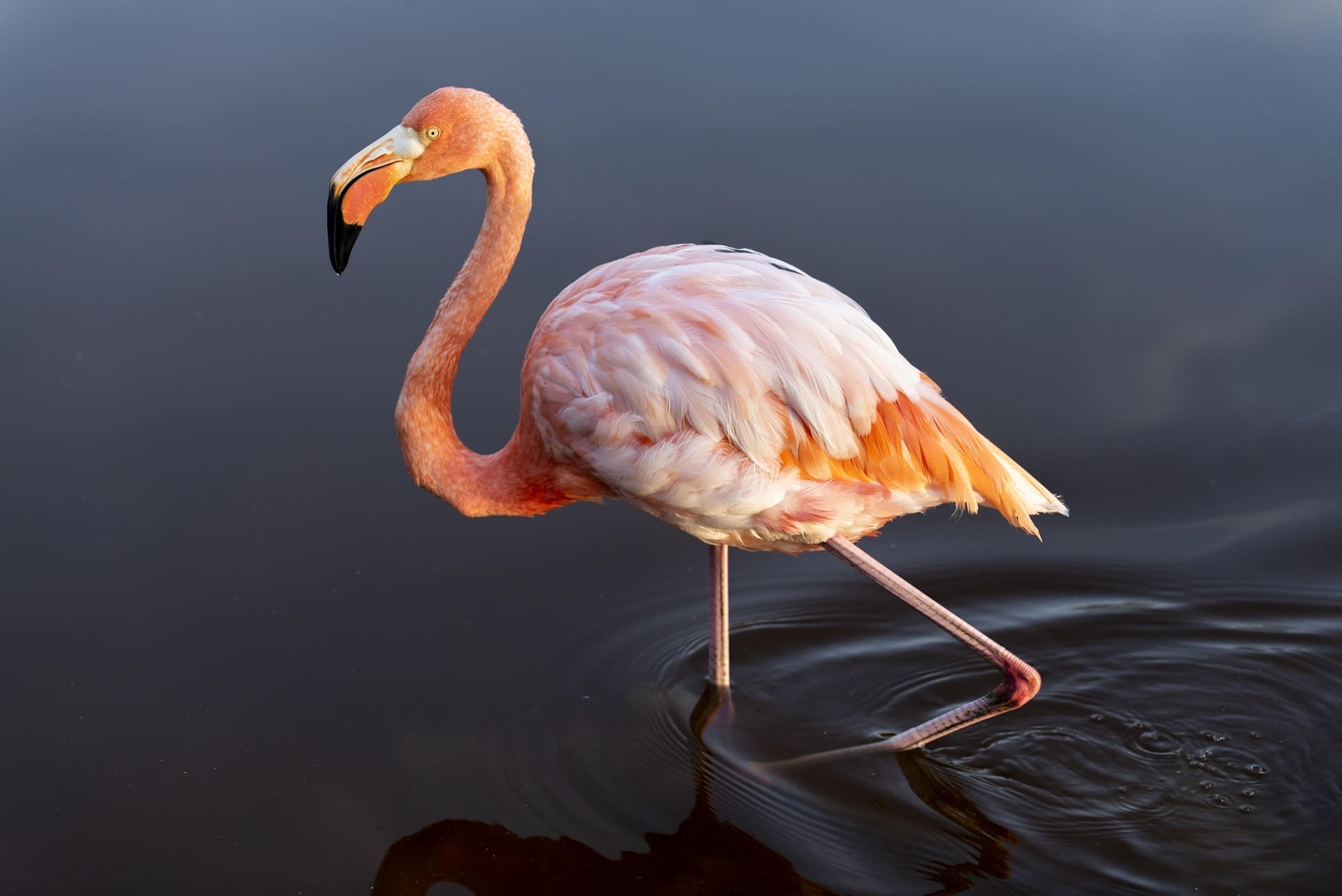
They are known to congregate in large flocks, standing (often perched on one leg) in the shallows of their habitat. Given their unmistakably flashy appearance, it is apt that a group of flamingos is known as a “flamboyance.”

Image by Gunnar Mallon from Pixabay

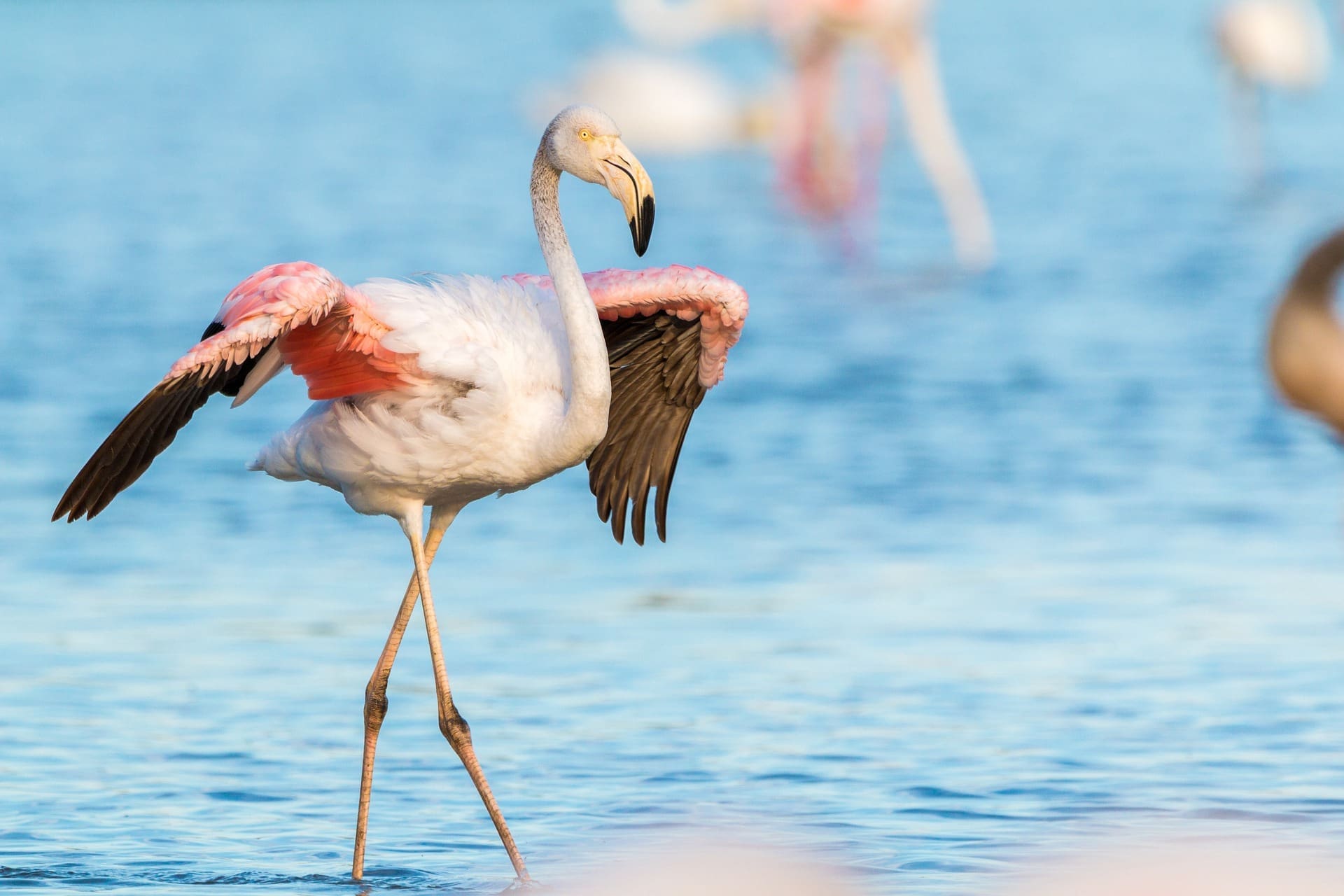
Flamingos boast a slender body, stilt-like legs, and a characteristic downward-bending bill, making them instantly recognizable. Though they are most often depicted as a bright pink, their plumage ranges from a subtle pink to crimson. This hue is actually derived from carotenoid pigments found in their diet of algae, crustaceans, and small invertebrates. So as flamingos’ range and available food sources vary, so too might their color. Interestingly, this same pigment responsible for the flamingo’s iconic pink is also what makes carrots orange and ripened tomatoes red. 

Flamingos thrive in saline or alkaline lakes, mudflats, and shallow lagoons, where they feed on algae, invertebrates, larvae, small seeds, and crustaceans like brine shrimp. Their long legs enable them to wade into deeper waters, utilizing their uniquely adapted bills to filter food from the mud and water. In fact, though the term usually calls to mind creatures like oysters or whales, flamingos are also considered “filter feeders” in their behavior and diet.

Image by Paul from Pixabay 

While most flamingo species are not endangered, habitat loss and human activities pose significant threats to their populations. Conservation initiatives, such as the establishment of protected reserves and the monitoring of wild populations, are crucial for safeguarding these charismatic birds and their habitats. As indicators of environmental health and key feeders in the wetlands, flamingos play a vital role in maintaining the delicate balance of their ecosystems. 

Lifestyle and relationships

Flamingos are highly social creatures, forming large flocks that can number in the thousands. They engage in intricate mating displays and rituals, characterized by synchronized movements and vocalizations. Once a couple has chosen to mate, breeding pairs construct simple mud nests, where they raise their offspring, feeding them a specialized “crop milk” produced in their upper digestive tract.

With a lifespan of 20 to 30 years in the wild, and up to 50 years in captivity, flamingos exhibit remarkable longevity. They typically lay a single chalky-white egg, which both parents incubate and care for until hatching. Young flamingos, born with gray downy feathers, gradually develop their iconic pink plumage over time.

Image by Pfüderi from Pixabay

Over time, these bright birds form strong social bonds that characterize their lives and behaviors. Remarkably, it has been observed that some flamingos will make friends for decades. Researchers have speculated that the bonds, which are influenced by factors such as personality traits and physical characteristics, may aid survival.

This long lasting affinity has led to comparisons and speculations about different forms of love in the animal kingdom. Though we see lots of courtship, pairing, and even mating for life in different species, friendship is one of those underrated forms of love well worth celebrating. And while these social relationships may indeed help with survival, it also might just be true that life is better with friends by your side.  

Feeling the love,

Maya


Maya Dutta is an environmental advocate and ecosystem restorer working to spread understanding on the key role of biodiversity in shaping the climate and the water, carbon, nutrient and energy cycles we rely on. She is passionate about climate change adaptation and mitigation and the ways that community-led ecosystem restoration can fight global climate change while improving the livelihood and equity of human communities. Having grown up in New York City and lived in cities all her life, Maya is interested in creating more natural infrastructure, biodiversity, and access to nature and ecological connection in urban areas.


Sources and Further Reading:
https://animals.sandiegozoo.org/animals/flamingo
https://kids.nationalgeographic.com/animals/birds/facts/flamingo
https://nationalzoo.si.edu/animals/american-flamingo
https://www.audubon.org/birds-of-america/american-flamingo
https://www.nationalgeographic.com/animals/article/flamingos-make-friends-for-life
https://nationalzoo.si.edu/animals/news/why-are-flamingos-pink-and-other-flamingo-facts

Featured Creature: Humpback Whale

What species of tremendous size and grace undertakes the largest mammal migration on Earth? 

The humpback whale!

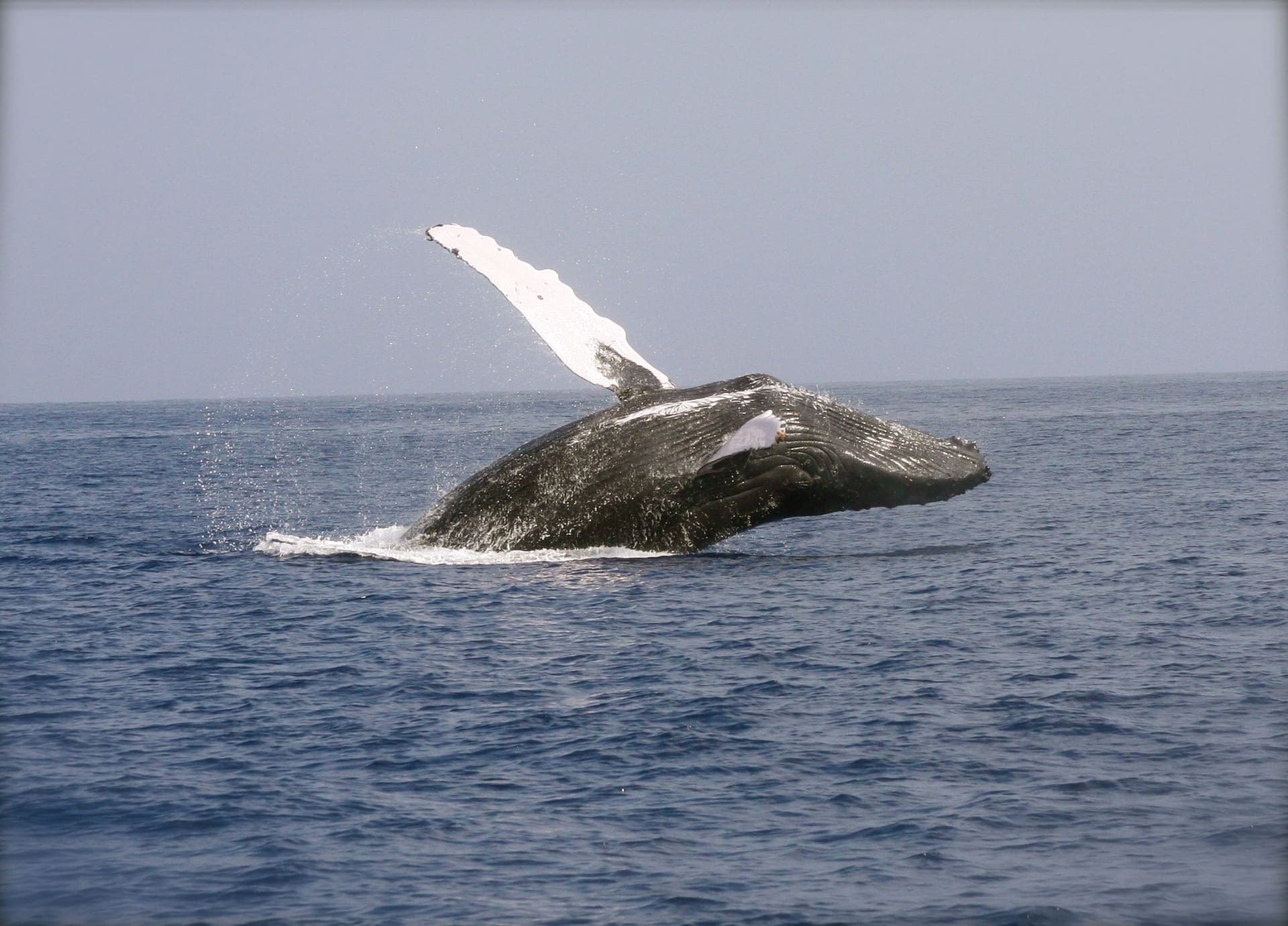
Image by Brigitte Werner from Pixabay

In the vast expanses of the world’s oceans, a symphony of moans, cries, and howls fills the water, echoing across great distances. This stunning serenade is the song of the humpback whale, one of the most majestic creatures to grace the seas. 

Scientifically known as Megaptera novaeangliae, the humpback whale derives its common name from the distinctive hump on its back. With dark backs, light bellies, and long pectoral fins that resemble wings, these whales are a sight to behold. Their Latin name, signifying “big wing of New England,” pays homage to those impressive pectoral fins and early encounters European whalers had with these graceful giants off the coast of New England. 

Image by Monica Max West from Pixabay

Humpback whales are renowned for their enchanting songs, which echo through the ocean depths for great distances. These compositions, which consist of moans, howls, and cries, are among the longest and most complex in the animal kingdom. Scientists speculate that these melodic masterpieces serve as a means of communication and courtship, with male humpbacks serenading potential mates during the breeding season for minutes to hours at a time. Songs have also been observed during coastal migrations and hunts. Many artists have taken inspiration from these songs, and you can even listen to eight-hour mixes of them to help you get to sleep. Check it out:

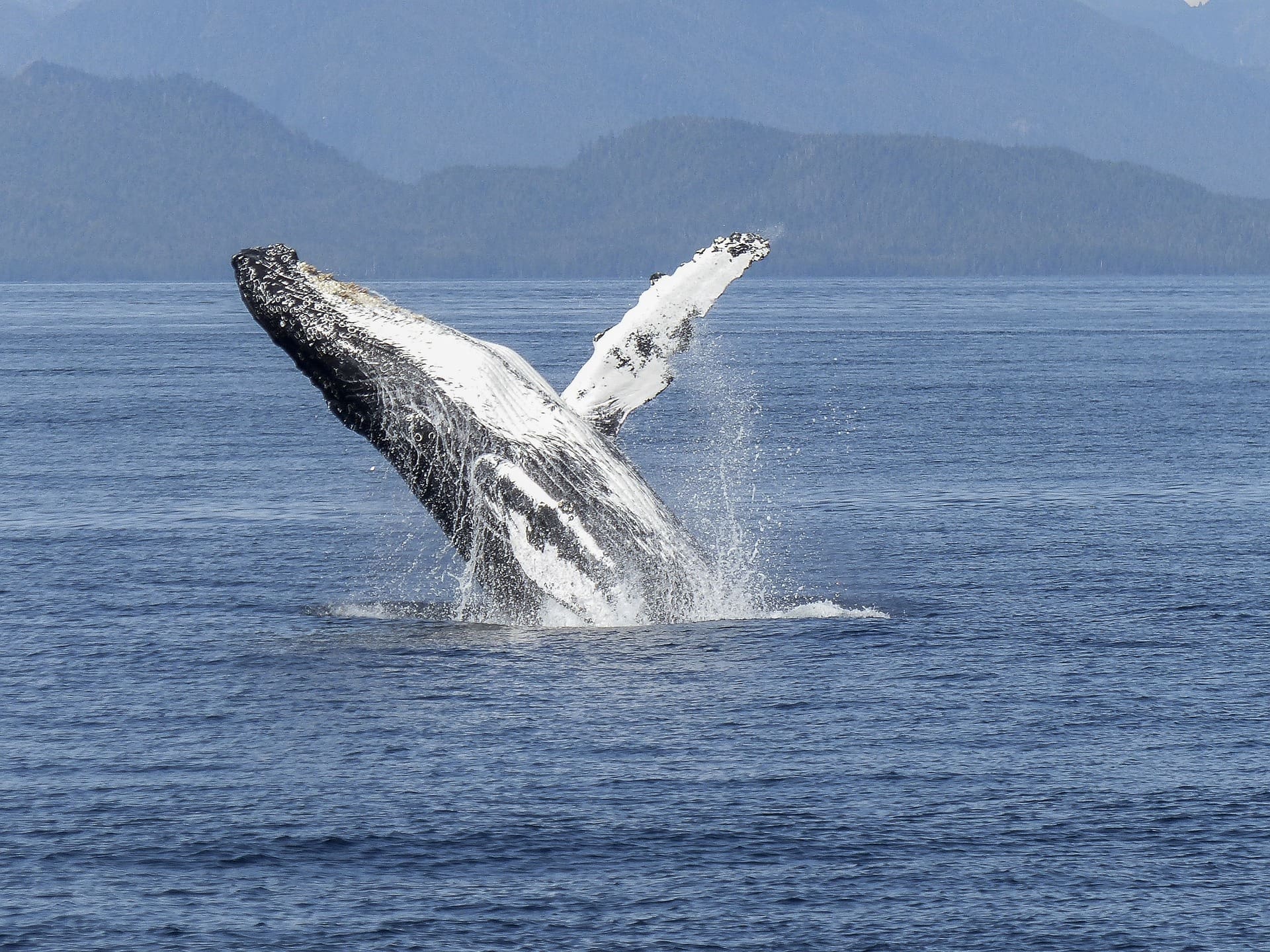
Another marvel of the humpback are their awe-inspiring displays of acrobatics, from flipper slapping to full-body breaching. Despite their colossal size, these creatures display remarkable agility and grace. With lengths of up to 62.5 feet (19m, or one school bus!) and weights of 40 tons (40,000 kg), humpback whales are true behemoths of the ocean.

Life on the move

Life for a humpback whale is a tale of two halves—a perpetual journey between polar feeding grounds and tropical breeding waters. These remarkable migrations span thousands of miles and rank as one of the longest animal migrations on the planet, and the longest among mammals. 

Feasting on plankton, krill, and small schooling fish, humpback whales are skilled hunters, capable of consuming up to 1,360 kilograms of food per day. Employing innovative techniques such as bubble-netting and kick-feeding, they ensnare their prey with precision and efficiency. Generally these whales stay in small and dynamic groups, and they use their social intelligence and coordination to orchestrate these group hunting mechanisms. 

Ecological powerhouses

Humpback whales’ feeding and movement contributes to more than just their own wellbeing. As these majestic creatures feed on zooplankton, copepods, and other food sources in the oceans’ depths, and subsequently ascend to the surface, they disrupt the thermocline—a boundary between surface and deep waters—facilitating greater mixing of ocean layers. This enhanced mixing fosters increased nutrient availability, benefiting a myriad of marine organisms. 

They also cycle nutrients through their own consumption and excretion, contributing to a phenomenon known as the “biological pump.” These whales ingest biomass and nutrients from microscopic and small macroscopic organisms in deeper waters, digest it, and excrete their own waste in large macroscopic fecal plumes on the ocean’s surface. This cyclical process effectively transports nutrients from the ocean depths back to the surface, replenishing vital elements such as nitrogen for algae and phytoplankton growth. In regions like the Gulf of Maine, the nitrogen influx from whale feces surpasses that of all nearby rivers combined, underscoring the profound impact of these marine giants on nutrient cycling. Finally, when a whale’s life has come to an end, its own massive body sinks to the ocean floor and countless organisms are nourished by it in the decomposition process.

Image by shadowfaxone from Pixabay

Conservation and Resurgence

Understanding the multifaceted lives and roles of humpback whales underscores the urgency of their conservation. Historically valued solely for commercial exploitation, these majestic creatures now emerge as essential components of oceanic ecosystems. Though humpback whales have faced centuries of exploitation and habitat degradation, concerted conservation efforts offer hope for their survival, not only safeguarding whales themselves but also preserving the intricate ecological processes that sustain marine life and biodiversity. 

Whales continue to face threats from ship collisions, entanglement in fishing gear, noise pollution, and the disruption of habitat for their food sources due to trawling, pollution, and encroachment. But strong advocacy has brought these creatures back from the brink before, and our conservation and restoration work can safeguard the future of these enchanting giants and ensure that their songs continue to echo through the seas for generations to come.

Take a look at Sir David Attenborough’s tale of their resurgence and beauty:

May we steward the ocean with love and care,

Maya


Maya Dutta is an environmental advocate and ecosystem restorer working to spread understanding on the key role of biodiversity in shaping the climate and the water, carbon, nutrient and energy cycles we rely on. She is passionate about climate change adaptation and mitigation and the ways that community-led ecosystem restoration can fight global climate change while improving the livelihood and equity of human communities. Having grown up in New York City and lived in cities all her life, Maya is interested in creating more natural infrastructure, biodiversity, and access to nature and ecological connection in urban areas.


Sources and Further Reading:
https://www.fisheries.noaa.gov/species/humpback-whale
https://www.nationalgeographic.com/animals/mammals/facts/humpback-whale
https://www.nwf.org/Educational-Resources/Wildlife-Guide/Mammals/Humpback-Whale
https://us.whales.org/whales-dolphins/species-guide/humpback-whale/
https://www.pbs.org/wnet/nature/blog/humpback-whale-fact-sheet/
https://conservationconnections.blogspot.com/2012/05/importance-of-whale-poop-interview-with.html
https://www.youtube.com/watch?v=uRY9giOUTrI (Whales as Keystone Species – Cycling Nutrients, Carbon and Heat with Joe Roman at Bio4Climate’s Restoring Oceans conference)

Featured Creature: Whale Shark

What creature is the largest of its kind, sports beautiful patterns, and holds a reputation for being a ‘gentle giant’? 

The whale shark!

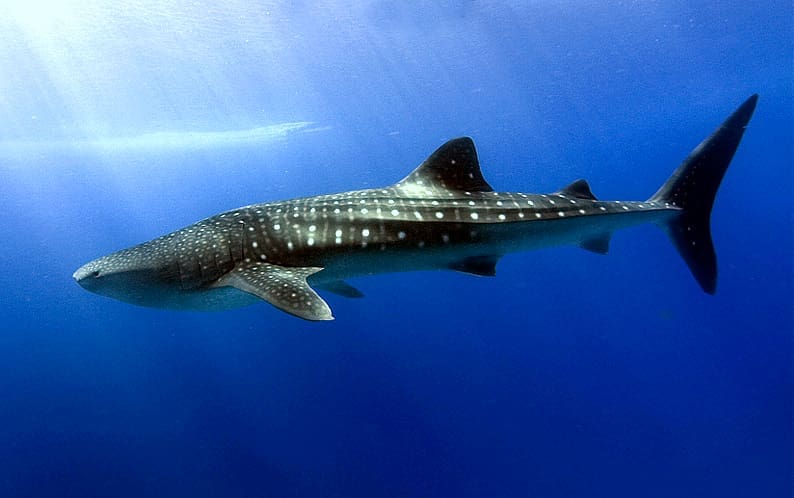
Photo by Shiyam ElkCloner (CC BY-SA 3.0 via Wikimedia Commons)

Filter feeding for giants 

The majestic whale shark is famed for being the largest fish in existence. With a length of up to 33 feet and weight up to 20 tons, they are not only the largest living fish, but thought to be the largest fish that ever lived on this planet. Though their name might suggest otherwise, whale sharks are not a type of whale at all, but instead a member of the shark family. It is their enormous size (akin to a school bus) that led them to be compared with whales. 

Like their other shark relatives, these creatures are excellent swimmers and true masters of the deep. People are coming to recognize that all sharks, even carnivorous species that hunt marine mammals, fish, or other invertebrates, have been unfairly mischaracterized as threatening, and whale sharks are another species you need not be afraid of. 

In fact, one of the most fascinating traits of the whale shark is its diet. Despite their own large size, whale sharks subsist on some of the smallest ocean inhabitants, plankton. Much like the enormous blue whale, whale sharks are a living example of one of the most interesting links in the food chain, where nutrients are cycled from microscopic life to macroscopic organisms. 

They filter-feed by opening their mouths and letting plankton-rich waters pass through, as well as ingesting other small fish or unlucky invertebrates along the way. But even in this habit they are unique. Whale sharks use a technique called “cross-flow filtration,” in which particles do not actually catch on the filter (the way it works when we drain pasta through a strainer or breathe through an N95 mask). Instead, water is directed away through the gills while particles move towards the back of the mouth. A bolus (or a spinning ball of food) grows in size as more particles are concentrated, finally triggering a swallowing reflex in the throat. This avoids clogging any filters in the process and is a particularly efficient method of filter feeding. 

Because they are so large, whale sharks need a lot of food to sustain themselves, and so they journey long distances in order to eat enough for their great big appetites. They can be observed throughout the world in warm tropical waters and tend to lead solitary lives. Where there is an abundance of plankton, however, whale sharks are sure to follow. For example, in the Springtime many whale sharks migrate to the continental shelf of the Central West Coast of Australia, where Ningaloo Reef is the site of a great coral spawning that produces water rich with plankton for our giant fishy friends to enjoy.

Photo by Leonardo Lamas from Pexels

Big fish in a complex sea

The whale shark contributes to nutrient cycling throughout its lifespan, providing important benefits to the ecosystems they are a part of. Some of the warm tropical waters that whale sharks call home tend to be low in nutrients and productivity, and in these areas whale sharks can make a big difference due to their size and force. As they undertake migrations or even as they go about daily swimming and feeding activities, their motion stimulates small ocean currents that can help nutrients travel from areas of high productivity to waters where they are much less concentrated. 

Their own eating habits rely on an abundance of microscopic creatures and the nutrients they metabolize, and eventually each mighty whale shark passes on and becomes food itself, returning those nutrients to the ocean food web. After death, whale sharks sink to the ocean floor and the benthic organisms that reside there find food and shelter in the great carcasses. It can take decades for this decomposition to occur, and in the meantime hundreds of creatures benefit from the habitat and nutrients left behind.  

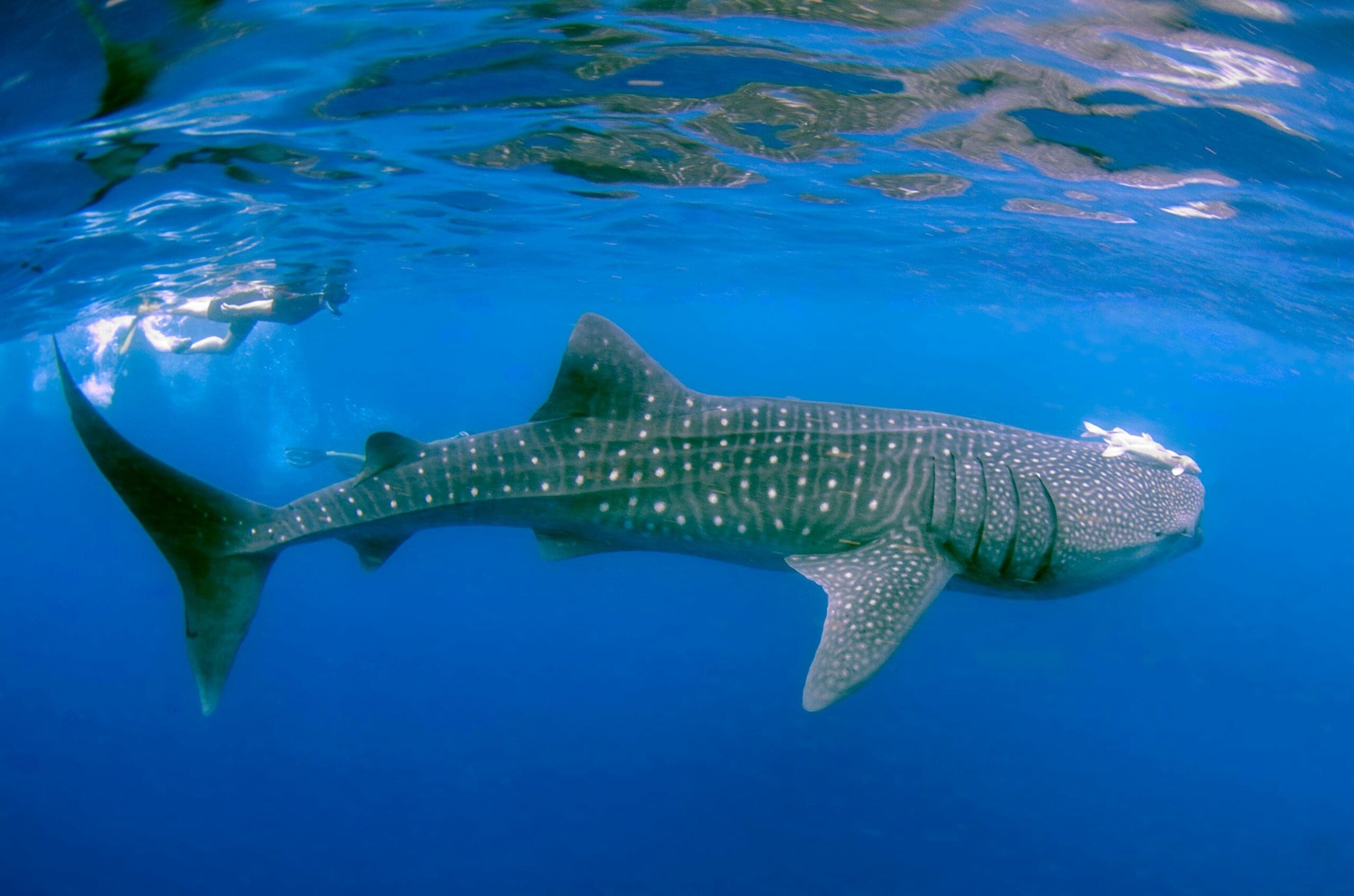
In life as well, whale sharks can provide refuge to smaller species of fish that travel around their great bodies, taking advantage of the shelter these gentle giants create. As largely docile creatures, whale sharks can be quite approachable and playful with divers who are also interested in tagging along: 

In a couple of instances, humans have even pushed their luck so far as to ride along on a whale shark’s back! Such close contact is discouraged by conservationists to protect the personal space of these beautiful animals, but whale sharks’ friendly reputation remains. 

Though they may be steady, generous members of the ocean community, whale sharks are struggling to survive in changing conditions. They are an endangered species, and while some protections for these creatures have been enacted across the coastal waters of the world, they are still hunted for meat, fins, and oil, or captured or killed as bycatch in industrial fishing operations. Whale sharks also suffer from the plastic pollution in our oceans, as microplastics mingle with the food they rely on. Like the rest of us, whale sharks need clean, healthy, abundant environments in which to live and co-create. 

Whale shark in the Maldives (Photo by Sebastian Pena Lambarri from Unsplash)

Unique beauties

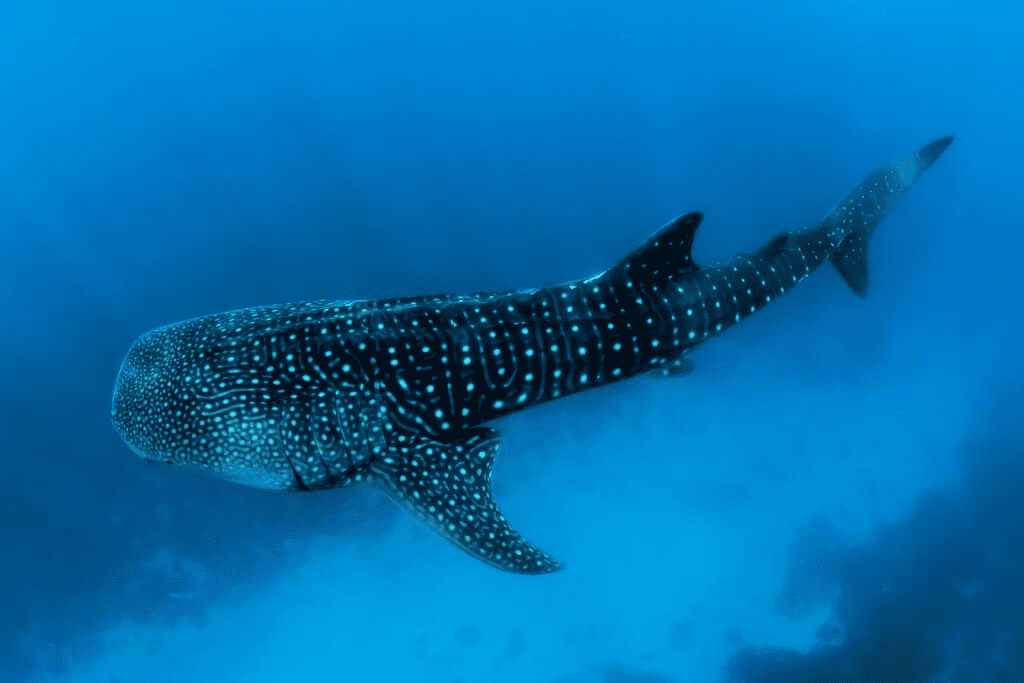
Whale sharks may be known for their size, but that’s not the only special thing about their anatomy and appearance. Each whale shark sports a beautiful pattern of white markings on its dark gray back. Not only does this make these creatures look like giant mobile modern art pieces, but the patterns also uniquely identify whale shark individuals.

It is not conclusively determined why whale sharks carry these unique signatures, their own version of the human fingerprint. Some scientists speculate that the patterns, which tend to be common among carpet sharks and other species that find such markings useful for camouflage as they traverse the ocean floor, indicate a close evolutionary link among these organisms.  

The World Wildlife Fund has used these markings to identify individuals in the waters around the Philippines and keep track of whale shark population numbers there, so that humans can make the interventions needed to mindfully coexist with our marine friends. Whatever its distant origin or function today, this feature makes it clear that each whale shark is a special and irreplaceable member of our blue planet. 

For gentle giants and filtering friends,
Maya


Maya Dutta is an environmental advocate and ecosystem restorer working to spread understanding on the key role of biodiversity in shaping the climate and the water, carbon, nutrient and energy cycles we rely on. She is passionate about climate change adaptation and mitigation and the ways that community-led ecosystem restoration can fight global climate change while improving the livelihood and equity of human communities. Having grown up in New York City and lived in cities all her life, Maya is interested in creating more natural infrastructure, biodiversity, and access to nature and ecological connection in urban areas.


Sources and Further Reading:
https://www.worldwildlife.org/species/whale-shark
https://www.georgiaaquarium.org/animal/whale-shark/
https://www.nationalgeographic.com/animals/fish/facts/whale-shark
https://en.wikipedia.org/wiki/Whale_shark
https://earth.org/endangered-species/whale-sharks/
https://www.4ocean.com/pages/whale-shark-cause-of-the-month

Featured Creature: Clamworm

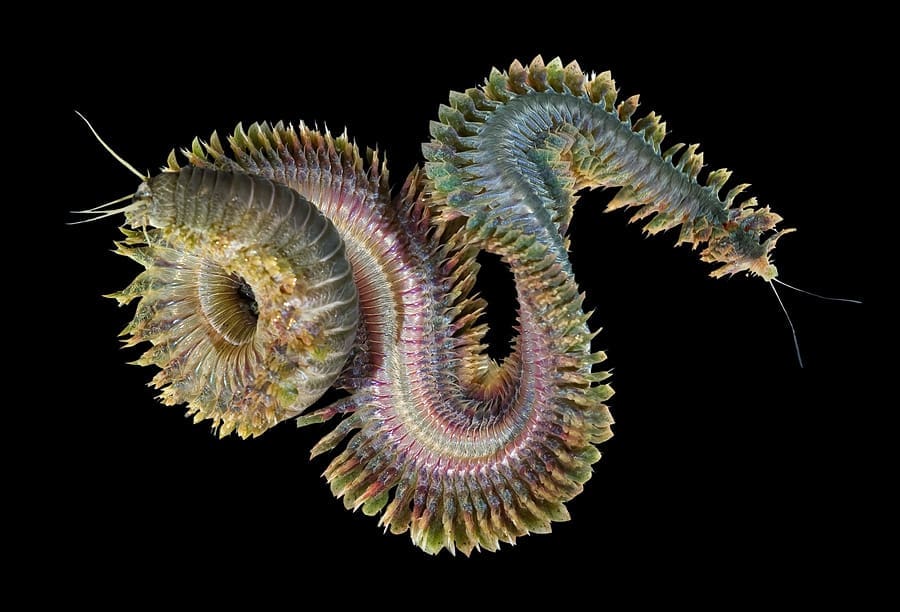
Photo by Alexander Semenov

What sort of worm is festooned with sensitive tentacles all the way down its sides and – though it can’t bark – has a nasty bite?


That would be the “clam worm” or alitta succinea, a denizen of estuarial waters.

Alternative names

I’ve always called them “seaworms” but they are normally known as “clam worms,” “ragworms,” “sand worms” or “pile worms”, and they are a species of annelid, the phylum of segmented worms.

Size and habitat

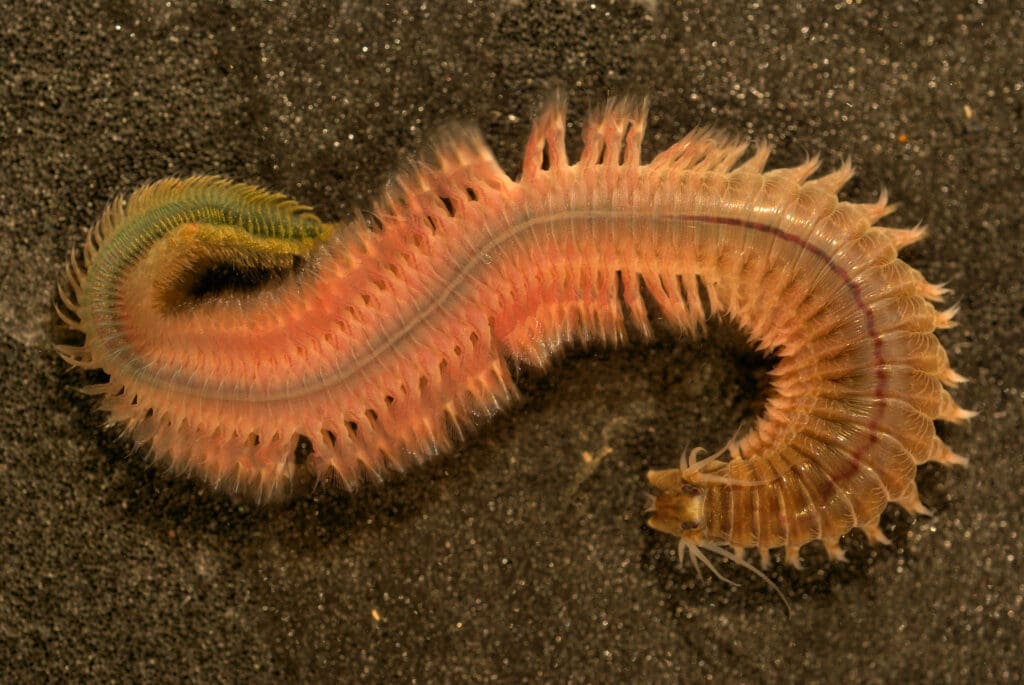
The clam worm can reach up to 15 cm (almost 6 inches) but most are smaller. This worm is reddish-brown in color, and has four eyes, tentacles or flaps all the way down its sides which can also function as gills, and sensory feelers at its head. 

When hungry, it uses a long internal mouthpart called a proboscis, along with two hooks that unfold to capture and then draw prey into a mouth at its front end. These worms are themselves an important food source for fish and crustaceans, and are widely used as fishing bait. Their typical habitat is rocks, vegetation, reefs, and mud. They burrow into the mud or sand, or hide under rocks, to be safe from many potential predators.

Photo from wikimedia.org

My own first encounter 

In my early teens, my father and I used to fish for striped bass with a flashy lure with a seaworm strung on a hook behind it. “Here’s how you do it,” my father counseled me. “Just poke the worm in its mouth and, as soon as it opens, insert the hook point.”

“Owww!!!” I exclaimed. “This worm bit me!” My father laughed, almost as hard as during one of my earlier ‘learning moments’ in a Maine field, when halfway over an electric fence I got shocked! On neither occasion did I expect the bite, but I eventually learned to be more careful. Those pincers were sharp! 

The pincers’ zinc content makes them strong while keeping them very lightweight. They certainly drew my blood that first time! The fish surely liked these worms, but eventually I gave them up for flies (less messy and easier on the worms).

Spawning behavior 

During the full and new moon tides in the late spring and early summer, these clam worms undergo a process called epigamy, which enlarges their parapodia (tentacles) so they can swim more easily to the surface to release their eggs and sperm, at which point their bodies rupture and disintegrate. Talk about dying to reproduce! One hopes at least they have fun on their way out. Their fertilized eggs then settle to the bottom and hatch into a new generation.

Replacement parts 

These worms can replace various body parts, and make new worms from broken pieces, such as when their tails are pulled off by a predator. But rear body segments are more readily repaired than heads, which are much harder to replace – those of us our heads still on can probably relate!

Check out a short video on clam worms and their special properties:

Their role in marine ecosystems 

The tunneling and boring of marine worms irrigate and oxygenate the shallow water pools encouraging beneficial plant and algae growth. Whether it’s in tide pools, lowland waters or oceanic reefs, the marine worm’s primary ecological contribution is as sustenance for aquatic animals further up the food chain. Species of these worms respond quickly to increased amounts of pollution in the water and on the ocean bottom. Their presence or absence may indicate important changes in the marine environment.

Some subspecies are at risk, but clam worms are OK 

Most of this species is doing just fine, at least when not being used for bait or eaten by humans. However, you might just want to think twice before skinny dipping on May-June new or full moon tides!

By Fred Jennings

Featured Creature: Giant Barrel Sponge

What creature grows tall and sturdy, cleans up its neighborhood, and defends itself from predators – all without moving a muscle?

The Giant Barrel Sponge, or Xestospongia muta!

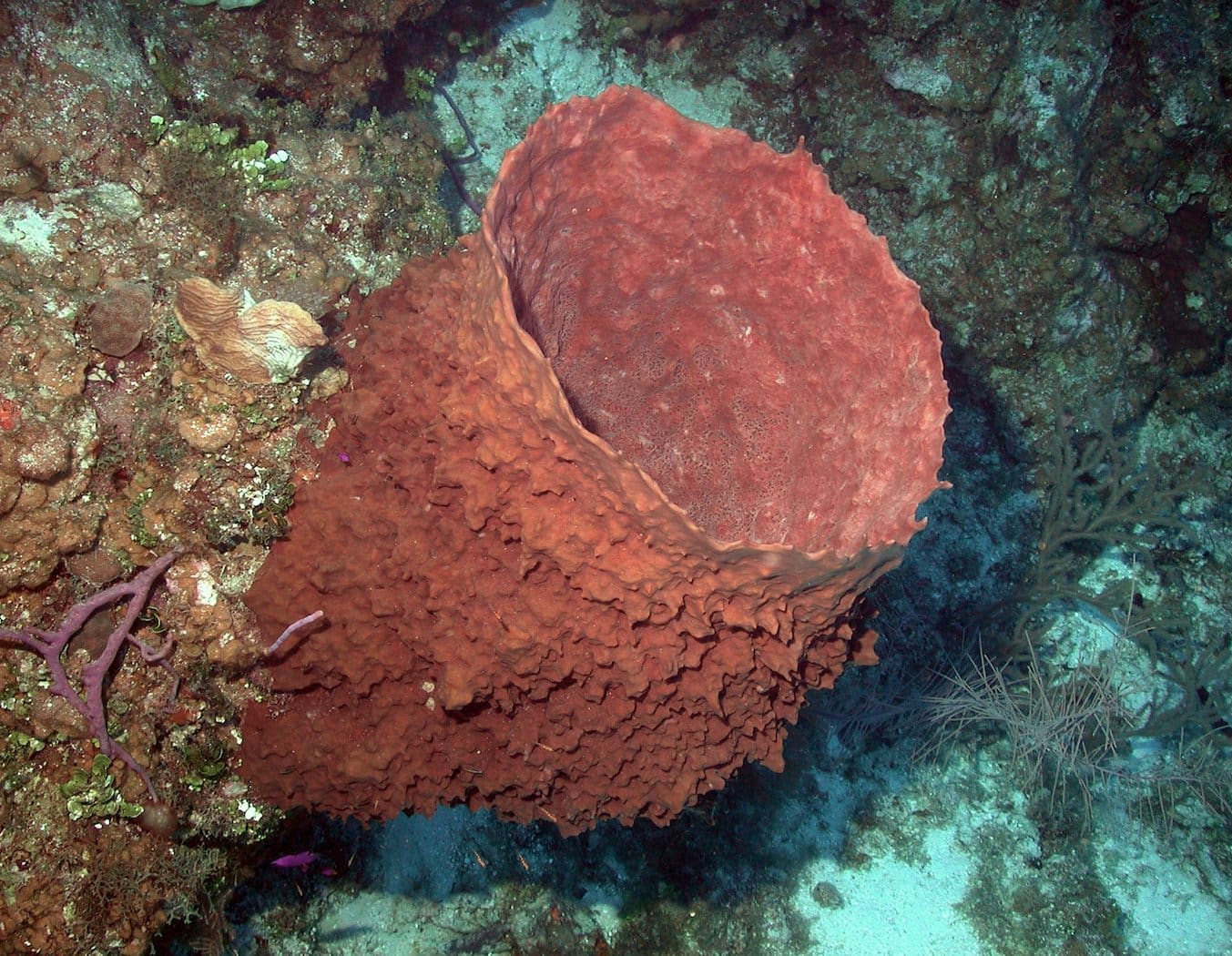
Photo By Twilight Zone Expedition Team 2007, NOAA-OE – NOAA Photo Library (Public Domain, via Wikimedia Commons)

A Giant Barrel by any other name… 

Giant barrel sponges are aptly named for their shape and great size. They grow over 1 m tall, but only grow an average of about 1.5 cm a year. After all, good things take time! 

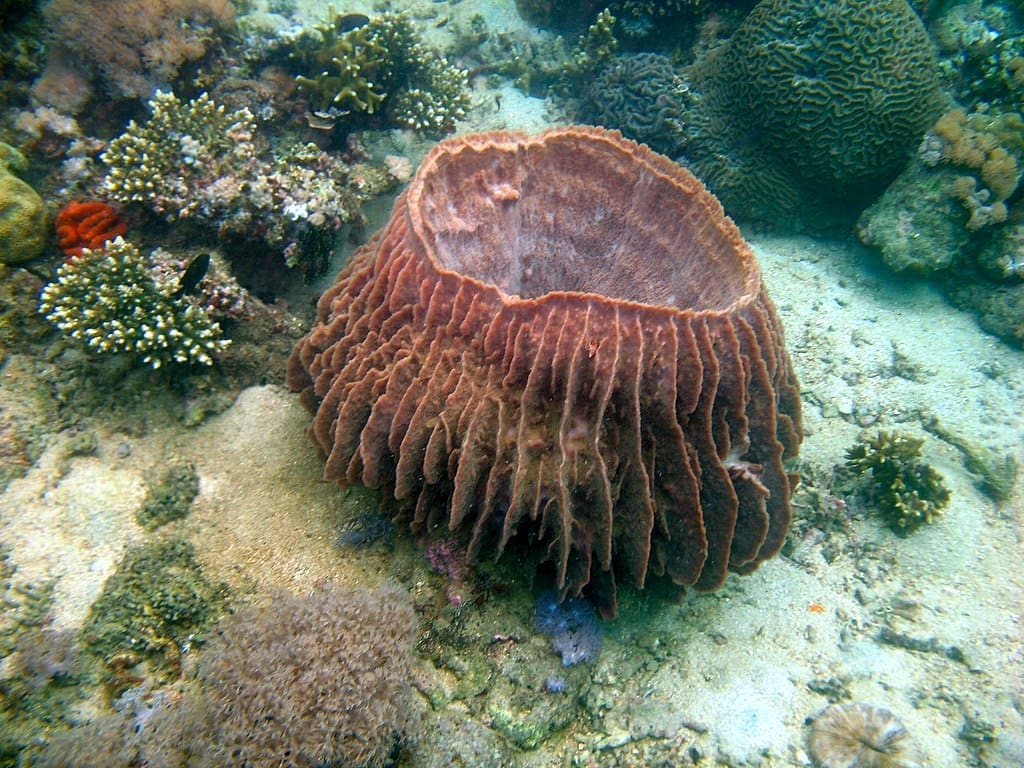
Giant barrel sponges come in a range of colors, depending on the presence of the cyanobacteria that they work with in symbiosis. They can be pink, purple, brown, reddish brown, and gray, and tend to be different colors at different depths. 

You may be wondering why this “giant barrel” doesn’t look very much like Spongebob Squarepants, or the sponge you use to clean up in the kitchen. Well sponges, or animals of the phylum Porifera, come in all shapes and sizes, and there is great diversity among the 8,550 species of them. Sponges are quite ancient, with their oldest fossil records dating back 600 million years, so they’ve had time to differentiate and find their own ecological niches.

The giant barrel sponge is known as the “Redwood of the Sea.” The phrase comes from the fact that giant barrel sponges share the tendency for individuals to live long lives, from a few hundred to thousands of years old. In fact, the oldest known giant barrel sponge is over 2000 years old. 

Old age isn’t the only thing they have in common with their counterparts on land. Like the magnificent redwoods, they do wonders to clean up and support the environment around them. Giant barrel sponges can filter up to 50,000 times their own volume in water in a single day. They also provide habitat to several small fish and other invertebrates that can be found living inside or on the surface of the sponge.

Photo by Andre Oortgijs (CC BY-SA 3.0 via Wikimedia Commons)

How does such a giant creature sustain itself?

Although giant barrel sponges are, well, giant, their diet is anything but. These creatures, like many species of whales, sustain their size not by eating very large sources of food, but by eating large volumes of it. Giant barrel sponges are filter feeders, and consume microorganisms from the water around them that they pump through their bodies. The sponges have special cells along their inner cavities called choanocytes, which work to facilitate the movement of water and the capture of food from it.

In their ocean food chain, giant barrel sponges take their place above their symbiotic partners cyanobacteria, and are consumed in turn by macroorganisms like fishes, turtles, and sea urchin. They try to defend themselves by releasing chemicals to repel their predators, but there’s only so much they can do when stuck in one place, waiting to be ingested by so many types of marine life. Like other filter feeders, giant barrel sponges ultimately form an important branch in the transfer of nutrients from very small to much larger life forms.  

They don’t even have tissues, let alone organs, but their simple structure is more than enough to ensure their survival and proliferation. Giant barrel sponges reproduce by spawning, and are one of the few species of sponge that undertake sexual reproduction. Males and females release sperm and egg cells into the ocean synchronously, so that when the time comes, they have a chance of contributing to a fertilized egg that grows into a larva and, after being carried by currents to a new spot of the ocean floor, establishes itself as an independent sponge. 

Check out this short video of the spawning phenomenon:

A valued community member

Giant barrel sponges are native to the oceans of the Americas, found primarily in the Caribbean Sea, and observed as far south as the coasts of Venezuela. 

Due to their filtration capabilities, giant barrel sponges are real assets to the ecosystems they are a part of, but boosting water quality is not the only ecological role they play. As mentioned, many other creatures live in and around the cavernous sponges, and giant barrel sponges are one of the largest organisms in the coral reef environments where they are found. They are thought to help coral anchor to substrate (the mix of mineral, rock, and skeleton that binds reefs together), and themselves make up about 9% of coral reef substrate in certain areas where they are found. By helping in this binding process, giant barrel sponges can play an important role in reef regeneration. 

Though the giant barrel sponge is not currently classified as threatened, like all of us, it is living in vulnerable times, as reef habitats are weakened in warming, acidifying waters. It is susceptible to a disease called Sponge Orange Band disease that afflicts all kinds of sponges. They can also be damaged or killed by human activities that disturb reefs and break sponges off from their surroundings. 

On the flip side, when these great creatures are doing well, they enable the thriving of life all around them. May all of us aspire to say the same.

With one giant smile,
Maya


Maya Dutta is an environmental advocate and ecosystem restorer working to spread understanding on the key role of biodiversity in shaping the climate and the water, carbon, nutrient and energy cycles we rely on. She is passionate about climate change adaptation and mitigation and the ways that community-led ecosystem restoration can fight global climate change while improving the livelihood and equity of human communities. Having grown up in New York City and lived in cities all her life, Maya is interested in creating more natural infrastructure, biodiversity, and access to nature and ecological connection in urban areas.


Sources and Further Reading:
https://animaldiversity.org/accounts/Xestospongia_muta
https://oceana.org/marine-life/corals-and-other-invertebrates/giant-barrel-sponge
https://en.wikipedia.org/wiki/Giant_barrel_sponge
https://www.americanoceans.org/species/giant-barrel-sponge
https://oceanservice.noaa.gov/facts/sponge.html