
What creature is nicknamed the “river wolf?”
The guide pulls back on the oars, straining with effort to stay in place against the current. The angler leans back in a similar manner, his rod bowed under pressure.
A fish erupts from the water, scales glimmering with the evening light.
Just as quickly as it broke the surface, it disappears from view, still engaged in its titanic struggle at the end of the line. After fifteen minutes of unpredictable splashes, tension, and shouts of excitement, I was introduced to the most charismatic creature I’ve ever met: the Siberian Taimen.
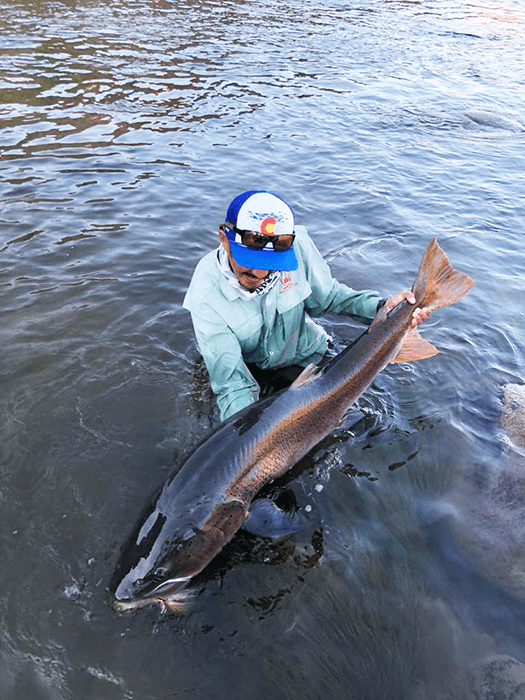
This particular Taimen was four feet of silvery power. We stood in awe as the bright red tail slipped through the angler’s hand, disappearing once more into a dark pool. Not to be held by another human for years, if ever again. I sighed with relief, thankful our good practice led to a healthy release.
I remember reflecting on how much needed to happen to reach this moment. The client had to take 3-4 flights to get across the world, followed by 8 hours crammed in a Jeep from the 20th century, navigating dirt roads.
They did this all for just the opportunity to catch a taimen — a creature notorious for being incredibly difficult to catch.
But that singular moment makes it all worthwhile.
Cyrus Kiely
This was my first week on the job at Mongolia River Outfitters — a premier fly fishing outfitter and conservation organization. Throughout the rest of the season, I learned how this awe-inspiring creature holds its entire ecosystem in balance, a balance threatened by the fragility of the species.
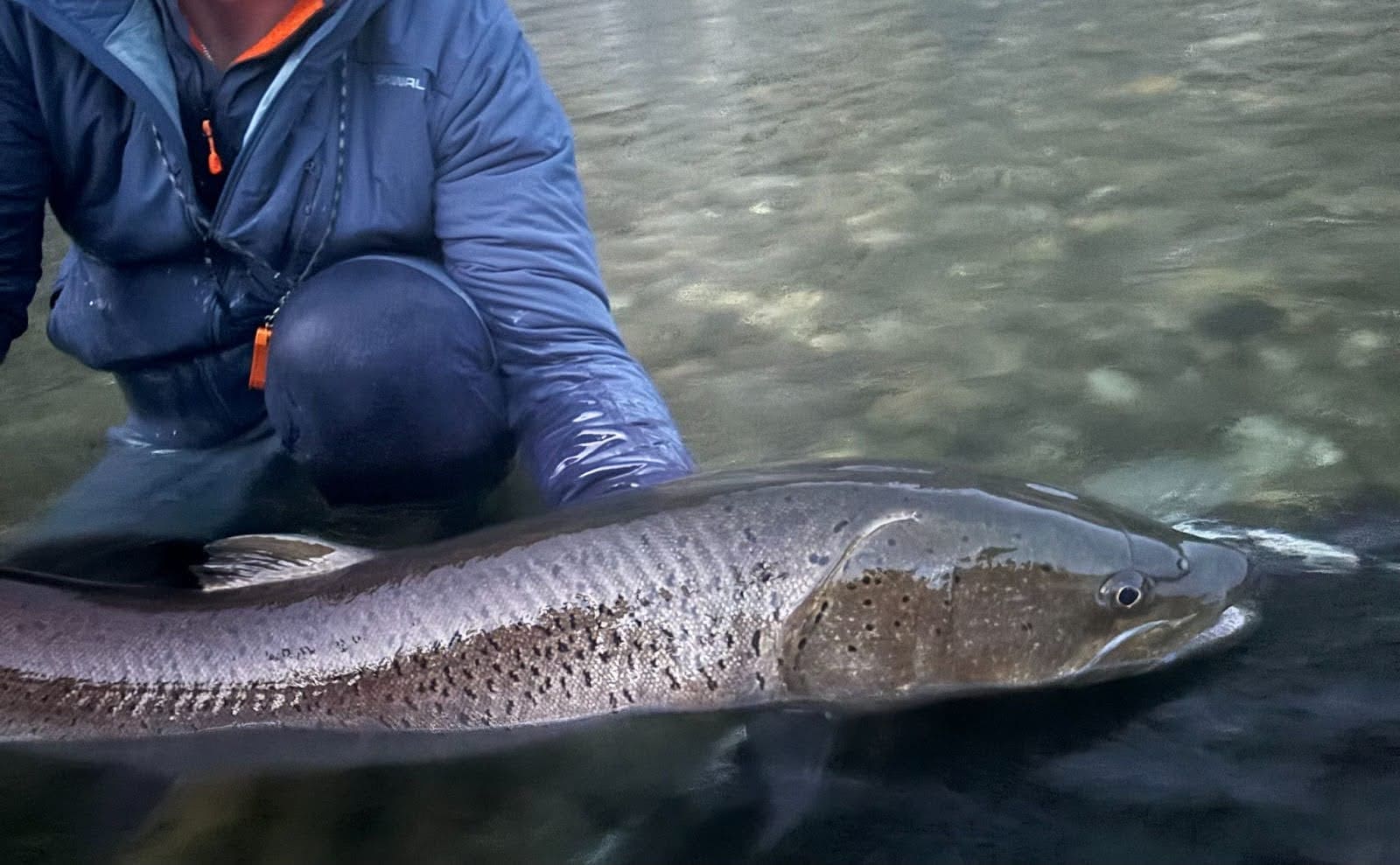
Taimen are the largest Salmonids (the trout and salmon family) in the world. They can live up to 30 to 50 years, reach sizes greater than SIX FEET, and weigh more than 100 pounds! Ecologically speaking, they are slow growing, apex predators, feasting on trout, ducklings, and small mammals that find themselves at the mercy of the river.
Cyrus Kiely
Taimen epitomizes the term “keystone”.
They keep their river’s ecosystem in delicate balance, regulate prey populations, cycle nutrients, and occupy an indispensable niche.
By regulating prey populations, smaller fish species such as lenok or arctic grayling are unable to outcompete the rest and establish a hegemony within the river. In turn, these rivers remain rich in biodiversity!
In fact, thanks to the Taimen, these rivers grow even more nutrient rich and biodiverse. In parts of Russia, they have been known to regularly prey on adult Pacific salmon. These salmon (averaging around 20 lbs) run up freshwater rivers from the ocean, bringing the nutrients from the Pacific along with them. Thanks to the Taimen, these nutrients get passed from individual to individual, benefitting the entire ecosystem with their presence.
Taimen truly are facilitators of interconnectedness, maintaining population structures and promoting the flow of nutrients. While this importance often goes unnoticed and underappreciated, it’s only when they disappear that everyone sees just how integral these fish are.
When Taimen disappear from their historic waters, their absence can lead to a domino effect in the structure of the ecosystem.
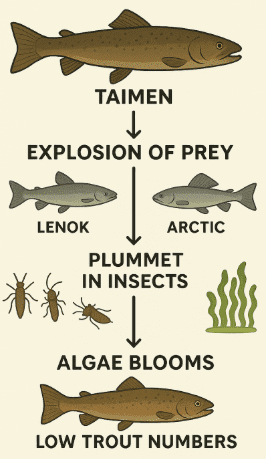
Without the Taimen to keep them in check, prey populations such as lenok and grayling explode. In this exponential growth, the aquatic invertebrate (water bugs) populations they feed on plummet due to overpredation. Because of this, algae and plants are no longer kept in check by these aquatic invertebrates ,which feed on them.
So far, in this theoretical event, we have a lot of small fish, not too many bugs, and way too much algae in the river. But, over time, the situation will grow more dire. As the fish lose insects to feed on, they begin to experience massive die-offs. The insect populations vary wildly, as predator pressure shifts unpredictably, and algae blooms become a real issue. They suck up an incredible share of oxygen from the water, a vital element of a trout’s ideal habitat.
The simple absence of Taimen causes a cascade of domino effects, ending in low trout numbers and a less suitable environment due to lower oxygen levels. Luckily, this is the worst case scenario. Today, taimen continue to thrive in many protected areas, maintaining the delicate balance of these ecosystems. As conservationists, environmentalists, and people who really like cool creatures, it’s our job to investigate what threatens this delicate balance.
Poaching: A Threat to a Delicate Balance
If Taimen are so integral to the ecosystems they live in, don’t we understand that we need to protect them? Yes, but when an unexpected threat hits Taimen, it hits them hard.
Due to their large size, old age, and voracious appetite, Taimen have a very low population density within rivers. This fact means the death of a single mature Taimen is a significant ecological shift in population dynamics.
As humans, we have struggled to comprehend this fact. Individual deaths may seem insignificant when compared to the abundance of smaller fish, but for the Taimen, each loss represents decades of growth, reproduction, and ecological importance within an ecosystem.
Today, the threat of poaching looms over many of these protected fish with the very real issue of local extinction.
Over three months on the river, I witnessed countless poaching related incidents. I saw the head and carcass of what was a 20 year-old fish filleted and carelessly tossed away on the bank. Another time, a dead Taimen washed up on the shore with a barbed treble hook lodged down its throat, shredding its stomach and causing a slow and painful death.
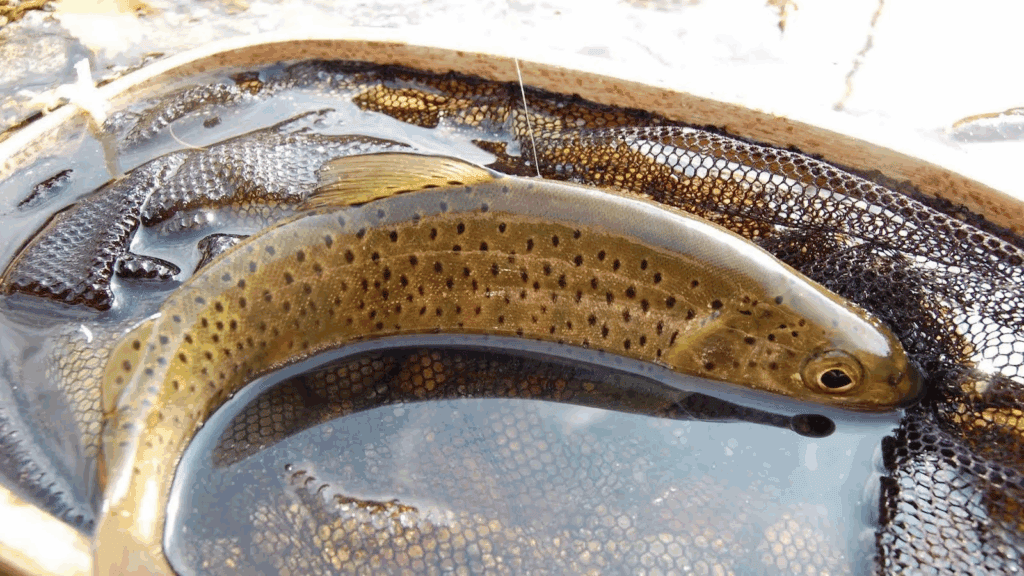
Book Talk, The Dawn Patrol Diaries, James Card
How much poaching and loss are we willing to put up with?
I hope for a future where I can relive that magical summer evening. I hope to one day lean back, straining with effort as I reel in, physically and spiritually connected to one of nature’s most remarkable creatures. I hope we have enough foresight to prevent such a loss, so the world can continue to marvel at the charisma of such an ancient and inspiring animal.
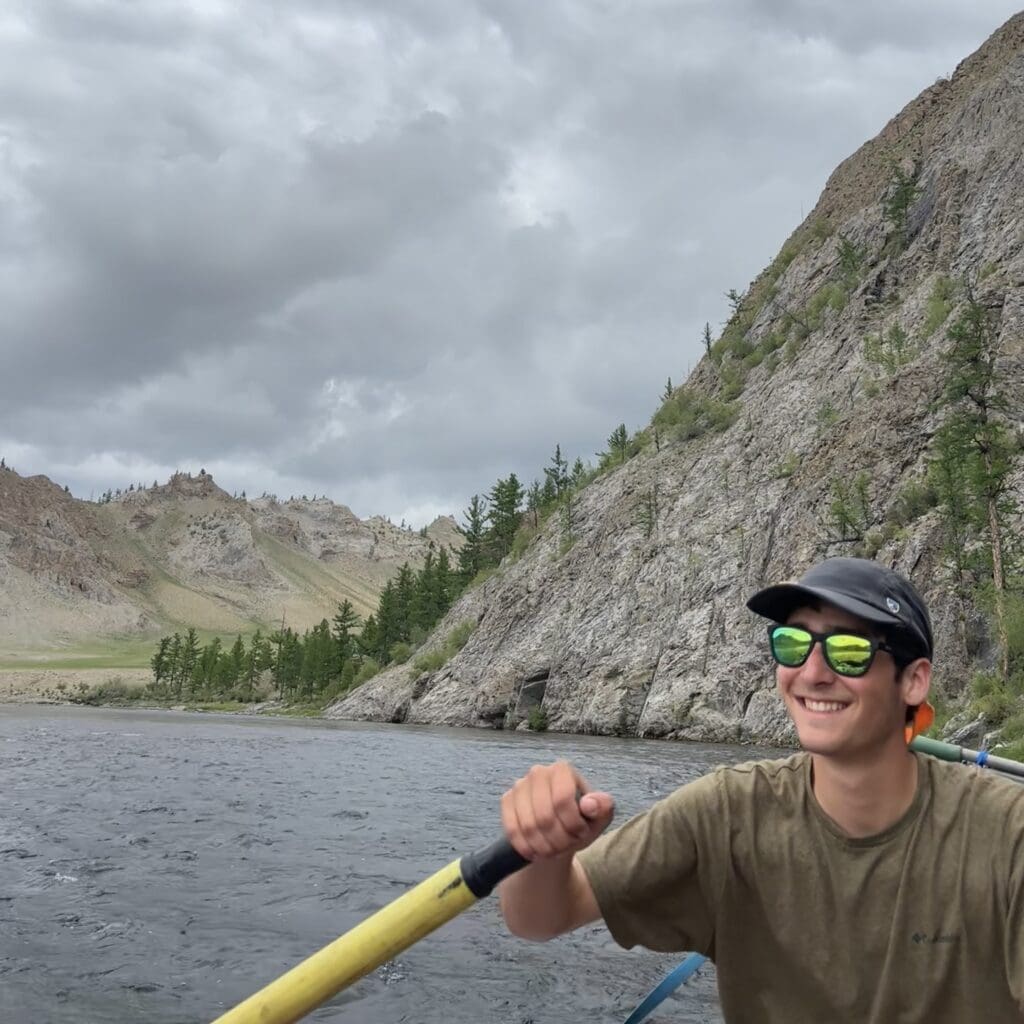
Cyrus Kiely is an undergraduate at Dartmouth College, studying Quantitative Social Science and Environmental Studies. He is an avid skier, hunter, and lifelong outdoorsman with a passion for biodiversity conservation. His experiences growing up in Montana, combined with environmentally focused opportunities abroad in Mongolia and Namibia ,have shaped his commitment to fighting environmental challenges. Particularly the importance of large landscape conservation in the face of rapid development.