
The balance between land and water is one of the foundational regulators of life on Earth. Ecosystems, agriculture, forests, cities, and human societies all depend on relatively stable exchanges between precipitation, soil moisture, groundwater recharge, evaporation, and atmospheric circulation. Yet scientists are increasingly finding that this balance is becoming unstable in ways that traditional climate metrics alone do not fully capture.
A major new study published in Nature suggests that one of the defining climate paradoxes of the 21st century may already be underway: many regions are receiving more rainfall overall, while simultaneously experiencing declining terrestrial water storage and progressively drier landscapes.
The findings emerge from a combination of satellite observations, hydrological analysis, and terrestrial water storage (TWS) studies. TWS refers to the total amount of water stored across land systems, including groundwater, soil moisture, wetlands, snowpack, rivers, and vegetation water content. Scientists monitor these changes using Earth observation systems such as NASA’s GRACE and GRACE-FO satellite missions, which detect tiny shifts in Earth’s gravitational field caused by changes in water mass distribution.
What the researchers found is deeply concerning. Even in regions where precipitation totals are increasing, landscapes are often losing their ability to retain water over time.
The reason lies partly in the changing character of rainfall itself.
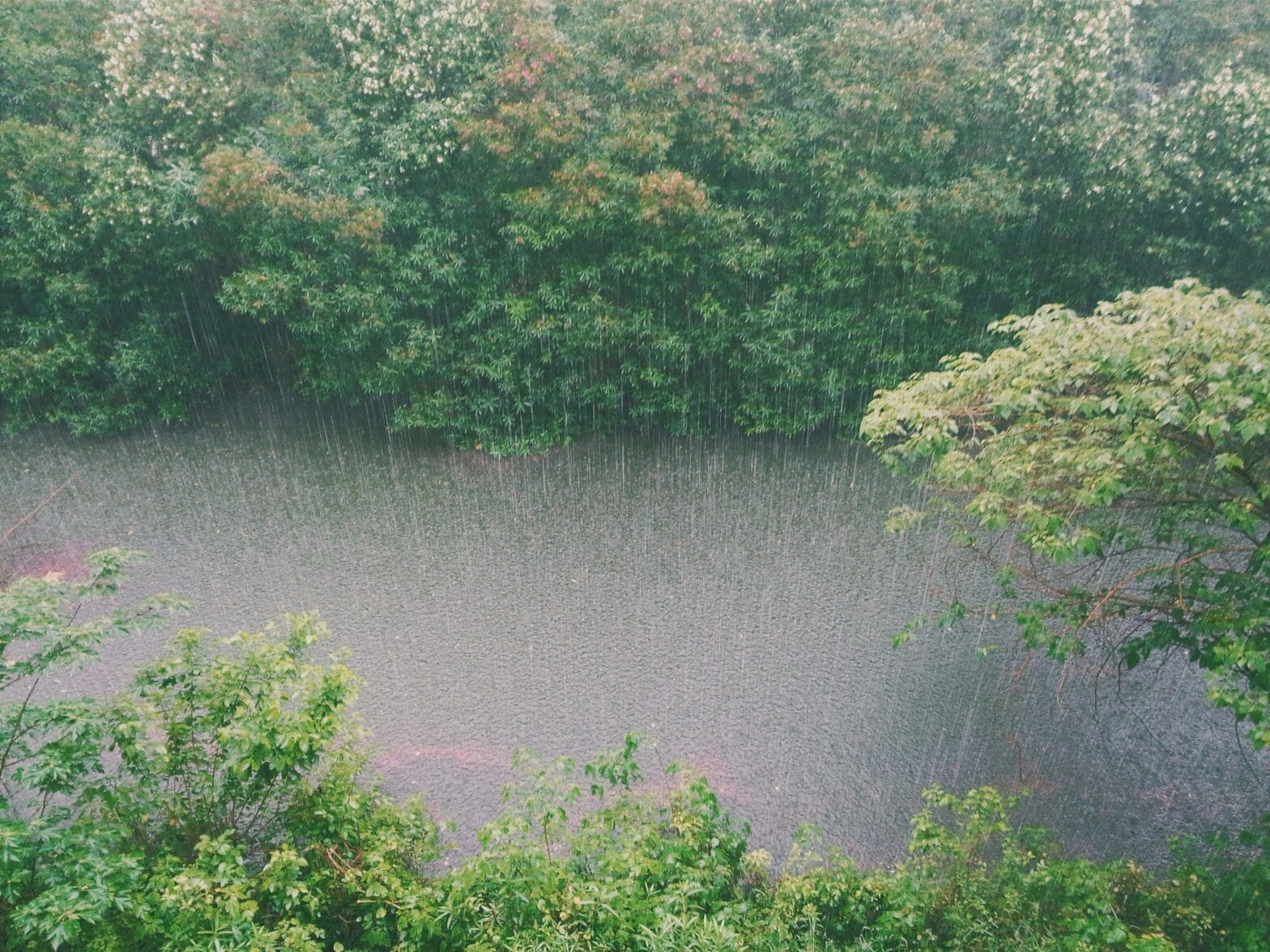
Rather than arriving as slower, moderate precipitation events that infiltrate soils and recharge ecosystems, rainfall is increasingly occurring in short-duration, high-intensity bursts. These extreme precipitation events generate rapid surface runoff instead of long-term hydrological storage. Water moves quickly across hardened or degraded landscapes, increasing flash flooding, erosion, sediment transport, and infrastructure damage while contributing relatively little to groundwater recharge.
At the same time, rising temperatures intensify evaporation and atmospheric moisture demand. Warmer air can hold significantly more water vapor, increasing what climate scientists describe as hydroclimate intensification. This creates stronger oscillations between wet and dry extremes — heavier storms followed by prolonged drying intervals.
An additional factor is the changing energy balance at Earth’s surface, particularly involving shortwave radiation. Reduced cloud persistence between storms, declining soil moisture, and land degradation can increase the amount of incoming solar shortwave radiation absorbed at the surface. Dry soils convert more solar energy into sensible heat rather than latent heat used for evapotranspiration. In practical terms, this means landscapes heat up faster and more intensely during dry intervals, amplifying heat waves and accelerating soil desiccation.
This feedback loop is becoming increasingly visible across US and many other parts of the world.
The study also highlights evidence from the United States showing how changing rainfall timing can dry landscapes even when total water input remains similar. Experimental treatments in a U.S. grassland ecosystem found that more concentrated watering events reduced soil moisture over time, while another study showed that increasing day-to-day rainfall variability affected satellite vegetation indices across 42% of vegetated lands.
In recent weeks, India has experienced simultaneous extremes of severe heat and intense storm activity. In the state of Uttar Pradesh saw devastating thunderstorms, lightning, hail, and dust storms that killed more than 111 people across multiple districts on May 13 as reported in a article by Mongabay. At nearly the same time, large parts of northwest and central India entered severe heatwave conditions, with temperatures exceeding 115°C in parts of Maharashtra and Uttar Pradesh.
This pattern — intense heat interrupted by short-lived but destructive rainfall events — reflects exactly the type of hydroclimatic volatility discussed in the Nature study.
Southern India has also experienced increasingly erratic rainfall behavior. Bengaluru, for example, has repeatedly faced episodes of urban flooding linked to short-duration extreme rainfall overwhelming drainage systems, even while broader seasonal water stress remains a persistent concern. Similar patterns have emerged globally, from flash floods in the Himalayas and Pakistan to atmospheric river events in North America and severe flood-drought oscillations across parts of Africa and Europe.
The broader scientific implication is that climate change is not simply shifting average temperature or precipitation values. It is reorganizing the temporal dynamics of the water cycle itself.
Historically, many ecosystems evolved around relatively predictable hydrological rhythms. Forests, wetlands, floodplains, and biodiverse soils acted as stabilizing infrastructure — slowing runoff, increasing infiltration, regulating evapotranspiration, and buffering climatic variability. But when precipitation becomes more concentrated and landscapes become degraded, these buffering capacities weaken.
This is why terrestrial water storage is becoming such an important metric in climate science. TWS provides insight not just into how much rain falls, but whether ecosystems are capable of storing and circulating water over long timescales.
The findings also reinforce growing interest in ecohydrology and land-atmosphere feedback systems. Vegetation influences cloud formation, forests recycle atmospheric moisture, wetlands moderate temperature extremes, and soil microbial systems regulate infiltration and carbon cycling. Healthy ecosystems are not passive recipients of climate — they actively participate in regulating it.
In this context, ecological restoration becomes more than conservation policy. Reforestation, regenerative agriculture, wetland restoration, urban biodiversity systems, and watershed restoration may function as forms of climate adaptation by rebuilding hydrological resilience directly into landscapes.
The emerging challenge of the 21st century may therefore not only be atmospheric warming itself, but the destabilization of the planetary water cycle that warming initiates.
Note: Interested in how restoring water cycles and rehydrating landscapes can help reduce floods, droughts, wildfire risk, and extreme heat?
Join Bio4Climate’s Thinking Like Water: Film Club & Live Conversation Series running June 9 – July 14, 2026, a five-part documentary and discussion series exploring practical, nature-based approaches to watershed and landscape restoration with filmmakers, restoration practitioners, and permaculture experts from across the world.
Image Source : Photo by Christopher on Unsplash

Poulomi Chakravarty, PhD is an environmental scientist, educator, and science communicator with expertise in micrometeorology, ecology, biodiversity, phytoremediation, climate extremes, remote sensing, and climate education. She serves as Scientific Advisor, India Program Director, and Education Lead at Biodiversity for a Livable Climate, where her work advances climate literacy, environmental education, ecosystem restoration, and nature-based climate solutions. Her work also focuses on integrating natural systems, Indigenous Knowledge, and AI-enabled approaches for climate resilience. As a facilitator of climate action programs, she designs curricula and leads community-based initiatives that help diverse learners engage with climate science, biodiversity, soil, water, and sustainability. Beyond her professional work, she is passionate about environmental protection, animal rescue, painting, music, and life as a devoted dog mom.