
What tree wears needles in summer, gold in autumn, and nothing at all in winter, yet never forgets to bloom again?
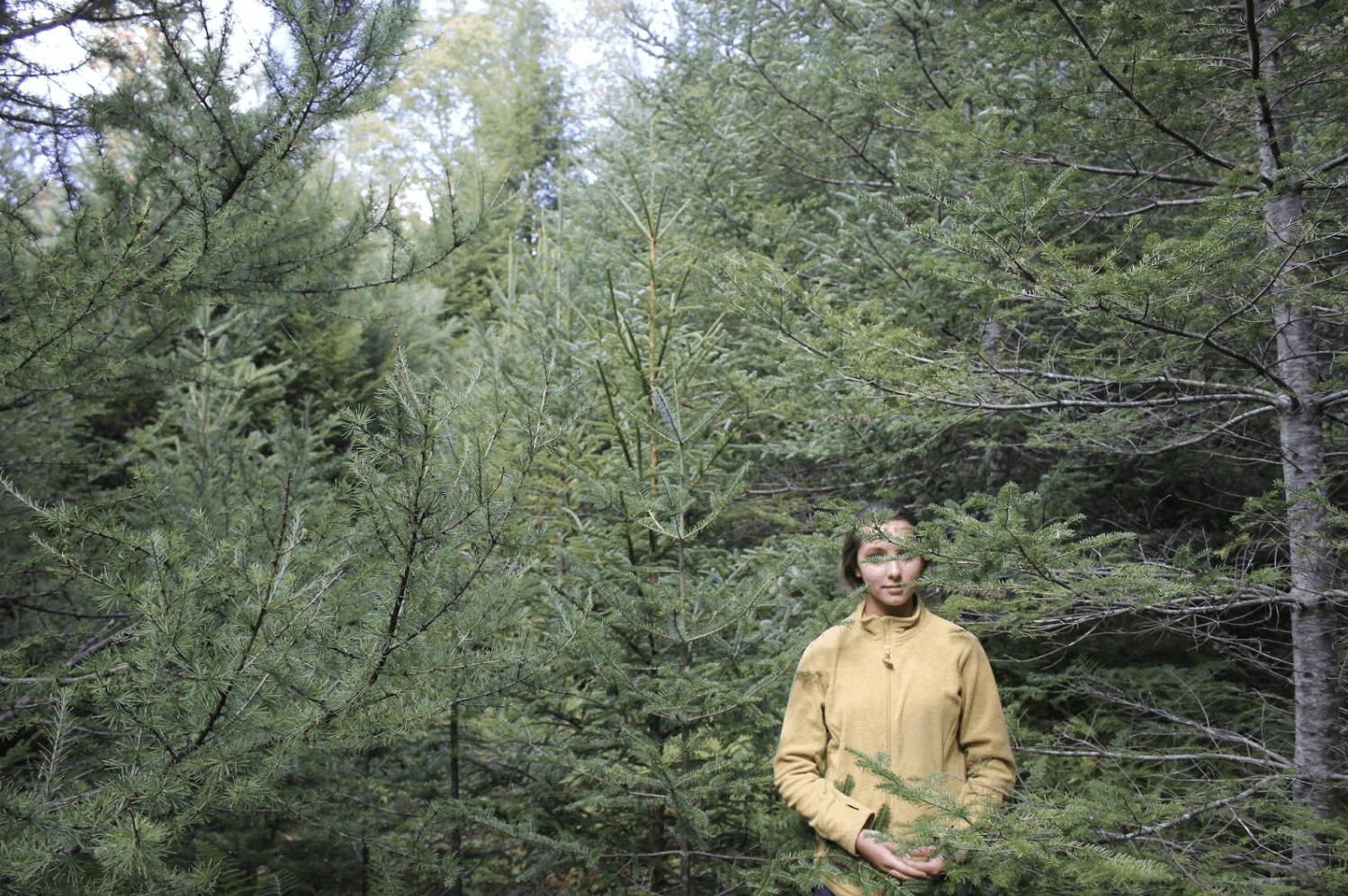
The trees are silent. Last fall’s leaves crunch under my feet as I follow a faint trail through the woods. I know every rock and overturned leaf of this forest. Here I trampled over ferns, snowshoed in the light of a full moon, splashed in the gentle brook, and wandered for hours upon hours of my childhood. I wander back into these woods, dense with Eastern Hemlock, American Beech, hobblebush, trillium, and suddenly I’m young again, young enough to only see the beauty in the world, and I’m home. The old trail fades, and it’s time to journey beyond, along a path that lives in my mind like a memory. I recognize the surrounding trees, the pull of a small clearing in the distance. I may be off the trail, but I know where to walk, which steps will lead me through the thicket of trees, curving past the rickety rock wall, down by the bog, where a grove of evergreens grows, hemlocks and pines, and where a rare find in this forest thrives. Meet the tamarack.
In this forest, at the foothills of the Adirondacks, tamaracks are an uncommon sight. I’ve wandered through these woods for years, and these are the only ones I’ve been able to find. The marsh here, tucked into the creaky wood, creates an ecosystem where the tamarack thrives. Just beginning to grow, this small pocket of evergreens and tamaracks reminds me to remember my roots, deep in the bog, on a path I’ve come to know.
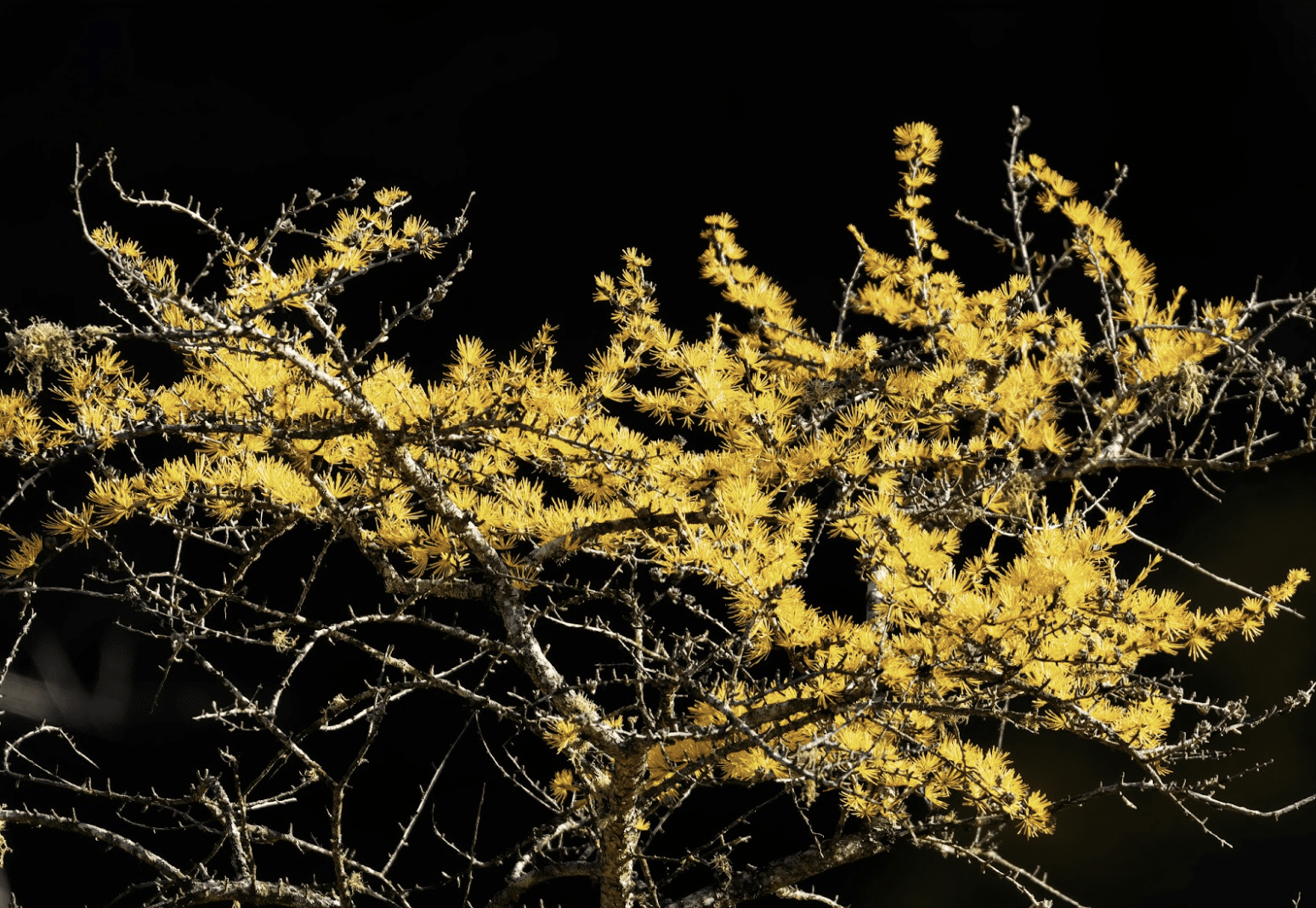
The name “tamarack” originates from “Hackmatack”, which is an Abenaki word meaning “wood for making snowshoes.” (Source) Tamaracks (Larix laricina) are found throughout North America, including all Canadian provinces and territories (Source). These trees thrive in bogs, but are also found in upland areas in the northern extent of their range (Source).
Tamarack trees are special. Known as deciduous conifers, they shift their appearance through the seasons. “Deciduous” refers to trees that drop their leaves for a portion of each year, while “evergreen” trees keep their leaves throughout the seasons (Source). “Conifer,” on the other hand, defines the tree as one that reproduces using a cone structure, thus a cone-bearing plant (Source). While many conifers are evergreen, the tamarack is rare in its ability to drop and regrow its needles in response to seasonal changes throughout the year. In bundles of 10 to 20, the needle clusters of these trees fade from a vibrant green to bright yellow during the fall months, alongside many other tree species in the northeast (Source). These yellow needles fall as the cold weather returns, a golden blanket over the tamarack’s roots (Source).
It has been years since I visited this small pocket of tamaracks in person. Yet I am here often in this is the place of my dreams. It has always been a place of wonder and peace, which lives on in my imagination. I close my eyes, and I’m back there, winding between trees, following the path imprinted in my soul. This is a place I know. How powerful it is to know the trees, the esker that runs along through the forest, the curve of the river as it bends away from my course.
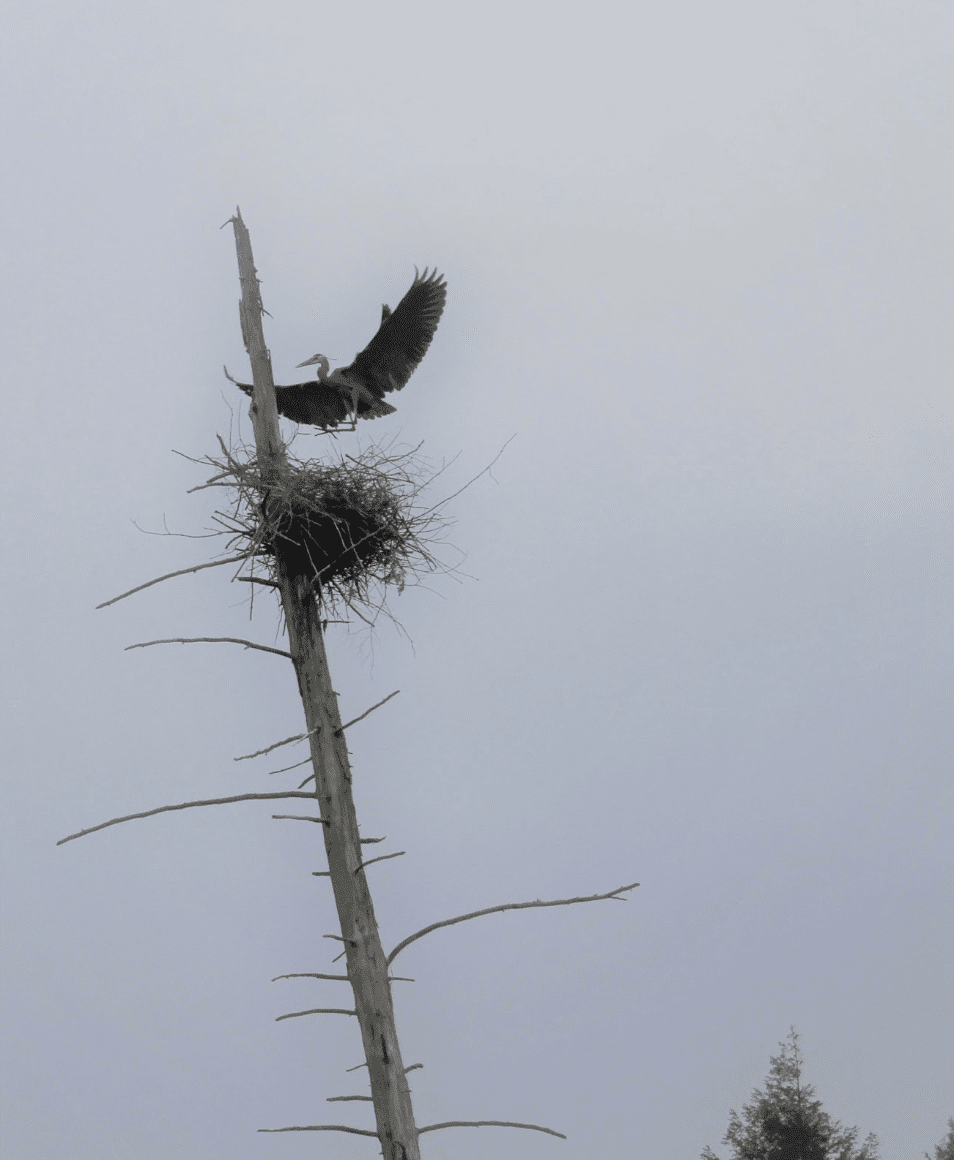
I know this place, but it’s changed – I’ve changed. I’m not the same young girl who used to look for colorful rocks in the riverbed, my camera steady in my hands as the heron landed gracefully in its nest, and observed the beaver dams protruding from the murky marsh. But this place will always be a part of me, no matter where I find myself in the future, no matter how much I change, no matter how much this forest changes. The little pocket of evergreens and whimsical tamaracks, tucked in the bog entrenched in my memory, continue to grow, evolving and shifting with the seasons. There is such beauty in change.

Adrianna Drindak is a rising senior at Dartmouth College studying Environmental Earth Sciences and Environmental Studies. Prior to interning at Bio4Climate, she worked as a field technician studying ovenbirds at Hubbard Brook Experimental Forest and as a laboratory technician in an ecology lab. Adrianna is currently an undergraduate researcher in the Quaternary Geology Lab at Dartmouth, with a specific focus on documenting climate history and past glaciations in the northeast region of the United States. This summer, Adrianna is looking forward to applying her science background to an outreach role, and is excited to brainstorm ways to make science more accessible. In her free time, Adrianna enjoys reading, baking gluten free treats, hiking, and backpacking.