
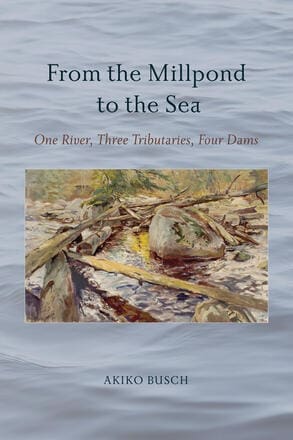
“This holiday season, I received a book that sharpened something I’ve been thinking about a lot lately—not the restoration of a single site or ecosystem, but the restoration of movement. Movement through the in-between places, and through the ecological and social nodes that form living corridors. It deepened my urgency around noticing how species, water, and energy move through human-dominated landscapes, the barriers we’ve built into them, and what that means for restoration.
From the Millpond to the Sea: One River, Three Tributaries, Four Dams by Akiko Busch centers on the Hudson River watershed and its many dams. Busch traces how these structures restrict biodiversity, block fish migration, warm water, and trap sediment, reshaping rivers over time. The book also made me reflect on how other species create barriers differently: when beavers build dams, they don’t simply stop movement, but create conditions that allow life to self-organize. Even when a beaver dam eventually fails, the pond it created will become a forest—supporting diverse life cycles along the way.
After sharing the book with our restoration biologist, Jim Laurie, he asked a simple question that stayed with me: “What do you want the Hudson River to become?” It made me wonder what the closest waterbody to my own home might want to become. I hope it inspires you to ask the same question.” -Alexandra Ionescu
Posted: January 3, 2026