
News and Insights

How To Be A Better Parasite
Sophie Pavelle
Only foolish parasites kill their host; smart ones hold them close. What if humans could learn from that? What if we mirrored the restraint, reciprocity, and sustainability of Earth’s most successful exploiters? Could this new sort of parasitic relationship offer our host planet the chance to survive—maybe thrive—in balance?
Evolutionary biologist Dr. Lynn Margulis famously argued that symbiosis is not an exception, but the root of life itself, responsible for the evolution of organelles like mitochondria and chloroplasts. Since its genesis, the tree of life has branched through chance, tension, and opportunity, its tips entwining through symbiotic alliances. Species contend and negotiate, fusing in networks that pulse with resilience.
Biodiversity as Climate Infrastructure: Micrometeorology, Fluxes, and the Living Earth
Dr. Poulomi Chakravarty
Climate change is usually framed as a problem of greenhouse gases and rising global temperatures. Yet the real heartbeat of climate stability lies closer to the ground, in forests, wetlands, grasslands, and even the work of animals. These ecosystems continuously interact with the air above them, shaping weather, rainfall, and temperature patterns.
Welcome to the realm of micrometeorology, the science of small-scale processes at the land–atmosphere boundary.
Events and Community
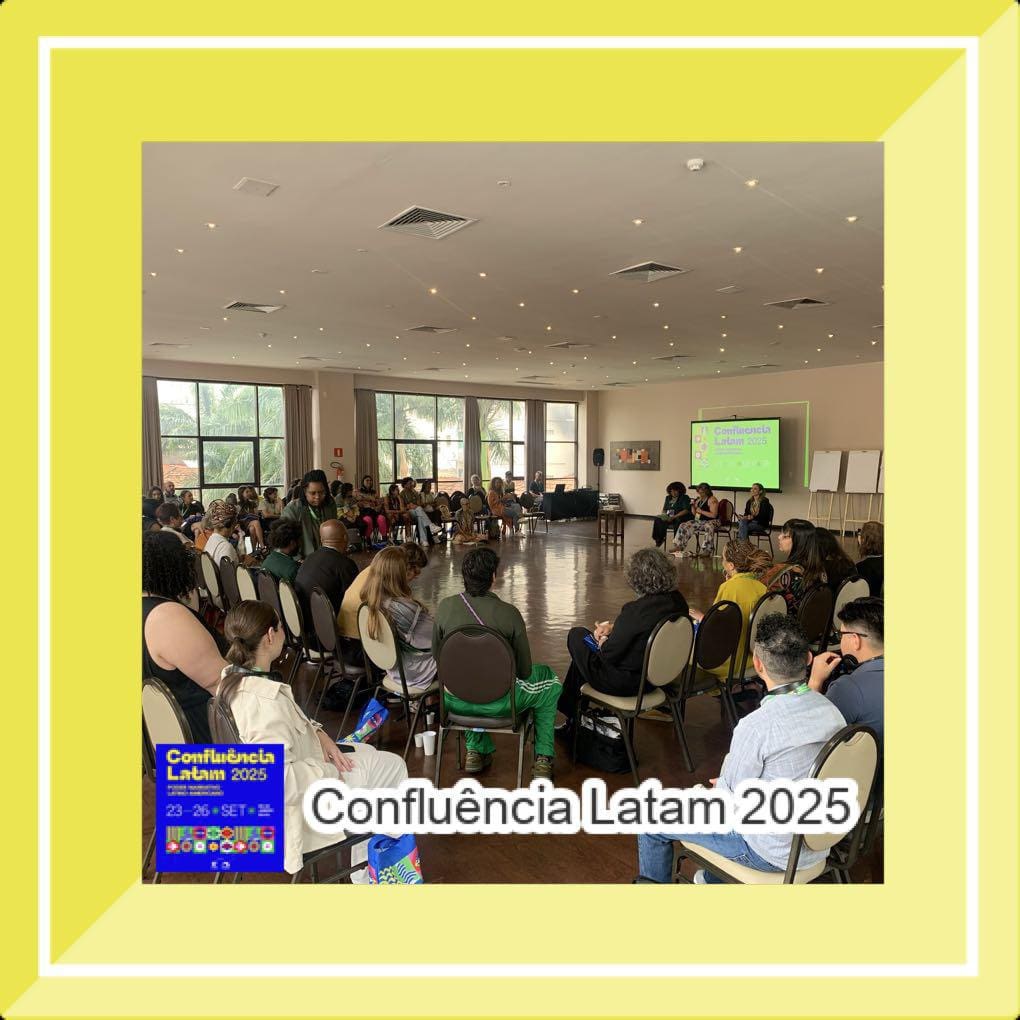
Rio de Janeiro | Confluência LATAM 2025
Last week Brendan wrote in from São Paulo after an evening listening to Ailton Krenak. Today, he’s checking in from Rio de Janeiro where for the last few days he’s been attending a conference on narrative change in Latin America.
Whether you’re working in the region or not, I wanted to share a few general takeaways on narrative change principles so far that I think can help inform the work that each of us in the larger Bio4Climate community are doing across contexts.
1. Prioritizing short and longterm storytelling. Archiving and sharing stories that connect to immediate struggles, the kind that mobilize action and meet people where they are today, but that also nest inside a larger arc of transformation.
2. Narrative change doesn’t happen in isolation. It requires rooting stories in lived realities: the politics people navigate, the cultures they belong to, and the social bonds they rely on.
3. Are the tactics we’re using actually aligned with the futures we imagine, or are they perpetuating old patterns and reinforcing old social or political ecosystems?
4. Mapping areas of consensus, creating spaces for dialogue, and investing in the infrastructure to hold alliances over time are just as important as the narratives and stories themselves.
How do these things manifest in your work and your activism? What would you add?
Courses
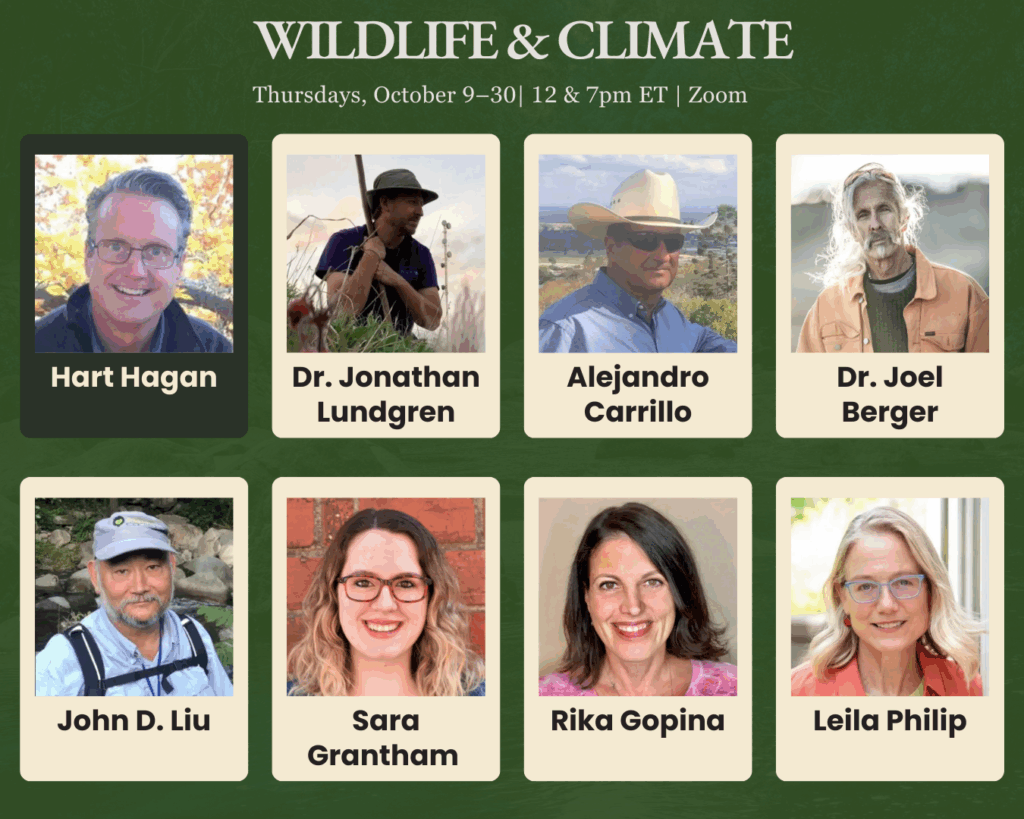
Are Causes of Sharp Wildlife Decline Also Driving Climate Instability?
Wildlife & Climate, taught by Hart Hagan and an exciting roster of guest experts, explores the actual connections between wildlife and climate change and gives us a real and viable framework for living with nature, restoring habitat and addressing climate change.