
News and Insights
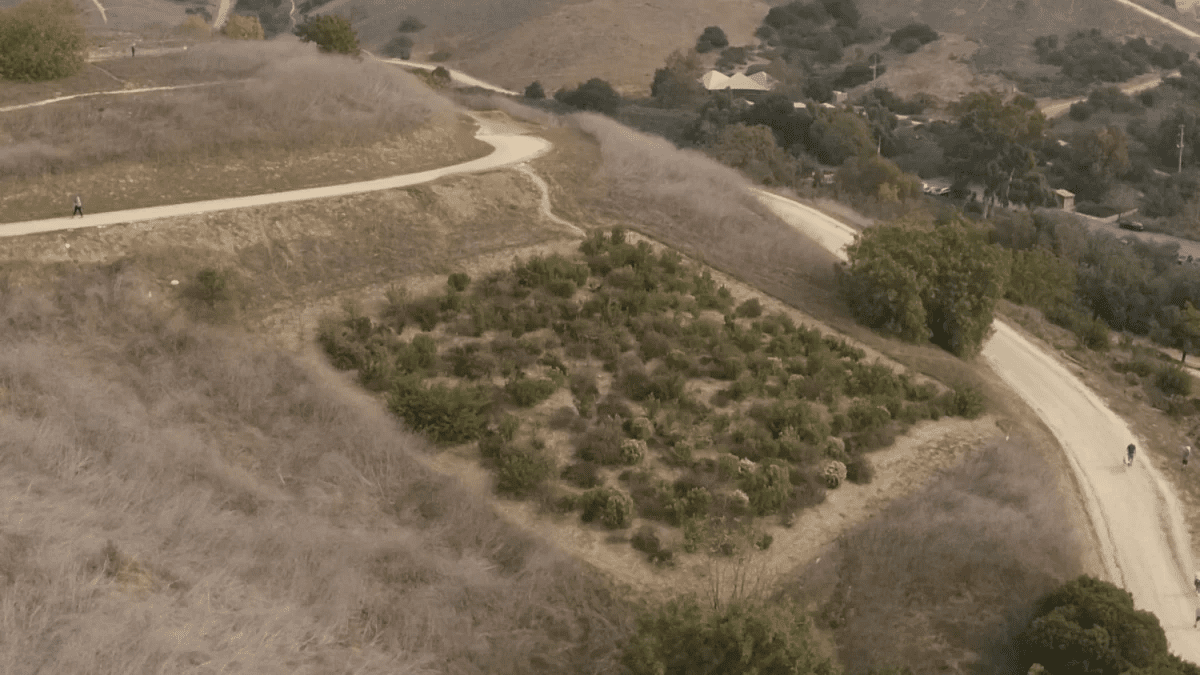
Photo Credit: Demian Willette/Loyola Marymount University
Miniforests Are Popping Up in Big Cities
As leaders in the East Coast Miyawaki forest revolution, we are excited to see coverage of this miniforest outside Los Angeles go mainstream on NPR. Learn how scientist use spider webs to track biodiversity and how park visitors become part of the citizen science team to measure plant growth.
NPR’s Short Wave dives into California’s largest miniforest, located in Ascot Hills Park. After just two years, scientists have noted significant increases in biodiversity and impressive growth of plants that tend to grow more slowly on their own, outside of miniforests.
From decreasing the likelihood of weeds growing through crowding to mapping the types of creatures that frequent the forest through spiderwebs, this miniforest is teeming with life and helping scientists define the benefits of miniforests.
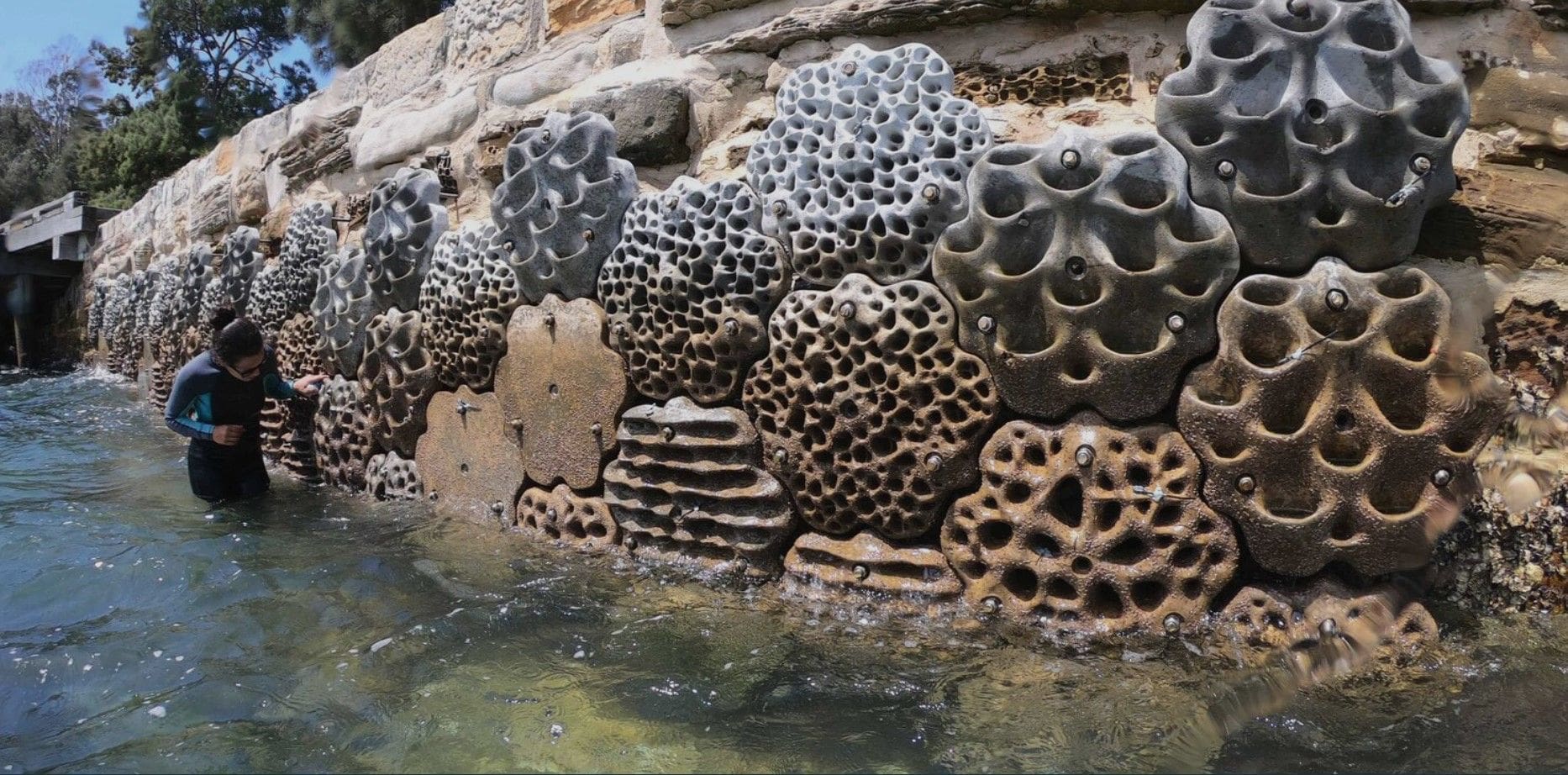
Photo © Living Seawalls
Nature-Based Solutions Take Hold in Boston
In coastal cities, traditional approaches to preparing coastlines for rising sea levels can actually intensify the process of erosion rather than preventing it. Instead of employing these more traditional (yet ineffective) “solutions,” Boston, Massachusetts has introduced nature-based solutions to protect their coastline.
“[Nature-based solutions] offer a wealth of community and environmental benefits by enhancing the natural services provided by coastal ecosystems—including wetlands, dunes, barrier islands, seagrasses, coral and oyster reefs, and mangroves—that build climate resilience while providing key social and economic benefits.”
Events and Community
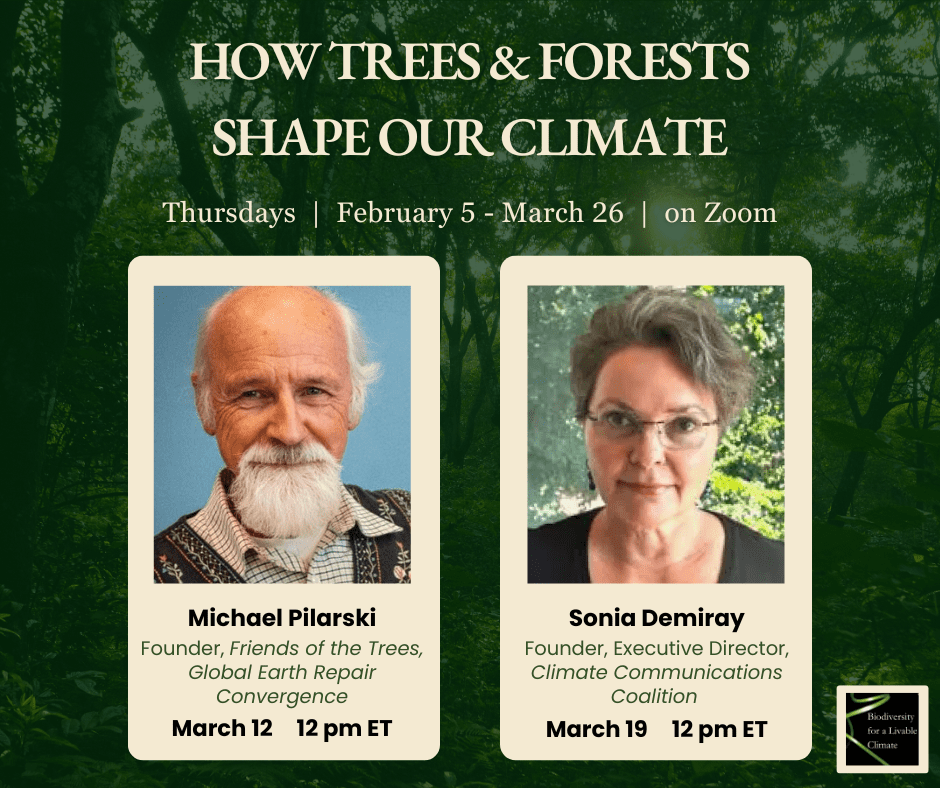
We’re excited to share the next two speakers in our upcoming course, How Trees & Forests Shape Our Climate, offering a powerful sequence from permaculture to strategic communication on the science demonstrating the critical importance of our forests.
We will be joined by Michael Pilarski, founder of Friends of the Trees and the Global Earth Repair Convergence. Drawing on decades of experience as an instructor and a writer in permaculture design, Michael will ground the course in lived ecological practice. He will teach us how to apply permaculture principles to land and forest restoration and stewardship.Sonia Demiray, founder and Executive Director of the Climate Communications Coalition, will join us to share the up-to-date science and objective data that should be guiding our forest management decisions. Her organization’s “Keep It In The Forest” campaign shows us how to combat the disinformation around forestry in the U.S. in order to protect our remaining native forests and sustain a livable biosphere.
Register by January 17 to receive the lowest rate! Group rates, reduced rates, and scholarships are available. Email courses@bio4climate.org for more information.
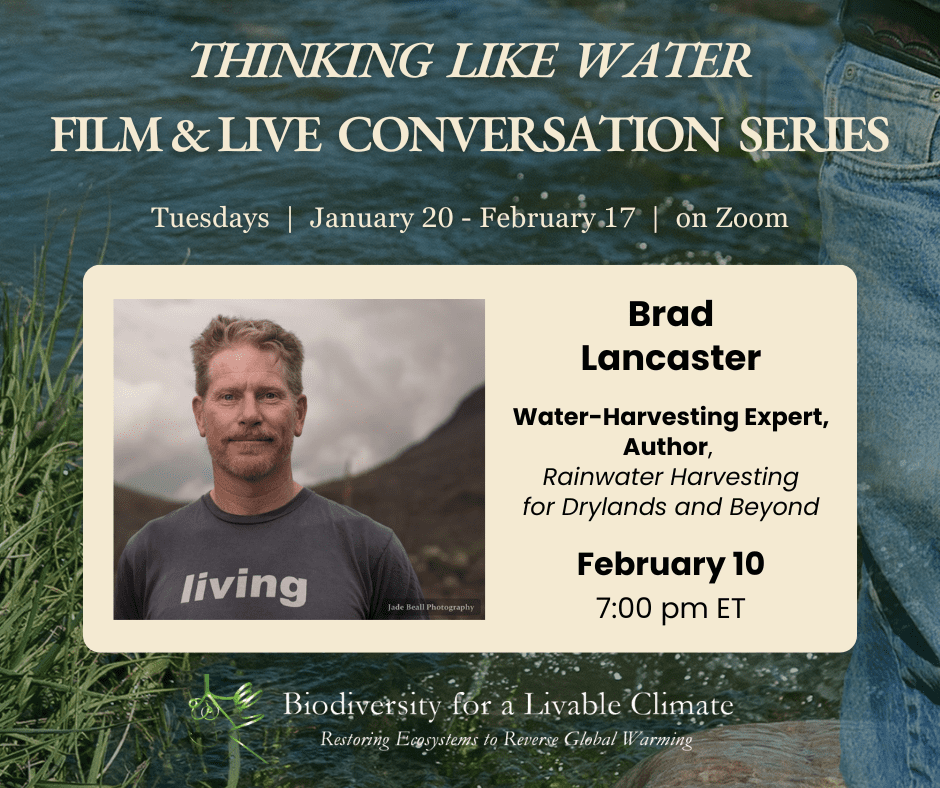
The Bio4Climate Film Club Presents Thinking Like Water
January 20 – February 17
Tuesdays | 7:30 pm ET / 5:30 pm MT
Want to learn how to restore the watershed and landscape in your community? Join our upcoming live conversation series and film screening of Thinking Like Water with filmmaker Renea Roberts and facilitator Dr. Katie Ross.
This five-part docuseries captures Bill Zeedyk, a legendary and visionary water steward, as he applies simple, nature-based restoration methods across the American Southwest. Over five weeks, you’ll see the inspiring impact of Native nations, ranchers, non-profits and communities collaborating with Bill to transform parched watersheds into lush, green, thriving landscapes.
Legendary urban desert water steward Brad Lancaster will join us on February 10 at 7:00 pm ET to share the innovative rainwater harvesting and water management strategies he demonstrates in the fourth episode, which he boldly implemented in his desert city of Tucson, Arizona. He’ll answer questions on how to “start where you are” to turn water scarcity into abundance.
If you have a willingness to get your hands dirty and a keen eye for observation, you can do similar work — this film shows you how it’s done. Join us for Thinking Like Water.
Registration is now open! Reduced rates and scholarships are available. Email films@bio4climate.org for more information.
Miyawaki Forest Program Update
The last session of the 2025 Northeast Miniforest Summit, “The Miyawaki Method vs. Ecology of Place: Experimentation & Curiosity in Canada’s Miniforest Network,” explored many interconnected themes—how planting a miniforest is fundamentally different from planting trees; what is negotiable and non-negotiable within the Miyawaki method; Canada’s growing network of miniforests and its evolving community of practice; and Heather’s four-year-old backyard miniforest in Guelph, Ontario.
Rather than following a one-size-fits-all approach, Heather highlighted the importance of experimentation, curiosity, and responsive adaptation to local ecological conditions. While the Miyawaki method offers step-by-step guidelines, Heather encouraged practitioners to honor the unique ecology of each site and shared lessons grounded in her hands-on experimentation and experience with the method. Through her examples, she opened space to consider climate-informed design and, where appropriate, assisted migration—not as a way to replicate the past, but to support miniforests as they adapt to changing environmental conditions.
This session leaves us with a few reflections to sit with:
- What does it mean to truly design with the ecology of a place—its soils, plant communities, and future climate—rather than applying a fixed method or template?
- What role should climate forecasts and assisted migration play in restoring ecosystems for future conditions, not just reconstructing the past?
- How might curiosity, adaptation, and continual learning from ecological processes reshape not only how we implement and steward miniforests, but how we understand responsibility, stewardship, and our place within the web of life?
We hope this reflection deepens your own thinking as well, and marks not an ending, but a continuation of shared learning, practice, and relationship-building across this growing Northeast community and beyond.
The Weekend Read
This week’s book recommendation comes from Jonas Davulis, a member of the Symbiosis Team and active participant in Bio4Climate courses and events. His pick is Becoming Earth: A Journey Through the Hidden Wonders That Bring Our Planet to Life by Ferris Jabr.
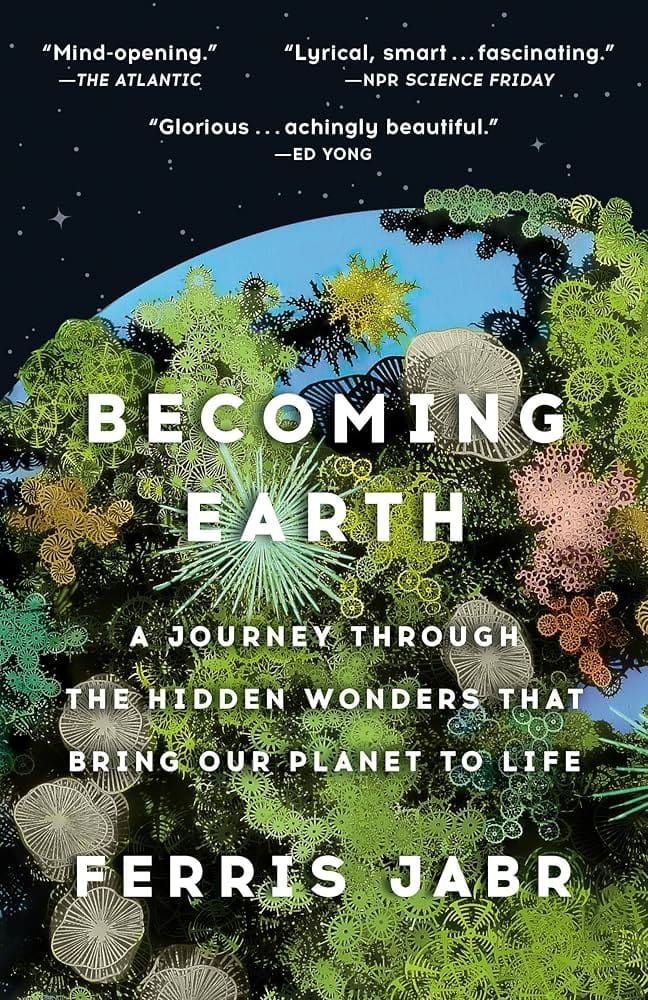
”Becoming Earth is the story of how Earth’s inhabitants from microbes to trees have made this rock into the living planet we know today! I read this book with many others here at Bio4Climate last winter as the main dish to Jim Laurie’s Biodiversity #12 course, and I still find myself referencing it whenever I’m talking about the life that sustains us.
Starting from the ground up, you’ll travel deep through the Earth where there’s microbes that eat metal. Step in elephant tracks that become living ponds. And watch the author as they bring back life to their desolate suburban lot. From there you’ll swim through clouds of plankton, forests of kelp, and hordes of plastic! As you catch your breath with some air microbes made, you’ll see the rekindling of indigenous fires on the landscape, and look towards a new sustainable future.
If there’s one thing you’ll take-away, it’s that: ‘We and other living creatures are more than inhabitants of earth; we are earth – an outgrowth of its physical structure and an engine of its global cycles. Earth and its creatures are so closely intertwined that we can think of them as one.’ Page: xiv” – Jonas Davulis