
News and Insights
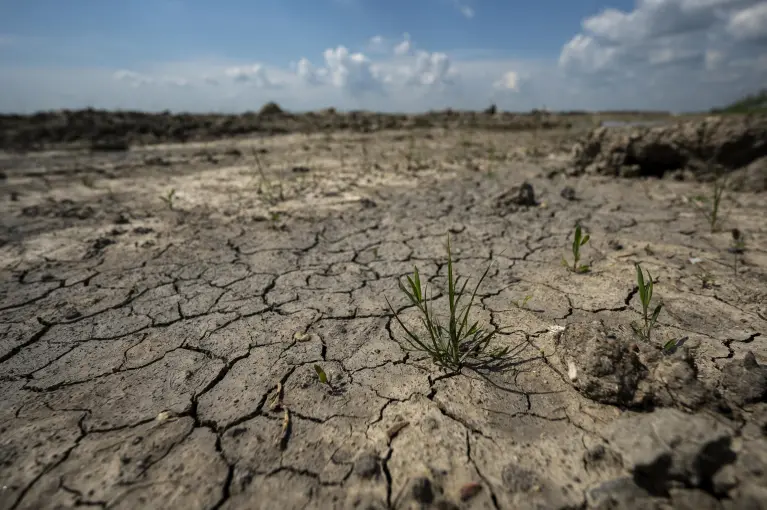
Photo credit: AP Photo/Denes Erdos
Group of “Water Guardians” In Hungary Seeks to Restore Land
After years of severe drought across the Great Hungarian Plain, farmers are taking steps to bring water back to their land. Through a partnership with a local thermal spa, overflow water is being used to flood various fields in an attempt to mimic the natural cycle of flooding that would usually take place.
“The water guardians hoped that by artificially flooding certain areas, they wouldn’t only raise the groundwater level but also create a microclimate through surface evaporation that could increase humidity, reduce temperatures and dust and have a positive impact on nearby vegetation.”
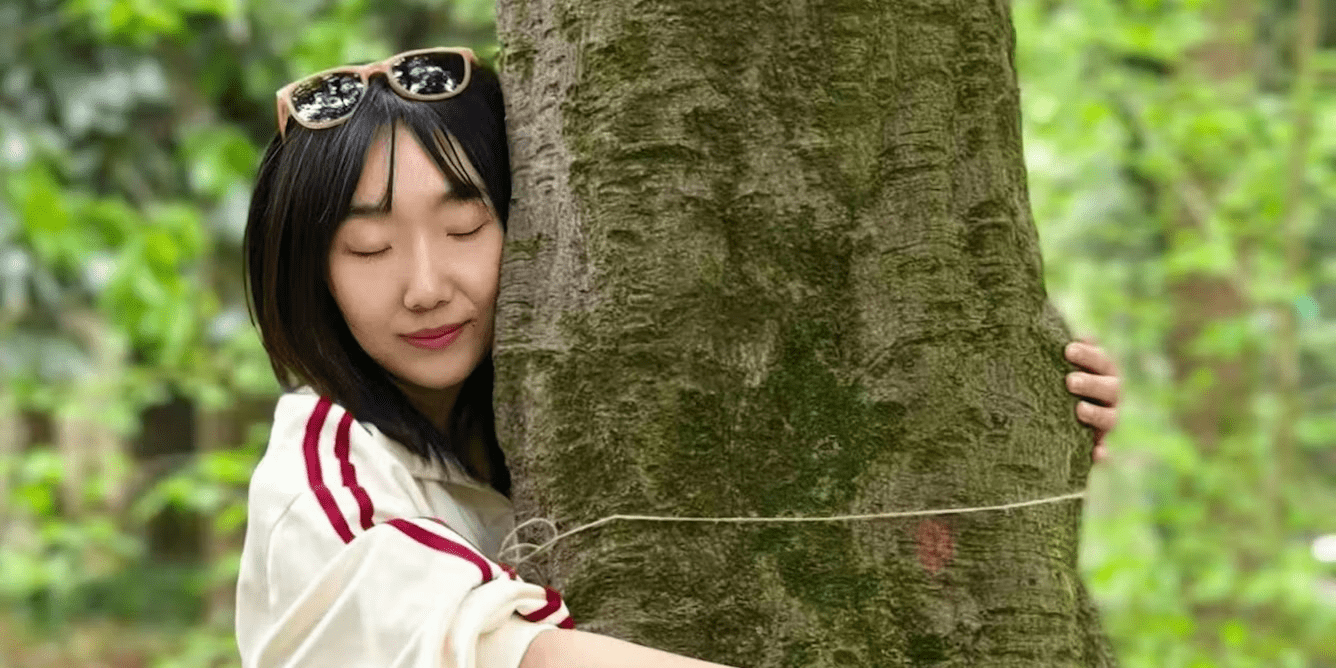
Photo Credit: Xiaoyand, CC BY-NC-ND
Tree Hugging Takes Off Among China’s Younger Generations
It’s no secret that everyday stresses have never been as abundant as they are today. In Beijing, China, young people are seeking relief from stress through forest therapy, which includes interacting with and connecting to trees.
“For young people like Wong and Mo, trees emerged as spaces to explore themselves and connections to each other. And while the story of China’s urbanisation is often told through images of polluted air, water and soil, young people like Wong and Mo present an alternative narrative: that young Chinese generations seek to repair the urban environment by connecting with others while caring, nurturing and even hugging the trees with their friends and strangers.”
Events and Community
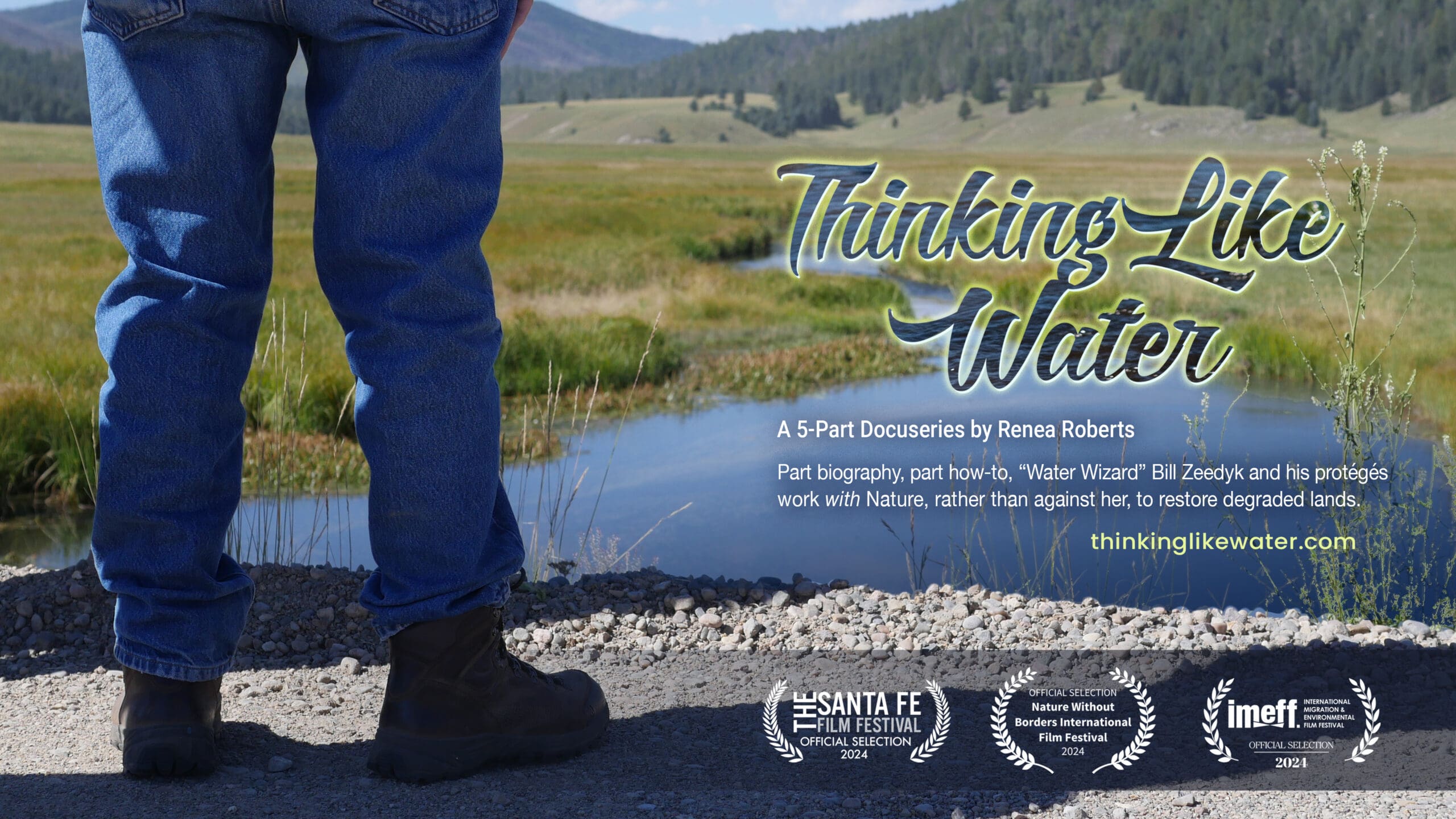
The Bio4Climate Film Club Presents Thinking Like Water
January 20 – February 17
Tuesdays | 7:30 pm ET / 5:30 pm MT
Did you know there are thousands of watersheds across North America that flow into seven major drainage basins?
Imagine if each of us took steps to restore our own local watersheds, and return life and rain to our landscapes!
Are you curious to be inspired by people who have already begun this work, and to learn practical next steps you can take where you live?
Join us this January to be part of a very special screening of Thinking Like Water, a five-partdocuseries which follows restoration pioneer Bill Zeedyk and his collaborators, as they transform degraded watersheds into more resilient ecosystems – girding against the ravages of drought and climate change.
The docuseries and conversations with filmmaker Renea Roberts and other featured speakers begin on January 20 and continue for five Tuesdays. Registrants can choose how they’d like to participate—watch each documentary episode in advance and join the live conversation, or come together for a weekly viewing party with discussion shortly after. Each session will also make space to connect with others in your watershed and discover ways to learn more about the local waterways that connect us.
Registration opens soon with early bird savings available. More info to come in Featured Creature. You can also email us and we’ll send a registration email directly to you once registration opens.
On February 5, Bio4Climate will host the world’s leading research scientist on the biotic pump, Anastassia Makarieva during the first class in our upcoming course. You’ll not only hear from Anastassia as she explains the many mechanisms in a forest that make it one of the most powerful ecosystems that regulate our climate, you’ll also have the chance to interact with her and ask questions.
Check out this short video that further explains how the biotic pump works: The Biotic Pump: How Forests Create Rain, created by Jimi Sol.
Throughout the course, you’ll hear from and speak live with author and journalist Judith Schwartz, Scot Quaranda of the Dogwood Alliance, and several other expert guest speakers still to be announced!
Don’t miss the upcoming course, How Trees & Forests Shape Our Climate! The course runs from February 5 through March 26 and meets weekly on Thursdays from 12:00 – 1:30 pm ET.
Register by January 17 to receive our lowest rate! Group rates, reduced rates, and scholarships are available. Email courses@bio4climate.org for more information.
Miyawaki Forest Program Updates
This week’s session, “Scientific Research (Current and Emerging) around Miniforests,” explores what we’re beginning to learn from early scientific research and data collection methods on miniforests in Massachusetts and Belgium.
The presenters shared early findings from the first summers of data collection, including research on how miniforests might cool their surroundings by comparing different surface covers and tracking temperature changes throughout the day; studies designed to measure insect diversity and herbivory in Miyawaki forests compared to other urban spaces; observations of plant growth and survival over time; and data on soil biology, water infiltration, and data collection methods. The session also drew on a detailed Report on the Evolution of Six Miyawaki Forests in Belgium.
This session leaves us with a few reflections to sit with:
- How does knowledge of miniforests unfold over time, and what comes into view through different ways of studying them?
- What early signals—cooling patterns, soil change, insect activity—are most important to track in the first few years of a miniforest, and which signals require much longer timeframes to fully understand?
- How do the tools and methods we choose (from sensors to simple field observations) shape what we are able to notice—and what might they still miss about how miniforests function?
We hope this reflection deepens your own thinking as well.
Staff Reading Picks
This week, we’re sharing a book recommendation from Alexandra Ionescu, Bio4Climate’s Associate Director of Regenerative Projects.
From the Millpond to the Sea: One River, Three Tributaries, Four Dams by Akiko Busch

“This holiday season, I received a book that sharpened something I’ve been thinking about a lot lately—not the restoration of a single site or ecosystem, but the restoration of movement. Movement through the in-between places, and through the ecological and social nodes that form living corridors. It deepened my urgency around noticing how species, water, and energy move through human-dominated landscapes, the barriers we’ve built into them, and what that means for restoration.
From the Millpond to the Sea: One River, Three Tributaries, Four Dams by Akiko Busch centers on the Hudson River watershed and its many dams. Busch traces how these structures restrict biodiversity, block fish migration, warm water, and trap sediment, reshaping rivers over time. The book also made me reflect on how other species create barriers differently: when beavers build dams, they don’t simply stop movement, but create conditions that allow life to self-organize. Even when a beaver dam eventually fails, the pond it created will become a forest—supporting diverse life cycles along the way.
After sharing the book with our restoration biologist, Jim Laurie, he asked a simple question that stayed with me: “What do you want the Hudson River to become?” It made me wonder what the closest waterbody to my own home might want to become. I hope it inspires you to ask the same question.” -Alexandra Ionescu