
News and Insights
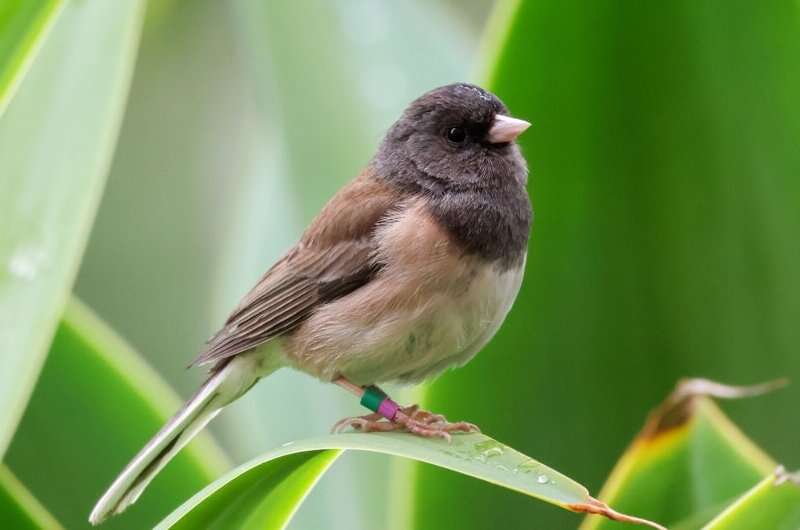
Photo credit: Alex Fu
Birds Exhibited Changes In Beaks Due To COVID-19
A new study from the National Academy of Sciences (PNAS) details the changes in birds living in urban areas, such as college campuses, during the COVID-19 pandemic. As food scraps and other sources of food became scarce due to the lockdowns, urban birds’ beaks shortened in length from one generation to the next.
“Birds hatched during the pandemic had beaks similar to wild juncos, but as human activity picked up again, their beaks reverted to the short, stout form seen in urban populations. These results indicate that city birds quickly adjusted their behavior when human activity stopped and started again.”
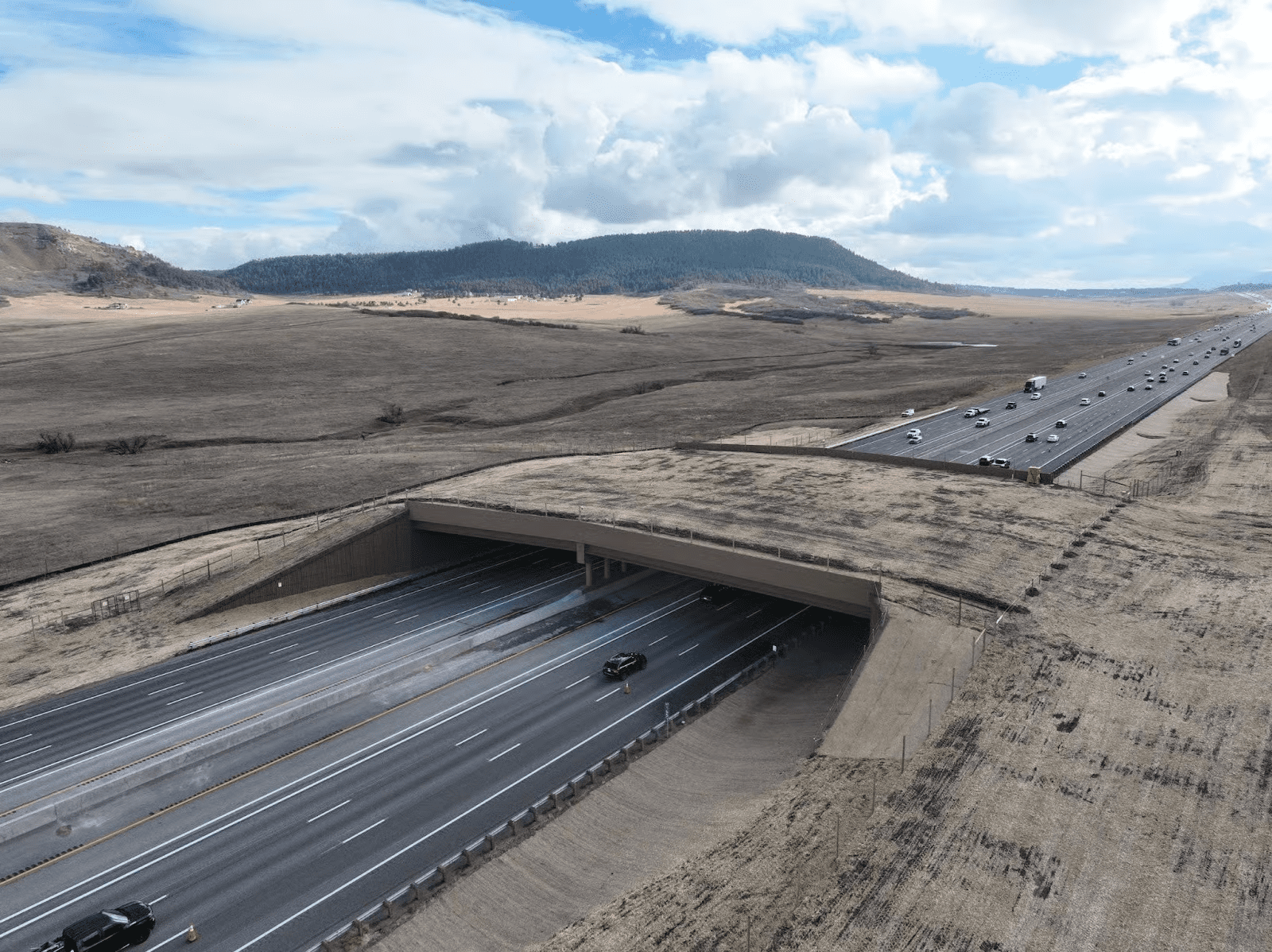
Largest Wildlife Crossing in the United States Opens in Colorado
On a stretch of highway between Denver and Colorado Springs, Colorado, wildlife now have a safe way to travel from one side to the other. The Greenland Wildlife Overpass connects roughly 40,000 acres of habitat that were previously disconnected for wildlife.
Though it will be used by a variety of animals, the 200-foot-wide overpass was designed with elk and pronghorn in mind. The overpass is the final piece of a wildlife crossing system that has been in progress for many years and now connects roughly 18 miles of safe crossings for wildlife.
Events and Community
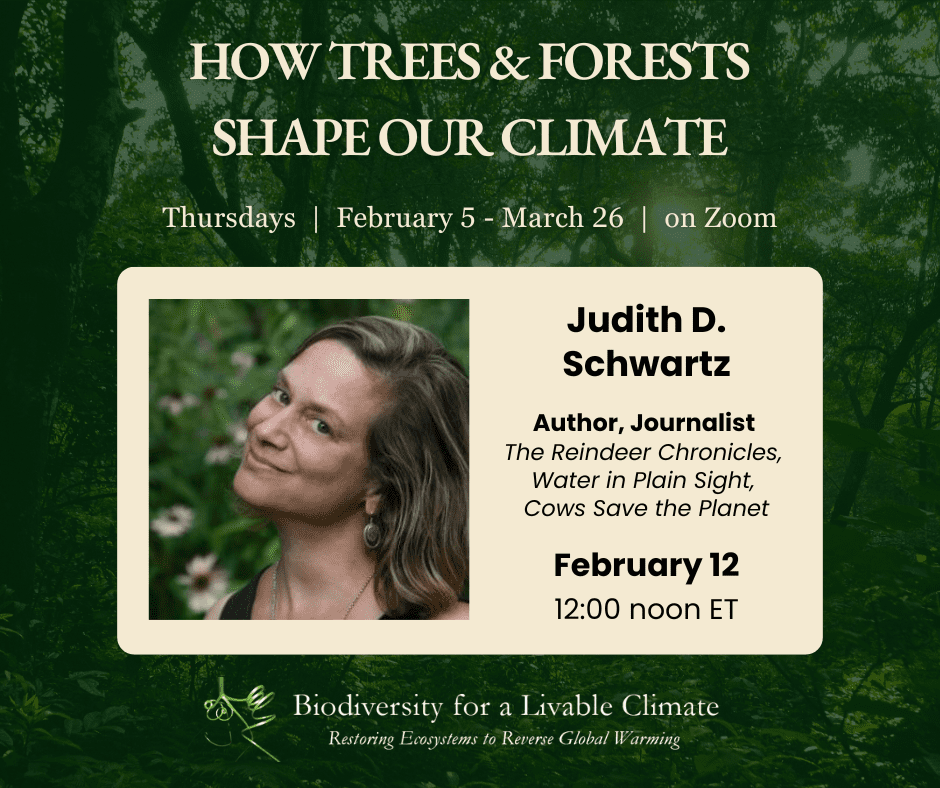
Don’t miss this opportunity to talk with award-winning author and journalist Judith D. Schwartz in our upcoming course How Trees & Forests Shape Our Climate on Thursday, February 12 from 12:00 noon – 1:30 pm ET.
Judith’s work brings complex science to life through powerful, human-centered storytelling. She is the author of three influential books including The Reindeer Chronicles, Water in Plain Sight and Cows Save the Planet, which document successful ecosystem restoration projects around the world that are healing landscapes while strengthening ecological, economic, and social resilience. Judith is also a journalist for publications including The Guardian, Scientific American, Yale E360, Discover, and The American Prospect, and she speaks internationally on restoration ecology and regenerative climate solutions.
In this course, Judith will share stories of earth repair including the restoration of forests, soils, and water cycles, that demonstrate the vital role that forests play in regulating climate, water, and life on Earth.Read more about Judith’s work and our upcoming course – How Trees & Forests Shape Our Climate
Register by January 17 to receive our lowest rate! Group rates, reduced rates, and scholarships are available. Email courses@bio4climate.org for more information.
Miyawaki Forest Program Updates
This week we spotlight The Role of Miniforests in the Homegrown National Park by Doug Tallamy, author, entomologist, and co-founder of Homegrown National Park.
In this presentation, Tallamy invites us to look closely at the places we move through every day—lawns, backyards, streets—and to notice how biodiversity loss is woven into how these landscapes are shaped and managed. Miniforests suggest another possibility: small, multilayered, diverse pockets of life where key host-plant relationships can be re-established.
At the heart of his work is a simple but profound idea: plants are not just plants. They are relationships. Many insects can only live, grow, and move through landscapes that contain the specific native plants they evolved alongside. Without these host-plant relationships, energy moves less easily through food webs. Tallamy emphasizes the importance of landscapes that support caterpillars because caterpillars are a primary way energy moves from plants into broader food webs.
With residential land covering vast stretches of the U.S., Tallamy reminds us that the future of biodiversity will be shaped not only in parks and preserves, but in the everyday places in between—especially private and residential land.
He also leaves us with an open question that invites continued inquiry over time: how well can miniforests support biodiversity?
This presentation leaves us with a few reflections to sit with:
- Can you choose one native tree or shrub near you and imagine—or draw—the relationships it supports?
- How might we shift our relationship with plants from aesthetics alone toward ecological function?
- Life depends on movement. In what ways could miniforests reopen pathways for species, energy, and relationships to move through human-dominated landscapes?
We hope this reflection deepens your own thinking as well.
Staff Reading Picks
This week, we’re sharing a book recommendation from Jim Laurie, one of our course instructors and co-founder of Bio4Climate.
Finding the Mother Tree: Discovering the Wisdom of the Forest by Suzanne Simard
If you are looking for a good book to read this holiday season, I recommend Finding the Mother Tree. Suzanne Simard grew up in the gigantic forests of British Columbia and later became a forestry scientist who turned our paradigms about healthy forests upside down.
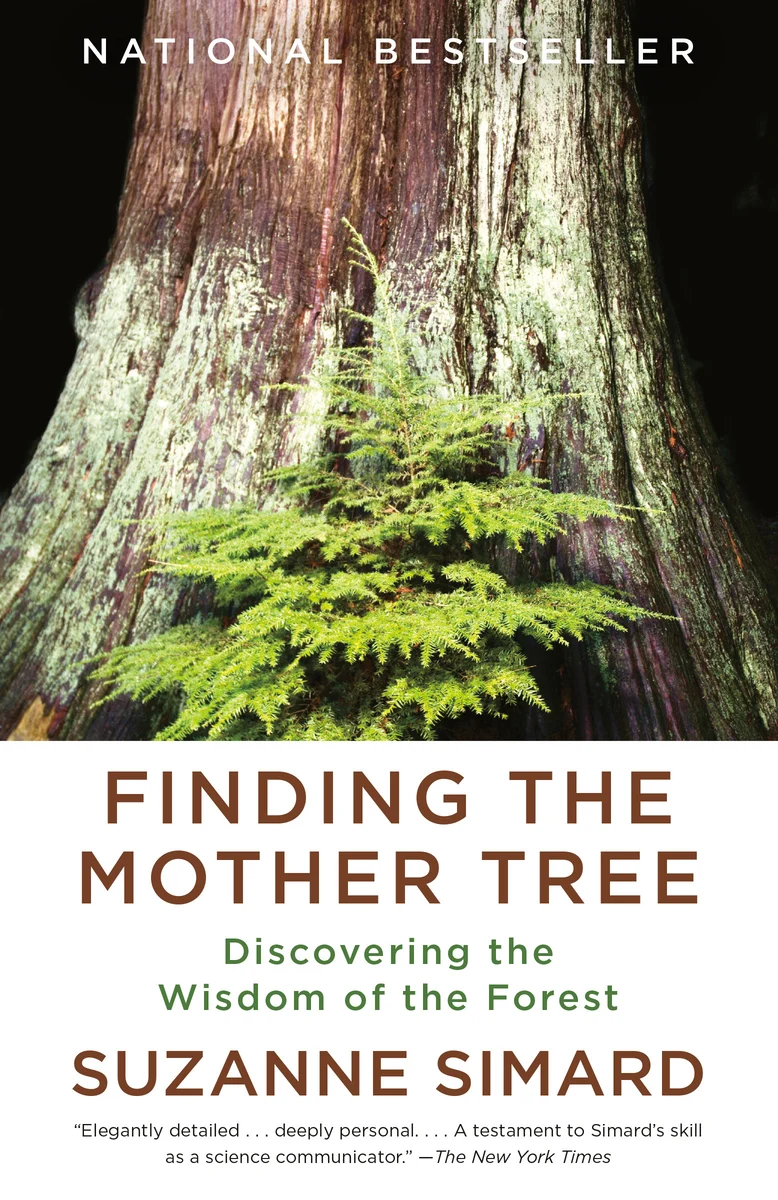
This book is also a love story. Suzanne Simard has been greatly saddened by the loss of so many forests due to clear cutting and increasing fires in a warming world. She now spends much of her time working with First Nations Tribes on the Canadian West Coast, teaching future forestry students how to regenerate forests as well as sustainably harvest.
Finding the Mother Tree has elaborate sources, pictures, and notes. It was featured and very well received in one of our Biodiversity Deep Dive courses.