
News and Insights
New Satellite Observations Show How and Where Earth’s Vegetation is Changing

Scientists from the German Center for Integrative Biodiversity Research (iDiv), the Helmholtz Center for Environmental Research (UFZ), and Leipzig University have created a new method to help us better understand how the living surface of our planet is reorganizing in a warming world.
A Coordinated Conservation Effort Across Finland, the Canadian Arctic, and the United States is Working to Protect and Restore Peatlands in Europe and North America.
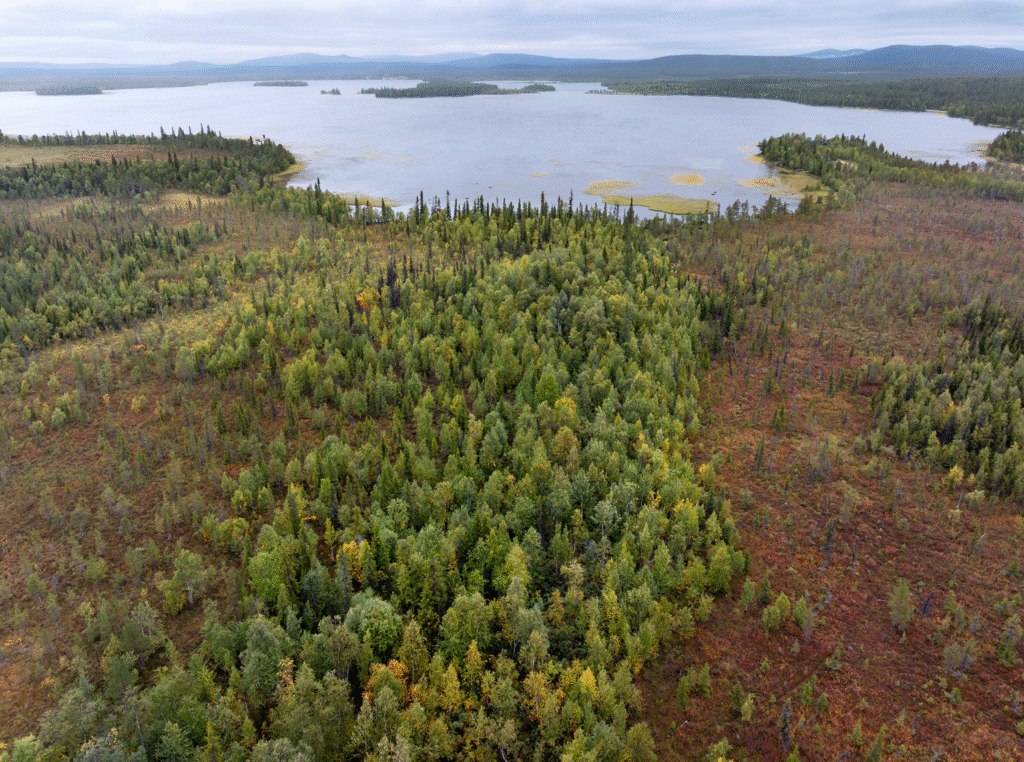
Through grassroots mapping, community monitoring, and restoration projects rooted in traditional land use and knowledge, indigenous and local groups in Finland, Canada, and the United States are collaborating on a collaborative biodiversity replenishment model to protect and restore peatlands and surrounding forests.
Events and Community
Courses
“There is a sky behind the forest. There are seas unbounded, seething waves made from the foams of dreams and churned by hands of light.” – My Story by the renowned Iraqi poet Nāzik al-Malā’ikah (translated by Emily Drumsta)
In the book The Genius of Trees, Harriet Rix opens with an image of forests as living interfaces between sea, sky, and land. In the cloud forests of La Gomera in the Canary Islands, where mist lingers and trees “chase” clouds, Rix shows how landscapes gather water from the air itself. But these hydrological partnerships are not confined to rare mountaintops. From Brazil to Borneo, Costa Rica to China, Australia to the Philippines, forests function as atmospheric engines.
Rix reveals a profound evolutionary insight – trees developed into trees to gain power over water. Through photosynthesis, they split water molecules using solar energy. Through vertical growth, they solved the paradox of needing both air and water reaching upward to harvest light and downward to access groundwater. Above ground, trees interrupt airflow, emit volatile organic compounds that seed clouds, and release water vapor through stomata helping to regulate rainfall. Below ground, roots collect, redistribute, and stabilize water tables. Across three trillion trees and 73,000 species, these minute adjustments accumulate into sweeping shifts in global water flow.
This understanding forms the scientific foundation of our upcoming course, Emergent Intelligence of Trees: How Symbiosis Shapes Living Systems, led by restoration biologist Jim Laurie. Beginning March 18, with an introductory webinar on March 11, this course explores how forests function as living climate systems regulating hydrology, stabilizing atmosphere, building soils, and generating resilience through symbiosis.
Your Weekend Read
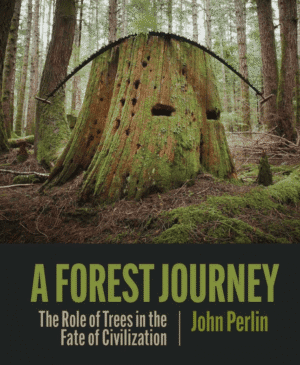
Errata: Last week, we inadvertently misidentified the author of A Forest Journey. John Perlin is the correct author of this book. We encourage you to take a trip with John through the history of forests!
A Forest Journey: The Role of Trees in the Fate of Civilization
By John Perlin
At first glance, you might think this is “just” a book about trees. But it is so much more! John Perlin shares the history of human civilization as it relates to forests. From commerce to conquest, every chapter of our history has been played out in relation to forests.
I first encountered John during our GBH talk and was fascinated to discover that our complex relationship with nature can be traced as far back as the epic tale Gilgamesh from 2100 BC. This reprint of Perlin’s 1989 book by Patagonia is full of stunning full-color pictures and was recently updated to include climate change and the biotic pump.
By purchasing this title through the link provided above, you’ll continue to support Bio4Climate. We are an affiliate partner of Bookshop.org and receive a portion of the sales price at no additional cost to you. View the Bio4Climate Bookshop for more books.