

Biodiversity 14:
Emergent Intelligence of Trees:
How Symbiosis Shapes Living Systems
A 10-week course with Jim Laurie
March 18 – May 20, 2026

Registration is now closed.
Sign up here to receive invitations to
our upcoming courses.
Trees are not passive features of the landscape. They are active agents in shaping Earth’s habitability.
This course explores how trees create and sustain the conditions that allow life to flourish. Drawing on current ecological science and two companion texts—The Genius of Trees: How They Mastered the Elements and Shaped the World (Harriet Rix, 2025) and Trees: An Illustrated Celebration (Kelsey Oseid, 2023)—we examine how trees interact with climate, water, soil, and living communities across time.
Participants will learn how trees:
- Build relationships with fungi, bacteria, soil microbes, animals, and humans
- Regulate the water cycle through transpiration and cloud formation
- Shape the carbon cycle through chemistry and photosynthesis
- Contribute to the formation and stability of Earth’s atmosphere
- Generate large-scale cooling effects through the biotic pump
- Interact with fire, disturbance, and recovery in resilient ecosystems
We will also explore deep time—how forests and grasslands once covered far more of the planet, building carbon-rich soils that stored water, cooled continents, and supported ice ages. These historical perspectives help us understand what is possible again through restoration.
A central theme of the course is ecological intelligence. Rather than framing intelligence as a uniquely human trait, we will examine how trees and other living systems make decisions, adapt to constraints, and evolve cooperative strategies that improve shared habitats through symbiosis.
Classes combine short lectures, visuals, videos, discussion, and breakout conversations. Jim Laurie’s teaching style emphasizes clarity, participation, and mutual learning—ensuring that each session offers something new to learn and something meaningful to share.
Whether this is your first Biodiversity course or your fourteenth, you are warmly invited to join a growing learning community committed to understanding how life works—and how working with nature can help cool the planet.
Registration is now closed.
Sign up here to receive invitations to
our upcoming courses.
Format
This is a 10-week course that meets every Wednesday, starting March 18, 2026 and will run until May, 20, 2026. Classes will be held from 12 – 2 pm ET and 7 – 9 pm ET on Zoom. Students can choose either class time to accommodate their schedules (or participate in both).
The course will have reading assignments, slide presentations, videos, and breakout sessions to discuss topics raised in class and to get to know your classmates.
Instructor Jim Laurie’s goal is that each person shares something and learns something new in each class. There are many “old timers” who have taken several courses, but we also have new people in each course. The Old Timers are eager to encourage the “Newbies” and help them catch up and feel comfortable as part of the Symbiosis Team.
Course Books

In The Genius of Trees, Harriet Rix explores how trees have shaped the world by mastering water, carbon, chemistry, and time itself. Traveling across diverse landscapes, she examines how trees create soils, influence rainfall, regulate climate, and form enduring partnerships with fungi, animals, and microbes.
Alongside these journeys, Rix traces the deep evolutionary history of trees, revealing how their adaptive strategies helped build Earth’s atmosphere and sustain life through multiple extinction events.
Blending field observation, evolutionary science, and lucid storytelling, the book reframes trees as active agents in shaping habitable landscapes—inviting readers to see forests not as background scenery, but as intelligent participants in the living world.
Read this review in The Guardian and learn more.
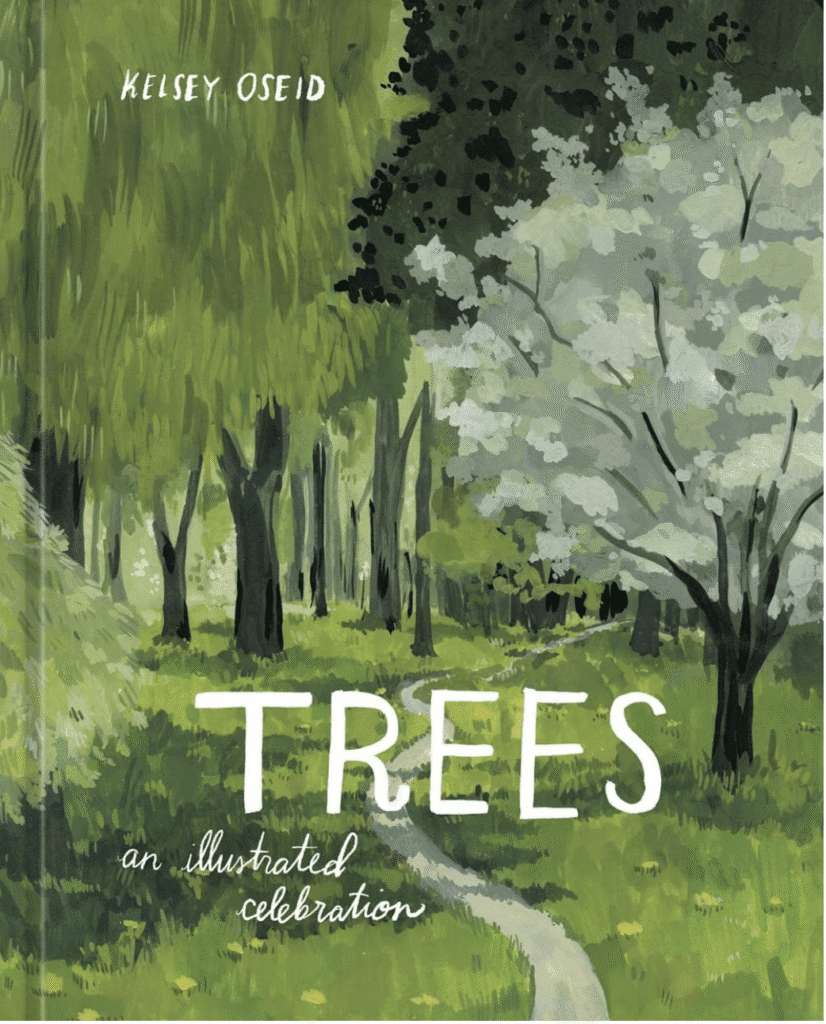
In Trees: An Illustrated Celebration, Kelsey Oseid invites readers to explore the beauty, diversity, and quiet wonder of trees—one of the most essential life forms on Earth. Through elegant illustrations and accessible science, the book introduces how trees grow, communicate, and support life across the planet.
Oseid highlights the many ways trees sustain ecosystems: producing oxygen, storing carbon, shaping habitats, and forming underground partnerships with fungi to share water, nutrients, and signals of stress. Along the way, she reveals surprising facts—from the stories hidden in tree rings to the subtle clues found in leaf shapes—that deepen our appreciation of how trees work.
Blending art, science, and curiosity, this illustrated guide celebrates the world’s most remarkable trees, from towering redwoods to resilient mangroves and ancient baobabs. The book offers a visually rich and engaging companion for learning about trees as living, interconnected beings within Earth’s larger web of life.
Registration is now closed.
Sign up here to receive invitations to
our upcoming courses.
Your Course Instructor

Jim Laurie
Restoration Biologist, Futurist, Consultant, Co-founder, Biodiversity for a Livable Climate
Jim Laurie has worked for twenty years, as a biologist and technical trainer in the chemical industry in Houston, Texas, where he pioneered the use of living machines to biologically remediate wastewater more effectively than conventional technology. In 1995, he relocated to Vermont to manage the world’s largest “Living Machine” designed by ecological visionary John Todd to clean raw municipal sewage without toxic chemicals. He then consulted on projects to restore the redwood forests and Pacific salmon fisheries and implement flood prevention and ecological design. In 2017, he developed “Scenario 300,” an analysis demonstrating that if just half the available land on the planet were restored, atmospheric carbon concentrations could fall to 300 ppm within four decades.
Jim studied Holistic Management of grasslands with Allan Savory and the Savory Institute, built a lab to study fungi and grow mushrooms, learning from the work of Paul Stamets, and worked with the International Wolf Center in Minnesota to learn about predators and the biology of the North woods. Jim received his B.S. in Biology at Rice University and his M.S. in Future Studies at the University of Houston in 1997 where he completed his thesis on “Biological and Educational Tools for Reversing the Loss of Biodiversity in the 21st Century.”
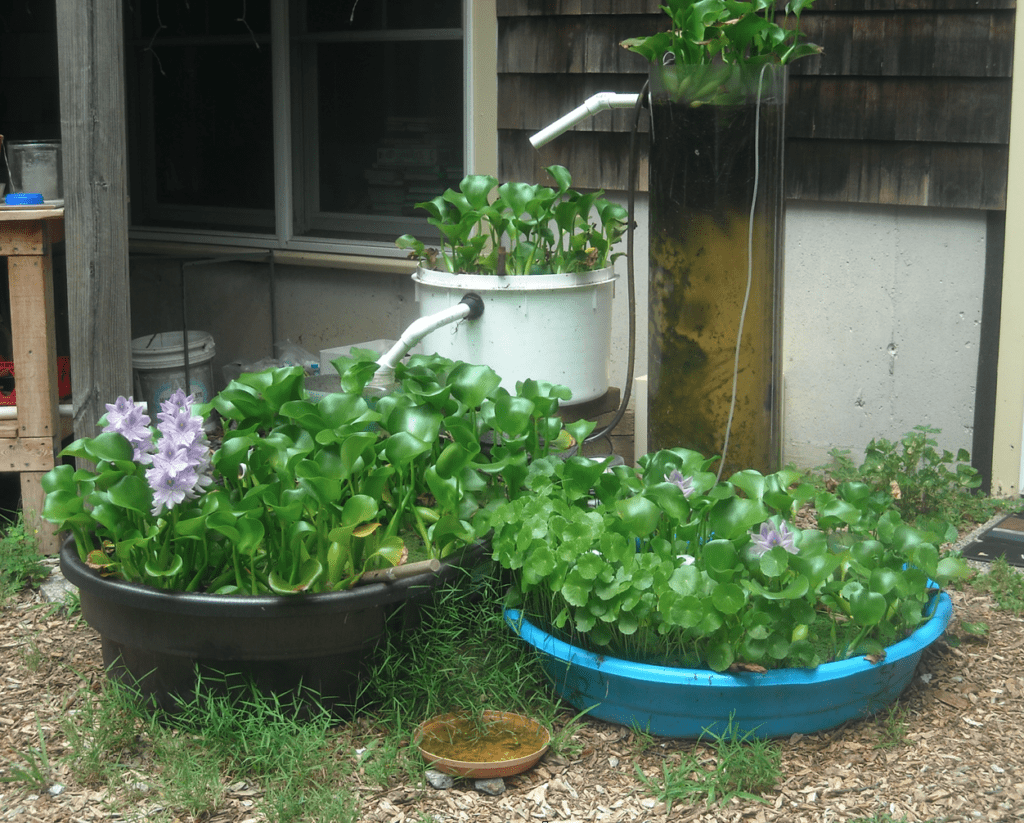
Jim discovered the magical power of nature in his work as a biologist in the chemical industry to clean toxic wastewater with “Living Machines.” His career turned to restoration biology and teaching. You will enjoy his interactive and thought provoking style which makes science accessible, while still being comprehensive.
This Series of Biodiversity Courses
Are you ready to transform your understanding of how life on the planet works and how we can play a role? Join us as we follow the transformation of leading writers and thinkers to a deeper understanding of natural systems, our role, and the ability of nature to cool the planet.
While each course builds on our understanding, you do not need to have taken any of the previous Biodiversity Courses. Whether this is your first or tenth course, please join us if you are curious about nature and its power to restore ecosystems to abundance. The veterans of previous classes will help you catch up in your learning. We are developing into a “Symbiosis Team” to ameliorate or reverse the impacts of global warming. Everyone has much to learn and share and there is much to be done. We need and appreciate your enthusiasm on the team, and encourage people to join at the level that they are able to. Sliding scale pricing is available, as are scholarship options. To join us, register below!