
What insect clones itself, gives birth to live young, and sometimes already has the next generation developing inside it?
The Aphid! (Aphidoidea)
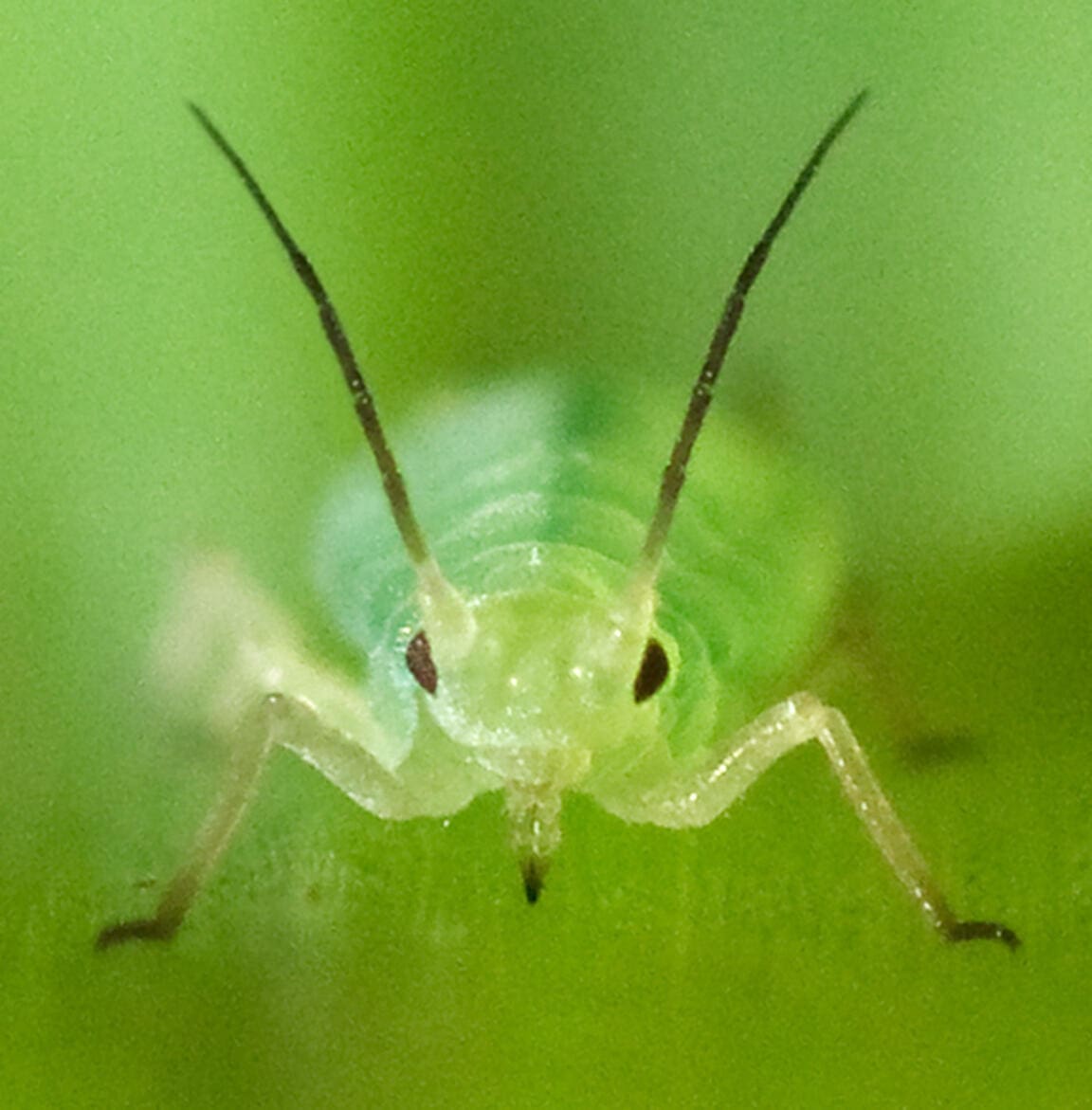
Bio4Climate’s Director of Marketing and Strategic Engagement Lori Pierelli recently planted rose bushes in honor of her Italian grandmother who had a gift for growing beautiful roses. She recalls her grandmother constantly mentioning aphids as problematic for the plants. Since Lori is now a “rose mom,” she decided to learn more about these insects that could potentially harm her budding babies.
More Than Just a Pest
At first glance, aphids do not seem like creatures worth celebrating, and growing up, I certainly never got the impression they should be. These tiny, soft-bodied sap-suckers are usually only noticed after they’ve begun feeding on plants. The leaves curl, the stems distort, and sticky honeydew starts to appear on the plant. But like many other “pest” species, aphids serve a purpose and contribute to keeping ecosystems going.
Aphids belong to a large group of insects, with thousands of species found around the world. Most feed on only one plant species or a few closely related plants. It’s this specialization that helps us understand why aphid diversity is tightly linked to plant diversity.
Small Bodies, Big Goals
Aphids feed on phloem, a nutrient-rich tissue that carries sugar through plants. They do this by inserting their slender mouthparts directly into the tissue. Phloem sap is rich in carbohydrates but relatively poor in essential amino acids, so aphids must rely on an internal “partnership” with bacteria that helps supply nutrients the insect cannot make on its own. In and of themselves, they are miniature ecosystems!
Aphids have one of the strangest lifecycles in the insect world. They reproduce without mating and birth live young instead of laying eggs. Some species show telescoping generations, where a mother carries daughters that already contain developing offspring inside them.
The Aphid Effect
Aphids are often framed as pests, and rightfully so, because some species do damage crops and ornamental plants and spread plant viruses. Ecologically, however, aphids are a major food source for other terrestrial creatures. From lady beetles, lacewings, and hoverflies to parasitoid wasps, ground beetles, birds, and other predators, aphids represent life beyond the plant.
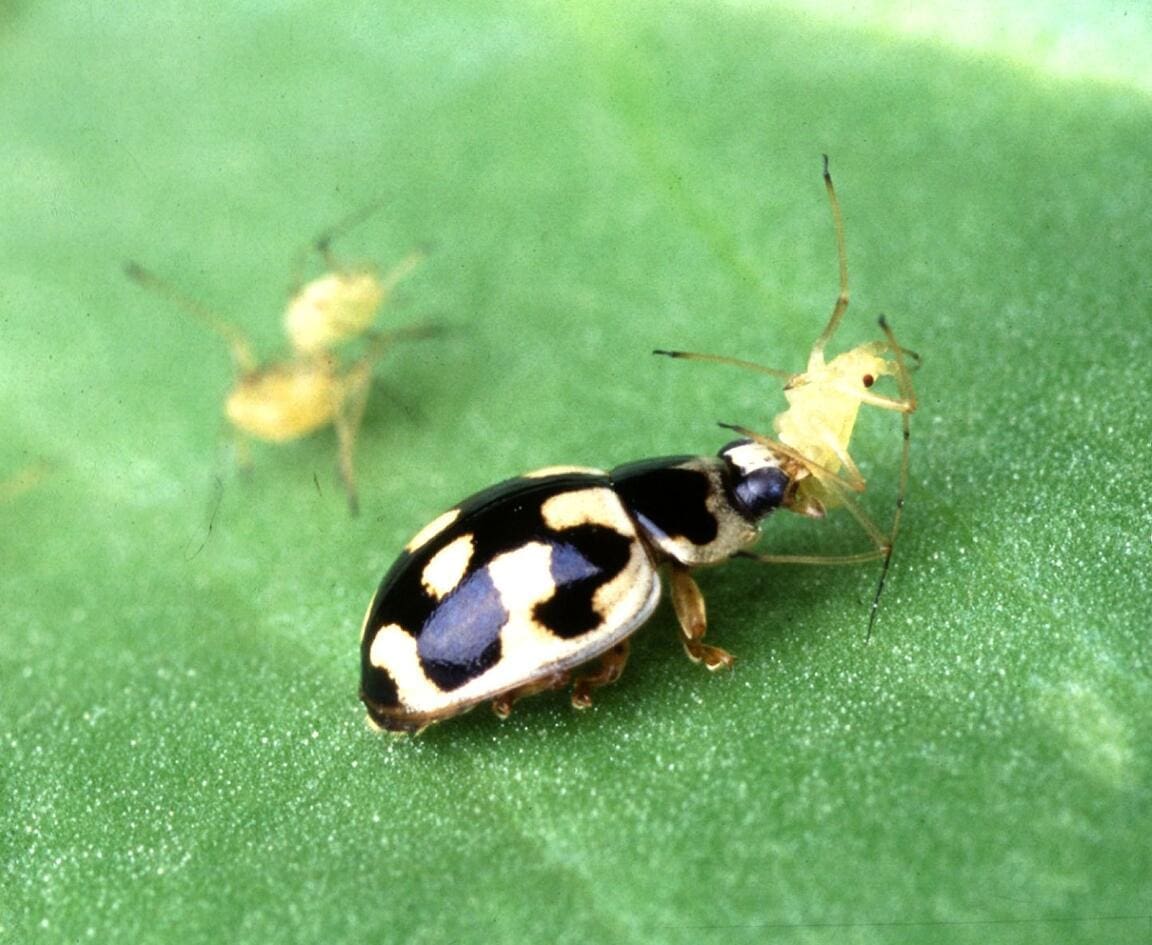
Aphid honeydew, their sugary waste, supports ants and other insects and can be an important energy source for parasitoids and other beneficial organisms. Some ants “farm” aphids, protecting them from predators in exchange for honeydew. The ripple effect throughout the ecosystem shapes who eats whom and who survives in a habitat.
They support biodiversity by providing an early-season food source when many predators are just starting to become active. They help sustain specialist predators and parasitoids that depend on aphid colonies to complete their lifecycles. Their honeydew feeds microbes, ants, and other insects, creating additional layers of interaction around the plant they occupy.
These insects are part of the biodiversity of the plants they live on. In some tree systems, multiple aphid species occupy different niches on the same host, feeding on different parts of the plant. A single tree has the ability to support a small but complex community of aphids, predators, and mutualists. Even as aphids are seen as nuisances, they are indicators of a healthy plant community.
Surviving by Adapting
Like many other species, aphids adapt to survive. When conditions are good, they reproduce rapidly and spread fast. When their environment changes, many species produce winged forms that disperse to new hosts. Their ability to switch between body forms helps them escape crowding, poor plant quality, and seasonal stress.
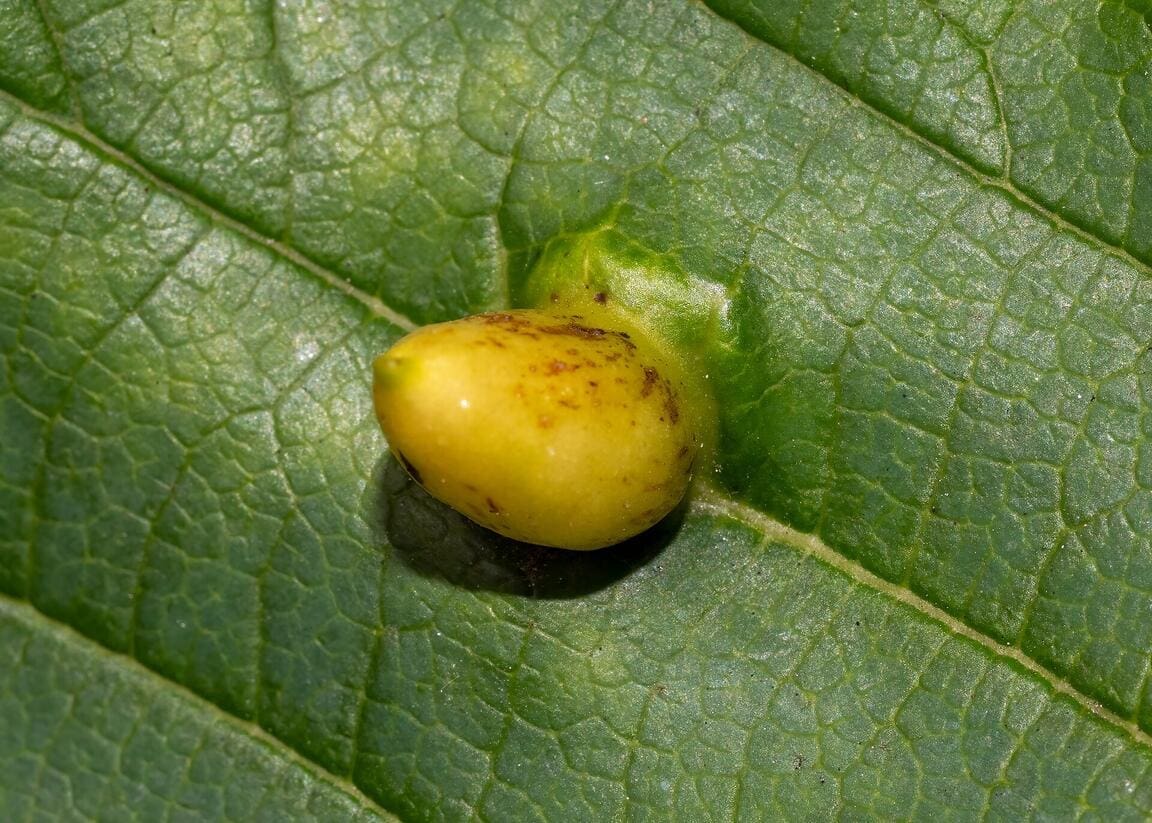
Some aphids even induce plants to make galls, abnormal but highly organized plant structures to serve as shelter and protection. Galls are not random plant damage; they are shaped responses triggered by the aphids’ biological signals. That makes aphids not just herbivores, but expert manipulators of plant growth.
A New Perspective on an Old Pest
Aphids are easily dismissed as nuisances to be rid of, but every ecosystem needs a villain to survive. Aphids’ role as food for birds and other predators and honeydew creators for ants are part of a larger, rippling nutrient cycle.
So, while I’ll be keeping an eye out for aphids on my rose bushes, I’ll keep in mind that they are more than just a pest and remind myself that they are contributing to a broader ecological system, carrying a lot of life in their tiny bodies.
Sources
- Animal Diversity Web: Aphididae
- ScienceDirect: Buchnera aphidicola – An Overview
- MicrobeWiki, Kenyon College: Aphids and Buchnera
- Montana Public Radio: Aphid Reproduction
- Wikipedia: Telescoping Generations
- Springer Nature: Aphid Adaptation in a Changing Environment Through Their Bacterial Endosymbionts
- Britannica: Aphid
- HHMI: Here’s How Insects Coax Plants into Making Galls
- Virginia Tech VCE Publications: Galls Made by Aphids, Adelgids, Phylloxerans, Psyllids, and Midges
- GrowLiv Biologicals: Lifecycle of Aphids