
What creature is the largest terrestrial animal in North America, an icon of the American prairie, and has one of the great conservation success stories of modern times?
The American Bison! (Bison bison)
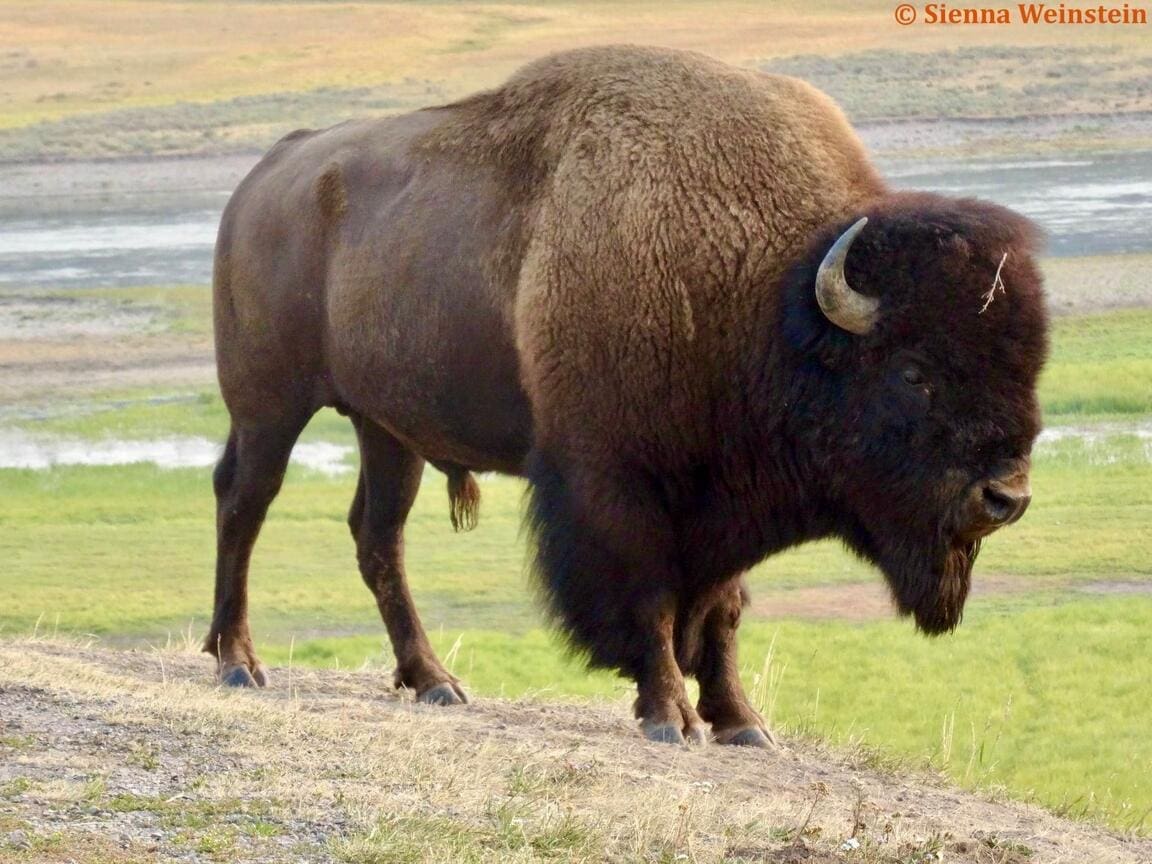
In August of 2021, friends and I explored Yellowstone National Park, visiting iconic landmarks such as Old Faithful, the Grand Prismatic Spring, the Grand Canyon of the Yellowstone, and Yellowstone Falls. While there, we saw numerous wildlife species, including the true icon of the American plains: the bison. In March 2026, while vacationing in the Silicon Valley area of California, I discovered a paddock with a small herd of plains bison open to visitors. I was surprised to discover a park 20% larger than New York’s Central Park filled with bison. I just had to take a look for myself.
Big, Burly, and Bushy Bovid
Quite simply, the bison is an impressive creature. Even its basic facts are astonishing. Bison are the largest terrestrial animal in North America. Mature bulls can be 5.5–6.5 feet high at the hump, and 9 to 12.5 feet in length. Cows (females) are typically smaller, at 5.0 feet high at their humps, and 7–10 feet. Their short, curved, black horns can grow up to 2 feet long, and they can weigh between 1,800–2,400 pounds.
Their formidable appearance is enhanced by several unique traits that make them easily identifiable. Their deep brown fur creates a long mane that covers their distinct hump and gives them a long beard. Their large heads contain a thick skull used not only for digging through snow to reach vegetation underneath, but to fight with one another by crashing their head or horns together.
Thanks in large part (pun intended!) to their size, Bison live between 15–20 years. Their massive presence makes them relatively safe from natural predators, but like most creatures, the weak, old, and young of the species can fall prey to large predators such as mountain lions, bears, or wolves.
The Bison Playbook: Life, Love, and Lunch on the Prairie
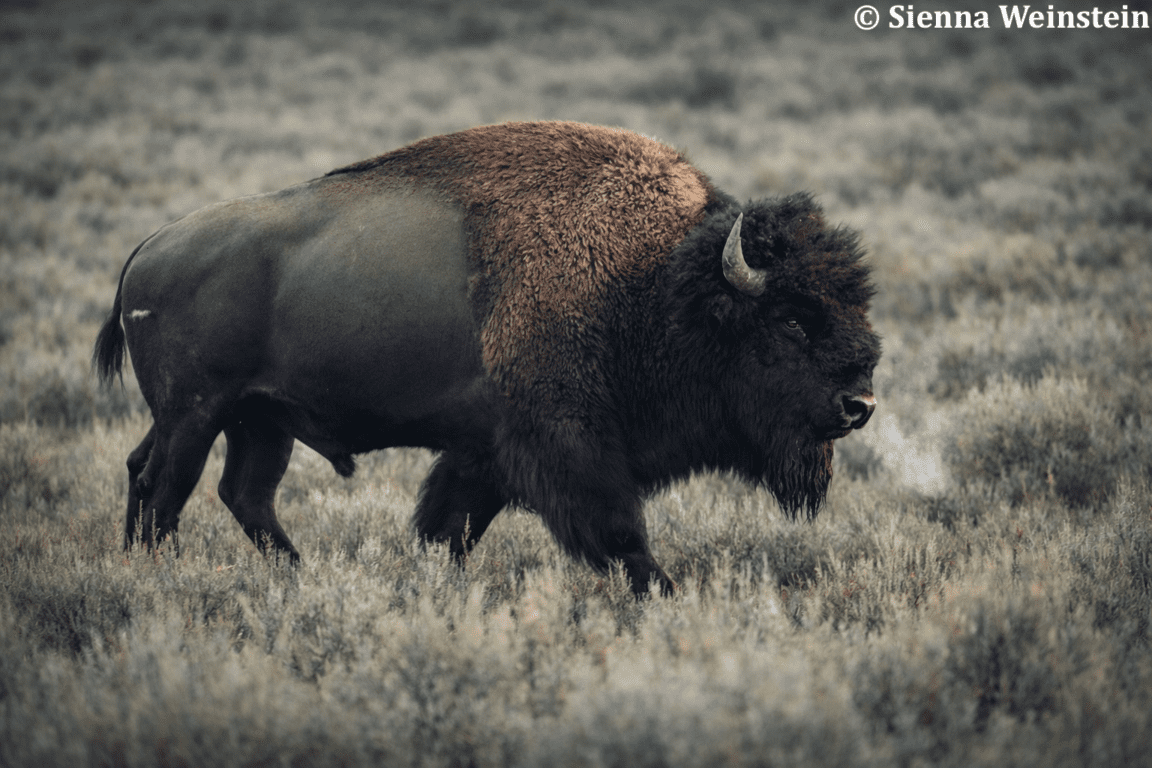
Bisons are communicators, especially during the breeding season (the rut). Grunts, snorts, and bellows advertise dominance and challenge rivals. Body language, including head tossing, ground pawing, and wallowing conveys aggression or social status. In breeding season, females release scents that indicate reproductive willingness.
Breeding typically occurs in mid- to late summer, with intense competition for female attention. Like humans, bison breed for approximately 9 months; spring is birthing season. Cows typically give birth to a single calf; twins, while extremely rare, are possible. Within hours, calves are mobile. Females are the primary caregivers, nursing for several months and protecting and guiding their young.
Herd animals, bison live in groups that facilitate social structure and provide protection from predators. They are typically composed of females, calves, and young males. They have relatively long lifespans for large mammals—often 10–20 years in the wild—and delayed maturity, with females breeding at around two to three years, and males competing successfully only when older and larger. Outside the breeding season, the older bulls may be solitary or form small bachelor groups. The herd structure provides protection from predators and facilitates social learning.
Bison exhibit seasonal movements rather than strict migrations, tracking food resources across the landscape. They are herbivores that primarily graze on grasses and sedges, though they will also consume forbs and shrubs when available, especially in winter or drought conditions. Their diet shifts seasonally depending on plant availability, and their grazing plays a key ecological role in shaping grassland ecosystems.
As a keystone, “ecosystem engineer” species for North American grasslands, bison play an important role in shaping landscapes. Their behavior and habits disproportionately influence their ecosystem by promoting plant diversity, aerating soil, and creating habitat for various plant and animal species.
Bison are selective grazers, favoring grasses over flowering plants (forbs), which increases plant diversity and stimulates new growth. They create shallow depressions in the dirt known as wallows for dust bathing, which later fill with water, creating small, temporary wetlands for insects and amphibians. Their massive hooves also help break up the soil, while their dung acts as a seed spreader and nitrogen-rich fertilizer, boosting soil health.
Their dung also incubates the eggs and larvae of numerous insects, and many bird species, including endangered species, in turn, feed on these insects and use fallen bison fur for nesting.
A Cultural Legend and an Epic Comeback Story
Long before the bison were scientifically studied, Indigenous peoples across North America recognized the ecological, spiritual, and practical purpose of the bison. For millennia, Native communities used every part of the animal: meat for food, hides for clothing and shelter, bones for tools, sinew for bindings, and the bison itself as a centerpiece of ceremony and prayer.
Even today, more than 60 tribes continue to weave their sacred “Brother Buffalo” into family life, spiritual practice, and food traditions.
Despite their significant cultural impact in Native American history, the bison were the victims of one of the most catastrophic wildlife collapses in recorded history.
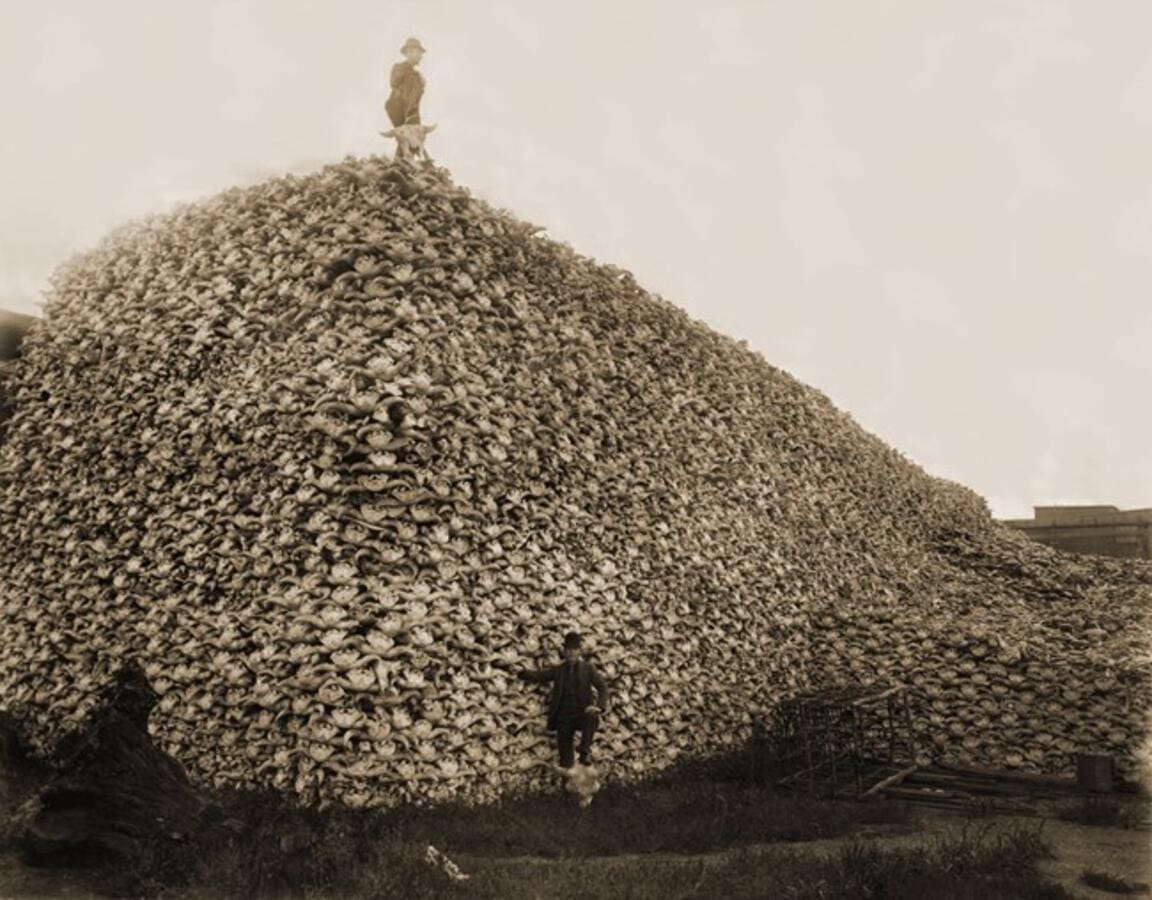
In the nineteenth century as European settlers pushed westward, they brought with them railways, repeating rifles, and a booming international market for hides and bones. What followed was a slaughter of almost incomprehensible scale.
Bison populations once estimated at 30 to 60 million animals crashed to fewer than 1,000 by the 1890s. Some accounts suggest only 300 survived. The U.S. military actively encouraged the killing, recognizing that eliminating bison meant undermining the food supply, and resistance, of Plains tribes. Disease from cattle and competition with domestic livestock piled on. The species was, for all practical purposes, moments from extinction.
But at core, the bison’s survival story is a human story too. In the late 1860s, a handful of private citizens—ranchers, conservationists, and animal lovers acting largely without government support—began capturing and sheltering bison. These rescued animals became the foundational stock for nearly every herd alive today.
Today, about 31,000 bison are managed as wildlife across public lands in the United States and Canada, with another 360,000 in private herds. In 2016, the American bison was named the national mammal of the United States, a long overdue recognition.
Despite their incredible comeback, the story of the bison isn’t finished. They are still listed as Near Threatened on the IUCN Red List, and many scientists use the sobering phrase “ecologically extinct” to describe its status across most of its former range. The populations that remain are often too small, too fragmented, and too genetically isolated to play the full ecological role bison once performed.
Hybridization with cattle, disease, habitat loss, and inconsistent policy support all continue to cast long shadows. The work ahead of us is to expand connected habitats, support Indigenous-led conservation, protect genetically intact herds, and build the kind of durable policy commitment a national mammal deserves. Although humans previously pulled the bison back from the verge of extinction once, we must make sure we don’t leave it stranded on the edge.

Sienna Weinstein is a wildlife photographer, zoologist, and lifelong advocate for the conservation of wildlife across the globe. She earned her B.S. in Zoology from the University of Vermont, followed by a M.S. degree in Environmental Studies with a concentration in Conservation Biology from Antioch University New England. While earning her Bachelor’s degree, Sienna participated in a study abroad program in South Africa and Eswatini (formerly Swaziland), taking part in fieldwork involving species abundance and diversity in the southern African ecosystem. She is also an official member of the Upsilon Tau chapter of the Beta Beta Beta National Biological Honor Society.
Deciding at the end of her academic career that she wanted to grow her natural creativity and hobby of photography into something more, Sienna dedicated herself to the field of wildlife conservation communication as a means to promote the conservation of wildlife. Her photography has been credited by organizations including The Nature Conservancy, Zoo New England, and the Smithsonian’s National Zoo and Conservation Biology Institute. She was also an invited reviewer of an elephant ethology lesson plan for Picture Perfect STEM Lessons (May 2017) by NSTA Press. Along with writing for Bio4Climate, she is also a volunteer writer for the New England Primate Conservancy. In her free time, she enjoys playing video games, watching wildlife documentaries, photographing nature and wildlife, and posting her work on her LinkedIn profile. She hopes to create a more professional portfolio in the near future.
References
- A-Z Animals: States with the Most Bison in America
- Wikipedia: American Bison
- Wikipedia: American Bison Hunting
- Wikipedia: Conservation of American Bison
- Wikipedia: List of Bison Conservation Herds in North America
- Wikipedia: Plains Bison
- IUCN Red List: American Bison
- Smithsonian’s National Zoo: American Bison
- National Park Service: Bison Facts
- National Park Service: Bison and People
- National Wildlife Federation: American Bison
- Parks Canada: Indigenous Peoples and Bison