
News and Insights
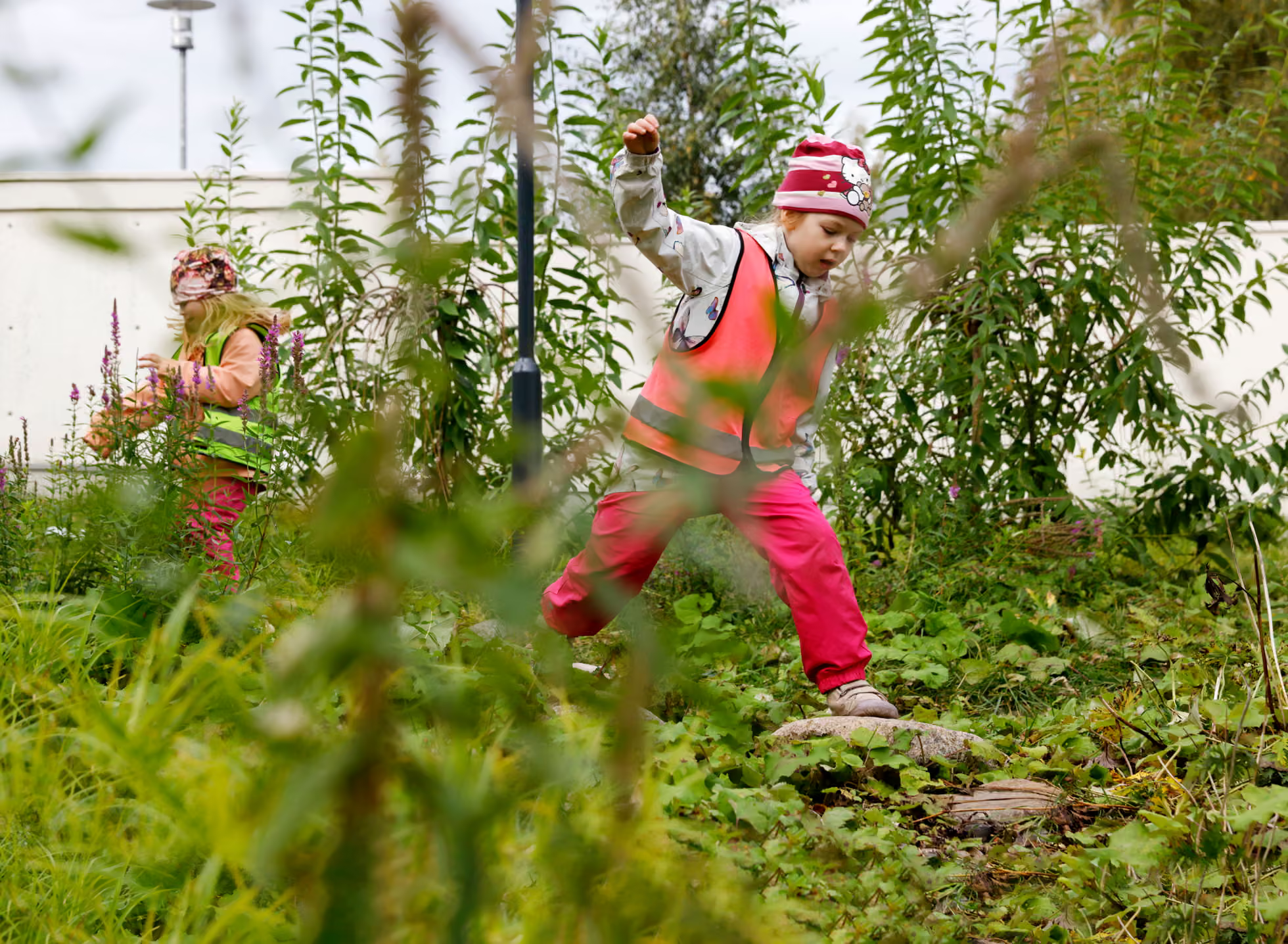
Photograph: Liisa Takala/The Guardian
How Exposing Children to the Outdoors Could Improve Health Outcomes
It’s no secret that biodiversity has positive effects on all aspects of life, and Finland is leading the charge on increasing children’s exposure to the outdoors. Outdoor playtime is a daily occurrence, and sections of the forest floor are dedicated to growing vegetables and composting leaves and weeds. Various kindergarten classes were included in a study looking at how increased access to biodiversity affects children’s health.
“A year later, it found children playing in the green kindergartens had less disease-causing bacteria – such as Streptococcus – on their skin, and stronger immune defences. … Other research showed that in just two weeks children’s immune system regulation could be improved by playing in a sandpit enriched with garden soil.”
“The kindergartens provide more evidence of just how crucial healthy ecosystems are to human health. As biodiversity, habitats and wild species are lost around the planet, there are huge potential repercussions for human wellbeing”

Sloth Bridges In Costa Rica Inspire Action In Brazil
Solutions that support wildlife conservation and biodiversity are right up our alley, and efforts to help sloths safely navigate forests in the face of urbanization is the newest example. Keeping sloths away from predators and man-made threats, such as cars, is crucial to ensuring their survival.
Seeing the need for a safe method of passage within fragmented forests, the Sloth Conservation Foundation set up rope bridges. The impact of this conservation effort doesn’t start and end with sloths: at least 14 other species have utilized the rope bridges according to camera traps.
In response to these efforts, “a conservation project in Brazil recognized it was similar to the challenge faced by the endangered northern maned sloth, a species endemic to the country’s Atlantic Forest.”
Events and Community

Our upcoming course How Trees & Forests Shape Our Climate has new dates.
The course will now run from February 5 – March 26, 2026, meeting live in weekly, 90-minute classes on Zoom on Thursdays at 12:00 pm ET.
This eight-week course explores how forests cool the climate through water cycles, biodiversity, and ecosystem processes, while challenging common myths about logging, wildfires, and forest management. The course also dives into the mechanisms of the biotic pump and what makes forests one of the most powerful ecosystems on the planet. Featuring expert guest speakers, the course offers science-based insights and practical perspectives for meaningful climate action.
Register by January 17 to receive our lowest rate!
Group rates, reduced rates, and scholarships are available. Email courses@bio4climate.org for more information.
Miyawaki Forest Program Updates
This week, we spotlight Using the Miyawaki Method to Empower Agroecology and Food Forestry with Coakee William Wildcat, Founder of Mother Tree Food & Forest.
In this talk, Coakee explores how the Miyawaki Method applies to food production, and how its core principles—dense, multi-layered planting, high diversity, and living soils—align with syntropic agroforestry as a form of ecological restoration. He discusses potential natural vegetation (PNV), the forest as a meta-organism, and Indigenous agroforestry practices, showing how these inform both food forests and afforestation.
This presentation leaves us with three questions to reflect on:
- What changes when we approach the forest as a living community rather than an inventory of species—and what practices help us learn to listen?
- What responsibilities emerge when we grow food in ways that restore soil, water, and biodiversity?
- What emerges when we study ecological succession more deeply, and what aspects of the Miyawaki Method still call for real, on-the-ground experimentation?
We hope this reflection deepens your own thinking as well.
Staff Reading Picks
This week, we’re sharing a book recommendation from Executive Director Beck Mordini.
A Forest Journey by John Perlin
You might think this is a book about trees, but it is more accurately the history of human civilization as it relates to forests. From commerce to conquest, every chapter of our history has been played out in relation to forests. I first encountered John Perlin during our GBH talk and was fascinated that our complex relationship with nature can be traced as far back as the epic tale Gilgamesh from 2100 BC. The reprint of Perlin’s 1989 book by Patagonia was not only updated to include climate change and the biotic pump, but is full of stunning full-color pictures. It makes a beautiful gift and an enjoyable read for yourself. – Beck Mordini
