Featured Creature: Burmese Python

Which creature is one of the largest snakes in the world, a popular exotic pet, and an unwanted addition to the Florida Everglades ecosystem?

One summer in high school, a close friend confessed that her parents had committed a crime when she was little. They released their two pet goldfish into a small pond behind her house to see what would happen. As far as experiments go, it was uneventful: the pair of fish grew to a respectable size, enough so that someone staring intently at the little pond could catch flashes of orange now and again. My friend’s goldfish fared well in her tiny pond, but could have also succeeded in a larger, more competitive environment. Goldfish thrive in most settings, so it is  likely that they would outcompete native fish for food resources in the process of survival. However, the goldfish is not the only exotic pet with this potential. Governments around the world recognise this, which is why the release of pets into the wild is a legislated issue.

Many species can illustrate the need for these laws well, but one particularly dramatic story exists in the Florida Everglades: that of the Burmese python. What was once a popular pet has now become Florida’s nightmare, a situation so dire that massive swaths of Florida society have mobilized to hunt these former pets and their descendants en masse through the Everglades. While the Burmese Python has found a comfortable habitat in Florida, its tendency to eat everything in sight has made the state unable and unwilling to accommodate it.

Burmese Python Basics 

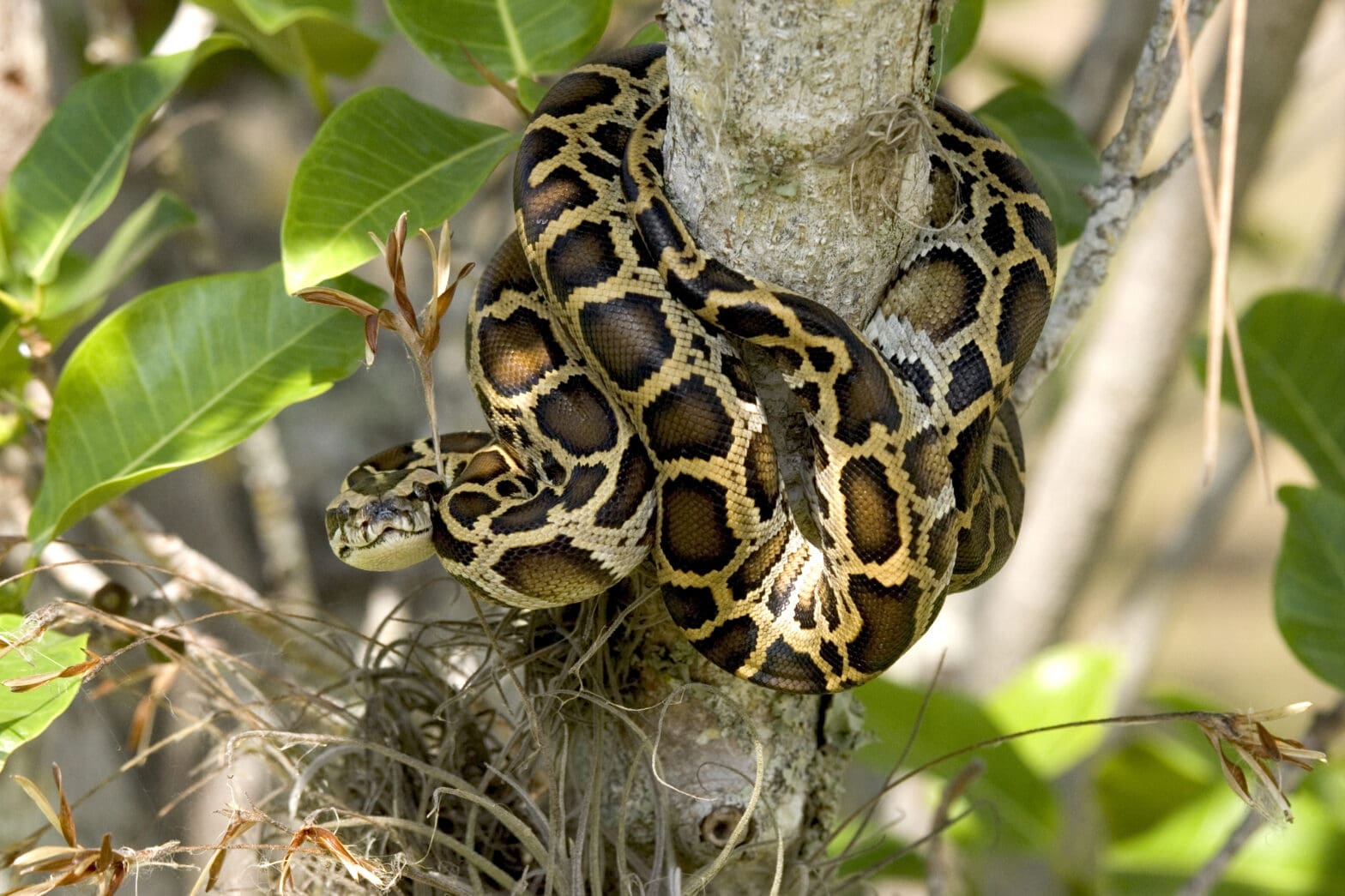
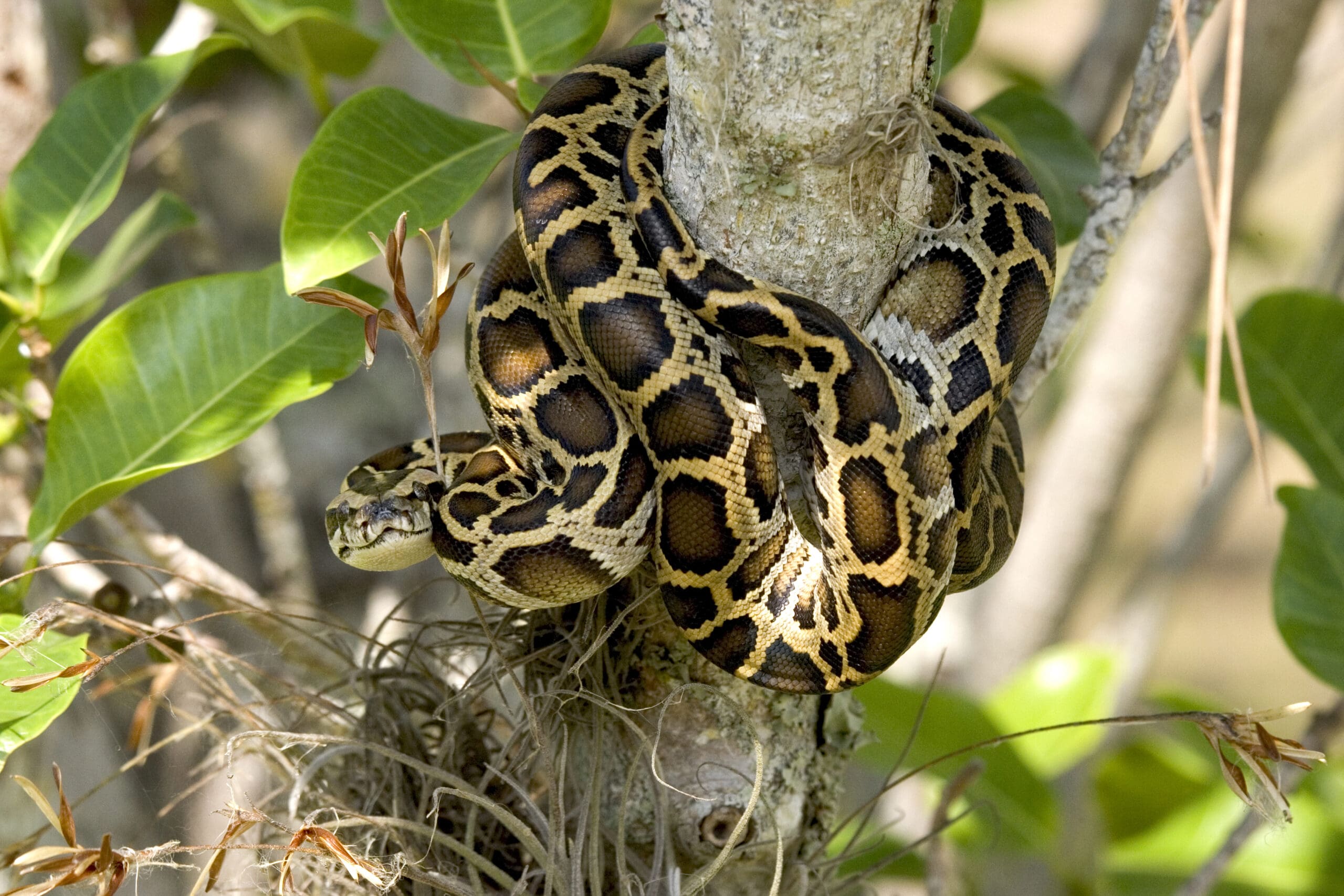
The simplest way to understand what a Burmese python looks like? Ask a kindergartener to describe a snake. The Burmese python is a massive, formidable serpent. Although female Burmese pythons grow to larger sizes relative to their male counterparts, the average python commonly reaches lengths of 10-15 feet, but can grow over 20 feet and weigh in at 200 pounds. At this size, they can easily suffocate small mammals and other similar-sized prey.

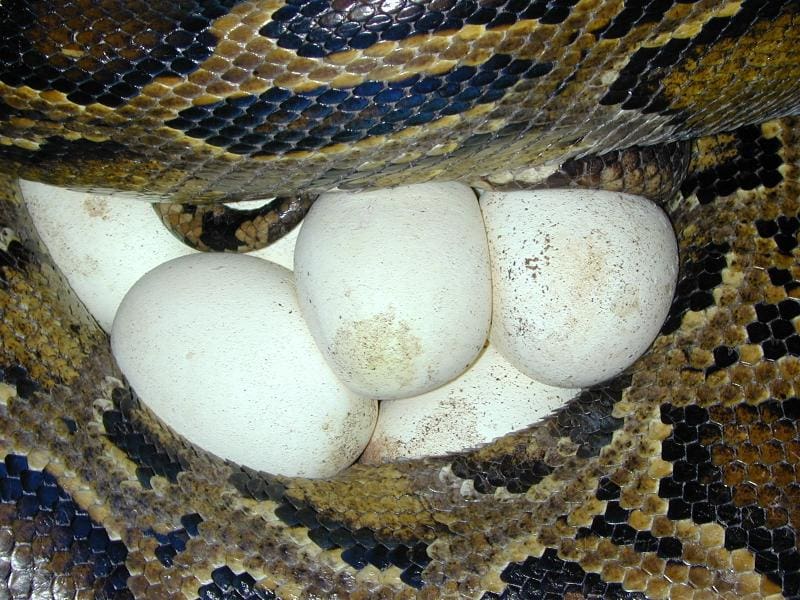
The Burmese python is an r-selected species with reproductive traits ideal for turbulent situations. The Burmese python reaches reproductive age between four and five years old and can reproduce throughout its life. The average Burmese python lives to be 15-30 years old, depending on if it’s in the wild or captivity, and reproduces once per year. One clutch of eggs can be anywhere between 50 and 100 individuals. The average clutch has only a 38% survival rate, but this is all part of the snake’s plan of quantity over quality of maternal care. This reproduction strategy, combined with the python’s unfussy diet, allow it to adapt to new environments, and even outcompete native species for food and resources to the detriment of the ecosystem’s health: the definition of an invasive species. 

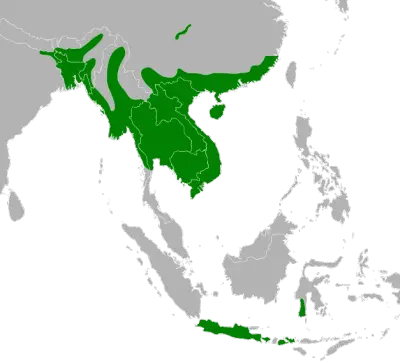
Burmese Python’s native range in Asia.
Courtesy Animalia.

Burmese pythons exist in a variety of settings with varying degrees of success. Firstly, they often exist in captivity as a lucrative part of the exotic pet trade. 
The python is an apex predator in the wild, and the only notable threats adult members of the population face are from humans, namely, poaching and industrial development. These issues are most prevalent in certain areas in the Burmese Python’s native range in Southeast Asia. In some zones, populations have declined by 80% in a single decade. The Burmese python is therefore globally classified as a “threatened” species. Overall, the Burmese python has found the most success in the Florida Everglades, where it can hide in the vast, untouched, and diverse ecosystem.

The Florida Everglades, a Biodiverse Haven

The Florida Everglades is one of the largest wetlands in the world and an incredible source of tourism for the state. It is also the primary freshwater source for a third of Floridians, and provides water for most of the state’s agricultural ventures. None of these vital functions, however, are the reason that Everglades National Park was created. Instead, early local conservationists, such as the Florida Audubon Society and Marjory Stoneman Douglas, believed that the area’s unique and considerable biodiversity was worth preserving. These voices won despite fierce opposition from game hunters and other interested parties, and Everglades National Park was authorized by Congress in 1934 with the Everglades Act and formally established in 1947. It became the first US national park created to preserve biodiversity. 

As biodiversity continues to decrease globally, the statistics comprising the Everglades become even more significant: the many endangered, endemic, and otherwise rare species comprising the Everglades should serve as a shining example of the importance of ecosystem preservation in the US. Instead, the Everglades today is only 50% of its original land size and faces an onslaught from many familiar sources. For one, agricultural activity in the greater Everglades Agricultural Area (EEA) has predictably led to fertilizers and pesticides being found in the Everglades system.

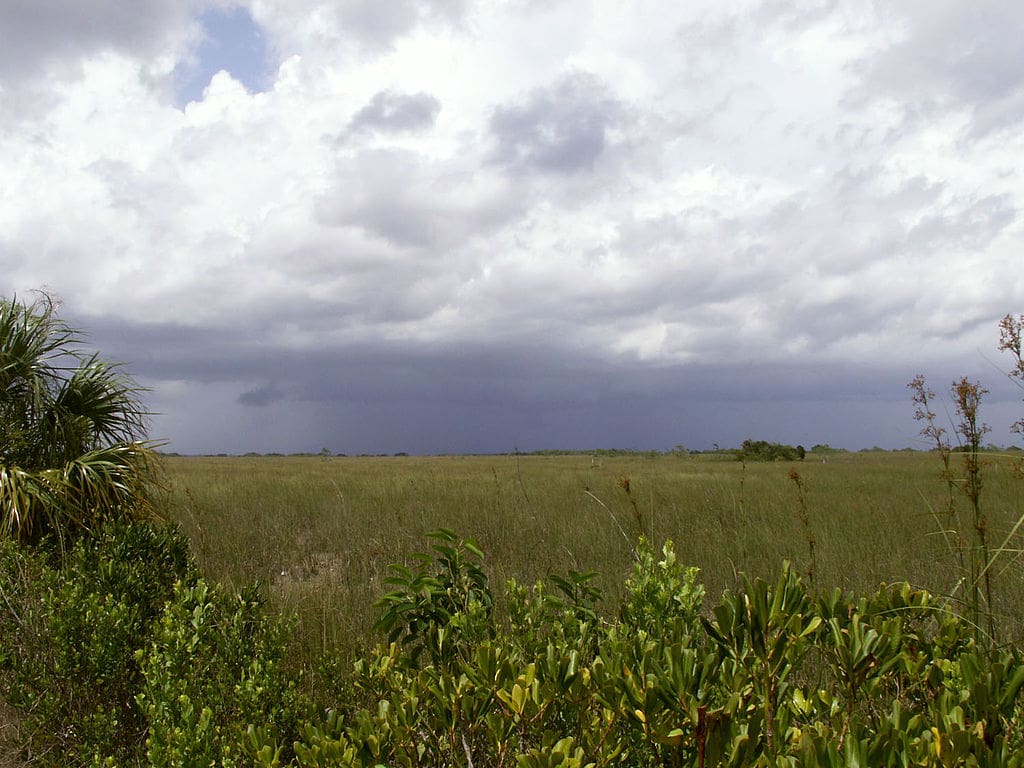
Everglades National Park
Moni3, public doman

Increased industrial and residential development in Florida has also had an impact. Many of these projects date back to the 1940’s, when large swaths of the Everglades were drained for industrial and agricultural purposes. These have resulted in a 70% reduction of water flow from Lake Okeechobee to the Everglades and beyond. The secondary effects of this decreased water capacity are serious. In addition to many rare species, the Everglades feature acres of peatland, consisting of soil incredibly dense with decomposed organic matter, leaving behind carbon and nitrogen. As these areas have received less water and experienced drought, allowing oxygen to move in and decompose the peat, releasing carbon, nitrogen, and other material into the atmosphere. Finally, the Burmese python has spent decades wreaking havoc on the Florida Everglades. In the face of these challenges, the Florida and federal governments have had limited success. 

Other entities, however, have voiced concerns over the situation, as well as a desire to be involved in decision making, such as the local Seminole and Miccosukee tribes, who have called the Everglades home for generations. The Second Seminole War began in 1835 over the Seminole and Miccosukee peoples’ forced relocation west of the Mississippi from their reservation north of Lake Okeechobee in what is now central Florida. Many native forces used the Everglades as a refuge and meeting place during the conflict. By the third Seminole war, most of the nation had moved west, those who stayed dug deeper into the Everglades. 

Today, the Seminole tribe is heading the ambitious Everglades Restoration Initiative, a $65 million dollar project that is mostly focused on improving the Everglades water system. The initiative aims to clean the water of pollutants, increase water storage capacity, and lobby for decreasing development projects in the greater Everglades area. Furthermore, the Miccosukee people have been successfully lobbying governments on behalf of the Everglades for decades, including fighting legal designations that would force the native population to vacate the Everglades. It is this continued ignorance from the government that has led organizations such as the National Academies to call for increased cooperation between the groups: after all, ancestral knowledge of the ecosystem predates western scientific knowledge. For one, the Miccosukee and Seminole peoples have a better understanding of how a restored Everglades should look. The governments of the United States and Florida have also had limited successes in addressing other issues plaguing the Everglades, such as an aforementioned invasive species.

A Long Way From Home

Rome wasn’t built in a day, and neither was the Florida Everglades branch of the Burmese python family. The first pythons in Florida arrived in the 1970s and early 80s as a popular exotic pet. However, breeders and owners alike allowed many snakes to escape into the wild. These individual cases mostly slipped by undetected. The real catalyst for today’s python crisis was Hurricane Andrew, which hit Florida in 1992 and led to many snakes escaping from a breeding facility.

These snakes rapidly found a home in the familiar, subtropical Florida Everglades, where their r-selected tendencies helped them thrive. 

But what exactly is the problem with the Burmese python being in the Everglades? An invasive species thrives at the expense of the health of a larger ecosystem. Much like their fellow invasive species, such as the Asian Carp, the Burmese python is a predator with an appetite so large that their new ecosystem cannot provide enough food. It’s what’s known as a carrying capacity overshoot. In the Everglades, their unchecked predation devastated native mammal populations.

Although the snake primarily snacks on small mammals, no creatures are really safe. A widely cited 2012 study found that between 1997 and the publication, raccoon numbers in the Everglades (once an incredibly common sight) had declined by 99.3 percent. Fellow common mammals in this study barely fared better, with all population crashes being over 85%. Most damningly, sightings of these animals were often in areas where pythons were not present or had only been recently introduced. Other species, like marsh rabbits and foxes, “effectively disappeared over that time.” Today, estimates of their population in the Everglades range from 100,000 to 300,000 individuals.

Female Burmese Python with eggs
Photo: Tigerpython

A Serpentine Smear Campaign

It wasn’t until 2000 that the Burmese python was officially recognized as an established species in the Everglades. In 2006, the Florida government took a soft approach to eliminating pet python releases with the new Exotic Pet Amnesty program.Through this program, pet owners could connect with parties interested in taking their unwanted pets free of charge. Two years later, the Florida Fish and Wildlife Commission (FWC) decreed the python as a “reptile of concern.” This distinction meant that the Burmese python could only be kept as a pet after a potential owner jumped through bureaucratic hoops.. The effectiveness of these solutions to the python’s presence in the Everglades was limited, as working to prevent  snake releases does not address the already-established local population. 

It is important to note that during this early period, the most effective and robust solutions to the python invasions came from local and national non-profits. In 2008, the Nature Conservancy launched its Python Patrol program for the Florida Keys, an initiative that trained volunteers in the best methods of python seeking and euthanizing. The Nature Conservancy partnered with Everglades National Park in 2010 and the FWC took over the program following its success. 

A parallel yet arguably more impactful program was that of the local Conservancy of Southwest Florida. Unlike the Nature Conservancy, their efforts comprise a larger number of innovative strategies. Firstly, they considerably publicized the efforts of their eradication and removal volunteer crews: several videos went “viral” on a global scale, which helped raise awareness toward the issue. They also pioneered a high-tech elimination strategy that involved catching and airtaging male pythons of breeding age in order to track their movements to python nests. 

In 2012, the Obama-era US Fish and Wildlife Administration decided to weigh in on the python problem. The Burmese python, along with several other exotic snakes, was designated as a Prohibited Species under the Lacey Act. This act is one of the oldest pieces of conservation legislation in the United States. Dating back to 1900, it bans the interstate sale and purchase, importation, exportation, etc, of a list of specific plant and animal species without a permit. Later amendments were more comprehensive and dealt with wildlife shipment labelings, timber supply chains, and other mechanisms affecting the transport of foreign species. The ability to own one of these animals, such as the Burmese python, is a matter left for individual states to decide. 

Despite a myriad of eradication efforts, experts and officials share the opinion that eradicating the Burmese python from Florida is nearly impossible.

Lessons Learned

Unfortunately, it is far too easy to blame the processes of government in this story, as decisive action was quite delayed. Legal theorists over the years have also pointed out that the Lacey Act has a loophole, whereby government agencies cannot take action against an already established invasive population. In the future, should it be the responsibility of the government to take preemptive preventative measures to protect biodiversity? Despite their smaller role in this story, I would venture a yes: as development projects threaten the stability of the Everglades as a water purifier and essential ecosystem, the law is needed to stop these endeavors in spite of the market forces demanding their creation. 

The state of Florida remains an absolutely essential player in hopes of preserving the Everglades. However, the old and continuing story of Everglades conservation is absolute proof of the power of non-government entities to motivate legal and public policy actions. The state would therefore be wise to consult not only pioneering non-profit conservationists, but the longtime local experts that call the national park home. 


Alexa Hankins is a student at Boston University, where she is pursuing a degree in International Relations with a concentration in environment and development policy. She discovered Bio4Climate through her research to develop a Miyawaki forest bike tour in greater Boston. Alexa is passionate about accessible climate education, environmental justice, and climate resilience initiatives. In her free time, she likes to read, develop her skills with houseplants, and explore the Boston area!


Featured Creature: Slow Loris

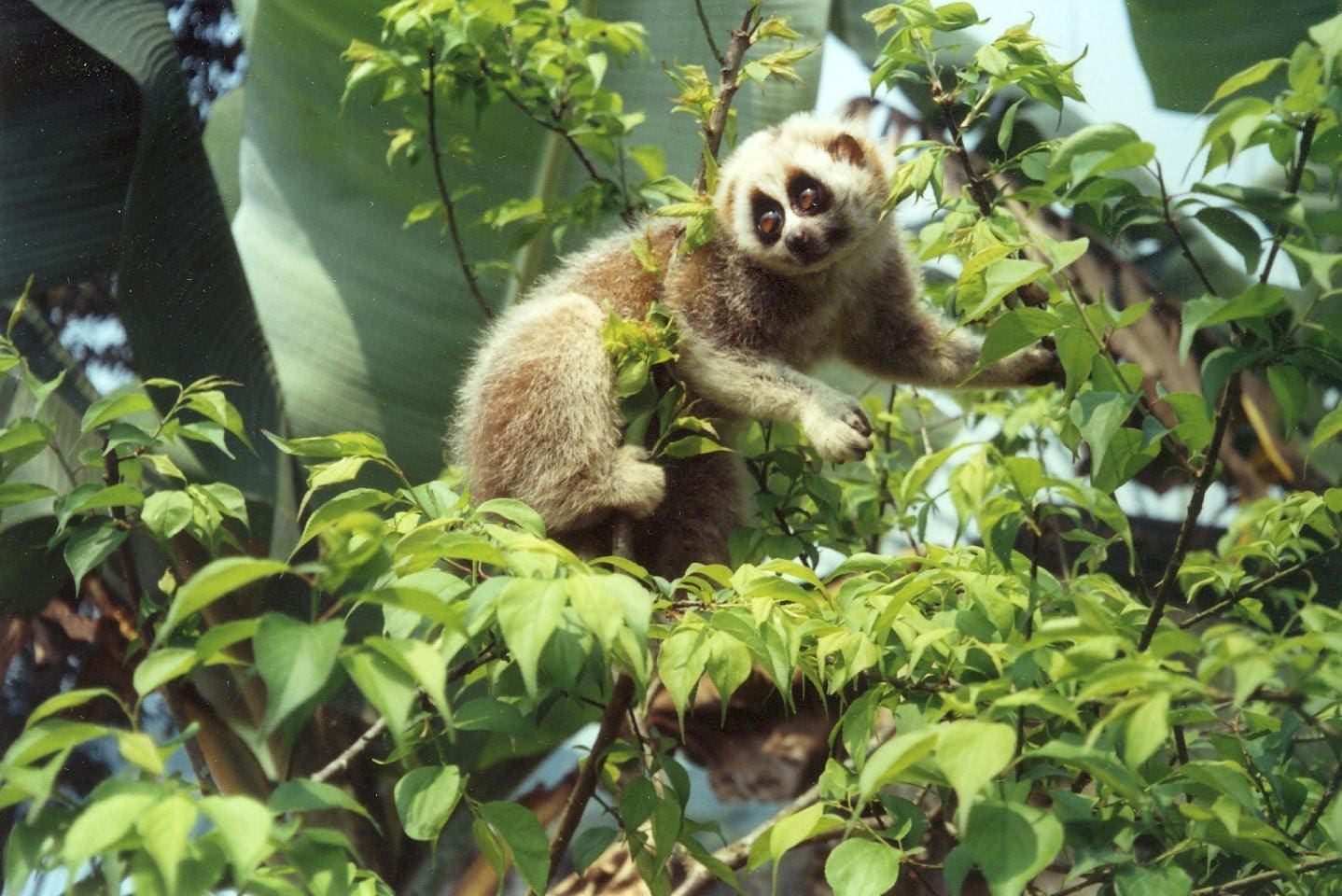
What creature has large eyes, dexterous feet, and is the only venomous primate known to exist?? 

The slow loris (Nycticebus)!

Image Credit: Helena Snyder (CC BY-SA 3.0 via Wikimedia Commons)

Sometimes the smallest creatures hide the largest secrets/mysteries. At just about 10 inches long and weighing up to 2 pounds, the slow loris is, in my opinion, no exception. This small, tailless primate with large (and iconic) moon-like eyes inhabits rainforests. As omnivores, slow lorises feed on both fruit and insects. There are nine species total, all inhabiting the Southeast region of Asia ranging from the islands of Java and Borneo to Vietnam and China.

True to their name, slow lorises are not light on their feet and move slowly. Despite this, slow lorises are not related to sloths, but are instead more closely related to lemurs. But in the rainforest, that’s not such a bad thing. Their leisurely, creeping gait helps them conserve energy and ambush their insect prey without being detected.

Adaptations

Living in the dense, verdant rainforest isn’t for everyone.The jungle is riddled with serpentine vines, thick vegetation, and towering trees. But slow lorises have developed multiple adaptations that allow them to thrive in such an environment. 

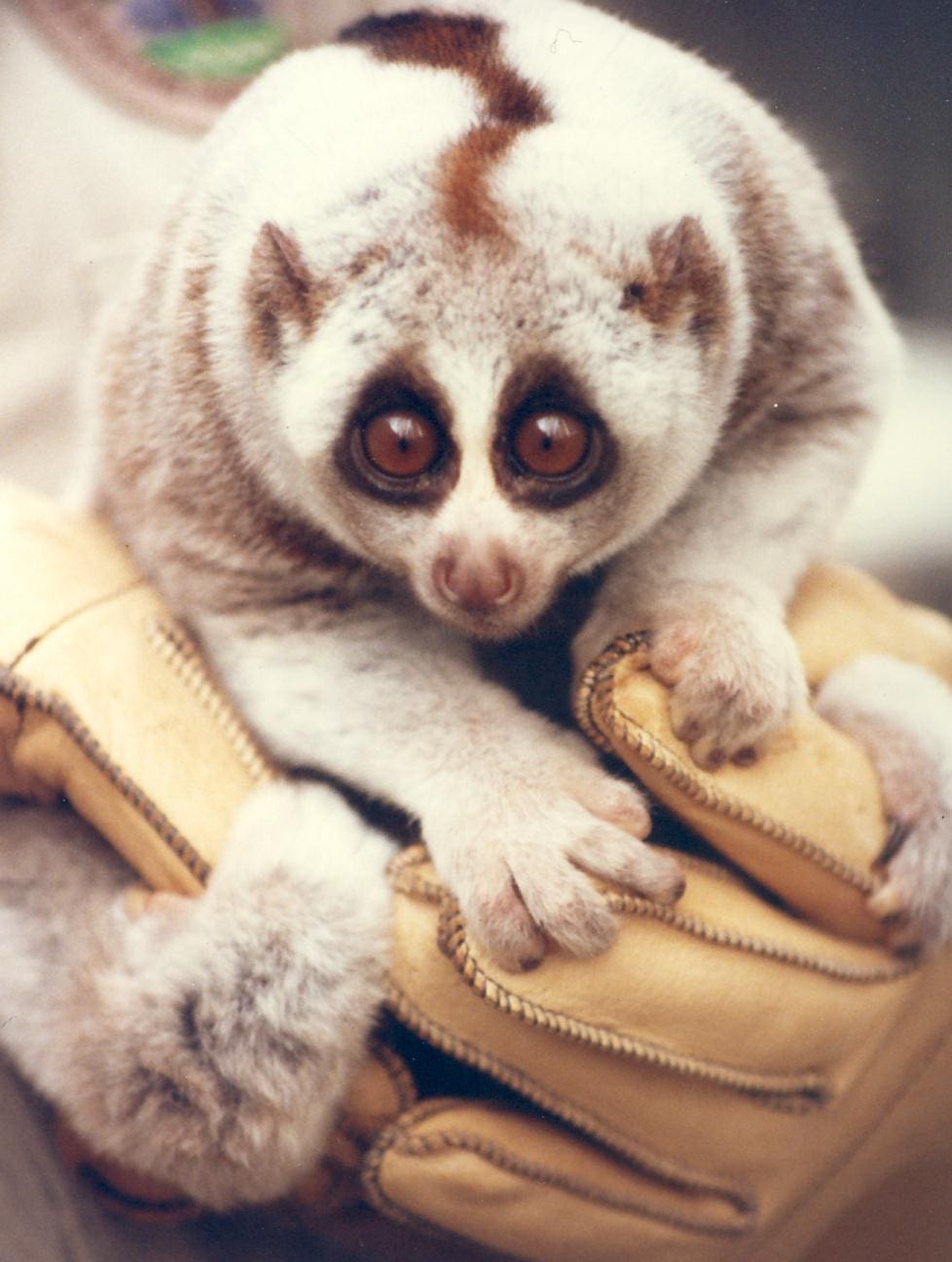
  Their fur markings serve as a warning to other animals that they are not to be trifled with. This is known as aposematic colouration. Similar to skunks, contrasting fur colors and shapes signal that they are venomous which makes predators think twice about attacking. 

Slow lorises are nocturnal, and those large eyes allow them to significantly dilate their pupils, letting in more light and allowing them to easily see in near total darkness.

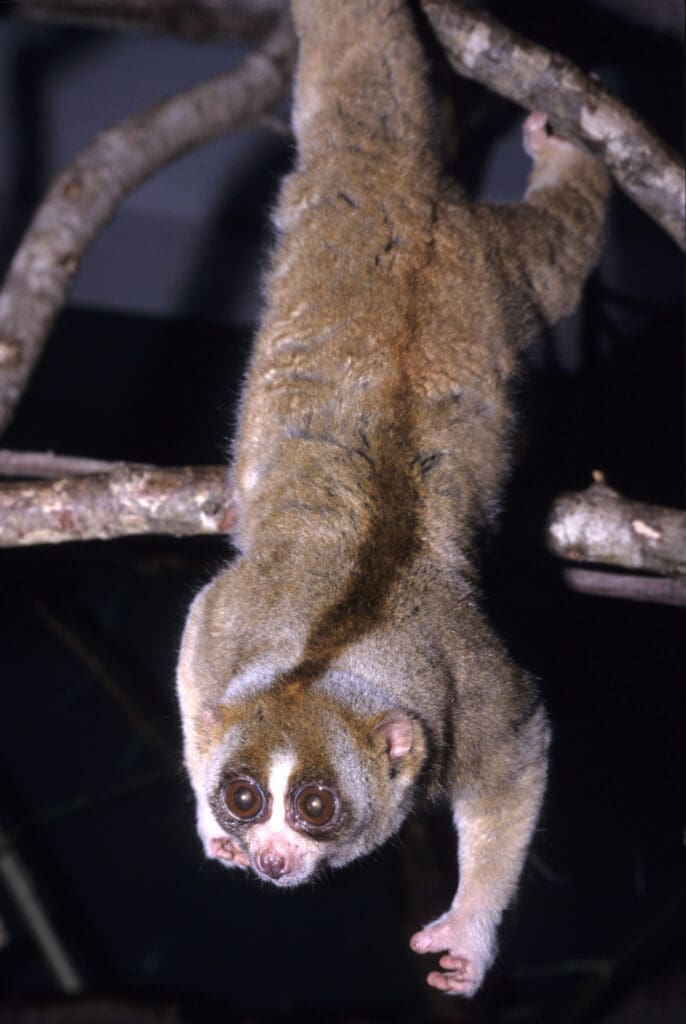
Even eating is no small feat in the rainforest. Slow lorises have specialized bottom front teeth, called a toothcomb. The grouping of long, thin teeth acts like a hair comb, allowing the slow loris to strip strong bark and uncover nutritious tree gum or sap. Equipped with an impressively strong grip, they can hang upside down and use their dexterous feet to hold onto branches while reaching for fruit just out of reach for most other animals. A network of capillaries called retia mirabilia allows them to do this without losing feeling in their limbs. With these adaptations, slow lorises are ideally suited for a life among the trees.

       Image Credit: David Haring (CC BY-SA 3.0 via Wikimedia Commons)

Venemous Primate

Slow lorises are the only venomous primate on Earth. They have brachial glands located in the crook of their elbow that secrete a toxic oil. When deploying the toxin, they lick this gland to venomize their saliva for a potent bite. And no one is safe– slow lorises use this venom on predators, and even each other. Fiercely territorial, they are one of the few species known to use venom on their own kind. In studying this behavior, scientists have found many slow lorises, especially young males, to have bite wounds.

The venom can be used as a protective, preventative defense mechanism as well. Female slow lorises have been observed licking their young to cover them in toxic saliva in hopes of deterring predators while they leave their babies in the safety of a tree to forage.

Whether you’re a natural predator, human, or another slow loris, a bite is very painful. Humans will experience pain from the strong bite, then a tingling sensation, followed by extreme swelling of the face and the start of anaphylactic shock. It can be fatal if not treated in time with epinephrine.

Image Credit: Helena Snyder (CC BY-SA 3.0 via Wikimedia Commons)

Bridging Human-Animal Conflicts

There are two major threats to slow loris populations – the illegal pet trade and habitat destruction. Because of their unique cuteness, soft fur, and small size, these creatures are often sold as illegal pets. Poachers will use flashlights to stun and capture the nocturnal slow loris, clip or remove their teeth  to avoid harmful bites to humans and, because of their endearing, teddy bear-like appearance, sell them off as pets. Slow lorises are nocturnal and not able to withstand the stress of being forced to be awake during the daytime. They are also often not fed a proper diet of fruit, tree sap, and insects which leads to nutritional deficiencies and poor health.


Habitat loss from agricultural expansion is another threat. As farms grow, slow loris habitat shrinks. Land cleared to plant crops encroaches upon the rainforest which results in less territory and food sources for the slow loris.

However, one scientist found a way to reduce the canopy-loss from farming and restore slow loris territory. After observing wild slow lorises using above-ground water pipes to traverse farmland, researcher Anna Nekaris had an idea. Through her organization, the Little Fireface Project, she worked with local farmers to add more water pipes to act as bridges for slow lorises to use to move about the area. These unnatural vines provided a highway connecting isolated spots of jungle to each other. Not only did the slow loris population benefit by gaining more arboreal access to trees and food sources, but the community also benefited. Nekaris worked with the farmers to provide more water pipes to their land while showing human-animal conflict can have a mutually beneficial solution.

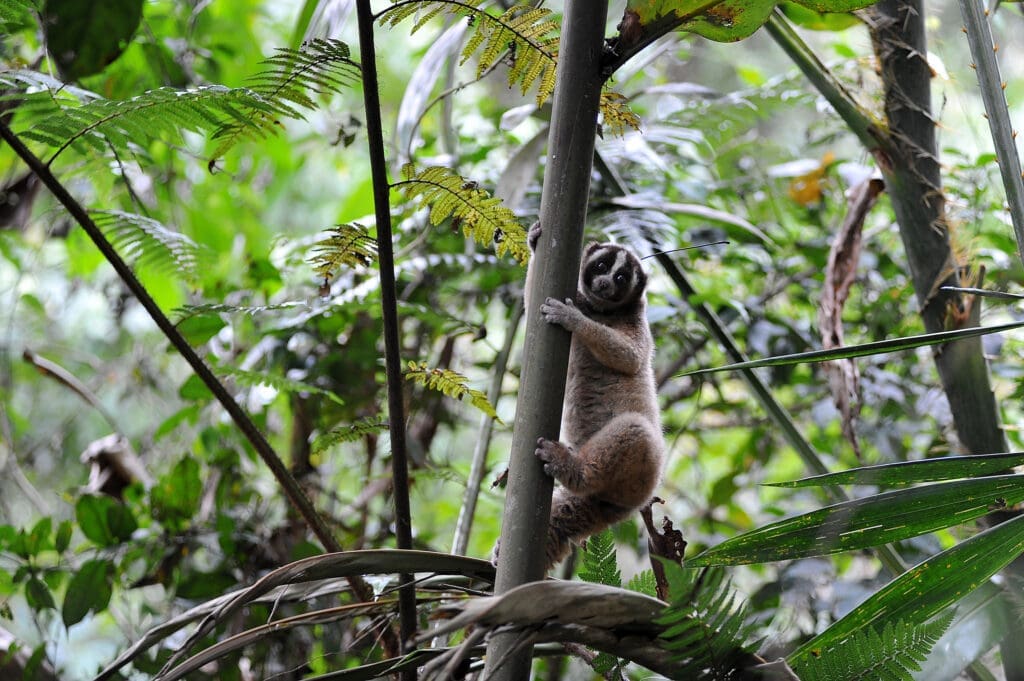
Image Credit: Jefri Tarigan (CC BY-SA 4.0 via Wikimedia Commons)

Conservation

Every species of slow lorises is threatened, according to the IUCN, which monitors wild populations. Slow lorises may seem like an odd and somewhat unimportant creature on the grand ecological scale, but they are very important pollinators. When feeding on flowers, sap, or fruit, they are integral in spreading pollen and seeds across the forest. Through foraging and dispersal, slow lorises maintain the health of the ecosystem’s flora. 

The slow loris garners attention for its cute looks, but beneath its fuzzy face and moon-like eyes, is a creature connected to the/its environment. Slow lorises are a perfect example of how species are tethered to their habitat in an integral way – their existence directly impacts forest propagation. As a pollinator, they disperse pollen stuck on their fur to new areas and increase genetic diversity throughout the forest. Slow lorises are proof of Earth’s interconnectedness. 

To see the slow loris in action climbing from tree to tree and foraging for food, watch this short video.

Climbing up and away for now,
Joely


Joely Hart is a wildlife enthusiast writing to inspire curiosity about Earth’s creatures. She holds a Bachelor’s degree in creative writing from the University of Central Florida and has a special interest in obscure, lesser-known species.


Sources and Further Reading:

Articles

Scientific Papers

Featured Creature: Banded Sea Krait

What semiaquatic creature has a paddle-like tail, swims through crevices, and can even climb trees?

The banded sea krait!

Photo by Bernard Dupont, CC BY-SA 2.0 via Wikimedia Commons

Did you know that some snakes can swim? Beyond the legends of mighty and fearsome sea serpents, sea snakes exist, and swim through waters around the world, not just the pages of myth and folklore. 

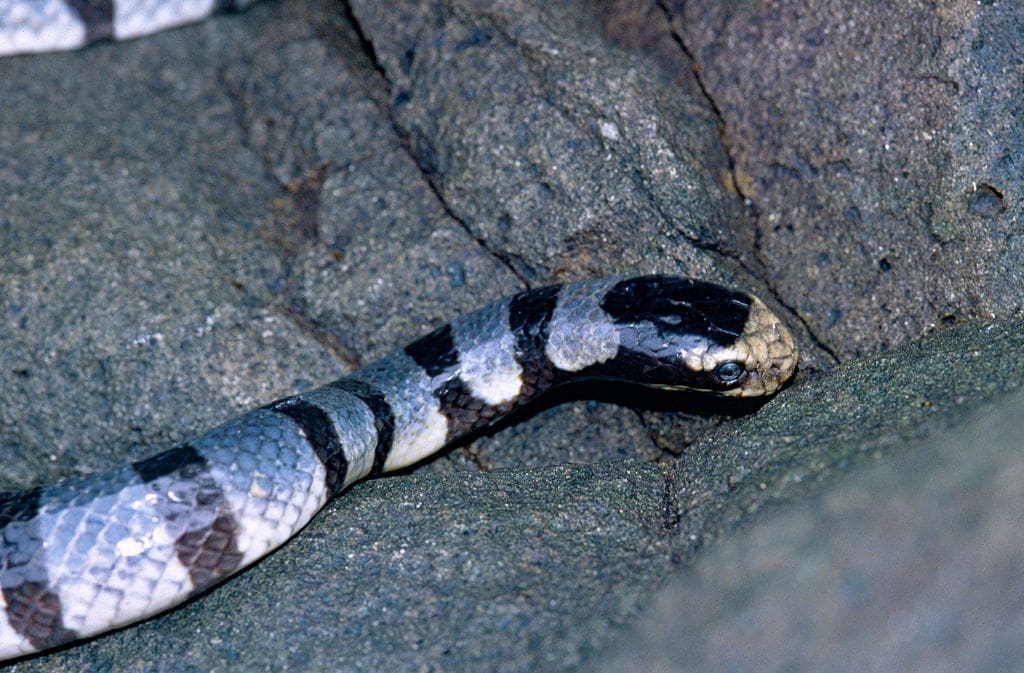
The banded sea krait is a type of sea snake that inhabits the Pacific and Indian Oceans. Males are about 30 inches long, while females can be up to 50 inches long. As the name may hint, the banded sea krait’s bluish-gray body is scored by thick, dark blue bands numbering from 20 to 65. The top half of its body is colored more darkly than its underside, a kind of pigmentation called countershading unique to many sea creatures. Countershading is a type of aquatic camouflage that helps the sea krait blend in with its environment, an adaptation that contributes to these creatures’ survival.

By appearing dark from above, the sea krait becomes challenging to differentiate from the water. By appearing lighter from below, it melds with the sunlight of shallow water. This makes it difficult for predatory birds to spot the sea krait from the sky and conceals the reptile from prey watching below.

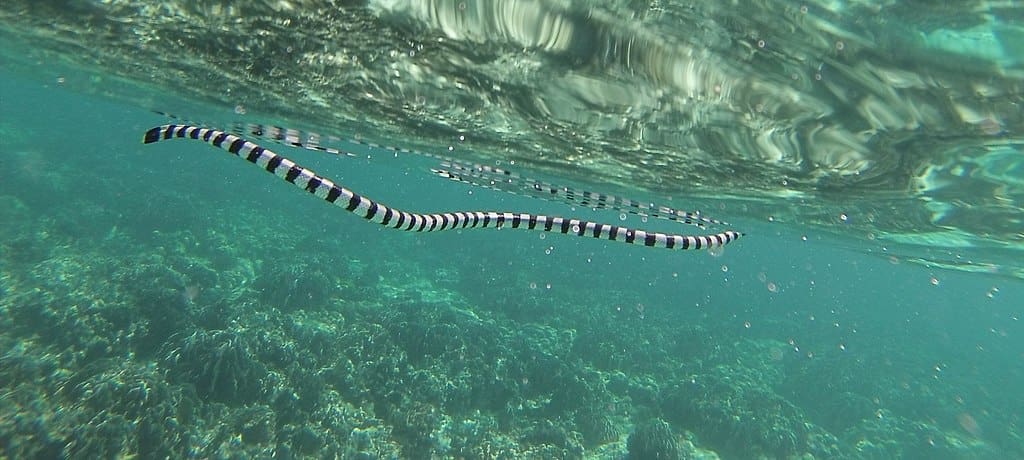
The banded sea krait boasts a specialized tail shaped like a paddle that enables it to swim quickly through the water. These creatures also have valved nostrils to keep out water when diving. Despite spending most of its life in the ocean, the banded sea krait lacks gills and must breathe air. However, it can hold its breath for up to 30 minutes. A unique organ called the saccular lung helps banded sea kraits take in more oxygen when they come up for air. This lung acts like a diver’s oxygen tank. 

Photo by Matt Berger, CC BY 4.0 via Wikimedia Commons

Formidable Feeding Habits

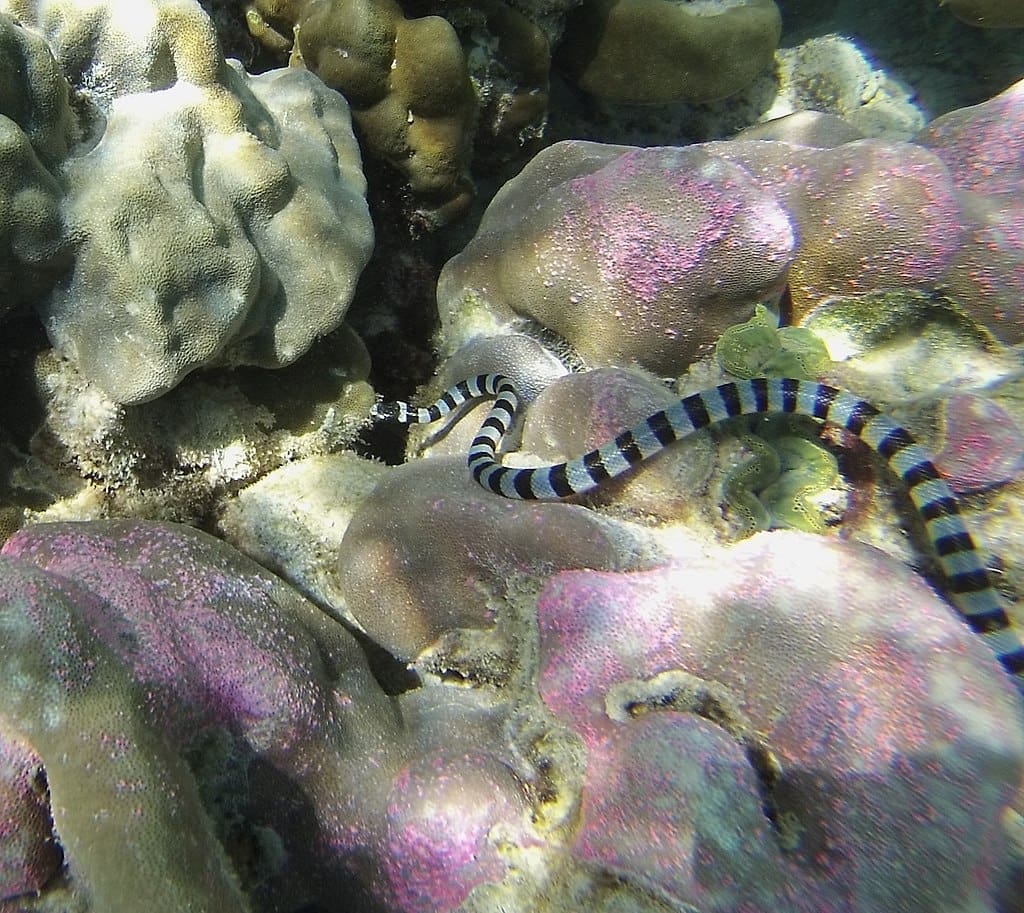
The banded sea krait hunts fish and eels. Its cylindrical body easily weaves through coral reefs and mangrove roots to reach the hiding spots of its prey. Females are up to three times larger than males and prefer to hunt Conger eels due to their size while males often select the smaller Moray eel. Like terrestrial snakes, banded sea kraits swallow their prey whole and can consume eels much larger than themselves. Such a massive meal hinders the ability to swim properly, so the krait must come ashore to digest. This digestion process can take weeks to finish. Talk about a satisfying meal!

Amphibious Nature

Banded sea kraits venture on land to digest food, shed skin, drink freshwater, and lay eggs. They spend about 25% of their time on islands, mangrove forests, or rocky inlets and the rest in the sea. Despite their paddle-like tail better suited for swimming, they travel remarkably well on land, and have even been observed climbing trees. 

Banded sea kraits use rocks to shelter beneath while waiting to digest their food and to rub against to help shed their skin. These reptiles must consume freshwater to survive and find lakes, streams, or puddles of rainwater on land to drink. When it comes to reproduction, eggs are laid under the sand by female banded sea kraits.

Photo by Matt Berger, CC BY 4.0 via Wikimedia Commons

Venom

Banded sea kraits are highly venomous. They inject venom through their fangs, and itis 10 times more potent than a rattlesnake’s! This comes in handy when it’s time to hunt. A banded sea krait may hide among coral crevices and wait to strike a passing eel. Its venom works quickly to paralyze the prey. 

Don’t be alarmed – humans are rarely bitten by these kraits, as they have a very docile and non-confrontational nature. Some people, mostly fishermen hauling up nets, have been bitten in the past (symptoms include seizures, muscle paralysis, and respiratory failure). 

Life Cycle

Aside from their other land-based activities, female banded sea kraits come ashore to lay eggs. They may lay between 5 – 20 eggs, which then hatch in about 4 months. Babies emerge fully capable of surviving the ocean environment and appear as miniature versions of the adult banded sea krait. They will hunt smaller prey until they grow larger enough to take on eels. Banded sea kraits are estimated to live for 20 years in the wild.

Take a look at some of their activities in action: 

And if you’re wondering how a sea krait can swallow an eel whole, watch this video:

From well-recognized animals like the humpback whale and dolphin to the lesser known banded sea krait, the ocean is a haven rich in biodiversity.

Swimming away for now,
Joely


Joely Hart is a wildlife enthusiast writing to inspire curiosity about Earth’s creatures. She holds a Bachelor’s degree in creative writing from the University of Central Florida and has a special interest in obscure, lesser-known species.


Sources and Further Reading:
https://earthsky.org/earth/lifeform-of-the-week-banded-sea-krait-is-a-two-headed-swimming-snake/
https://animaldiversity.org/accounts/Laticauda_colubrina
https://oceana.org/marine-life/banded-sea-krait/
https://www.dovemed.com/diseases-conditions/common-yellow-lipped-sea-krait-bite

Featured Creature: Gila Monster

What creature has a venomous bite and is uniquely adapted to survive harsh desert terrain?

The Gila monster!

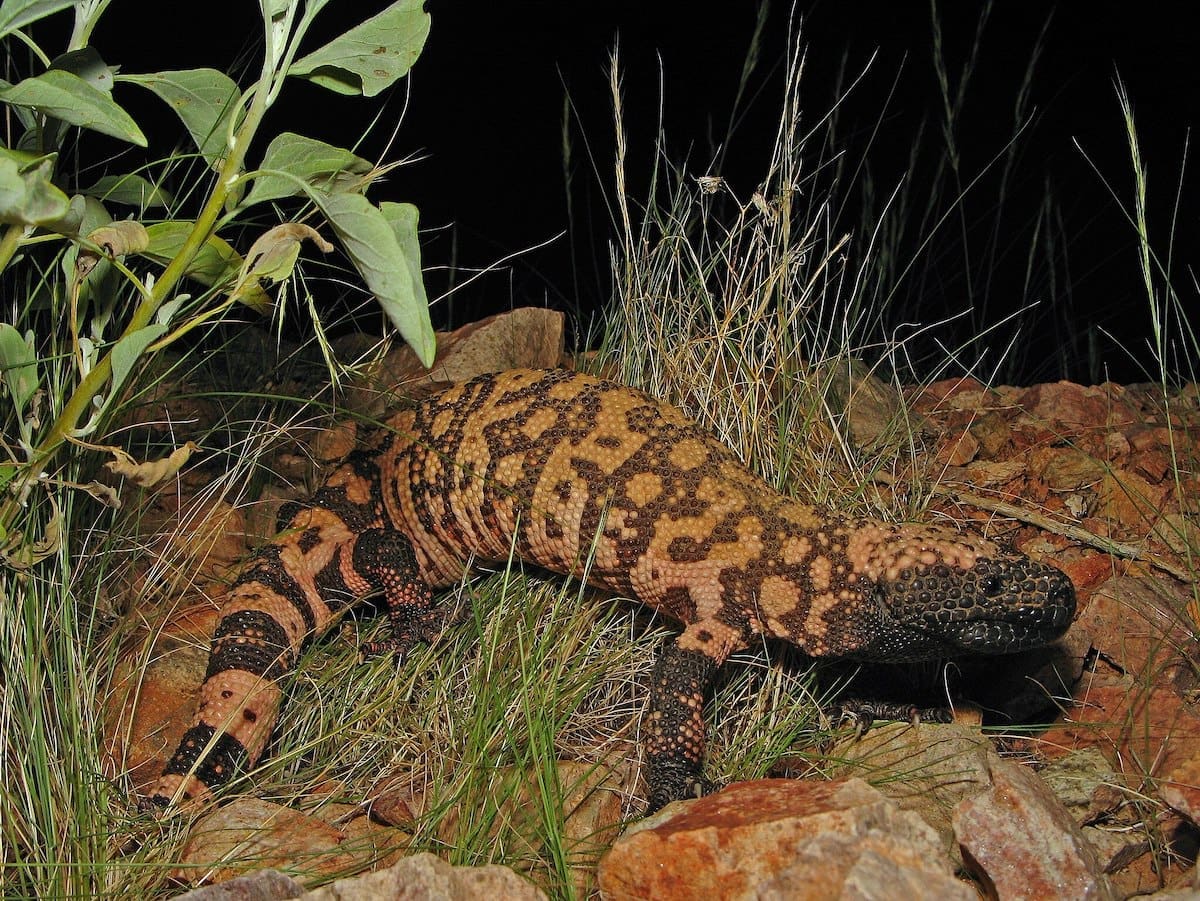
Image by Josh Olander CC BY 4.0 via Wikimedia Commons

Be not afraid! The Gila monster is not a monster at all, but rather a unique lizard with special adaptations. This reptile is native to North America’s Southwest region including Arizona, Utah, Nevada, and Northwest Mexico. It is so named because of its discovery by herpetologist and paleontologist, Edward Drinkerin, in the Gila River basin.

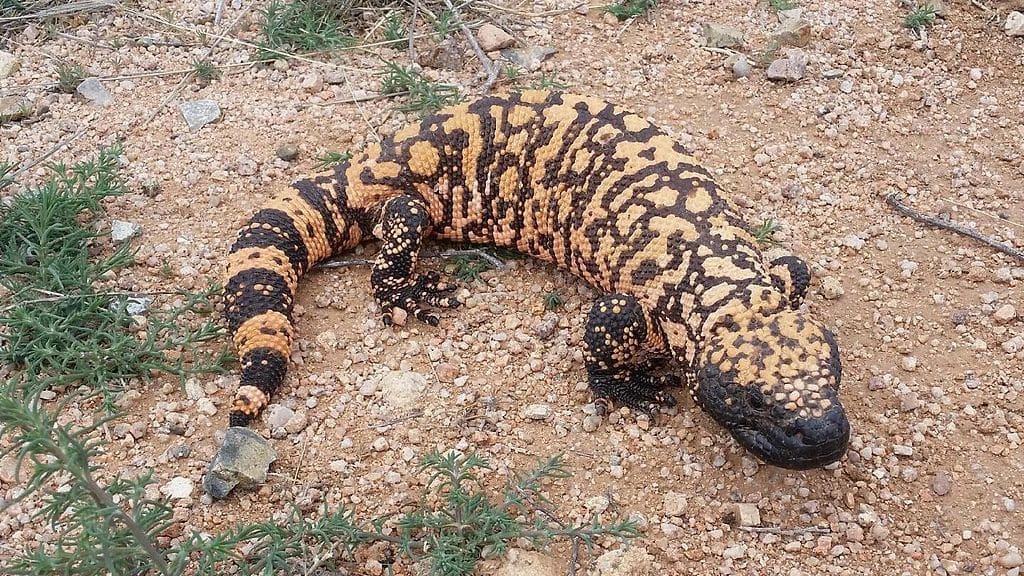
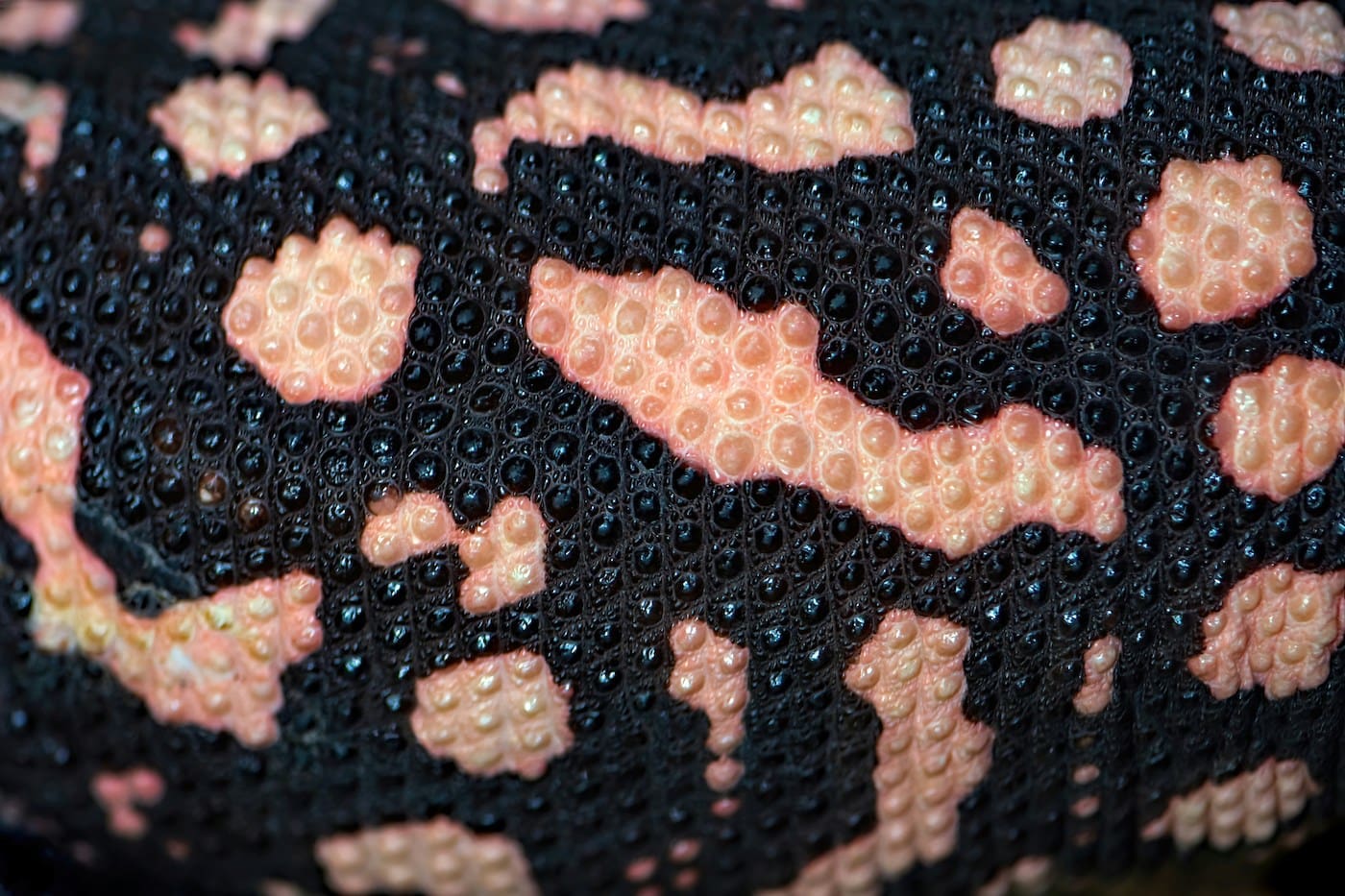
The Gila monster is a lizard of substantial size, weighing about 1.5 – 3 pounds and clocking in at over 1 foot long. Males are characterized by their larger heads and tapering tails, while females have smaller heads and thicker tails. Its black and orange skin is easily identifiable and comes in two patterns – banded and reticulated. The banded and reticulated Gila monsters are recognized as two distinct subspecies.

Reticulate Gila Monster (Image by Jeff Servoss, Public domain via Wikimedia Commons)

Desert Dweller

This creature is suited for hot, arid environments like the Sonoran and Mojave deserts, where tough skin is needed for a tough landscape. The Gila monster’s beaded skin is created by osteoderms, small bumps of bone beneath its thick skin, that armor the lizard against predators and the harsh terrain. 

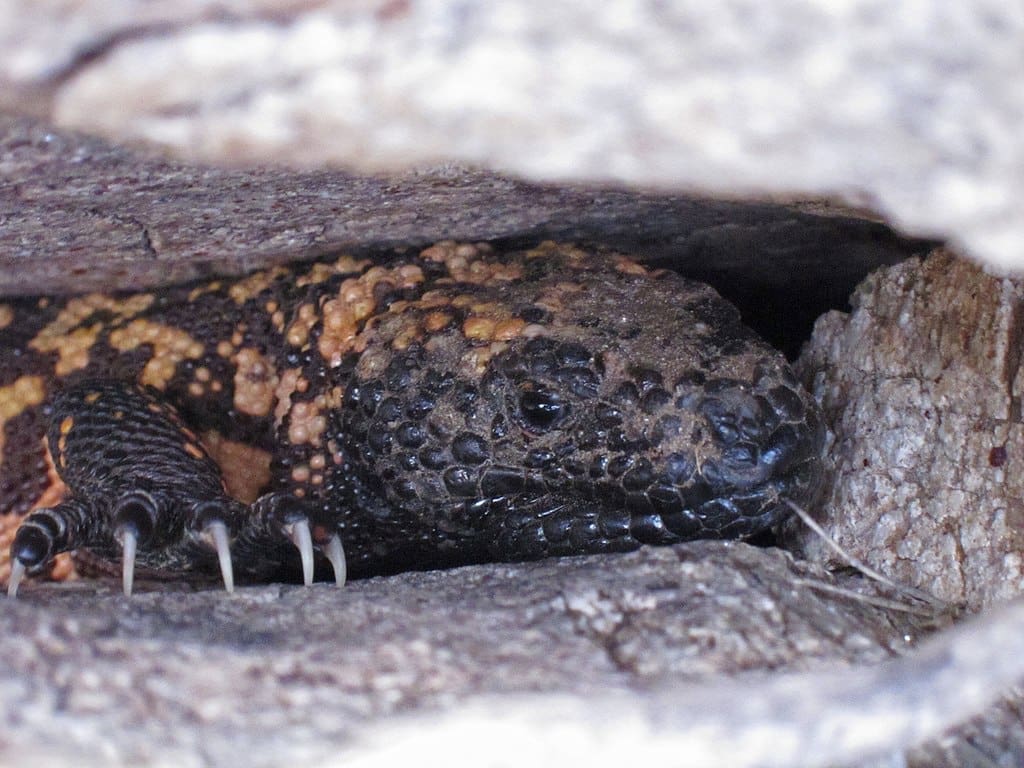
When desert temperatures soar over 105 degrees Fahrenheit (or 40.5 degrees C), even the Gila monster needs shelter from the sun. Like all reptiles, the Gila monster is cold-blooded and cannot regulate its body temperature on its own. So when it gets too hot, the monster needs to retreat to a shady place to cool down – a burrow. Gila monsters are equipped with long claws to dig burrows in the sand. These lizards spend 95% of their time underground to avoid scorching heat and will often sleep during the day to hunt at night.

Image from Unspash by David Clode

Diverse Diet

Gila monsters prey on insects, birds, small mammals, and frogs. They especially have a preference for eggs and will unearth turtle eggs or raid bird nests. Gila monsters use their forked tongue to process scents and track prey. These carnivorous lizards will climb cacti to devour the eggs of a bird’s nest or even stalk a mouse to its burrow in search of young offspring. In harsh environments, sustenance is difficult to come by so when it gets the chance, the Gila monster can eat 35% of its weight in food. Any unused calories are stored as fat in its tail.

When hunting live prey, it subdues its victim by secreting venom through grooves in its teeth. Venom glands are based in the lower jaw and, unlike snakes that strike and inject venom in seconds, Gila monsters must bite and hold or gnaw their prey to release their venom. They have a very strong bite and can clamp on for over 10 minutes.

While the bite of a Gila monster is painful, it is not deadly to humans. Gila monster venom is most similar to that of the Western diamondback rattlesnake, but the amount of venom released into the wound is much lower. Symptoms from a Gila monster bite include extreme burning pain, dizziness, vomiting, fainting and low blood pressure. Because of their solitary and secretive nature, Gila monster bites are very rare and most cases are from improper handling of these creatures. 

Hatchlings

When it comes time to reproduce, female Gila monsters lay 3-20 eggs in their burrows during July. The incubation period for Gila monster eggs can be as long as a human pregnancy, about 9 months. This is unusual as most reptiles incubate their eggs for just 1-2 months. The reason for such a long incubation period is thought to be due to overwintering. 

Overwintering is a survival method where hatchlings emerge from their eggs, but not their nest. Gila monster hatchlings stay in their burrow, waiting for weeks to months, for temperatures to rise and food sources to increase. But how can they survive for months without food? Gila monsters are born with fatty tissue in their tails that permits them to forgo consumption. Additionally, they will eat the nutrient-dense yolk from their egg which provides substantial calories.

Baby monsters are just about 5 inches long and look like a miniature version of an adult. When conditions are right, they will leave their burrow to hunt for insects and begin their solitary life in their desert habitat.

Photo by Michael Wifall from Tucson, USA, CC BY-SA 2.0 via Wikimedia Commons

Cultural Significance

The Navajo revere the Gila monster as a strong and sacred figure. The Gila monster is often called the first medicine man and had healing and divining powers. Now, the Gila monster is Utah’s official state reptile and represents Utah’s connection to both its Indigenous culture and wildlife. 

Despite the recognition, Gila monsters are listed as ‘Near Threatened’ by the International Union for Conservation of Nature (IUCN). There is an estimated population of several thousand left in the wild. Major threats include habitat loss from increased development and illegal poaching for the pet trade.

Venom of Value

The Gila monster’s venom has been a point of interest in the scientific community. While there is no antivenom for bites, there is hope to utilize its venom for medical use. Scientists discovered that a specific hormone within the Gila monster’s venom can alter the way cells process sugar – a potential cure for diabetes. By isolating this hormone, researchers were able to replicate it synthetically. After years of testing, a new drug to help with Type 2 diabetes was released in 2005 under the name Byetta – all thanks to the existence of the Gila monster.

Even the most unlikely organisms can have a great impact on humanity, which is one of the reasons why it is so important to preserve biodiversity. “Monsters”, allies, or wonders – you be the judge. 

Signing off for now,
Joely


Joely Hart is a wildlife enthusiast writing to inspire curiosity about Earth’s creatures. She holds a Bachelor’s degree in creative writing from the University of Central Florida and has a special interest in obscure, lesser-known species.


Sources and Further Reading:
https://www.aboutanimals.com/reptile/gila-monster/
https://blog.kachinahouse.com/the-lizard-in-native-american-culture/
https://www.livescience.com/65093-gila-monsters-photos.html
https://lazoo.org/explore-your-zoo/our-animals/reptiles/gila-monster/
https://www.nhm.ac.uk/discover/the-monster-whose-bite-saves-lives.html
https://kids.frontiersin.org/articles/10.3389/frym.2019.00017

Featured Creature: Asian Giant Hornet

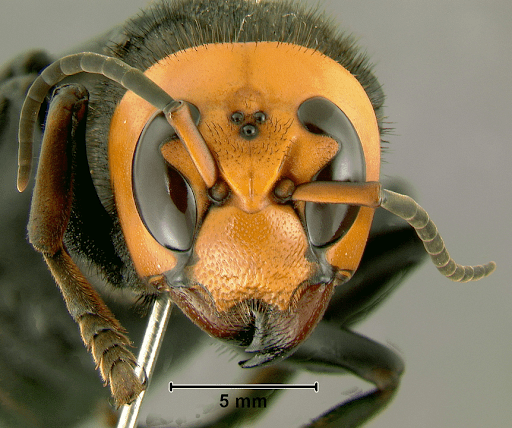
Photo from wikipedia.org

What creature comes from Southeast Asia, is the biggest of its kind, eats animals we need, and  has been tried and convicted of murder in the court of public opinion?

Meet the Asian Giant Hornet!

Warning: This is not your warm and cuddly Featured Creature.  

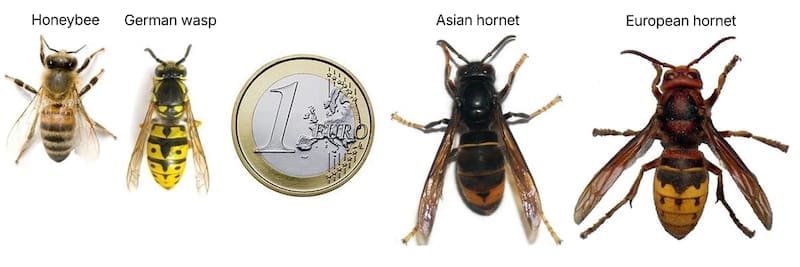
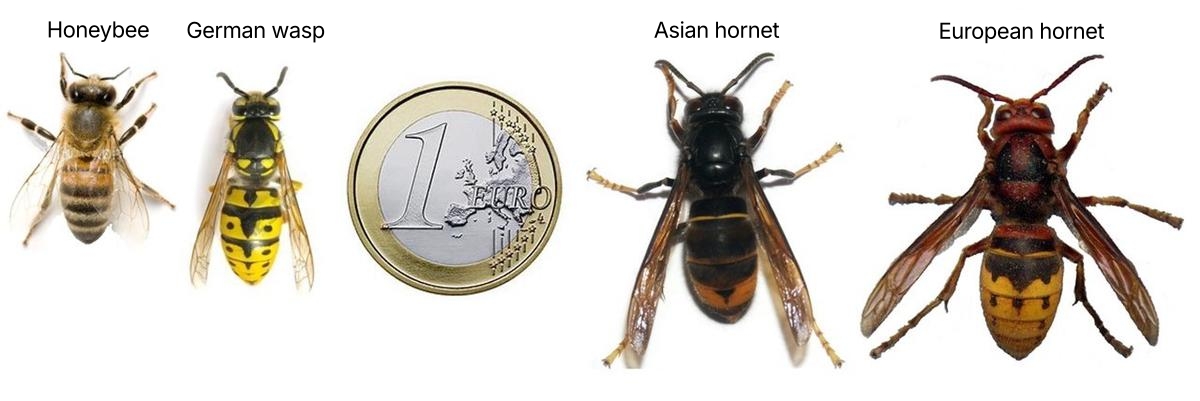
It was a warm and pleasant day last summer, and some of us Bio4Climate folks were entertaining out-of-town guests at our Miyawaki Forest in Cambridge, Massachusetts.  During lunch, a biologist from central Europe expressed horror at the appearance of a “new” insect.  She described it as the largest wasp she had ever seen (the differences between wasps and hornets are primarily coloring and size).

What do you think?

Indeed, it was a new insect in the Western Hemisphere – it landed in France in 2004.  Before then, its home had been limited to Southeast Asia and Japan for 16 million years as a forest dweller that mostly lives in subterranean nests.  Those in the know suspect that it somehow hitched a ride in pottery imported from China.  Perhaps it’s a bit surprising that the hornet’s international travels took so long, given that globalization has been going on for many centuries.

Asian Hornet Size Comparison
Relative sizes for comparison, from vespawatch.be CC BY 4.0 license

In many places where this creature newly appeared, authorities put out the alarm and asked citizens to take a photo of it with their cell phones but do not touch it or disturb it in any way!  It has a quarter-inch stinger and plenty of venom for repeated attacks.  It’s rarely lethal to humans, but the sting has been described as driving a hot nail into your flesh.  “Just tell us where you saw it and we’ll send in experts to try to find its nest” – no simple task with nests that are usually underground.

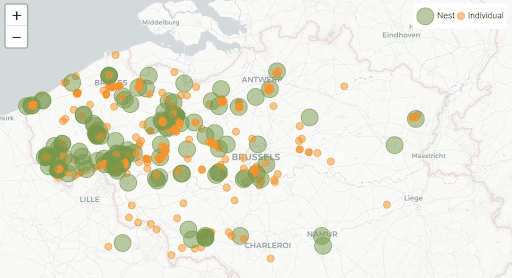
As it happens, people mostly mis-identified other black-and-yellow wasps as Asian Giant Hornets so the alarm was somewhat false – but the threat was real.  And the spread could happen quickly, as it did in Belgium:

Asian hornets in Belgium: August 2018, ©Vespa-Watch
Asian hornets in Belgium: August 2020, ©Vespa-Watch
Asian hornets in Belgium: July 2022, ©Vespa-Watch

If these maps resemble our recent and devastating infectious global invasive-species explosion, Covid-19,  it’s not a coincidence.  Zoonotic diseases – illnesses that jump from nonhuman animal hosts, including insects, to humans – present in patterns that resemble the spread of hornets.  The threat of another potential pandemic, albeit non-microbial, should ring alarm bells everywhere.  

But that’s a story for another day.  The current question is, “Why are we so worried about the Asian Giant Hornet?”  True, it’s a painful sting, but is there something else?

Yes, indeed.

This hornet’s favorite food is honey bees.  The bees don’t stand a chance against these aggressive and much larger adversaries.  A small crew of invaders can decimate a nest of thousands of bees in a few hours.  Their powerful jaws quickly decapitate their victims; they proceed to chew up the body into “meatballs” and deliver the meals to their own offspring.  Hence the nickname “murder hornets,” although that is rather overly dramatic – all carnivores eat other creatures.  After all, it’s an essential job in almost all ecosystems to keep a habitat’s checks and balances are working.

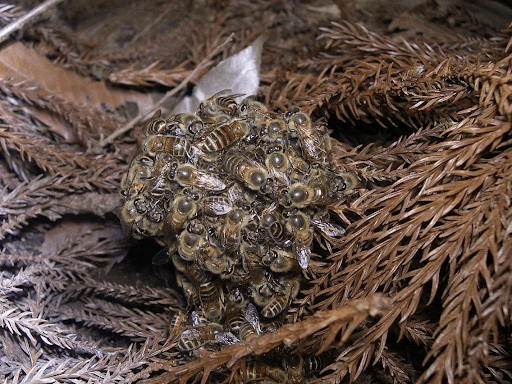
Bees in the hornet’s native South Asian habitat do have a defense, at least against only one or two invaders.  A team of bees surrounds the hornet, beats their wings, and raises the temperature beyond hornet tolerance – and to victory!  

Photo: Takahashi
A defensive ball of Japanese honey bees (Apis cerana japonica) in which two Japanese hornets are engulfed, incapacitated, heated, and eventually killed. This defense is also used against the Asian giant hornet.

Unfortunately, non-Asian bees haven’t had millions of years to figure out how to smother hornets.

Since honey bees are essential pollinators for many crops in addition to producers of honey, the appearance of Asian Giant Hornets in North America in 2019 mobilized beekeepers and agriculture big time.  In 2020 officials warned that if the hornets become established, they “could decimate bee populations in the United States and establish such a deep presence that all hope for eradication could be lost.”  As with many invasive species, when they establish themselves in a new place their natural predators usually don’t come along, and that disrupts the ecosystem’s function.

In the hornet’s defense from a homo sapiens perspective, it has some redeeming qualities. It’s only fair to say that it also attacks what we would call agricultural pests, and its larval silk proteins “have a wide variety of potential applications due to their [many] morphologies, including the native fiber form, but also sponge, film, and gel.”  

Finally, given that every animal eats and gets eaten eventually,

In some Japanese mountain villages, the nests are excavated and the larvae are considered a delicacy when fried. In the central Chūbu region, these hornets are sometimes eaten as snacks or an ingredient in drinks. The grubs are often preserved in jars, pan-fried or steamed with rice to make a savory dish called hebo-gohan. The adults are fried on skewers, stinger and all, until the body becomes crunchy.

In gastronomy, there is hope!


P.S. “Vespa,” by the way, is the genus of wasps and hornets.  So the next time you’re riding your bike and you hear an ever louder buzzing behind you, be grateful when it’s a gas-guzzling scooter and not its eponymous insect.

Extra featured-creature feature, red in tooth and claw: 

By Adam Sacks


Sources:
https://www.discoveringbelgium.com/asian-hornets/
https://en.wikipedia.org/wiki/Asian_giant_hornet
Alfred Lord Tennyson In Memoriam A. H. H., 1850:
   Who trusted God was love indeed
   And love Creation’s final law
   Tho’ Nature, red in tooth and claw
   With ravine, shriek’d against his creed

Featured Creature: Wasps

What creature taught humans to make paper, builds with mud and can pollinate a flower inside a fruit?

Wasps!

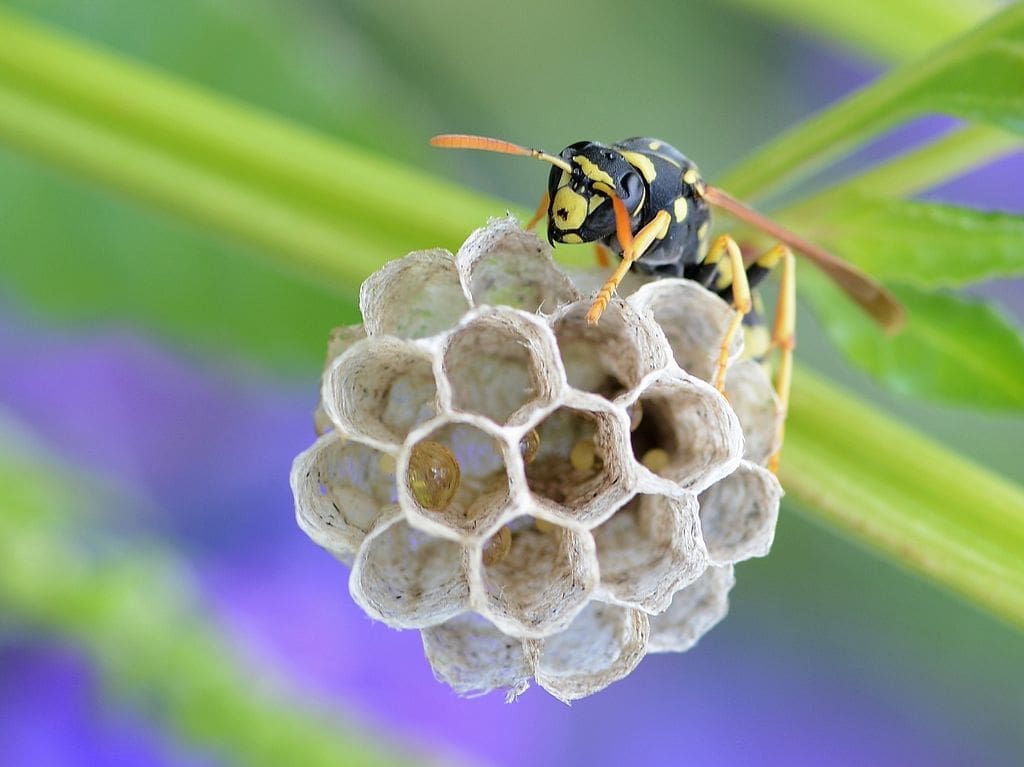
Young paper wasp queen guarding her nest and eggs.
Alvesgaspar (CC BY-SA 3.0 via Wikimedia Commons)

When creatures possess a defense mechanism capable of hurting us (like a sting), we categorize them as ‘dangerous.’ When they look differently than we do, we categorize them as ‘strange,’ and when they get attracted to man-made cities or agricultural fields due to the buffet of food we lay out for them, we categorize them as a ‘nuisance.’ When it comes to wasps, we call them all the above. 

Whenever a creature has a negative reputation, people wonder, “Why do we even need them? Can’t we just get rid of them?” It’s a painful reminder of the Ego mindset, the one that sets us above other species. But if we take a moment to learn about other creatures, especially the ones we consider “pests,” we soon move towards an Eco mindset. We begin to realize that all species are important for balancing Earth’s ecosystems, and that each individual brings something unique and irreplaceable to this planet. When we embody the Eco mindset, we no longer see humans as dominant, but as equal participants in nature’s systems.

Wide Range

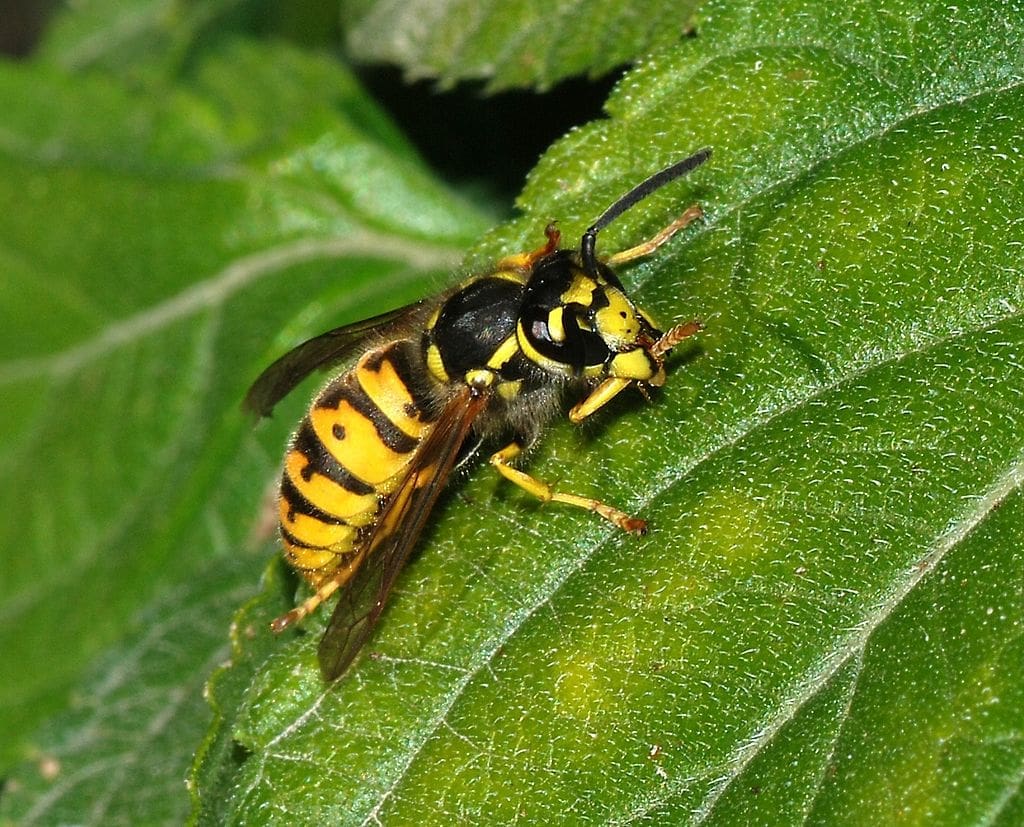
The term ‘wasps’ includes a variety of species that are generally separated by their behavior (and not all of them are yellow and black – in fact, only about 1% of wasps sport those colors). Social wasps, such as yellowjackets and hornets, live in colonies with hierarchies similar to bees and ants while solitary wasps, such as potter wasps, do not. Social wasps start a new colony every spring. Each colony begins with a queen, and she will raise a few worker wasps to enlarge the nest and bring food. Once the nest is spacious enough, the queen will lay eggs, and by the end of the summer there will be thousands of colony members. Throughout autumn, all wasps will perish except for a few new queens. Over the winter, this new set of royalty will find shelter in a fallen log or an abandoned burrow, and when spring returns they will venture out to create new colonies. 

A social wasp (Vespula germanica)
Alvesgaspar (CC BY-SA 3.0 via Wikimedia Commons)

Wonderful Architects

Wasps, unlike honeybees, cannot produce wax. To build nests, most species create a paper-like material out of wood pulp and shape the material into cells perfect for rearing. The manufacturing process involves gathering wood fibers from strips of bark, softening the wood by chewing and mixing it with saliva, and spitting it back out to form the cells. Some species, like Potter Wasps, prefer to design nests from mud.

Theory has it that 2,000 years ago, a Chinese official named Cai Lun invented our modern use of paper after watching wasps build a nest in his garden. So next time you read a book, write a note, or receive one of our letters in the mail, you can thank wasps for their ingenious skills!

Although many of us may not enjoy having a wasp nest in or near our home, it’s best to leave them alone when possible. Remember that a colony only lasts for a season, and once the wasps leave you can remove the remaining nest. If you need more convincing for leaving wasp nests intact, keep reading to learn how these creatures contribute to the environment.

Work-oriented

Despite the lack of recognition, wasps contribute to man-made gardens and agricultural fields by eating other ‘pests,’ or insects, that harm crops. Their wide-ranging diet and wide geographical range (they exist on every continent except Antarctica) means they contribute to human food sources worldwide. Wasps eat flies and grasshoppers, and will feed aphids to their growing larvae. Some also eat nectar, making them pollinators. Around the world, many farmers consider them essential for their food-production methods. When it comes to food security, we can thank wasps for looking after our crops.

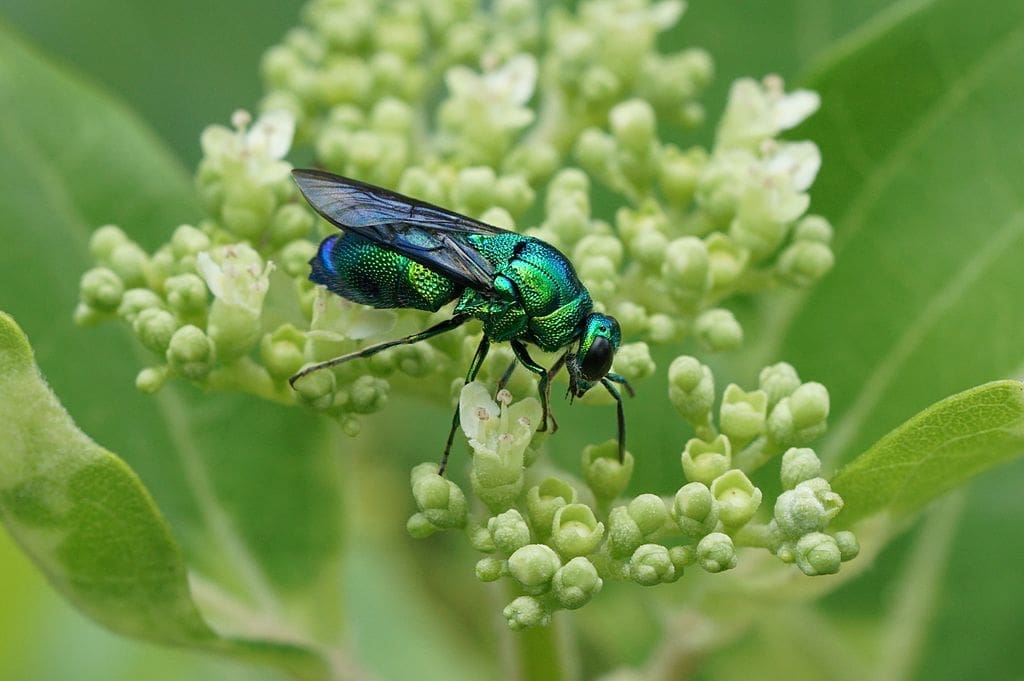
Cuckoo Wasp (Chrysididae)
Vengolis (CC BY-SA 4.0 via Wikimedia Commons)

Well-balanced

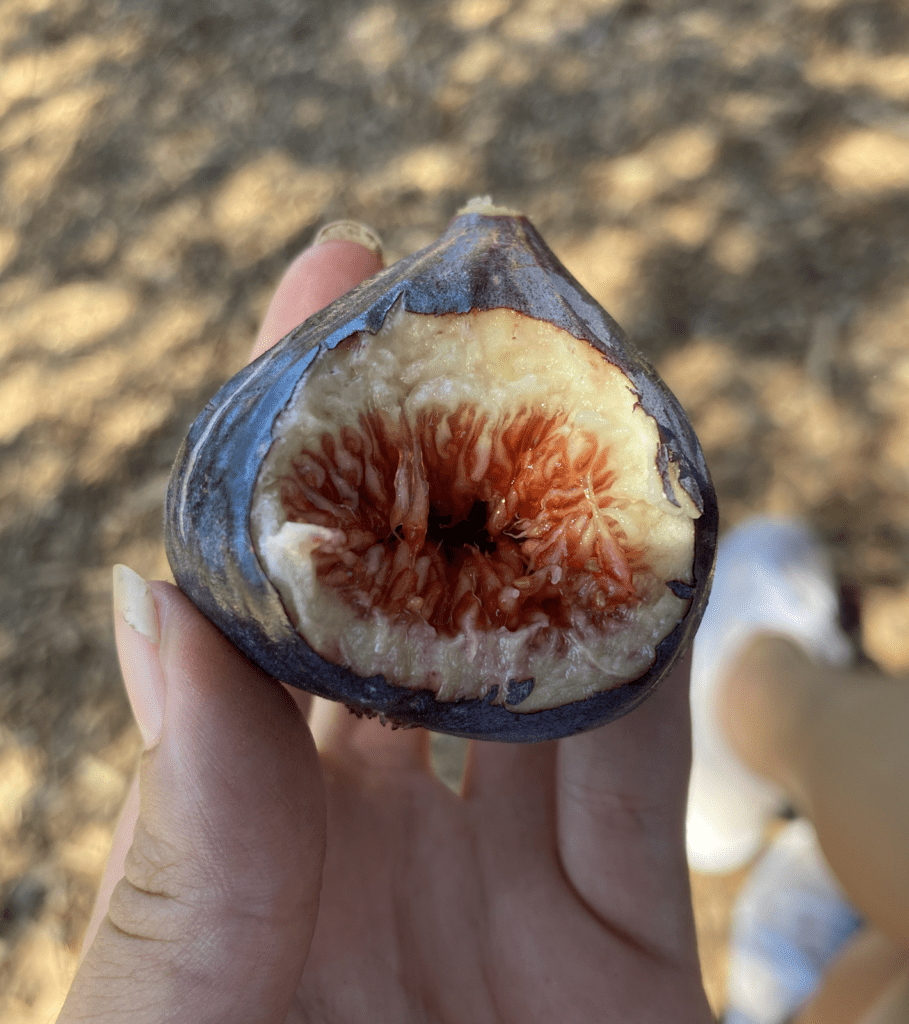
I recently had my first fig, grown organically without any pesticides or chemical fertilizers, ever. It was delicious, and when I asked the manager of Sarvodaya Farm for another, we began to discuss the important role of wasps in fig reproduction.

Although figs are considered a fruit, they are actually an inverted flower. The fig blooms inside the pod, rather than outside, and so it relies on insect pollination to reproduce. It takes a special pollinator to crawl through a small opening and into the fig’s pod to bring the flower its much-needed pollen. Wasps like to lay their eggs in cavities, so they developed a mutually beneficial (or symbiotic) relationship with fig trees. Wasps get a home protected from predators to raise their young, and figs get to reproduce. 

Some species of wasps have developed a similar mutualistic relationship with orchids. The extinction of wasps would not only be detrimental for figs, orchids, and other plants that rely on insect eaters or pollinators, it would also be tragic for the many organisms that eat those plants (which, as a new fig fanatic, now includes me). 

My first fig ever, from Sarvodaya Farms, where I learned about the mutually beneficial relationship between figs and wasps

Warriors of disease

In case the invention of paper, crop protection, and pollination were still not enough to impress you, one species of wasp found in Brazil also produces a toxin in its venom that contains cancer-fighting properties. Even the substance that enables some wasps to kill larger prey contains healing properties. 

By writing about creatures a lot of people see as ‘pests,’ I hope to do my part in speaking against the way we view and treat other animals. I also hope these stories encourage you to take the time to learn from our non-human neighbors. Cai Lun demonstrated the incredible tools we can design when we look to nature for inspiration, a practice known as biomimicry. The solutions are all around us, but it’s up to us to be still, inquisitive, and open-minded, and to let nature show off her magic. 

Wishfully yours,

Tania


Tania graduated from Tufts University with a Master of Science in Animals and Public Policy. Her academic research projects focused on wildlife conservation efforts, and the impacts that human activities have on wild habitats. As a writer and activist, Tania emphasizes the connections between planet, human, and animal health. She is a co-founder of the podcast Closing the Gap, and works on outreach and communications for Sustainable Harvest International. She loves hiking, snorkeling, and advocating for social justice.


Featured Creature: Poison Dart Frog

pixabay.com

What creature the size of a paperclip is lethal enough to kill ten grown men?

The poison dart frog!

pixabay.com

What makes the poison dart frog so powerful?

Poison dart frogs – so named because the Indigenous Emberá people of Colombia traditionally used the venom in blow darts – are some of the most toxic creatures on Earth. Some carry enough poison to kill ten grown men or to poison 20,000 mice. 

This potent toxicity originally comes from plant poisons that were ingested by the frogs’ insect prey. The effects of this diet, whose repercussions pass from plant to insect to frog to human hunters, shows just how interconnected these ecosystems are. Though it’s not established how the plant poison is processed into venom, when poison dart frogs are bred in captivity and fed a different diet, they do not develop the venom. 

Why are poison dart frogs so colorful?

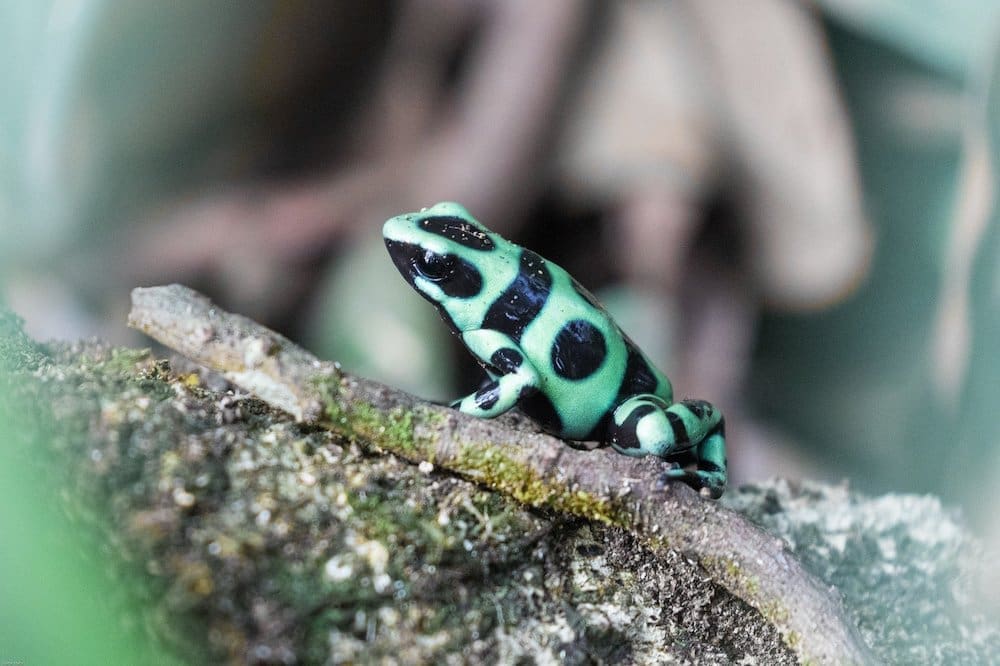
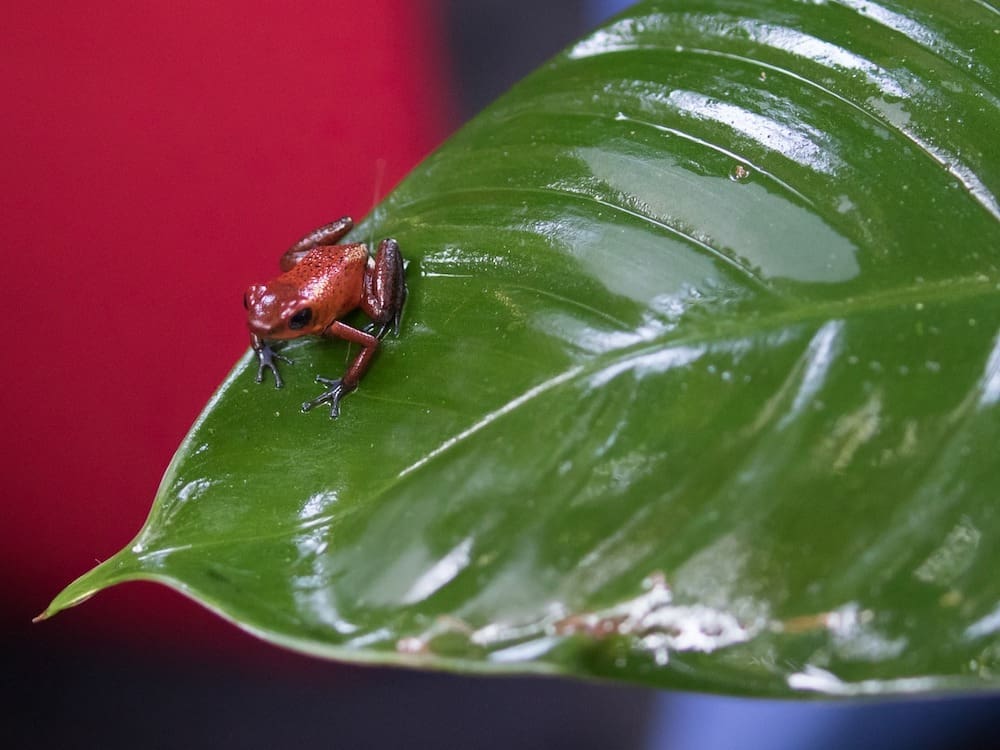
The poison dart frog uses bright colors and patterns as a warning to predators – do not attack if you wish to live! Various species come in bright yellow, turquoise and black, or strawberry red, and these eye-catching visuals broadcast to predators that they’re venomous and dangerous. 

They use poison in self-defense, not in hunting, excreting venom into their skin when they’re threatened, so that a single touch would be enough to stop a human heart. This is such an effective tool that many species have evolved to mimic the bright colors and patterns of poison dart frogs in order to get some of that protection from predators by association. 

What are other characteristics of poison dart frogs?

They’re tiny! Grown adult frogs typically measure one to two inches, and can be held on a single fingertip (though you wouldn’t want to try this at home).

pxfuel.com

Like all frogs, they’re amphibious, which means they lay eggs that hatch tadpoles, and have permeable skin through which they can absorb water and oxygen. 

How are human activities impacting poison dart frogs?

Deforestation is one of the biggest threats to the poison dart frog. Poison dart frogs are spread across the rainforests of Central and South America. There are over one hundred species of them, and new ones continue to be found! However, habitat loss across these areas, especially in the Amazon, put them at risk of extinction.

Check out this brief look at the life of one golden dart frog:

These bright creatures may be dangerous, but they are just as dazzling. They show that brilliant things can come in small packages.