
.jpg)
What creature is considered a trickster in Indigenous culture, and the namesake for one of the most popular superheroes of all time?
The Wolverine! (Gulo gulo)
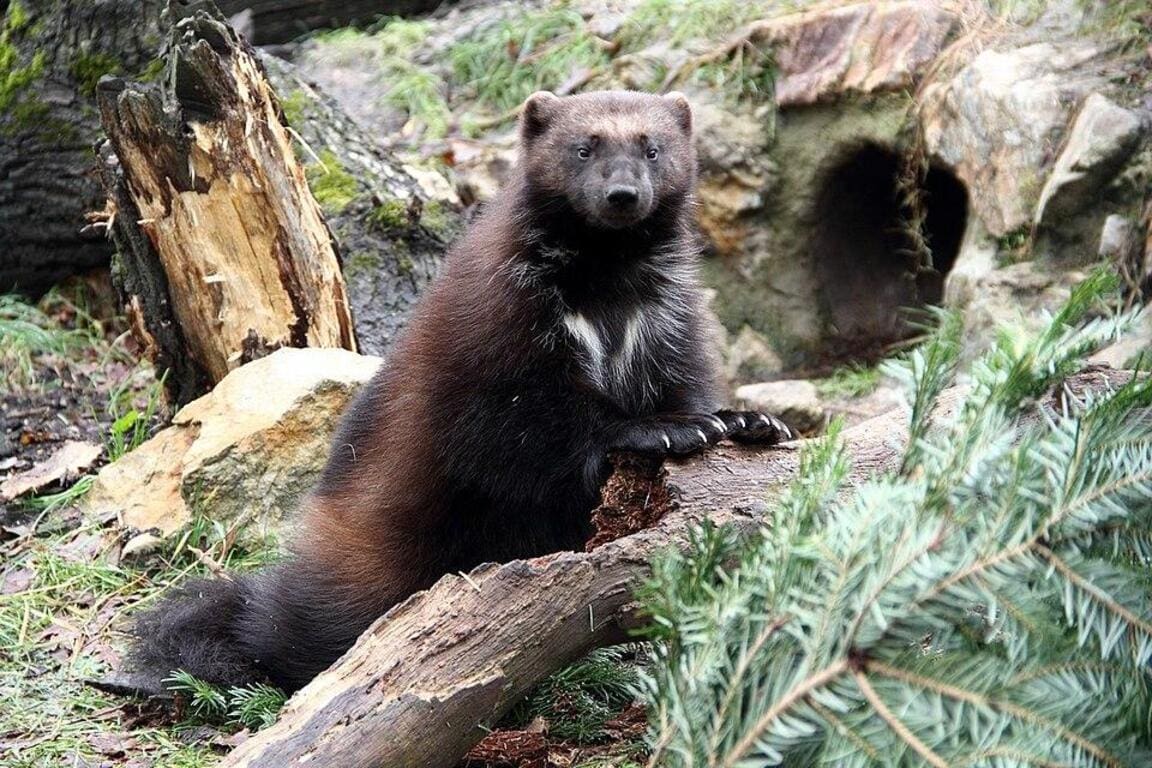
When I was in fourth grade, we were assigned creatures about which to write essays. I was given the wolverine. Back then, the only thing I knew about the wolverine was that it was the name of a superhero in X-Men. But as I researched more about the animal, I learned that the wolverine is just as cool as a superhero!
Wolverines are the largest animal of the Mustelidae family, which includes weasels, badgers, and sea otters, among others. Wolverines are mostly found in cold remote climates, as in northern Canada, Russia, and Siberia. There have also been reports of wolverines in Ukraine and Latvia. If you’ve ever seen a wolverine in the United States, you should consider yourself lucky! Wolverines have only rarely been spotted in North America.
If you ever encounter a wolverine in the wild, think twice before getting close!
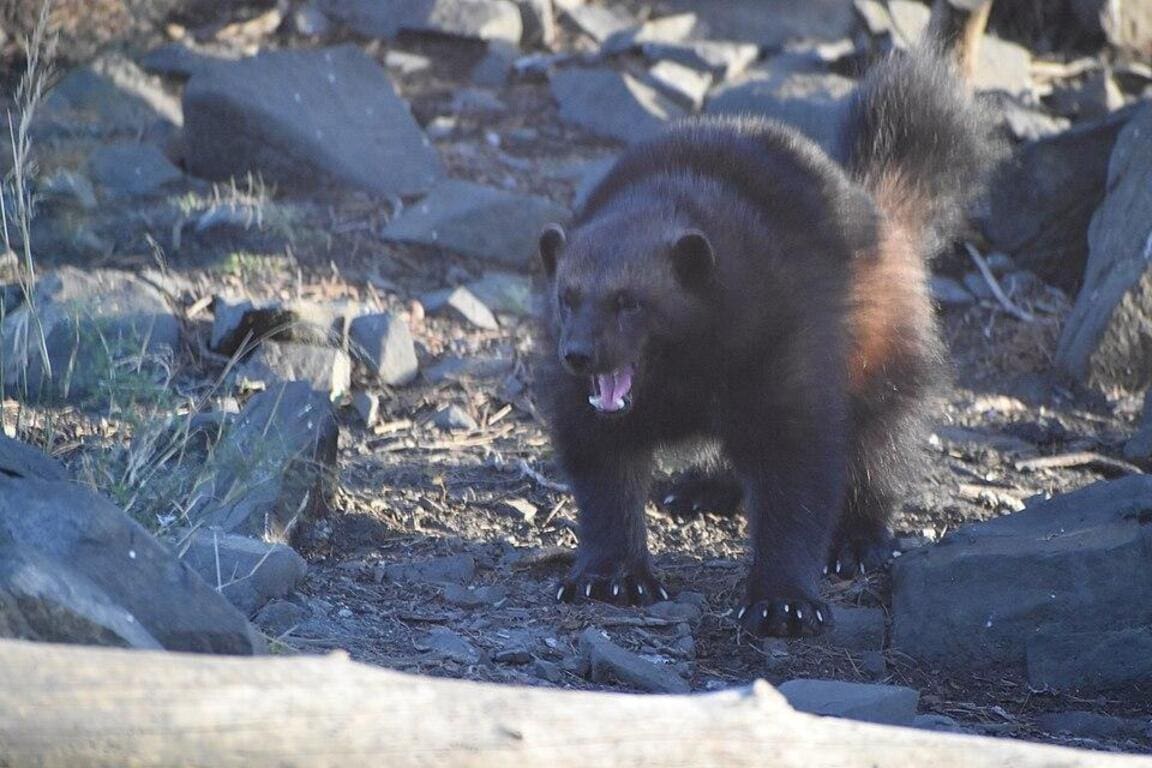

Wolverines—The Trickster Animal
Wolverines can be found in various oral histories and mythologies from many Algonquian tribes, as well as the Innu people of Quebec. Even though several different cultures mention the wolverine, they all categorize the animal with the same label—a “trickster.” The Innu believe that the wolverine created the whole world, gathering up all the animals into a boat like Noah’s Ark. While the Innu sees the wolverine as more of a funny trickster, other tribes like the Mi’kmaq and the Passamaquoddy see the wolverine as more dangerous. They view the animal as a thief, and a companion to the wolf. The Dene tribe also views the wolverine as a trickster, but one that can shapeshift into other creatures.
So, why do all these tribes classify the wolverine as a trickster? Certainly the trickster is a much studied aspect of cultures worldwide, but I’d like to offer my personal take.
Wolverines are around the size of a medium dog. They are carnivorous scavengers, which means they eat animals who are already dead. Because of their size and dining habits, you might assume that they’re not as dangerous as other carnivores. However, wolverines are known to kill animals much larger than themselves, including wolves, deer, and moose. They also have pungent anal scent glands, which are used for marking territory and attracting mates. This has led to them getting the nickname “skunk bear” or “nasty cat.”
This is where my theory comes from: Imagine you’re walking outside, and you see a dog. You’ve never seen a dog that looks like this before, but it’s small and cute, so you go to pet it. But before you do, a deer walks by, and the dog attacks it. You watch this dog kill a deer about five times its size and start feasting on its body. If that wasn’t enough, the dog just absolutely reeks!
I imagine that the Indigenous tribes who first interacted with the wolverine were shocked by its behavior and labeled the animal as a trickster from then on.
In the Words of Monty Python, “Bring Out Your Dead!”
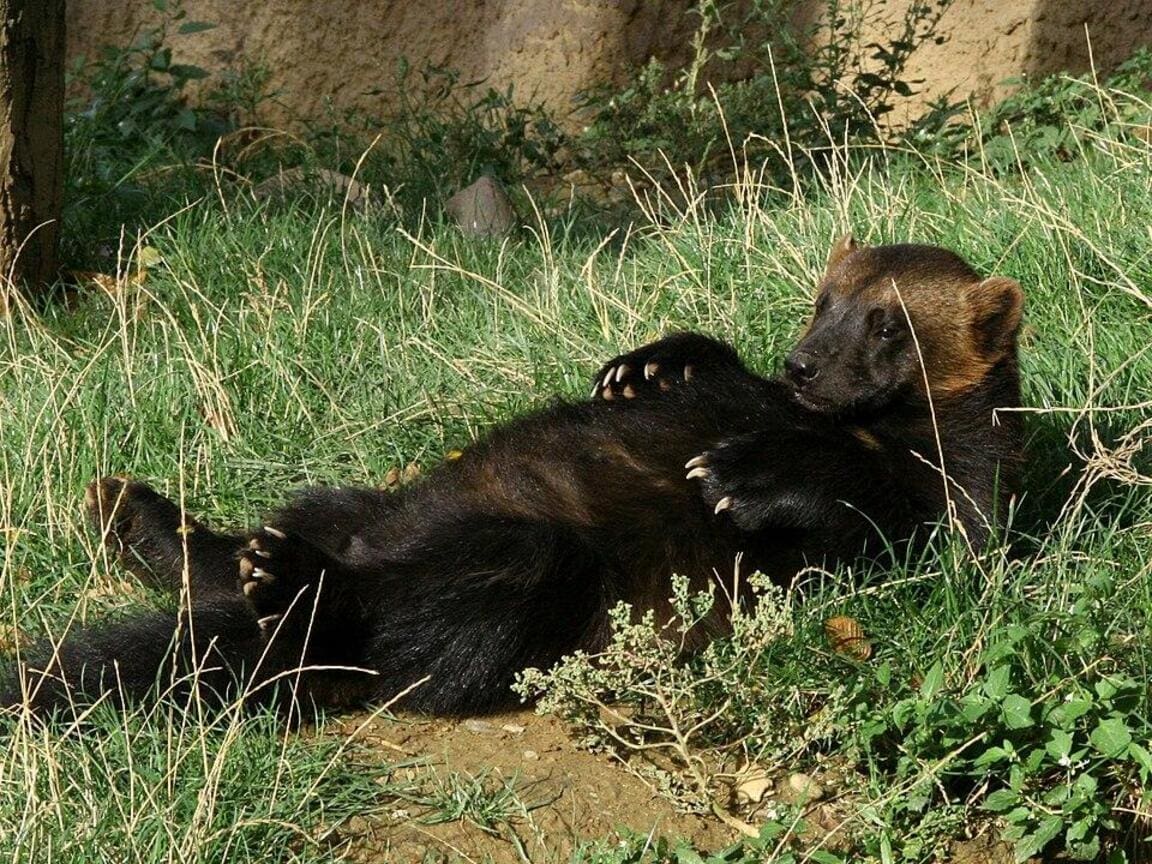

Though their ability to hunt down prey is impressive, it is not the wolverine’s main source of food. Wolverines are scavengers, relying heavily on the carcasses of other animals (carrion), including winter-killed elk, moose calves lost to predators, and avalanche victims. Wolverines have a keen sense of smell that enables them to detect a buried carcass under several feet of snow.
It’s not the prettiest job title, but wolverines are the garbage collectors, sanitation crew, and nutrient recyclers of some of the planet’s coldest, most remote ecosystems. Their remote existence supports ecosystems that other creatures barely reach.
Carcasses attract pathogens and parasites that can spread to other wildlife, and left alone, their frozen bodies would take a long time to decompose in frozen ground. Not only do wolverines reduce the spread of disease, their breakdown of carcasses returns nitrogen, phosphorus, and other nutrients to the soil, feeding everything from microbes to the plants on which herbivores depend.
Wolverines store surplus meat in snow “freezers,” prepositioning food resources across their landscape. Researchers believe this behavior is tied to their denning needs.
Snow-Dependent Species Trying to Survive in a Warming World
Wolverines are adapted to the cold and depend on snowpacks to reproduce and store food. Researchers who mapped 562 wolverine den sites across North America and Scandinavia found that nearly all of them (98%) exist in areas where snow cover persists into mid-May. Female wolverines dig their dens deep into the snowpack, insulating their kits from extreme cold and predators. Snow is essential for their reproduction and survival.
Our warming climate is causing a rapid decline of the spring snowpacks that wolverines need to den, and store their food. Current population numbers reflect this impact. Biologists estimate that fewer than 300 wolverines remain across the entire contiguous United States, with a breeding population of fewer than 50 individuals. In November 2023, the U.S. Fish and Wildlife Service officially listed the North American wolverine as a threatened species under the Endangered Species Act, citing climate-driven habitat loss and fragmentation as the primary long-term threat, with trapping and winter recreation disturbance near den sites supplemental factors.
Because wolverines need such vast, connected, undisturbed territory and such specific snow conditions, they are considered indicator species. They represent a living gauge of healthy, high-elevation snowpack ecosystems. When they are able to survive, it’s a good sign that the underlying systems are holding together. Loss of wolverine populations are an early indicator that the ground systems are unravelling.
So, About That Superhero…
If you were like me in the 4th grade, the first time you heard the name “wolverine” was from the Marvel comic book/movie series X-Men. Of course, the animal came before the superhero, which led me to thinking: Why was Wolverine named after the animal?
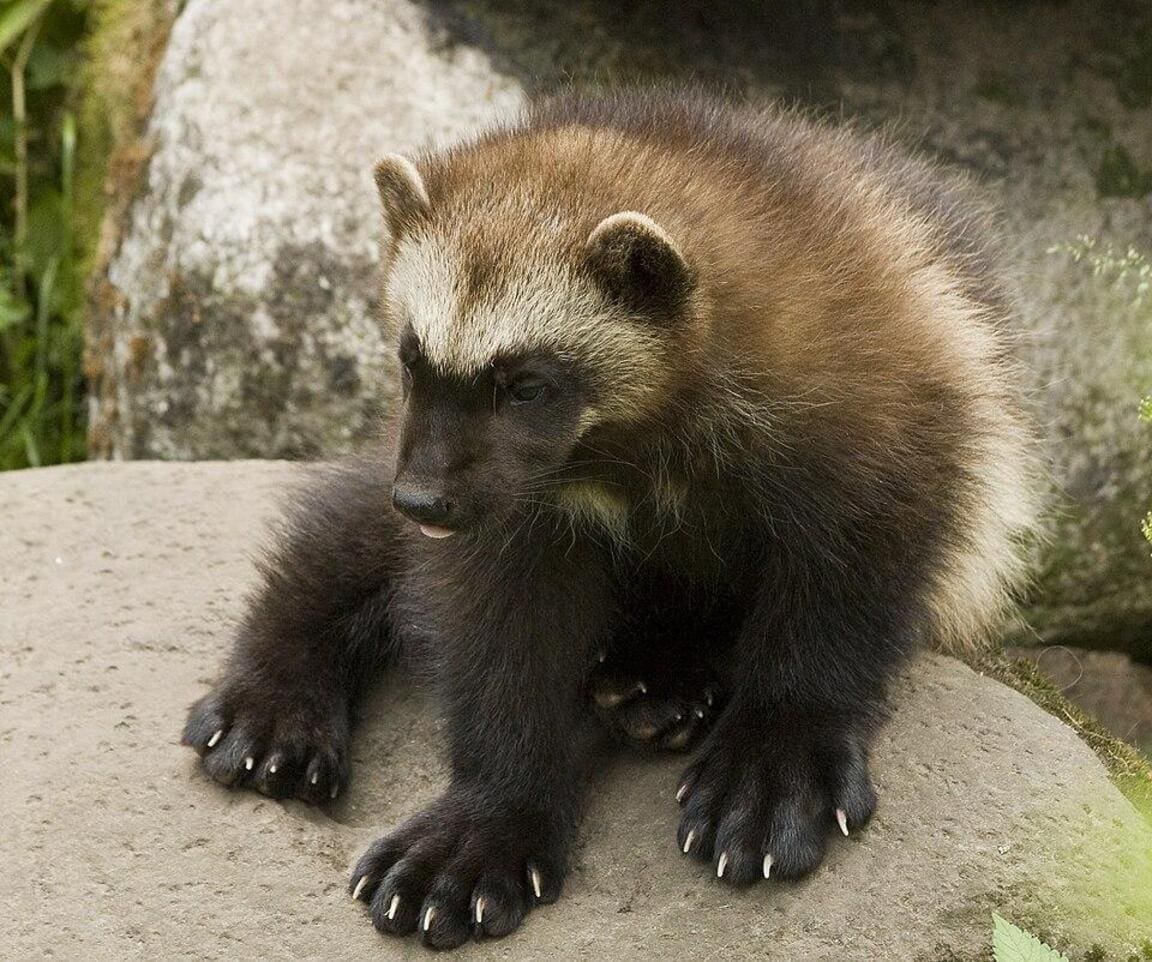
First, if you know anything about the character Wolverine, it’s that he has retractable claws. This is, in fact, the opposite when it comes to the animal. Though they are sharp enough to kill their prey, the wolverine’s claws are non-retractable. Their claws are always out, which helps them not just with hunting, but also for climbing and digging.
Even though Wolverine’s claws are not anatomically identical, everything else about his fighting style is reminiscent of the wolverine. During cage matches, most opponents were bigger than he was, just like a wolverine with its predators. Yet size did not hinder the strength of either one. Wolverine was able to best his enemies with strength, fighting tactics, and all-around ferocity, just as the wolverine does.


Melanie Davis-Kay is a soon-to-be graduate from Lesley College. She was a former volunteer at The Discovery Room inside the Museum of Science. She lives in Arlington, MA.
Sources
- The Wolverine Foundation: General Wolverine Characteristics
- Lynch, Patricia Ann. Mythology A to Z: Native American Mythology A to Z. Facts On File, 2004.
- Millman, Lawrence. Wolverine Creates the World: Labrador Indian Tales. Capra Press, 1993.
- Moore, Patrick, and Angela Wheelock. Wolverine Myths and Visions: Dene Traditions from Northern Alberta. University of Nebraska Press, 1990.
- Pasitschniak-Arts, Maria, and Serge Lariviere. “Gulo Gulo.” The American Society of Mammalogists, 23 June 1995.
- Defenders of Wildlife: Why Wolverines Are the Most Fearless Animals (And Why They’re Coming Back to Colorado)
- Journal of Mammalogy: Temporal Patterns of Wolverine (Gulo Gulo Luscus) Foraging in the Boreal Forest
- Swann, Brian. Algonquian Spirit: Contemporary Translations of the Algonquian Literatures of North America. CNIB, 2011.
- British Ecological Society: Diet Shift of a Facultative Scavenger, the Wolverine, Following Recolonization of Wolves
- Marvel: Wolverine (Logan/James Howlett) in Comics Powers, Villains, History
- The Wolverine Foundation: Wolverine Distribution
- SpringerLink: Volatile Compounds from Anal Glands of the Wolverine, Gulo Gulo