
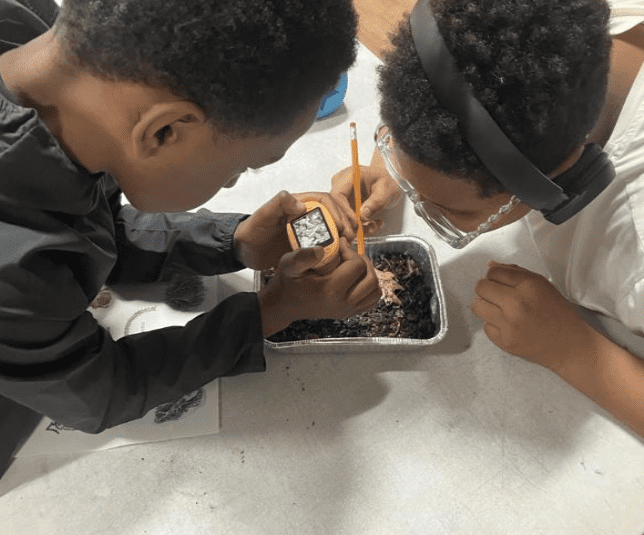
This spring, Biodiversity for a Livable Climate’s Soil to Sky Biodiversity Education Program completed a successful six-week pilot at East End House, a community center in East Cambridge that provides after-school programming for Cambridge Public Schools (CPS) students.
From April through May 2026, 20 students in Grades 2–5 participated in weekly hands-on biodiversity classes led by Paul Barringer, Curriculum Designer and Cambridge Program Facilitator, together with teaching assistant Melvin Leventhal. Through exploration, games, observation, and collaborative projects, students discovered how living ecosystems—from the soil beneath their feet to the trees above their heads—help regulate climate and support life.

The program was built around Bio4Climate’s Soil to Sky Biodiversity Curriculum, developed by the organization’s education team funded by Sacred Heart Foundation Grant:
- Beck Mordini, JD – Executive Director
- Paul Barringer – Curriculum Designer and Cambridge Program Facilitator
- Jerald (Jed) Katch, PhD – Director of Education
- Poulomi Chakravarty, PhD – Climate & Biodiversity Research Scientist and Education Lead
Together, the team designed a curriculum that introduces climate through living systems, helping young learners understand that healthy soils, thriving biodiversity, forests, and pollinators all play essential roles in creating resilient communities.
Learning Through Discovery
Over six weeks, students explored three core modules of the Soil to Sky curriculum.
Trees Cool the City
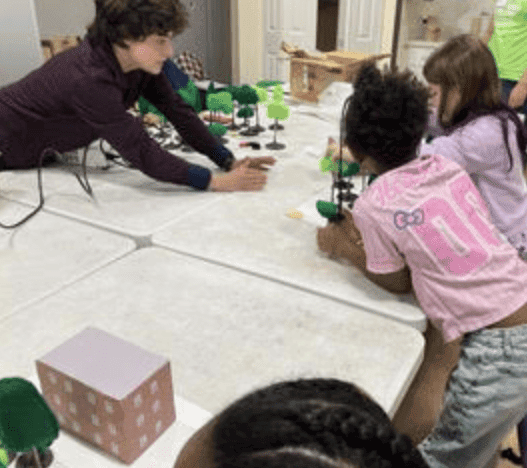
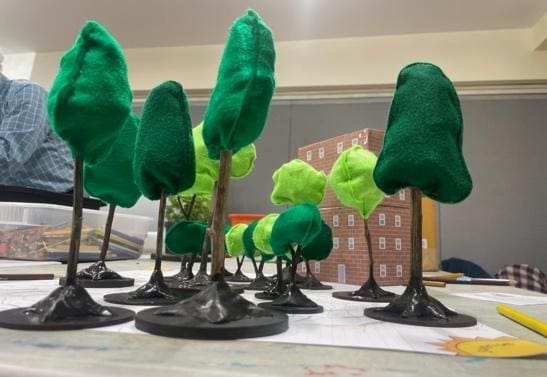
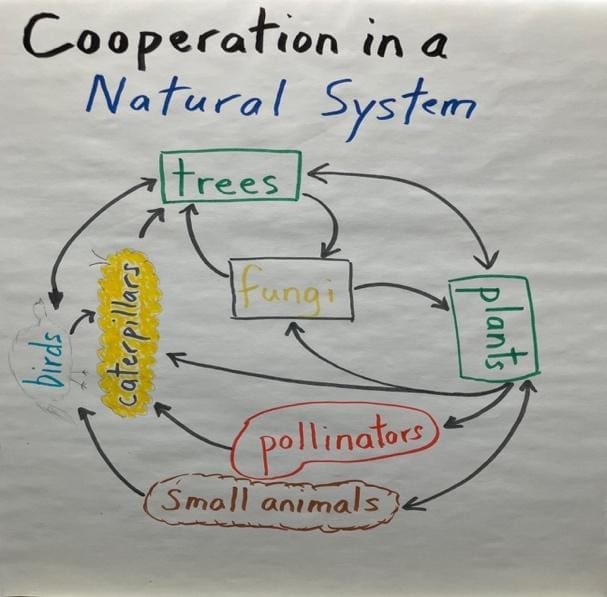
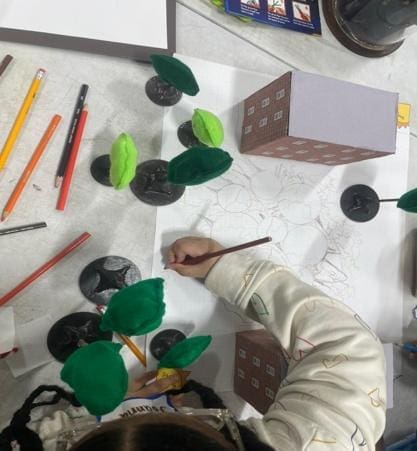
Students investigated how trees naturally cool neighborhoods through shade and evapotranspiration, learned how forests communicate through underground fungal networks, and discovered why trees thrive when planted together. Working in teams, they designed model mini-forests, mapped fungal connections beneath the soil, and selected ideal planting locations within urban neighborhoods.
Soil Is Alive
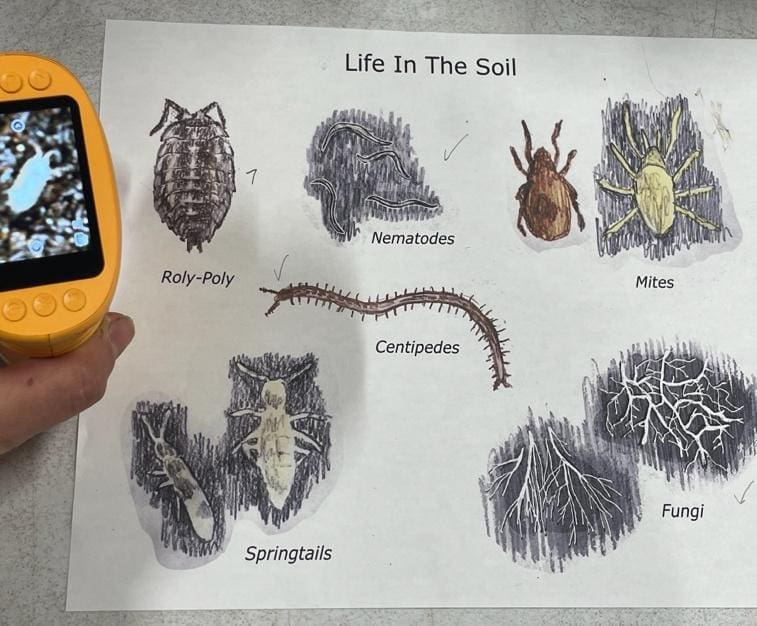
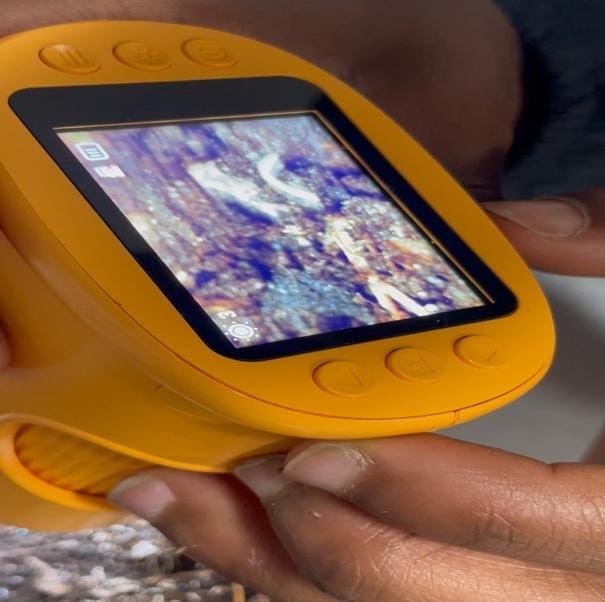
Using student microscopes, learners explored soil as a living ecosystem. They observed microorganisms, compared soil life, and discovered that a single teaspoon of healthy soil contains billions of bacteria, fungi, and other microscopic organisms. The investigations transformed soil from something often overlooked into a dynamic community supporting all terrestrial life.
Pollinator Match-Up
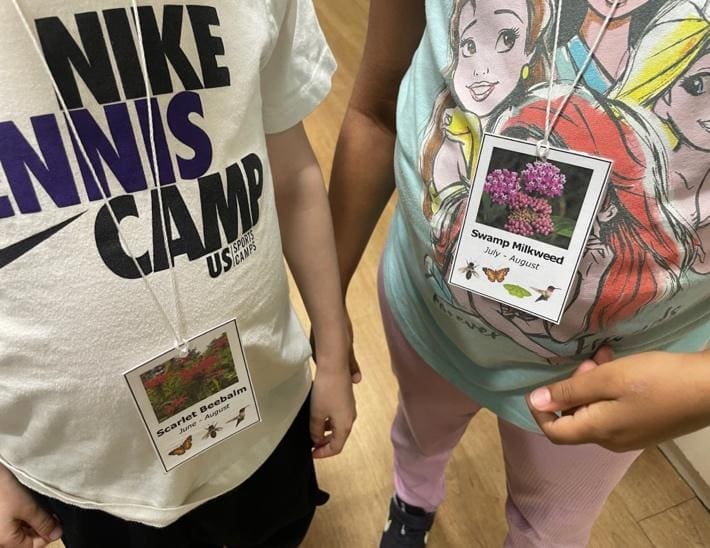
Students explored the remarkable relationships between native plants and pollinators through an interactive matching activity. They learned that many native bees specialize on particular flowers, while others forage more broadly, and that these long-evolved partnerships form the foundation of healthy ecosystems. Through play and collaboration, students developed an understanding of ecological interdependence and the concept of symbiosis.
Measuring Learning
The pilot demonstrated strong learning outcomes across both younger (Grades 2–3) and older (Grades 4–5) students.

By the final weeks of the program:
- 80% of Grades 2–3 students and 95% of Grades 4–5 students showed increased participation and engagement.
- 85% of younger students and 90% of older students correctly explained how trees cool the surrounding environment.
- 80% of Grades 2–3 students and 98% of Grades 4–5 students understood how underground fungal networks connect groups of trees.
- 70% of younger students and 100% of older students successfully identified three or more soil microorganisms using microscopes.
These outcomes reflected not only gains in scientific understanding but also increasing curiosity, collaboration, and confidence as students engaged with ecological concepts through direct observation and hands-on investigation.
Looking Ahead
The Cambridge pilot demonstrates how biodiversity-centered climate education can inspire young learners to see the natural world as a connected system. Rather than introducing climate change through abstract global challenges, the Soil to Sky program begins with the living ecosystems students can observe, investigate, and understand for themselves.
As Bio4Climate continues to expand Soil to Sky into schools, after-school programs, and community learning spaces—including its recent international pilot in Hyderabad, India—the Cambridge program provides encouraging evidence that hands-on, nature-based learning can cultivate ecological literacy, systems thinking, and environmental stewardship from an early age.
Through Soil to Sky, students are not simply learning about nature—they are learning to see themselves as part of the living systems that sustain a healthy and livable planet.
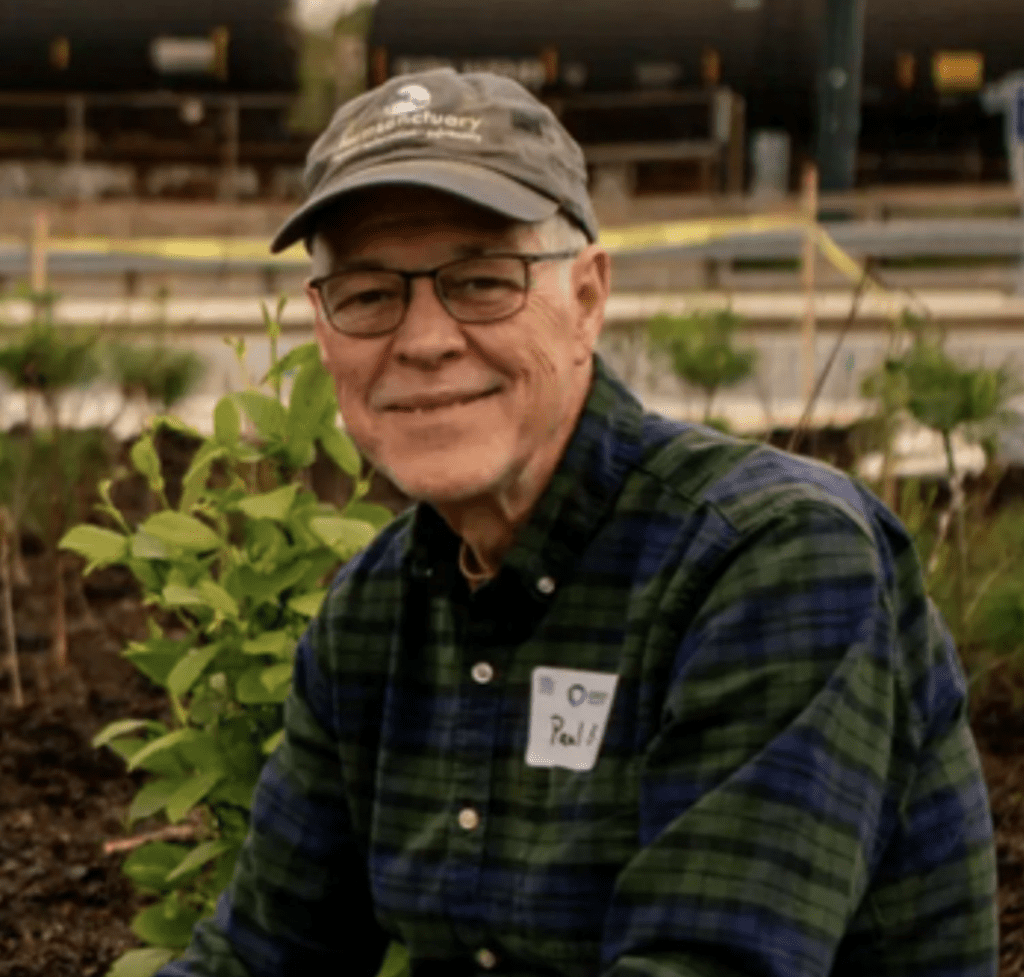
Paul Barringer is a retired K–8 music educator with more than two decades of experience in Somerville Public Schools and earlier work with Cambridge Public Schools, where he helped develop a creative, improvisation-based K–2 music program. He is also Co-Founder of Native Plant Community Gardens in Cambridge and a Volunteer Pollinator Specialist with Farm Sanctuary, bringing together his background in education, curriculum design, native plants, and pollinator advocacy to support Bio4Climate’s Soil to Sky program.