

How the Confederated Salish and Kootenai Tribes Are Advancing Climate Solutions Amidst Funding Cuts
“We’ve been doing climate work all along,” says Michael Durglo, Climate Change Coordinator for the Confederated Salish and Kootenai Tribes in Montana. Many Indigenous communities were doing climate work long before it was called “climate change” or “climate activism.” For them, caring for the land is a way of being. Long before federal climate grants existed, Indigenous communities were observing changes in the land and responding to what ecosystems needed. Today, however, carrying out climate work at scale often requires navigating an increasingly complicated funding system.
Sixty percent of Americans are increasingly pessimistic that the U.S. will do enough to avoid the worst effects of climate change. Given this trend, this series asks: Amidst shrinking government support how do we keep moving toward a livable future? Together, we’ll explore people and institutions piecing together climate solutions – finding ways to restore ecosystems and build resilience even when the money is difficult to find.
Durglo described piecing together money from several places. Some funding comes through federal agencies, including the Bureau of Indian Affairs and the Environmental Protection Agency. Other projects depend on competitive federal grants, nonprofit partnerships, private grants, or project-specific restoration funding.
The Confederated Salish and Kootenai Tribes have their own governing system through their Tribal Council as well as thousands of years of Traditional Ecological Knowledge. Durglo served on the Tribal Council from 1996 to 1999 and has spent decades working in different roles throughout his community.
He is no stranger to finding ways to keep environmental work moving. More than 13 years ago, the Confederated Salish and Kootenai Tribes were already ahead of the curve, developing a climate action plan well before climate planning became commonplace. Today, they are putting pieces of that vision into practice – even as the money available to carry out climate projects becomes less reliable.
Adapting to Wildfire Smoke
In an era of shrinking funding for climate initiatives, Durglo and the Tribes are getting innovative and meeting community needs. As wildfires increase, the Tribes’ Climate Action Plan prioritizes helping community members protect themselves from poor air quality. Durglo described how many people on the reservation already own box fans to stay cool. Rather than buying a new fan, a household can buy a low-cost filter, tape it to a box fan, and use something already sitting in the home to filter the air during wildfires.
This initiative is not dependent on a large grant. It is a simple, community-level adaptation: look at what people already have, identify what they need, and find a way to make the two work together. The Tribes have also joined the PurpleAir Network, placing sensors around schools, homes, and community areas that provide real-time information about air quality.
Saving White Pine from Beetle Kin
Another project begins high in the Montana mountains, funded through America’s Ecosystem Restoration Initiative which consolidates funding from federal and private organizations. In this restoration initiative, climbers search for whitebark pine trees that are resistant to pine beetle infestations. Whitebark pines are essential to the high-elevation ecosystem and considered kin to the Tribes. They are a vital keystone species that support high-elevation biodiversity, regulate snowmelt, and stabilize fragile alpine soils. But as the climate warms, pine beetles increasingly threaten the trees. Historically, Montana’s sub-zero winters helped keep beetle populations in check by freezing their larvae. As winters warm, more beetles survive and move into higher elevations that were once protected by intense cold and snow.
Among stretches of dying trees, Durglo and his team look for the survivors.“There might be one tree that is resilient to the beetles, among many, many dead trees,” he said. Once they find one, climbers travel all the way to the top of the roughly 50-foot tree and place cages around its cones so animals do not eat the seeds. When the cones are ready, the climbers return to harvest them. The resilient seeds are taken to the Tribe-owned greenhouse, where they are nursed from seed to tree.
Today, the greenhouse has around 30,000 baby trees waiting to be planted and reunited with their kin in Montana’s high-elevation mountains. The restoration effort shows what climate work can look like when ecological knowledge and funding come together.
Empowering the Next Generation
The Tribes are also investing in the people who will care for that land next. EAGLES is a program for youth in grades K-12 on the reservation, funded through the Bureau of Indian Affairs, a federal agency. Young people participate in environmental work ranging from recycling and reducing microplastics in the soil to carbon education summer camps. They are not simply being taught about climate change. They are learning how to steward the places where they live.
Some of the Tribes’ biggest climate ideas, however, are still waiting on funding opportunities.
Working Toward the Future
Durglo applied for a 20 million dollar grant to build solar gardens on the reservation. Solar gardens, unlike solar farms, are designed to service a cluster of homes. Durglo shared that many homes on the reservation are designed as cluster homes, a communal living model designed for resource sharing and multigenerational living. Like community gardens, solar gardens would allow community access to renewable energy without any individual bearing the cost of solar equipment yet collectively reaping the benefit of lower energy costs.
The Tribes have also pursued a $1.5 million grant from the EPA for a Solid Waste Infrastructure project that could take used materials such as plastic and repurpose them into products including park benches, tables, and detergent bottles. The plan exists, and the opportunity exists. However, the funding is pending.
Holding the Nuance, Moving Forward
In part, this is a reality of what community climate resilience looks like in practice. It is a whitebark pine project funded through one source. A youth program funded through the Bureau of Indian Affairs. Federal support from agencies such as the EPA. A solar project waiting on a major grant. And a low-budget, accessible box fan filter that is an incredibly innovative and practical way to support people through climate crisis.
The Confederated Salish and Kootenai Tribes are piecing together climate solutions from the resources available to them. At the same time, they are working to ensure climate work does not depend entirely on one funding stream, rather how can climate work be integrated in the Tribes despite the amount of funding.
Let’s be clear – funding matters. Without it, progress is delayed or unable to reach the scale the community envisions. But the commitment to the work is not rooted in U.S. government funding. Durglo and his community show us that resilience in climate work is rooted in ancestry, relationship, and responsibility.
Thank you Michael, for doing this work, and thank you for sharing it with us.
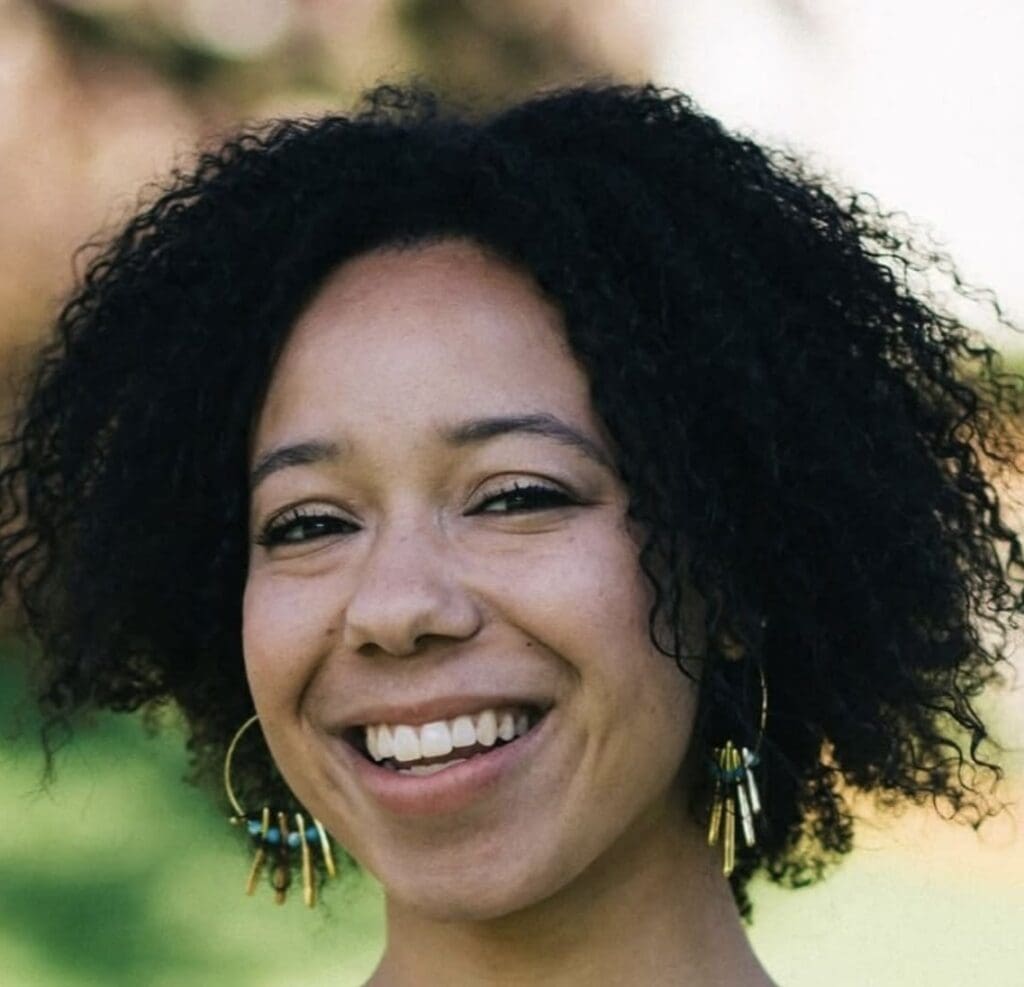
Madison Matthews is a solutions-oriented activist and innovation strategist working at the intersection of climate, strategy, and systems change. At the core of her work is a belief that creating a more just and sustainable world requires not only imagining what is possible, but building the strategies, partnerships, and pathways to bring that future to life. Before joining Biodiversity for a Livable Climate, Madison spent nearly five years at Accenture, where she worked as an innovation strategist helping organizations navigate complex challenges, develop new ideas, and translate ambitious visions into actionable strategies. Across her work, she has developed a particular strength in envisioning future possibilities, bringing people together around a shared direction, and moving ideas from concept toward implementation. Her commitment to environmental and social change extends beyond her professional career through years of community organizing, climate advocacy, mutual aid, urban agriculture, and work connecting people with the land. At Biodiversity for a Livable Climate, Madison brings these experiences together through her work on climate solutions, translating emerging ideas and ecological approaches into stories and strategies that help people see what a different future can look like. She is driven by the belief that some of our most meaningful solutions begin with the courage to envision a better world—and the collective work required to make it real.