Featured Creature: Black Bear

PanAmericana 2017 - the image was taken on an overlanding travel from Ushuaia to Anchorage - taken by Thomas Fuhrmann, SnowmanStudios - see more pictures on / mehr Aufnahmen auf www.snowmanstudios.de

What animal travels over 100 miles for food and, due to warming temperatures, is suffering from insomnia?

The Black Bear!

Observing the scene from a large boulder at the water’s edge, the silence is disrupted by a faint clanging in the bushes as an unnatural rustling sounds from my campsite. Enraptured by the unfurling of clouds across the jagged landscape, I don’t see the creature until it emerges from a cluster of pines, pattering along a neighboring stretch of bedrock. The Black Bear is only 20 feet away when it dips into the water, head bobbing as the creature paddles to the other side of the lake. When it reaches the opposing shore, I release a breath I didn’t know I was holding, and watch as it pulls itself out of the water and crawls onto the green grass. The bear blends in with the darkness and disappears into the night.

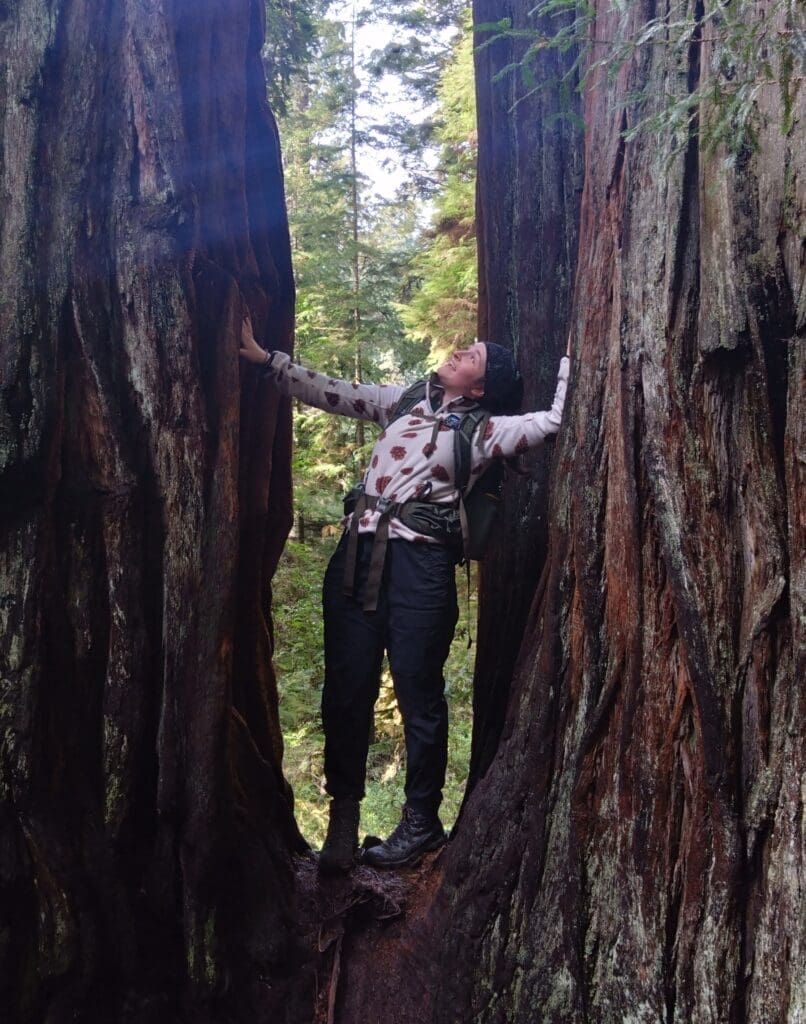
It was the last night of a seven-day backpacking trip in Kings Canyon National Park in the Sierra Nevada mountains of California. We were staying at a campsite by Emerald Lake. After the bear encounter, I later returned to my campsite, only to find my bear barrels, designed to securely store food and other smellable items, scattered about – a reminder of the bear’s presence, and the complicated relationship between our species.
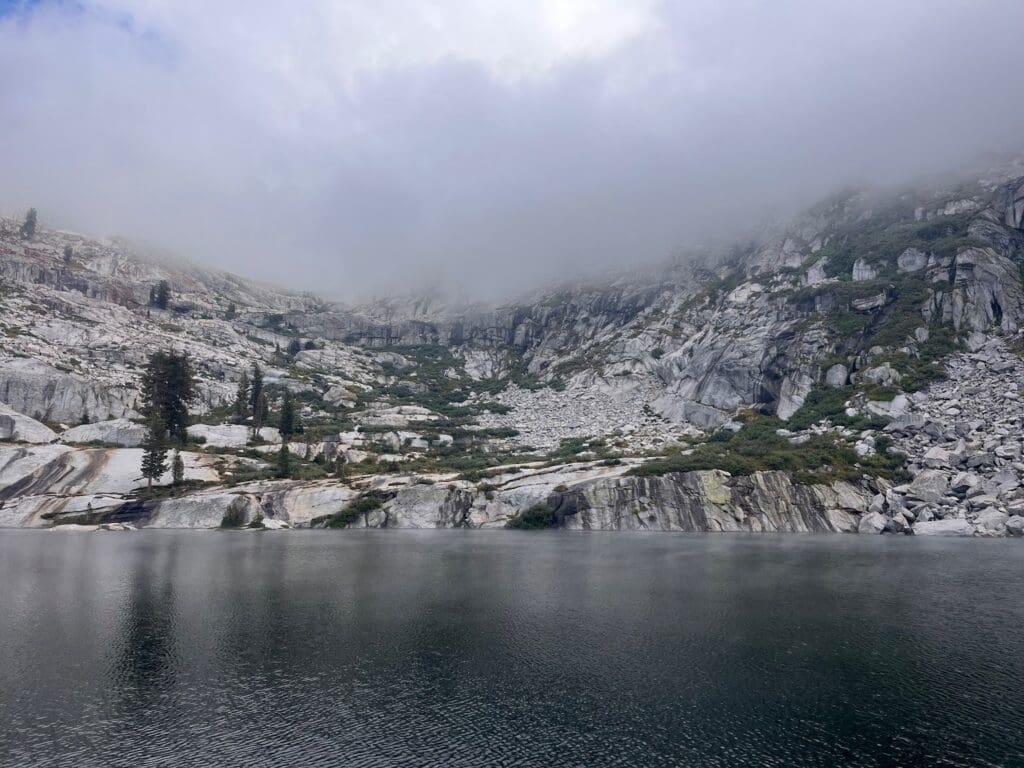
Photo by Adrianna Drindak

The Black Bear, also known as the American Black Bear, is found throughout North America, from the rugged Arctic regions of Alaska and Canada to parts of northern Mexico. In search of food, these creatures will travel up to 100 miles outside their territories, with their food availability often differing depending on the season. As omnivores, Black Bears consume both plants and other animals. Black bears help the growth of plants, such as berries, because the seeds are able to exit their digestive track and germinate – with the added benefit of fertile soil.

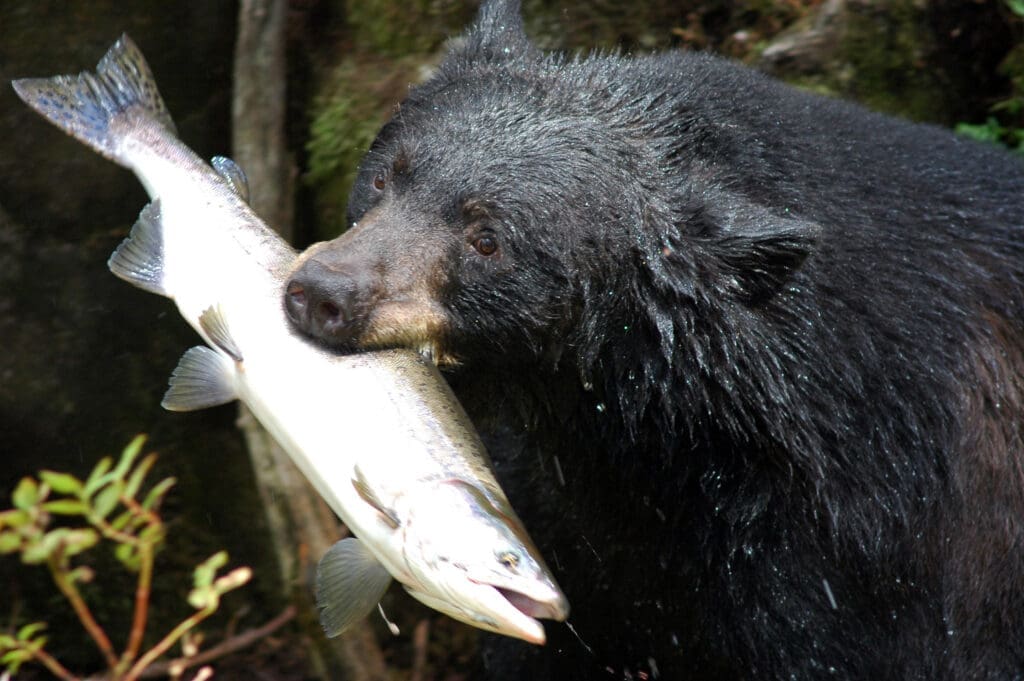
In the Pacific Northwest, Black Bears are well-known for their consumption of salmon. After catching and consuming salmon, Black Bears will often leave the carcasses at the edges of the stream or river, in an area known as the riparian zone. The salmon release nitrogen into the soil, which is then absorbed by large plant species. There is evidence that the nutrients from the salmon, created as a result of their predator-prey relationship with Black Bears, increase the overall health and well-being of the forest ecosystems in these areas.
[1], Public domain, via Wikimedia Commons

In many areas, Black Bear food availability is being impacted by climate change. Recently, a group of researchers from the University of Nevada, Reno aimed to better understand how bear behavior has changed over time, especially the tension between human centers and Black Bear habitats. The group found that temperature swings in the early spring are devastating Black Bear food supply, resulting in bears seeking out food sources in human-centered areas. According to Dr. Kelley Stewart, who is leading the project, “The plants start growing and flowering with an early spring warm-up, and then there’s a late-season frost that takes them all out. It especially affects berries and the harder things like acorns, pine nuts and other things that nature normally provides for bears.” This decrease in food supply is leading to another negative outcome: Black Bears entering human settlements in search of food. 

With increased human-bear interactions, bear mortality rises. While in part a result of lacking food resources, scavenging in human-dominated areas can result in the bears getting hit by cars or being euthanized. In June of 2024, Sierra County, California reported the first Black Bear-caused human mortality in recorded California history. Researchers have connected late frosts in early spring causing twice as many lethal removals of Black Bears compared to years without these cold snaps. When bears seek out the food of humans, they get used to trash and other attractants as a viable food source, therefore increasing their proximity to human centers. When bears become habituated to these environments, and human food, they are often labelled as “dangerous” and are euthanized.

There are communities working to repair this relationship between Black Bears and human-occupied places. The Boulder Bear Coalition was founded in 2014 and aims to educate the Boulder, Colorado residents on “proactively reducing attractants and enhancing deterrents.” Their methods focus on targeting the root of the issue, such as securing trash and providing resources so residents can implement strategies that keep bears and people safe. But the question remains that if Black Bears are seeking out human food in response to limited sustenance availability, do these actions solve the fundamental problem of our changing climate?

Climate change not only threatens Black Bear food supplies, but also their hibernation patterns. During the winter, Black Bears enter a state of decreased heart rate and dormancy known as hibernation, which is a response to colder temperatures. In preparation for hibernation, bears partake in excessive eating habits, otherwise known as hyperphagia. This increase in food intake helps build up body mass for the long winter months. However, with warming winters, bears are not sleeping for as long as they used to. According to a recent study, the length of bear hibernation could decrease by 19 to 39 days by 2050. With a shorter hibernation period, Black Bears will be threatened by limited food supply during the winter months. Which only becomes more complicated by the availability of human-caused waste and attractants – therefore resulting in further conflict and bear euthanizations.

It was our last night in the alpine zone. We reached our destination, Moose Lake, in the early afternoon, and had the rest of the day to enjoy our last night at elevation. Out of the corner of my eye, I saw a sleek figure meander along the shore. The shape of the creature slowly came into focus. There was a Black Bear wandering only twenty feet away from our campsite, scrambling along the rock edge, looking blissfully serene as it glanced back and forth to the shore ahead and the crystal clear water. Barely looking our way, the bear prodded into the distance, its body ebbing and flowing with the gently lapping shoreline. It continued along the water’s edge before disappearing on the far side of the lake.

My experiences in the California backcountry have shown that mutual respect between our species is possible – and has the power to be a beautiful relationship. In the face of climate change, we must learn to co-exist and compromise with care and empathy in our ever-evolving landscape.

To learn more about the connection between humans and species like bears, watch the webinar we hosted in partnership with GBH last year. In The Goldilocks Strategy: Getting Our Relationship with Bears and Lions Just Right, hear straight from experts working with lions and bears and communities that live alongside them. 
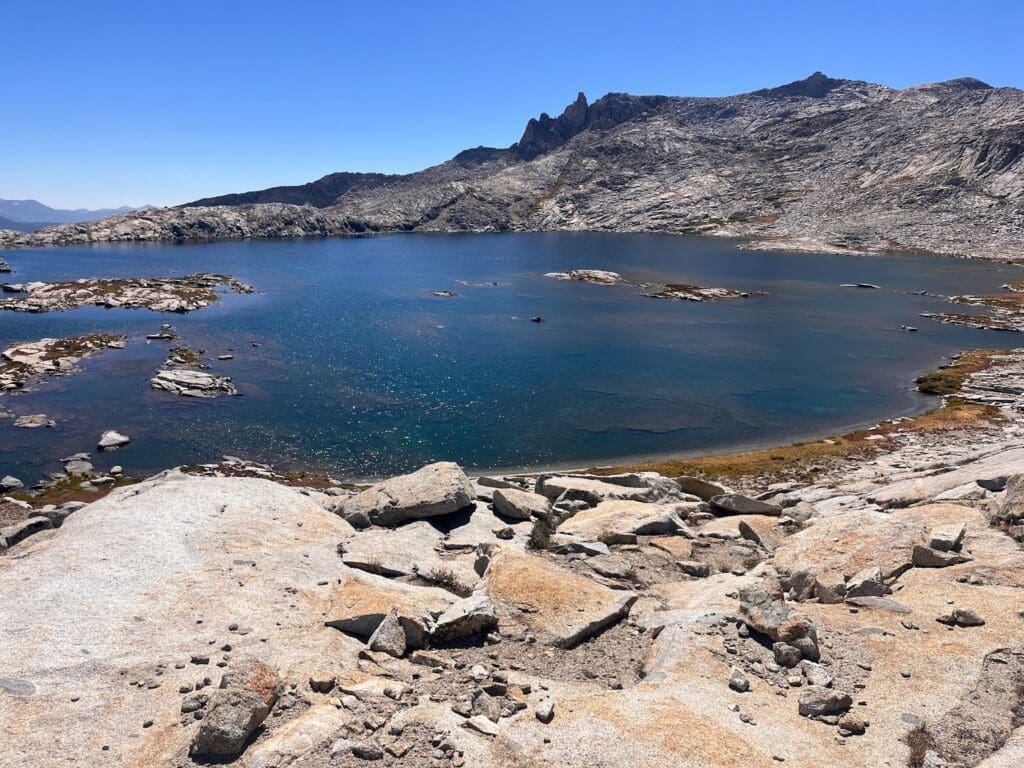
Photo by Adrianna Drindak

Adrianna Drindak is a rising senior at Dartmouth College studying Environmental Earth Sciences and Environmental Studies. Prior to interning at Bio4Climate, she worked as a field technician studying ovenbirds at Hubbard Brook Experimental Forest and as a laboratory technician in an ecology lab. Adrianna is currently an undergraduate researcher in the Quaternary Geology Lab at Dartmouth, with a specific focus on documenting climate history and past glaciations in the northeast region of the United States. This summer, Adrianna is looking forward to applying her science background to an outreach role, and is excited to brainstorm ways to make science more accessible. In her free time, Adrianna enjoys reading, baking gluten free treats, hiking, and backpacking.


Sources:

Featured Creature: Greenland Shark

What creature has a lifespan of over 250 years and catches prey by suction?

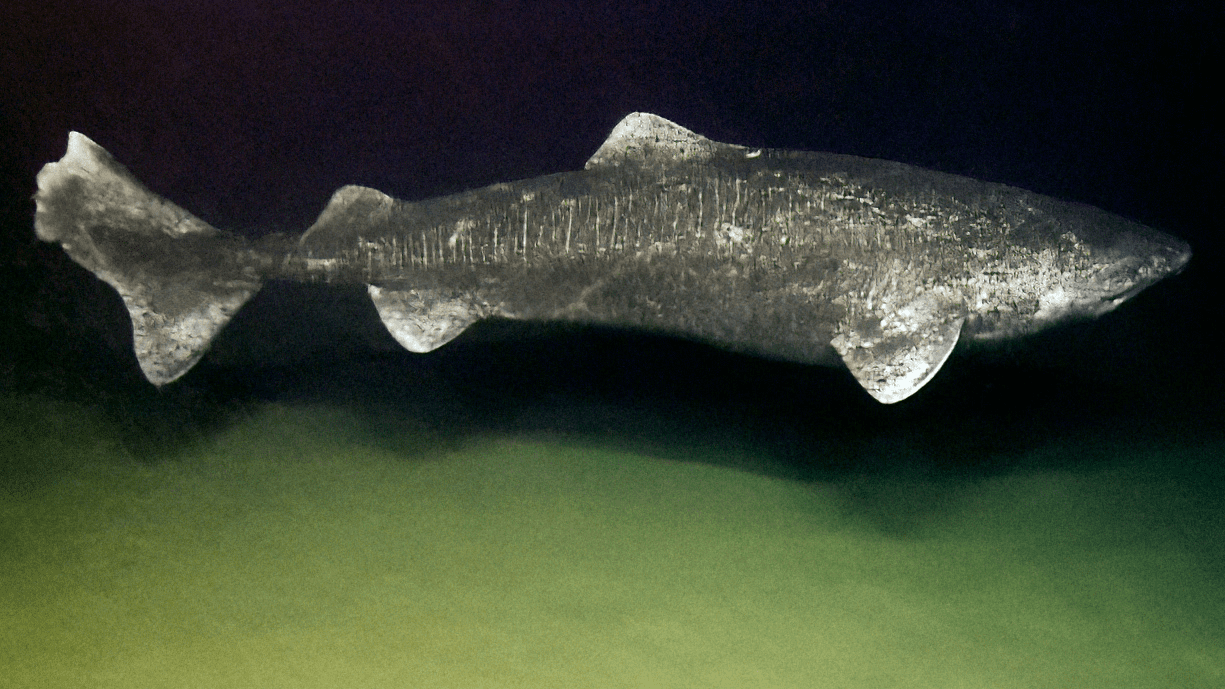
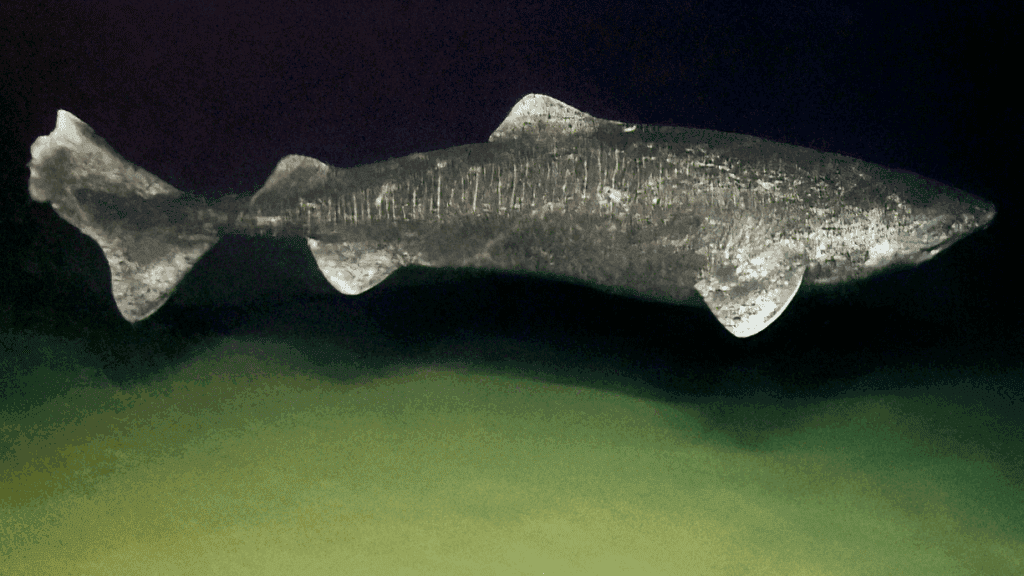
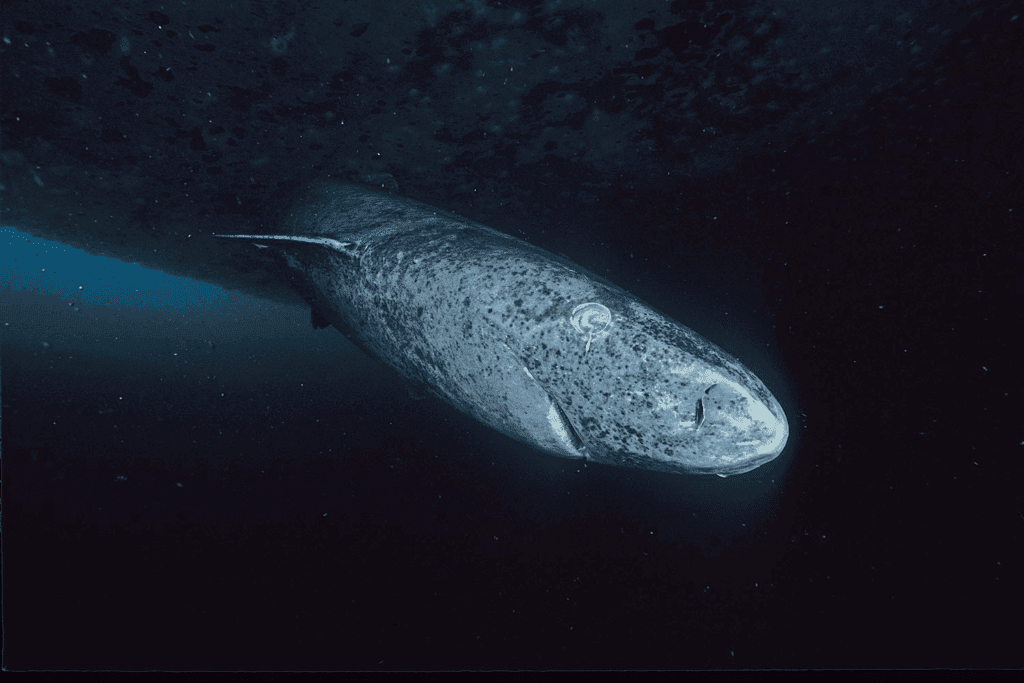
Image: A Greenland shark; Wikimedia user Zlois (CC0 via Wikimedia

The Greenland Shark (Somniosus microcephalus) is one of the oldest and largest sharks in the world. It is the biggest of its superorder, Squalomorphii (one of the two groups of sharks). They can get up to 21 feet and 2,255 pounds, and have an average lifespan of 272 years. The oldest recorded Greenland Shark was almost 400 years old; that shark was alive during the Scientific Revolution! When I first came across these sharks and their longevity, I was fascinated. There are so many interesting things about this creature, so let’s take a look!

Amazing Adaptations

Unlike most other sharks, Greenland Sharks like cold, deep water, and are usually found near the Arctic or Atlantic Oceans. Greenland Sharks have special adaptations that help them thrive, and allow them to survive near-freezing water temperatures and high water pressure. 

For one, they’re big animals, and larger animals tend to have slower metabolisms and therefore age slower. Their slow metabolisms also mean they move almost lethargically. This gives them part of their scientific name, Somniosus microcephalus; “Somniosus” comes from “somnum”, the latin word for sleep! That’s why they’re also called sleeper sharks. 

If they’re so slow, how do they catch prey so fast? Greenland Sharks are known to eat seals, fish, and other fast aquatic animals, but they can only reach a maximum of around 1.6 miles per hour (one of the slowest animals of their size!). They primarily catch food by ambushing prey while they’re asleep, and by targeting injured animals. Since there’s little to no light at the depths these sharks are found at, and they’re usually dark colors, they can sneak up and surprise other creatures. They also have a special method of actually “grabbing” their targets. They open their mouths fast, creating a suction force that draws water (and the animal) into their large mouths, allowing them to swallow some prey whole. 

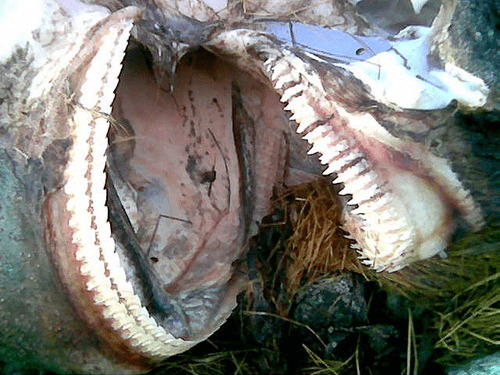
Image: The open mouth of a dead Greenland Shark, showing off the teeth; Audun Eriksen (CC BY-NC 4.0 via iNaturalist)

Another example of Greenland Sharks’ adaptations to their environment is the fact that they have specific chemical compounds in their bodies that help them in different ways. The two common ones are urea and TMAO (trimethylamine N-oxide). Since these sharks are constantly surrounded by saltwater at high pressure, lots of urea in their body helps the shark’s cells keep their shape. This is why they’re classified as osmoconformers: they have high concentrations of urea in their body to match high concentrations of salt in the outside water, keeping a balance. Also, both urea and TMAO help the shark be less dense, allowing it to float better. 

Urea does also have some negative side effects: too much of it can destabilize enzymes within the shark, hurting them and keeping proteins in their body from functioning correctly. TMAO counteracts this, stabilizing proteins even when there’s a lot of urea. This process allows Greenland Sharks to survive without trouble in the Arctic Ocean. 

While these chemicals are helpful to sharks, they’re absolutely not for humans. TMAO in particular is extremely toxic to mammals, and can lead to extreme sickness or death. People do eat them, though! These sharks are a delicacy in some places: Hákarl, cubes of fermented Greenland Shark meat, is the national dish of Iceland. Because of the TMAO and urea, the meat has to be dried for weeks or months, and fermented in a certain way so it becomes safe for human consumption.

Image: Hákarl (fermented Greenland Shark meat, cubed); Wikimedia user Holapaco77 (CC BY 2.0 via Wikimedia)

Deep water usually doesn’t get much light, so these sharks adapted by also evolving other ways to “see”. They have an incredible sense of smell and rely heavily on it for navigation. They also have the ability to sense electric fields through special gel-filled pores all over their snout and face! This sixth sense lets them detect small movements and even heartbeats, allowing them to navigate both on a small scale (their immediate surroundings) and a large scale (Earth’s magnetic field). 

In fact, their other senses are so well-developed that they don’t need sight at all. Many Greenland Sharks’ eyes become infected by a copepod called Ommatokoita elongata. This parasitic crustacean gets permanently attached to the corneas of the shark, injuring their eyes and sometimes rendering them completely blind (though the sharks don’t notice or care!). These creatures can sometimes have bioluminescence, making the shark look as if it has glowing eyes. It’s been theorized that, in the darkness of the water, this spot of light may help the shark attract prey.

Image: A Greenland Shark, eyes infected with Ommatokoita elongata parasites; Wikimedia user Hemming1952 (CC BY-SA 4.0 via Wikimedia)

Important interactions

Greenland Sharks have been around for a long time, and lots of different people have interacted with them in various ways. Because of their niche habitat range, accidental encounters are rare, and there haven’t been any recorded human attacks. These sharks aren’t aggressive (like most sharks, even though they get a bad reputation). Since they’ve been around for over a million years, different cultures have had different peaceful interactions with Greenland Sharks. 

Sightings of these sharks may be behind the legends of the Loch Ness monster (although other creatures might contribute, too). There are also Inuit legends involving these sharks. Since they have such a high urea content, they smell like ammonia, or urine. One legend involves the sea goddess Sedna throwing a urine-soaked rag into the ocean, where it transformed into the first shark, a Greenland Shark. The nordic dish hákarl originally got so famous because when the meat isn’t fully fermented, it’s mostly non-toxic but has inebriating effects, which was thought to help people connect to and communicate with Sedna.

Image: A figurine of Sedna from the National Museum of Finland; Wikimedia user Sailko (CC BY 3.0 via Wikimedia)

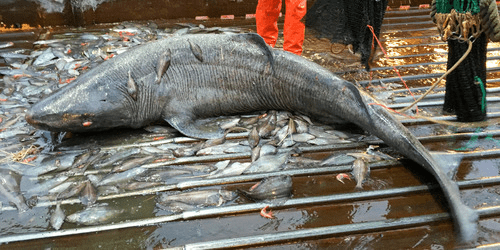
These sharks have had plenty of negative interactions with people, too. They used to be purposely hunted for the production of certain oils. This doesn’t happen as much anymore, but they are still a frequent bycatch species. This means that they’re often accidentally captured or killed in the process of trying to catch some other animal. Modern fishing methods make bycatch more and more common, and this results in overhunting of many fish species around the world. Trawls are one of the most problematic examples of this. 

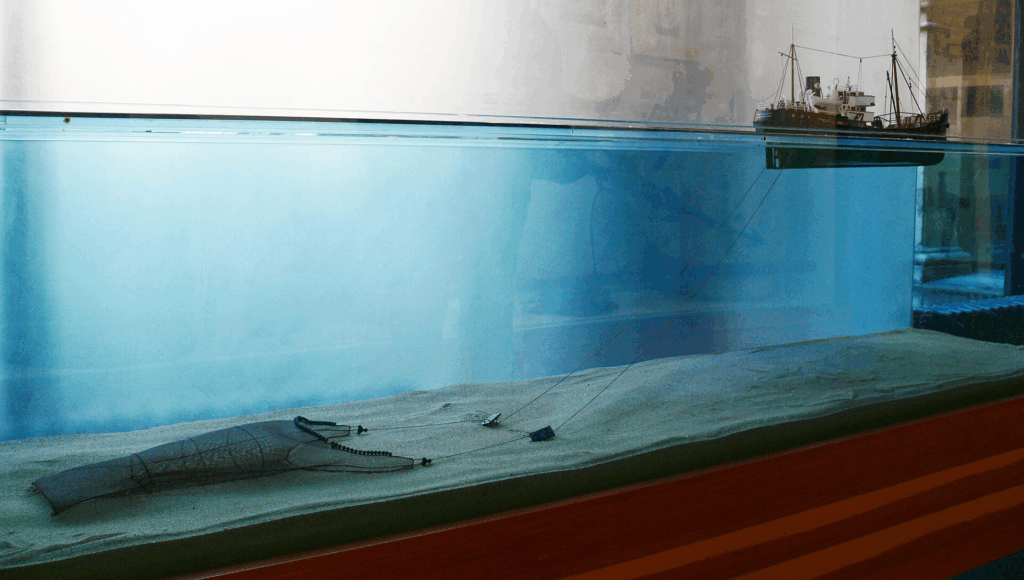
A trawl net is a large, basket-like net that’s weighted to drag along the sea floor. Boats pull the nets along the ground at high speeds, and any animal in the way gets scooped up and trapped. This is terrible for sea life; imagine if you were a little sea creature at the bottom of the ocean, and out of nowhere an almost-invisible net grabs and traps you along with everyone else nearby. Entire populations of animals get captured in these nets, and most of them end up getting thrown away! Bottom feeders, or species that spend their time on the ocean floor (like Greenland Sharks), are typically deemed undesirable for selling. The targeted fish species only end up being a tiny fraction of the total catch, and the rest often gets discarded. 

Image: Model representation of a trawl fishing technique; Andreas Praefcke (CC0 via Wikimedia)

Not only is this fishing method inefficient and wasteful, the nets damage homes of ocean animals by breaking or smashing everything in their path. Annually, around 3,500 Greenland Sharks are caught and killed as bycatch. Fishing methods like these have resulted in a decline in Greenland Shark populations, as well as many other aquatic animals. 

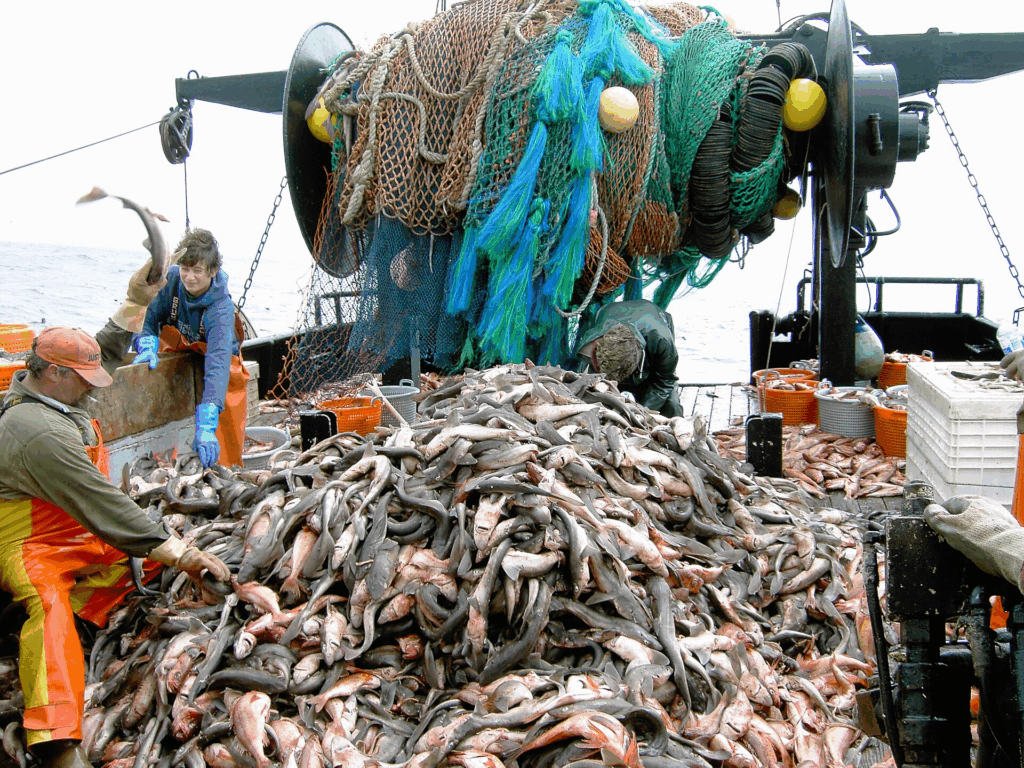
Image: A mountain of dead dogfish being emptied from a trawl net; Wikimedia user Citron (CC0 via Wikimedia)

Other factors relate to the well-being of Greenland Sharks, and global warming is a big one. Since these sharks love cold water, they usually stay around the Arctic circle. Global warming is making this water a little warmer than it used to be, and a lot of the sea ice is melting. 

Greenland Sharks have extremely long lifespans, but they also have low fertility rates and long gestation periods (how long it takes a baby to develop). Greenland Sharks have gestation periods of around 8 to 18 years. This means that it takes them a long time to replace population members. If too many die at once, baby sharks might not be born fast enough to save the population.

All of these factors influence the rarity and vulnerability of these sharks. 

The IUCN Red List is a list that keeps track of vulnerable or endangered species. In 2020, Greenland Sharks got reclassified from near threatened to vulnerable. Unfortunately, since they have such a slow recovery time, their status will probably continue to get worse. This is bad news for a very strong reason: Greenland Sharks are incredibly important to their ecosystems. 

As apex predators, they eat pretty much everything, including fishes and seals. They’re able to do this by ambushing prey, as described above. This helps them keep those populations in check by controlling how many of their prey species there are. If Greenland Sharks went extinct today, those other species would multiply. They would quickly take over ecosystems, destabilizing them, interrupting food chains, and overall harming everyone. Greenland Sharks prevent this by acting as a neutralizing force on population sizes of other fish. These sharks are important for maintaining balance in their environments. 

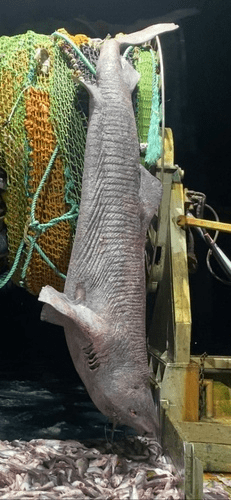
Image: A Greenland Shark caught as trawl bycatch; Claude Nozères (CC BY-NC 4.0 via iNaturalist

Greenland Sharks are scavengers; they eat carrion and other dead matter. They can eat large carcasses of animals that fall to the bottom of the oceans (like whales; have you ever heard of a whalefall?). Greenland Sharks actually have very unique, specialized teeth to let them do this; their upper teeth are small, thin, and pointy. Their lower teeth are chunkier with complex shapes that point away from the top teeth. This lets them tear off large chunks of meat when they roll their jaw. Teeth like this are another incredible example of Greenland Sharks’ specialized evolution! Eating already-dead animals lets them get energy and nutrients from other sources, “recycling” it and putting it back into the ecosystem. 

Overall, Greenland Sharks are very important to their environments, and their removal would have disastrous effects on surrounding sea life.

Image: A dead Greenland Shark; Claude Nozères (CC BY-NC 4.0 via iNaturalist)

To me, these weird, fascinating sharks are incredible. They have strange and unique adaptations that help them survive their extreme environments, and they’re important to those environments because of their interactions with other species. Because of the specificity of their Arctic circle deepwater habitat, they’re relatively poorly studied. There isn’t that much recorded information on them; we still have a lot of unanswered questions. After learning more about them, I’m personally interested in how they’re able to survive for centuries (some genetic research implies it’s related to transposons, or “jumping genes” that can move around the chromosome!). 

And while I tried, there’s also a lot about these sharks I didn’t mention. You can read more about their genetics here, about their longevity here, and about the harms of overfishing and trawling here.


Anya Reddy is a high school student at Blue Valley North. She loves biology and biochemistry, as well as entomology, ecology, and environmental science in general. Some of Anya’s non-science passions include archery and all kinds of 2D and 3D art. She enjoys learning about all kinds of organisms and how they connect and interact with others in their environment; she hopes to use writing to help share fascinating details about them, helping others like the weird and interesting organisms she loves.


Dig Deeper

Featured Creature: Thylacine

What stands like a kangaroo, has stripes like a tiger, and is found everywhere in art but nowhere in nature?

Meet the Thylacine!

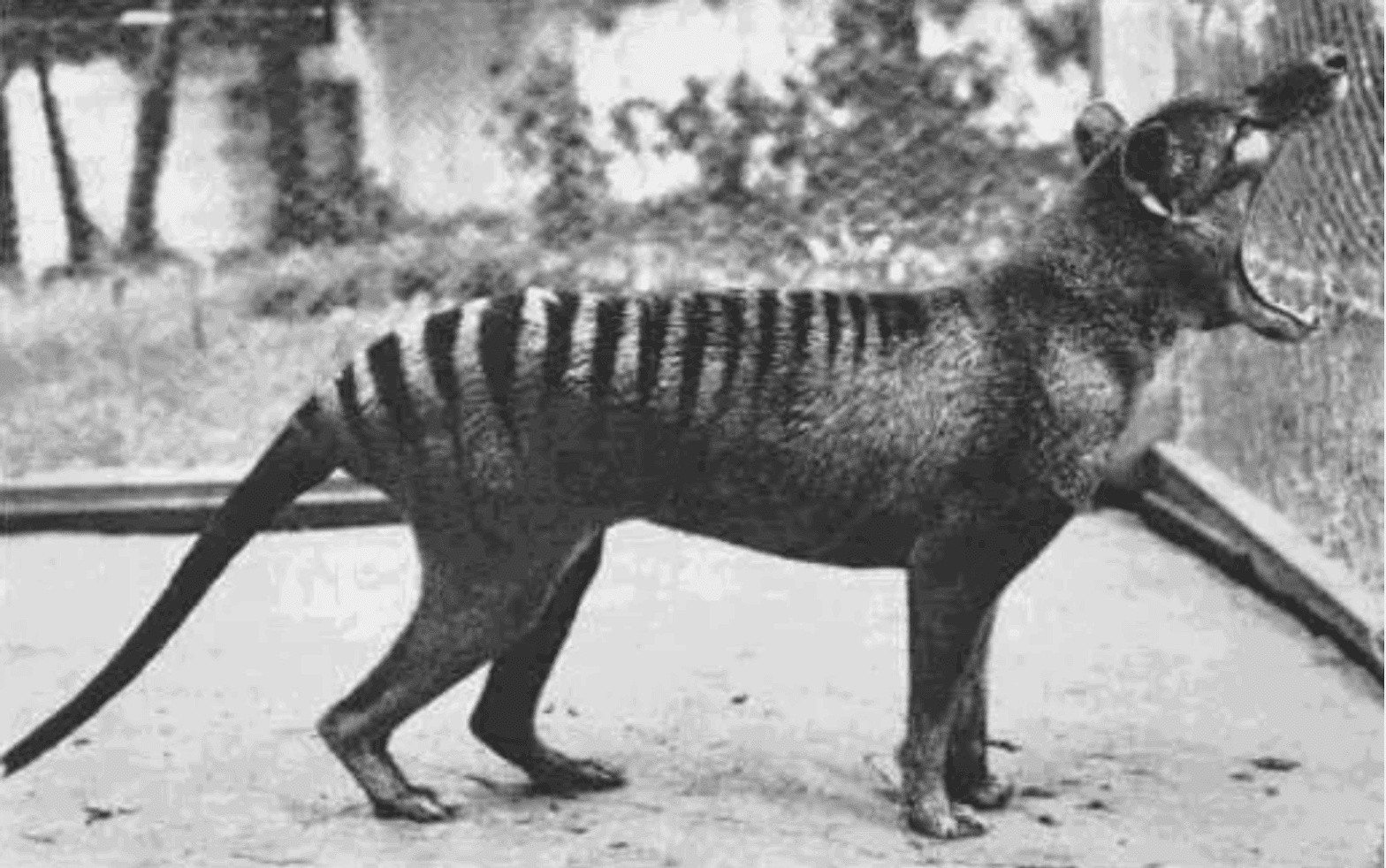
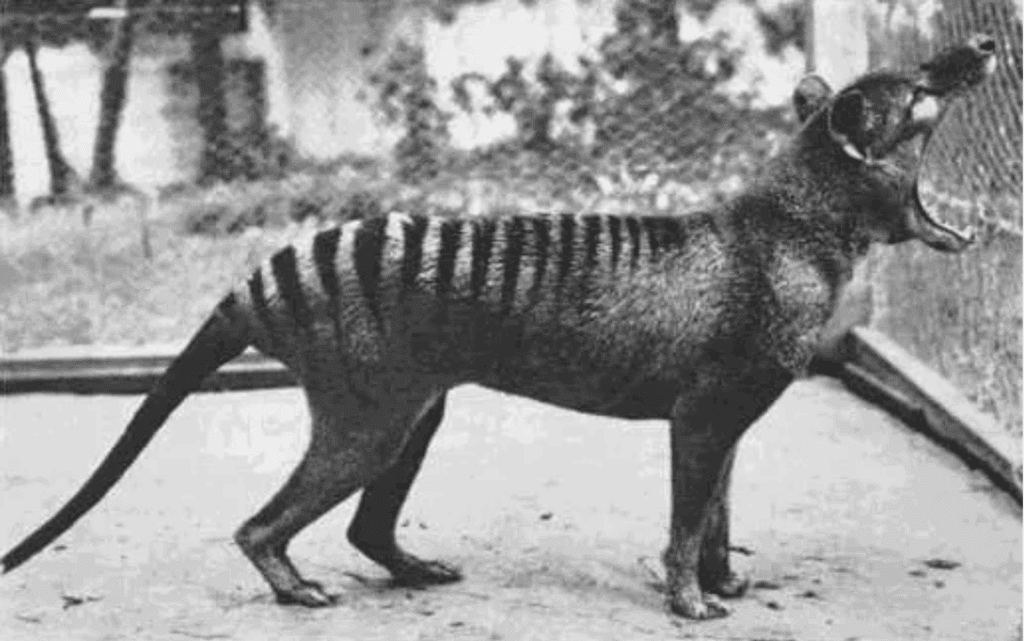
Benjamin, the last living thylacine, showing off his amazing yawn gape at the Hobart Zoo, 1933
(Image credit: Unknown original photographer; Public Domain)

A Unique Creature with a Truly Unique Biology

I was first introduced to the thylacine at a young age while watching a wildlife documentary. This one, focused on the wildlife of Australia, featured a few seconds of black-and-white footage of a wolf-like creature with distinctive tiger-like stripes, pacing around its enclosure at the now-closed Hobart Zoo (also known as the Beaumaris Zoo) in Tasmania’s capital of Hobart. I was captivated by this animal’s unique appearance, and was shocked beyond belief when at one moment, the animal opened its jaws at an alarmingly wide gape. Instantly, it became my favorite extinct animal of modern times, and remains so to this day.

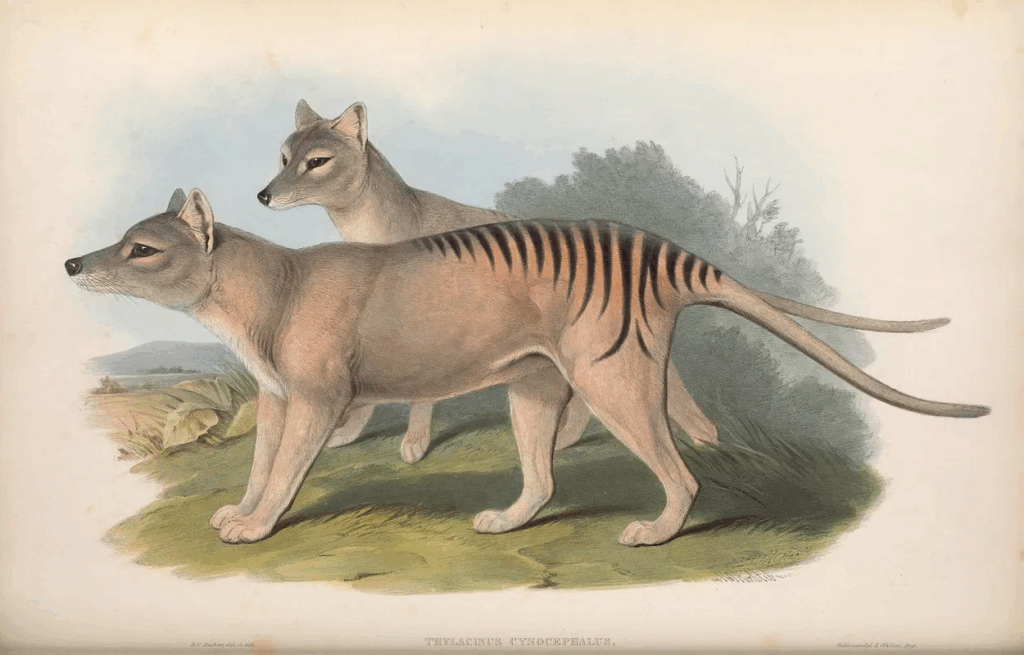
Though it is also known as the Tasmanian tiger and Tasmanian wolf, the thylacine was neither. Rather, it was a marsupial, a group of mammals in which the female carries her young in a pouch. Much like those of tigers, the stripes across the back and down to the base of the tail were used for camouflage. The thylacine was the apex predator in its woodland ecosystem, and relied on ambush to attack its prey. It was also the largest carnivorous marsupial of its time, with a size comparable to that of a medium or large dog.

Despite having raised heels like canids, and typically walking with a stiff, shuffling gait on all fours, the thylacine was able to rest its heels on the ground and use its rigid tail for balance, adopting a kangaroo-like stance. This stance was primarily used to gain better observation of the surroundings. Thylacines were one of only two marsupials in which the male had a pouch (the other was the water opossum). 

The most noteworthy (and intimidating) feature of the thylacine was its ability to open its jaw to a near 80º angle—the widest of any mammal! This may have been beneficial in taking down fast-moving prey, like wallabies. In theory, the greater the gape, the greater the clench onto the prey, which in turn, heightened the chance of a hunt well done. The gape yawn was also documented as a threat warning. It has been theorized that the gape may have been used by males as a display to win the attention of females and intimidate rival males.

Out-Competed, Wrongly Persecuted, and Hunted Until the End

Native to the islands of Tasmania, New Guinea, and mainland Australia, the thylacine died out in the latter two locations over 3,000 years before the arrival of Europeans. This has been theorized to be the result of the introduction of another Australian icon: the dingo, who won the competitive war for prey in those areas, but never reached our striped hero’s last stronghold in Tasmania.

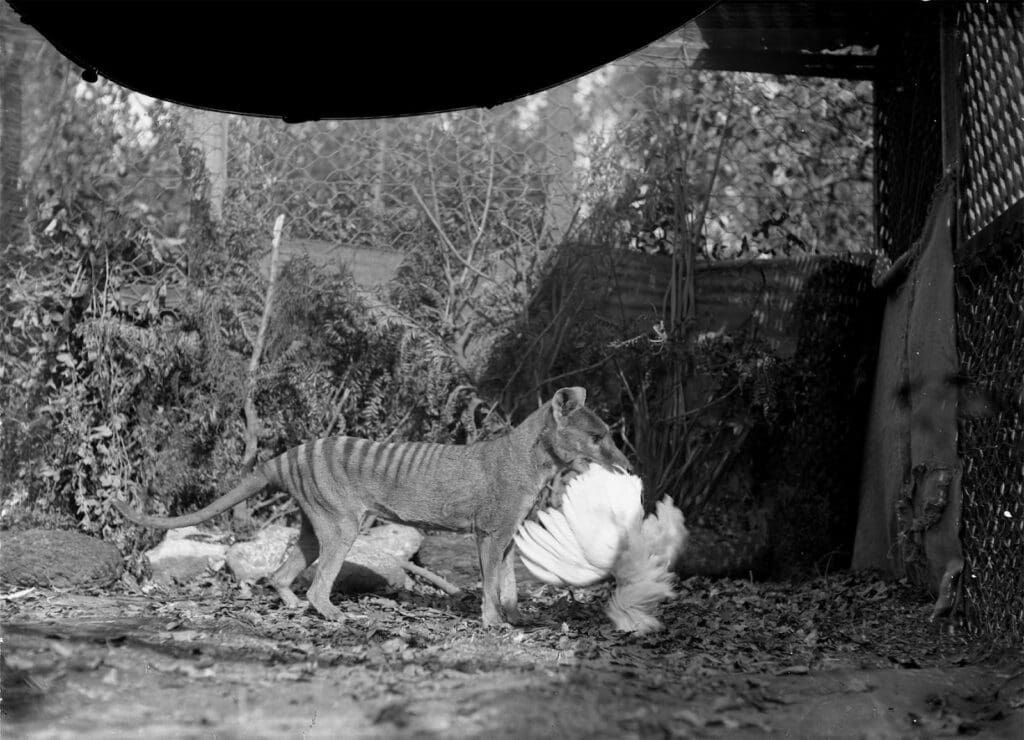
Once Europeans formally established settlements on Tasmania in the nineteenth century, the thylacine was perceived as a sheep thief and a bounty placed on their innocent heads. A series of photos taken by Harry Burrell depicted a thylacine with a chicken in its mouth. Over recent years, these photos have been the subject of heavy debate and discussion among researchers as to whether the individual shown is captive, or even a living specimen. Speculation exists that editing was performed prior to the a photo’s publication in The Australian Museum Magazine (shown below).[1] [2] [3] 

Based on observations, the thylacine was in fact  a shy and reclusive animal. Their depiction as a sheep-killer was greatly exaggerated, yet persisted. A 2011 study exploring thylacine skull biomechanics conducted by Marie Attard, PhD of the University of New South Wales advanced our understanding of their hunting behavior. Her research suggested that the thylacine’s bite force and jaw mechanics restricted it to smaller prey. As stated by Attard, “… our findings suggest that [the thylacine’s] reputation was, at best, overblown.”

The (potentially-staged) image that sealed the thylacine’s fate: A thylacine specimen with a chicken in its jaws, 1921. The image presented to the Tasmanian public was zoomed in, omitting the fenced background. (Image credit: Harry Burrell; Public Domain)

Cultural Icon

The last wild thylacine was shot and killed by farmer Wilf Batty on his property in Mawbanna, Tasmania, in 1930. In 1936, the last captive thylacine, named Benjamin, died at the Hobart Zoo on September 7. The day is now known as National Threatened Species Day in Australia, and not only serves to remember Benjamin, but to raise awareness for all threatened native plant and animal species throughout the continent. 

Today, the thylacine is a cultural icon of Australia, and imagery of this unique marsupial is found all over Tasmania, including in artwork, the Tasmanian cricket team mascot, license plates, and even the state’s coat of arms.

Photograph: HC Richter/National Library of Australia

A Candidate for a Real Life Jurassic Park

The thylacine is just one of several subjects currently undergoing intensive research and experimentation by the American biotechnology and genetic engineering company Colossal Laboratories & Biosciences De-extinction Project. The company has already made headlines for planning to bring back the wooly mammoth; the thylacine is another animal they hope to bring back from extinction. 

As the apex predator of Tasmania, the thylacine controlled populations of various native and invasive herbivore species, ensuring they did not cause chaos in their native ecosystem. This included preventing overgrazing, culling weaker and sick animals, suppressing disease among other species, and promoting biodiversity. Since the loss of the thylacine, trophic downgrading has occurred, which is a significant ecological disruption that cascades throughout the food chain. 

Think about the classic example of Yellowstone’s wolves: when they were hunted to near extinction, herds of elk began overgrazing across the landscape, damaging the health of the ecosystem. With the return of wolves to Yellowstone, elk numbers are kept in check, and the number of plant and animal species have since diversified and thrived. 

While genetic engineering may create hope of restoring thylacines as the wolf of Tasmania, it is more important to address threats to living species and their habitats. As we restore the water cycles and vegetation of degraded land, biodiversity begins to recover, creating a positive feedback loop of regeneration. 


Sienna Weinstein is a wildlife photographer, zoologist, and lifelong advocate for the conservation of wildlife across the globe. She earned her B.S. in Zoology from the University of Vermont, followed by a M.S. degree in Environmental Studies with a concentration in Conservation Biology from Antioch University New England. While earning her Bachelor’s degree, Sienna participated in a study abroad program in South Africa and Eswatini (formerly Swaziland), taking part in fieldwork involving species abundance and diversity in the southern African ecosystem. She is also an official member of the Upsilon Tau chapter of the Beta Beta Beta National Biological Honor Society.

Deciding at the end of her academic career that she wanted to grow her natural creativity and hobby of photography into something more, Sienna dedicated herself to the field of wildlife conservation communication as a means to promote the conservation of wildlife. Her photography has been credited by organizations including The Nature Conservancy, Zoo New England, and the Smithsonian’s National Zoo and Conservation Biology Institute. She was also an invited reviewer of an elephant ethology lesson plan for Picture Perfect STEM Lessons (May 2017) by NSTA Press. Along with writing for Bio4Climate, she is also a volunteer writer for the New England Primate Conservancy. In her free time, she enjoys playing video games, watching wildlife documentaries, photographing nature and wildlife, and posting her work on her LinkedIn profile. She hopes to create a more professional portfolio in the near future.


Dig Deeper

https://www.australiangeographic.com.au/photography/2018/01/fake-or-real-this-photo-of-the-thylacine-has-caused-a-lot-of-controversy/

https://www.biospace.com/press-releases/colossal-achieves-multiple-scientific-firsts-in-progress-towards-thylacine-de-extinction 

https://www.cbsnews.com/news/tasmanian-tiger-scientists-breakthrough-bringing-back-extinct-thylacine/

https://colossal.com/de-extincting-tassie/

https://colossal.com/thylacine/

https://en.wikipedia.org/wiki/Thylacine

https://en.wikipedia.org/wiki/Water_opossum

https://www.instagram.com/p/DICL8ALsbGA/

https://www.livescience.com/15862-tasmanian-tiger-jaw-sheep.html

https://meridian.allenpress.com/australian-zoologist/article/33/1/1/134595/Is-this-picture-worth-a-thousand-words-An-analysis

http://www.naturalworlds.org/thylacine/index.htm

https://www.nma.gov.au/defining-moments/resources/extinction-of-thylacine

https://zslpublications.onlinelibrary.wiley.com/doi/abs/10.1111/j.1469-7998.2011.00844.x

Images:

https://trowbridgegallery.com.au/shop/john-gould/john-gould-mammals/thylacine-2/?srsltid=AfmBOoq-wfbhLQJK0LoefDYytlcCOD3Gjb1KjvlaQZn_6k_tMx1F2UYZ 

https://www.australiangeographic.com.au/photography/2018/01/fake-or-real-this-photo-of-the-thylacine-has-caused-a-lot-of-controversy/

https://www.dailymail.co.uk/sciencetech/article-13958755/Deextinction-Tasmanian-Tiger-Colossal-Biosciences.html

https://www.smithsonianmag.com/smart-news/remembering-tasmanian-tiger-80-years-after-it-became-extinct-180960358/