
What bearded grazer follows the rain across East Africa in one of the greatest migrations on Earth, and feeds a river’s food web even in death?
The Wildebeest! (Connochaetes taurinus)
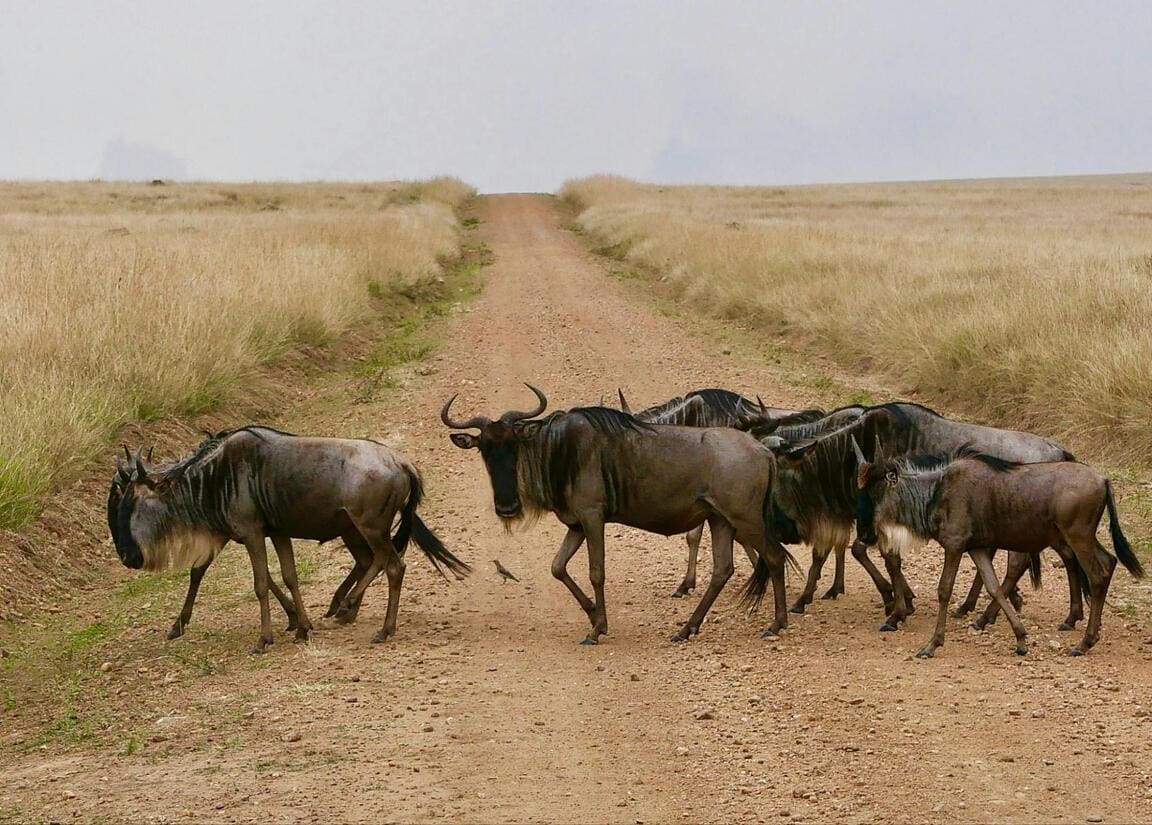
A Familiar Face, a Much Bigger Story
Twelve years ago, during my first visit to Nairobi, I went to the Nairobi National Park and encountered some of Kenya’s remarkable wildlife. Among the animals I saw were wildebeest. Over the years, I returned to the park and encountered them again, but those early sightings sparked a curiosity I’ve wanted to explore.
There is something distinctive about a wildebeest. Its heavy shoulders, sloping back, curved horns, and long face give it an appearance that seems assembled from several different animals. It has the beard of an old man, the horns of an antelope, and a sturdy body built for covering long distances. Its name may sound almost comical, but there is nothing ordinary about this creature.
At first glance, it might seem like just another grazer on the African plains. Yet the wildebeest is part of one of the most extraordinary ecological dramas on Earth, a story in which rainfall becomes a signal, grass becomes fuel, and millions of hooves help connect distant landscapes.
Built for a Life on the Move
The blue wildebeest (Connochaetes taurinus), also known as the brindled gnu, is native to eastern and southern Africa. It is a member of the antelope family, although its unusual appearance can make it difficult to recognize that at first.
Its life revolves largely around grass and water. Unlike animals that can feed on a wide variety of plants, wildebeest are adapted to grazing, often selecting relatively short, nutritious grasses. Their movements reflect the changing availability of these resources.
And then there is the migration.
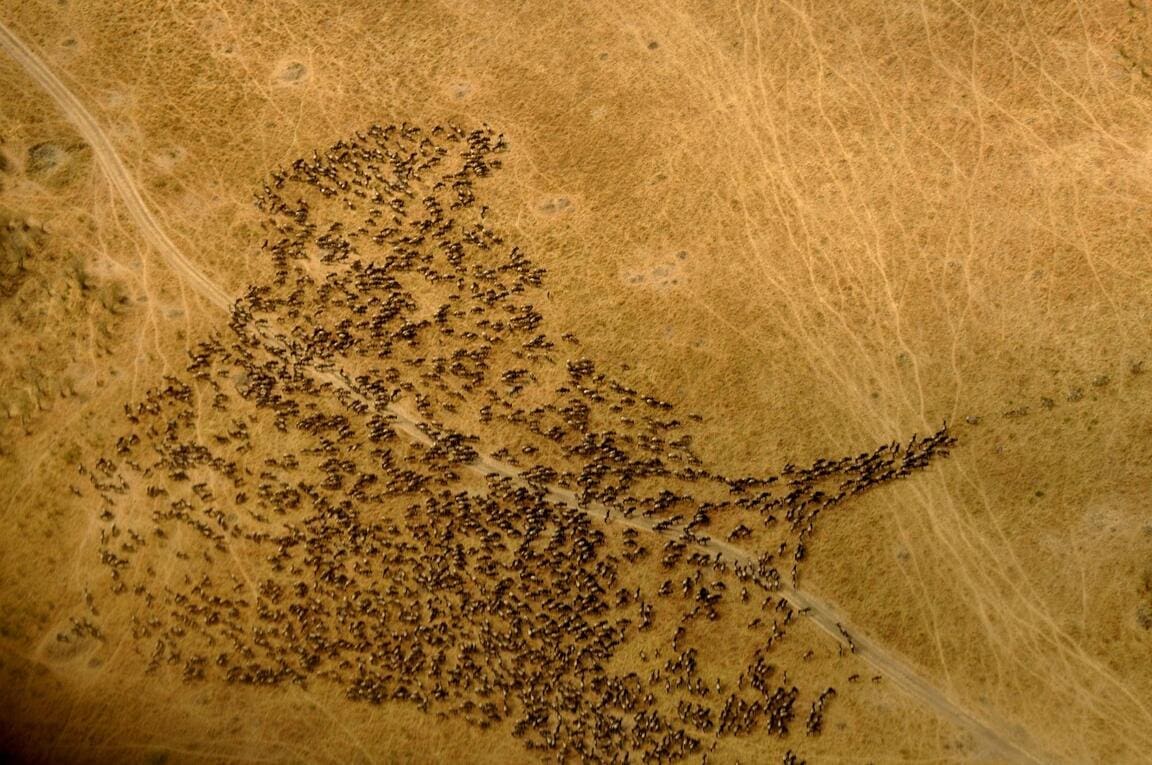
Across the Greater Serengeti–Mara ecosystem, approximately 1.3 million migratory wildebeest move seasonally between Tanzania’s Serengeti and Kenya’s Maasai Mara, following rainfall and the changing availability of forage. They do not consult a calendar or follow a fixed road. Their movements respond to the living landscape: where rain has fallen, where fresh grass is growing, and where water remains available.
The herds typically give birth on the southern Serengeti plains during the rainy season, when nutritious grass supports lactating mothers and their young. As conditions change, they move towards other grazing grounds, including the western corridor and the northern Mara River region. When the rains return, many begin moving south again. Every leg of the journey follows the rain.
And the young must keep up. Wildebeest calves are remarkably precocious, often standing within minutes of birth and attempting to run soon afterwards. In a world where predators are always searching for an opportunity, those first steps can mean the difference between survival and death.
The migration is often described as the greatest terrestrial wildlife migration remaining on Earth. But its real significance extends far beyond the spectacular sight of a moving herd.
Grasslands Are Not Empty Spaces
Imagine a grassland after the rains. New growth spreads across the soil, insects become active, birds forage, and grazing animals arrive to take advantage of the abundance.
Wildebeest turn grass into animal biomass, and their droppings return nutrients to the soil. Research in the Serengeti shows that large grazers speed up nutrient cycling, and that under the right rainfall and grazing conditions they can even boost grassland growth. Multiply that by roughly 1.3 million animals and the effect is felt across the whole ecosystem.
Wildebeest also support an extensive food web. Lions, spotted hyenas, cheetahs, and other predators hunt them, while vultures and smaller scavengers benefit from carcasses. Even the animals that do not survive the migration contribute nutrients to the surrounding ecosystem.
The wildebeest is therefore both a consumer of grass and a source of life for other species.
When the River Receives the Herd
Perhaps one of the most astonishing discoveries about wildebeest is that their ecological influence does not end when they reach a river.
During the Serengeti–Mara migration, river crossings are dangerous. Animals gather along the banks, enter the water, and struggle against currents and crowded conditions. Each year, thousands drown.
It is a distressing part of the migration, but it also reveals something remarkable about the interconnectedness of ecosystems.
A 2017 study published in Proceedings of the National Academy of Sciences examined the effects of mass wildebeest drownings in the Mara River. Researchers estimated that, on average, around 6,250 carcasses contributed approximately 1,100 tonnes of animal biomass to the river each year during the period they studied.
As the carcasses decompose, their nutrients enter the aquatic food web. Soft tissues break down within weeks, while bones keep releasing nutrients for several years. Aquatic organisms, biofilms, and scavengers all participate in processing and redistributing these resources.
In effect, the migration transports nutrients from the grasslands into the river. A large herbivore’s life, and even its death, becomes part of the river’s ecology.
This discovery challenges the idea that land and water ecosystems operate separately. They are connected by animals that move between them, carrying energy and nutrients across boundaries.
What Happens When the Way Is Blocked?
For a migratory animal, a landscape is not simply a place to live. It is a route between the resources needed at different times of the year.
That is why fences, roads, settlements, and the fragmentation of grazing lands can have consequences far beyond the immediate area where they are built. When animals can no longer reach seasonal feeding grounds or water sources, the entire pattern of their lives may change.
The Greater Serengeti–Mara migration remains spectacular, but it is not the only wildebeest migration in Kenya. The Mara–Loita population, which once numbered an estimated 120,000 to 150,000 animals in the 1970s, had fallen to approximately 26,700 by 2024, according to the Convention on Migratory Species. Research identifies settlement and fencing across the Loita and northern Mara plains as major barriers to movement.
This is a sobering example of how a migration can be diminished without the animals disappearing everywhere. A population may still exist but lose the freedom to move through the landscape that helps to sustain it.
The question is no longer simply whether there is enough grass. It is whether the animals can reach it.
And this brings us to the people who have long lived alongside these grasslands.
The Wildebeest and the Maasai: A Shared Landscape
The Maasai are among the pastoralist communities whose histories, livelihoods, and cultural identities are deeply connected to East Africa’s rangelands. Livestock grazing, access to water, seasonal movement, and knowledge of local conditions have long shaped pastoral life.
These landscapes are not merely wildlife habitat. They are also lived-in places, supporting families, livestock, livelihoods, and cultural traditions.
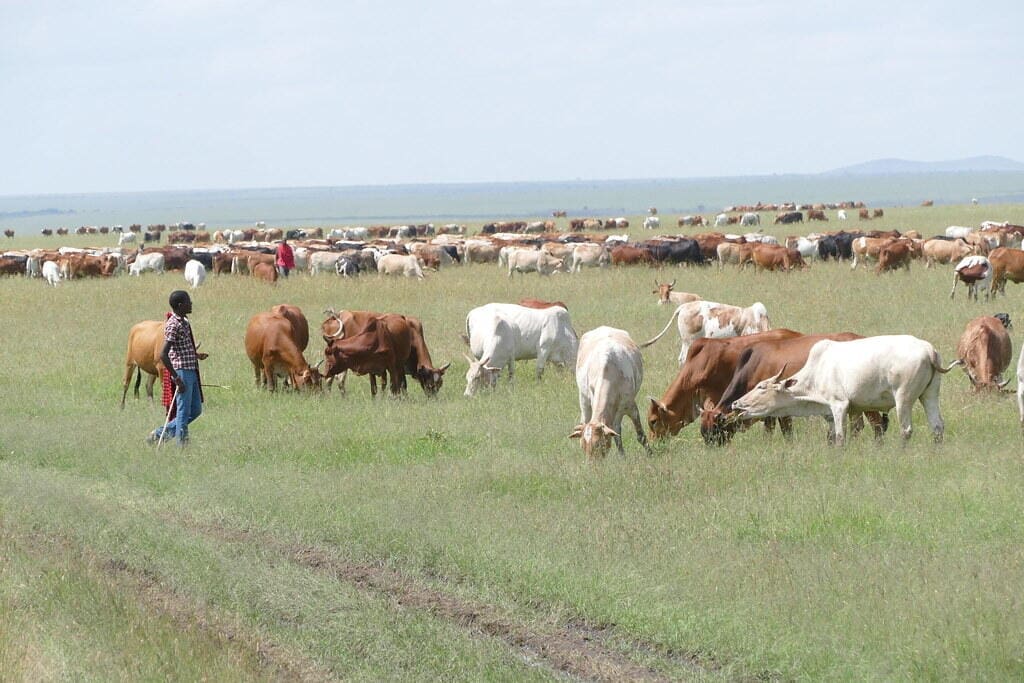

Yet conservation has sometimes treated human presence as a problem to be removed rather than a relationship to be understood.
The idea commonly described as fortress conservation prioritizes protected areas from which human use or settlement is restricted, often with the assumption that nature is safest when separated from people. In East Africa, conservation histories and land-use policies have sometimes restricted pastoralist access to ancestral lands and resources. More recent research on Maasai lands in Kenya has examined how land subdivision, fencing, and conservation arrangements can reshape community land rights and fragment landscapes.
It is worth pausing on the assumption at the heart of that idea. Many of us have absorbed the picture of conservation as a line on a map, with wildlife on one side and people on the other. The wildebeest and the Maasai invite a different picture, one in which the health of the land depends on connection and movement, and in which the people who know the land best are partners rather than obstacles.
The picture is complicated. Some community conservancies provide income and opportunities for wildlife protection, while other arrangements raise serious concerns about unequal decision-making, land access, and the long-term security of pastoral livelihoods. The experiences of Maasai communities are not all the same, and conservation should not assume that one model works everywhere.
But the ecological question is clear: what happens to a migratory animal when the land it depends on becomes a patchwork of disconnected spaces?
And what happens to the people whose livelihoods have also depended on being able to move across changing conditions?
The wildebeest migration offers a powerful reason to reconsider the idea that nature and people must always be separated for conservation to succeed. Protecting wildlife requires attention to the wider landscape, including the rights, knowledge, and participation of the people who live there.
Conservation that listens to pastoralists, respects customary land governance, and maintains ecological connectivity has a better chance of supporting both wildlife and human well-being.
For readers who want to explore this issue further, the following research provides useful starting points:
- “Fencing is our last stronghold before we lose it all”: A political ecology of fencing around the Maasai Mara National Reserve, Kenya.
- The Community Land Act and the subdivision of Kenya’s Maasailand’s remaining commons.
- East Africa must reject its colonial model of conserving wildlife (The Guardian).
A Lesson for a Changing Climate
The wildebeest migration is driven in large part by seasonal rainfall and the resulting availability of fresh grass and water. This makes the animals’ movements closely connected to climate.
When rainfall patterns shift, droughts intensify, or water sources become less reliable, the timing and distribution of forage can change. Wildebeest must respond to these changing conditions, but their ability to do so depends on whether the routes between habitats remain accessible.
Mobility is therefore an important form of adaptation.
This is also true of pastoral communities. The ability to move livestock towards available water and pasture helps herders respond to variable weather and avoid placing too much pressure on one area. When movement is restricted by fences, land fragmentation, or competing land uses, both people and ecosystems may become less resilient.
The Food and Agriculture Organization identifies pastoral mobility, Indigenous and local knowledge, and inclusive land governance as important components of sustainable rangeland management. In 2026, the International Year of Rangelands and Pastoralists is drawing attention to these connections between healthy landscapes, biodiversity, food systems, and livelihoods.
The lesson is not that every form of movement is automatically beneficial, or that wildlife and livestock never compete. Rather, it is that ecological relationships must be understood in their local context. Healthy rangelands depend on the interaction of rainfall, soils, plants, animals, and the people who manage and depend on them.
When we think about climate solutions, we often picture things we build or add. The wildebeest and the Maasai point to something quieter: resilience that comes from keeping living systems connected and letting them move. Healthy, connected rangelands support biodiversity, cycle nutrients, and help both wildlife and people adapt to a changing climate. Protecting that connection is climate work, even when it looks like nothing more than open grass.
What I See When I Think of the Wildebeest Now
I first encountered wildebeest in Nairobi National Park twelve years ago. I have seen them again since, but researching this creature has given me a different way of understanding what I was looking at.
I now see more than an unusual-looking antelope grazing on the plains.
I see an animal whose life connects rainfall to grass, grass to soil, and grasslands to rivers. I see a creature that supports predators and scavengers, carries nutrients through a landscape, and depends on the freedom to follow changing seasons.
I also see a reminder that wildlife conservation cannot be separated from questions about people and land. A migration needs connected habitat, and connected habitat exists within a wider social world. The future of the wildebeest is tied not only to protecting animals inside national parks, but also to decisions about the landscapes beyond their boundaries.
Perhaps the most extraordinary thing about the wildebeest is not that it travels so far. It is that its journey reveals how much depends on the ability to move.
In this International Year of Rangelands and Pastoralists, protecting not just individual animals but the relationships that sustain whole ecosystems means keeping migration routes open and listening to and respecting the communities who live along them.
What You Can Do
The next time you hear a story about protecting nature, ask a simple question: who lives here, and what do they know? Then take one step:
- Look closer. Read the three pieces linked above on fencing, land subdivision, and fortress conservation in Maasailand, and notice how often connection and movement are the missing part of the conversation.
- Change the story. Share this piece with someone who thinks of conservation as keeping people out, and start a conversation about what it could look like to keep landscapes connected instead.

Betty Bitengo is from Nairobi, Kenya, and graduated from Jomo Kenyatta University of Agriculture and Technology with a degree in Community Development and Environmental Conservation. She has worked with both local and international NGOs on projects that promote sustainability, community empowerment, and environmental awareness. She has always been passionate about protecting the environment and ensuring that communities have the tools and knowledge to thrive in harmony with it. She believes that change begins with awareness and that sharing knowledge in ways that are accessible and relatable is key to addressing our shared challenges.
Betty joined the Bio4Climate team to contribute to outreach and engagement efforts that inspire action, foster collaboration, and make complex environmental topics understandable to everyone. Over the past year, she has supported Bio4Climate’s educational programs through course outreach, event promotion, email communications, website and content updates, and community engagement. Through this work, she has gained experience in connecting people with learning opportunities and helping share Bio4Climate’s message about the important relationship between people, ecosystems, and a healthy climate.
Sources
- Convention on Migratory Species: Fact Sheet on Wildebeest Migration: Serengeti–Mara and Mara–Loita
- Science: Promotion of the Cycling of Diet-Enhancing Nutrients by African Grazers (McNaughton et al., 1997)
- Proceedings of the National Academy of Sciences: Annual Mass Drownings of the Serengeti Wildebeest Migration Influence Nutrient Cycling and Storage in the Mara River (Subalusky et al., 2017)
- FAO: International Year of Rangelands and Pastoralists 2026
- Land Use Policy: “Fencing Is Our Last Stronghold Before We Lose It All”: A Political Ecology of Fencing Around the Maasai Mara National Reserve, Kenya
- Pastoralism: Research, Policy and Practice: The Community Land Act and the Subdivision of Kenya’s Maasailand’s Remaining Commons
- The Guardian: East Africa Must Reject Its Colonial Model of Conserving Wildlife (Gatu wa Mbaria, 2022)