
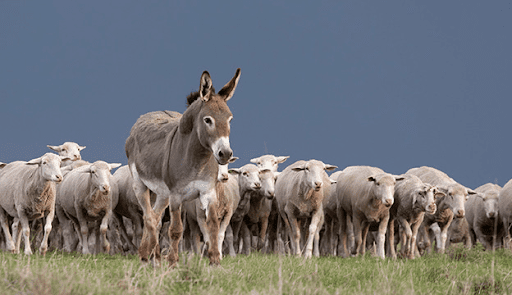
In 2021, Bio4Climate helped bring attention to the wild donkeys of Kachana Station in Western Australia, where Chris Henggeler has spent decades restoring a degraded landscape through holistic management. Rather than viewing the donkeys as pests, Chris has integrated them into his work alongside cattle, seeing their grazing, movement, and soil disturbance as part of the landscape’s regeneration.
Western Australian authorities take a very different view. Feral donkeys are classified as pests because of their potential impacts on vegetation and water sources. In 2021, authorities ordered Chris to remove the donkeys from Kachana. After four years of appeals, the order was upheld in October 2025. Kachana is now required to cull at least 70 donkeys by August 31, 2026, with the remainder of the 117 animals covered by the order to be culled by August 2027.
This week, Bio4Climate advisor Judith D. Schwartz brought Kachana’s story to her Substack audience and inspired us to speak up again. It may be too late for some of these tireless ecorestoration partners, but the larger questions their story raises remain very much alive.
- Donkeys on Death Row, by Judith D. Schwartz
- Bio4Climate’s interview with Chris Henggeler of Kachana Station
- The Donkey Experiment, ABC News
- The Donkey and the Roads of History Blog — Join the conversation
At Bio4Climate, we rarely ask whether a creature is simply “good” or “bad.” We ask: what role does it play in the web of life? Including humans.
Posted: August 22, 2026