
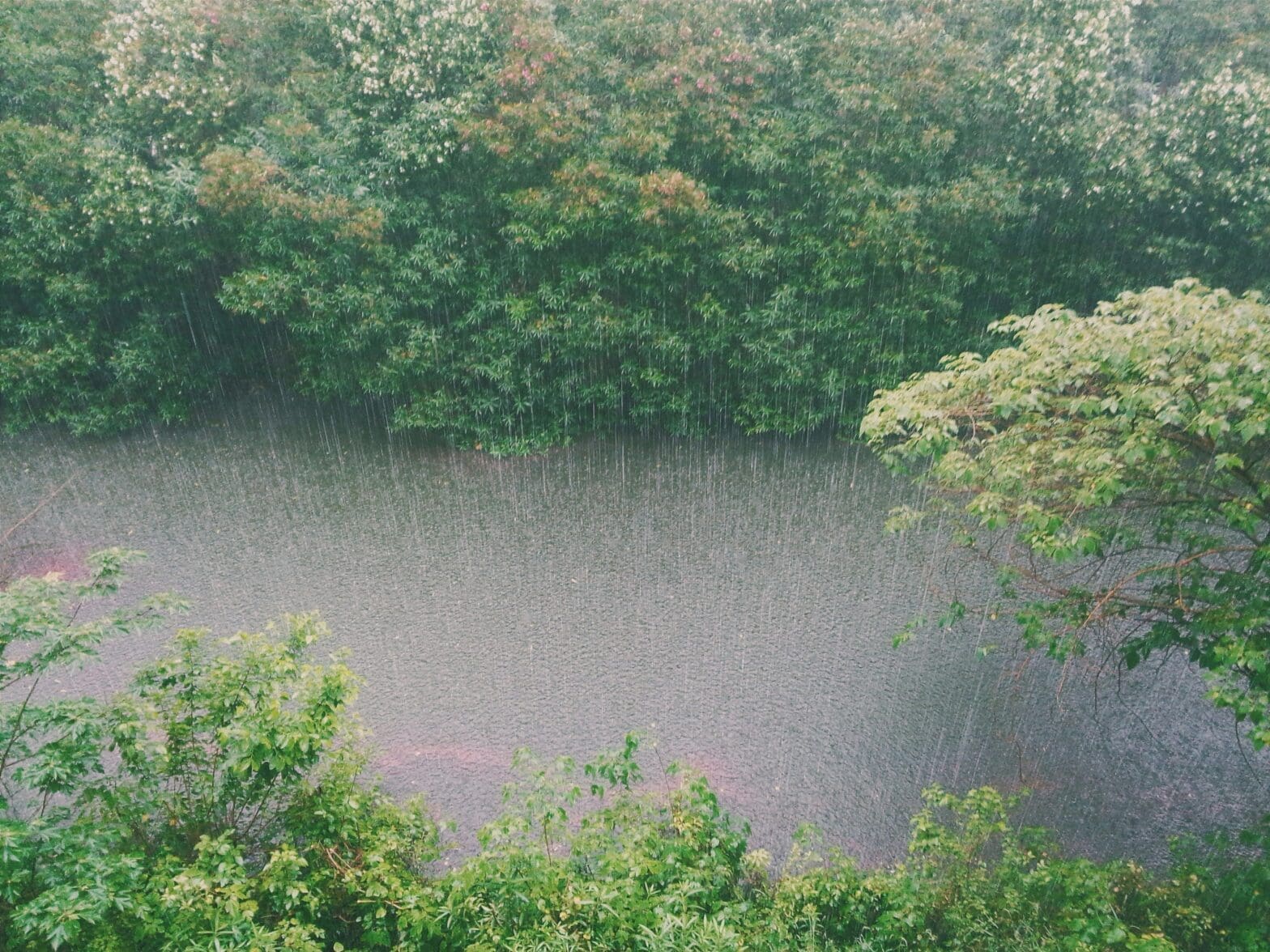
Something strange is unfolding in the global water cycle: many regions are seeing more rainfall overall, yet landscapes are becoming drier. A recent article in USA Today highlighting a major new study in Nature using satellite-derived terrestrial water storage (TWS) data shows that climate change is intensifying not only rainfall, but the instability of how water moves through land systems.
Rain is increasingly falling in short, extreme bursts rather than slower, soaking events that recharge soils and groundwater. Combined with rising temperatures, stronger evaporation, and increased shortwave radiation heating dry land surfaces, ecosystems are losing their ability to retain moisture over time. The result is a dangerous cycle of heat waves, flash floods, soil drying, and hydrological volatility.
As climate systems become more volatile, adaptation cannot rely solely on emissions reductions or engineered infrastructure. We must also restore the ecological systems that slow, store, filter, and circulate water across landscapes. The future of climate resilience may depend less on controlling the atmosphere directly, and more on rebuilding Earth’s natural capacity to retain and regulate water.
The full blog post, written by Bio4Climate’s Research Scientist Dr. Poulomi Chakravarty.
Posted: May 22, 2026