

Why Living Systems Matter More Than Ever
Over the past few years, climate change has stopped feeling like something happening in the distant future. It is unfolding around us, in increasingly visible and disruptive ways.
Across the world, communities are experiencing longer and more intense heatwaves, wildfires, droughts, floods, and tropical cyclones. These events are affecting not only people and infrastructure, but also forests, farms, rivers, wetlands, wildlife, and the ecological systems on which our lives depend. Since 2023, global temperatures have remained roughly 1.4°C to 1.6°C above pre-industrial levels, with climate extremes being felt across Asia, Africa, Europe, the Americas, and the Arctic.
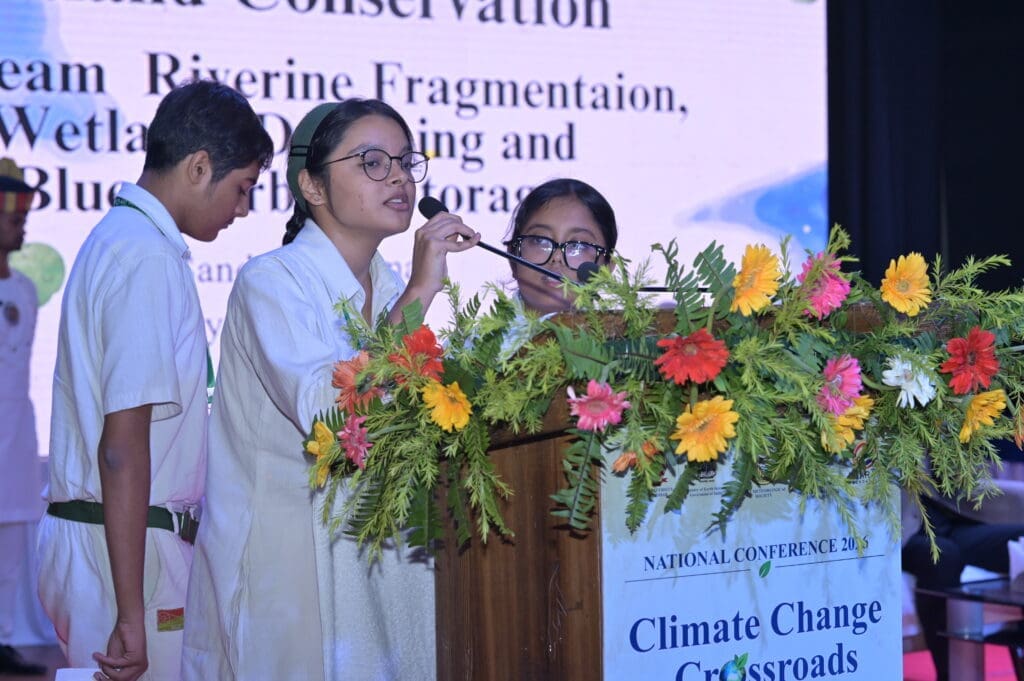
It was against this backdrop that I had the opportunity to participate in the Climate Change Crossroads 2026 Conference in Patna, India, held on September 30 and October 1. The conference brought together researchers, practitioners, government representatives, and students working across climate science, biodiversity, agriculture, extreme weather, food systems, public health, and disaster resilience.
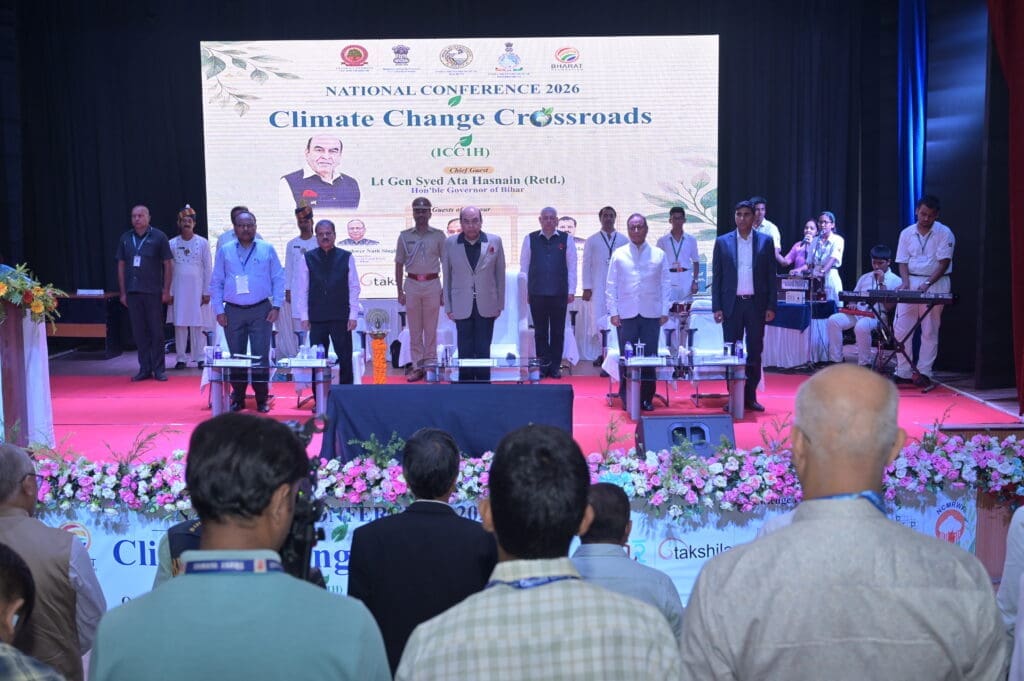
What struck me most was how difficult it has become to separate these conversations.
A discussion about heat soon becomes a discussion about water. A discussion about water becomes one about agriculture. Agriculture brings us to soil, biodiversity, livelihoods, and food security. And when we talk about floods, drought, disappearing vegetation, or urban heat, we are ultimately talking about the condition of the living systems around us.
That interconnectedness was at the heart of the work that Beck Mordini and I presented through Living Climate Systems Knowledges for Restoring Ecosystems and Building Climate Resilience.
Our central message was simple: climate change is also an ecosystem crisis.

We often discuss climate problems one at a time—carbon emissions, flooding, drought, heat, deforestation, biodiversity loss. But nature does not operate in separate categories. Soil stores water. Water supports vegetation. Plants move moisture and provide shade. Biodiversity helps ecosystems function, adapt, and recover. When one part of that system is weakened, the effects can ripple through everything else.
This is why we wanted to move the conversation beyond individual climate interventions toward something more integrated: restoring the relationships that allow landscapes to function.
At Bio4Climate, we see this happening through very tangible work—removing pavement so soil can live and absorb water again, planting native species, creating dense and biodiverse miniforests, restoring watersheds, helping water remain in landscapes, and building community stewardship around these places.
One idea from our presentation has stayed with me particularly strongly. Instead of asking only, “How many trees did we plant?”, we should also be asking, “What ecological functions did we restore?”
That shift in perspective matters.
A tree is not simply a carbon unit. A wetland is not simply flood infrastructure. Soil is not merely the surface beneath our feet. These are living systems that regulate water, temperature, biodiversity, and the conditions that make human communities habitable.
The conference in Patna gave us an important space to place this message alongside conversations about wetlands, agriculture, urban heat, river systems, biodiversity, early warning, and climate adaptation. The session on Biodiversity and Ecosystem Resilience under Climate Stress, in particular, demonstrated how closely these challenges are connected.
For me, the experience reinforced something fundamental that responding to climate change cannot only mean reacting to the next disaster.It must also mean restoring the living systems that help prevent landscapes and communities from becoming more vulnerable in the first place.
As we emphasized in our presentation, ecological restoration is ultimately about more than bringing nature back. It is about restoring the relationships that keep landscapes biodiverse, functional, resilient, and habitable.
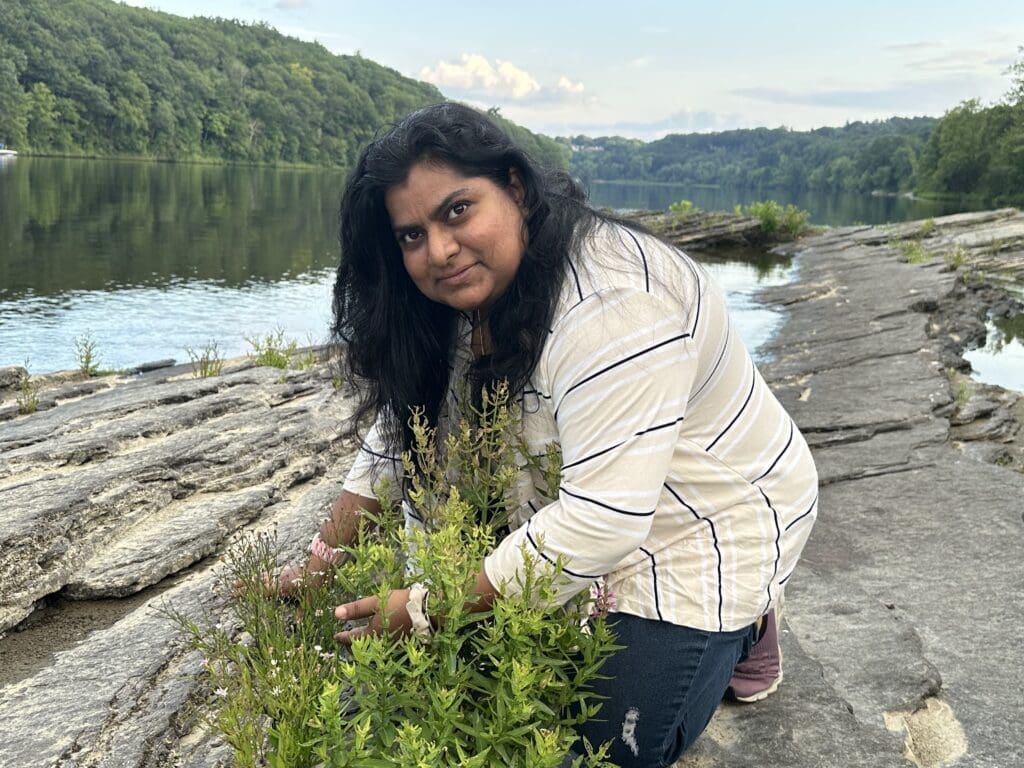
Poulomi Chakravarty, PhD is an environmental scientist, educator, and science communicator with expertise in micrometeorology, ecology, biodiversity, phytoremediation, climate extremes, remote sensing, and climate education. She serves as Scientific Advisor, India Program Director, and Education Lead at Biodiversity for a Livable Climate, where her work advances climate literacy, environmental education, ecosystem restoration, and nature-based climate solutions. Her work also focuses on integrating natural systems, Indigenous Knowledge, and AI-enabled approaches for climate resilience. As a facilitator of climate action programs, she designs curricula and leads community-based initiatives that help diverse learners engage with climate science, biodiversity, soil, water, and sustainability. Beyond her professional work, she is passionate about environmental protection, animal rescue, painting, music, and life as a devoted dog mom.