

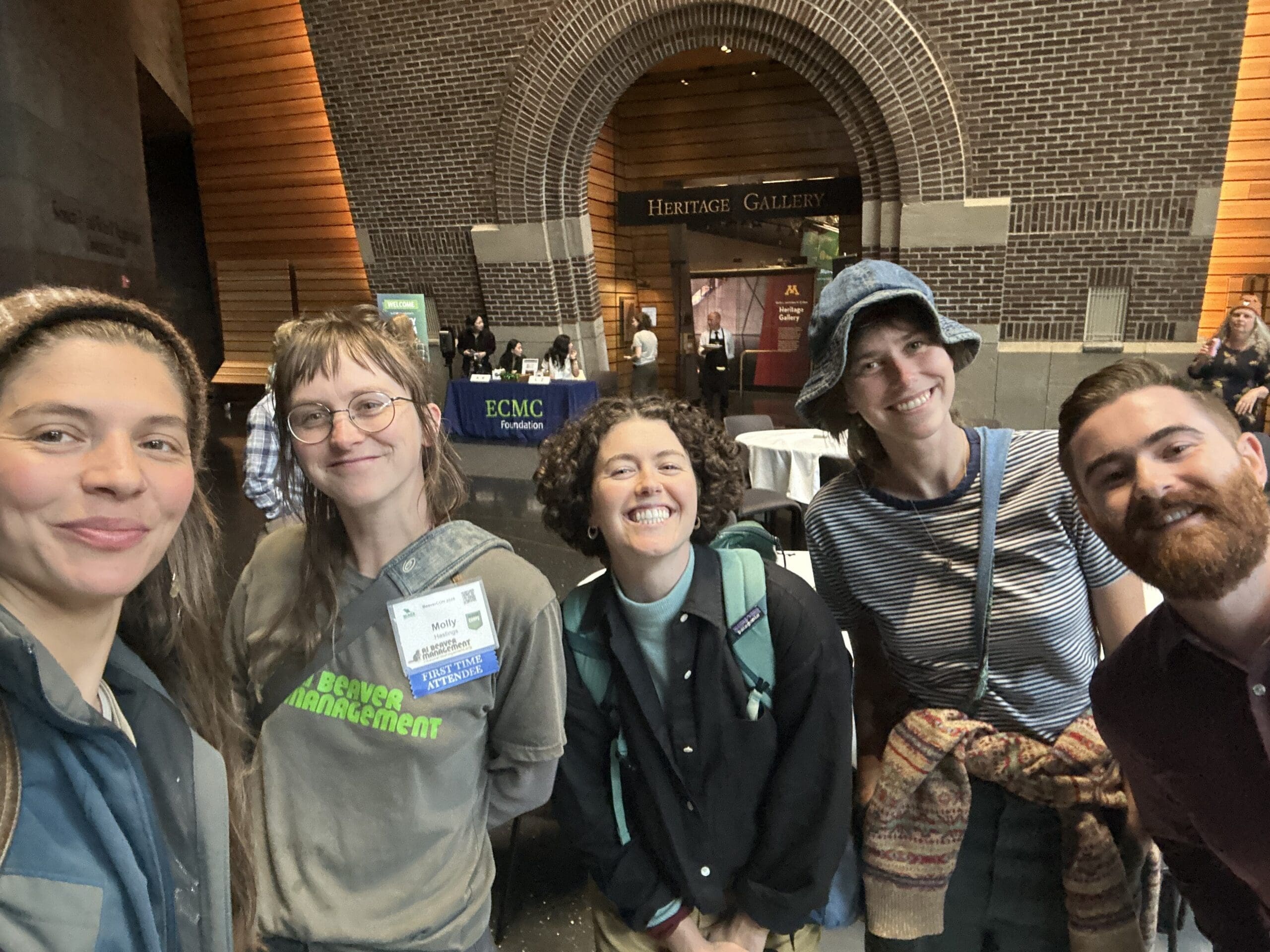
This year, thanks to Bio4Climate’s support and a scholarship from the Beaver Institute, I had the opportunity to attend BeaverCON 2026 at the University of Minnesota in Minneapolis. I am deeply grateful to have been welcomed into this generous community of people tending, in so many different ways, to beaver coexistence, restoration, science, advocacy, and care for watersheds.
I presented early questions about how elements of the Miyawaki Method—such as soil restoration and dense, diverse, multi-layered native planting informed by potential natural vegetation and local plant communities—might support planting and regenerating food for beavers. I was grateful for the thoughtful conversations that followed and hope they may lead to future learning and collaboration.
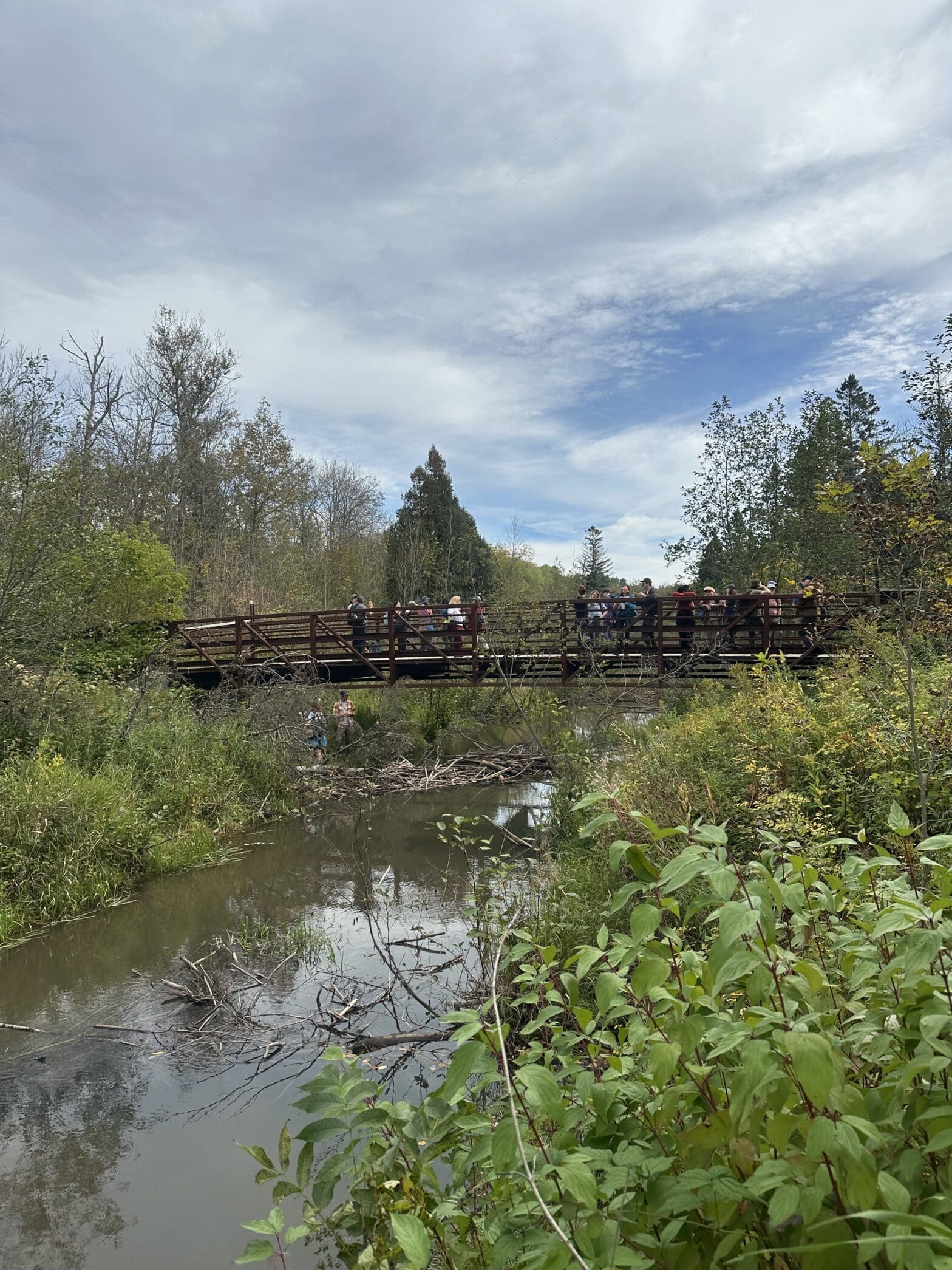
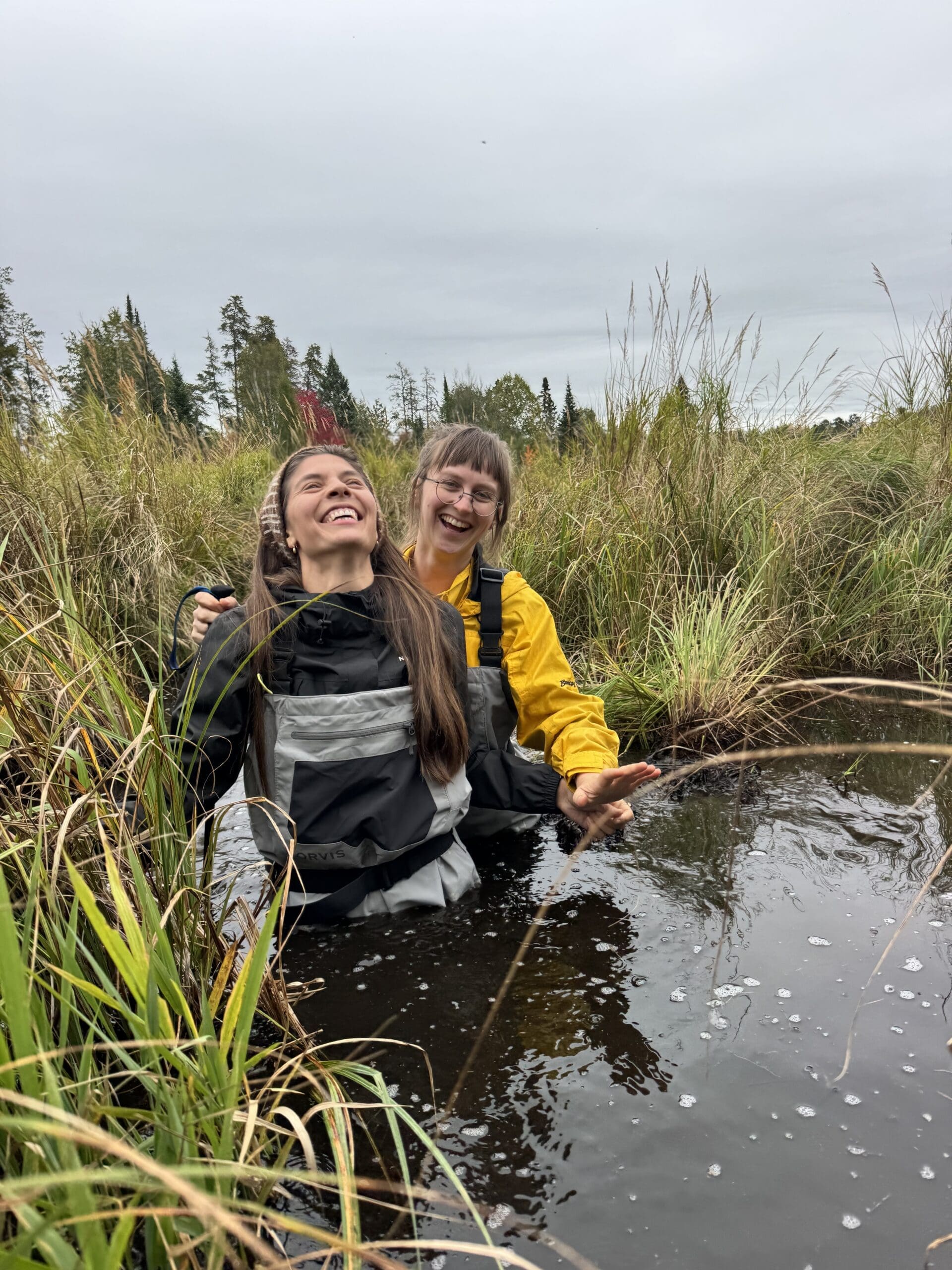
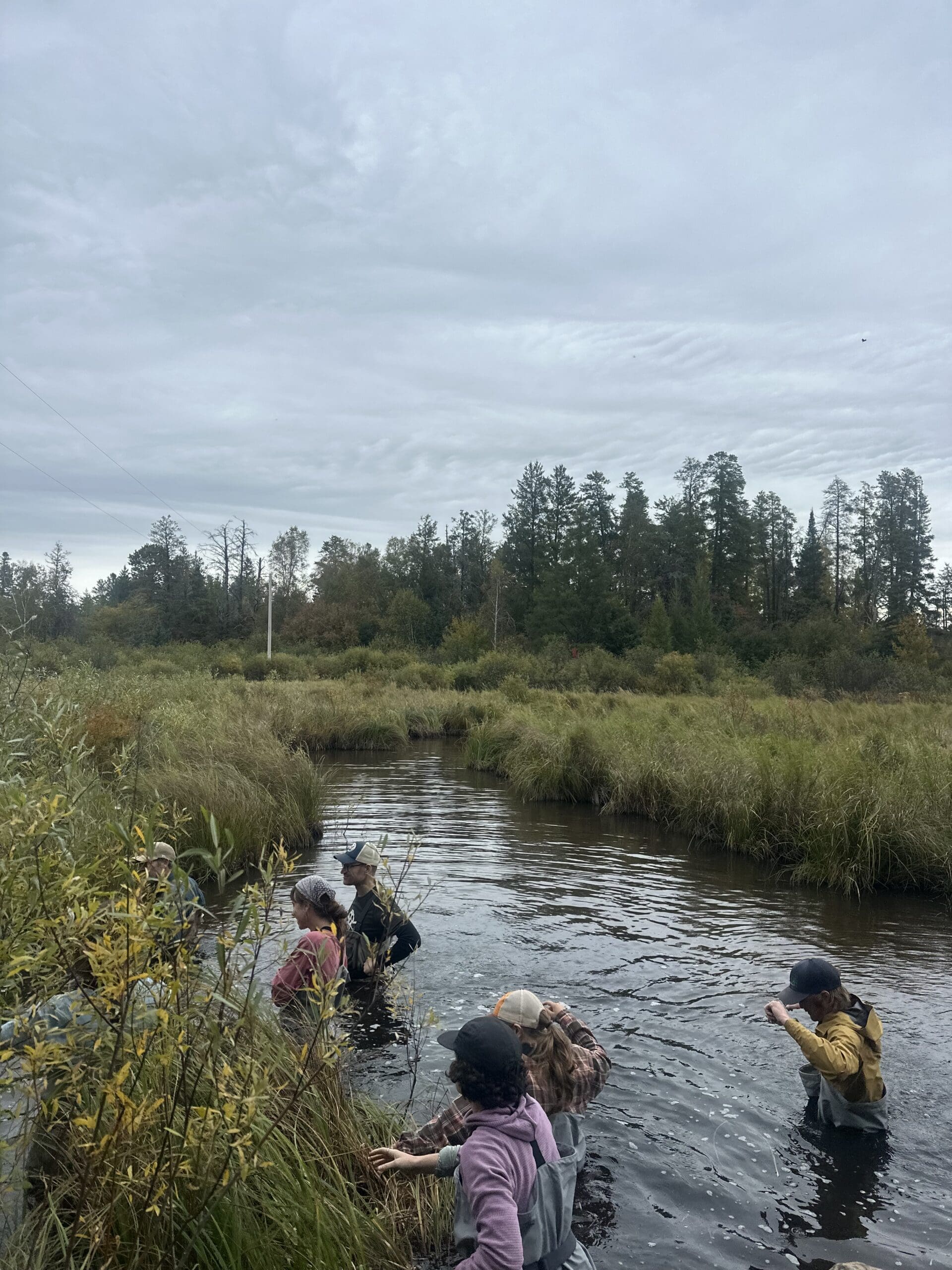
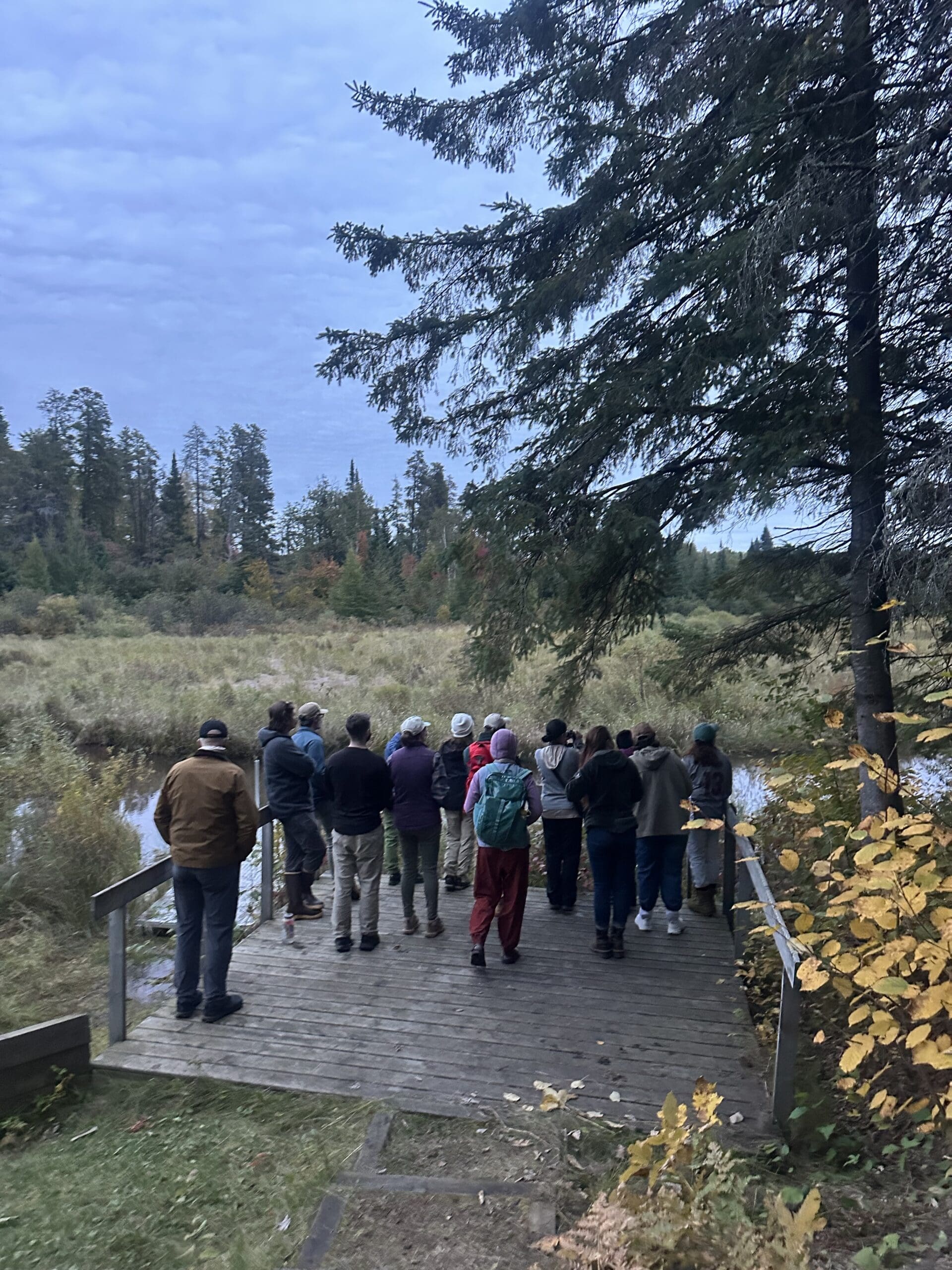
I also joined an early-career field trip with Dr. Emily Fairfax, her lab, and fellow participants, hiking among beaver ponds at Jay Cooke State Park and exploring the beaver wetlands at the University of Minnesota’s Cloquet Forestry Center in waders. From the embodied knowledge of exploring beaver-excavated canals, to field techniques and introductions to drones and environmental DNA as other ways of knowing an ecosystem, to conversations over shared meals, the trip created space to learn from one another and from the landscapes themselves.
We often look for one big intervention that will change the world. BeaverCON—and the beavers themselves—offered a different lesson: a landscape is transformed not by one large dam or visible structure alone, but by many small, connected actions over time—often unseen and sometimes temporary. The excavation of canals, the cutting of vegetation, the breaching of a dam, and the movement of water each shift the conditions for what can grow, gather, and live there.
I left humbled by the many visible and less visible ways beavers shape living, resilient watersheds—and by how much there is still to learn. I’ll be sharing more reflections, lessons, and questions in the coming weeks.

About the Author
Alexandra Ionescu is the Associate Director of Regenerative Projects at Biodiversity for a Livable Climate, where she leads the Miyawaki Forest Program—supporting the planting of miniforests, cultivating partnerships, and guiding strategic planning—and recently curated the inaugural 2025 Northeast Miniforest Summit. Her work focuses on urban afforestation using the Miyawaki Method, education around beaver-engineered landscapes, and floating wetlands that combine art with ecological functionality. A lifelong student of how nature works, her mindset—shaped by graduate education in Biomimicry from Arizona State University and Nature–Culture–Sustainability Studies from the Rhode Island School of Design—is about cultivating propensities for the web of life to emerge. Her practice brings together the implementation of nature-based solutions, knowledge activation, curation, writing, photography, and strategic, as well as creative direction. She is a Certified Biomimicry Professional, and in 2025 she further deepened her ecological understanding through the Water Stories Core Course, a training focused on water-cycle restoration and decentralized water retention systems. Alexandra serves in an administrative role on the Board of Directors of the Beaver Institute and is a co-leader of the Beaver Network for East Coast/Rhode Island.