
An Earthling’s Guide to Planetary Health
(aka: The Regenerating Life Study Guide)
John Feldman
with Fred Jennings and the resources made
available by Biodiversity for a Livable Climate
Includes references to content markers in the
Regenerating Life Community and Educational version
and the Regenerating Life DVD.
Introduction
This Guide gives readers an outline of the causes and solutions to the climate crisis. It is based on the understanding that the Earth’s climate is maintained and regulated by the biosphere. The biosphere is the living environment that we are each a part of, and which we are each dependent upon. It includes all the animals, plants, fungi, bacteria, and other micro-organisms on Earth. The biosphere is often referred to as nature, the environment, the system of life, or Gaia. Humans have caused the climate crisis through severely damaging the biosphere. And we have been doing this for centuries.
Conventional narratives take a reductionistic approach and, often, blame the entire climate crisis on the rise in fossil fuel emissions. This Guide loudly proclaims that the climate crisis is caused by far more than just the burning of fossil fuels. It is caused by humanity’s ongoing destruction and rampant exploitation of the living Earth, humans included.
By expanding the scope of causes this approach also expands the scope of solutions. This Earthling’s Guide explores how the biosphere regulates the climate, what we humans have done to cause the crisis, and – most importantly – how we can work with nature to restore the biosphere and solve the climate crisis. The Earthling’s Guide also optimistically proclaims that we Earthlings can solve the climate crisis if we accept the obligation to care for the Earth and each other.
This Earthling’s Guide to Planetary Health is for anyone interested in exploring a holistic approach to the climate crisis. It is based on and expands upon the documentary Regenerating Life. The Earthling’s Guide follows the flow of the documentary and includes references, citations, and links that back up and expand upon the content of the film. It should be useful for anybody who has seen the film, who wants to know more or get clarity on an idea or story.
On the next page are links to watch Regenerating Life and the Regenerating Life Community and Educational Version which was produced to accompany this Guide.
In the addendum we have included Hummingbird Films’ Soggy Manifesto – which gives ideas of what each of us can do to alleviate the climate crisis. And for those of you who are good at repairing things we’ve included a link to: Your Living Earth Troubleshooting Guide.
Table of Contents
An Earthling’s Guide to Planetary Health is divided into 33 numbered chapters. The numbers refer to time-coded markers in the Regenerating Life DVD and The Regenerating Life Educational Version. The chapter names are the same as the marker names. (The chapter numbers start with 3 to be consistent with the marker numbers.) The time code for each marker is listed in this guide so that any version of the film can be used. Time code is in hours: minutes: seconds; frames.
- CHAPTER 2 [5:17;23] — Part 1 : Water Cools the Planet
- CHAPTER 3 [5:41;23] — Everything Causes Everything Else
- CHAPTER 4 [11:29;16] — Love the Greenhouse Effect
- CHAPTER 5 [16:22;06] — Earth’s Warming and Cooling Processes
- CHAPTER 6 [20:59:06] — Plants Sweat Too
- CHAPTER 7 [23:32;12] — Rain Needs Trees
- CHAPTER 8 [26:12;12] — Fresh Water to the Land
- CHAPTER 9 [30:24;20] — What is Climate Change?
- CHAPTER 10 [33:24;07] — Global Drying
- CHAPTER 11 [37:05;25] — The Mystery of Water
- CHAPTER 12 [39:33;02] — Conclusion to Part 1
- CHAPTER 13 [41:49;16] — Part 2 : Life Sustains the Climate
- CHAPTER 14 [43:12;19] — The Cycle of Life
- CHAPTER 15 [49:39;17] — Earth’s Energy Balance
- CHAPTER 16 [51:36:06] — The Dung Cycle
- CHAPTER 17 [59:40:03] — Living Soil
- CHAPTER 18 [1:04:33;04] — Deforestation
- CHAPTER 19 [1:11:42;22] — Resilience and Restoration
- CHAPTER 20 [1:16:30;05] — The Profit Monster
- CHAPTER 21 [1:20:1 6;05] — CO 2 – The Fall Guy
- CHAPTER 22 [1:27:33;17] — Conclusion to Part 2 : Reversing All This
- CHAPTER 23 [1:30:07;00] — Part 3: Small Farms Feed the World
- CHAPTER 24 [1:30:25;17] — The Problem with Plowing
- CHAPTER 25 [1:35:17;07] — The Industrialization of Farming
- CHAPTER 26 [1:40:32;12] — Poisoning the Soil
- CHAPTER 27 [1:45:35;17] — The Green Revolution That Wasn’t
- CHAPTER 28 [1:50:47;17] — Let Cows Burp
- CHAPTER 29 [1:53:53;26] — Ecological Farming
- CHAPTER 30 [1:58:07;28] — Changing Our Lens
- CHAPTER 31 [2:01:21;13] — Agricultural Solution Sets
- CHAPTER 32 [2:05:21;07] — Community Gardens
- CHAPTER 33 [2:11:01;04] — Conclusion and Dream Solutions
- CHAPTER 34 [2:14:17;17] — Credits
CHAPTER 2 [5:17;23]

Part 1: Water Cools the Planet
“When I started this film about the causes and solutions to the climate crisis, I had no idea that I’d be spending so much time looking at water.” —Narration
“Yes, it is water that governs 95% of the heat dynamics of the blue planet, Earth. Water.” —Walter Jehne
“If you want to solve the problem of climate change, you don’t need any technology. You just take care of the soil.” —Satish Kumar
“That soil is a sponge and that’s a sponge that can actually infiltrate the rain, retain that water in that soil, make it available for plants to grow and make it able to drive that hydrological cycle.” —Walter Jehne
(All quotes from Regenerating Life)
Chapter 3 [5:41;23]
Everything Causes Everything Else
Systems Thinking
The biosphere is one big, interconnected network of organisms. To understand and appreciate this network, this Earthling’s Guide to Planetary Health takes a systemic or holistic approach. This is called “systems thinking” and is the basis for a new paradigm of scientific methodology for understanding life. It is sharply contrasted with reductionism, which is the scientific approach that breaks life down into smaller and smaller parts and that concentrates on understanding the parts as a way to understand the whole.
The current narrative that fossil fuel emissions are the primary cause of climate change is an example of a reductionistic way of thinking.
Everything Causes Everything Else
We 21st century Earthlings generally think in terms of cause and effect, action and reaction, but when we take a systemic approach, we see that every effect also causes something, so everything causes everything else.
The Gaia Theory
An important example of systems thinking is the Gaia Theory developed by James Lovelock and Lynn Margulis. It is a scientific idea that proposes that the biosphere is a self-regulating, self-sustaining entity called Gaia from the ancient Greek name for the Goddess of the Earth. Gaia is the entire natural world; it includes the living (organisms) and the non-living (oxygen, water, etc.). It is often thought of as an organism, maybe a “super-organism,” but Lynn Margulis was always quick to point out that biologically speaking Gaia is not an organism, because no organism recycles its own waste within itself, but Gaia does. James Lovelock, on the other hand, was happy to call Gaia an organism.

Chapter 3 References
3.1 “Changing the Climate Conversation” by Steve Wineman. Biodiversity for a Livable Climate, March 19, 2014. “Everything is connected to everything else.” – Barry Commoner, The Closing Circle. https://bio4climate.org/2014/03/19/changing-the-climate -conversation/
3.2 A systems approach to climate change. Compendium Volume 1, Number 2: Appendix B. https://bio4climate.org/article/compendium-1-2 -appendix-b-a-systems-approach-to-climate-change/
3.3 “James Lovelock: an appreciation” by Peter Paul Bunyard. Symbiosis, Springer Nature B.V., September 13, 2022. Pages 181-187. https://link.springer.com/article/10.1007/s13199-022-00873-w
Chapter 4 [11:29;16]
Love the Greenhouse Effect
Love the Greenhouse Effect
Most discussions of the climate crisis start with the greenhouse effect, and this Guide is no exception. In this Guide the greenhouse effect is cast as a good thing.

The greenhouse effect is essential for life on Earth. Otherwise, we’d all be frozen. Generally, when we think about the greenhouse effect, we tend to concentrate on the greenhouse gases in the atmosphere. These are a group of gases that let the incoming energy, sunlight, through, but then absorb some of that energy as it reradiates away from the Earth’s surface as heat. The greenhouse gases act as a complex insulation system. But just as a blanket doesn’t “warm” the bed (after all, the bed is cold when you get into it), the greenhouse gases don’t “warm” the Earth. The greenhouse gases hold in the heat coming off the Earth just as a blanket holds in the heat coming off your body. Shifting the focus to the heat coming off the Earth is a big eye-opener, because it is the heat that causes the problem.
Why is Earth Overheating?
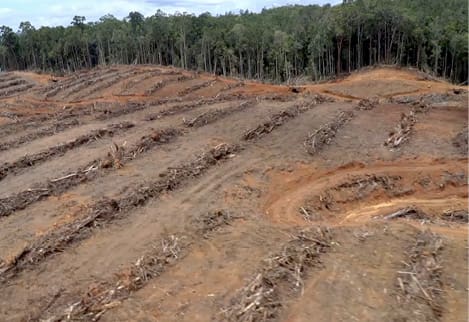
It’s the heat coming off bare land and impervious surfaces that is driving the increase in the greenhouse effect, not the increase in one or more of the greenhouse gases, although they play their part. Over the course of centuries, humans have been destroying the forests, fields, and wetlands that once covered the Earth, and have left behind bare land. A satellite view of the Earth shows this quite clearly. It’s estimated that 40% of the land that was once covered in green is now bare. Bare land reradiates far more heat (infrared energy) than land that is covered in plants, especially forests. Our cities have become “heat islands.” We all know that bare land is hotter than land covered in vegetation: think of walking with bare feet in the summer on concrete, sand, or hard packed dirt; then think about walking on grass or on a forest trail.
Albedo Compared With Reradiation
It is important to distinguish between infrared energy (heat) reradiating off the Earth’s surface and “albedo.” Albedo is the reflection of visible light/solar energy. So, something white has a high albedo because it reflects more light than something dark. Clouds and glaciers have a high albedo and they reflect sunlight away from the Earth. This reflection has a significant cooling effect. A dark surface absorbs more sunlight and heats up more than a light surface. A light surface absorbs less sunlight and reflects more, so it heats up less. You can observe this with a simple experiment: take two pieces of construction paper, a white one and a black one, and put them side-by-side outside in the sun. Now measure their temperatures with an infrared thermometer. The white one which is reflecting more solar energy has a lower temperature than the black one which is absorbing more solar energy and thus heats up more.
When solar energy (incident solar radiation) reaches the Earth’s atmosphere, one of three things happens to it. It is either (1) reflected away from the Earth by clouds and surfaces – depending on the albedo reflectance of the surface, (2) converted into latent energy through the process of evaporation of surface and soil water, and through the process of transpiration by plants, or (3) absorbed by the surface which then heats up and reradiates infrared energy back. A small percentage of the absorbed solar energy is used for photosynthesis, which provides food for living organisms.
What Are The Significant Greenhouse Gases?
Water vapor is by far the most abundant greenhouse gas, but that doesn’t diminish the importance of the other greenhouse gases, notably carbon dioxide, methane, nitrous oxide, and others. The greenhouse gases are not the same as each other, nor do they act in the same way. They have different absorption spectra and different atmospheric lifetimes. They work together, and it’s very hard to untangle the effects of one greenhouse gas from the collective.
Walter Jehne breaks down the greenhouse gasses as follows: “The water vapor’s greenhouse effect is about 80% of the gas effect, compared to the CO2 which is about 11%, and about 9% is methane, nitrous oxide, CFCs and others.”
The Atmosphere
To get a perspective on all this, we must think about that invisible thing we call the “atmosphere.” Although we can’t see the atmosphere, it is full of activity. Conventional pie-charts breakdown the gases in the atmosphere as: 78% nitrogen, 21% oxygen, and 1% trace gases. The trace gas carbon dioxide is .04 percent of the atmosphere. This low percentage doesn’t diminish the power and importance of carbon dioxide. All of the molecules in our bodies and all of the molecules in organic life got their carbon atoms from carbon dioxide. That 1 percent of trace gases also includes all of the other greenhouse gases, except for – confusingly – water vapor.
Why isn’t water vapor included in these pie charts? The simple answer is that the percentage of water vapor in the atmosphere is constantly changing: It varies from far less than 1% to about 4%. Watch the steam coming off a boiling pot of water, or the clouds forming and disappearing, and you’ll have a greater appreciation of the complexity of water in the air. (Hint: steam is liquid water mixed with water vapor.)
Also, of course, the atmosphere contains ice and lots of liquid water: clouds, mists, hazes, fog, rain, etc.
In addition to gases, liquid water and ice, the atmosphere contains soot, dust, bacteria, fungal spores, viruses, and many chemicals produced by plants and animals. These are called aerosols. You can smell a rose because a chemical aerosol traveled from the rose to your nose.
These aerosols play a tremendous role in the climate. Soot, dust, bacteria and organic chemicals are all part of the formation of hazes, smog, mists, clouds, and rain – all of which are forms of liquid water in the air (see chapter 7).
Chapter 4 References
4.1 “Greenhouse Gases: True, but Not the Whole Truth” by Christopher A. Haines. The Journal of Sustainability Education, July 14, 2022. https://www .susted.com/wordpress/wp-content/uploads /2022/07/Haines-JSE-Climate-Change-PDF.pdf
4.2 Water, Life, and Climate, Compendium Volume 2 Number 1, July 2018. https://bio4climate.org/article /compendium-2-1-water-life-and-climate/
4.3 Plants Cool the Planet: Key Concepts (5:15). Biodiversity for a Livable Planet. https://bio4climate .org/plants-cool-the-planet/
Chapter 5 [16:22;06]
Earth’s Warming and Cooling Processes
Humid hazes

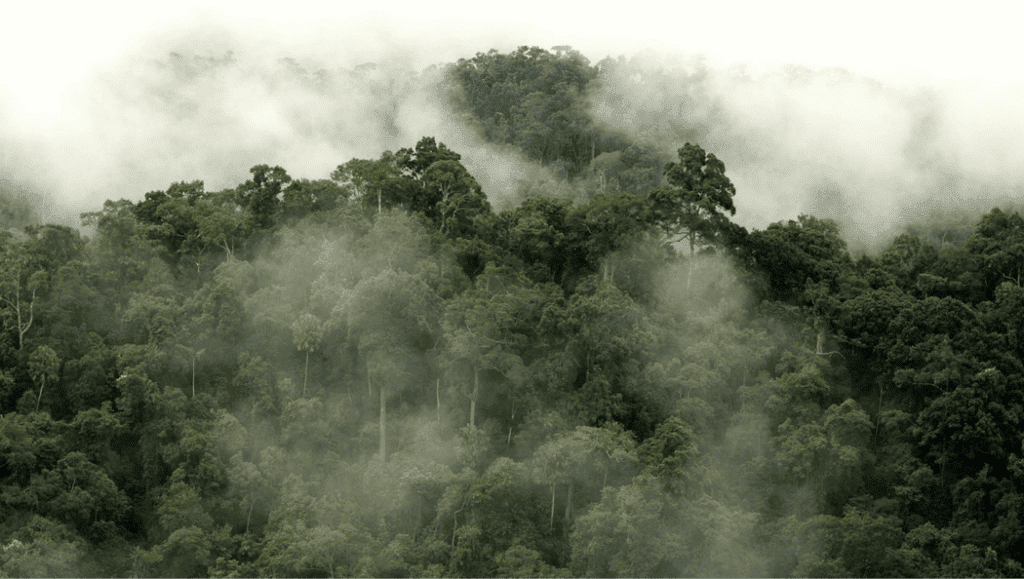
Humid hazes are another significant natural insulating/warming process. Think of a beautiful mist in the mountains in the morning. As the sun hits that mist, which is liquid water in the air, the water absorbs the sun’s energy and the mist changes from liquid to vapor (see chapter 6). To our eyes it disappears. Then that water vapor can further absorb heat because it is a primary greenhouse gas. This is called the dual warming effect of mists.
Toxic Humid Hazes

A detrimental example of the mists that warm the planet are toxic humid hazes. Also called smog, this is liquid water held in the air due to its association with soot, pollutant chemicals, and carbon particulates from the burning of fossil fuels, forest waste, crop residues, and fires of all sorts. Often called “brown haze,” these toxic humid hazes can persist and – due to the dual warming effect of mists – greatly increase the temperature in cities and industrial areas. These toxic humid hazes can lead to significant breathing and health problems for us Earthlings, particularly in areas devoid of plants and trees. For this reason alone, it would be wise to reduce the burning of fossil fuels significantly.
Water Cools the Planet
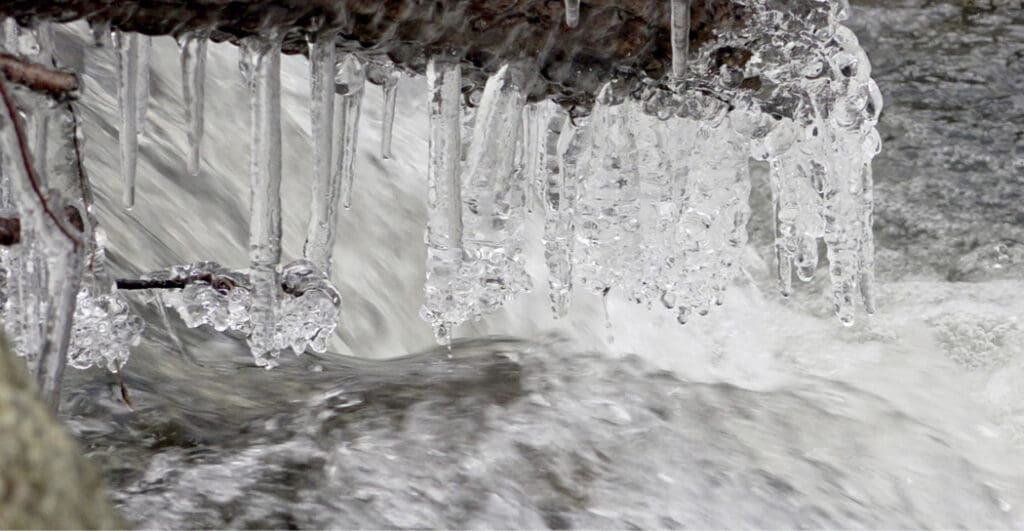
Just as the Earth has natural insulating/warming processes, it also has natural cooling processes. These all involve water. It has been estimated that 95% of the heat dynamics (the warming and cooling) of our planet is governed by water. On land, this regulatory process happens as water circulates through the atmosphere, the soils, the forests, and the wetlands.
So, the second big reason that the Earth is overheating is that our cooling system is breaking down. This too is the result of the destruction of the Earth’s natural environments.
We can repair this cooling system by saving and regenerating forests and rebuilding small water cycles (see chapter 28).
Clouds
There is lots of water in the air. There is more water in the air than in all the rivers on Earth, ten times more. Much of that water is in clouds. At any one time, about half of the planet is covered by clouds. Clouds have a significant cooling effect: they shade the Earth below. This sunlight is reflected by the white clouds away from the Earth.
Chapter 5 References
5.1 Jehne, Walter. Healthy Soils Australia “Regenerate Earth: The practical drawdown of 20 billion tonnes of carbon back into soils annually, to rehydrate biosystems and safely cool climates.” Center for Regenerative Solutions, May 2017. https://naturebasedclimate.solutions/resource-database /regenerate-earth
5.2 Water Article Summaries, Compendium Volume 2, Number1, July 2018. https://bio4climate.org/article /water-article-summaries/
5.3 “Water for the Recovery of the Climate: A New Water Paradigm” by Michal Kravcik. Biodiversity for a Livable Climate, May 13, 2017. https://bio4climate.org/2017/05/13/water-for-the-recovery -of-the-climate-a-new-water-paradigm/
Chapter 6 [20:59:06]
Plants Sweat Too
The Cooling Power of Evaporation
Water is the original shape shifter. In our daily lives we encounter water as solid, liquid and vapor. When liquid water evaporates, it changes phase from liquid to vapor. This requires energy. In normal atmospheric conditions it takes about 590 calories to evaporate one cubic centimeter (one gram) of water. This energy comes from the environment. Think of sweat cooling your body. Evaporation is a powerful cooling process.
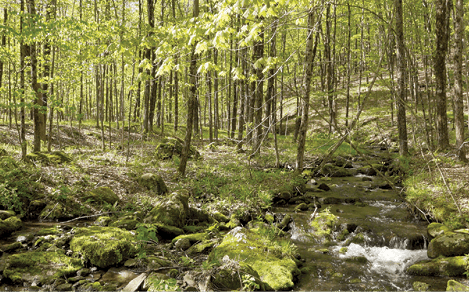
When that water vapor (an invisible gas) rises in the air, it can condense into mists and clouds, both of which are liquid water (which is why we can see them). This phase change then releases that 590 calories and, if the clouds are high enough, that released heat can leave the atmosphere.
The process of evaporation – when liquid water becomes water vapor – transforms sensible energy (heat we can feel) to latent energy (energy absorbed when a substance changes state, without changing its temperature.). This process is reversed when the water vapor condenses as liquid water: the latent energy is released as sensible energy (heat).
To visualize the flow of water through living systems, it’s fun to start with your own body. We drink water daily; our food is mostly water; and then we pee and sweat it out. Where did that water you drink come from? And when you pee, where does it go? Now think about plants. They absorb water from the soil through their roots, use it to grow, and then they, too, sweat it out – in plants it’s called transpiration.
Transpiration: Plants Sweat Too
Transpiration is a plant’s way of sweating. It has the same cooling effect on the environment as evaporation of water off our skin. Transpiration is a primary cooling process over the land.
Plants take the water from the soil up through their roots and into their branches and leaves. After using it in many chemical processes, trees then release water vapor through little pores in their leaves called stomata. These stomata also take in carbon dioxide and release oxygen.
A large tree has the cooling capacity of a couple of room-sized air conditioners. So, cutting down even one tree contributes to global warming.
This can’t be over stressed: trees cool the planet through transpiration. In our battle against global warming, trees are a powerful ally.
The Small Water Cycle
As the water vapor transpired by trees and other plants rises up in the atmosphere, it condenses into mists and clouds. Then, when the rain comes down, it can fall within the same area that it evaporated from. This is called the small water cycle. Once the rain comes down, the water enters the soil and can, once again, be used by plants. Or it may join a stream or a river.
Chapter 6 References
6.1 Climate Change: The Water Paradigm (3:04), animation by Jimi Sol, Biodiversity for a Livable Climate, https://www.youtube.com /watch?v=Q8B4tST8ti8&ab_channel=JimiSol
6.2 “Evapotranspiration – A Driving Force in Landscape Sustainability” by Jan Pokorny, Biodiversity for a Livable Climate, April 30, 2019, https://bio4climate .org/2019/04/30/evapotranspiration-a-driving -force-in-landscape-sustainability/, https://www .intechopen.com/chapters/26110
6.3 Summaries of articles showing the cooling effect of vegetation, Compendium Volume 5, Number 2, January 2022, https://bio4climate.org/article /summaries-of-articles-showing-the-cooling-effect -of-vegetation/
6.4 Anastassia Makariova: Global Cooling from Plant Transpiration: Mechanisms and Uncertainties (2: 07:10), Biodiversity for a Livable Climate, https://www.youtube.com/watch?v=NcDvVQOTuOw&ab _channel=BiodiversityforaLivableClimate
6.5 Water Holistic website, https://www.waterholistic .com/
Chapter 7 [23:32;12]
Rain Needs Trees
Rain Needs Trees
As we have seen, whenever water vapor condenses into liquid water in the air, it does so in association with aerosols. Mists require small particles called micro-nuclei, while clouds and raindrops require larger precipitation nuclei. In both cases, many – but not all – of these aerosols are produced by plants and trees and various organisms.

It has been demonstrated that trees release bacteria from their stomata as they transpire water, and that these bacteria become precipitation nuclei.
We all know that trees need rain but understanding the biological origin of precipitation nuclei in forests reminds us that “rain needs trees.”
Chapter 7 References
7.1 Cool: How Plants Cool the Planet (5:15) animation by Jimi Sol , Biodiversity for a Livable Climate, https://www.youtube.com/watch?v=B-oJyInmTTo&t=101s& ab_channel=JimiSol
Chapter 8 [26:12;12]
Fresh Water to the Land
The Large Water Cycle
Evaporation from the oceans is one of Earth’s fundamental cooling processes. The oceans are an interconnected and complex part of the Earth’s biosphere and its climate control system.

The oceans contain 97% of the water on our planet. Of the remaining water, which is fresh water, approximately 2% is in icebergs and glaciers, and 1% is comprised of flowing water on the land and in the atmosphere.
As the surface waters of the ocean are bathed in sunlight, they warm up. This causes evaporation. As we’ve seen, the process of evaporation requires 590 calories of heat per gram, which is one cubic centimeter (cc) of water. This evaporated water, now in the vapor phase, rises up in the atmosphere and when it condenses as mists, clouds and rain it changes its phase back to liquid water, and releases those 590 calories of heat into the atmosphere. If those clouds are high enough, much of that heat is released into outer space.
Much of the water in those clouds is released as rain over the ocean, but some of those clouds travel inland and release that water over the land. As rainwater from the ocean hits the land, some of it goes into streams, ponds, and rivers and eventually flows back to the ocean. This is called the large water cycle.
The Cooling Power Of Storms
A hurricane can release a lot of energy, and that release is the result of this cooling process. Jim Laurie estimates that a big hurricane (like hurricane Harvey) can release “the equivalent of thousands of Mt. St. Helens events.” That’s a lot of energy that leaves the atmosphere.
And these big storms will keep on coming for years and years, and they will continue to cause damage. That is the cooling process Earthlings are going to have to endure. We certainly should show some foresight by moving our vulnerable population centers inland and away from the coasts.
An Abundance of Fresh Water
But the good news is that storms that originate over the oceans bring a flow of fresh water onto the land. If we hold that storm water on the land for as long as possible, and if we work with nature to keep the rain where it falls, we will have enough water for plants, animals, irrigation, drinking and washing.
Nature has wonderful ways of keeping water on the land. Healthy soil is the first level. Healthy soil holds a great deal of water. It’s like a sponge. And because this sponge is made by life itself, it’s often called “a soil carbon sponge” (see chapter 17).
Next are the meandering streams, ponds, lakes and rivers – including beaver dams, swamps, marshes, and bogs – that allow rainwater to penetrate the land and gradually flow back to the ocean. Gradually is the key word here. In many areas of the world humans have built just the opposite: fast ways to get flood waters sluicing off the land and back to the oceans, losing all that fresh water.
The role of beavers in maintaining the fresh water infrastructure cannot be over-stressed. Unfortunately, beaver populations all over the world have been decimated by the fur trade.
(See chapter 28 for ways people are restoring the small water cycle and solving the climate crisis.)
Biotic Pump
Another way that fresh water comes onto the land is through what’s called the “biotic pump.” This is a result of transpiration by forests. When trees in a forest along the ocean transpire water into the atmosphere, that water vapor rises in the air and leaves a low-pressure zone in its wake. That low pressure pulls moist air in from the ocean.
As forests further inland transpire water, they also create a low-pressure zone which moves water further inland. This process can move water inland for thousands of miles.
The biotic pump theory was developed by the late Victor Gorshkov and Anastassia Makarieva. Today Anastassia Makarieva is actively campaigning for sensible biosphere-based climate solutions.
Chapter 8 References
8.1 Restoring Water Cycles to Reverse Global Warming: Conference Home, Biodiversity for a Livable Climate, conference at Tufts University, October 16-18, 2015, https://bio4climate.org/conference /tufts-2015-restoring-water-cycles/
8.2 “Millan Millan and the Mystery of the Missing Mediterranean Storms” by Rob Lewis. Biodiversity for a Livable Climate, July 28, 2023, https://bio4climate.org/2023/07/28/millan-millan-and-the -mystery-of-the-missing-mediterranean-storms/
8.3 Biotic pump of atmospheric moisture as driver of the hydrological cycle on land, Makarieva and Gorshkov 2007[12], Compendium Volume 2, Number 1, July 2018, https://bio4climate.org/article /biotic-pump-of-atmospheric-moisture-as-driver -of-the-hydrological-cycle-on-land-makarieva-and -gorshkov-200712/
8.4 “Winds and Rain: The Role of the Biotic Pump” by Peter Bunyard, International Journal of Biosensors and Bioelectronics. December 2020, https://www .researchgate.net/publication/367945830_Winds _and_rain_the_role_of_the_biotic_pump#full-text
Chapter 9 [30:24;20]
What is Climate Change?
What Is Climate Change?
In the media and in many people’s minds, the term climate change means the rise in temperature caused by carbon emissions.
This Earthling’s Guide looks at climate change differently: Climate change is caused by humankind’s destruction of the biosphere, because it is the biosphere that regulates the climate.
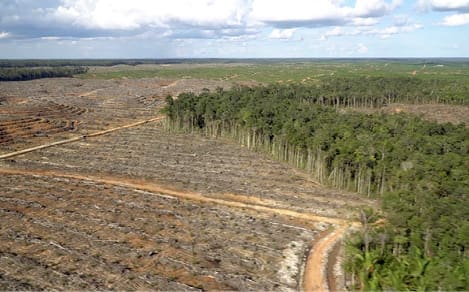
The combination of: 1. increased heat being re-radiated off bare land, which has increased the greenhouse effect, and 2. the destruction of the water-based cooling systems provided by forests and other ecosystems, has increased global temperatures.
To put it simply, we Earthlings have upset the balance of both the large and small water cycles. This has caused the climate crisis.

If you think about the flow of water through living systems, it can boggle your mind. Water is indeed the blood of the Earth. It is this flow that both cools and insulates the planet. By destroying the forests, fields with healthy soil, wetlands, and oceans, we humans have greatly upset this flow, badly disrupting the Earth’s temperature regulation system. This is why we are experiencing an increase in severe storms, floods, droughts, aridification, heat spells, and wildfires across the planet. (The important role of soil in retaining water is covered in Part 2.)
Walter Jehne is always quick to point out that it’s not the averages we should be worried about, but the extremes – the extreme highs and lows of temperature and the extreme storms and droughts. After all, extreme high temperatures and extreme low temperatures may not have a significant effect on the average temperature.
Chapter 9 References
9.1 “We must unite our efforts to fight climate change and biodiversity loss”, Crossroads blog, November 28, 2023 , https://iucn.org/crossroads-blog/202311 /we-must-unite-our-efforts-fight-climate-change -and-biodiversity-loss

Chapter 10 [33:24;07]
Global Drying
Global Drying
Perhaps it would have been better if “global warming” had been called “global drying,” but that too is overly reductionistic. But thinking of the problem in this way brings up the question: With the increase in storms coming from the ocean, why is the land drying up so quickly and becoming increasingly fire-prone?

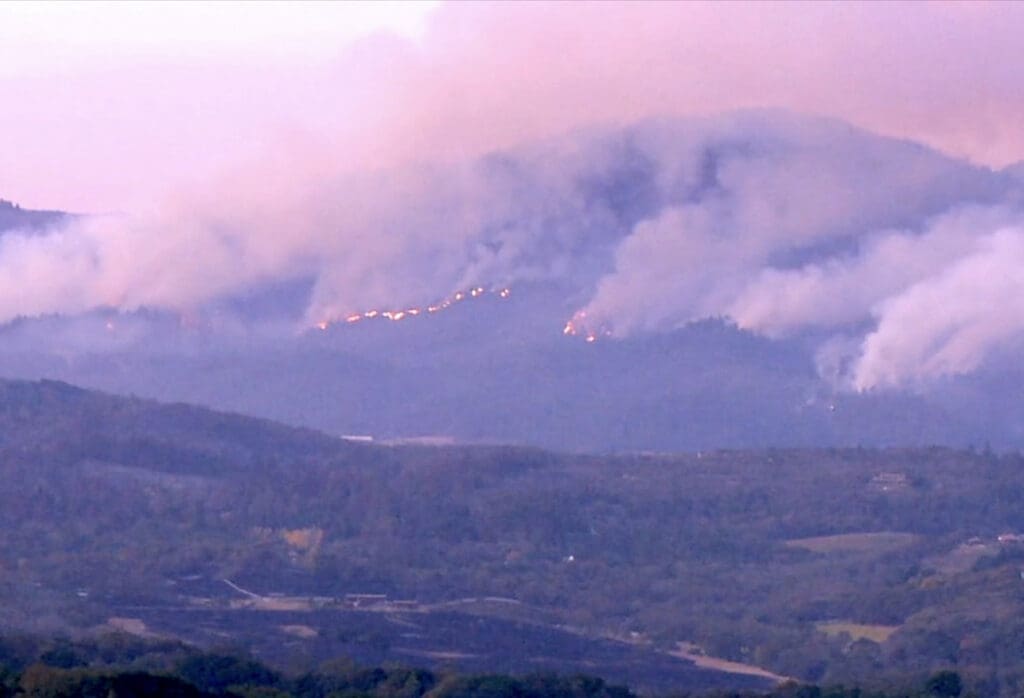
The answer comes by looking at the aftermath of those big storms. First, there are the floods and then, since the soil is dead and there are fewer forests, wetlands, and meandering streams, the water runs off and the land dries up. We experience this as droughts. These drought conditions are more extreme in areas with limited vegetation. Then as the land dries up, the probability of wildfires vastly increases.
Forest fires destroy the cooling power of the forests; they leave behind a blackened area that reradiates large amounts of heat, contributing to the rise in the greenhouse effect. After a wildfire when rain hits the land, it generally runs off quickly causing floods, erosion, and mudslides.
Chapter 10 References
10.1 “The NS wildfires are not ‘natural’ disasters: climate change, forest management, and human folly are all to blame” by Beck Mordini, Biodiversity for a Livable Climate, July 14, 2023 , https://bio4climate .org/2023/07/14/the-ns-wildfires-are-not-natural -disasters-climate-change-forest-management-and -human-folly-are-all-to-blame/
10.2 Jan Lambert: Soak Up the Rain! What We Can Do to Reduce Drought, Floods, Heat Waves & Severe Storms (45:59). Biodiversity for a Livable Climate, https://www.youtube.com/watch?v =IjS2qFITiuk&ab_channel=Biodiversityfora LivableClimate
10.3 The Weathermakers: The Weather Making Approach for Restoring the Water Cycle (website), https://theweathermakers.nl/
10.4 Responding to Wildfire, Compendium Volume 4, Number 2, January 2021, https://bio4climate.org /article/compendium-4-2-responding-to-wildfire/
Chapter 11 [37:05;25]
The Mystery of Water
The Mystery of Water and Science
Despite its importance in all of life’s processes, scientists are only beginning to understand the molecular nature of water.
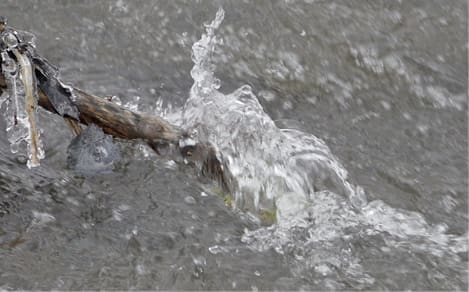
Gerald Pollack researches the idea that under certain conditions water can exclude one hydrogen ion (H+), which is positively charged, and the remaining water can form a lattice of H3O2-molecules. He calls this the fourth phase of water. This charge separation has a tremendous impact.

The Importance of Revolutionary Scientists
Gerald Pollack also points out, as Lynn Margulis always did, that in order to have revolutions in science we need scientists who are willing to explore new ideas and new avenues of thought. But unfortunately, many scientists just cling to traditional ideas because that’s the prudent thing to do.
Chapter 11 References
11.1 “Water Isn’t What You Think It Is: The Fourth Phase of Water” by Gerald Pollack, Biodiversity for a Livable Climate, January 2019, https://bio4climate.org/article /water-isnt-what-you-think-it-is-the-fourth-phase-of -water-by-gerald-pollack/
11.2 The Living Earth Paradigm: A better view for a better planet. Biodiversity for a Livable Climate, https://bio4climate.org/231356-2/
Chapter 12 [39:33;02]
Conclusion to Part 1
A Moist Temperature Controlled Space
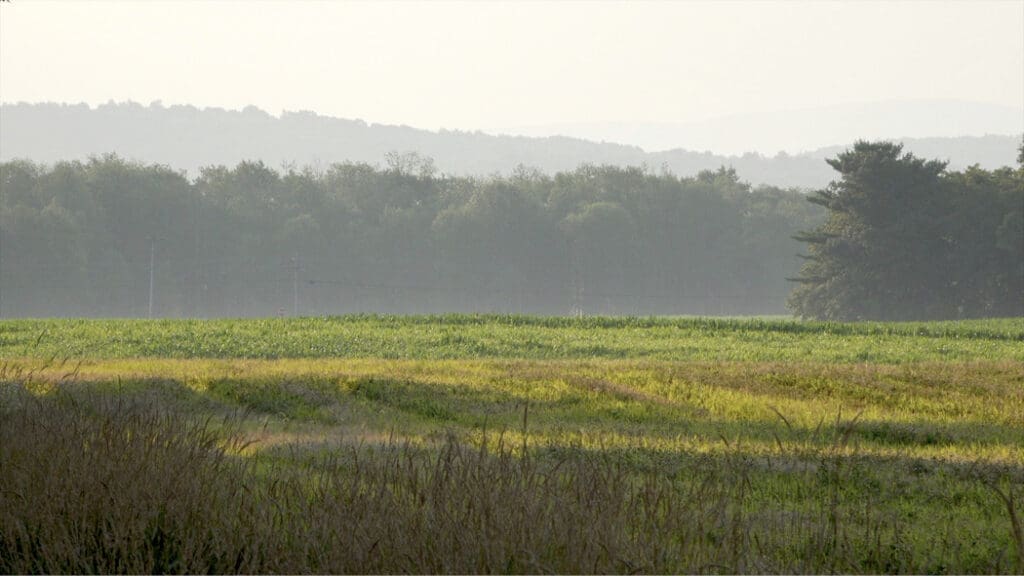
“So how come the earth has a temperature beautifully suited for life? It’s because life … the vast biodiversity that exists on the planet … cycles shape-shifting and energy-transporting water through the soil and trees, through the atmosphere, and back again … warming and cooling … creating its own moist temperature-controlled space. Earth wouldn’t have a temperature suited for life if it didn’t have life cycling water.”
Regenerating Life narration
CHAPTER 13 [41:49;16]
Part 2: Life Sustains the Climate
“Life is a process. It is the self-making process where components from the environment are taken in and moved around and changed chemically… to do what? To make more. Why? To make more. Why? To make more. Life is always expanding, always making more of itself.” —Lynn Margulis
“Photosynthesis is this place where heaven and Earth come together. The plant makes itself first, and then through the infrastructure of its own body it sends those sugars down into the soil to feed other life and then it also feeds life above ground through its own self.” —Didi Pershouse
“Life sustains itself by continuously remaking itself and all its parts. It does this by cycling through itself matter and energy.” —Narration
(All quotes from Regenerating Life)
CHAPTER 14 [43:12;19]
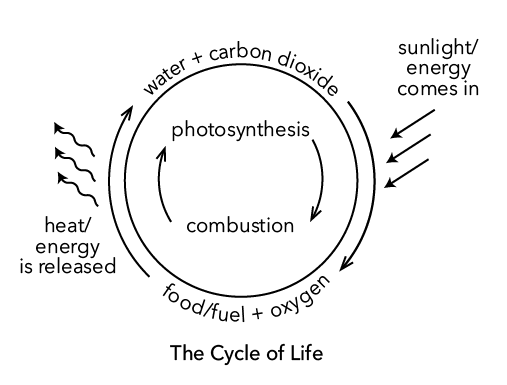
The Cycle of Life
The Cycle of Life
Life is a self-making and self-sustaining process. It sustains us, sustains the biosphere, and regulates the Earth’s temperature. How does it work?
Life sustains itself by continuously remaking itself and all its parts. It does this by cycling matter and energy through itself. If you think of your body as fluid and always changing while still maintaining its structure, you start to get the idea of yourself as a process that cycles matter and energy. This matter and energy comes from the food you eat and water you drink.
Look at your hand and think about what happens to it over time. Imagine the blood flowing through it, water coming off it as sweat, and the skin cells vanishing as dust. Remember the burns, cuts and scrapes that happened and were healed? Your skin will be replaced in about a month and the bones in your hand in about ten years, depending on your age. You remake yourself on a regular basis, different parts at different intervals. This remaking process can only happen if we have food which gives us energy. And all of that energy comes initially from the sun.
Photosynthesis
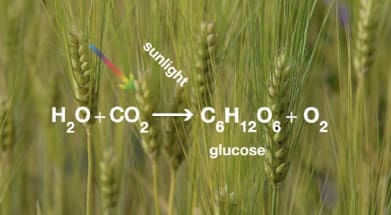
Through the process of photosynthesis plants and some other organisms have the amazing ability to turn sunlight into stored energy – this is “food.” There are organelles (chloroplasts) in a plant’s cells that take carbon dioxide molecules (CO2) out of the air, water molecules (H2O) from the soil, and then, using the energy supplied by sunlight, convert them into sugars and oxygen. It’s a complex process, but it can be simplified as the equation:
H2O + CO2 + sunlight/energy = C6H12O6 (glucose) + O2 (oxygen)
Glucose is generally used in this simplified equation. The balanced equation is:
6H2O + 6CO2 + sunlight/energy = C6H12O6 (glucose) + 6O2 (oxygen)
Combustion
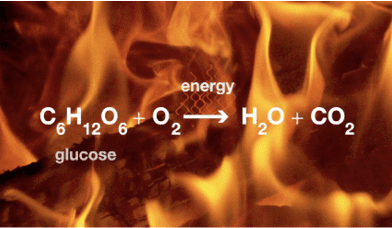
In order to make use of all that stored energy in our food, we use the oxygen we breathe to burn that food in organelles in our cells called mitochondria. The output of this reaction is energy that we can use, while we then exhale/discard carbon dioxide and water in a combustion process.
This is the balanced simplified equation for combustion:
C6H12O6 (glucose) + 6O2 (oxygen) = heat/energy + 6H2O + 6CO2
It’s the same process that happens when a tree burns or when organisms decay. A tree trunk is made of lots of glucose molecules combined into cellulose. So, when a log or fossil fuel burns, the carbon dioxide and water are released to become available to plants to make more glucose molecules. The carbon dioxide enters the atmosphere and may one day be used by a plant somewhere else on the Earth. Carbon, water, and oxygen are continuously cycled in this way.
Combustion is the opposite of photosynthesis. The Cycle of Life is a visualization of the flow of energy and matter through living systems. It goes from photosynthesis to combustion and back again.
Because plants have both chloroplasts (for making sugars) and mitochondria (for burning sugars), they are fully self-sufficient. We humans are not self sufficient, which is to say: we can’t make our own food from sunlight.
Note: In this document, and in the film Regenerating Life, the word combustion includes the processes of respiration and oxidation.
Drawdown and Sequester
The two words “drawdown” and “sequester” have been used in order to frame natural processes into the conventional carbon-dioxide-causes-climate-change narrative. It goes something like this: since the rise in carbon dioxide in the atmosphere is the primary cause of climate change, plants are a good solution because they draw-down carbon dioxide and sequester it in the soil. This framing leaves out the entire process of photosynthesis and is often misinterpreted. Words matter! “Drawdown and sequester” gives the impression that plants take CO2 out of the air and store it in their roots. Nothing could be further from the truth. As described above, plants take CO2 into their leaves, separate the carbon from the oxygen, make sugars and other carbohydrates, and then some of these sugars go to their roots. The carbon, as part of various molecules, is “stored” in plants, but carbon dioxide, which is a gas, is not stored in plants. “Sequester” is also a tricky word – because in nature everything cycles.
One gross misinterpretation of these two words is the idea that a solution to climate change is to suck carbon dioxide out of the air with giant machines (drawdown) and then sequester it … where? Regenerating Life satirizes people and companies who are doing this – it is a serious waste of resources, and is based on a misconception of the primary causes of and driving forces behind climate change.
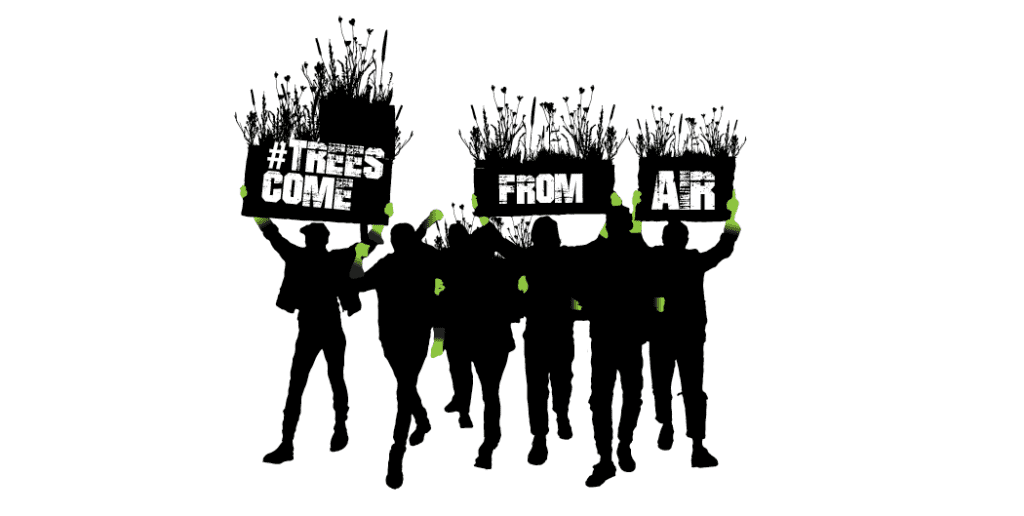
Trees Grow From the Air
When we think closely about photosynthesis, it really is a wonder! Plants take energy from the sun, carbon dioxide gas from the air, and water from the rain and turn them into food and energy to benefit all the rest of life. All Earthlings, humans included, are made from carbon atoms that were once in the air as part of carbon dioxide gas molecules and water that was once in the rain.
So, contrary to the popular assumption that trees grow from the soil, trees grow from the air. Only tiny bits of matter – minerals that we often think of as “nutrients” – come from the soil.
What’s most alarming is that, from time to time, you’ll hear Earthlings call carbon dioxide a “pollutant.” Imagine that!
Chapter 14 References
14.1 “Climate Is About Far More Than Carbon Dioxide” by Adam Sacks, Biodiversity for a Livable Climate, May 21, 2021, https://bio4climate.org/2021/05/21 /climate-is-about-far-more-than-carbon-dioxide/

CHAPTER 15 [49:39;17]
Earth’s Energy Balance
Earth’s Energy Balance
We are bombarded with energy from the sun; we use that energy and then we release it as heat. If Earth is to maintain anything close to a stable temperature, then the amount of energy coming in must equal the amount going out. It’s been calculated that on average 342 watts hit the Earth per square meter of surface. So, for things to work well, 342 watts has to go out.

These days – because we have so much bare land and have destroyed so much of the natural water infrastructure that cools the planet – there is only 339 watts going out. That means we are continuously retaining 3 watts per square meter. That’s less than one percent. We can find encouragement in the idea that it’s less than one percent, but remember: it builds up continuously. It also reminds us how powerfully resilient the Earth system is. With all the environmental destruction that’s been going on, the System of Life has done a pretty good job maintaining the temperature through challenging conditions.
Thermodynamics
The study of energy and how energy is transformed is called thermodynamics. In essence thermodynamics is the study of the flow of energy. But what is energy? Energy is often defined as “the ability to do work.” Energy is not a substance, not a fluid, not a “thing”. It is the flow of atomic motion across a gradient of greater motion to lesser motion: from hot to cold, from high pressure to low pressure. Electricity is the flow of a charge.
The first law of thermodynamics is that energy is neither created nor destroyed. As it is used, energy is transformed from one form into another. It flows. The same amount coming into a system must go out of the system. The energy in your food is used by your body and then leaves your body as heat. The energy in fossil fuels is used to power your car’s engine and then leaves the car as heat. That energy, in the residual form of heat, has lost most, but not all, of its ability to do work, but the amount of energy has not changed.
The second law of thermodynamics is that all energetic systems tend toward disorder. Things fall apart. Another word for disorder is entropy.
Sunlight has order. We see this in a rainbow. Food and gasoline have molecular order. When we burn the food or gasoline, heat is released. Heat is disordered; it is high in entropy. So, while the quantity of energy may not change, the ability to do work declines as the energy does its work. Some people call heat “waste energy.”
The transformation of food-energy into heat-energy within organic life is from order to disorder. As your body uses energy to create order it produces entropy. This entropy leaves the body as heat. And the order is left in your body.
Returning to the Earth’s energy balance, although the same amount of energy that hits the Earth must leave the Earth, the energy coming in as sunlight is not the same as the energy going out as heat. The energy going out is less ordered, which is to say it has more entropy, than the energy that came to us from the sun. And the order that is left behind on Earth is Life.
*See bibliography for a great book on living systems and thermodynamics: Into the Cool by Eric D. Schneider and Dorion Sagan.
Chapter 15 References
15.1 Relationships between vegetation and temperature, Compendium Volume 5, Number 2, January 2022, https://bio4climate.org/article/compendium-5-2 -relationships-between-vegetation-and-temperature/
15.2 Jehne, Walter. New climate solutions, water cycles and the soil carbon sponge, 2018, Compendium Volume 2, Number 1, July 2018, https://bio4climate .org/article/new-climate-solutions-water-cycles-and -the-soil-carbon-sponge-jehne-2018/
CHAPTER 16 [51:36:06]
The Dung Cycle
The Dung Cycle
The cycle of life describes how energy comes in and goes out, and it shows one of the ways carbon, oxygen, and hydrogen are cycled through living systems. But what about those mineral nutrients we always hear about? Where do they come from and how do they cycle?
Humans and all organisms require certain mineral nutrients. The list includes: nitrogen, magnesium, calcium, potassium, sodium, selenium, iron, phosphorous, iodine, and others. Originally all these elements (except nitrogen) came from the breakdown of rocks. Once in living systems and once in the soil, these essential elements are cycled and recycled through poop, pee, and decay.
Nitrogen is made available to life by bacteria that live in colonies in the roots of legumes, which are plants in the pea family like clover. This nitrogen is then used by organisms and cycled through poop, pee, and decay.

All animals poop and this is a fundamental way that essential nutrients are cycled. Even caterpillar and insect poop play a substantial role. This is why, for centuries up to the present day, farmers using ecological methods of agriculture use animal poop as a fertilizer.
Regenerating Life highlights a sophisticated use of animal dung and urine used in Andhra Pradesh, India called ZBNF (Zero Budget Natural Farming, now called Andhra Pradesh Community Managed Natural Farming). Balls, about the size of a tennis ball, are made from cow dung, urine, pea flower (for nitrogen), sugar, and a handful of local soil. The balls are allowed to dry in the air for several months (long enough for the insides to ferment) and then they are crushed into a powder and sprinkled onto the fields just after sowing. The seeds are also coated with a similar mixture (see chapter 31, Agricultural Solution Sets).
Poop Is Essential For Growth
There’s a wonderful mutually-beneficial exchange that happens between plants and the living soil. Plants use only a portion of the sugars they make for themselves; the rest they send to their roots, and so these sugars are made available for soil microbes and fungi. In exchange for this, these organisms process nutrients in the soil (that came from poop, pee, and dead organisms) and send them in a bioavailable form to the plants. And then Earthlings eat the plants.
Chapter 16 References
16.1 Ecological roles of animals, Compendium Volume 5, Number 2, January 2022, https://bio4climate .org/article/compendium-5-2-ecological-roles -of-animals/

CHAPTER 17 [59:40:03]
Living Soil
The Soil is Alive
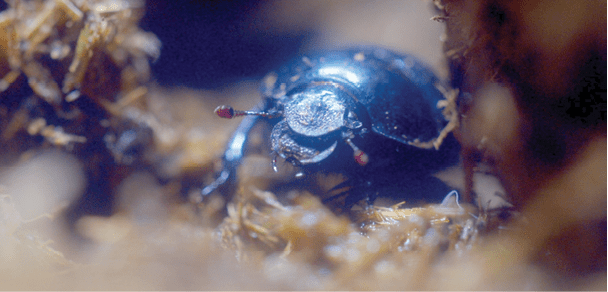
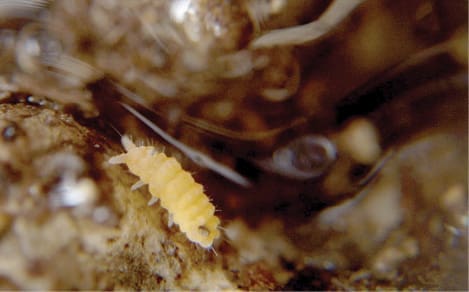
The soil is a living tissue that covers the land. Lynn Margulis called it “the tissue of Gaia.” The soil is the world of small and very small organisms, including insects, fungi, bacteria, and other microbes (Protoctista) living and working beneath our feet.
We’ve seen that the soil carbon sponge is the first step to holding water on the land. This soil carbon sponge is created by life itself. This sponge holds rain water when it comes down and makes it available for plants and all of life. That water is taken up by the roots of trees and plants and then is transpired through their leaves.
Fungi
Fungi are a fundamental part of living soil. Fungi create a protein called glomalin, which is a sticky substance that coats little bits of dirt and holds them together. These little clumps of dirt have large air spaces between them, and this is why good soil is a sponge.
Fungi are amazing creatures. When we see a mushroom, it’s common to think that we are looking at the whole organism, and that when we pull up the mushroom we see its roots. But this is backwards. The mushroom is the fruiting body (like an apple on a tree), and the “roots” (the mycelium) are the organism. Which is to say, the fungal organism is the network of mycelium that we tore apart when we pulled up the mushroom. And it is this network – this organism – that works with plant roots to form a vast communications web underground.
Fungi are an essential part of breaking down poop and dead organisms. Through mycelium, and because of a mycorrhizal symbiosis with plants (called mycorrhizae), the results of this breakdown – nutrients – are sent to plants and can end up in a vegetable or hamburger you eat.
Chapter 17 References
17.1 Didi Pershouse’s website, https://www.didi pershouse.com/
17.2 Walter Jehne: Soil Carbon Sponge and the New Climate Solutions (2:08:15), Biodiversity for a Livable Climate, April 28, 2018 , VIDEO, https://www.youtube.com/watch?v=vHw5I_fclkc
17.3 Jim Laurie: Soil Ecosystem Health: From Fungi & Nematodes to Beetles & Earthworms (22:32), Biodiversity for a Livable Climate Dec 3, 2014, VIDEO https://www.youtube.com/watch?v= 6C15nDETOtU
17.4 Fertilizer vs Fungi, Compendium Volume 2, Number 1, July 2018, https://bio4climate.org/article /compendium-2-1-fertilizer-vs-fungi/
17.5 Fred Magdoff: The Heart of Life – Soils, Microbes, Plants and Insects (34:53). Biodiversity for a Livable Climate, January 7, 2019, VIDEO, https://www .youtube.com/watch?v=FpJPKek6iXk
17.6 “Interview: Supporting the Soil Carbon Sponge: Microbiologist, climate scientist and founder of Healthy Soils Australia Walter Jehne discusses climate and soil health.” by Tracy Frisch, Eco Farming Daily, Acres USA. July 2019. Retreived September 25, 2019. https://www.ecofarmingdaily .com/supporting-the-soil-carbon-sponge/

CHAPTER 18 [1:04:33;04]
Deforestation
Deforestation
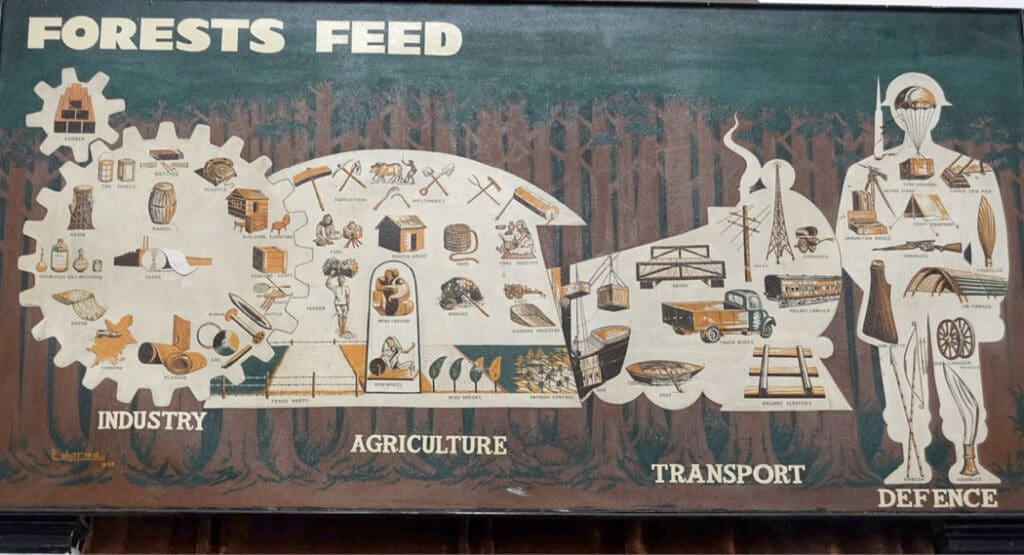
It’s well known that we humans have, for centuries, been destroying our environments, particularly the forests. We have deforested most of the original forests and left behind bare land. It is estimated that 78% of the Earth’s primary (“old growth”) forests have been destroyed. Luckily, many of these forests are growing back, but we continue to plunder the forests at an astounding rate.
We have dug mines and wells in virtually every corner of the Earth, including under the ocean, and removed fossil fuels, minerals and precious metals – leaving wasteland behind. We have filled in the wetlands and straightened out (or channelized) the rivers. We have damaged, if not destroyed, almost all of the ocean ecosystems. And through industrial agriculture and its widespread use of chemical fertilizers and pesticides, we have destroyed much of the Earth’s soil, killing the life therein.
And this can’t be blamed solely on modern “industrialized” civilizations. Humans started deforesting the Earth as soon as we discovered fire, and then agriculture. There is evidence that the Sahara Desert was, maybe 10 thousand years ago, a lush land with savannahs, lakes, and forests. Just look at a satellite view of North Africa and the “fertile crescent.” Can you believe it was once covered in plants?
Shifting Baseline Syndrome
Stephan Harding introduces the idea of shifting baseline syndrome. Even though the environment becomes degraded year after year, each current generation looks upon the environment they are born into as “normal.” And then they degrade it a little bit more, and that becomes “normal” for the next generation, and so it continues.
The Extractive Economy
In the current age we have institutionalized the idea that governments and corporations have the right, if not the obligation, to extract wealth from the land and the people in order to prosper and grow the economy, which is measured by GDP (gross domestic product). This is called the extractive economy and it is the primary engine for the growth of international corporations. (In Regenerating Life it is called “the Profit Monster” see chapter 20.)
These days the governmental/political desire to increase GDP by increasing production and consumption of consumer goods, food, and industrial (especially military) products is directly at odds with an urgent need to save and regenerate the Earth’s ecosystems. To make matters worse, the mistaken narrative that more technology and, in particular, more renewable energy, are solutions to the climate crisis is further fueling the extractive and exploitive economy and thus worsening the climate crisis.
Chapter 18 References
18.1 Forests, Compendium Volume 1, Number 1, July 2017, https://bio4climate.org/article/forests/
18.2 “Shifting baseline syndrome: causes, consequences, and implications” by Masashi Soga and Kevin J. Gaston; ESA Journals, April 4, 2018, https://esajournals.onlinelibrary.wiley.com/doi/10.1002 /fee.1794
18.3 Blessed unrest, transforming the extractive economy, Compendium Volume 3, Number 1, July 2019, https://bio4climate.org/article/compendium -3-1-blessed-unrest-transformative-change/
18.4 “The Role of Wood in World History” by K. Jan Oosthoek. Environmental History Resources, October 15, 1998. Retrieved July 6, 2019, https://www.eh-resources.org/the-role-of-wood-in-world -history/
18.5 “Humans may have transformed the Sahara from lush paradise to barren desert” by David K. Wright, The Conversation, March 16, 2017. Retrieved April 12, 2020, https://theconversation.com/humans -may-have-transformed-the-sahara-from-lush -paradise-to-barren-desert-74666
CHAPTER 19 [1:11:42;22]
Resilience and Restoration
How Do We Restore The Living Ecosystems That Nourish Us?
Virtually every ecosystem on Earth has been damaged, but there are people developing and repairing these ecosystems. Ecosystem restoration starts locally and is always based on the power of nature to grow and prosper and produce abundance if given a chance.

There are ways to repair degraded soil through “remineralization” and biochar. And there are ways to restore coral reefs. It’s generally accepted that we must stop deforesting the Amazon, and stop destroying forests across the globe. And there are many organizations and many people today working to save the environment. Often, they aren’t aware that their efforts are a front-line solution to the climate crisis
Regenerating Life tells the story of Tony Rinaudo who came to the Niger Republic of West Africa in 1980 to help the farmers. His first plan was to plant forests, but most of the trees died because a forest is not just a bunch of trees, it is a complex ecosystem. Indeed, most efforts to “plant trees in the desert” are similarly problematic. Then, after almost giving up, Tony Rinaudo made a remarkable discovery: “It looks like a desert, but there are trees everywhere. They are underground.” When he looked over the barren landscape, he saw little bushes. But then he realized that these were not little bushes; they were tree stumps sprouting branches. This led him to develop a method for farmers to regenerate the land by pruning these trees to leave a dominant “trunk” and allowing it to grow. This has revitalized acres of farm land and farming communities. It is called Farmer Managed Natural Regeneration, and teaches us that forests and other environments that have been degraded can often be rebuilt from the life that is left.
Biodiversity
Nature is powerful and resilient because it contains a rich diversity of animals, plants, fungi, bacteria, and protists (microbes and algae). It is this biodiversity that allows natural ecosystems to adapt to changing conditions and to repair and regenerate itself. Ecological farmers rely on this biodiversity when they look to nature’s remarkable ability to control pests and “adapt” to stress.
Chapter 19 References
19.1 Reforestation Solution: Tony Rinaudo and Farmer Managed Natural Regeneration (1:09:32), GBH Forum Network, September 23, 2022, VIDEO, https://www.youtube.com/watch?v=2FE-4faVy68
19.2 A Rallying Cry for Ecosystem Restoration and Climate Stabilization, Biodiversity for a Livable Climate, https://bio4climate.org/a-rallying-cry-for -ecosystem-restoration-and-climate-stabilization/
19.3 Approaches to ecosystem restoration, Compendium Volume 4, Number 1, July 2020, https://bio4climate .org/article/compendium-4-1-approaches-to -ecosystem-restoration/
19.4 Biodiversity and why it matters, Compendium Volume 1, Number 2, March 2018, https://bio4climate.org/article/compendium-1-2 -biodiversity-and-why-it-matters/
19.5 “Working with plants, soils and water to cool the climate and rehydrate Earth’s landscapes” by Stefan Schwarzer, UN Environment Programme, July 2021, https://www.researchgate.net/publication /359452372_Working_with_plants_soils_and_water_to_cool_the_climate_and_rehydrate _Earth’s_landscapes
19.6 “Indigenous communities transform a Mexican desert landscape into forest” by Juan Mayorga. Translated by Maxwell Radwin. Mongabay, March 23, 2022, https://news.mongabay.com/2022/03 /indigenous-communities-transform-a-mexican -desert-landscape-into-forest/
19.7 Tony Rinaudo and World Vision International website, https://www.wvi.org/bio/tony-rinaudo
CHAPTER 20 [1:16:30;05]
The Profit Monster
The Profit Monster
Untangling the human-devised systems that have destroyed the Earth’s environments is a daunting task. The extractive economy that greatly exploits the Earth and its inhabitants is nothing new. But now the global population has sky-rocketed and our technology can destroy with more speed and efficiency. Healthy land is vanishing.

Regenerating Life refers to this extractive economy as “the profit monster.” The profit monster is fed by “the consumer monster,” which is, very often, you and me.
Rapacious Capitalism
The stories of government and corporate greed and destruction are overwhelming – tearing apart indigenous and local communities, murdering people for their water rights, their land and their minerals. The exploitation of the people done in the name of progress and wealth is outrageous.

The documentary Regenerating Life looks at the story of Berta Caceres. A powerful and committed activist, she organized a coalition of Lenca People of Honduras to stop the corporate/government construction of a hydroelectric dam on their sacred river.
On March 2, 2016, she was murdered in her home by a squad of mercenaries led by West Point Graduate David Castillo, who was president of the company building the Aqua Zarca dam. Her family and the organization she started COPINH and their lawyers got seven of the mercenaries and David Castillo himself sentenced to long prison terms. Now they are going after the European banks that funded Castillo.
Here’s a brief update on COPINH’s fight for justice as of March 2025: The Atala Zablah family, who are the owners of the Agua Zarca dam, fought the sentences with smear campaigns and media attacks on COPINH, aggression against COPINH protests, and pressure on the Supreme Court. Nonetheless, in November 2024, the Honduran Supreme Court of Justice upheld the sentences of the seven men, although they reduced David Castillo’s sentence. Berta’s family and COPINH continue to demand accountability for the masterminds of Caceres’ murder, calling for investigations of the Atala Zablah family and the development banks that financed Agua Zarca.
This story is just one example of the battles being fought against corporate and government exploitation.
Chapter 20 References
20.1 Copinh website, https://copinh.org/en/
20.2 “Ending the extractive economy before it brings an end to us” by Neil McInroy, Democracy Collaborative, Aug 2, 2024, https://www.democracy collaborative.org/blogs/5c9duzikm8reorxjyyjcmayv2oggb2-lnt7g
20.3 Extractive Economy, Grassroots Global Justice Alliance, June 8, 2020, https://ggjalliance.org /program-activities/extractive-economy/
20.4 “Close to 2,000 Environmental Activists Killed Over Last Decade”, Yale Environment 360, E360 Digest, September 13, 2023, https://e360.yale.edu/digest /environmental-defenders-murdered-2022
CHAPTER 21 [1:20:16;05]
CO2 – The Fall Guy
How Did Carbon Dioxide Become The Fall Guy?
Considering the complex ways in which the biosphere regulates and sustains the Earth within a temperature range suitable for life, it’s hard to understand how the molecule carbon dioxide became the “bad guy” in so many climate-change narratives.
Indeed, in many peoples’ minds, the term global warming is more-or-less synonymous with increased carbon emissions in the atmosphere. This oversimplification of the problem has led to considerable confusion, misunderstanding, and errors of judgment.
The emphasis on carbon dioxide seems to have started with Eunice Foote, John Tyndall, and Savante Arrhenius. They were important 19th century scientists who ascertained that certain gases in the atmosphere, later called “greenhouse gases,” have a warming effect. They understood that water vapor and carbon dioxide were the dominant greenhouse gases. Arrhenius wrote a seminal paper in which he asked what would happen to Earth’s temperature if there was a doubling of the greenhouse effect.
In the twentieth century, with the advent of computers and more sophisticated mathematical models, the same question was asked by many investigators. Regenerating Life looks in particular at a 1974 paper by Syukuro Manabe and Richard Wetherald: The Effects of the CO2 Concentration on the Climate of a General Circulation Model.
All these models indicated that if one doubles the amount of carbon dioxide in the air there will be an increase in the average global temperature by somewhere between 2 and 5 degrees Celsius.
Mathematical Models
But what are mathematical models? A mathematical model uses mathematical concepts and language to describe a natural situation. They are crude mathematical facsimiles. One of the primary skills necessary to create good models is for the designers of the model to reduce the number of variables in a situation to the quantifiable ones they want to study. Mathematical models can’t supply “evidence” about something in nature because, strictly speaking, they are not scientific experiments, but they can supply predictions and various scenarios about what might happen in the real world if variables change.
Mathematical modeling became the accepted way to investigate global warming. Unfortunately, these investigations were mostly by physical scientists, not biologists. The important models did not include life at all. A report by Jule Charney and many others (called the Charney Report) from 1979 says on page 1: “However, we have not examined anew… the role of the biosphere in the carbon cycle.” The Earthling’s Guide must therefore largely discount such studies, because our premise is that the biosphere is the principal actor in the Earth’s climate.
The modelers themselves understood the severe limitations of their models, and were careful to always include important qualifications and caveats. Manabe and Wetherald write in their conclusion: “Because of the various simplifications of the model described above, it is not advisable to take too seriously the quantitative aspect of the results obtained in this study.” (p. 13)
But the results of such models have been taken quite seriously; they have entered the scientific and popular narrative without such caveats. Results of the models became important because scientists – who well understood the complexity of the climate and the important roles of water and biodiversity – needed a simple way to alert the world to the impending man-made crisis called, initially, global warming. Walter Jehne describes it this way: “There was a small group [of scientists] that said, look we’re never going to sell this politically, it’s just too complex and we’ll just lose everybody right? And we’ve got to now have a global marketing communications exercise to get the public on this clear, simple line, CO2 increase, global warming, response reduce emissions.”
This marketing exercise was quite successful, enough so that the extreme complexities of the global warming problem – that Regenerating Life addresses – were, from then on, almost totally left out of the conversation. The focus and research dollars turned toward carbon dioxide.
The causal link between rising carbon dioxide and rising global temperatures was cemented into people’s minds by showing the similarities through time of two graphs: the first one of the rise in carbon dioxide in the atmosphere, and the second one of the rise in average global temperatures. They are remarkably in sync: when CO2 goes up, the temperature goes up. This relationship was made popular by Al Gore in the film “An Inconvenient Truth.” The curves were used to make the point that an increase in carbon dioxide in the atmosphere led to increased average global temperatures (global warming) because of the greenhouse effect.
But there’s another way to look at the same graphs: Both the rise in global temperatures and the rise in carbon dioxide in the atmosphere are twin symptoms of the same problem: the destruction of the biosphere. Therefore, they would naturally move in lock-step with one another over time. Fewer plants on Earth means more CO2 in the atmosphere and less cooling capacity, hence rising temperatures.
It is also important to point out that Manabe and Wetherald and most of the important modelers did take into account the role of water as the most plentiful greenhouse gas. But because it was their mandate to model CO2, and because it is difficult to model water, these modelers opted to assign water as a “secondary” factor and treat carbon dioxide as the “primary” factor – but such a hierarchy was developed for the sake of the models; it does not exist in nature.
Although these models are getting more and more sophisticated, and while today’s models can include complex variables such as clouds and atmospheric humidity, they continue to exclude most of the biosphere. This is one reason why these models have been consistently underestimating the problem.
Differentiating The “Energy Crisis” From The “Climate Crisis.”
It’s important to separate the solutions to the climate crisis from the solutions to the energy crisis (or crises). They are not the same. To supply energy for businesses and consumers that keeps up with the growing demand, society continues to need more and more energy. There’s little doubt about this. In particular computer “cloud” services, especially “artificial intelligence,” have increased energy consumption tremendously.
Fossil fuels are eventually going to be used up. In addition, the burning of fossil fuels creates large amounts of pollution. This has led to the urgent need for non-fossil fuel sources of energy. There are renewable sources (wind, solar, wave, tidal, geothermal) and there is nuclear energy. Currently the push is on for solar and wind.
Efforts were made in the past to encourage conservation of energy, to promote recycling and less consumption. But we don’t hear as much about these measures in 2025 because they conflict with the need to increase consumer spending.
The irony here is that our “first world” societies are using more and more electricity and consuming more and more “stuff” than ever before, so we need non-fossil fuel energy just to keep up.
More to the point, the push for renewables and a new generation of electrification is causing more and more environmental damage – thus amplifying the climate crisis!
Think of all the devices we now have that require sophisticated batteries – everything from electric cars to cell phones and power tools. And these batteries (lithium ion and other) require minerals that must be extracted from the ground at great cost to the environment and local populations. The environmental destruction and exploitation of the people in the Democratic Republic of the Congo caused by the mining of cobalt and copper is outrageous. It’s on par with what King Leopold did to the Belgian Congo to get rubber for tires.
And what happens to those lithium-ion batteries? What do you do when your batteries die? Although the lithium and cobalt and other minerals are recyclable, globally only about 5% of the lithium-ion batteries are recycled.

Somewhere along the line, the solution to the energy crisis morphed into the solution to the climate crisis. This is undoubtedly because of the mistaken belief that fossil fuel emissions are the principal cause of the climate crisis. The thesis of this Earthling’s Guide is that the climate crisis is caused by far more than just the burning of fossil fuels. And while reducing carbon emissions will help reduce toxic humid hazes (smog) and could perhaps reduce the level of carbon dioxide in the atmosphere, neither of these is nearly enough to ease the current climate crisis. And even though the reduction of fossil fuels has been the primary governmental, political and societal solution proposed for the climate crisis for the past 40 to 50 years, the burning of fossil fuels continues to increase.
Words Matter
It is also important to note how in the media and popular vernacular the term “greenhouse gas warming” became gradually replaced by the term “global warming” and then that was gradually replaced by the term “climate change.” This explains, in a way, how the changes in popular terminology led to the assumption that climate change equals greenhouse gas warming.
Chapter 21 References
21.1 The urgency of the climate crisis, Compendium Volume 1, Number 2: Appendix A, March 2018, https://bio4climate.org/article/compendium-1-2 -appendix-a-the-urgency-of-the-climate-crisis/
21.2 “Barn Swallows and the Tyranny of Small Decisions” by Adam Sacks, Biodiversity for a Livable Climate, November 24, 2019, https://bio4climate .org/2019/11/24/barn-swallows/
21.3 Arrhenius, Svante. “On the Influence of Carbonic Acid in the Air upon the Temperature of the Ground.” The London, Edinburgh, and Dublin Philosophical Magazine and journal of Science (Fifth Series), April 1896, pages 237-276. https://www.rsc .org/images/arrhenius1896_tcm18-173546.pdf
21.4 Charney, Jule G., Chairman of the Ad Hoc Study Group on Carbon Dioxide and Climate. “Carbon Dioxide and Climate: A Scientific Assessment.” Report of an Ad Hoc Study Group on Carbon Dioxide and Climate, Woods Hole, Massachusetts, July 23-27, 1979. National Academy of Sciences, 1979. https://nap.nationalacademies.org/catalog /12181/carbon-dioxide-and-climate-a-scientific -assessment
21.5 Manabe, Syukuro and Richard T. Wetherald. “The Effects of Doubling the CO2 Concentration on the Climate of a General Circulation Model.” Journal of the Atmospheric Sciences, January 1975. Pages 3-15. https://journals.ametsoc.org/view/journals/atsc /32/1/1520-0469_1975_032_0003_teodtc_2_0 _co_2.xml?tab_body=pdf
21.6 The Advancement of Science: From Paradigms to Peer Review, Compendium Volume 1, Number 1, July 2017, https://bio4climate.org/article/the -advancement-of-science-from-paradigms-to-peer -review/
CHAPTER 22 [1:27:33;17]
Conclusion to Part 2: Reversing All This
Eco-restoration Solution Sets
There are no “silver-bullets” for complex systemic problems, so Regenerating Life suggests “solution sets” for the climate crisis. The first is ecological restoration. It involves rebuilding ecosystems from “the life that is left.” Give nature a chance to rebuild herself. You can do this in your backyard, if you are lucky enough to have one. Plant a garden, perhaps a wildflower garden, instead of a grass lawn.

But that is not going to be enough. We need large scale intervention, such as by rebuilding small water cycles, and we need to prioritize stopping the destruction of forests and wetlands – and rebuilding them back. We should use our wealth to pay people and countries to save their forests, fields, wetlands and waters.
Chapter 22 References
22.1 Abstact on Eco-restoration, Compendium Volume 1, Number 1, July 2017, https://bio4climate.org/article /compendium-1-1-abstract/
22.2 Compilation of article summaries on resilience through eco-restoration, Compendium Volume 2, Number 2, January 2019, https://bio4climate.org /article/compendium-2-2-compilation-of-article -summaries-on-resilience-through-eco-restoration/

CHAPTER 23 [1:30:07;00]
Part 3: Small Farms Feed the World
“Farmers today are driven by an agricultural program that you are all funding with your tax dollars to degrade the soil and destroy nutrient density in food… so industry can make profit, plain and simple.” —Gail Fuller
“And the reality on the ground is that small holders, globally — agroecology is a word they use for it now, it’s basically what indigenous peoples have been doing for a very long time — are producing a massive amount of food, way more calories, much more sophistication, many more crops per acre than the industrial model does.” —Dan Kittridge
FAO (Food and Agriculture Organization of the United Nations) data is showing that small farms produce more, and it is also showing that 75% of the food we eat comes from small farms. —Vandana Shiva
(All quotes from Regenerating Life)
CHAPTER 24 [1:30:25;17]
The Problem with Plowing
The Dust Bowl
Wes Jackson says in Regenerating Life that “the beginning of agriculture is the equivalent of the biblical fall.” This is because plowing, particularly deep plowing, kills the life in the soil. And dead soil doesn’t grow plants or retain water.
The Dust Bowl of the early 1930s in the middle of the US is a great example of a man-made climate disaster that started with plowing. At first the prairies of the Great Plains were covered in rich centuries-old soil. Perennial plants helped create that rich soil and fed millions of buffalo and diverse ecological communities. The area was discovered by European settlers to have rich soil, but the method of growing monocultures, particularly of wheat – an important commodity at that time – was to plow the soil deeply. It worked for a while, but eventually the plowing killed all the life in the soil, and when a drought came the land dried up and the soil turned to dust. Then powerful winds came and the dust blew all the way to Washington, D.C., and it became a national emergency.
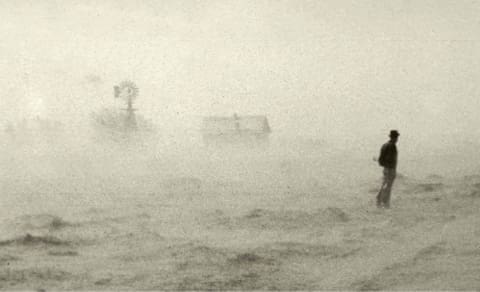

The Franklin Roosevelt administration and a handful of scientists and farmers went a long way toward understanding the problem and learning new ways of farming. The land was revived and family, community, ecological, and industrial farming practices were essential to “feeding the allies” during World War II.
Chapter 24 References
24.1 Compilation of Studies and Findings on Soil and Biology, Compendium Volume 1, Number 1, July 2017, https://bio4climate.org/article/compendium -1-1-compilation-of-studies-and-findings/
CHAPTER 25 [1:35:17;07]
The Industrialization of Farming
The Industrialization of Farming
But after WWII, the military-industrial complex took over farming in the US. Not only were the plows bigger and better than ever thanks to the engineering strides made for war machinery, but the production of nitrogen fertilizers and chemical additives grew into a mighty business.
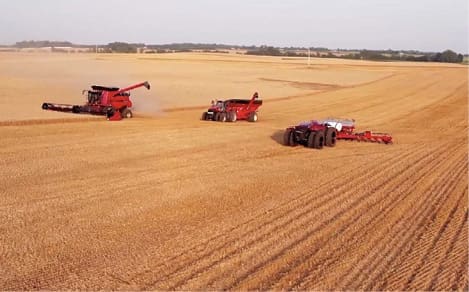
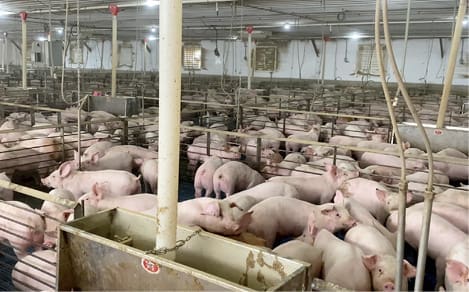
Today’s industrial agriculture is designed to maximize yield and to maximize profit, without regard for the biosphere, the health of the living soil, the animals, the farmers and the farm communities. This approach was sold to people on the idea that a growing global population requires more food than ever before, and that the only way to do this is through mass production. These methods have resulted in monoculture commodity crops, including animals, which are grown in vast quantities and traded on commodity markets. These commoditized products are then fed into the industrial food production process that delivers everything from frozen pizza and soft drinks to sirloin steak and potato chips.
Nitrogen Fixation, Natural
Massive plowing in agriculture requires fertilizers to supply those lost nutrients. Nitrogen is key among these nutrients. In nature, nitrogen is “fixed” (converted into usable compounds) by bacteria that live on the roots of legume plants. Traditional and ecological farmers grow legumes (pea plants) and this supplies usable nitrogen which is then recycled through poop, pee, and decay (see the Dung Cycle, chapter 16). In traditional agriculture, sources of poop from cows, chickens, birds, bats, and other animals are all used.
Nitrogen Fixation, Artificial
In the early 20th century, Nobel prize winner Fritz Haber developed the Haber-Bosch process of fixing nitrogen. This industrial process combines nitrogen gas with hydrogen at high pressures and moderate temperatures to produce ammonia (NH3). This forever changed farming and accelerated the development of industrial agriculture. Today, the corporate agriculture business has grown into one of the most rapacious profit monsters. Junk food makes up an overwhelming proportion of food products in most US supermarkets. The food is so low in nutrition that another lucrative profit center has developed: the supplement and vitamin industry.
This massive killing of the soil and the biosphere for industrial agriculture has greatly contributed to the climate crisis.
Pesticides
In addition to synthetic fertilizers, the chemical industry put its resources into developing powerful chemicals that kill insects and other pests: pesticides.
Industrial agriculture puts chemicals in the soil and in the plants to kill insects, fungi, bacteria and all sorts of “pests.” These chemicals, along with deep-plowing, kill the life in the soil, particularly the fungal networks that are essential to keep soils alive and to hold water in the soil. These poisons spread throughout the web of life and eventually to us. As Rachel Carson said years ago, we humans have the tragic belief that in the name of “progress and technology” we can do whatever we want to nature without suffering any consequences. But the consequences have been devasting to the biosphere and highly detrimental to human health.
In Regenerating Life Gail Fuller tells how as a commodity farmer in Kansas he was instructed by industry advisors to specialize on a couple crops – that diversity wasn’t good. This lack of diversity led to weeds and pests, so he had to spend money “left and right” in fungicides, insecticides, seed treatments, and more. He goes on to say that 90% of the land in Kansas is used for agriculture, but they import 90% of their food. This is because what they are growing are commodity crops – most of which aren’t human food at all. And this commodity system is being subsidized by the US government.
Chapter 25 References
25.1 Paul Tukey, Alexis Baden-Mayer, Ling Tan, Betsy Nicholas: Community and Movement Leaders discuss a range of regenerative/restorative activities (28:09), Biodiversity for a Livable Climate, May 15, 2017, https://www.youtube.com/watch?v=l3o4AOQyIwQ&ab_channel=BiodiversityforaLivableClimate
25.2 Introduction to Agriculture-based Climate Solutions, Compendium Volume 1, Number 2, March 2018, https://bio4climate.org/article /compendium-1-2-introduction/
CHAPTER 26 [1:40:32;12]
Poisoning the Soil
Roundup
A good example of the fiasco caused by trying to control nature for profit is Roundup.
Roundup, made by Monsanto which is now part of Bayer, is marketed and sold all over the world as a weed killer. It is very effective at killing bacteria and other organisms in the soil. Chemically, it is considered an antibiotic. It is also used as a desiccant on commodity crops just before harvest, particularly oats. Some commodity crops have been genetically modified to be tolerant of glyphosate – the active ingredient in Roundup – so that large quantities of glyphosate can be sprayed on and around the plants, without harming them at all.
The effects of Roundup and other agricultural chemical additives go far beyond the soil; they are damaging to human health. Although it’s hard to quantify or isolate the effect of any one chemical or part of the industrial food production process as the “cause” of a particular disease, many diseases, including autism and a full range of childhood diseases, have been linked to glyphosate and other chemicals. And stories of disease, cancer in particular, from the pollution of water and soil in communities around large chemical plants are notorious.
By doing his own research (and not listening to his advisors) Gail Fuller learned of the dangers of Roundup/glyphosate to the soil, the crops, the animals, and humans. He immediately stopped using it and apologized to his family. Gail Fuller is now a leading ecological farmer and runs Fuller Field School to teach how by working with the power of natural cycles, farmers can produce good food that fosters healthy people and strong communities.
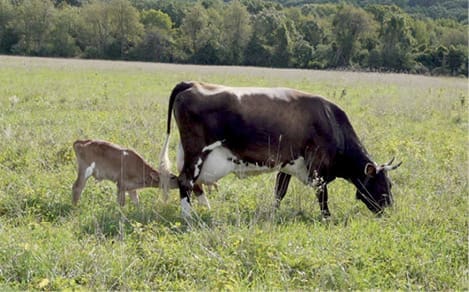
A Disease Industry
The entire industrial food production process which produces food that is low in nutrition and may contain harmful chemicals prompted Walter Jehne to say: “I don’t think you have a healthcare system in America. You have a two-trillion-dollar disease industry in America, fed by a one-trillion-dollar industrial food system.”
CAFOs
Commodity crops include animals such as cows, pigs and chickens. These animals are raised in CAFOs – concentrated animal feeding operations – or what are often called factory farms. The animals are cramped together and often have very little, if any, exposure to the outdoors. They generally eat food that is designed to make them fat, not healthy. Cows, for instance, are often fed corn, which is not part of their natural diet. Like all mono-cultures, these animals are subject to a variety of diseases which can spread quickly in the population, so antibiotics, fungicides, pesticides, and other chemicals are used regularly on these animals.
CAFOs contribute significantly to the climate crisis because large areas of forest are destroyed in order to build them.
In Praise of Cows
Cows are amazing animals. They eat and digest grass – which is cellulose – in their stomachs, which are full of bacteria and other microorganisms that can break down that cellulose. Lynn Margulis called cows “fermentation tanks on four legs.” One byproduct of this fermentation (anaerobic respiration) is methane. The cows release the methane primarily through burping, but also through farting. In CAFOs, the massive quantities of animal waste, including methane, can be problematic because of the concentration of waste that is released into nearby communities, and into rivers and streams.
Chapter 26 References
26.1 Summaries of articles on the ecological roles of animals, Compendium Volume 5, Number 2, January 2022, https://bio4climate.org/article/summaries-of -articles-on-the-ecological-roles-of-animals/
26.2 “Glyphosate: Unsafe on any Plate: Food Testing Results and Scientific Reasons for concern.” Food Democracy Now! 2016, https://usrtk.org /wp-content/uploads/2016/11/FDN_Glyphosate _FoodTesting_Report_p2016-3.pdf
26.3 “Monsanto Roundup Lawsuit Update” by Ronald V. Miller, Jr., Lawsuit Information Center, July 23, 2024, https://www.lawsuit-information-center.com /roundup-lawsuit.html
26.4 Dan Kittredge: Nutrition and Health from the Ground Up (19:27), Biodiversity for a Livable Climate, Nov 27, 2014, https://www.youtube.com /watch?v=QOtsWsMbabg
26.5 Bionutrient Association website, https://www .bionutrient.org/
26.6 “Regenerative Grazing: A Compelling Climate Strategy” by Lynne Pledger, Biodiversity for a Livable Climate, December 4, 2023, https://bio4climate .org/2023/12/04/regenerative-grazing-a-compelling -climate-strategy/
26.7 Can Cows Save The Planet? Holistic Management and Planned Grazing. Biodiversity for a Livable Climate, https://bio4climate.org/solution/can-cows -save-the-planet/
CHAPTER 27 [1:45:35;17]
The Green Revolution That Wasn’t
The Green Revolution
Another example of the corporate takeover of farming is the so-called Green Revolution which was, and still is, a strategy by chemical companies, allied with philanthropic and governmental organizations, to “feed the world” through the industrialization of agriculture with chemical technology. The epicenter of the first green revolution was in India. The rationale was that the global population was expanding so rapidly that traditional agricultural methods couldn’t possibly feed all the people.

Regenerating Life looks at the work of Norman Borlaug. He was a government biologist who developed a hybrid strain of wheat that could withstand lots of chemical pesticides and fertilizers. He oversaw a plan to force native farmers to convert their crops to this hybrid wheat, so that then they could spray heavily.
However, today, it has become clear that these industrial practices have killed the soil, killed insect pollinators, and consequently the nutritional quality of food grown in this way has suffered a considerable decline. This has hurt local farmers, their families, their communities and the population at large.
Fighting Back: Seedbanks
As a response to the Green Revolution, Vandana Shiva started Navdanya. Navdanya, which means “nine seeds,” is the center of a network of seedbanks and communities practicing ecological agriculture in India. It was started in response to the push by corporations to create hybrid (generally now genetically modified) strains of seeds, patent them, and then sell them to the farmers – along with prohibiting those farmers from saving the seeds from crops that they have grown for use in subsequent years. This has happened in the US and many other countries. But in India – thanks to the work of Navdanya’s legal teams and Vandana Shiva’s activism – a law was passed that says that farmers have the right to save, sow, grow, breed, and sell their own seeds, and that this right can never be taken away.
Chapter 27 References
27.1 Introduction to Navdanya, http://www.navdanya.org /about-us
CHAPTER 28 [1:50:47;17]
Let Cows Burp
Philanthropic Imperialism
The industrial take-over of farming through government and philanthropic efforts to “feed the world” is an example of philanthropic imperialism. This term highlights the practice of offering charitable help to those in need as a way to establish and maintain control over them.
“They used that one event of a drought and the distress to push the Green Revolution just as much as today, a hurricane and a disaster is used to push GMO seeds in the relief. It’s an established practice of US AID, the US Embassy. World Bank was part of this, Rockefeller and Ford were part of it,” says Vandana Shiva
The Quest to Control Nature
In the 1960s it was popularly assumed that advanced technology would help man control nature and improve peoples’ lives. The idea that technology will save us from the uncertainties of nature (including the climate crisis) is still very much embedded in western industrialized culture. Here Regenerating Life pokes fun at Bill Gates who, in an interview, suggests that we should figure out a way to stop cows from farting and burping.
Planning Horizons
In a documentary applauding his work, Norman Borlaug said proudly in 1970 that his agricultural methods could supply enough food for the world’s growing population for 20 to 30 years. This is an example of limited “planning horizons.” Regenerating Life asks: “What happens after the year 2000?” The film points out that healthy ecological methods of farming can supply food forever and have been doing so for centuries. Ecologically minded farmers take great pride in continually enriching the soil and not depleting it.
The Tragic Aftermath of the Green Revolution
Although Bill Gates and others continue to push new “green revolutions,” with GMO seeds and new chemicals, particularly in Africa, the aftermath of the Green Revolution in India is heartbreaking. In Regenerating Life, farmers who were part of that “revolution” report having health problems because of the chemical spraying, and financial problems because of the costs of the seeds and the chemicals. Like farmers in the US who are part of the commodity system, they have had trouble making ends meet and have had to watch their children move to the cities where they could get factory jobs.
Now these farmers in India, thanks to Zero Budget Natural Farming (see chapter 31), are growing healthy food and are economically doing much better. They are also happy to have their children join them on their farms.
Computer Controlled Farming
In the US and most of the world, the technological takeover of farming continues with bigger tractors and computer-controlled machinery. As Satish Kumar points out, “even the farmers these days don’t touch the soil. They are not anymore farmers, they are just machine minders.”
What About The Population Explosion?
The population explosion has always been the elephant in the room. Unlimited growth on a finite planet is impossible. Population control is, one would think, an ecosystem’s responsibility, whether of humans or another species.
We don’t know what the Earth’s “carrying capacity” is. It’s often assumed that we have surpassed it a long time ago. But we do know that if we want to sustainably produce large quantities of food, we will have more success working with nature than against her.

Water Scarcity
The population explosion also prompts us to ask about water scarcity and our growing need for fresh water. People are dying of thirst, living in dry communities – and there are more and more wildfires. But, as we’ve seen, there is plenty of water on the planet, and nature has many ways to bring fresh water to the land in abundance, and continues to do so. What we need are ways to keep the water on the land, and to keep it available for the biosphere and for our human needs. This is why it’s so important to rebuild the small water cycles in every area of the world.
Rebuilding the Small Water Cycle
One of the most profound solutions to the climate crisis is being undertaken by a group in Slovakia, Water Holistic. This group of scientists is led by Michal Kravčik, who wrote the ground-breaking book: Water for the Recovery of the Climate: A New Water Paradigm. The group works with local communities and governments to rebuild the streams, ponds, and water infrastructure on mountain slopes or other areas. In many instances they create “leaky dams” out of logs, mimicking the dams built by beavers that were once common. (This encouraging work is not mentioned in Regenerating Life.)
Chapter 28 References
28.1 “The New Water Paradigm: Global Climate and Ecosystem Restoration” by Michal Kravcik, CSc, Biodiversity for a Livable Climate, April 29, 2019, https://bio4climate.org/2019/04/29/the-new -water-paradigm-global-climate-and-ecosystem -restoration/
28.2 “The philanthropic-corporate-state complex: imperial strategies of dispossession from the ‘Green Revolution’ to the ‘Gene Revolution’” by Ashok Kumbamu, Globalizations, Volume 17, February 25, 2020, https://www.tandfonline.com/doi/abs/10.1080/14747731.2020.1727132
28.3 “Geo-Engineering – An Idea Whose Time Ought Never Come” by staff, Biodiversity for a Livable Climate. August 9, 2016, https://bio4climate.org /2016/08/09/geo-engineering-an-idea-whose-time -ought-never-come/
28.4 “The Human Ecology of Horizon Effects” by Frederic Jennings, Academia, 2017, https://www .academia.edu/33743123/THE_HUMAN _ECOLOGY_OF_HORIZON_EFFECTS_2017 _FINAL_PUBLISHED_VERSION_978_3 _330_06796_7_pdf.
28.5 Zero-Budget Natural Farming in Andhra Pradesh, India (2:09), UNCCD, May 31, 2021. https://www .youtube.com/watch?v=AzmXb9Kwr04
28.6 “The world population explosion: causes, backgrounds and projections for the future” by J. Van Bave, National Library of Medicine, 2013, https://www.ncbi.nlm.nih.gov/pmc/articles/PMC3987379/
28.7 “Scientists Warning on the Problem with Overpopulation and Living Systems” by M. Lynn Lamoreaux and Dorothy C. Bennett. MAHB (Millennium Alliance for Humanity and Biosphere, February 25, 2024, https://mahb.stanford.edu /library-item/scientists-warning-on-the-problem -with-overpopulation-and-living-systems/
28.8 Maude Barlow: Civilization & Water- Scarcity, Abundance, and the Road Less Traveled (18:54), Biodiversity for a Livable Climate, Nov 2, 2015, https://www.youtube.com/watch?v=38yF86aBp5o
CHAPTER 29 [1:53:53;26]
Ecological Farming
Ecological Farming
To build the soil we need look no further than the millions of ecological farmers who are growing healthy crops, raising healthy animals, and continually focused on the quality of their living soil. They are solving the climate crisis.

Regenerating Life doesn’t zero in on one particular farming practice. Instead, it presents a brief list of the principles that most ecological farming practices adhere to, regardless of what they are called.
• Work with nature
• Cover the land
• Encourage biodiversity
• Keep animals and animal dung on the farm
• Do no harm: reduce chemical inputs and plowing
Central to these agricultural practices is the idea of maintaining healthy communities.
Nature Has The Solutions.
Ecological farmers have learned that, when the soil is healthy and when there is biodiversity on the farm, there is a natural biological resistance to pests and other problems. As Gail Fuller says: “If you give Mother Nature a chance, she’ll help you” (see chapter 19).
Rotational Grazing
In many cases, observing nature helps farmers to develop methods that mimic nature.
In nature, the grazing of herds of animals contributes to the health of the land not just through pooping, but by stimulating growth of the grasses and other plants and encouraging them to grow deeper roots. Animal hooves soften the soil and create pockets that hold water. And all of this grazing and trampling activity stimulates further growth and biodiversity of plants, animals and microbes. The millions of buffalo that roamed the Great Plains of the US contributed significantly to the health of that land, built the soil, and built drought resistance. Steffen Schneider explains that rotating a herd of cows from one fenced-in area of a field to another according to a schedule, called “rotational grazing,” greatly benefits the animals, the farm, its customers, and the climate.
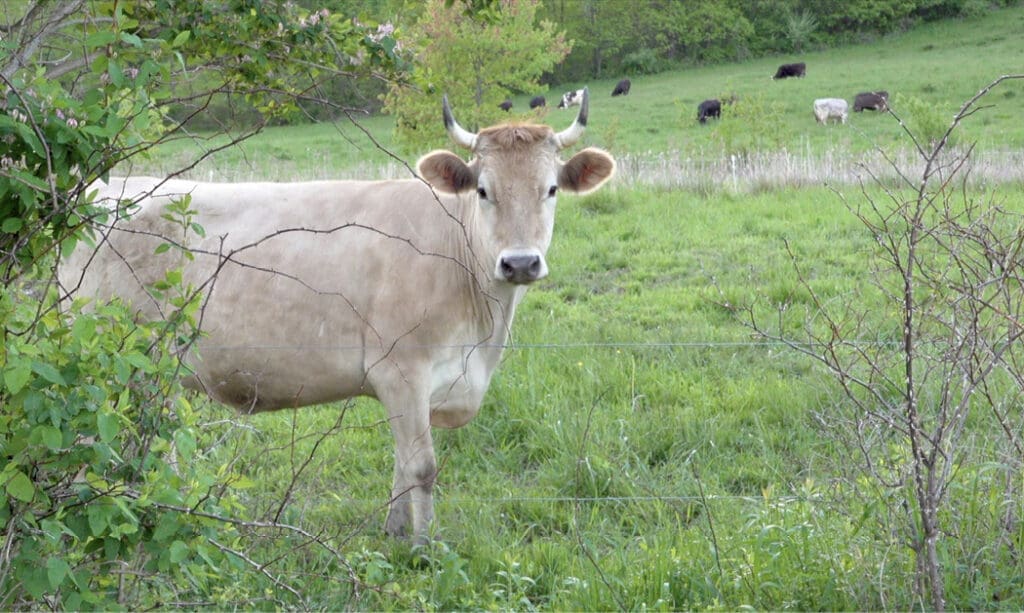
Chapter 29 References
29.1 Holistic planned grazing for drought relief, Allan Savory, Zimbabwe, Compendium Volume 2, Number 2, January 2019, https://bio4climate.org /article/holistic-planned-grazing-for-drought-relief -zimbabwe/
29.2 Compilation of Studies and Findings about Soil, Compendium Volume 1, Number 1, July 2017, https://bio4climate.org/article/compendium-1-1 -compilation-of-studies-and-findings/
29.3 Kris Nichols: Regenerative Farming- Front Line Action to Reverse Global Warming (35:46), Biodiversity for a Livable Climate, May 16, 2017, https://www.youtube.com/watch?v=yibhkzNV9Mw
CHAPTER 30 [1:58:07;28]
Changing Our Lens
Changing Our Lens
A change in perspective isn’t easy. For some of us, it all starts with one “ah-hah” moment and builds from there. It’s often necessary to change your mind – to give up an idea you once thought was true forever. For others, it’s an aesthetic change: what once was beautiful becomes ugly. When we begin to realize that those “amber waves of grain” blowing in the wind are ugly, or that a perfectly green suburban lawn isn’t actually beautiful, we begin to see things differently. Or when we think about the idea that it’s not the number of greenhouse gas molecules that is making the global temperature rise, but the increased amount of bare dry land on the planet, then we are changing our perspective.
That doesn’t necessarily mean that the old perspective is totally wrong. The sun does go around the Earth, too.
Community Supported Agriculture (CSA)
Booker T. Whatley (1915–2005) changed farmers’ and customers’ perspective on farming by pointing out that small farms are not little versions of big farms. The small farms’ mission is to grow healthy food for people in their local community. He pioneered the idea of “community supported agriculture” in which people buy a share of the farmer’s produce directly from the farm, eliminating the middle-person. CSA’s are now available in many communities around the world.

Eating ecologically grown food from your own community is a powerful solution to the climate crisis. It is also the best thing you can do for your own health.
In contrast to Norman Borlaug’s 30-year planning horizon (see chapter 28), Naima Penniman of Soul Fire Farm turns our attention to a much longer time horizon: “This is long haul work. Our north star is like seven generations into the future, in what we want to leave for our children’s children’s children.”
CHAPTER 31 [2:01:21;13]
Agricultural Solution Sets

Perennial Polyculture Grains – The Land Institute
Wes Jackson and scientists at his Land Institute in Kansas are working on a profound solution set to the climate crisis. What if, instead of growing grains that are annuals (seeds need to be planted every year) in monocultures (all one variety of plant), we developed and grew grains that are perennials and grow them in polycultures. The people at the Land Institute are successfully doing just that.
Community Managed Natural Farming (APCNF)
Another solution set documented in the film and described by Vijay Kumar is Zero Budget Natural Farming (ZBNF). This approach is now called Andhra Pradesh Community Managed Natural Farming (APCNF); it is being implemented by Rythu Sadhikara Samstha (Farmer Empowerment Organization), still under the guidance of Vijay Kumar.
This farming method uses cow dung and urine to make inoculants for growing crops. The plan is that the farmers have to buy very little from the outside. Everything they need is produced on the farm, by the farmers. Their methods are so successful that they have been able to grow viable crops even in a drought year. Farmers plant a variety of crops in the same field which mature over time into a “food forest.” From the outset, the objective is to always have crops to take to market.
Chapter 31 References
31.1 Andhra Pradesh Community Managed Natural Farming (APCNF) website, https://apcnf.in/
31.2 Vijay Kumar and Didi Pershouse: The Remarkable Success of Community Managed Natural Farming in Andhra Pradesh. (49:30), Biodiversity for a Livable Climate, January 21, 2021. VIDEO, https://bio4climate.org/event/the-remarkable-success -of-community-managed-natural-farming-in -andhra-pradesh/
31.3 Engin Atasay, Jim Corven, Rachael Furlong, Zoe Hansen-DiBello: Educating the New Climate Paradigm (48:15), Biodiversity for a Livable Climate, March 18, 2015, VIDEO, https://www.youtube.com /watch?v=DIoSOrn58eQ

CHAPTER 32 [2:05:21;07]
Community Gardens
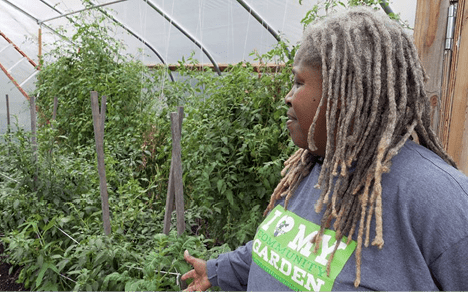
Community Gardens
A third solution set involves community gardens, an important response to the corporate takeover of our food supply. Karen Washington in Regenerating Life talks about her experiences and what she has learned as a pioneer of community gardens in the Bronx area of New York City. In this case, community members each have a portion of the garden to cultivate. They share resources and their market sales.
Food Aparteid
Karen Washington coined the phrase “food apartheid” to describe the situation in which the good healthy organic and regeneratively grown food is in white wealthy neighborhoods, while all that’s available in poor communities is cheap processed industrial food. And she further points out that the industrial food makes people sick and that this is another profit center for industry.
Karen stresses the importance of growing your own food (or at least buying from neighbors that do) as a way of taking control of one’s life… of taking power away from the fohod industry.
Chapter 32 References
32.1 Karen Washington: The Roots of Regenerative Solutions (19:51), Biodiversity for a Livable Climate, March 1, 2022. https://www.youtube.com /watch?v=qgqBAmWUr5E
32.2 Adaptation and Urban Resilience, Compendium Volume 3, Number 2, January 2020, https://bio4climate.org/article/compendium-3-2 -adaptation-and-urban-resilience/
32.3 Untapped Wisdom for Mitigating Natural Disasters & Rapidly Increasing Local Food Production (1:01:25), Biodiversity for a Livable Climate, February 17, 2023. VIDEO, https://www.youtube .com/watch?v=9ioABmYYc2U

CHAPTER 33 [2:11:01;04]
Conclusion and Dream Solutions
What Are Some Dream Solutions?
To conclude, Regenerating Life points out that, while civilizations and species come and go, Life on Earth will prosper long after humans are gone. To alleviate the climate crisis, we need to stop destroying forests – every tree should be treasured – because the forests are our first defense against planetary warming and drying. We should rebuild the forest ecosystems across the planet.
We should also rebuild the small water cycles, the soils, the wetlands, and even the oceans (see chapter 28).
A simple, profound, and inexpensive solution is solar cookers which alleviate the need in rural communities for people to search for scraps of wood, pay for fuel to cook food, and live in smoke filled homes. People who harness free solar energy for cooking breathe cleaner air, drink safe water, and preserve the environment. Learn more at Solar Cookers International: https://www.solar cookers.org/
One dream idea is for governments, particularly the US government through its Farm Bill, to stop subsidizing giant corporations in industrial agriculture, and instead to subsidize small ecological farmers and farmers’ markets. This policy change would revitalize farming in the US, just as Roosevelt did in the 1930s. This would lower the costs and increase the availability of healthy nutritious food – helping people regain healthy bodies and healthy immune systems, and so reduce the annual costs of health care by a significant amount.
Another dream solution set (not mentioned in the film) is for governments to require manufacturers of all products – from cars to toys – to implement systems for recycling their products. This would increase the price of products, but incentivize manufacturers to make products that last longer and to reuse parts from discarded products. Cars can be recycled through the dealership system already in place. An entire industry would develop. A useful way to institutionalize sustainable recycling behaviors would be to use circular economic techniques, such as where the ownership of durable goods like appliances remains with their manufacturer under a long-term leasing arrangement. This would provide those manufacturers with strong incentives to make durable goods in modular ways that are easier and cheaper to recycle at the end of their product lifetimes.
Invariably, nature has already devised a way to solve these problems; our job is to come to understand them, and to work with nature and not against her. This is not only age-old wisdom; it is also simple common sense: the more we nurture and protect the land, the more the land will nurture and protect us. We need to ReThink Everything.
Chapter 33 References
33.1 Didi Pershouse: The Ecology of Care- Shifting from a Sterile to a Fertile Paradigm (36:45), Biodiversity for a Livable Climate, December 17, 2017, VIDEO, https://www.youtube.com/watch?v=8_dOnomXQ18
33.2 “Slow Water Romance” by Zuzka Mulkerin, Biodiversity for a Livable Climate, February 10, 2024, https://bio4climate.org/2024/02/10/slow-water -romance/

CHAPTER 34 [2:14:17;17]
Credits
Acknowledgements
In writing this guide, I’m grateful for the assistance of Susan Davies, my Producer of many years, and Fred Jennings. I would also like to acknowledge the tremendous contribution of the organization Biodiversity for a Livable Climate. Under the guidance of Adam Sacks this organization put together a collection of scientific papers on the subject of global warming and made them available on their website. This Compendium of Scientific and Practical Findings Supporting Eco-Restoration to Address Global Warming was invaluable as I made Regenerating Life. Many of the references sited in this Earthling’s Guide go directly to this Compendium and to the Biodiversity for a Livable Climate website. Now under the leadership of Beck Mordini, this organization has become a partner in my effort to share the knowledge necessary to mitigate the climate crisis.
I would also like to thank the people who inspired in me a love and appreciation for the natural world and encouraged me to share that love through photography and filmmaking. John Trott was my seventh grade teacher at Burgundy Farm Country Day School and Burgundy Wildlife Camp. He commissioned me to make my first nature film, A Sense of Existence, at the age of 14. Ms. Ruth Strosnider, my high school biology teacher, fostered my intellectual understanding of biology as an academic subject. And my parents, Charles and Estelle Feldman encouraged me to play in the woods, follow my filmmaking and photography dreams, and have fun. And, most importantly, I would like to thank Sheila Silver, my wonderful wife and collaborator.
John Feldman
Bibliography
Ausubel, Kenny & Harpignies, J.P. (Editors). Nature’s Operating Instructions: The True Biotechnologies. Sierra Club Books, 2004.
Capra, Fritjof. The Turning Point: Science, Society, and the Rising Culture. Bantam Books by arrangement with Simon & Schuster. 1982.
Capra, Fritjof. The Web of Life: A New Scientific Understanding of Living Systems. Anchor, 1996.
Capra, Fritjof and Luisi, Pier Luigi. The Systems View of Life: A Unifying Vision. Cambridge University Press, 2014.
Easterbrook, Don (Editor). Evidence-based Climate Science: Data opposing CO2 emissions as the primary source of global warming. Elsevier. 2016.
Egan, Timothy. The Worst Hard Time. First Mariner Books, 2006.
Fortin, J. André. Mycorrhizas: The New Green Revolution. Éditions MultiMondes, 2009.
Fukuoka, Masanobu. Sowing Seeds in the Desert: Natural Farming, Global Restoration, and Ultimate Food Security. Chelsea Green Publishing, 2012.
Goreau, Thomas J., Larsons, Ronal W. & Campe, Joanna (Editors). Geotherapy: Innovative Methods of Soil Fertility Restoration, Carbon Sequestration, and Reversing Co2 Increase. CRC Press, 2015a
Harding, Stephan. Animate Earth: Science, Intuition and Gaia. Forward by Lynn Margulis. Chelsea Green Publishing Company, 2006.
Howard, Sir Albert. An Agricultural Testament. Oxford University Press, 1943.
Howard, Sir Albert. The Soil and Health: A Study of Organic Agriculture. Introduction by Wendell Berry. The University Press of Kentucky, 1947, 2006.
Imhoff, Daniel & Badaracco, Christina. The Farm Bill: A Citizen’s Guide. Island Press, 2019.
Jackson, Wes. Consulting the Genius of the Place: An Ecological Approach to a New Agriculture. Counterpoint, 2010.
Jackson, Wes. Nature as Measure: The Selected Essays of Wes Jackson. Introduction by Wendell Berry. Counterpoint Press, 2011.
King, F.H. Farmers of Forty Centuries: Organic Farming in China, Korea, and Japan. Dover Publications, Inc., 2004, original published by Mrs. F. H. King, Madison, WI 1911
Kravčík, Michal. Water for the Recovery of the Climate – A New Water Paradigm. Co-authors Pokorny, Jan, Kohutiar, Juraj, Kovác, Martin, & Tóth, Eugen. Krupa Print, 2007. (You can find this book on bio4climate.org)
Kuhn, Thomas S. The Structure of Scientific Revolutions. The University of Chicago Press. 1996
Leopold, Aldo. A Sand County Almanac. Oxford University Press. 1966
Luisi, Pier Luigi. The Emergence of Life: From Chemical Origins to Synthetic Biology. Cambridge University Press, 2016.
Margulis, Lynn. Symbiotic Planet (A New Look at Evolution). Basic Books; Revised ed. Edition, 1999
Ohlson, Kristin. The Soil Will Save Us: How Scientists, Farmers, and Foodies are Healing the Soil to Save the Planet. Rodale, 2014.
Penniman, Leah. Farming While Black: Soul Fire Farm’s Practical Guide to Liberation on the Land. Forward by Karen Washington. Chelsea Green Publishing, 2018.
Pershouse, Didi. The Ecology of Care: Medicine, Agriculture, Money, and the Quiet Power of Human and Microbial Communities. Mycelium Books, 2016
Pollack, Gerald H. The Fourth Phase of Water: Beyond Solid, Liquid, and Vapor. Ebner & Sons Publishers. 2013
Prigogine, Ilya & Stengers, Isabel. Order Out of Chaos: Man’s New Dialogue with Nature. Bantum Books, 1984
Schneider, Eric D. & Sagan, Dorion. Into the Cool: Energy Flow, Thermodynamics, and Life. The University of Chicago Press, 2005
Schwartz, Judith D. Cows Save the Planet: And Other Improbable Ways of Restoring Soil to Heal the Earth. Chelsea Green Publishing, 2013
Schwartz, Judith D. Water in Plain Sight: Hope for a Thirsty World. St. Martin’s Press, 2016.
Schwartz, Judith D. The Reindeer Chronicles: And Other Inspiring Stories of Working with Nature to Heal the Earth. Chelsea Green Publishing, 2020.
Seneff, Stephanie. Toxic Legacy: How the Weedkiller Glyphosate is Destroying Our Health and the Environment. Chelsea Green Publishing, 2021.
Shiva, Vandana. Staying Alive: Women, Ecology and Survival in India. Women Unlimited, 2010.
Shiva, Vandana. The Violence of the Green Revolution: Agriculture, Ecology and Politics in the South. Natraj Publishers, 2010.
Shiva, Vandana. Soil Not Oil: Environmental Justice in an Age of Climate Crisis. North Atlantic Books, 2008, 2015.
Shiva, Vandana & Shiva, Kartikey. Oneness vs the 1%: Shattering Illusions, Seeding Freedom. Chelsea Green Publishing, 2020
Todd, John. Healing Earth: An Ecologist’s journey of Innovation and Environmental Stewardship. North Atlantic Books, 2019
United States Department of Agriculture. Soils & Men: Yearbook of Agriculture 1938. United States Government Printing Office, 1938.
Williams, Michael. Deforesting the Earth: From Prehistory to Global Crisis, An Abridgment. The University of Chicago Press, 2006.
Worster, Donald. Dust Bowl: The Southern Plains in the 1930s. Oxford University Press, 2004
Worster, Donald. Shrinking the Earth: The Rise and Decline of Natural Abundance. Oxford University Press, 2016.
Young, Daniel Arthur. Restoring Climate Stability by Managing Ecological Disorder: A Non-Equilibrium Thermodynamic Approach to Climate Change. Carbon Resources Research. 2017
For additional resources go to bio4climate.org
Addendum
HOW TO SOLVE THE CLIMATE CRISIS
Regenerating Life: Kitchen Table Talking Points
A Soggy Manifesto
This manifesto is for you and your friends and family to keep as encouragement and a gentle reminder of the tasks ahead.
The climate crisis is a full-blown environmental crisis that goes far beyond the burning of fossil fuels. It is caused by humanity’s ongoing destruction and rampant economic exploitation of the living Earth, humans included. This living Earth, the biosphere, is a robust and self-sustaining system that regulates its own temperature and weather patterns. It does this by cycling water through itself and through the atmosphere and back again. This biologically modulated flow of water is both warming and cooling, creating its own temperature-controlled space.
We experience the climate crisis as an increase in severe storms, floods, droughts, heat spells, desertification, and wildfires. These are all about water, or the lack of water.
To learn more about how life regulates the climate, how we humans have screwed it up, and how people are solving the climate crisis, watch the documentary Regenerating Life: How to cool the planet, feed the world, and live happily ever after. To cut to the chase, read the following outline of solutions.
The solution to the climate crisis is a major eco-restoration effort with four interconnected campaigns. The solutions are local and there’s something for everyone to do.
Plant plants. Cover the land. Save the Soil.
It is estimated that 40% of the land that was once green with plants is now bare. Even the Sahara Desert was once green! Bare land reradiates far more heat (infrared radiation) than land covered with plants. Therefore, bare land is the primary cause of the increased greenhouse gas warming. Covering the land with plants, especially cover-crops in agricultural fields, is the best way to reduce this excess warming. You can help by planting wildflower, vegetable and shrub gardens, even potted plants. Eat good local food, if you can. Support local ecological farms and farmers’ markets. Join a CSA. Remember nitrogen fertilizers and pesticides kill the soil. Avoid them! Always strive to build healthy living soil that holds water. This helps prevent wildfires and leads to nutritious food, healthy people, and healthy communities.
Keep the Water Upstream.
The small water cycle is the cycle of water on the land. It goes from rain to soil, to plants, and, through transpiration, back to rain. Transpiration, which is a plant’s way of sweating, cools the land. But we have destroyed the wetlands and, in many cases, gone to great efforts to send storm waters quickly back to the oceans. To keep this water on the land, we must mimic nature and beavers by literally rebuilding the streams, ponds, lakes, wetlands, and rivers. Each of these environments is a biodiverse ecosystem teeming with life. In your community, what happens to the rain once it hits the ground? If you live near the ocean, support and join communities fighting to save ocean ecosystems, barrier reefs and coastal wetlands.
Save the Forests. Trees Cool.
Over centuries we have grossly depleted the Earth’s wondrous forests. Don’t cut down trees unless absolutely necessary. Support efforts to save and rebuild forests. Remember a forest is more than a bunch of trees. Forest ecosystems are air conditioners and, through the biotic pump, bring fresh water in from the ocean and move it across continents. Forests cool the planet and are our best defense against global warming. Standing trees in cities and residential areas should be nurtured and protected. Saving forest ecosystems helps prevent water scarcity and wildfires.

Work with Nature.
Work with nature to rebuild the Earth’s ecosystems, including human communities. If you live in the suburbs think about converting your grass lawn into a biodiverse meadow, or a vegetable garden, or a botanical garden. And build parks around the wetlands, revere them, be grateful for them. If you live in a city, develop parks and community gardens, and support ecological farms and farmers markets. Work with others who are restoring ecosystems in your community. Stop polluting our air and water! Curb your consumerism! Repair things if you can. Reduce the use of plastics! Recycle! It’s all hands on deck.
It Will Take Generations.
We must expand our time horizons and start to think in terms of hundreds of years… the time it may take to regrow a sustainable forest, for example. The task may seem daunting, but the good news is that every day will be an improvement. It’s a healing process.
An Earthling’s Guide to Planetary Health / Addendum: A Soggy Manifesto
Download this Soggy Manifesto here.
Your Living Earth Troubleshooting Guide is now available!
This pocketsize guide, authorized by the manufacturer, gives step-by-step instructions for addressing common problems with Your Living Earth. This includes excessive storms, floods, droughts, heat spells and wildfires.
Download the Troubleshooting Guide


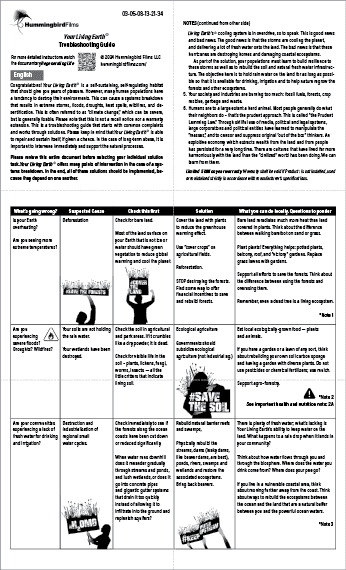
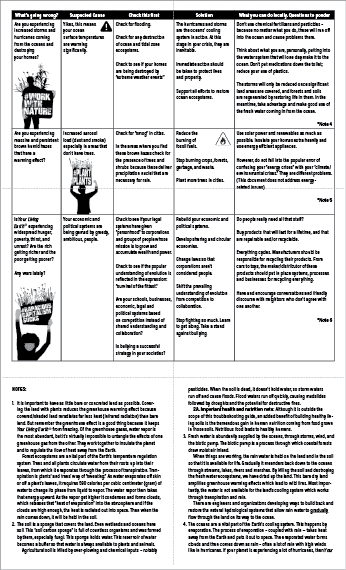
An Earthling’s Guide to Planetary Health
© 2025 Hummingbird Films LLC
For a PDF or paperback copies of this guide visit: https://hummingbirdfilms.com/regeneratinglife/earthlingsguide/
Hummingbird Films
PO Box 292, 93 Mallory Road
Spencertown, NY 12165
hummingbirdfilms.com
https://www.youtube.com/@hummingbirdfilms1322
Page composition: Abrah Griggs
Photos and graphics in this guide are taken from the film Regenerating Life.
Graphics by Guido Alvarez.
Biographies of the interviewees and John Feldman can be found on the Regenerating Life website.