
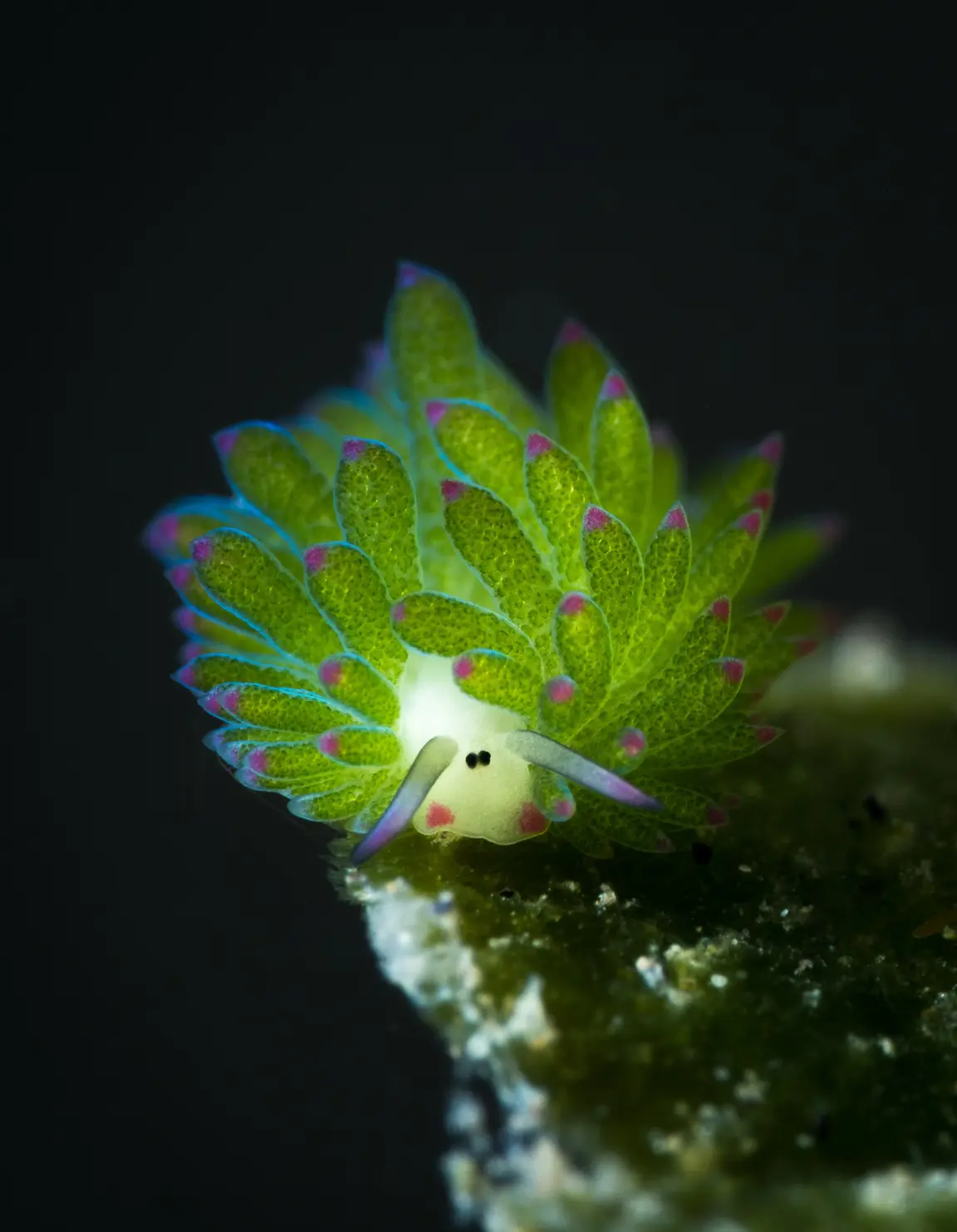
What animal eats sunlight, lives like a plant, and looks like a tiny animated sheep grazing underwater?
The Leaf Sheep! (Costasiella kuroshimae)
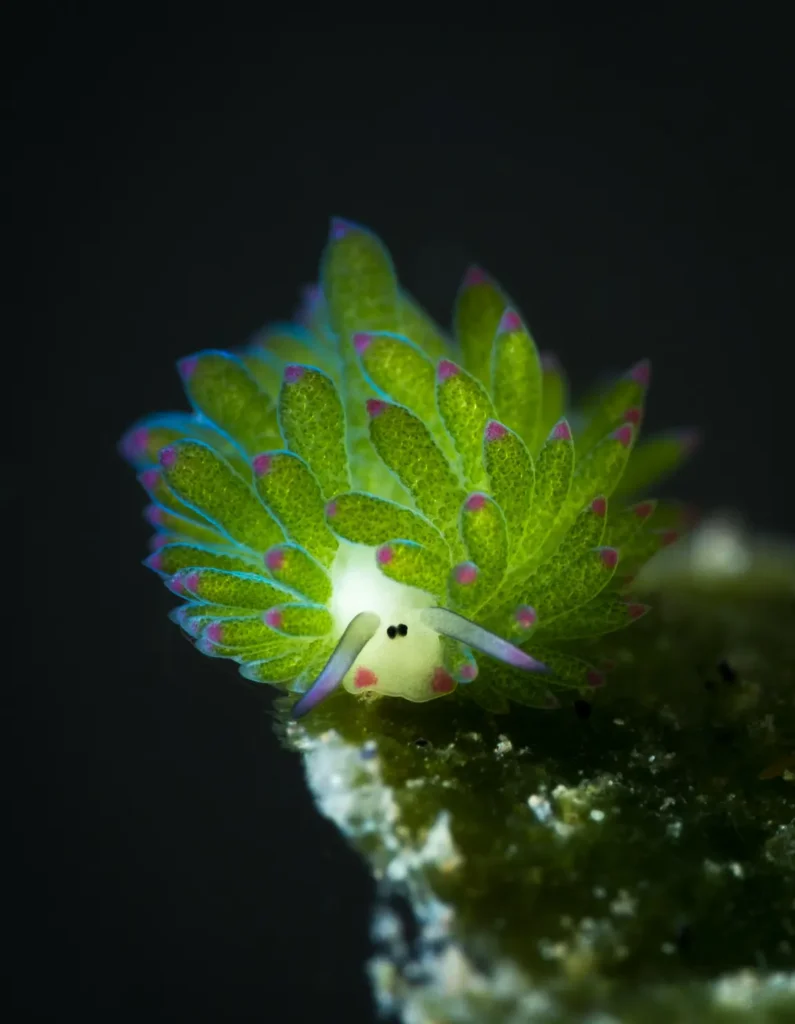
Its not a plant. Not algae. Not a trick of the light. Meet the sea slug known as the leaf sheep, one of the most extraordinary recyclers in the ocean.
Costasiella kuroshimae is a creature so small you could fit several on your fingernail, yet so biologically inventive that scientists are still trying to understand how it pulls off its most remarkable trick: stealing solar power.
At first glance, the leaf sheep doesn’t look real. Its soft, rounded body is dotted with dozens of tiny green lobes, each tipped in white, giving it the unmistakable appearance of a miniature sheep grazing on an underwater meadow. Two dark eyes peek from its head, while a pair of ear-like rhinophores tilt forward, as if listening for something just beyond human hearing. It’s easy to understand why divers often describe the first encounter as surreal — like spotting a tiny animated character wandering across a blade of algae.
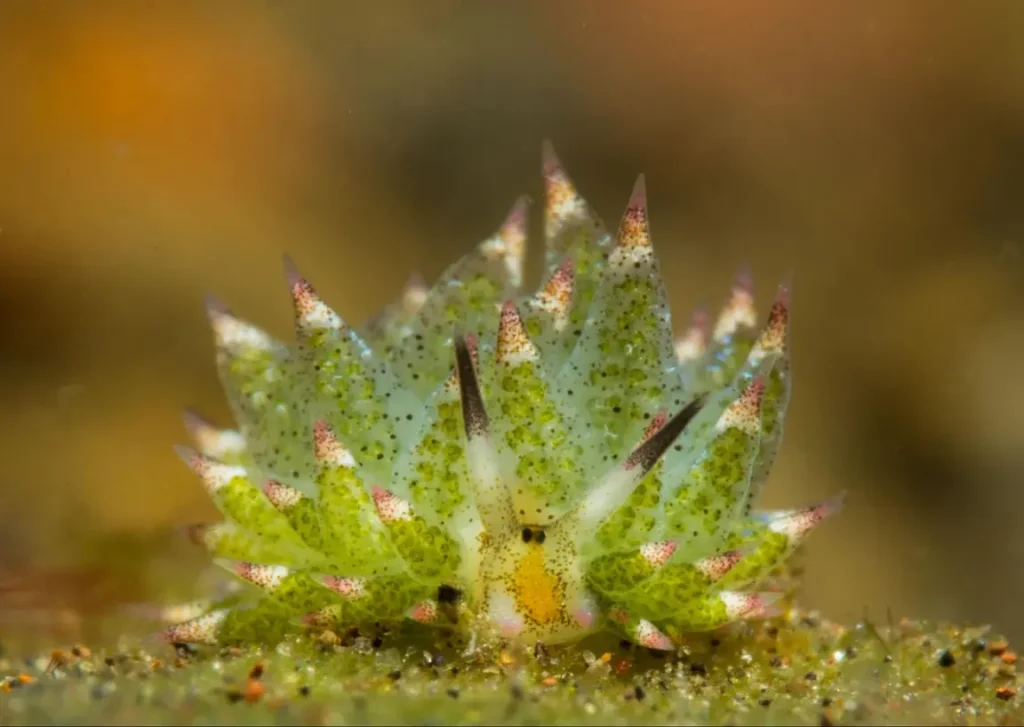
As cute as this sea slug is, what lies beyond its appearance is one of the strangest biological strategies in the ocean: kleptoplasty — literally, “stolen plastids.”
The leaf sheep feeds on algae. That alone isn’t unusual. Many marine animals graze on algae the way herbivores graze on grass. But instead of digesting everything it eats, the leaf sheep does something astonishing. It isolates the algae’s chloroplasts — the structures that perform photosynthesis — and stores them inside its own body. Those tiny green lobes covering its back, called cerata, act like living solar panels packed with borrowed chloroplasts.
The result? The leaf sheep can photosynthesize. After eating algae, it continues producing energy from sunlight, much like a plant. It still needs to eat, but sunlight supplements its energy intake — a hybrid lifestyle that blurs the line between animal and plant.
This strategy changes how we think about energy flow in ecosystems. Animals typically rely on eating other organisms for energy, while plants convert sunlight into usable fuel. The leaf sheep does both. It occupies a strange middle ground, showing that the boundaries between ecological roles aren’t always as rigid as we assume. In a world defined by specialization, the leaf sheep quietly experiments with flexibility.
This flexibility matters. In nutrient-poor environments, being able to stretch energy resources can make the difference between survival and disappearance. By holding onto chloroplasts, the leaf sheep continues generating energy even when food is scarce. It becomes less dependent on constant grazing and more resilient to fluctuations in its environment.
Resilience through Relationships
The leaf sheep’s resilience reflects a broader theme in nature: cooperation and reuse. The leaf sheep doesn’t evolve photosynthesis from scratch. Instead, it borrows an existing solution. It recycles living machinery. It becomes, in a sense, a living fusion of species.
The undersea cutie isn’t just a curiosity — it’s a living example of interconnectedness. The algae provide chloroplasts. Sunlight fuels them. The slug uses them. Energy flows across species boundaries, dissolving the idea that organisms exist in isolation.
This is exactly the kind of hidden relationship that shapes ecosystems. The leaf sheep grazes on specific algae species, helping regulate their growth. In turn, those algae form part of the foundation for small coastal ecosystems, providing habitat for microorganisms and stabilizing surfaces where other species settle. Even a creature only a few millimeters long participates in the balance of its environment.
A Scientific Mystery
Despite its ecological significance, the leaf sheep remains largely unknown outside marine biology circles. Part of that is because of where it lives — shallow tropical waters in places like Japan, Indonesia, and the Philippines. Part of it is its size. You don’t casually notice something smaller than a grain of rice unless you’re already looking closely.
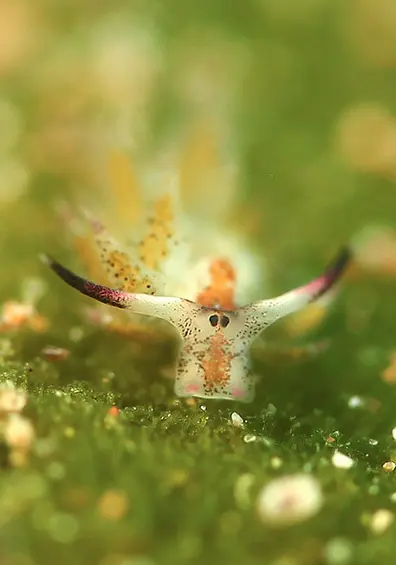
There’s something else at play too. The leaf sheep challenges our expectations. We tend to imagine innovation as something dramatic: large predators, massive migrations, ecosystem engineers like beavers or corals. The leaf sheep reminds us that evolutionary creativity often happens quietly, at microscopic scales, in overlooked corners of the world.
It also raises scientific questions that researchers are still trying to answer. How long do the stolen chloroplasts remain functional? How does the leaf sheep prevent its immune system from destroying them? Do the chloroplasts continue repairing themselves, or are they slowly replaced through feeding? These mysteries are still being explored, and each answer reshapes how we understand cooperation between species.
There’s also a deeper question embedded in the leaf sheep’s existence: how many other organisms are quietly blurring biological boundaries? If one animal can borrow photosynthesis, what other hidden partnerships exist in nature that we haven’t yet recognized?
The leaf sheep also changes how we think about scale. We often focus conservation on charismatic megafauna — whales, elephants, wolves. But ecosystems are built from countless small interactions. Remove enough tiny grazers, recyclers, and specialists, and the larger structures begin to wobble. The leaf sheep represents that hidden scaffolding: small, quiet, but part of the fabric that holds ecosystems together.
From a biomimicry perspective, the leaf sheep offers a provocative idea — borrowing and integrating existing systems rather than building new ones from scratch. Human technologies often aim to optimize efficiency, reduce energy use, and create hybrid systems. The leaf sheep does all three, using biological materials, sunlight, and cooperation. It’s a tiny reminder that innovation in nature often emerges through reuse, not reinvention.
All of this is what makes the leaf sheep so compelling. It doesn’t dominate its environment. It doesn’t engineer landscapes. It doesn’t migrate across oceans. Instead, it demonstrates a subtler power — adaptability, cooperation, and efficiency at the smallest scale.
In a changing climate, those traits matter more than ever. Flexibility, energy efficiency, and symbiosis are strategies ecosystems rely on to remain resilient. The leaf sheep embodies all three.
So the next time you picture a solar-powered organism, you might imagine leaves stretching toward the sky. But somewhere in shallow tropical waters, a tiny green “sheep” grazes quietly, soaking up sunlight, and rewriting the rules of what an animal can be.
Bio4Climate intern Allison Eckard came across the Leaf Sheep as part of her studies and was inspired by its incredibly small size and cartoon-like appearance to learn more about how it contributes to its undersea environment.

Allison Eckard is a senior Biology major with minors in Health and Environmental Science at Lesley University with a passion for ecological literacy and science communication. Through her internship with Bio4Climate, she explores the hidden relationships between neural systems, biodiversity, and climate resilience. She especially enjoys helping readers discover the surprising ways evolution shapes life in the smallest—and most unexpected—places.
References
- Rumpho, M. E., Worful, J. M., Lee, J., Kannan, K., Tyler, M. S., Bhattacharya, D., Moustafa, A., & Manhart, J. R. (2008). Horizontal gene transfer of the algal nuclear gene psbO to the photosynthetic sea slug Elysia chlorotica. Proceedings of the National Academy of Sciences, 105(46), 17867–17871. https://doi.org/10.1073/pnas.0804968105
- Christa, G., Woehle, C., Wägele, H., & Gould, S. B. (2015). The plastid in the mollusc Elysia chlorotica: stolen photosynthesis. Journal of Experimental Botany, 66(15), 4255–4266. https://doi.org/10.1093/jxb/erv138
- Rumpho, M. E., Pelletreau, K. N., Moustafa, A., & Bhattacharya, D. (2011). The making of a photosynthetic animal. Journal of Experimental Biology, 214(2), 303–311. https://doi.org/10.1242/jeb.046540
- Maeda, T., Hirose, E., Chikaraishi, Y., Kawato, M., Takishita, K., Yoshida, T., Verbruggen, H., & Maruyama, T. (2012). Algivore or phototroph? Plastid retention and carbon/nitrogen acquisition in the photosynthetic sea slug Costasiella kuroshimae. Biology Letters, 8(4), 543–546. https://doi.org/10.1098/rsbl.2012.0028
- Clark, K. B., Jensen, K. R., & Stirts, H. M. (1990). Survey for functional kleptoplasty among West Atlantic Ascoglossa (=Sacoglossa) (Mollusca, Opisthobranchia). Veliger, 33(4), 339–345.
- Jensen, K. R. (1997). Evolution of the Sacoglossa (Mollusca, Opisthobranchia) and the ecological associations with their food plants. Evolutionary Ecology, 11(3), 301–335. https://doi.org/10.1023/A:1018428420456
- WoRMS Editorial Board. (2024). Costasiella kuroshimae Ichikawa, 1993. World Register of Marine Species. https://www.marinespecies.org
Yes, fascinating creature which poses so many questions and suggests new ideas about evolution and is rules!
Beautiful writing! Thank you for the introduction to leaf sheep, Allison.
Allison – you are an incredibly talented observer and writer!